Month: March 2021

Do we need a European commissioner for animal welfare?

Along with dozens of European organizations, Animal Equality Italy launched a campaign to create a new government position: European Commissioner for Animal Welfare.

WHY WE JOINED THE COALITION: The campaign launch comes on the heels of the live animal transport tragedy, in which two animal transport ships carrying a total of almost two thousand animals were denied entry to multiple European countries due to a suspected disease and the ships full of animals drifted through the Mediterranean sea for months—one of the ships remains at sea today.
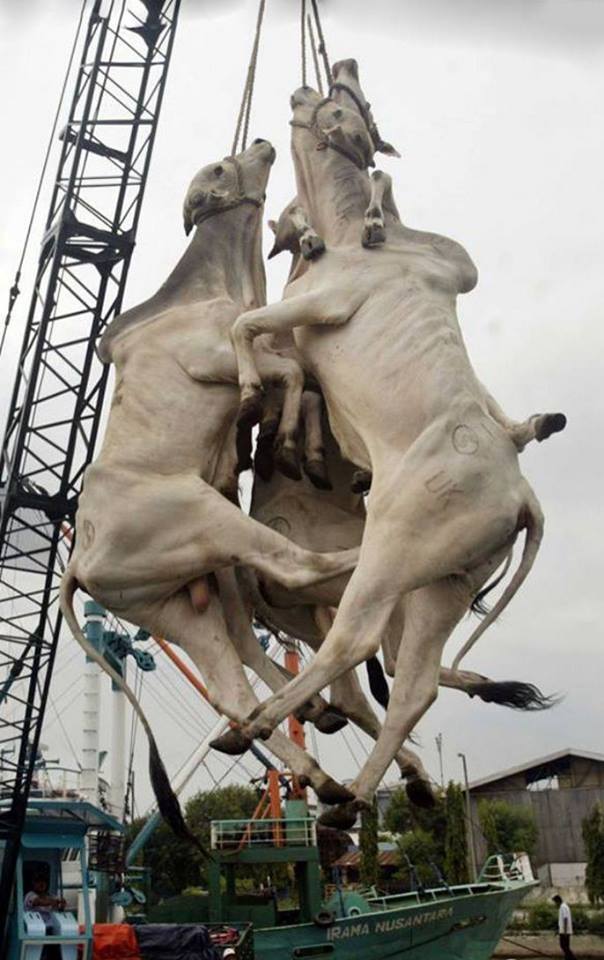
Footage revealing the harsh conditions and treatment of animals on farms and slaughterhouses in Italy and Europe also led to the launch of the campaign, which has been a long time in the making.

LANGUAGE IS IMPORTANT: Currently, the European Commissioner for Health and Food Safety is responsible for not only food safety issues but also everything related to animal welfare within the European Union (EU).

Leaving animals out of the job title highlights the limited commitment of the EU on animal issues, which need attention now more than ever.
That’s why the new campaign is pushing for the current Commissioner’s job title to be changed to, “European Commissioner for Health, Food Safety and Animal Welfare.”

ANIMAL PROTECTION SHOULD COME BEFORE ECONOMIC INTERESTS: European citizens have repeatedly shown that they care about animals. Surveys, including those conducted on behalf of the European Commission, show that the clear majority of citizens want to see a higher level of animal protection in European legislation.

Despite the existence of some legislation dedicated to the protection of animals, economic interests too often prevail over the requests of citizens and even those of the European Parliament, which has repeatedly called for the introduction of legislative changes to help animals.

With the establishment of a European Commissioner for Animal Welfare, animal issues will have more visibility within the European Union and the Commissioner will be explicitly invited to adopt a more proactive and progressive attitude on animal welfare on behalf of the whole European Commission.

WHAT YOU CAN DO: Our work in making this a reality has already begun, as we’ve entered into talks with European lawmakers, but to really put pressure on political decision-makers we need your support!

Sign the petition calling for an EU Commissioner for Animal Welfare, now!

SIGN THE PETITION

https://animalequality.org/news/animal-equality-pushes-for-a-european-commissioner-for-animal-welfare/

And I mean…It is naive to believe that with a new title, a disinterested commissioner, friend and supporter of the agribusiness would finally begin to carry out his duties as animal welfare officer.
Even now, those responsible know what is considered to be animal law in the EU:

Freedom from hunger and thirst
Freedom from discomfort
Freedom from pain, injury, and disease
Freedom to express normal behavior
Freedom from fear and distress.
There is no lack of laws, there is a lack of fairness and professional ethics

The EU Commission’s policy is animal industry-friendly. Most EU commissioners only view animals as goods, products or property.
Intentional or commercially motivated cruelty to animals is not prevented by the existing laws. And not punished either.

The EU Commission is concerned with maintaining the flow of “animal”- goods and is only interested in facilitating cross-border animal transports.
This not only has catastrophic effects on the animals but has also undermined trust in the EU Commission and damaged its reputation abroad
No EU commissioner needs a new title, but a new moral.

My best regards to all, Venus

Kenya: Murderers eliminate the last white giraffe

The only white giraffe has been killed by poachers, according to conservationists in Kenya, who explained that after the death of its mother and sister at the hands of other hunters, this last specimen carried a GPS, according to the Diario de Sevilla.

It inhabited the Ishaqbini Hirola Reserve, a wild conservation area in southeastern Kenya on the edge of the Tana River, home to hundreds of birds, mammals, and the famous Hunter’s antelope, a critically endangered species.

In 2016, the reserve became a popular tourist destination due to the discovery of three specimens of white giraffes (a female and her two calves).


In March 2020, the mother and one of the babies were murdered;

Local residents found their skeletons months later on the reservation. Its striking color is due to leucism, a genetic condition that alters the production of melanin and therefore causes the pigmentation of the skin to acquire a white tone.

Unlike albinism, leucism does not cause sensitivity to sunlight, nor does it cause a change in eye color.

This family of giraffes was first seen in Garissa County and made a huge splash worldwide for its beauty and uniqueness. This is precisely why the Kenya Wildlife Service began investigating the disappearance after the animals were not seen for several weeks.

“This is a very sad day for the Ijara community (reserve area) and for all of Kenya,” said Mohammed Ahmednoor, manager of this reserve. “We are the only community in the world that guarded white giraffes,” said the manager.

(Giraffa camelopardalis), albino. |

Ahmednoor described the killing of the giraffes as “a blow to the important steps taken by the community to conserve rare and unique species and a wake-up call to continue supporting conservation efforts.”

The boundless greed and wickedness of some people will never cease to amaze us. We absolutely condemn this murder, as well as any other animal on this planet.

https://www.animanaturalis.org/n/asesinada-la-ultima-jirafa-blanca-del-mundo

And I mean…The death of these two giraffes in March 2020 is a symptom of a much larger phenomenon. Since the mid-1980s, the entire population has decreased by up to 40 percent.

Of the reticulated giraffes, only an estimated 8500 animals live in the wild in Kenya. In Ethiopia and Somalia, only a few hundred are likely to be added.
Giraffes have been the focus of poachers for a number of years. Because of their size and behavior, they are easy prey for illegal hunters. They are shot as bushmeat.

Giraffes are also sought after by charlatan miracle healers who sell the myth that bone marrow and brain are supposed to help fight HIV / AIDS.

The skins and tail hair are also popular.

The last white copy was probably particularly popular because of its very unusual appearance.
And when a rich American, Spaniard, or German has paid $ 50,000 for their murder, every poacher clears the way and makes it easy for the client.

Only the death penalty for poachers might help save the last specimens of endangered wildlife.

My best regards to all, Venus
Belgium: GAIA (Belgium Animal Rights) Launches #EUforAnimals Campaign. Show Your Support By Signing the Petition – Link Given.

WAV Comment – GAIA are a great campaigning organisation based in Belgium, supporting a wide range of animal issues,  Check out their website from the link below to see more.  We have enjoyed campaigning with them in Brussels (EU HQ) in the past on the live export issues.

We encourage everyone to sign the petition at EU for Animals – and let the non acting EU that they really need to get into Century 21 and more importantly, reflect the wishes of the vast majority of EU citizens.

Note – you DO NOT have to be an EU citizen to sign this; anyone can contribute.  Just select your nationality at the end of the petition form.

Regards Mark

Website – https://www.gaia.be/en

GAIA launches #EUforAnimals campaign

18 March 2021

GAIA

On 10th March, GAIA, together with various other organisations and the support of Eurogroup for Animals, launched very successfully the #EUforAnimals campaign. Main goal is to explicitly include ‘Animal Welfare’ into the job title of the Commissioner for Health and Food Safety.

GAIA’s key demand is that more relevance is given to animal welfare by making this responsibility explicit in the name of the relevant Directorate-General and the job title of the competent EU Commissioner. In the present context, the Commissioner’s responsibility would become for “Health, Food Safety and Animal Welfare”. 

Animal protection in the EU will increase if this obligation is highlighted, and the appropriate Commissioner is expressly urged to take a more constructive and progressive approach to animal welfare on behalf of the entire European Commission, thereby reacting to the passionate call of European citizens.

You can sign the petition on the EU for Animals website and a space will be added in the coming days to show the list of MEPs who have communicated their support. 

Read more at source

#EUforAnimals

Togo / Spain: Further ‘Elbeik’ Update 1416GMT 18/3/21 – Stranded Cattle Ship Ordered to Dock in Spain after ‘Hellish’ Three Months at Sea.

Following on from our earlier post today regarding the cattle stranded at sea on the ‘Elbeik’:

Togo: Live Animal Transport: Elbeik Still At Sea with 1700 Animals and Over 100 Feared Dead – Expected to Dock In Cartagena, Spain Tonight. ‘Karim Allah’ Killing Team Still In Cartegena. What Happens Later ? – World Animals Voice

We now have the following from UK Press ‘The Guardian’ (London), as follows.

Does this situation not sum up the scum involved in this business, that

“a source said the owner plans to sell the animals “to north Africa”.

All this time at sea, and the suffering involved with it, the numbers of animals now dead, and all this thickhead can think about is still trying to make money from the remaining animals, and sending them on yet further (by sea ) to another destination in North Africa; which we can only view as being ‘Libya’.

Regards Mark

Stranded cattle ship ordered to dock in Spain after ‘hellish’ three months at sea | Environment | The Guardian 

Stranded cattle ship ordered to dock in Spain after ‘hellish’ three months at sea

Almost 180 bulls believed to be already dead as campaigners call for surviving animals to be humanely slaughtered on arrival in port

After three months stranded in the Mediterranean, a livestock ship carrying almost 1,800 young bulls has been ordered to dock at the Spanish port of Cartagena.

The Elbeik is expected to arrive in Cartagena this evening, having left the Spanish port of Tarragona in mid-December.

It has been struggling to find a buyer for the cattle after being refused entry by multiple countries, including Turkey and Libya, over fears the animals had a disease called bluetongue.

Sources have told the Guardian almost 180 cattle are now dead, more than double a previous estimate. An MEP has suggested that the “hellish” stress of three months at sea means slaughter on arrival at port is now the most humane option.

Following recent stops near Cyprus and in Greek ports to reprovision, the Elbeik returned to Spanish waters earlier this week, anchoring off the island of Menorca.

Spanish authorities on Tuesday ordered the ship to dock in Cartagena, describing it as the “most suitable port” for the inspection and possible unloading and slaughter of the animals. A source within the ministry of agriculture said the vessel would be inspected by vets once docked.

The return order comes just weeks after Spanish authorities slaughtered more than 850 young bulls in Cartagena from another livestock ship, the Karim Allah. The ship had also left Spain in mid-December and been refused entry to ports in Turkey and elsewhere because of bluetongue fears.

On Wednesday a source close to the Elbeik said the owner of its cattle hoped to arrange blood tests for the animals when the ship arrives in Cartagena. If the results showed them to be free of bluetongue and other diseases, the source said the owner plans to sell the animals “to north Africa”.

The Guardian has been sent a document, apparently signed by the Elbeik’s captain, saying 179 bulls had died at sea, up from a previous estimate of 80 deaths. Another 1,610 animals appeared “normal and healthy”, which it credited to the crew’s good care , but said “lately they have been frustrated due to staying on board” for so long.

The Karim Allah had likewise arranged blood draws and aimed to sell the bulls if they were disease-free, but Spain’s agriculture ministry ordered the bulls to be put down before the blood samples were analysed.

Some MEPs and NGOs have argued that euthanising the bulls in Spain, rather than sending them on another long journey to face possibly less humane slaughter, was a kinder option.

“For more than three months these animals [on the Elbeik] have been on this hellish ride,” said MEP Thomas Waitz, a member of an EU committee examining animal transport issues and European Green party co-chair.

Waitz said the “constant stress” of being at sea, on top of food and water shortages, meant the young bulls were probably in “a dire state” and euthanasia now appeared “the only responsible thing to do”.

Campaigners blame the EU for continuing to allow lengthy export journeys for farm animals and failing to manage problems.

Unexpected problems, said Olga Kikou of Compassion in World Farming, were exacerbated by a failure to make contingency plans for animals facing hold-ups and a lack of clarity over who was responsible for their welfare.

Sign up for the Animals farmed monthly update to get a roundup of the best farming and food stories across the world and keep up with our investigations. You can send us your stories and thoughts at animalsfarmed@theguardian.com

A comment left by Elvera, one of our supporters:

Three months at sea and then likely euthanized. Spain, EU should be ashamed of their indifference to the suffering they have inflicted on these poor creatures. How many more such tragedies have to occur before live transport is banned. Anyone involved in this trade is sick and lacking any moral compass .

We fully agree !

Togo: Live Animal Transport: Elbeik Still At Sea with 1700 Animals and Over 100 Feared Dead – Expected to Dock In Cartagena, Spain Tonight. ‘Karim Allah’ Killing Team Still In Cartegena. What Happens Later ?

Live animal transport: Elbeik still at sea with 1700 animals | Eurogroup for Animals

Photo – Animal Welfare Foundation

WAV Comment – From our research today (18/3), we understand that the Elbeik is en route to Cartagena in Spain, and will arrive today at about 1900 hours.  As you can read below from AWF, the mobile killing team that was used for the ‘Karim Allah’ is still at Cartagena, so will all the remaining animals on the Elbeik be slaughtered when they arrive there ?

The incidents relating to the ‘Karim Allah’ and the ‘Elbeik’ show without doubt the abuses that the live export business inflicts on live, sentient animals.  The useless EU does nothing as always about the live trade; and so it remains as useless as it always has been.

We hope that both these incidents inflict massive financial losses on all parties involved in what is outright animal abuse and suffering; we have no sympathy for them whatsoever.  If you want to be involved in this business, then expect retribution from the vast majority of people.

They are sick, the operators are sick, the authorities are sick and the EU is definitely sick; it always has been where live animal transport is involved !

Live animal transport: Elbeik still at sea with 1700 animals

16 March 2021

AWF

Three months after its departure the vessel is still wandering around the Mediterranean with no clear destination.

Last Thursday, the Elbeik vessel left Greece heading towards Spain. Since yesterday, it’s anchored in front of Menorca and our member Animal Welfare Foundation got confirmation that there are more than 100 dead animals on board.

Despite the fact that the Greek authorities in Crete provided the vessel with food for the crew and feed for the animals, there are concerns over the conditions of both after 3 months at sea.

Unfortunately the fate of these animals remains unclear: the possibility for them to be exported again to a third country is still there. Indeed, the vessel’s final destination has not yet been indicated. 

Meanwhile, the mobile killing unit, used for the Karim Allah’s animals, is still up in the Spanish port of Cartagena. 

Immediate action is necessary to relieve the animals and the crew. We urge the Spanish authorities to finally step in and put an end to this sad journey.

I crossed over the ‘angry line’ about all this weeks ago – EU top shit – Mark

USA: Texas University Denied Attempts to Cover Up Research Dog Suffering.

Texas A&M University has repeatedly tried to hide what has gone on in its canine muscular dystrophy (MD) lab—and repeatedly failed.

Today, the school can chalk up another loss.

In a first-of-its-kind ruling within the Fifth Circuit, the U.S. District Court for the Southern District of Texas has denied the university’s attempt to dismiss a lawsuit that PETA had filed against it.

The litigation challenges the Texas A&M vice president of brand development’s refusal to allow us to place an ad on the school’s buses featuring Peony, a dog used in the university’s canine MD experiments.

This groundbreaking victory means that we can now collect evidence from Texas A&M regarding its denial of our ad, which we allege is a free-speech violation.

You can read more about this great news here.

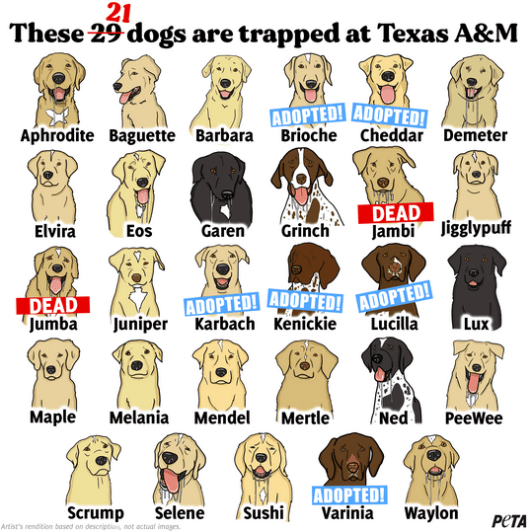
Under pressure from PETA supporters, the laboratory has released dozens of dogs for adoption and ended its breeding program. But the school continues to warehouse 21 dogs—many of whom are completely healthy—in its barren metal cells.

If you haven’t done so already, please take action to help free them

Urge Texas A&M University to Close Dog Laboratory | PETA

South Korea: Very Positive News To Stop Dog Meat Farms. Korean Government Seeks to Recognize Animals as ‘Living Beings,’ Not ‘Objects’.

WAV Comment – Hats off to all the crew involved in fighting the dog meat campaign in South Korea.  Like live animal transport which we are also fighting and are deeply involved in, we appreciate that these things are never easy to get positive results with.  But, in the end, good always wins over evil, and we see their news as a real positive; it also gives us hope with all our own work – the South Korean Ministry of Justice announced plans recently to amend the civil code to remove animals from the category of ‘property’ and designate a possible third category, in a bid to ensure their basic legal rights.”.  That is excellent news.

We congratulate the team for all their hard work in efforts to change this despicable trade.

Despite things looking more positive with regard the future, it does not mean that campaigning stops; quite the opposite – it must really go on now until victory. 

In the newsletter (link given below at the end of this post), you will find many actions you can continue to take.  Actions which must continue to be taken until this abuse is stopped for once and all.  Please support the fight to get what we now see as a very positive move froward.

Regards Mark

You can view all of our past work in this campaign by visiting:

Search Results for “south korea” – World Animals Voice

BREAKING NEWS

Korean Government seeks to recognize animals as ‘living beings,’ not ‘objects’

Our relentless campaign over the years is starting to pay off👍


The Korea Times reported on March 16, 2021, “ For a country with around 1.5 million pet owners, Korea’s legal framework for animal protection has been considered relatively weak, leading to low public awareness on animal welfare, and lenient punishment for animal cruelty.

A major reason for this, pointed out by many animal rights activists, is because the civil code defines animals as “objects,” not living beings.

Under the current law, animals are regarded as the property of their human owners, something that can be owned, traded and controlled without any of the basic rights that are given to people.  Therefore, animal abusers often face relatively weak punishment proportional to their level of cruelty, as their sentences are based on the Property Damage Law and Animal Protection Law.

But this may change, as the Ministry of Justice announced plans recently to amend the civil code to legally recognize animals as living entities. 

In response to an increasing number of people who perceive companion animals as part of their family, the ministry said that it will remove animals from the category of property and designate a possible third category, in a bid to ensure their basic legal rights.”

Click here to read the Korean Dogs newsletter online:

https://r.newsletter.koreandogs.org/ajmz1godtht7e.html?utm_source=sendinblue&utm_campaign=__BRAND_NEW_Call_for_Action__BREAKING!!!__Korean_Govt_seeks_to_recognize_animals_as_living_beings_not_objects_!_&utm_medium=email


UK / Nigeria: Undercover investigation by UK television shows that Nigerian wet markets operate as normal; and that this is another Covid pandemic waiting to happen. Disturbing Footage.

Nigeria:  Undercover investigation by UK television shows that wet markets operate as normal; and that this is another Covid pandemic waiting to happen. Disturbing footage, as are all wet markets that involve live animals.


https://www.itv.com/news/2021-03-16/its-going-to-happen-again-fears-wet-markets-could-lead-to-another-deadly-disease

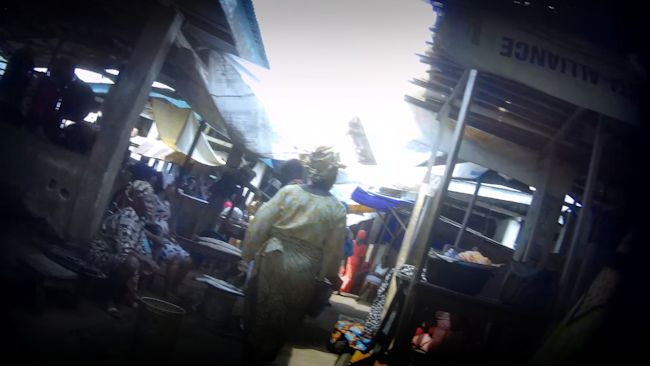
ITV News (UK) has secretly filmed in Oluwo Fish Market, a wet market just outside Lagos, Nigeria’s largest city.

‘It’s going to happen again’: Fears wet markets could lead to another deadly disease

  • Video report by ITV News Correspondent Lucy Watson

Inside the market, ITV News

Oluwo Fish Market teems with life. It is a wet market just outside Lagos, Nigeria’s largest city.

ITV News secretly filmed there – a place awash with animals – alive and dead. Scientists believe wet markets are a breeding ground for disease, a high risk environment, from where the next pandemic could emerge.

The very concept of a “wet market” means the presence of blood and bodily fluids.

It is a marketplace selling fresh meat and fish, as opposed to a “dry market” that sells durable products.

Not all wet markets sell live animals. Not all of them trade in wild and exotic animals, but some do, and some of those have been linked to outbreaks of zoonotic diseases, where an infection crosses the species barrier from animal to human. Exhibit A. Covid-19. The pandemic that allegedly originated at the Huanan Seafood Wholesale Market in Wuhan, China.

Video obtained by both ITV News and the charity WildAtLife shows live crocodiles having their scales removed, pangolins being kicked and abused and dogs boiled alive.

Chinedu Mogbu has rescued many animals from the wet market, ITV News.
Chinedu Mogbu has rescued many animals from the wet market.Credit: ITV News

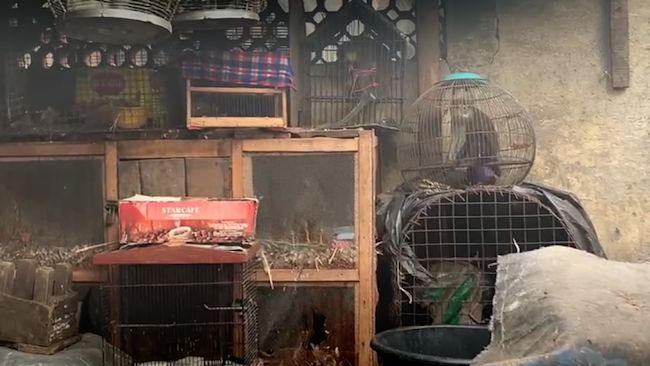
Multiple primates were seen imprisoned in cages, the heads of others were for sale. It was difficult to watch when a baby baboon, trapped inside a birdcage, reached out to the camera grasping for freedom, as a decapitated monkey was sold next to him.

One woman reached into a brown sack and pulled out a pangolin. This species is the most trafficked animal in the world. We could buy it there for less than ten pounds.

The pangolin is a species that has been linked to the COVID-19 outbreak in China. Their scales are of high value in Asia for medicines.


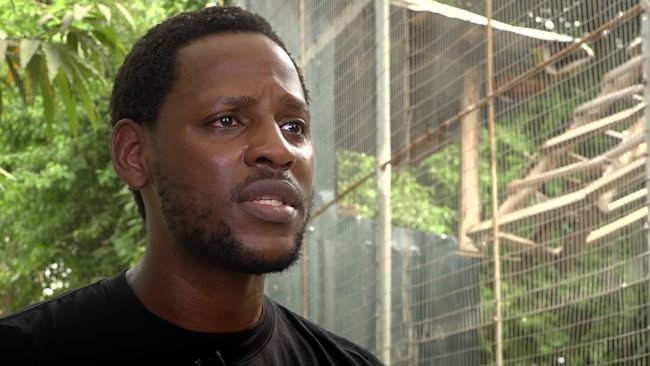
The abuse of animals and the health risks for humans at this market were plain to see. It’s what the conservation group WildAtLife want to expose. Chinedu Mogbu works for them, and has rescued umpteen exotic species from there in recent months.

He said: “Nigeria doesn’t have strong laws to protect its wildlife.

Wet market animal cages
There are fears another zoonotic illness could develop at a wet market.Credit: ITV News

“Anyone can go into the forest, take a pangolin and sell it on the street. The law enforcers are not even aware of the importance or the laws that protect these animals.”

We did notice the presence of Asian buyers at this African market.

Any illicit, international trade would undoubtedly increase the risk of spreading disease around the globe, but Nigerian officials say they are doing enough to prevent that.

Joseph Attah from the Customs Service refused to answer more than one question on the matter though.

This was all he would say: “We have been making a lot of seizures about that, we have been seizing them and we will continue to seize them anytime we see them.”

We know, that despite our allegations, the wet market in Epe continues to thrive. Scientists are concerned that such places pose an unnecessary and high risk.

“Every single animal at a wet market is likely to have an infection,” Malcolm Bennett from the University of Nottingham told me. He is Professor of Zoonotic and Emerging Diseases.

“That general concept of bringing lots of animals and people together, and doing lots of things to them in the same place is a high risk thing to do. It’s not just a biodiversity of animals, it’s a biodiversity of disease. Some of which will spread to us.“

He said unflinchingly, “It is going to happen again.”

There is a high security lab at the university where they are analysing the affects of COVID-19 on cells.

Bringing together animals and people that don’t usually mix increases the risk of new infections, so wet markets are ideal places for cross species transmission and disease amplification.

Other viruses we know of that started out as zoonotic diseases are SARS, MERS, Ebola, even HIV.

Stopping the development of such viruses is impossible, instead we need to mitigate the risks.

In many peoples’ eyes what happens at some wet markets is unhygienic, tortuous and brutal, but in African and Asian nations it isn’t simply a case of shutting them down. There are more issues at play. They have a critical role in social interaction and for different cultures. The Deputy Director of the National Zoo, Aminu Muhammad Beli, explained.

“We cannot close the wet markets because there are certain animals that have cultural attributes to certain tribal groups. We have to devise a way of sustaining the industry,” he said.

His words are perhaps difficult to stomach when you see carcasses lying in the hot sun and live animals being butchered. Regulation and surveillance must increase though, else harmful pathogens will breed.

We just can’t predict where or how destructive they will be.

Regards Mark

Comment – I watched the investigation on UK news yesterday (16/3) – and was informed that some of the UK team rescued some of the animals and released them back into the wild where they belong. Well done ITN.

The Easter lamb – a blood sacrifice of the Christian faith!

He is getting a preview of what is next for him …

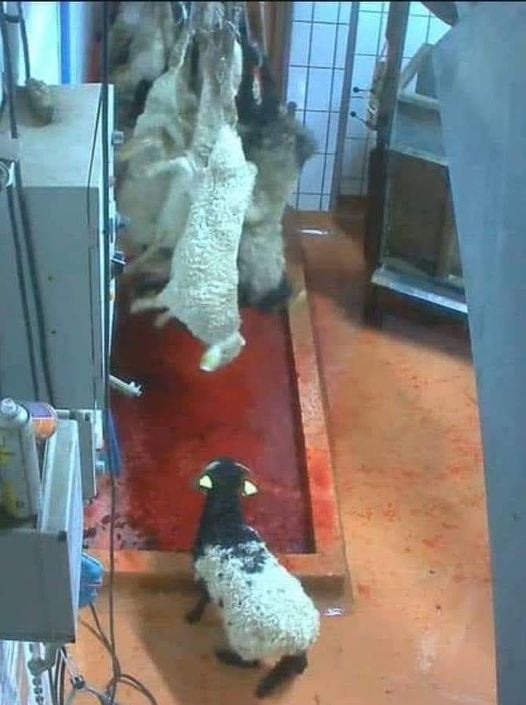
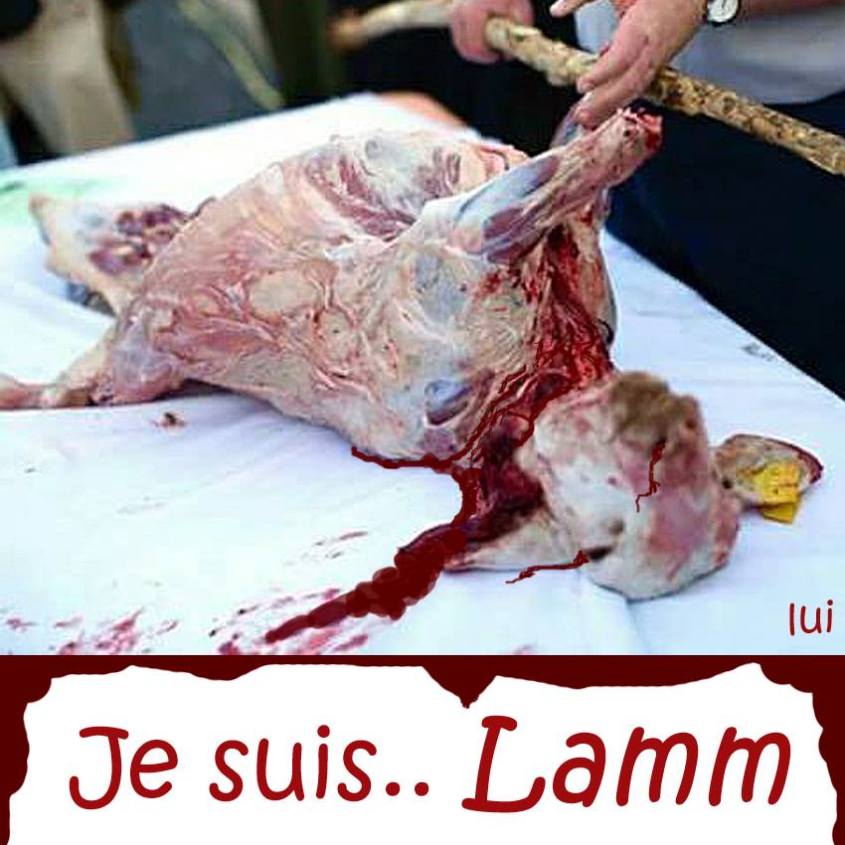
At Easter, not only chocolate bunnies are served, but also lots of eggs, a roast rabbit, or even an Easter lamb. What many are not aware of: Thousands of lambs suffer before the holidays, especially for our enjoyment.

In large parts of Europe, sheep are rarely kept for their wool, because no profit can be made from it, not even from sheep’s milk production.
Lamb, on the other hand, is still considered a delicacy in many places – especially at Easter. The lamb babies are between eight weeks and six months old when they are slaughtered.

As a rule, they have never eaten grass.
Their meat is therefore considered to be particularly tender and low in fat.

In Italy, the demand for the Easter lamb is particularly high. According to the Confederazione Italiana Agricoltori (CIA), the Italian farmers’ association, Italians eat around 260 tons of lamb on the festive days alone, for which several million lambs lose their lives.


The great demand is mainly due to the Christian tradition, in which the Easter lamb is a symbol for Jesus Christ and his resurrection.

For the History: Jesus voluntarily sacrificed himself for the sins of mankind.
For the truth: Nobody asks the lamb, we just kill it.

The right to life should be taken for granted. For all living beings
Therefore: Let animals out of your plate! A tortured animal is an involuntary sacrifice and its suffering cannot justify any tradition or religious belief

My best regards to all, Venus