
karma has hereby expressed itself clearly but it has not gotten better, rather the opposite.
Meat consumption is increasing
Apparently, a large part of humanity doesn’t even use its natural brain for its own good …
Have a nice day, Venus
karma has hereby expressed itself clearly but it has not gotten better, rather the opposite.
Meat consumption is increasing
Apparently, a large part of humanity doesn’t even use its natural brain for its own good …
Have a nice day, Venus
Germany, Brazil, and the Portuguese EU Council Presidency are pushing for the trade agreement to be concluded quickly.
We have to prevent that!
Greenpeace is working to ensure that the toxic deal does not materialize.
The trade agreement between the EU and the South American Mercosur countries Argentina, Brazil, Paraguay, and Uruguay is about to be concluded.
 The Gran Chaco – stretches across the border region of Argentina, Paraguay, and Bolivia. Nowhere in the world is clearing for the cultivation of soy progressing faster than here for soy planting.
The deal aims to lower tariffs on agricultural products like beef. For these products, more and more rainforest is being destroyed in the Amazon region – often by slash and burn.
The huge biodiversity in the Amazon rainforest and the Pantanal is threatened: jaguars, sloths, and many other animal species are displaced or die in the fires.
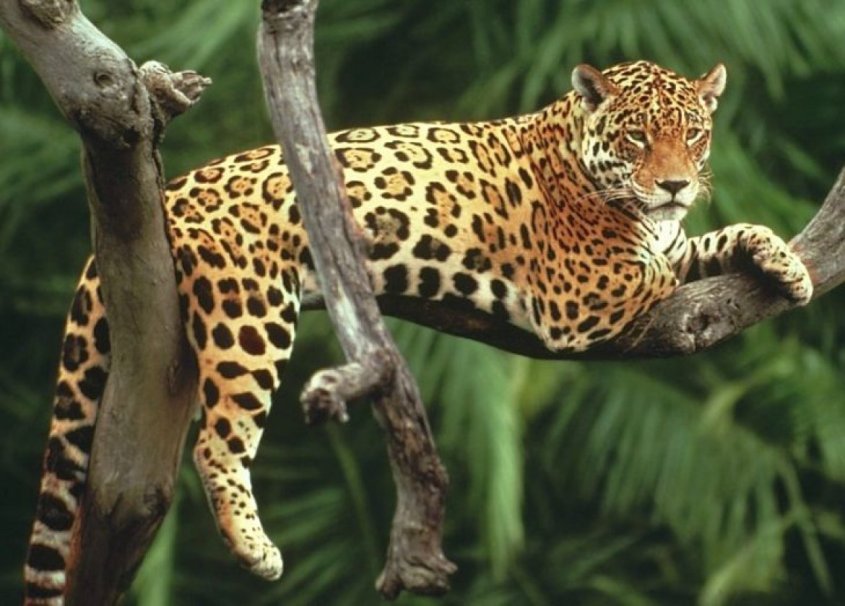 Amazon: Jaguar
Customs duties on pesticides “made in Germany” should also be dropped.
This would deliver even more toxic chemicals to South America that cannot be used in the EU.
There they poison the soil and water and kill plants and animals – and also endanger the health of the people who are exposed to them.
Environmental protection also means wise trade policy !!
Humans destroy and poison important natural areas and CO2 stores.
Unique habitats such as the Amazon rainforest and the Pantanal are at risk, and reckless policies give land robbers additional encouragement.
As a result, more fires are burning in Brazil than there have been for years. The intensive industrial agriculture depends on the drip of pesticides, the massive use of these poisons leaves its mark on people and the environment.
We are destroying our best allies against the climate crisis – the last primeval forests on earth and poisoning the habitat for all living beings.
 Amazon
Consistent nature conservation and the expansion of protected areas are life insurance for people and animals. Because the well-being of humans is linked to the well-being of other living beings and entire ecosystems.
We have to see ourselves as part of nature instead of continuing to destroy it!
International trade must focus on people and nature – and not on corporate profits. If EU-Mercosur cuts tariffs on agricultural products such as beef and poultry as well as pesticides and cars, the agreement will further fuel the destruction of nature and the climate crisis.
That mustn’t happen! Greenpeace is therefore working to ensure that the deal does not come about.
Please help too and sign our petition!
https://act.greenpeace.de/eumercosur-ma
And I mean…The EU has been negotiating with Mercosur for twenty years, with no result. And now, with Bolsonaro of all people, everything suddenly happened very quickly. Chancellor Merkel in particular has pushed for this quick deal.
European cars, that is, industrial goods, against South American beef, poultry, and raw material
That is essentially what was agreed with the deal.
Business is business and the rules of capitalism do not include the protection of the environment, the climate, and human rights.
This leaves Bolsonaro’s devastating policies on the Mercosur deal with no consequences.
It’s fatal.
Europe must not look the other way when human rights, the environment, and the climate are trampled on. We have to pull the emergency brake and stop the conclusion of the EU-Mercosur agreement in this form.
We, therefore, urge the Federal Government and the EU Commission: No “keep it up” !!
Stop working on the current EU trade agreement with Mercosur.

Please sign and share the petition.
My best regards to all, Venus
During our campaigns in the Southern Ocean, our crews often had nice encounters with penguins.
They are definitely one of our favorites among flightless birds.
But the idyllic images are often deceptive – unfortunately penguins don’t have it easy either: climate change, overfishing, and the destruction of their habitats are affecting penguin populations all over the world.
There are 18 species in the world and in the video you will meet some representatives who we have already run into during our missions.
(Text on the Video): there are 18 different species of penguins some are small and some are large
they cannot fly
but are very good swimmers
and very good at waddling
we fight to protect the penguins
and all marine life
And I mean…Every year on April 25th is World Penguin Day.
It is therefore important to remember the day because it should draw attention to the fact that litter in the oceans and climate change are a threat to animals.
These sea birds are critically endangered.
Because the warming of the earth causes the sea ice to decline, the penguins find fewer and fewer krill, the small crustaceans that they mainly feed on.
Plastic garbage – the garbage from human animals – causes them – like all marine animals – great difficulties.
Humboldt penguins are among the most threatened species. Twice as many of them now live in zoos and animal parks as in the wild.
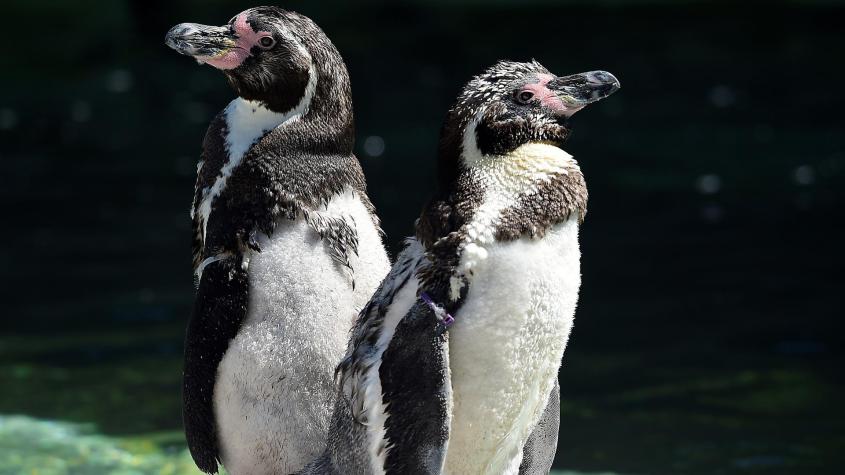 Humboldt penguins
By the way, not all penguins are the same.
Because of ice: not every penguin feels comfortable there, according to the WWF. Some species live in warmer regions, such as the little penguins in Australia.
 penguins in Australia.
Penguins can withstand up to -70 degrees. Their water-repellent feathers and the layer of fat protect them from cooling down.
Penguins are considered monogamous and loyal.
We love these wonderful animals and want to continue fighting against the loss of their habitat.
My best regards to all, Venus
If you’ve ever been to a zoo and seen polar bears swimming in circles compulsively for hours, or seen tigers pacing back and forth endlessly, or elephants swaying back and forth rhythmically, all with a blank look in their eyes, you’ve witnessed an animal suffering from zoochosis.
There are people who argue that animals are happy in zoos, or are at least content. Are they? Keep reading to learn about zoochosis and what it tells us about the degree to which captive animals suffer.
Read on to discover:
What Is Zoochosis?
What are the Signs of Zoochosis?
What Causes Zoochosis?
Is Zoochosis a Sign of Suffering?
Is Zoochosis a Disease?
How Many Animals Get Zoochosis?
If I Don’t See Signs of Zoochosis, Does That Mean Everything is OK?
How Can We Prevent Zoochosis?
Zoochosis is a form of psychosis that develops in animals held captive in zoos. Most often, it manifests in what are called stereotypic behaviors, or stereotypies, which are often monotonous, obsessive, repetitive actions that serve no purpose. Stated plainly, zoochosis is mental anguish made visible by abnormal behavior, and it’s a common indicator of poor welfare.
Animals evolved in the wild, where they could roam freely, interact socially, problem solve, and in general live a rich sensory life. Captivity, whether in zoos, circuses, aquariums, or elsewhere, denies them all of this and more. As a result, animals suffer.
Crucially, stereotypical behaviors do not occur in the wild, but are exclusively seen in animals held in captivity.
Thousands of different species are kept in zoos, and each one has specific physical and psychological needs that can never be met in captivity, even with the best husbandry practices. The most common stereotypies seen in captive animals can depend on species, and individuals, but often include:
Yes.
According to Wikipedia, “A disease is a particular abnormal condition that negatively affects the structure or function of all or part of an organism, and that is not due to any immediate external injury.” This definition is inclusive of both bodily and mental disorders.
That said, zoochosis is not a disease in the sense of an abnormal condition that stems from within, such as from one’s own body getting sick. Zoochosis is instead a disease that stems from outside forces, from the extreme sensory deprivation that zoos and other forms of captivity impose upon animals.
Zoochosis is a mental disorder that manifests in abnormal, and often unhealthy, physical behaviors. It is largely, though not necessarily exclusively, caused by psychological factors induced by physical captivity and sensory deprivation.
That said, many animals held captive in zoos are the product of breeding programs that result in inbreeding and loss of genetic diversity. So it is certainly possible that in some cases — though certainly not all — there is a biological component to zoochosis.
We don’t know.
As with all mental conditions, zoochosis is surely suffered to varying degrees by different individuals in different circumstances. In addition, zoochosis manifests in different ways across different individuals and different species. In some animals it may not be noticed by humans at all. So we cannot determine precisely how many animals in captivity suffer from severe mental illness.
There are 240 zoos in 13 countries accredited by the Association of Zoos and Aquariums, with 217 being in the U.S. alone. Collectively, they confine 800,000 animals from 6,000 different species, and that’s still only part of the picture globally, which doesn’t even account for roadside zoos, private possession, or other settings for captive animals, such as agriculture and research.
Accordingly, it is safe to assume that there are many millions, if not billions, of animals worldwide who are held in captivity and live lives of mental anguish.
No!
Perhaps you have known someone in your own life who is suffering inside but bottles up all their emotions. Research is clear that this happens in nonhuman animals, too.
If someone looks sick in a way we recognize, we assume they are not well. But when we see an elephant or a bear in captivity swaying incessantly back and forth, most of us don’t understand how and why they are suffering.
How Can We Prevent Zoochosis?
Do not keep animals in captivity. It is as simple as that.
If you have to keep the animal locked up to prevent them from escaping, that animal is held captive.
With the exception of real sanctuaries accredited by the Global Federation of Animal Sanctuaries (GFAS), and cases of urgently needed medical care, it is a safe bet that captive animals everywhere are being held captive for the benefit of their human captors, not the animals themselves, and exceptionally rarely, “for the benefit of the species” at extreme cost to the individuals.
Animals, just like us human animals, want to be free. They do not want to live their lives behind bars any more than we do.
Click here to donate:
Regards Mark


Inhumane Treatment of Bua Noi & Primates in Pata Zoo
Pata Zoo license comes up for renewal this month June 2020 It must not be renewed ! For years animal activists have been raising issues on the inhumane treatment of Bua Noi in Pata Zoo a privately owned zoo located on top of a department store Pata Pinklao in Thailand.
An offer from The Aspinall Foundation of moving Bua Noi to a Sanctuary facility. They have the experience and capacity to facilitate it and can fund the transfer at no cost to the owner Mr. Kanit Sermsirimongkol.
They’ve been running gorilla rescue and release programmes in the neighbouring Republics of Congo and Gabon for over 35 years, and have released over 70 gorillas during this time.
Such a transfer would have significant welfare benefits for Bua Noi, and sends a powerful message about protecting wildlife and habitats in the countries of origin.
Bua Noi has been held in a department store since 1987 that’s 33 years of suffering in captivity, how she was brought into Thailand is questionable the paperwork doesn’t add up she could have possibly been a fallen victim of wildlife trafficking.
• In March 2015, it was reported that Thai authorities charged Pata Zoo for breaking several laws and ordered the removal of all large animals (sadly NOTHING HAS HAPPENDED!!!! )
Then the DNP responded by declaring it could not withdraw the licence of Pata Zoo as the zoo had not done anything against the law. The DNP director-general argued that the Wildlife Conservation and Protection Act did not forbid animals from being caged in high-rise buildings and, therefore, Pata Zoo did not violate the law by maintaining a zoo on top of a building
Having reviewed the Cruelty Prevention and Welfare of Animal Act states (B.E. 2557 (2014) Section 3 states “Cruelty” means an act or a failure to act which causes an animal to suffer, physically or mentally, or causes an animal to suffer from pain.
The conditions Bua and other primates are forced to live in
• Small Spaces
• Barren Concrete and steel cells (outdated)
• No natural environment (no sun, no grass , no plants, no soil )
• Suffering mentally
• Isolation
Just this year in April 2020 a fire broke out in the zoo , to think of the mental state of the animals during this horrifying time! This should have prompted the government to shut the zoo down it’s unsafe the zoo and the building is old and dilapidated
The zoo is currently on lock down with the rest of the world due to the pandemic and the effects are taking it’s toll to humans, imagine Bua Noi the last gorilla in Thailand living in complete isolation .
This is the time the government must look at this issue with compassion and recognize that there is no conservation in allowing Bua Noi continued suffering !
Please Sign her petition Pata Zoo license must not be renewed to learn more about her story and other primates watch Stolen Apes .
How can we allow this type of suffering to continue ?
Please support the petition;
Regards Mark
Conservation organisations purchase 950 sq km biodiversity hotspot, helping to secure a vital wildlife corrido
“These logs are historic,” says Elma Kay, standing in Belize Maya Forest, where she has been doing an inventory of felled trees. “These are the last logs that were cut here, for mahogany and other hardwoods, left behind by the previous logging company.”
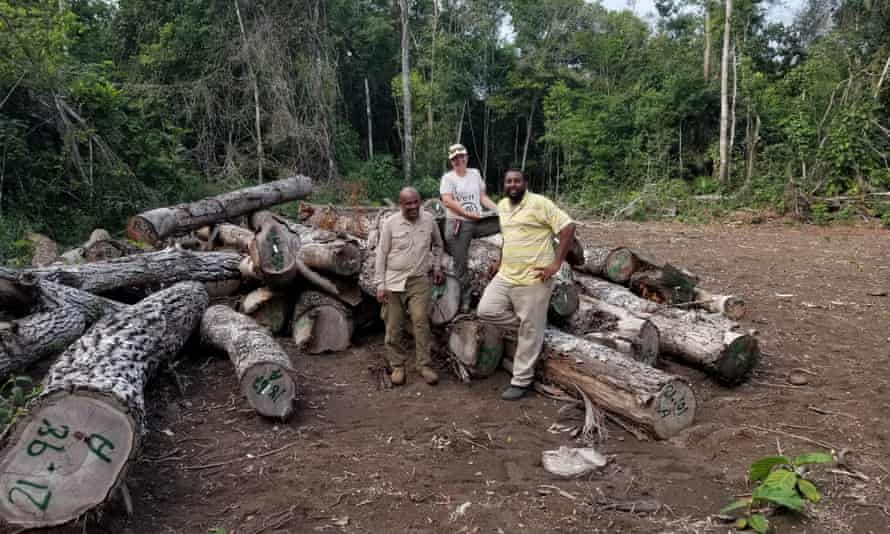
“These logs are historic,” says Elma Kay, standing in Belize Maya Forest, where she has been doing an inventory of felled trees. “These are the last logs that were cut here, for mahogany and other hardwoods, left behind by the previous logging company.”
Trees will no longer be cut down in this 950 sq km (236,000-acre) area, after the land was bought by a coalition of conservation organisations to save one of the world’s last pristine rainforests from deforestation. “The forest will now be protected in perpetuity,” says Kay.
The news is timed to coincide with Earth Day, the annual event established in 1970 to mobilise action on environmental issues.
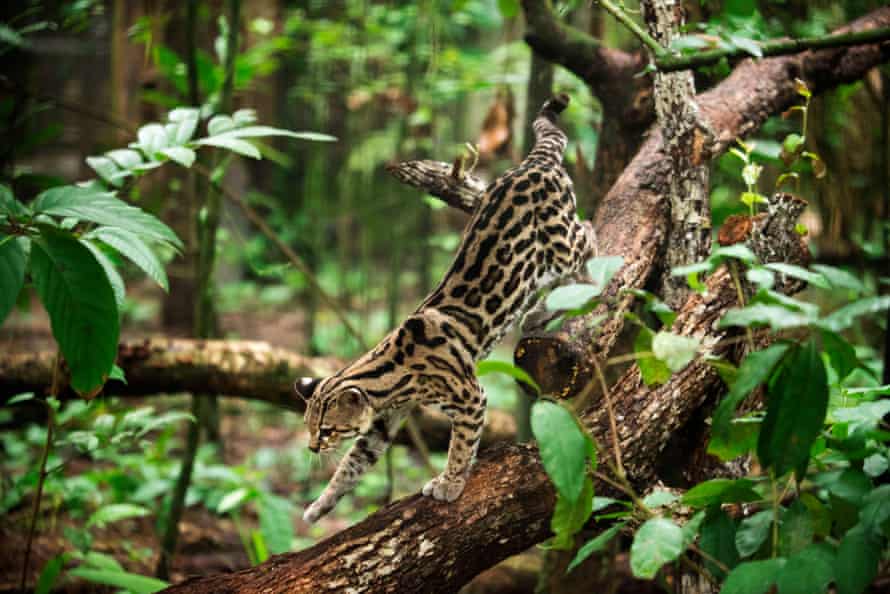
The newly named Belize Maya Forest is part of 150,000 sq km (38m acres) of tropical forest across Mexico, Belize and Guatemala known as the Selva Maya, a biodiversity hotspot and home to five species of wild cat (jaguars, margay, ocelot, jaguarundi and puma), spider monkeys, howler monkeys and hundreds of bird species.
This means we get to safeguard our biodiversity, from iconic jaguars to endangered tapirs
Elma Kay, Belize Maya Forest Trust
“The minute you start driving through the forest, it’s teeming with biodiversity,” says Kay, one of the directors of the locally run Belize Maya Forest Trust. “I can’t tell you how many ocellated turkeys we saw on the drive in – more than 50. For Belizeans, this forest means we get to safeguard our biodiversity – from iconic jaguars to critically endangered Central American river turtles to endangered tapirs – which is the lifeblood of our economy and our cultural heritage.”
Combined with the adjacent Rio Bravo Reserve, Belize Maya Forest creates a protected area that covers 9% of Belize’s landmass, a critical “puzzle piece” in the Selva Maya forest region, helping secure a vital wildlife corridor across northern Guatemala, southern Mexico and Belize.
Protecting large areas of pristine rainforests will help mitigate the impacts of the climate crisis. “Forests like these hold vast amounts of carbon,” says Julie Robinson, Belize programme director for the Nature Conservancy, one of the partners behind the acquisition. “We’re at a tipping point, so it’s really important to try to reverse the trend we’re on.”
The area was owned by the Forestland Group, a US company that had permits for sustainable logging. When it came up for sale, the Nature Conservancy and others, including Rainforest Trust, World Land Trust, University of Belize Environmental Research Institute and Wildlife Conservation Society, saw an opportunity to buy the land.
“If it wasn’t bought for conservation, the most likely buyers would be for large-scale, industrial, mechanised, monocrop agriculture,” Kay says. “That’s the threat to forests in Belize, especially central Belize, the country’s agricultural belt. What we saved this land from is full-scale deforestation and conversion.”
Since 2011, the Maya Forest corridor, which connects Belize’s Maya mountains and the northern Maya lowland forests shared by Belize, Mexico and Guatemala, has faced high rates of deforestation, driven by land clearances for industrial-scale agriculture. “For decades, the Belize government, Belizeans and conservation organisations wanted to see this area protected,” says Robinson.
Despite the name, Mayans, whose civilisation once stretched across Belize, Guatemala and parts of Mexico, have not lived in the area for many years. Today, their descendants in Belize mainly live in the south. According to Robinson, indigenous peoples were not displaced to make way for industry, as has happened elsewhere in Latin America, but the private land was closed off. “At the time of the Forestland Group’s purchase, there were no people living on the property,” says Robinson. “However, there are local communities all around the property. They didn’t have access to the land.”
Belizeans have an incredible connection to nature. We refer to our country as the ‘jewel’
Julie Robinson, the Nature Conservancy
“There are archaeological sites on the property that date back to AD800,” Robinson adds. “There are also more than 25 cenotes [fresh water sinkholes], the sacred pools of Cara Blanca, which hold incredible Mayan treasures. Very few Belizeans have ever been to these areas. Those cenotes were also being threatened by agriculture. Culturally, it’s important to preserve those elements to reconnect Mayan communities to sacred sites, and also find ways of generating income through them for the communities and the country.”
Now the land has been acquired, Kay is leading the Belize Maya Forest Trust’s consultation process with local communities. Collaborative plans are likely to include low-impact eco-tourism. There may also be some sustainable agriculture, as well as scientific research. The only thing not on the table is the extraction of natural resources, such as timber.
“What surrounds Belize Maya Forest is a multi-ethnic society, including people like me, of mixed Mayan and European descent, and people from neighbouring Central American countries, German Mennonites,” says Kay. “We’re engaging all the different communities to participate in a conservation action plan. Most livelihoods are based on agriculture. One objective will be making agricultural livelihoods more sustainable, so there will be more climate-smart agriculture, agroforestry systems, systems that are restorative for soils.
“We recognise people need to make a livelihood, but it’s about doing that with values that protect the Maya Forest and safeguard it for all Belizeans.”
As the world’s climate and biodiversity crises worsen, philanthropic buying of land for protection could become more common. “It’s absolutely the way forward,” argues Robinson. “But it’s important to do it in collaboration with communities. It can’t be that we just buy a property, lock it up and say ‘this is now protected’. That’s not going to work.”
Belize has launched several initiatives in recent years to protect its natural resources. In 2018, oil drilling off its coast was banned to safeguard marine environments and the lucrative diving industry. Nearly 40% of the country’s land mass is also under some form of protection. “Belizeans have an incredible connection to nature,” says Robinson. “We refer to our country as the ‘jewel’.”
But the government’s environmental policies are also pragmatic, based on the value nature brings, from food and water supplies to tourism, one of the country’s largest generators of income. “People realise we need to have biodiversity and nature, but we need to use it in a sustainable way,” says Robinson. “Development is absolutely important. Belizeans support development and agriculture, but in a way that is in balance with nature”.
Regards Mark
The organization SOKO animal protection and the magazine “DER SPIEGEL” reveal:
The German Nature Conservation Association # NABU # supplied the University of Tübingen with crows for experiments in which electrodes were operated on in the brain.
Their heads were drilled open, they were locked up, tied up, and all to find out how intelligent the birds are and what goes on in the crows’ brains as they learn.
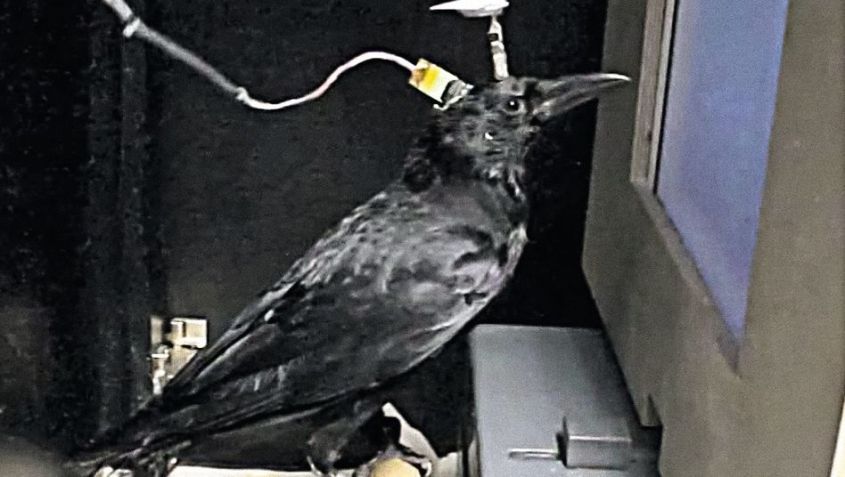 Carrion crows in the laboratory of the University of Tübingen
SOKO Tierschutz prepares legal steps against the experiments and the improper use of the animals.
According to a statement from NABU on its homepage, NABU was asked for animals by Prof. Nieder from the University of Tübingen, and these were given to him.
In the meantime, NABU has published a statement on this – nothing was known about these attempts, so the argument goes.
“If the Nature Conservation Federation had been aware of such animal experiments, no carrion crows would have been handed in,” says NABU.
That sounds like washing your hands and trying to cover up.
That cannot be true either, because NABU, which learned the facts months ago, will only come to the public after the report by the magazine “Der Spiegel”.
The Nature Conservation Federation (NABU) claims that they assumed that the carrion crows that were sold would only be used for breeding or for non-invasive behavioral research.
This is a pure farce.
Because at the University of Tübingen horrific animal experiments are carried out.
And NABU must have known that.
And one more thing: Shouldn’t NABU already have a contract from the university back then, in which the protection of animals is specified and guaranteed?
In the meantime, every clear-thinking person should be aware that the German nature conservation association does not practice animal protection, but is playing a dangerous game with the razor blade.
Many people support NABU, financially and voluntarily, in good faith in animal welfare.
Animals lost their lives and with it, the trust of supporters was abused.
P.S: the head of the NABU, the president is a hunter.
Such a union cannot represent the animals!
My best regards to all, Venus
AnimaNaturalis Spain
💔That’s how this poor dog was rescued from a hatchery

Such was the condition of this rescued dog who for years had been forced to “produce” puppies for sale in stores and through individuals.
She was blind, very weak, and her breasts were shattered from breastfeeding all the children that her tormentor later took away
This is what is behind selling puppies. Behind cruel commercial pet breeding.
Don’t be part of it. Adopt, not buy.
Help to abolish this criminal business
My best regards to all, Venus
On April 20, 1985, courageous animal rights activists from “Animal Liberation Front”, ALF broke into the laboratories of the “University of California, Riverside” / USA in a large-scale operation and freed 468 pitiful laboratory animals from this horror cabinet.
For the mainstream press, only the US $ 700,000 allegedly incurred as the damage was worth mentioning; nobody saw the ethical feat of animal liberation in this empathic commando action, or better yet, nobody wanted to see it.
One of these poor creatures was “Britches”, a 1-month-old stubby macaque.
The little monkey was painfully separated from its mother when it was born.
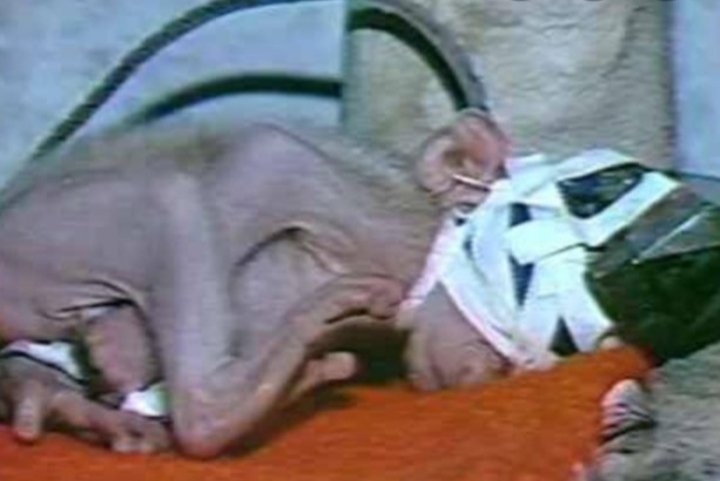
A terrible human fate was destined for him.
Experiments on the baby were carried out in the cold, blood-stained laboratories of the University of California.
The attempts were barbaric and diabolical.
The innocent creature’s eyelids were sewn shut and an electronic sonar sensor was planted in its tiny, fragile skull, as part of a 3-year experiment in which many other animals were also horribly tortured.
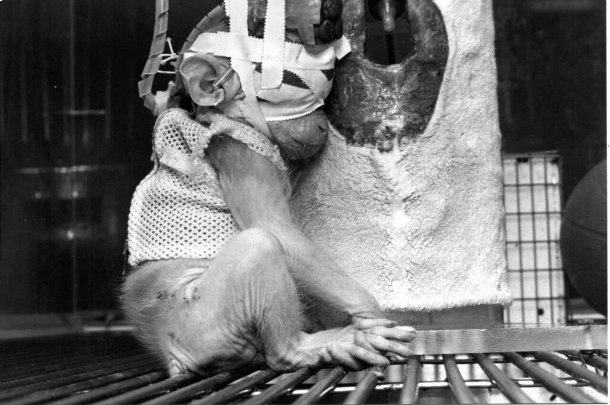
These useless experiments were intended to explore the behavior and neural development of monkeys under manipulated circumstances.
ALF freed the little guy and 467 of his fellow sufferers.
They brought “Britches” to a veterinarian who opened the animal’s eyelids again and gave him back his eyesight.
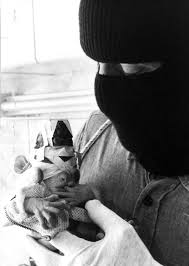
He was also able to remove the devil’s apparatus from his brain without a trace.
“Britches” recovered from his ordeal and was given a life on a grace ward.
There the bright and cheerful monkey was 20 years old despite his trauma until he finally died.
This video shows the monumental liberation of Britches:
Millions of other living beings, unfortunately, do not have the luck of the little “Britch” to be freed and saved by the “Animal Liberation Front” every year.
In the name of a pseudo-science that only serves the career or the sadism of the experimenters, they have to endure unimaginable torments in order to mostly endure a cruel death in the end.
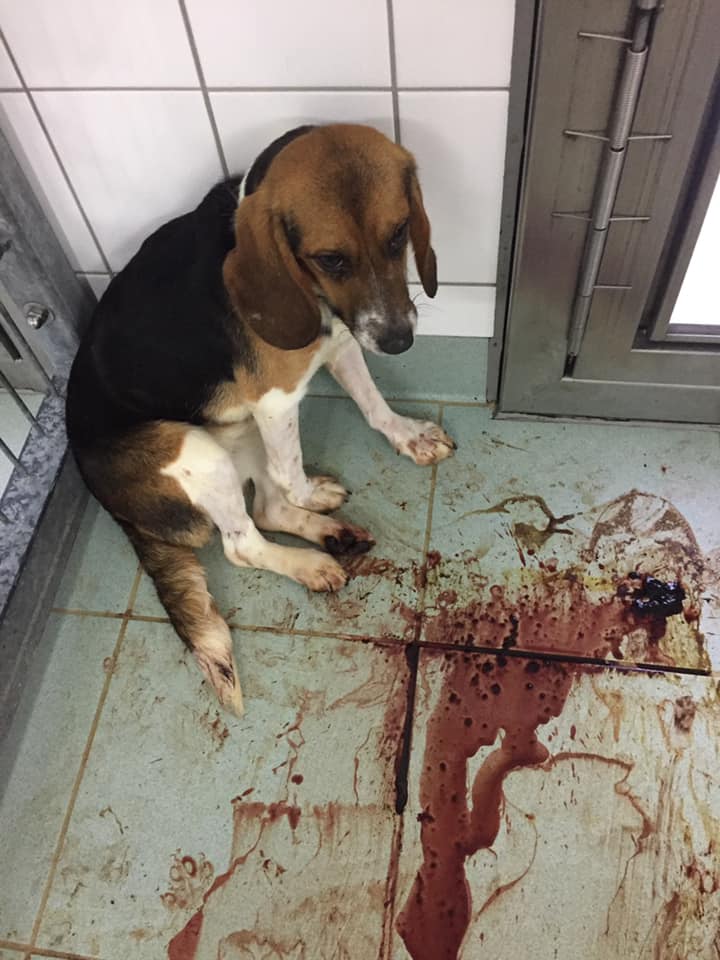
The handling of “laboratory animals” is criminal: they are drowned or suffocated in the name of science,
they are starved to death,
they are amputated,
their organs are crushed, burned,
they are irradiated in experimental surgery they are consumed,
put under shock,
isolated from their conspecifics, exposed to weapons of mass destruction,
blinded,
contracted with cancer, or paralyzed,
they have to inhale nicotine, drink alcohol, or use drugs such as heroin and cocaine.
We also want to commemorate all the victims who found, find, and unfortunately will find the tragic and senseless death for.
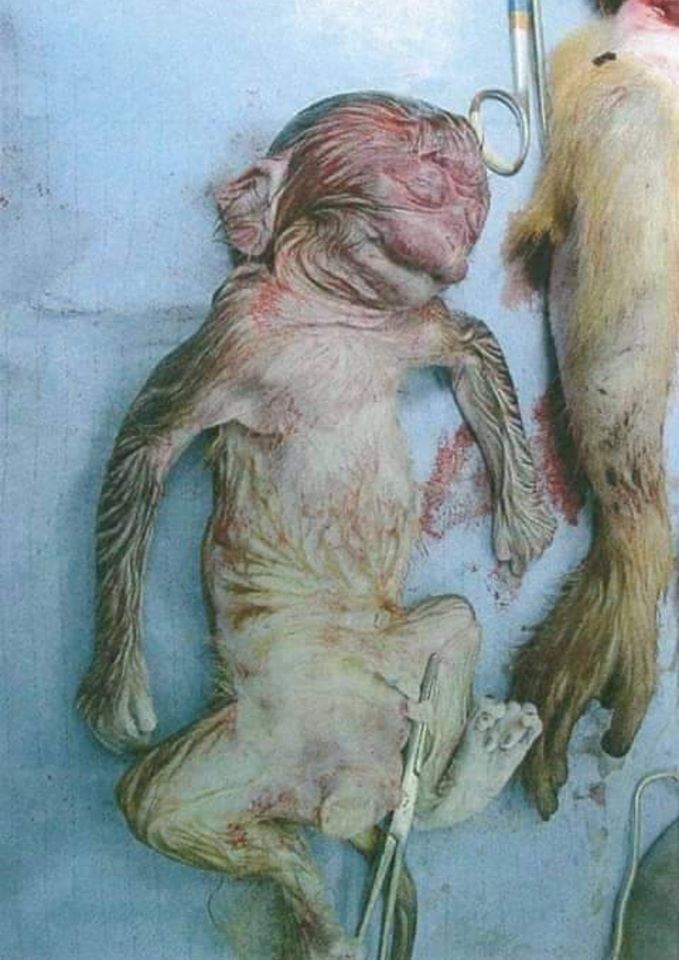
The fact that this violence is legally protected and, in the case of animal experiments, even socially accepted, makes the criminal researchers even more uninhibited and the laboratory into a law-free zone
And then it is said that animal rights activists are violent!!
Unless serious steps are taken to put an end to all of this, there will always be animal rights activists who will resort to violence against the exploiters somewhere and at some point in order to defend animal rights.
Thanks to ALF and all active animal rights activists for every animal rescued
Their selfless work is important and right because no creature on earth deserves to be abused and exploited by megalomaniac scientists in “Frankenstein’s laboratory” as a test object.
We thank them, and we fight with those in our way, everyone as he can, against the fascist system of exploitation of animals on every level.
My best regards to all, Venus
• 01.03.2020
This investigation was carried out at the breeding facility and the pig slaughterhouse at Kibbutz Lahav
** New Covert Investigation 2020 **
This investigation was carried out at the breeding facility and the pig slaughterhouse at Kibbutz Lahav
Operating for about 60 years!
This historical record tells the reality in which the pigs live
And the variety of practices and experiences they go through to the last day of their lives.
Feel free to watch and learn about this industry
And of course anyone interested in making a change
And stop eating animals
Text and source: Glass Walls-https://www.facebook.com/Glass-Walls-1656635714569806/
And I mean…On the internet, we read …
The 10 best countries for vegans and vegetarians
India
Israel
Taiwan
Australia
Greece
Italy
Indonesia
Jamaica
Poland
Canada
we read on …”When it comes to pure vegan food, Israel could also be at the top. There is the highest per capita rate of vegans in the world and there are more and more.
Accordingly, the selection of vegan food and vegan restaurants is huge. As in other countries in the Middle East, falafel, hummus, couscous, and tabouli are part of everyday life and are vegan anyway”
On Facebook, we also read from Yair Netanyahu, son of the country’s president:
“Have mercy on animals! Please don’t eat meat! 🐄🐐🐓גלו רחמים כלפי בעלי החיים! בבקשה אל תאכלו בשר!”
Most of the people in the country don’t know about such crimes or they just don’t care.
There are about 200,000 pigs on the land of the State of Israel killed for the pork industry in the same or a similar way.
Of course, German investments also show similar situations at German slaughterhouses.
But Germany is not even in eleventh place among the vegan countries.
And apart from that! The fact that the same animal torture happens elsewhere does not make the bad conditions in this country any better.
India, too, the first country on the list, is not on the right track and is becoming more and more capitalist and therefore worse and worse.
But Israel has received much praise from many media and animal welfare websites for the allegedly increased vegan awareness of the Israelis and is very often reported on the latest developments in animal welfare in the country
Apparently, it is purely media and travel- industry propaganda. This is how media propaganda works.
P.S: Following this investigation, a criminal complaint has been filed into the location.
My best regards to all, Venus
 World Animals Voice