Month: April 2021

“Compassion is the basis of all morals” (A. Schopenhauer)

Speciesism demands a strict separation between humans and animals. He demands special solidarity with all members of our species.

He assumes that all people have the same value (egalitarianism).

In our society, this is even called a humanistic attitude.
The result is the categorical devaluation of all non-human living beings.

This violent ideology is arbitrary and unfounded like the attitude of a despot who believes that his special power over other living beings also gives him special rights.

All species must have the right to life, freedom, integrity, and protection. Only then is it a right and not a privilege of the ruler.

Fight for basic rights for all feeling, thinking individuals.

regards and good night, Venus

EU: The EU-Mercosur trade agreement will fuel intensive farming.

The EU-Mercosur trade agreement will fuel intensive farming

14 April 2021

WAV Comment – find out more about the agreement by clicking on this link:

https://ec.europa.eu/trade/policy/in-focus/eu-mercosur-association-agreement/index_en.htm

The European Union and Mercosur states – Argentina, Brazil Paraguay and Uruguay – reached a political agreement for an ambitious, balanced and comprehensive trade agreement.

Nearly two years after the end of the EU-Mercosur trade negotiations, the European Commission finally published the related final Sustainability Impact Assessment (SIA), which confirms the findings of the draft SIA published in July 2020: if ratified as it stands, the agreement will fuel intensive farming, which is detrimental to animals, people, and the environment.

This SIA was released as the ratification of the EU-Mercosur agreement is for now uncertain due to the various concerns raised by civil society organisations. The European Parliament and several Member States, including Austria and France, have pledged not to ratify the deal “as it stands”, mainly because of the significant negative impact the deal will have on deforestation. 

In this context, the SIA tries to defuse some of these concerns by downplaying the impact the deal will have on the expansion of agriculture, and therefore on deforestation. Indeed, the SIA recognises that, in the beef sector, “EU  imports  from  Mercosur  will  increase  in  both  scenarios  (…) but that most of  the deforested  area  is  used  for  low-efficiency  cattle ranching”. Hence,  the SIA suggests that “there  is  great scope  for  expanding  production  by  intensifying  beef  production  in  these  areas  without  inducing deforestation”. However, fuelling the intensification of animal farming is extremely detrimental to animal welfare, but also to people and to the environment as intensive farms often not only rely on crop-based feed, whose production fuels deforestation, but also generates high levels of air, ground and water pollution.  Furthermore, the SIA seems to ignore that, according to a research by Global Forest Watch, the impact of the beef sector on deforestation is five times higher than any other industry, and deforestation rates are increasing worldwide. For instance, in Brazil alone, over half of the country’s deforestation over the last twenty years came from the beef sector, mainly due to the conversion of forests into cattle pasture. As a reminder, the Ambec report – the impact study commissioned by the French government – concluded that, as it stands, the EU-Mercosur agreement would generate an extra 25% of deforestation in the six years following its entry into force. 

The SIA also draws worrying conclusions concerning the Trade and Sustainable Development (TSD) chapter. It recognises that the potential  impact of  TSD provisions are uncertain,  “insofar  as  they  remain  contingent upon  implementation  in  good  faith  of  all  parties”. The decentralisation  of  environmental  regulation in  key countries like Brazil  can  increase this uncertainty. Hence, the environmental concerns are not likely to be addressed unless there is unilateral EU legislation guaranteeing imported products are deforestation-free, or that EU standards, including  animal welfare standards, apply to imported products.   

We regret the late publication of this SIA, which according to the Commission’s own policy, should have contributed to discussions during the negotiations of the agreement. It is worth noting that the European Ombudsman found that:

“the failure of the European Commission to ensure the finalisation of the sustainability impact assessment before the end of the EU-Mercosur trade negotiations constitutes maladministration” and “risks weakening European and national parliaments’ ability to comprehensively debate the trade agreement”

The European Commission also published a Position Paper commenting on the main findings of the SIA report, but it does not not mention any strategy to address the underlined shortcomings or any next step to be taken. For instance, on the beef sector, it supports intensification of the production, regardless of the very negative impact it would have on animal welfare, public health and the environment. Instead of endorsing intensive farming, which is the main driver of deforestation in the Amazon forest, the European Commission should acknowledge that addressing deforestation cannot depend solely on the political will of EU and Mercosur countries, given the economic weight of the beef sector in Mercosur, and the constant imports of beef and soy from the EU.

We  thus call on the EU to uphold the objectives of the Farm to Fork Strategy, which are to use trade policy “to obtain ambitious commitments” from partners in key areas such as animal welfare, and to take this opportunity to negotiate the adoption by Mercosur countries of EU-equivalent legal standards in key sectors (cattle, broiler chicken, laying hens), as well as in terms of transport, or to agree on conditions on animal welfare and sustainability to access tariff-rate quotas or liberalisation in animal products, including the respect of EU-equivalent animal welfare standards. 

https://www.eurogroupforanimals.org/news/eu-mercosur-trade-agreement-will-fuel-intensive-farming

Regards Mark

CIWF London: 15/4/21 – Time to End the Cage Age – a ban on cages for farmed animals receives overwhelming support at EU Parliament hearing.

Photos – CIWF.

Time to End the Cage Age – a ban on cages for farmed animals receives overwhelming support at EU Parliament hearing

15 April 2021

CIWF

Press Release

Today (15th April 2021), the European Parliament held a three-hour public hearing on the End the Cage Age European Citizens’ Initiative (ECI), which was warmly welcomed by the three European Commissioners present during the debate. A large number of Members of the European Parliament (MEPs) made interventions and, overall, the ECI received overwhelming support.

The End the Cage Age ECI calls on the EU to phase out the use of cages in animal farming. Today’s public hearing was a milestone for the ECI in the run-up to the official response from the European Commission, expected in the next few months.

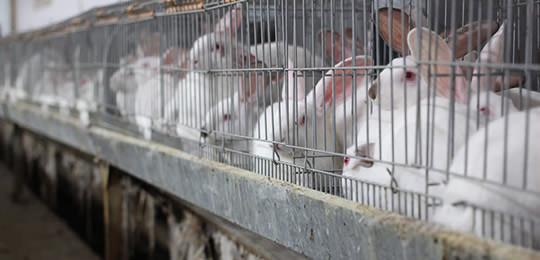
The EU claims to be a leader in animal welfare, yet every year it condemns more than 300 million farmed animals to lives of misery in cramped cages. This medieval practice is cruel and completely unnecessary since viable cage-free systems not only exist but are also in use in some parts of the EU. A number of pioneering Member States and businesses have led the way in ditching cages. Now it is time for the rest of the EU to catch up. In line with the ambitions of the European Green Deal and Farm to Fork strategy, we call on the European Commission to propose a phase-out of cages in farming through a revision of the 1998 Directive on the protection of farmed animals.

Reineke Hameleers, CEO, Eurogroup for Animals

MEP Norbert Lins, Chair of the Committee on Agriculture and Rural Development (Group of the European People’s Party, Germany) concluded at the hearing that “most speakers welcomed this initiative” and noted that “the ball is now in the Commission’s court.”

Before the hearing, on 13th April, EU citizens and Non-Governmental Organisations (NGOs) rallied behind the End the Cage Age ECI Initiative on Twitter, encouraging MEPs to support the ECI during the public hearing. A total of 35.000 tweets were sent, reaching a potential number of more than 3,7 million views, making public support for the ECI undeniable.

The End the Cage Age ECI launched on 11th September 2018 and closed exactly a year later. With 1.4 million verified signatures from citizens across the EU, it became the first successful ECI in farmed animal welfare.

Bo Algers, Professor Emeritus at the Swedish University of Agricultural Sciences, said: “EU law for farmed animals is incredibly outdated. Since 1998, when the EU adopted its Directive on the protection of farmed animals, the output from the animal welfare science has on average been tenfold. Today, we have a much better understanding of how physical, physiological and psychological factors relate to animal welfare. A wide range of species-specific ethological needs are not, or cannot be, provided in a cage, whether enriched or not. It is now crystal clear that cages, due to their inherent physical and behavioural restrictions, cannot provide good welfare, no matter how good the management.”

MEP Eleonora Evi, Vice-President of the Animal Welfare Intergroup and co-chair of its cage-free working group, said: “Today’s public hearing marked another fundamental step towards the objective of a cage-free Europe. Together with many like-minded MEPs, we gave a voice to the over 300 million animals that every year, in the EU alone, spend all, or a significant part, of their lives imprisoned in cages. The enormous support received by this European Citizens’ Initiative throughout Europe cannot be ignored by the European Commission, which needs to come forward with a legislative proposal to end the unnecessary cruelty of caged farming as soon as possible, bringing EU farming practices closer to our citizens’ expectations and more aligned with nature and the protection of public health.”

MEP Anja Hazekamp, President of the Animal Welfare Intergroup and co-chair of its cage-free working group, said: “Hundreds of millions of animals in Europe are locked up in cages for farming purposes. These animals have no chance to exercise their natural behaviours and the conditions in which these animals are kept are so bad that their lives become one big agony. Cages are cruel, but also outdated and unnecessary. It’s a milestone that more than 1.4 million citizens have stood up for these animals to put an end to the ‘Cage Age’. We are now looking at the European Commission and the Member States to prove that they take their call seriously, and that they take the European Citizens’ Initiative as a democratic instrument seriously. A legislative proposal to ban the use of cages in agriculture must be put forward without delay.”

Věra Jourovà, Vice-President of the European Commission responsible for Values and Transparency, said during the hearing: “The Initiative is fighting for a cause that is topical in the current public debate to improve animal welfare for farmed animals and to invest in sustainable farming. These are valid objectives, which the Commission has embraced in its political ambitions to design fair, healthy, and environmentally-friendly food systems and which have found their way in the Farm to Fork Strategy adopted in May last year.”

Stella Kyriakides, Health and Food Safety Commissioner, said during the hearing: “We are taking steps to tangible action because, as I have repeatedly stated, animal welfare and animal health are very high on our agenda.” She added: “We are very much aware that we need to do more, and we need to strive for better. And we are absolutely determined to do so. The European Citizens’ Initiative is a timely reminder of that. It is a heartful example also of democracy at its best.”

Janusz Wojciechowski, Agriculture and Rural Development Commissioner, said during the hearing that EU farm subsidies and recovery funds “can also be used in part to phase out caged farming and implement alternative methods”, and added “you have the full support from the European Commission to implement this transformation.”

Ruud Zanders, co-founder of the high animal welfare poultry farm, Kipster, said: “I grew up on my parents’ intensive poultry farm, which ended up going bankrupt in 2007. This made me rethink the model of production we were using. With Kipster, we set off to create the most animal, environment and people-friendly poultry farm on this planet. It turned out to be a golden egg for us, as our business is both profitable and scalable. We do not only want to respond to consumer demands but anticipate change and even set an example in the world that better ways of farming are possible.

The hearing was organised by the European Parliament’s Committee on Agriculture and Rural Development in association with the Committee on Petitions.

The hearing’s programme can be found here

The hearing’s recording can be accessed here.

Regards Mark
the happy face spider from Hawaii

Theridion grallator is a species of spider in the genus Theridion that is found exclusively in Hawaii.
The underside is light yellow and somewhat transparent.

Depending on the food consumed, it can be red, black, and white in color.
T. grallator gets its name from its long, spindly legs (grallator meaning “stilt-walker” in Latin).

It gets the nickname happy-face spider because of the yellow color on most of the body and the patterns on the abdomen.
The pattern is similar to a smiling face.
Therefore the common English name is also “happy face spider”.

This polymorphism could counteract the applicability of their hunters’ prey schemes.
The females live as solitary animals under leaves in forests.
They defend their egg balls aggressively and look after the brood for a while after they hatch.
It can happen that some young animals of the brood are taken in by foster mothers.

They mostly live predatorily and feed mainly on captured arthropods, especially insects that they suck out.
For this purpose, the prey animals are first dissolved with an enzyme-containing digestive juice, which the spider brings into its victim, which has been killed with its jaw claws.

It is absolutely harmless to humans.
Despite its restricted habitat, the Theridion Grallator is not considered endangered according to the IUCN

Text: Together for the animals

Not all happy-face spiders have such striking markings, and some are nearly all orange or all blue.
The Hawaiian name is nananana makakiʻi (face-patterned spider).
In addition to the variety of color polymorphisms present in T. grallator, this spider also demonstrates the interesting quality of diet-induced color change, in which its appearance temporarily changes as it metabolizes various food items.

T. grallator spiders do not utilize webs to capture prey, so they do not follow the sit-and-wait method of web-building spiders. Instead, they will forage freely, often traveling to nearby leaves to capture insects.

During prey capture, T. grallator spiders use their silk.
Common prey include Dolichopodidae and Drosophilidae.

A very likable animal and a splendid specimen of the genus!

My best regards to all, Venus

French hunter schizophrenia

⚠ HARD IMAGES posted on Instagram by a young hunter (since deleted).

https://fb.watch/4SYd73yQAa/

Instead of killing the boar, the hunter lets the dogs come to massacre him alive
We call this sadistic cruelty and is an indication of who has what intellectual level within the hunters…

According to this young man, who presents himself as a high school student in Gironde, “the boar is dead but is still moving because of the nerves”.
Lie or complete ignorance?
We’d say both because hunters aren’t just professional killers; they are professional liars too.

Be that as it may, the hunting lobby is sticking to the trivialization of cruelty among young people:

The minimum age for obtaining a hunting license in France is 16 years (15 years for the accompanying person with a license).

Hunting is a popular sport in France: 1.3 million hunters enjoy great freedom here. They can hunt almost anywhere and during the hunting season on all days of the week.

Hunting accidents, including fatal ones, are one of them.

Thierry Coste | Bild: BR

Thierry Coste is arguably the most influential French hunter. He is a political spokesman for the French Hunters Association. Coste is in regular contact with President Macron because for politicians Coste is a powerful man who knows how the French think in the country.
The hunt is a national good for them.

His political conviction is: “In the past, hunting was a privilege of the nobles, but the French fought for the right to hunt during the revolution.
Everyone has been allowed to hunt since the French Revolution. With us, hunting is not a sport for the rich. It’s democratic. Hunting is a thing of the people. “

And we say: Hunting is and remains murder!
Anyone who operates the murder of a defenseless animal as “sport”, “hobby”, “nature conservation”, “species protection”, “epidemic protection” or “tradition” does not deserve to have their own rights.

My best regards to all, Venus

EU: Banning Caged Farming in the EU: Hearing on the European Citizens’ Initiative.

Image – Unsplash

Banning caged farming in the EU: Hearing on the European Citizens’ Initiative – The European Sting – Critical News & Insights on European Politics, Economy, Foreign Affairs, Business & Technology – europeansting.com

Banning caged farming in the EU: Hearing on the European Citizens’ Initiative

This article is brought to you in association with the European Parliament.


The public hearing, organised jointly by Parliament’s Agriculture and Petitions Committees, on the European Citizens’ Initiative (ECI) “End the Cage Age will be opened by Committee Chairs Norbert Lins (EPP, DE) and Dolors Montserrat (EPP, ES) alongside Commission Vice-President for Values and Transparency Věra Jourová.

ECI organisers Olga Kikou and Leopoldine Charbonneaux will present the initiative’s objectives, after which, a scientist and a farmer will share their views. They will be followed by statements from Health and Food Safety Commissioner Stella Kyriakides, and by Kerli Ats and Guillaume Cros, respectively representatives of the European Economic and Social Committee (EESC) and the Committee of the Regions.

A debate between MEPs, the ECI organisers and the Commission will follow, before remarks from Agriculture Commissioner Janusz Wojciechowski and final statements by the ECI organisers.

WHEN: Thursday, 15 April, at around 09.00 CET

WHERE: European Parliament, Paul-Henri Spaak building, room 03C050, Brussels (remotely)

The draft programme of the hearing is available here.

The hearing will be web-streamed here (Parliament’s Multimedia Centre).

Background

The European Citizens’ Initiative allows 1 million citizens from at least a quarter of EU member states to ask the European Commission to propose legislation in areas that fall within its competence. Organisers of successful initiatives are invited by the EU to present their initiative at a public hearing in the European Parliament, in front of the committee responsible for the subject matter.

The “End the Cage Age” ECI was registered with the EU Commission on 5 September 2018. By the time of submission, the initiative gathered support of almost 1.4m signatories from across the EU, with the required threshold for signatures met in 18 member states.

The initiative calls on the Commission to “end (…) inhumane treatment” of “hundreds of millions of EU farm animals (…) kept in cages for most of their lives” and for an EU law to ban the use of: cages for laying hens, rabbits, pullets, broiler breeders, layer breeders, quail, ducks and geese; farrowing crates for sows; sow stalls, where not already prohibited; and individual calf pens, where not already prohibited.

Information to the media

In an effort to reduce the spread of COVID-19, Parliament is reducing the need for physical meetings on its premises, without compromising its role of democratic scrutiny and its ability to approve the necessary legislative measures to combat the virus and support the public, consumers, businesses and emergency services.

The meeting will be web-streamed and can be followed by the media without requiring their physical presence on EP premises. Journalists wishing to enter Parliament’s premises must wear either a surgical mask or an FFP2 respiratory mask (without valves) and respect the standard recommended guidelines on social distancing and hygiene.

Regards Mark

COVID-19: World Health Organisation calls for ban on sale of live wild mammals in food markets.

COVID-19: World Health Organisation calls for ban on sale of live wild mammals in food markets | World News | Sky News

COVID-19: World Health Organisation calls for ban on sale of live wild mammals in food markets

The statement comes after a WHO team visited Wuhan in China to investigate the origins of COVID-19.

The sale of live wild mammals at food markets should be suspended as an emergency measure, the World Health Organisation has said.

The statement comes after a WHO team visited Wuhan in China to investigate the origins of COVID-19.

The most likely scenario is that the virus originated in bats, was spread to another unidentified animal, and then passed on to humans, a WHO report said in March.

The organisation said in a separate report on Tuesday that animals, “particularly wild animals”, are the source of more than 70% of emerging infectious diseases in humans.

They added many of these are caused by novel viruses – a virus that has not previously been recorded.

The report states: “Wild mammals, in particular, pose a risk for the emergence of new diseases. They come into markets without any way to check if they carry dangerous viruses.

“There is a risk of direct transmission to humans from coming into contact with the saliva, blood, urine, mucus, faeces, or other body fluids of an infected animal, and an additional risk of picking up the infection from contact with areas where animals are housed in markets or objects or surfaces that could have been contaminated with such viruses.”

The WHO said “traditional markets play a central role in providing food and livelihoods ” around the world.

It added that banning the sale of live wild animals would help to protect the health of both shoppers and workers.

The closest-related viruses to COVID-19 have been found in bats in southwest China.

The intermediate host is more elusive: mink, pangolins, rabbits, raccoon dogs and domesticated cats have all been cited as a possibility.

The WHO team said that a theory the virus was leaked from a lab was “extremely unlikely” but it has not been ruled out.

The call for a ban of the sale of wild animals comes as the the WHO said the global coronavirus pandemic is at a “critical point”.

It added that people need a “reality check” as restrictions are eased.

Dr Maria van Kerkhove, head of the WHO’s technical response, told a news conference vaccinations alone are not enough to combat COVID-19.

Coronavirus restrictions were eased in parts of the UK on Monday, with shoppers returning to high streets and drinkers visiting pub gardens in England, and non-essential retailers reopening in Wales.

Dr van Kerkhove, speaking on Monday afternoon, urged caution, saying: “We need headlines around these public health and social measures, we need headlines around the tools that we have right now that can prevent infections and save lives.

“We are in a critical point of the pandemic right now, the trajectory of this pandemic is growing.”

Regards Mark – somehow, I dont feel that this is going to happen ! – I very much hope I am wrong, but ……………………….

New Zealand: 14/4/21 – Victory In the Live Animal Exports Campaign. Thank You Everyone. Your Victory !

14/4/21 – WAV Comment:  We have some great news to share with you all today, and that is that New Zealand ‘s government has announced that they will END ALL live exports by sea; including the export of mother cows from the dairy industry.  I personally want to thank everyone who supported our efforts to get the NZ government to stop this abusive business – now you have achieved that;  Success !

Regards Mark

From Animals Australia:

Animals Australia - Thank you


This is an incredible win for animals. New Zealand’s government has just announced that they will end all live animal exports by sea, including the export of mother cows from the dairy industry. When I heard this breaking news, I immediately thought of you.

It’s because of you all taking action to contact New Zealand’s decision-makers that they have heard that animals deserve so much better. And it’s thanks to people like you — including the tireless advocates at SAFE For Animals NZ — that hundreds of thousands of cows and their unborn calves will be spared the terror of the live export industry.

New Zealand hasn’t exported live animals for ‘meat’ for many years, since the Cormo Express disaster in 2003. But a legal loophole meant that hundreds of thousands of vulnerable pregnant dairy cows could still be exported — condemning them to lives of deprivation and suffering in destination countries and subjecting them to the unavoidable risks of sea transport. These dangers made global headlines last year with the tragic sinking of the Gulf Livestock 1, which saw thousands of dairy cows and 41 human crew members perish at sea.

As NZ Agriculture Minister Damien O’Connor said in his announcement of this decision this morning, “The fact is, once animals leave New Zealand by sea we have very limited ability to ensure their wellbeing before they reach their destination … that is an unacceptable risk to New Zealand’s reputation. We must stay ahead of the curve in a world where animal welfare is under increasing scrutiny.”This is the inherent risk of live export for any animal, from any country. And it’s why we will continue as fervently as ever to convince our government and others around the world to replicate the NZ decision and prioritise the wellbeing of animals over commercial interests.

Thanks to this courageous and compassionate leadership, New Zealand’s legacy for animals has again set a precedent for the rest of the world to live up to.

The New Zealand government would not have made this decision had they not recognised that human consciousness is shifting. That old traditions that have seen cattle and sheep as food and commodities are being replaced by a deep understanding of their sentience and the desire from an ever-growing collective of people to also protect them from harm.

Thank you for being one of those leaders, Mark, and for being one of the key people propelling this shift in human thinking.

Today is a good day. Thank you for caring so deeply, for your commitment to living and being the change and for helping to inspire the NZ government to reach this historic decision.

For the animals,

Lyn White AM
Animals Australia

From PETA Australia:

It’s the news we’ve all been waiting for: New Zealand will finally end its live export trade

The country, which currently sends around 3 million live farmed animals every year on horrific voyages around the world to be used as “breeding stock”, will phase out the industry over the next two years, the government announced on Wednesday. 

Of course, we wish the ban was immediate, but it’s nice to have a confirmed end date to this ghastly business which tosses animals about on rough seas, sees them trampled by their shipmates, suffocated by their own faeces, and dying of dehydration, starvation, and illness. 

The New Zealand government has made a historic and compassionate move. 

Now, all eyes are on Australia to follow suit. 

Please join us in calling on Agriculture Minister David Littleproud to end this disgusting, dangerous trade at last:

TAKE ACTION – demand the Australian government do the same:

Demand an End to Cruel Live Export | PETA Australia

Thank you for your compassion for animals.

Sincerely,

PETA Australia

And finally from SAFE in New Zealand, who have worked so hard to get this victory:

Kia ora Mark

We did it! Together we have once again made history for animals.
 
This morning the New Zealand Government announced a ban on all livestock export by sea.This is a huge win for animals and sets an international precedent for other countries to follow.

It is your tireless commitment to animals that has made our decision-makers take positive action to uphold the spirit of the Animal Welfare Act.

You took action for animals, and it mattered.
More than 57,000 people directly pleaded with our Prime Minister and Minister for Agriculture, asking them both for a ban on cruel live export. They have heard your voice.

 Thank you.

Thank the government for taking this action by clicking on:

Government moves to ban live export – SAFE | For Animals

We’re hopeful that today’s decision to ban livestock export by sea is the beginning of more positive change for animals in New Zealand. While this is a historic step forward, we are concerned about the tens of thousands of animals that will continue to suffer for the next two years during phase-out, as well as the animals that continue to be exported by air.
 
SAFE will continue to call for an immediate ban on all live animal export, and we need your help.

Today’s victory for animals is yours.
 
You were with us in 2019 when an ABC News exposé revealed the shocking reality that faced New Zealand cows exported to Sri Lanka.

More than 30,000 caring New Zealanders signed SAFE’s petition demanding government accountability and forcing an official review of cruel live export.

For more than a year we waited together for the Government review to be released. In September last year we watched in horror as the Gulf Livestock 1 disaster unfolded, and appalling footage from the ship came to light. Our Government was silent as 5,867 cows and 41 crew members, including two New Zealanders lost their lives.

You refused to remain silentWe know you will continue to take action for animals until our Government announces a complete and immediate ban on all live export.

Your voice and actions have made a difference again today. We know you’ll stand with us as we continue to be a voice for all animals and demand an immediate ban on all live export.

For the animals,

Debra Ashton
Chief Executive Officer

Elon Musk and the brave new dictatorship of Neuralink

Animal Trials, Exploitation, and Planted microchips

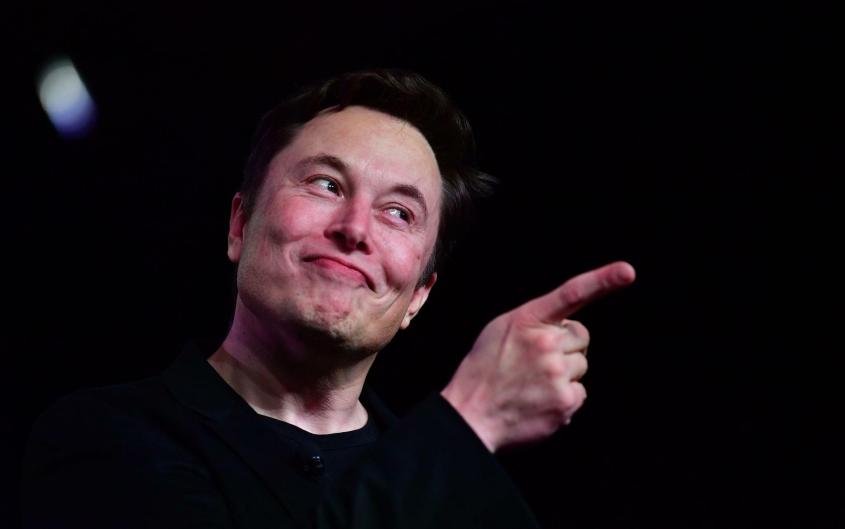
Elon Musk, the large entrepreneur, visionary, billionaire, and man with 3 citizenships originally from South Africa is known as the co-founder of Pay Pal, Space X, and Tesla.

He dreams of manned Mars flights and of sending people around the world through suction tunnels at lightning speed.

His achievements caused a sensation, but as always, not all that glitters is gold: behind the scenes of his work, animals are tortured and exploited in the name of an unholy science.
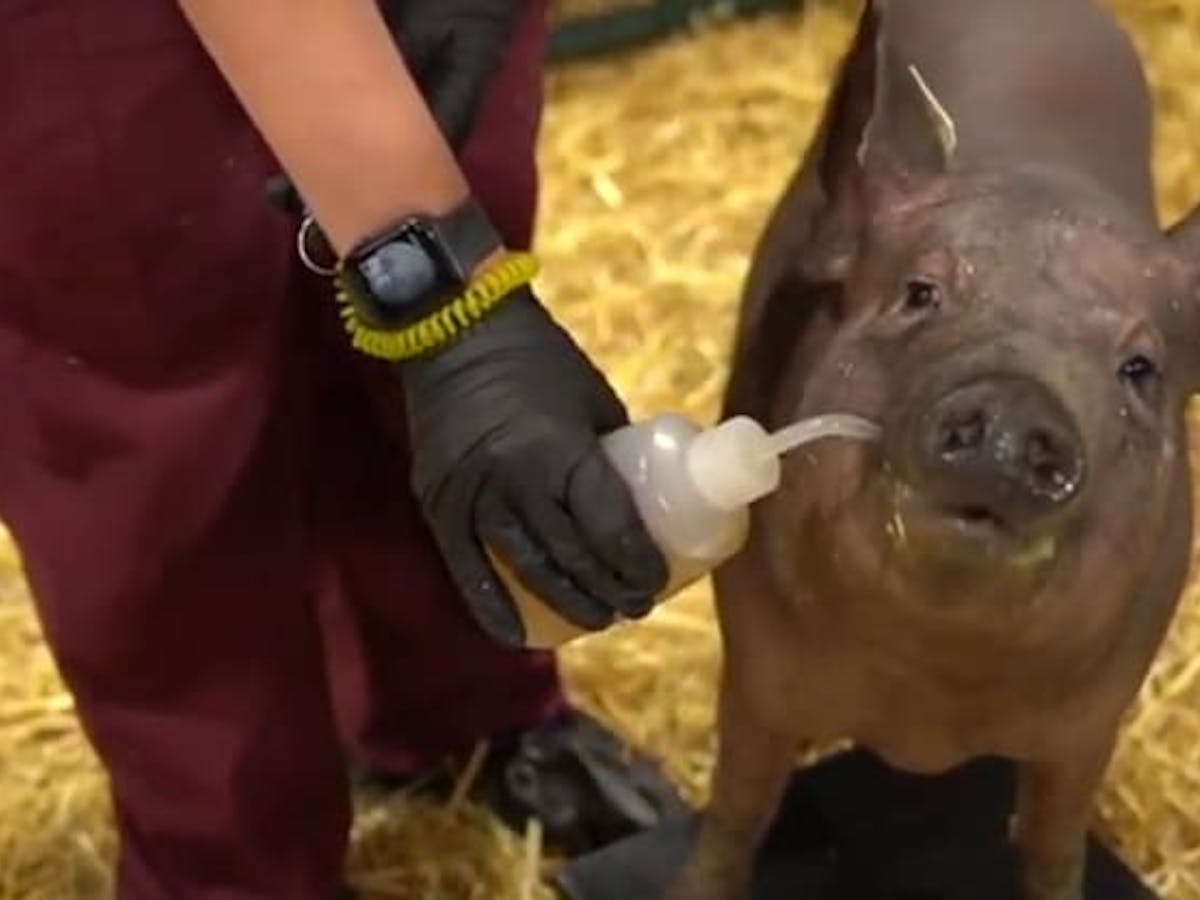
In 2020, the multi-billionaire introduced Gertrude to the world on August 28th: ​​one of many pigs who were exploited, coerced, and tortured for his megalomaniac ideas.
Gertrude was the result of his project for the Neuralink company, which is also owned by the cold-hearted Croesus.

Neuralink put a chip in Gertrude the pig's brain. It might be useful one dayAfter a few attempts, coin-sized computer chips were implanted in her brain and her pitiable, bristly fellow sufferers.
These were supposed to track the animals’ brain waves.

Realizing that this cruelty to animals will bring animal rights activists worldwide to the barricades, Musk wanted to cover up his crimes with a hypocritical “animal welfare coat”, but the shot backfired – an Elon Musk can do with all of us empathic animal rights activists do not deceive his wealth.

What he does in the name of science is flawless cruelty to animals.
His animal experiments only demonstrate his arrogance and the lack of respect for fellow creatures.

Continue reading “Elon Musk and the brave new dictatorship of Neuralink”

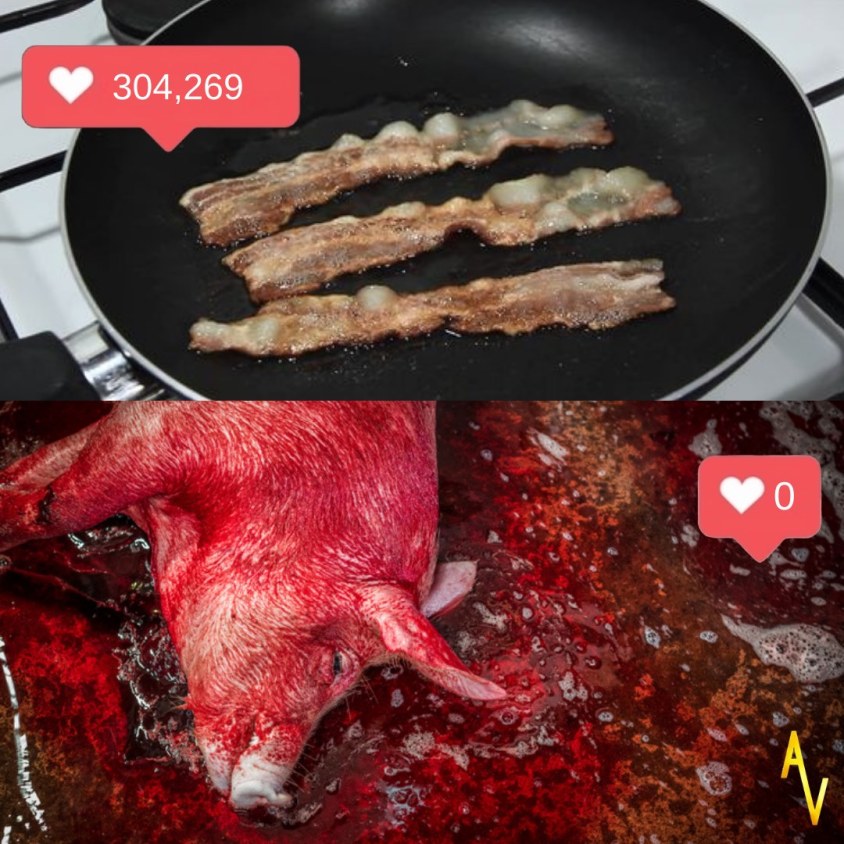
Likes and Truth

Non-vegans love the finished products comprised of another being’s flesh, but are reluctant to see just how that flesh came to be on their plates.⁠

Personal pleasure seems to override people’s morals, and those of us who are vegan know this all too well.⁠
⁠There’s a reason why seeing an innocent being hung up, bleeding from their neck makes you uncomfortable, and that’s because, deep down, you know it’s not OK.⁠

The majority of us were not born vegan – we made that choice because we connected the dots that are deliberately hidden with the insanely powerful meat, dairy, and egg propaganda, engineered by an industry that has successfully duped the public for centuries.

Anonymous for the Voiceless

Regards and good nighr, Venus