Month: September 2021

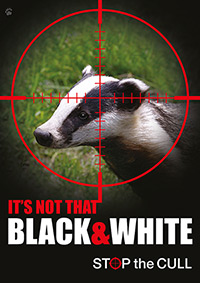
UK Wrongdoing: Challenge to badger cull due as Bern Convention Bureau considers alleged breach case.

WAV Comment – No final news yet, but we will report as soon as we know.

Regards Mark

Challenge to badger cull due as Bern Convention Bureau considers alleged breach case

13 September 2021

Press Release

Complaint alleges UK Govt in breach of international wildlife treaty obligations after failing to consider cull impact on badger population

A coalition of animal protection groups will have their complaint against the UK Government, alleging a breach of an international wildlife treaty, considered by the Bern Convention as its Bureau meets this week (15 and 16 September). 

The Bern Convention, to which the UK has been a signatory since 1982, aims to ensure the conservation and protection of Europe’s wildlife, and regulates the exploitation of species listed in Appendix III, which includes badgers.

Badger Trust, Born Free Foundation, and Eurogroup for Animals allege that the UK Government’s ongoing badger culling policy places it in clear contravention of its commitments under the Convention. Their complaint challenges whether the UK Government has adequately considered the impact of mass culling of badgers on the badger population and wider biodiversity, and whether there has been any significant disease control benefits to justify the culls. 

The consideration comes just a week after the UK Government announced that badger culling will be ramped up in 2021, with seven new licences issued expanding the cull area and setting maximum kill quotas that could see the highest numbers of badgers killed in a single year since culling began. There are now 61 areas with active cull licences, covering counties from Cornwall to Cumbria, and up to 75,930 badgers could be killed in 2021 – taking the total since the cull began to well over 200,000.

Britain is home to more than 25% of the European badger population. However, with more than 140,000 badgers killed under licence since the cull policy started in 2013, and with culling set to continue until 2025 under recently confirmed UK Government plans, that population is coming under severe pressure. The case was put on “standby” by the Bern Convention in 2020, with a request for further information, the first time a complaint made against the UK Government’s badger culling policy had not been dismissed at the initial stage. 

That the UK government continues to hand out new cull licences not only lays bare claims made by British ministers to be champions for animal welfare, but only serves to showcase a bewildering level of cognitive dissonance. No evidence whatsoever supports the ongoing culls in England, which is why, I suspect, no such evidence demonstrating a disease control benefit has been produced by the British government. We now rely on the other parties to the Convention to hold the UK government to account. England’s badgers — Europe’s badgers — cannot continue to be sacrificed for domestic political expediency.

Reineke Hameleers, CEO of Eurogroup for Animals

Whilst we are grateful that our complaint is at last being reviewed, it has been two years since we initially submitted our complaint in 2019. In that time another over 76,000 badgers have been killed under this failed approach to controlling bovine Tuberculosis – a respiratory disease in cattle that starts and ends with cattle. The latest licences for 2021 alone could take the same amount again, and the cull is set to run to 2025 – so we have years and years of further culling ahead. The impact on the badger population is unknown, and seemingly inconsequential to the UK Government who claim it is coming to an end, but in reality this senseless slaughter continues. We hope for a positive outcome from the Bern Bureau, and a brighter future for Britain’s badgers.

Adam Laidlaw, Executive Director of Badger Trust

The UK Government has hailed its badger culling policy a success. However, after eight years of culling which has seen the destruction of more than 140,000 badgers, representing perhaps a quarter of the UK badger population, evidence for significant disease control benefits among cattle herds in cull areas is lacking, and the Government’s woeful efforts to estimate and monitor targeted badger populations are failing to guarantee their eventual recovery. In spite of this, the Government has issued licences for 2021 which could see a further 75,930 badgers killed. We urge the Bern Convention to take action that will help to bring this inhumane, ineffective, unscientific and unnecessary slaughter of a native, protected wild animal to a permanent end.

Dr Mark Jones, veterinarian and Head of Policy at the Born Free Foundation

ENDS


Notes
A briefing on the complaint can be viewed here.

Final information relating to the complaint was submitted by Badger Trust, Born Free, and Eurogroup for Animals, in July in advance of the meeting this week. 

The original complaint lodged with the Bern Convention in 2019 can be found here.  
Time Out – Enjoy !

Regards Mark

EU: Farm to Fork Strategy own initiative report: vote in committees moving closer to systemic change and higher animal welfare.

Farm to Fork Strategy own initiative report: vote in committees moving closer to systemic change and higher animal welfare

10 September 2021

News

On Friday 10th September the AGRI and ENVI committees adopted with a large majority (94 in favour, 20 against and 10 abstensions) the draft report on a Farm to Fork Strategy for a fair, healthy and environmentally friendly food system.

Thanks to the 48 compromise amendments passed, the Farm to Fork own initiative report is now closer to leading a systemic change and higher EU animal welfare production.

Nevertheless, parts of some compromise amendments would have needed to be altered, such as the one stating that the support of affordable food should not lead to cheap animal products that prompt intensive farming.

The committees also supported theconsumption of algae for a dietary shift, which is welcomed, but at the same time the one of insects. Eurogroup for Animals believes that insect farming should not be promoted as an alternative protein source for animal feed or direct consumption due to serious animal welfare and sustainability concerns. Moreover, insects are not a sustainable solution for the EU’s food system transformation. On the contrary, insect farming is a false solution, given its potential to prompt more intensive farming instead of promoting the much needed systemic change.

Besides the compromise amendments, the AGRI and ENVI committees also adopted favourable amendments concerning trade, animal experiments and PMSG production, specifically: 

On trade, a very clear amendment calling for EU animal welfare standards to be imposed on imported products. With the ongoing review of animal welfare standards and the growing calls by countries like France to see more production standards applied to imports (a concept they call “mirror measures”), there has never been such an opportunity to extend the scope of EU measures, and by doing so, to use the leverage that access to the EU market represent to incentivise foreign producers to improve animal welfare standards. 

On animal experiments, an amendment reminding that structural animal experiments that are not indispensable should have no place in the food chain, as the Animal Experimentation Directive (2010/63/EU) prescribes the replacement and reduction of the use of animals in procedures. 

The amendment also calls on the Commission and Member States to stop the import and domestic production of Pregnant Mare Serum Gonadotropin (PMSG), which is extracted from the blood of pregnant horses that are systematically impregnated and exposed to blood collections, involving health- and welfare issues

The amendment calling on the EC to suspend import of horse meat from “countries where applicable EU requirements relating to traceability and animal welfare are not complied with” was also adopted.

The adoption of amendment 2294 is an important and timely statement from MEPs, proving that the objectives of the Farm to Fork Strategy remain clear and encompass all species. The call underlines the Parliament’s commitment to extend EU animal welfare standards to third countries, similarly to other amendments adopted in this report. Furthermore, it serves as a poignant reminder that the implementation of the Animal Experimentation Directive is far from perfect, a call that reverberates repeatedly from MEPs offices.

Reineke Hameleers, CEO, Eurogroup for Animals

Unfortunately other key amendments for the protection of animals were rejected such as the call for a ban on fur production, and the amendment calling on Member States to ban mink farming.

Besides the serious ethical issues disconsidered in those decisions, they also don’t take into account the recently adopted Report on the EU Biodiversity Strategy, where the EP acknowledged that fur farming can significantly compromise animal welfare and increase the susceptibility to infectious diseases including zoonoses.

The plenary vote on this report is scheduled for the beginning of October.  Eurogroup for Animals and its members urged MEPs to vote for an initiative report that leads to real systemic change and steps up the game for animal protection in Europe. 

Regards Mark

EU: Breaking – EU Votes to Stop Lab Animal Experiments.

16/9/21

Breaking – EU Votes to Stop Lab Animal Experiments

The EU just voted to phase out lab animal experiments.

https://www.livekindly.co/eu-to-phase-out-lab-animal-experiments/

On Wednesday, the European Parliament adopted a resolution vote calling for the European Commission to develop a definitive action plan to bring an end to lab animal testing. This should clearly identify key milestones and targets in order to ensure and incentivize meaningful progress.

Cross-party members of the European Parliament voted by an overwhelming majority (667-4) in favor of a transition from animal testing to ethical and effective alternatives.

In a press release, animal advocacy NGO Human Society International (HSI) welcomed the vote, calling it a “historic opportunity” to protect the almost 10 million animals used by EU laboratories every year in invasive experiments.

The vote is not legally binding, but it does place political pressure on the European Commission to respond to the results and take action. (Earlier this year, a similar process began to ban cruel caged animal farming in the EU, which the commission is now moving forward on.)

“This vote signals the need for systemic change in the EU’s approach to safety science and health research,” says Troy Seidle, vice president for research and toxicology at HSI.

Seventy-two percent of European citizens agree that the EU should set binding targets and deadlines to phase out animal testing, while 70 percent of adults believe full replacement of all forms of animal testing should be prioritized. Sixty-six percent say that all animal testing should be ended immediately.

“We need to let go of the unfounded belief that these animals are miniature people and get serious about understanding and predicting human biology in the real world,” says Seidle.Nearly ¾ of adults in Europe believe the #EU should set targets to phase out experiments on animals. We want to see humane, human-relevant, animal-free science properly funded and fully utilised in Europe. If you AGREE sign here ➡️ ➡️ https://t.co/Tve5BC9vNL#EndAnimalTestingpic.twitter.com/rGVt5zOkxE

Pharmaceutical testing, in particular, receives criticism for its relative lack of reliability. Small animals are not humans, and “successful” initial tests can lead to dangerous clinical trials. A 2015 study titled the Flaws and Human Harms of Animal Experimentation explored this.

“The unreliability of animal experimentation across a wide range of areas undermines scientific arguments in favor of the practice,” wrote the study author. “Animal experimentation often significantly harms humans through misleading safety studies, potential abandonment of effective therapeutics, and direction of resources away from more effective testing methods.”

Seidle lists human organ chips, stem cell models, and next-generation computer modeling among the most successful modern alternatives. Some companies are even developing cultured human skin for the cruelty-free testing of both pharmaceuticals and cosmetics.

Cosmetic animal testing is even less necessary, reputable, and popular than pharmaceuticals. Mexico recently became the first North American country to completely ban cosmetic animal testing, while Hawaii became the fifth U.S. state to implement a ban earlier this year.

The UK, however, could be about to pivot back towards animal testing after more than 100 years of slow progress and over 20 years after a national ban. This news also comes in the midst of ongoing protests over a beagle factory farm located near the notorious Huntingdon Life Sciences. According to activists, the site breeds up to 2000 puppies every year specifically to sell them for animal experiments.

To learn more about the history of animal testing in the UK, read on here.

See also: this is copyright protected.

https://www.livekindly.co/eu-to-phase-out-lab-animal-experiments/

Regards Mark

“Downer”cows- like dreck disposed

Fortunately, today and thanks to undercover investigations by animal rights activists, it is already widely known how the dairy industry operates its animal cruelty system worldwide

Cows, goats or even sheep are exploited, tortured and ultimately killed.

Calves are stolen from their mothers so that they can produce milk, udders are simply scorched, animals are tortured while being tethered – all this is unfortunately nothing new and is well known to many.

“Downer cows”, however, represent a previously unknown peculiarity of human ignorance and greed for profit.
In the dairy industry, “downer cows” are female cattle that are too weak to stand up on their own.

Often a calf was born shortly before, the mother is already severely weakened by the birth, but then there is also an acute calcium deficiency due to the unnaturally high milk production that has been bred.

Another reason can be an injury caused by the often terrible housing conditions in the industry.
And now comes the actual, criminal cruelty to animals: These massively weakened animals are often simply brought outside by the farmers in front of the barn.

These cows are called “downers”.
And why not leave them in the stable?
There is only one answer to this: For the farmer, this cow has been written off and its corpse can be removed from the outside more easily and cost-effectively after it has perished miserably.
It couldn’t be more cruel.

So the animals are somehow dragged with their last strength outside to their intended “death bed”.
The farmers often do not care what pain and stress this means for the poor creatures.
In their eyes they are “only farm animals”

Continue reading ““Downer”cows- like dreck disposed”

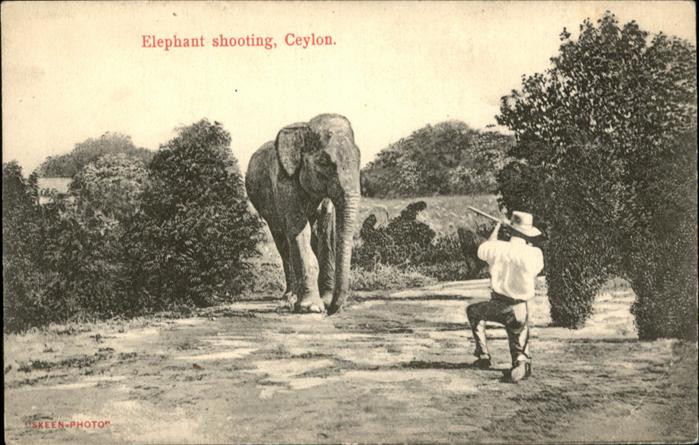
Hunting is a form of war

“Hunters only inspire me with revulsion. When they shoot at animals, it’s like soldiers shooting at children”Theodore Monod.

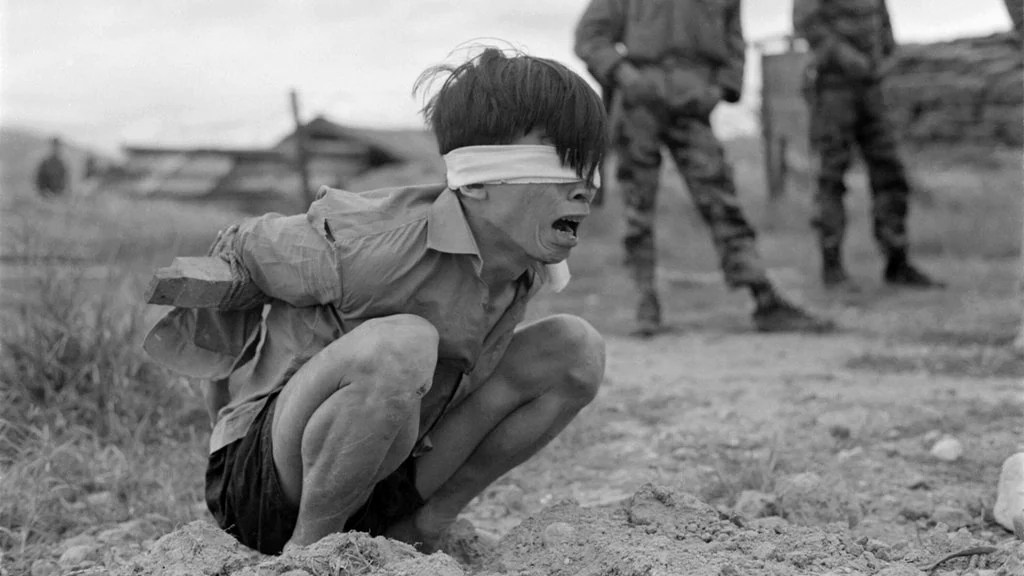
Vietnam

Hunting is always a form of war.
Hunting leads to bestiality and dehumanization.
War too
Hunting is and remains murder.
Just like the war

best regards, Venus

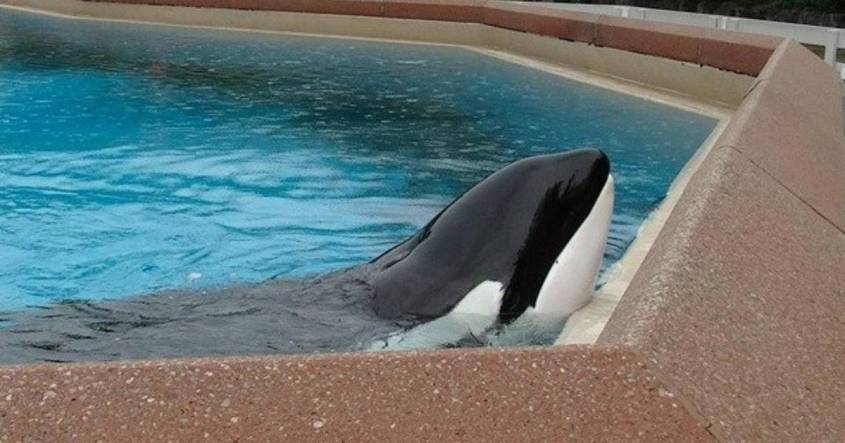
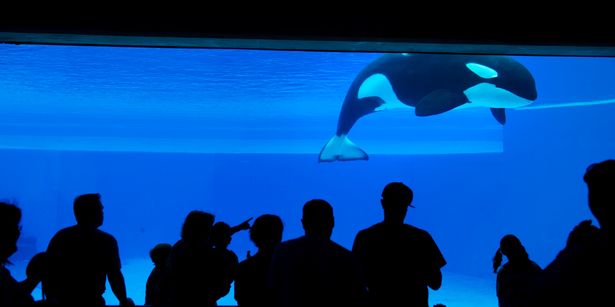
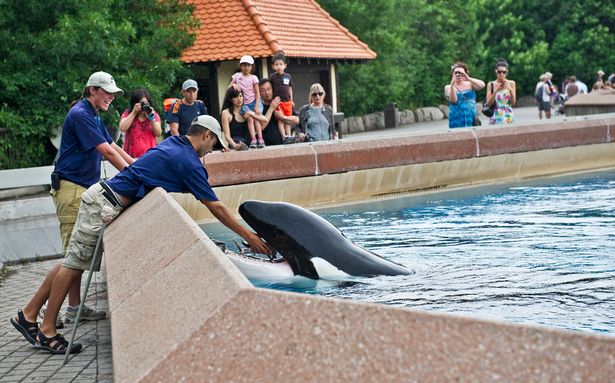
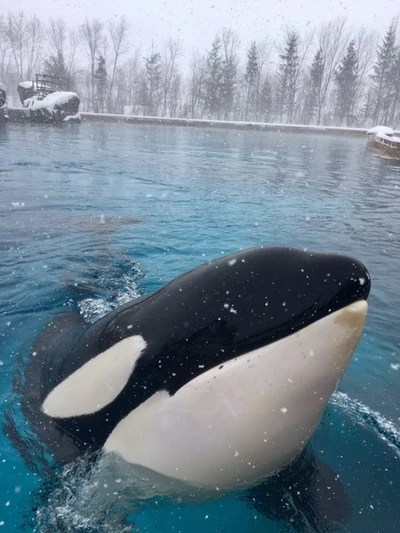
Marineland Canada and its prisoner Kiska: “The loneliest whale in the world” 🐳

This is the story of how Kiska, a whale who once lived happily with her family in the Icelandic Ocean, became the loneliest whale in the world:

In August 2011, a somewhat unseemly custody battle erupted between Busch Gardens (at that time the owner of SeaWorld) and Marineland Canada.

Ten years earlier, Marineland had approached Busch Gardens with a view to acquiring a male orca whom he could breed with the female orca Kiska.

Busch Gardens had been looking for some beluga whales, and was willing to make a breeding loan agreement whereby one male orca one of its SeaWorld entertainment parks would be sent to Marineland in exchange for four belugas.

Marineland said it wouldn’t go higher than three.
Busch wouldn’t go lower than four but finally offered to toss in a couple of SeaWorld’s trained sea lions.

And so the deal was done. And shortly thereafter, Ikaika, a four-year-old orca at SeaWorld Orlando, was flown to Marineland in Niagara Falls.

“Ike”, as he was generally known, had been developing dental problems, most likely from chewing on the metal bars of his pool, and he needed daily treatment along with antibiotics and pain medication.

The plan was that Marineland would keep up his treatments and although he was too young to breed, he could develop a relationship with Kiska and with Nootka, a younger female orca, and become a father in the coming years.

The contract stipulated that the two companies would alternate ownership of baby whales, all of which promised to be lucrative for both sides.

Nootka, however, died in 2008, and meanwhile Ike’s teeth were going from bad to worse. In 2009, SeaWorld decided they could give him better care and said they wanted him back.
But Marineland didn’t want to give him up.

SeaWorld pushed harder, including making some unusually candid statements about the dangers of keeping killer whales captive.

The dispute, which focused on the terms of the contract, ended up in court. SeaWorld won, Marineland appealed and lost again, and Ike was shipped back to the United States – this time to SeaWorld San Diego, where a 12-year-old orca named Sumar had recently died of a twisted intestinal tract.

For Kiska, Ike’s return to SeaWorld meant that she was now alone. Two years earlier, she had witnessed the death of her fifth child, Athena, at age four.
The bond between orca mother and calf is lifelong, and a growing number of studies suggest that orcas’ capacity to feel deep, complex emotions rivals or even exceeds the emotional capacity possessed by humans.

Since 2011, Kiska has lived alone in her concrete tank. Alone and bored, KISKA has been living in captivity in a tank in Canada for 40 years. No family members swim by her side. No friends invite her to play.

She holds the cruel distinction of being the only captive orca in North America held in social isolation from any other marine mammal.

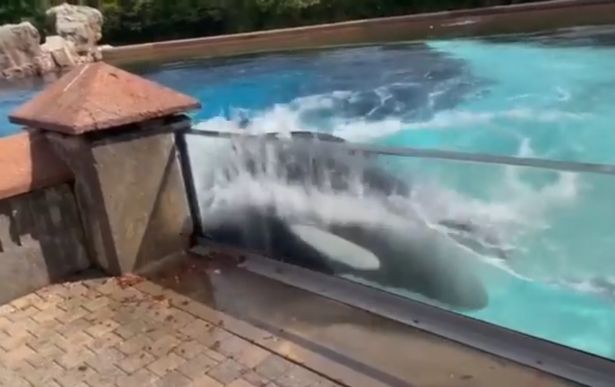
Video footage and eyewitness accounts depict her behavior as repetitive, unmotivated and lethargic. When not swimming in slow circles, she often floats in place, staring at the emptiness that is the inside of her tank.

We have been documenting this stereotypical behaviour that Kiska exhibits for years.
Below is a video we have provided of Kiska in 2014 displaying the same thrashing behaviour that has recently been circulating and there will also be another video we took posted in the comments below.

We have seen statements and headlines claiming that Kiska is “committing suicide.” Whilst this stereotypical behaviour is a result of poor welfare in captive orcas.

Whistleblower Phil Demers, who used to work at the park, claims 44-year-old Kiska was caught off the coast of Iceland and has been in captivity since 1979.
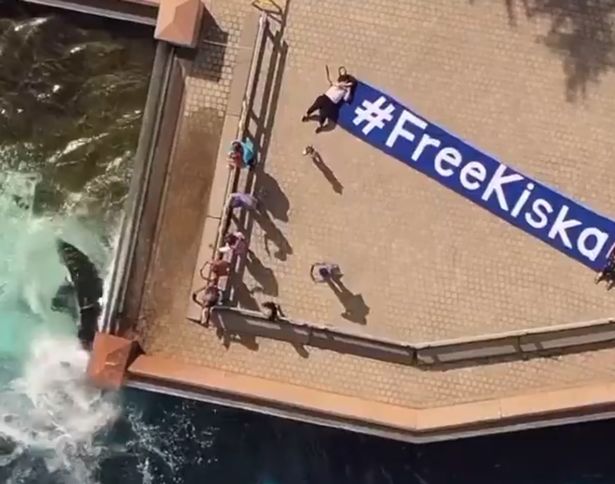
In a 30-second aerial clip taken by Demers, Kiska can be seen ferociously whacking her head and body against a wall.

pic.twitter.com/3MSMt9T9UI

The footage was shared on social media with the caption: “This video was taken on Sept 4th, 2021.
Anti-captivity activists entered MarineLand and observed Kiska, their last surviving orca bashing her head against the wall.
Please watch and share. This cruelty must end. #FreeKiska.”

Phil Demers posted a second video that shows a closer image with the orca stirring up the water as she rammed herself against her walled enclosure.

He claimed: “Another angle. This is dangerous and self harming behaviour. Kiska is in distress.”
The footage has been viewed more than 160,000 times on Twitter and has almost 2,000 retweets.
Worried members of the public have been shocked by the video.

https://whalesanctuaryproject.org/whales/lets-make-a-deal-kiska-ikaika/

Please, sign the petition: https://support.peta.org/page/11784/petition/1

And I mean…Marineland is one of the worst places for marine animals in the world.

You can hear every stupid saying … “I love MarineLand” and that means that everyone is only oriented towards having fun with enslaved animals, one thinks it is funny to be splashed by a whale and does not notice Kiska’s pathological behavior, due to her loneliness, her suffering, her miserable life.
Even worse: most of them also take their children with them so that the children can later view the enslavement of the whales as animal welfare
Everyone who buys a ticket for MarineLand is the employer of these animal exploiters, who actually have to earn their own money and do not get rich with the slave trade.

My best regards to all, Venus

WAMOS AIR – stop flying monkeys to laboratories!

Call on Spanish airline — WAMOS AIR — to stop flying monkeys to laboratories

Wamos Air, the Spanish airline that operates holiday charter flights, is also involved in transporting many hundreds of monkeys to research laboratories in the USA.

Wamos Air is a subsidiary of the Royal Caribbean Group (formerly Royal Caribbean Cruises Ltd), the world’s second-largest cruise line entity.

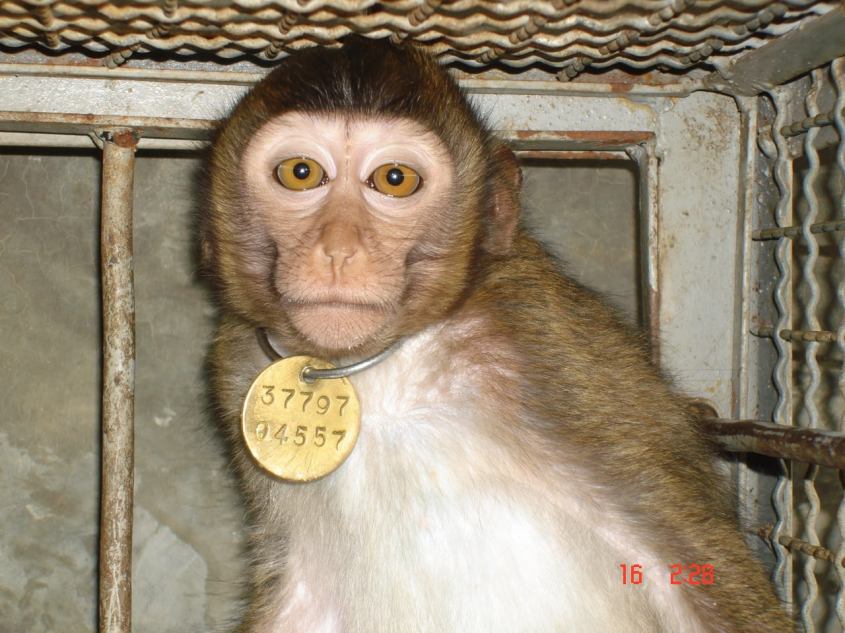
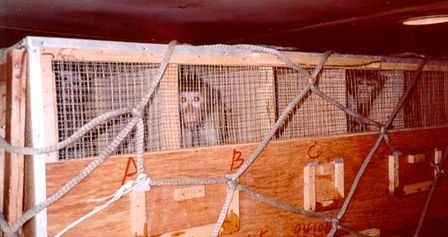
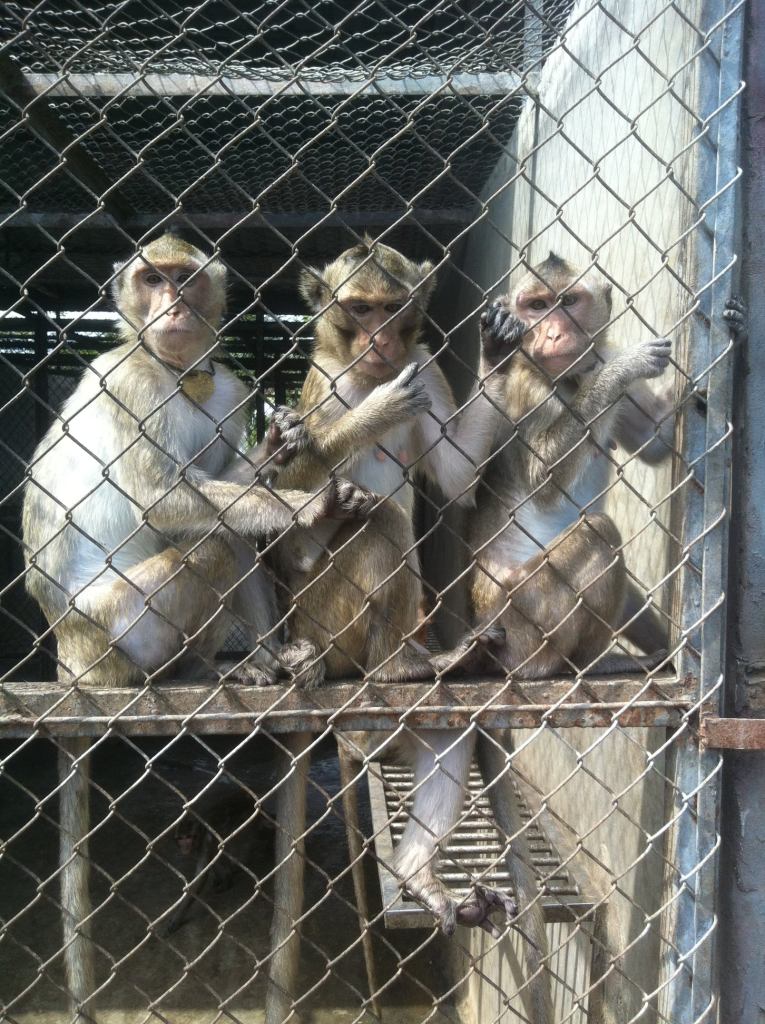
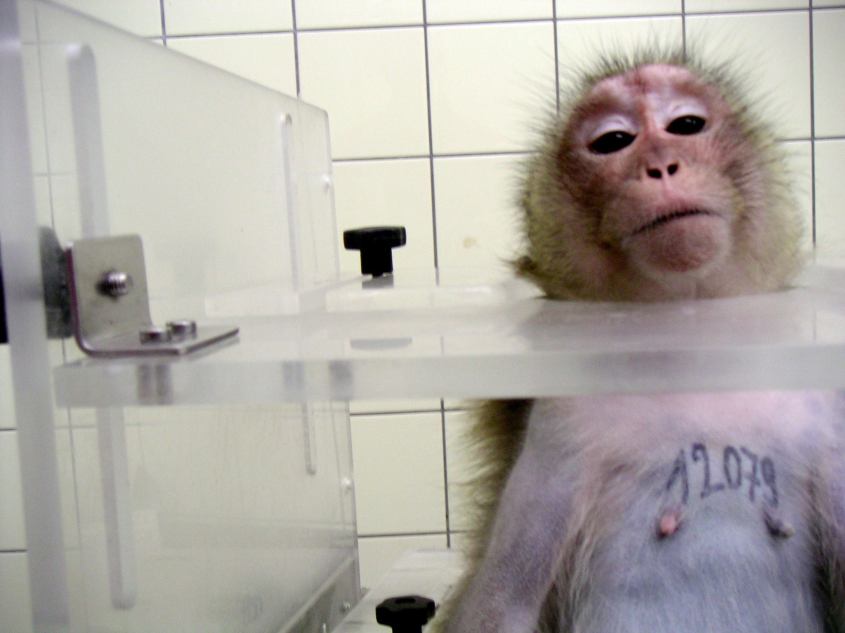
Torn from their family and social groups, monkeys are imprisoned on their own in small transit crates and travel on Wamos Air as cargo.

The journeys are extremely long, including about 24 hours of flying time and many hours in transit to and from the airports and layovers at Madrid airport.

We appeal to Wamos Air and the Royal Caribbean Group to discontinue their direct or indirect association with the cruel global trade in monkeys.’ [Action for Primates : https://actionforprimates.org/%5D

(This petition to Wamos Air and Royal Caribbean Cruises has been launched by Stop Camarles, Action for Primates and One Voice and is written in Spanish, English and French).
Please see below.

(Spanish) Llamamiento a la aerolínea española — WAMOS AIR — para que cese el transporte de macacos destinados a la experimentación

Wamos Air, la aerolínea española que opera vuelos chárter de vacaciones, también está involucrada en el transporte de cientos de monos destinados a laboratorios de experimentación en EEUU, Wamos Air es filial de Royal Caribbean Group (anteriormente Royal Caribbean Cruises Ltd), la segunda compañía de cruceros más grande del mundo.

Apartados de su familia y su grupo social, son enjaulados en su cajas de transporte y viajan con Wamos Air como mercancía. Los vuelos son extremadamente largos, alrededor de 24 horas, y muchas horas en tránsito entre aeropuertos y escalas en el aeropuerto de Madrid.

Reclamamos a Wamos Air y a Royal Caribbean Group que paren su asociación, directa o indirecta, con el cruel comercio global de monos. [Stop Camarles : @Scamarles]

(French) Appel à la compagnie aérienne espagnole WAMOS AIR pour qu’elle cesse de transporter des singes vers les laboratoires

Wamos Air, la compagnie aérienne espagnole qui exploite des vols charters pour vacanciers, assure également le transport de plusieurs centaines de singes vers des laboratoires aux États-Unis.

Wamos Air est une filiale de Royal Caribbean (anciennement Royal Caribbean Cruises Ltd), deuxième plus grande compagnie de croisières au monde.
Arrachés à leur famille, enfermés seuls dans de petites caisses, ils effectuent le trajet en tant que fret.

Les trajets sont extrêmement longs, comprenant environ vingt-quatre heures de vol, de nombreuses heures de transit en direction et en provenance des aéroports, ainsi que des escales à l’aéroport de Madrid.

Nous demandons à Wamos Air et Royal Caribbean de ne plus participer directement ou indirectement à la barbarie que représente le commerce mondial de singes. [One Voice :https://one-voice.fr%5D

https://www.thepetitionsite.com/de/takeaction/776/007/311/

And I mean…On 21st August, Wamos Air flew monkeys from Cambodia, via Madrid, to the US.

“Action for Primates” Organisation has been informed through contact in Europe, that the shipment comprised 720 individuals, destined for Envigo.
The suffering these intelligent and sensitive individuals experienced during their traumatic ordeal, packed into small crates and travelling as cargo for over 24 hours with many hours in transit to and from the airports and a layover at Madrid airport, is unimaginable.

It is simply not possible to confine non-human primates to small crates, away from familiar surroundings, and transport them on long journeys across the world without causing considerable distress, physical and psychological suffering.

The transportation and resulting suffering of these sensitive and highly intelligent animals is unacceptable.

What lies ahead for these individuals in the laboratories is unthinkable.

Envigo is a global contract research company that uses various species of animals, including monkeys, to carry out tests on behalf of other companies.
It was formed in 2015, following the merging of Huntingdon Life Sciences (HLS) and Harlan Laboratories.

Neither Wamos Air or Royal Caribbean Cruises, one of the parent companies of the Spanish airline, has responded to the appeal of Action for Primates Organisation to end their involvement in this cruel trade.

Please take action and ask others to do likewise. It is important to show Wamos Air and Royal Caribbean Cruises the strength of public feeling on this issue.
Without our resistance, animal abusers will do their work much more easily

My best regards to all, Venus

Germany: 250 mummified pigs – like in a horror movie!

It must have been a horrific sight – the stench was bestial. Residents from the tranquil Nikolaus village in the district of Cloppenburg (Lower Saxony) find 250 dead pigs in an abandoned stable.

Their mummification had already started, probably from drying out. There is no trace of the pet owner!

When police officers opened the stable on the outskirts of Nikolaus village, they came across skeletonized and, in some cases, mummified dead pigs. Experts from the veterinary office had to count the skulls of the animals – and came to around 250.

It is unclear why the farmer left 250 pigs die miserably and helpless, when he left the farm (!!!)

Nobody of the around 1100 inhabitants in the small Nikolaus village suspects what terrible fate must have played out behind the red stable walls.

“We have started an investigation against the pig owner for violating the Animal Welfare Act,” replied a spokeswoman for the Cloppenburg police station. The farmer had moved to another area in 2018.
It is unclear how long the animals had been lying alone in their boxes.

The veterinary office is also investigating the case

The police and the veterinary office in Cloppenburg, which is also investigating the case, do not want to give more precise information about the causes of death of the animals.
“The Cloppenburg district immediately ordered the former livestock keeper to remove the remains of the pigs from the stable and to have them disposed of harmlessly,” reports a spokesman for the veterinary office.
And further: “Then the stable must be cleaned and disinfected. This is monitored by the authorities.”

Pig farming was deregistered from the Cloppenburg district on December 31, 2012 and cattle farming on October 23, 2018, confirms veterinary office spokesman Frank Beumker. Controls after de-registration of the animal husbandry are not provided.

“The company was previously not noticed because of violations of animal welfare regulations,” (!!!) said the spokesman for the veterinary office.

https://www.ndr.de/nachrichten/niedersachsen/oldenburg_ostfriesland/250-mumifizierte-Schweine-auf-verlassenem-Hof-entdeckt,schweine730.html

And I mean…The police found 250 dead pigs on a farm in Lower Saxony. The operator left the farm several years ago and apparently let the animals die.
How could this happen? in a country with the “best animal welfare” in Europe?

Quite simply: because farms that keep animals are checked on average in Germany (at best) every 17 years. Veterinary offices in their current form are part of the problem. They lie and cover up cruelty to animals.

So if the veterinary office has come to the conclusion that… “The company had not previously been noticed for violating animal welfare regulations”, it is an outrageous lie.
Has the farmer deregistered his business and nobody from the veterinary office has asked for proof of the whereabouts of the animals?
It seems like nothing was checked here …

That means that the responsible veterinary office has not done its job.
This is a violation of the Animal Welfare Act due to omission!
But that’s not the only shame in this story.

Didn’t anyone notice how the pigs were roaring to death for weeks after the criminal farmer ran away and let the pigs slowly  perish?
has that only dawned on people after years?
and just because it stank?

We are a society of cowardly accomplices

My best regards to all, Venus

UK: We Welcome Welfare labels on meat to say how animal was killed: New law is in pipeline after campaign on halal and kosher livestock that isn’t stunned before slaughter. Link to take part in Government Consultation which closes 6/12/21.

MPs have also been calling for the change.

Sir Roger Gale said: ‘Brexit has presented us with the opportunity to reform our farming systems.

WAV Comment – For a very long time, welfare campaigners in the UK have been calling for this. ALL food should be clearly labelled to show production methods, nation of origin, and how the animal was slaughtered is clearly identified on the packaging. We very much welcome this decades (far too late) late legislation, but are hugely supported by the fact that so many Brits are demanding to see how their food is produced – and that animal welfare is a ‘high up the chain’ concern.

If you personally wish to get involved with, and submit to the consultation, then please go to;

https://consult.defra.gov.uk/animal-welfare-market-interventions-and-labelling/labelling-for-animal-welfare/

The consultation closes on 6/12/21.

Regards Mark

At the moment, it is not compulsory to label meat as halal, so campaigners have argued that those who eat the products and care about animal welfare should be able to make the choice to buy meat killed in a more humane way [Stock image]

Welfare labels on meat to say how animal was killed: New law is in pipeline after campaign on halal and kosher livestock that isn’t stunned before slaughter

  • It currently not compulsory to label meat as halal but new bill could change that
  • Campaigners argue shoppers concerned with animal welfare should be able to make the choice to buy meat killed in a more humane way
  • The Bill is in the early stages and is currently the subject of a public consultation 

Welfare labels on meat to say how animal was killed | Daily Mail Online

Halal and kosher meat will have to be labelled in a victory for animal welfare campaigners.

As part of the proposed law, all meat will have to be marked with how the animal was killed.

Animals slaughtered to be compliant with kosher and halal rules are often killed without being stunned first and have their throats slit.

At the moment, it is not compulsory to label meat as halal, so campaigners have argued that those who eat the products and care about animal welfare should be able to make the choice to buy meat killed in a more humane way.

The Bill is currently in the early stages and is the subject of a public consultation. But ministers have privately said they aim to bring in the law – and that it is supported by the majority of the British public.

Animals slaughtered to be compliant with kosher and halal rules are often killed without being stunned first and have their throats slit. Pictured: A meat processing plant [Stock image]
Animals slaughtered to be compliant with kosher and halal rules are often killed without being stunned first and have their throats slit. Pictured: A meat processing plant [Stock image] Photo – Getty Images

Victoria Prentis, minister for farming, fisheries and food, said: ‘As a nation, we care enormously about animal welfare and increasingly about environmental standards.

‘Consumer information and labelling are part of the toolbox that we have when it comes to creating a better food system for people and the planet. It is something that we will be considering in detail with industry and stakeholders in the weeks and months ahead.’

The Conservative Animal Welfare Foundation (CAWF), which the Prime Minister’s wife Carrie Johnson has long been a patron of, has been calling for this policy change for years.

Lorraine Platt, chairman of CAWF and a friend of Mrs Johnson, welcomed the news: ‘With the exception of whole eggs, there are currently no legal requirements to label products with information on how the animal was reared and slaughtered.

‘But the fact is the British public do care about these conditions – over 80 per cent of UK consumers are in favour of food labelling.

‘Where labelling does currently exist, consumers have been able to identify higher welfare products and subsequently many farmers have been rewarded with increased demand. It is our hope that through extending labelling to all farmed produce, we can help the growth of higher welfare farms in the UK.’

MPs have also been calling for the change. Sir Roger Gale said: ‘Brexit has presented us with the opportunity to reform our farming systems.

‘Transparency with consumers must be at the heart of these reforms and implementing labelling for animal welfare represents a critical step forward. In doing so we can empower consumers to make informed decisions about which farming systems they want to support – or avoid supporting.

‘There is an overwhelming democratic mandate for such a move, with around eight in ten British consumers stating animal welfare is an important consideration for them when shopping.’

Under new laws, there will also be stricter animal welfare labelling requirements – with how the animal was reared and cared for prominently displayed on the packaging.

This is part of a raft of legislation under the Animal Welfare Bill including plans to ban boiling lobsters alive and outlawing the sale and import of ‘cruel’ animal products such as fur and foie gras.

Halal meat is worth around £2.6billion a year in the UK, according to the Agriculture and Horticulture Development Board (AHDB).

It accounts for around 20 per cent of all lamb and mutton sold, despite Muslims only comprising around 5 per cent of the population.

This is because ‘halal consumers eat more meat per capita than the general population’, says the AHDB.

About 42 per cent of all halal meat is not stunned before slaughter, according to the Food Standards Agency.

Slaughter of kosher livestock – the method is known as shechita – is a small percentage of all animals killed accounting for only 0.5 per cent of all cattle, 0.1 per cent of sheep, 0.3 per cent of chickens. 

Enjoy

Regards Mark