Month: September 2021

USA: New Slaughterhouse Investigation Reveals Critical Lapse in Federal Law.

New Slaughterhouse Investigation Reveals Critical Lapse in Federal Law

By Ingrid L. Taylor

September 7, 2021

In the same month the U.S. Senate recognized August as National Catfish Month, Animal Equality, an international animal protection organization that has conducted hundreds of investigations into slaughterhouses and industrial farms, released disturbing footage of an undercover investigation at Simmons Farm Raised Catfish. Simmons, in Yazoo City, Mississippi, is one of the largest USDA-inspected catfish slaughterhouses in the U.S. and a supplier for Cracker Barrel and Captain D’s restaurant chains, as well as Kroger, Save A Lot, and Piggly Wiggly grocery stores. 

Video footage revealed catfish piled on overcrowded conveyor belts slowly suffocating as workers take lengthy breaks, fish returning to consciousness after electrical stunning and beheaded while fully awake, and undersized, deformed, or parasite-scarred fish languishing in bins without water for hours before being ground alive and turned into feed for growing catfish. A turtle, bycatch from the netting process that removes the farmed fish from ponds, was tossed onto a conveyor belt loaded with severed fish heads and tried to escape being shredded alive. 

The month-long investigation further revealed that these were not isolated incidents, according to Animal Equality’s Director of Investigations Sean Thomas, but that catfish, turtles, and other bycatch fish were routinely left to suffer out of water before being killed. 

Pressing for Criminal Animal Cruelty Charges 

Animal Equality presented evidence to the Yazoo County Sheriff’s Office and County Prosecutor alleging that Simmons had violated Mississippi law against animal cruelty, which does not exclude fish from legal consideration, according to Kathy Hessler, Director of the Animal Law Clinic at Lewis and Clark School. Hessler further stated in a memo that “scientific research indicates that fish and turtles can suffer and feel pain, and that animals who live in water, fish, in particular, suffer when taken out of water.” Thomas points out that catfish are “robust” fish and can survive for prolonged periods out of water, making their slow suffocation even more excruciating. 

The slaughter process itself also causes pain and suffering. The catfish pass through an electrical stunning device intended to incapacitate them prior to decapitation. The fish are heaped on top of each other, and the stunning relies on the current being carried from fish to fish through their crowded bodies. However, videos of the slaughter line show catfish flopping, gasping, and moving their fins after stunning, and many appear to be fully conscious when beheaded and may even maintain consciousness for some time after decapitation. 

In one haunting scene, the severed head of a catfish gasps slowly as the conveyor belt passes. Studies in other species of fish have shown that respiration and gasping can persist for up to eight hours after decapitation, and research in rats suggests that brain death does not occur for a least a minute after decapitation—raising questions about how much suffering these conscious catfish endure, and for how long. To that point, Thomas cites a 2020 study showing that catfish are resilient to electrical stunning and most immediately regained consciousness. 

The organization has also reached out to companies that purchase catfish from Simmons, and Kroger has initiated an independent investigation into the allegations. Animal Equality also filed consumer complaints with Alabama, Georgia, Louisiana, Mississippi, and Tennessee state attorneys general, stating that Simmons’s claim of “swiftly processing” catfish constitutes unfair or deceptive trade practices. In response, Simmons removed the claim from its website that the fish are processed “within 30 minutes.”

A Unique Opportunity to Demand Federal Oversight  

While catfish are not excluded from local animal cruelty laws, they are excluded from the Humane Methods of Livestock Slaughter Act, originally passed in 1958 and the only federal legislation overseeing animal welfare during slaughter. This act requires the “proper treatment and humane handling” of all animals slaughtered in USDA-inspected facilities but omits chickens and fish. According to Hessler, “fish and aquatic animals have no legal protections during transportation to, or within, the slaughter process. Methods of slaughtering fish and other aquatic animals can be quite gruesome, painful to the animals involved, and take significant periods of time.” In 2021, over 193,000 tons of catfish (measured in live weight) have already passed through slaughterhouses, with no oversight for their humane handling or welfare. 

However, catfish do hold the unusual status of being the only fish species inspected by the USDA, the federal organization responsible for enforcing the Humane Slaughter Act. This unique regulatory situation was implemented in 2016 to undercut foreign competitors to the U.S.’s home-grown catfish industry. Producers hoped that adding USDA certification to their products would give them an edge in the market. In the states of Mississippi, Alabama, and Arkansas, which collectively use 53,200 acres of water surface for catfish farming, catfish production is frequently marketed as “sustainable, traditional family farms” rather than as an industry bringing in significant sales, to the tune of 371 million dollars in 2020.  

Despite catfish’s special status, USDA inspectors don’t assess live fish in slaughterhouses. As Thomas explains, “it’s just for the sanitary conditions under which the fish are packaged. So, if a piece of that fish fell on the floor they would inspect it, but they’re not going over to the other side and watching where the live animals come in and seeing if stunning is occurring or anything like that.” Thomas points out that this sends a potent message to the industry “where the USDA doesn’t recognize them [the catfish] as animals deserving of even the most basic protections.” 

But, because USDA inspectors are already present in these facilities, Animal Equality sees this as an opportunity to press for federal oversight of catfish being slaughtered. And as Hessler states, the legislative framework is already present, and “these animals now vastly outnumber their mammal counterparts in the slaughter process, and scientific evidence has clearly shown that they can feel pain and suffer. It is therefore incumbent on us to protect them from unnecessary suffering during the slaughter process.” 

To this end, Animal Equality is petitioning Congress to include fish in the Humane Slaughter Act. Thomas admits that this is only a first step in humane oversight for farmed fish, but it would be a crucial move toward recognizing their capacity for pain and suffering and their need for federal protections. 

Simmons Farm Raised Catfish and The Catfish Institute could not be reached for comment. 

Read More

Fish Farming Giant Faces Animal Abuse Allegations

“If the Industry Won’t Tell the Truth, We Will”: Animal Equality’s Fight Continues

Factory Farming: Shedding Light on the Highly Secretive Industry

Regards Mark

UK: Alok Sharma MP and Climate Summit President Criticised for ‘Excessive’ Air Travel.

Have been researching Alok Sharma MP a bit more this morning (14/9); amazing what you can find:

Regards Mark

Try again Contact Information for Alok Sharma MP:

Contact information for Alok Sharma – MPs and Lords – UK Parliament

MP and climate summit president Alok Sharma criticised for ‘excessive’ air travel and avoiding quarantine

MP and climate summit president Alok Sharma criticised for ‘excessive’ air travel and avoiding quarantine – The Canary

Political leaders have accused Cop26 president Alok Sharma of “hypocrisy” after it emerged he has flown to at least 30 countries this year in the run-up to the climate summit. Sharma also attracted criticism for failing to self-isolate after visits to red-list countries, most recently Bolivia and Brazil, by relying on rules exempting ministers from quarantine.

“Get-out-of-jail free” card

The former secretary of state for business remains in Brazil where he’s meeting with state and business leaders in a bid to get them to commit to net zero carbon emissions by 2050. Liberal Democrat spokesperson Sarah Olney MP accused him of treating flexible rules for Crown servants as a “get-out-of-jail free” card.

As usual with this Government, it’s one rule for them and another for everybody else.

While Alok Sharma flies to red-list countries with abandon, hard-working families can hardly see loved ones or plan holidays as the Government changes travel rules on the hoof.

People are sick of the Government giving themselves get-out-of-jail free passes while the rest of us stick to the rules.

COP President:

COP26 President – GOV.UK (www.gov.uk)

‘One rule for them’: Alok Sharma criticised over flights to 30 countries

This article is more than 1 month old

Cop26 president accused of undermining climate effort after visiting 30 countries in seven months

‘One rule for them’: Alok Sharma criticised over flights to 30 countries | Alok Sharma | The Guardian

Alok Sharma, the government minister responsible for vital UN climate talks, is facing calls to self-isolate when he returns from Brazil, after he was hit with a double barrage of criticism for not quarantining when returning from “red-list” countries and for the environmental impact of his trips around the world.

The president of Cop26, which is being hosted in Glasgow in October and November, has visited 30 countries since February, including Brazil, where he has been this week, Indonesia and Kenya, it was reported.

Despite travelling to six countries on the government’s travel “red list” he was not required to isolate, according to the Daily Mail. The revelations came as the government added countries including Mexico to its red list, scuppering many people’s summer holiday plans.

The Mail also reported that Sharma had an indoor meeting – without masks – with Prince Charles days after returning from Bangladesh (a red list country) before going on a visit to a primary school.

With Sharma currently in Brazil, where the P1 and P2 variants emerged, he is now facing pressure to show he is not above the rules the public are subject to.

The Liberal Democrat health spokesperson, Munira Wilson, said: “It seems incredible that this government never seems to learn the lesson; it simply cannot be one rule for them and one rule for everyone else.

“Whether or not he should be going to red countries on his tour is up for debate – but whether he should be self-isolating when he returns is not.

“The Conservatives have made a terrible mess of international travel since March last year and it has cost many thousands of lives.”

Sharma has also been criticised for not leading by example when attempting to encourage others to reduce emissions. But Downing Street said face-to face talks were essential on occasion as Sharma tried to persuade major emitters to cut emissions and secure ambitious action ahead of the Cop26 summit.

The Welsh first minister, Mark Drakeford, told Sky News: “I’m afraid I do think it really undermines the effort that we know everybody has to make. We’ve all got used to having meetings with people in different parts of the world without needing to travel around the world to do it.

“And when we’re trying to persuade people to make the changes they need to make, we need to make, in our daily lives, transport, in our own homes, in the way that we think about the contribution we can make, we need the people at the very top to be demonstrating that they are doing that too, not thinking that that is for other people to carry that burden.”

David Lammy, the shadow justice secretary, said Sharma’s behaviour demonstrated that “it’s one rule for them and another rule for us” and “feels to not be setting the example”.

The Labour MP told the broadcaster: “Well, the optics are very clear – it’s one rule for them and another rule for us, whether it’s Dominic Cummings, whether it’s Matt Hancock, whether it’s Alok Sharma.

“Of course some international travel is required, but this amount of international travel when you’re climate change minister feels to me bizarre, and feels to not be setting the example.”

The Green party peer Jenny Jones, who has already accused the former business minister of being “excessive” and “hypocritical”, on Friday added that Sharma’s flights to France and Belgium “could hardly be faster than rail if you take into account the ability to work efficiently on the train”.

Most of Sharma’s trips were during the winter and spring months when international travel from the UK was mostly banned.

He visited India, Costa Rica, Qatar and UAE in March, while in April he travelled to South Korea and Japan before going to Bangladesh in June.

Not all of the 30 known trips were return flights to the UK, but travel to and from all the destinations would total 200,000 miles, or the equivalent to eight times around the Earth.

The delayed Cop26 conference will mark the first time since the 2015 Paris climate change conference that countries will set ambitious new targets to cut greenhouse gas emissions.

A No 10 spokesperson said: “As Cop president, Alok Sharma is leading climate negotiations with countries including major emitters to cut emissions and secure ambitious action ahead of the Cop26 summit.

“The majority of this work is done remotely but some travel to key countries for face-to-face talks is essential. He has secured ambitious action as a result of the discussions he has had.”

The spokesperson added: “Ministers conducting essential travel such as this are exempted from quarantine, as set out in the rules.”

Asked if Sharma would quarantine on his return from Brazil, where he is currently, the spokesperson said: “He will continue to comply with the rules as set out.”

UK: UN COP26 Climate Summit – vegan eating can reduce food-related carbon emissions by 73%. Eating meat and dairy is part of what got us into this mess. So Why No Vegan Food At the Summit ???? – Take Action Below.

Important Note – we have just tried to e mail and telephone the office of Alok Sharma, and everything seems to be closed down – we are even told the wrong number by phone; which we took from his official ‘contact’ area on his site !! – strange. Lets hope he is getting the message about all this. Thus, the action links given below may not now work at present. All I can say is keep trying now and again.

Regards Mark

WAV Comment – Is this not like inviting the senior arsonist as a principal guest to the firefighters annual ball ?

What the hell are these people on ? – and they call themselves experts and politicians who are supposed to be dealing with the climate situation !

The United Nations’ COP26 climate summit—which will be the largest summit that the U.K. has ever hosted—is fast approaching, and we learned that there’s a plan to serve animal-derived food at the convention, even though animal agriculture is devastating for animals and the planet.

Vegan foods have a far smaller carbon footprint than their animal-derived counterparts. Speak out today to ensure that the COP26 climate summit sets a good example for the world to follow. See action below.

The 26th United Nations Conference of the Parties (COP26) Climate Change Conference is fast approaching. Urge the president of COP26, Alok Sharma, to set a meaningful example during this climate crisis by serving a fully vegan menu at the event.

Eating Vegan Is Better for the Environment
The fishing, meat, dairy, and egg industries are not only cruel to animals but also catastrophic for the environment. For decades, the U.N. has identified animal agriculture as a leading cause of deforestation, pollution, ocean dead zones, habitat loss, species extinction, and the spread of zoonotic diseases.

Vegan foods have a far smaller carbon footprint than their animal-derived counterparts—even when comparing imported plant proteins to flesh from grass-fed, locally farmed animals—and a switch to vegan eating can reduce food-related carbon emissions by 73%. Quite simply, eating meat and dairy is part of what got us into this mess.

Animals can feel pain in the same way as humans. Just like us, they value their lives and don’t want to suffer.

In her natural environment, a hen will cluck to her chicks before they even hatch while sitting on the eggs in her nest. They peep back to her and to each other through their shells. In the ways that matter, humans and other animals are the same. There is no moral justification for exploiting animals for human purposes.

The COP26 Climate Summit Should Set an Example
Given everything that we now know about the devastating impact of animal agriculture on the environment, serving meat, dairy, or eggs at a climate change summit would be like distributing cigarettes at a health convention.

Plant foods are the way forward, and a vegan menu would not only allow attendees to dine with a clear conscience but also set an important example for the world to follow.

Take action and tell Sharma to serve only vegan food at the event.

Send emails to:

Alok Sharma
alok.sharma.mp@parliament.uk

Take action against this mentality:

Urge the COP26 Climate Summit to Serve a Fully Vegan Menu | PETA

60 seconds about circus

For many people, a visit to the circus is a welcome distraction from everyday life.
With the animals in the circus, on the other hand, it looks completely different.
They suffer from constant transport, inadequate and unsuitable husbandry conditions and from training that is based on violence and coercion.

Lifelong for your entertainment- Four Paws

Which animals are allowed in the circus?
In Germany in 2012, a total of more than 900 wild animals were kept in 141 of around 330 traveling circuses – camel-like animals are not even included here.
According to a recent EU-wide survey, Germany is the country with the most wildlife circuses, with an estimated 75 circus companies.
Nevertheless, there is so far no law in this country that fundamentally prohibits or even restricts the keeping of animals in the circus.
The Federal Ministry of Food and Agriculture (BMEL) presented a draft for a ban in autumn 2020, but it falls far short of the mark, as only the acquisition of certain species of wild animals in traveling circuses is to be banned.

Bad housing conditions and inadequate controls
In particular, a circus can never meet the demands of wild animals on their natural habitat.
Violent dressage, tiny cage wagons and constant transports characterize the life of animals in the circus.

Constant changes of location and stressful transports
Up to 50 changes of location per year and the associated transport are associated with great stress and physical strain for the animals – especially for large mammals such as elephants, rhinos or giraffes.
Animal-friendly keeping of wild animals is impossible in traveling circuses because the basic needs of these animals cannot be met.

Continue reading “60 seconds about circus”

Mendip Farmers Hunt, Ston Easton: brutal attack on sabs

Mendip Hunt Sabs-Report

Mendip Farmers Hunt, Ston Easton, 11th Sep 2021
Thanks to local tip offs we were able to catch the Mendip Farmers Hunt out illegally hunting foxes and terrorising wildlife.

We hot-footed it off to Ston Easton (a linear village and civil parish in the English county of Somerset) to start our day.

Our supporter funded drone again proved to be worth it’s weight in gold, we were able to safely watch and record the vile blood thirsty hunt.

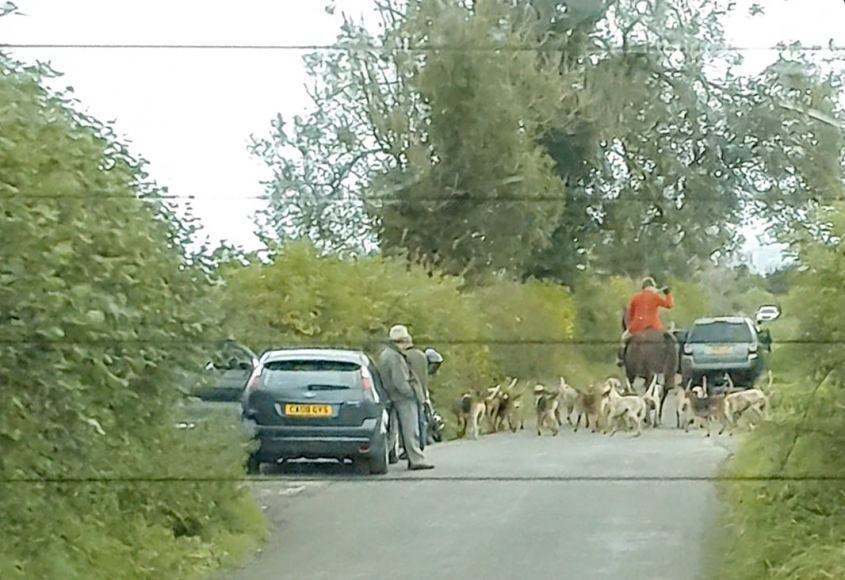
The hunt move off after the vicious attack on sabs.

With the drone, we watched them unboxing near a field of solar panels then separating themselves out around a maize field, lying in wait to flush fox cubs back into the maize to the jaws of the waiting, ill fed hounds.

These are the people who pass you in the street, stand next to you in a queue in Toolstation….horrible thought isn’t it?

Our two foot sabs caught up with Huntsman Hickmott on horseback with hounds et al on Thickthorne Lane. They turned into a field adjacent to Burnt House Farm where almost instantly the hounds picked up the scent of a fox and went into cry.

Our two foot sabs quickly made their way up the field on the public footpath following the terrible, overlapping, dreadful, screaming cacophony of the hounds now in fully cry.

Our two remaining sabs quickly made their way up the farm track, desperately spraying citronella both sides of the hedgerow and rating the hounds. The hounds began to hesitate and back off of the line but the hunts’ blood thirst was too strong.

Some of the gang of thug terriermen laughing post-attack as Hickmott departs with his hounds in the background.

Huntsman, Matthew Hickmott encouraged the hounds with voice calls, brrrs and fast horn blows and the remaining hounds poured through the hedgerow, across the dusty farm track and ran into the yard. The sound of encouragement from the field riders and hunt supporters was sickening to the core.

As these two sabs rounded the corner of the barn the dreadful sight of a fox being ripped apart alive by a pack of writhing hounds faced them. The hounds were packed in a chaotic pile all over the structure where the fox had taken cover. The screaming mass of hounds trampled over each other, climbing through, over and into the structure in the yard. On their right Tim Pullen and the approaching farmer. Ahead near the hounds Kevin Stevens.

Stevens, surprised at the swift appearance of our witnesses began to shout “GET OUT! THIS IS PRIVATE PROPERTY! GET OUT!” Then from behind a farm building on the left Matthew Hickmott walked forward on his horse his eyes on the still squirming, screaming hounds.

His satisfied expression changed instantly when he saw our sabs.

Continue reading “Mendip Farmers Hunt, Ston Easton: brutal attack on sabs”

How Many CO2 Emissions Does the Meat Industry Produce? (Hint: Way More Than You Think).

How Many CO2 Emissions Does the Meat Industry Produce? (Hint: Way More Than You Think)

What we eat impacts our planet – but how destructive is the meat industry?

The effects of the climate crisis are becoming more obvious and more severe. As a result, researchers are eager to dissect the climate breakdown, not only to better understand it, but to find ways to intervene. 

Carbon dioxide (CO2) is a leading driver of the issue. In fact, CO2 makes up the largest portion of anthropogenic (human caused) greenhouse gas emissions, according to the Intergovernmental Panel on Climate Change (IPCC). IPCC is the world’s leading authority on climate science. 

For decades, it’s been widely accepted that transportation is a huge part of the carbon problem, and it is. But another field’s carbon footprint is also problematic – the meat industry. But how many CO2 emissions does animal agriculture actually produce? And is it enough that we must curb our eating habits?

What is carbon dioxide?

Carbon dioxide is an acidic colorless gas that occurs naturally in the Earth’s atmosphere. Plants absorb carbon dioxide and release oxygen, making it integral to life on Earth.

CO2 is harmless in small amounts, but human activity causes levels of the gas to surge. Writing for Forbes, chemical engineer Robert Rapier highlighted that global carbon dioxide emissions have tripled in the last 55 years, sitting at 32.3 billion metric tons last year.

Why is carbon dioxide harmful?

CO2 is a greenhouse gas, meaning it creates a cover that traps heat in the Earth’s atmosphere. When concentrations are too high, the planet’s carbon cycle can’t process it efficiently enough. This causes global temperatures to increase, a phenomenon known as the greenhouse effect. 

Global climate change has led to loss of sea ice, rising sea levels, and more frequent and severe heat waves and droughts, according to NASA. Climate breakdown is also linked to stronger hurricanes, flash flooding, increased wildfires, erosion in coastal areas, ocean acidification, and biodiversity loss, the government agency highlights. 

“The effects of human-caused global warming are happening now, are irreversible on the timescale of people alive today, and will worsen in the decades to come,” NASA sums up.

How much carbon dioxide does meat produce?

Awareness of the transportation and fossil fuel industries’ impact on the environment has been growing for decades. But a sector that often slips under the radar is animal agriculture. 

According to the Food and Agriculture Organization of the United Nations (FAO), global livestock production makes up 14.5 percent of all anthropogenic (human caused) emissions – 7.1 gigatonnes of CO2 equivalent per year.

There is some debate surrounding the widely accepted FAO figure of 14.5 percent. Research published this year claims that this figure is ‘now out of date’. The article argues that the minimum estimate for animal agriculture’s emissions should be updated to 16.5 percent. 

“Some will contest the importance of a few percentage points. Yet even the difference between 14.5 and 16.5 percent is the difference between animal agriculture being responsible for close to one in seven, or one in six of all emissions,” the article reads.

Which foods have the lowest carbon footprint?

In 2019, researchers published the most comprehensive analysis to date of farming’s environmental impact. Looking at emissions per 100 grams of protein, beef emits just under 50kg of CO2 equivalents, according to the analysis. Lamb and mutton emit just under 20kg, while farmed prawns and pig meat emit 18.19kg and 7.61kg respectively. 

For context, grains emit 2.71kg of CO2 equivalents per 100g of protein and soybeans emit 1.98kg.  And peas – a common ingredient in plant-based meat (like Beyond Burgers) – emit just 0.44kg. 

Comparing emissions per kilogram of food (rather than per 100g of protein), plant-based sources are still significantly lower than animal-based ones. 

Producing a kilogram of beef emits 60kg of CO2 equivalents, the researchers concluded, while pea production emits just 1kg per kilogram of food. 

Lamb, poultry, and pork generate 20kg, 6kg, and 7kg of CO2 equivalents respectively. Contrastingly, root vegetables and apples both produce 0.4kg. Rice (4kg), tomatoes (1.4kg), nuts (0.3kg) and bananas (0.7kg), to name a few, also carry a smaller carbon footprint.

“A vegan diet is probably the single biggest way to reduce your impact on planet Earth, not just greenhouse gases, but global acidification, eutrophication, land use and water use,” Joseph Poore, who led the study, said in a statement. He added that the impact of ditching animal products is ‘far bigger’ than flying less or opting for an electric car. 

How Many CO2 Emissions Does the Meat Industry Produce? (Hint: Way More Than You Think) – Plant Based News

Regards Mark

The Unemployed Epidemiologist Who Predicted the Pandemic.

The Unemployed Epidemiologist Who Predicted the Pandemic by Stacey

With thanks to Stacey at ‘Our Compass’ as always;

Regards Mark

This is a 5 page post – pages can be selected from the numbers at the end.

Source The Nation

By Eamon Whalen

In early March 2020, Rob Wallace, an evolutionary biologist who had been adrift after an unceremonious exit from the University of Minnesota, flew to New Orleans and then got on a bus to Jackson, Miss., where he was scheduled to speak at an event on health and racial injustice. Wallace, who turned 50 this summer, has been studying and writing about infectious diseases and their origins for half his life. For almost as long, he’s been warning that the practices of industrial agriculture would lead to a deadly pandemic on the scale of Covid-19—or worse. “A pandemic may now be all but inevitable,” he wrote of the H5N1 avian influenza virus in 2007. ”In what would be a catastrophic failure on the part of governments and health ministries worldwide, millions may die.”

Before his trip to Jackson, Wallace had been closely monitoring the outbreak of a novel virus in Wuhan. Though he’d been spooked by a news report that showed a delivery driver in China practicing extreme social distancing, he went ahead with the trip. As an underpaid academic, he needed the money, and as an American, he didn’t expect anything to happen to him. “I too had been infused with a peculiarly American moment, wherein financial desperation meets imperial exceptionalism,” he wrote.

When Wallace returned from his trip, he threw himself back into writing and research with such fervor that he managed to ignore a pounding headache. When the shortness of breath started, his teenage son yelled at him through the computer screen to see a doctor. After he filled out an online questionnaire, Wallace was diagnosed with Covid-19 over the phone.

He’d been infected with something he’d been warning about for years, and like so many around the country and the world, all he could do was to hope to keep breathing. “No test. No antiviral. No masks and no gloves provided. No community health practitioner stopping by to check on me,” Wallace wrote.

“You can intellectually understand something but still not assimilate the oncoming damage,” he told me later, as he recalled the “sour vindication” of having his worst fears come true. “So there’s an aspect of rage, and an arrival at an understanding.”

I met Wallace for coffee on an afternoon in late June. We sat on benches under the shade on the campus of a liberal arts college near his home in St. Paul, Minn. He was dressed in a pale-red short-sleeve shirt, dark jeans, and sneakers. He wore rectangular black-rimmed glasses and a Minnesota Twins baseball hat and had a five o’clock shadow

Wallace looks more like a dad on the way to his kid’s Little League game than a lab-coat-wearing scientist who used to consult with the Centers for Disease Control and Prevention and the United Nations. That could be because he hasn’t had a job in academia for more than a decade, a circumstance he attributes to his decision to take the implications of his scholarship seriously.

That’s why the book Wallace published last October came with a provocative title—Dead Epidemiologists: On the Origins of Covid-19. Though there are many “brilliant, bright, amazing, and hardworking” epidemiologists whose work he cites, their impact is limited, Wallace said: “They are in the business of cleaning up the mess the system brought about, and that’s the extent to which they’re willing to go.” In his first essay on Covid, “Notes on a Novel Coronavirus,” published in January 2020, Wallace wrote that an epidemiologist is like a “stable boy with a shovel following around elephants at the circus.”

“As an epidemiologist, you’re supposed to want to put yourself out of business,” Wallace said. “Everyone has bills to pay; I understand that. But the extent to which your corruption might lead to a pathogen that could kill a billion people—that’s where my line is.” While he’s not the only Cassandra whose warnings of a pandemic like Covid-19 went unheeded, there are few as clear-eyed about where to direct the blame. “Agribusiness is at war with public health,” he wrote in the March 2020 essay “Covid-19 and the Circuits of Capital,” and if no serious action is taken, the interval before the next pandemic will be “far shorter…than the hundred-year lull since 1918.”

Animal welfare transport regulation of the EU is not able to protect animals

The animal welfare organization Animals ‘Angels published its report “100 Reasons to Revise Council Regulation EC 1/2005 on the Protection of Animals during Transport” this week.

The report combines Animals ‘Angels’ more than 20 years of experience in animal transport controls in the EU and worldwide with the results of scientific studies.

In “100 Reasons” Animals ‘Angels specifically uncovered the weaknesses of the EU Regulation (EC) No. 1/2005 on the protection of animals during transport and made over 100 specific demands” on the revision of the regulation that is currently taking place.
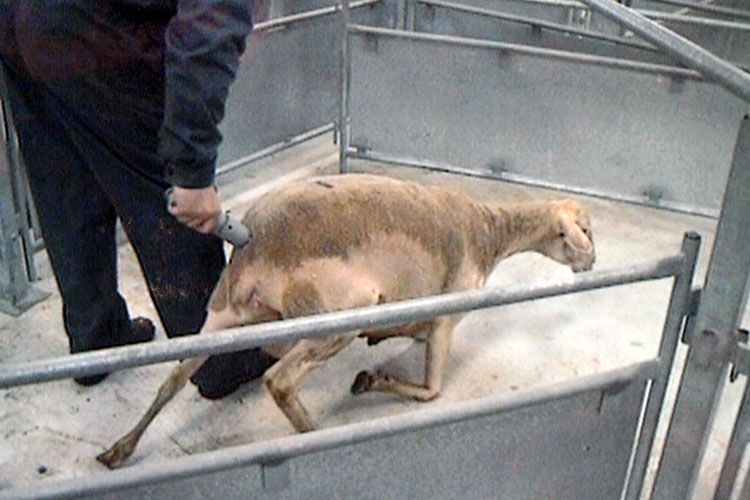
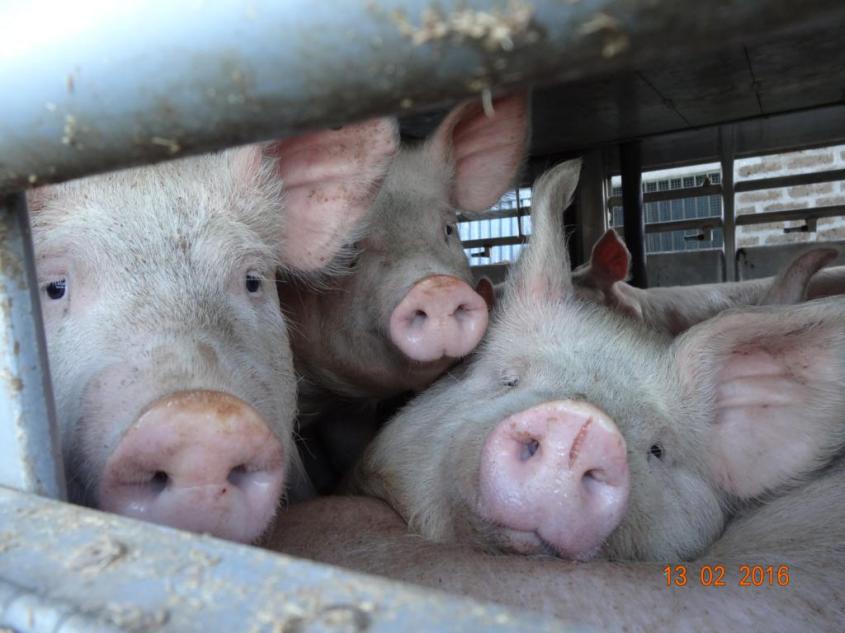
The existing EU laws are unable to adequately protect the animals being transported.

The main flaw of the regulation: it does not impose an absolute limit on the transport time.
Their implementation fails on many levels. Despite positive approaches, it cannot curb the suffering of the animals on the transports.

In 22 chapters, Animals’ Angels criticized parts of the ordinance on topics such as transport duration, loading density, transportability, temperature limit values, official controls, the sanction system and much more.
In addition to scientific findings, the report draws on countless empirical examples and first-hand information from actors such as veterinary and police officers, transporters, animal owners and drivers.

Animals’ Angels calls for a detailed revision of Regulation (EC) No. 1/2005 with the aim of ensuring the best possible protection for the animals being transported.

But above all, Animals’ Angels is calling for a rethink.
EU Treaties recognize animals as sentient beings.
It is high time to do justice to this recognition.
The revised Regulation on the protection of animals during transport has to reflect a morally acceptable treatment of animals that respectfully considers their life and their suffering as sentient beings.

Continue reading “Animal welfare transport regulation of the EU is not able to protect animals”

The Truth About Cows Raised for Human Consumption.

Watch, rage and repent

Regards Mark

The Truth About Cows Raised for Human Consumption (animalequality.org)


The public deserves the truth. For this reason, Animal Equality’s investigators take their cameras where the industry does not want you to see.

Animal Equality is committed to exposing the terrible fate of cows, calves, and steers exploited by both the meat industry and the–only seemingly less cruel–milk industry.

Our investigative team has captured images and footage from around the world showing the harsh living conditions, inherent suffering, and brutal abuse that farmed animals endure.

The evidence we have gathered over the years shows calves left outside to die in freezing temperatures in the US, calves beaten and force-fed in the UK, and pregnant cows slaughtered in Brazil.

In addition to documenting animal welfare issues, Animal Equality’s investigative team in Brazil has uncovered the devastating environmental impact of beef production in the Pantanal, one of the world’s most biodiverse areas.

Behind all of this suffering and destruction are industries that treat cows as money-making machines. It’s a system of endless suffering; calves separated from their mothers, females exploited for their milk, and males killed for their meat. That’s why the animal agriculture industry–relentless in its pursuit of profits–is so careful not to reveal what is happening behind closed doors.

The public deserves the truth. For this reason, Animal Equality’s investigators take their cameras where the industry does not want you to see: onto the trucks that transport cows across countries and continents, into the air above the Amazon Rainforest where forests are burned and cleared for cattle farming, and inside factory farms and slaughterhouses. 

Photo – Mark (WAV)