Month: October 2021

Beef Industry ‘Nervous’ At Growth Of Plant-Based Proteins, Claims Think Tank.

How The Beef Industry Is Fighting The Plant-Based Protein Boom (plantbasednews.org)

Beef Industry ‘Nervous’ At Growth Of Plant-Based Proteins, Claims Think Tank

Across four key areas, beef companies are working to battle the growing plant-based market to protect their pockets…

The beef industry is becoming increasingly desperate to clutch onto its market position amid the plant-based protein boom. But Faunalytics, a research company specializing in animal advocacy, has examined the industry’s marketing tactics and claims it’s ‘nervous’ of the growth of alternative proteins.

Beef industry

The think tank examined a 2021 report funded by the Beef Checkoff, a US marketing firm that works to promote animal agriculture. In the Impacts of New Plant-Based Protein Alternatives on US Beef Demand report, extensive strategies are outlined to maintain popularity amid increasing concerns about animal rights and the environment.

The report includes a survey on 3,000 US citizens with varying diets and a restaurant and grocery store experiment to assess consumer habits.

Faunalytics looked at the report with a view to ‘gain an advantage’ on what the plant-based industry can do in response. 

What they found is that consumer demand for beef decreases more when prices go up, over when plant-based protein prices decrease.

Furthermore, in a grocery store experiment, consistent beef eaters were more willing to switch to other options if the beef was more expensive.

However, the average customer is more willing to pay a higher price for beef than its actual price. And, a lower price for plant-based proteins than their retail price.

Study takeaways 

“The really fascinating thing about this report,” Faunalytics says, “is what it can tell us about the industry’s strategy.”

The four main tactics it identifies are:

1. Consumers believe beef tastes better and is more ‘natural’

As ever, the beef industry plans to focus on the ‘naturalness’ of beef over plant-based alternatives.

This is carried out by claiming plant-based meat can’t mimic the taste of the real thing, and highlighting long ingredient lists.

Faunalytics also claims that it will continue to focus on how the industry is good for farmers and rural communities.

2. Price is vital

The price parity of plant-based alternatives has long been a hot topic. It is subsidies that make cow meat particularly easy to produce at low costs.

And, according to the report, the beef industry will continue to drive down prices where it can.

‘We should work to amplify the voices of workers and communities harmed by the beef industry’ to fight against this, according to Faunalytics.

3. Beef market share remains high despite growing alt protein

Despite the staggering predictions for the ongoing boom of plant-based protein alternatives, the think tank says the beef industry isn’t worrying ‘too much’ about it denting the market share.

While beef contains more protein than many plant-based alternatives, advocates can respond by painting a better picture of health. This can be done by educating about consumer ‘obsession’ with protein.

4. Partnerships with retailers are important

Beef companies aim to establish relationships with retailers. This means stores and restaurants will have vested interests in the future of animal agriculture, Faunalytics says.

However, it’s a tactic vegan companies can easily follow suit on. And, something the likes of Beyond Meat is already doing with chains like Burger King, McDonald’s, and KFC.

Faunalytics’ concluding statement on the study is: “Even as the beef industry continues to enjoy a large market share, it can see the writing on the wall.

“The industry knows it doesn’t measure up on health, environmental friendliness, or animal welfare. All of which are values important to the younger generation.”

Regards Mark

Nigeria: rapists will be castrated in the future in Kaduna.

Rapists will be surgically castrated and anyone who rapes a child will face the death penalty under new laws in Nigerian state

Anyone raping a child under age 14 will face the death penalty in state of Kaduna
Men convicted of rape will face surgical castration under the new legislation
Reported cases of rape in Nigeria have risen dramatically during months of coronavirus restrictions
The governor of Nigeria’s Kaduna state has signed a law saying men convicted of rape will face surgical castration.

Anyone raping a child under age 14 will face the death penalty under the new legislation.

It follows public anger over a recent increase of rapes amid Covid-19 restrictions, which prompted the nation’s state governors to declare a state of emergency.

The governor of Nigeria’s Kaduna state Nasir Ahmad el-Rufai (pictured above) has signed a law saying men convicted of rape will face surgical castration

Nasir Ahmad el-Rufai said the ‘drastic penalties are required to help further protect children from a serious crime’.
Women’s groups have called for tougher action against rapists, including the death penalty.

Kaduna state’s new law is the strictest against rape in Nigeria, Africa’s most populous country.

The state’s newly amended penal code also says a person convicted of raping someone over age 14 will face life imprisonment.

The previous law carried a maximum penalty of 21 years‘ imprisonment for the rape of an adult and life imprisonment for the rape of a child.

A woman convicted of rape of a child under 14 faces the removal of her fallopian tubes.

https://www.dailymail.co.uk/news/article-8744261/Rapists-surgically-castrated-new-laws-Nigerian-state.html

And I mean… Excellent idea, the best I have ever heard!
Can we do that here for the same criminals and expand it to include butchers, slaughterhouse and fur farm owners, experimenters, hunters, animal torturers of all kinds?

My best regards to all, Venus

Germany: Hubertus Masse and the hypocrisy of the Church

Every year in autumn the so-called Hubertus masses take place everywhere in the churches.

Priests and pastors of both denominations bless hunters, the hunt and the “route” of the killed animals. – A bloody fraudulent label: Because St. Hubertus, in whose name these masses take place, recognized Christ in the animals and stopped hunting.
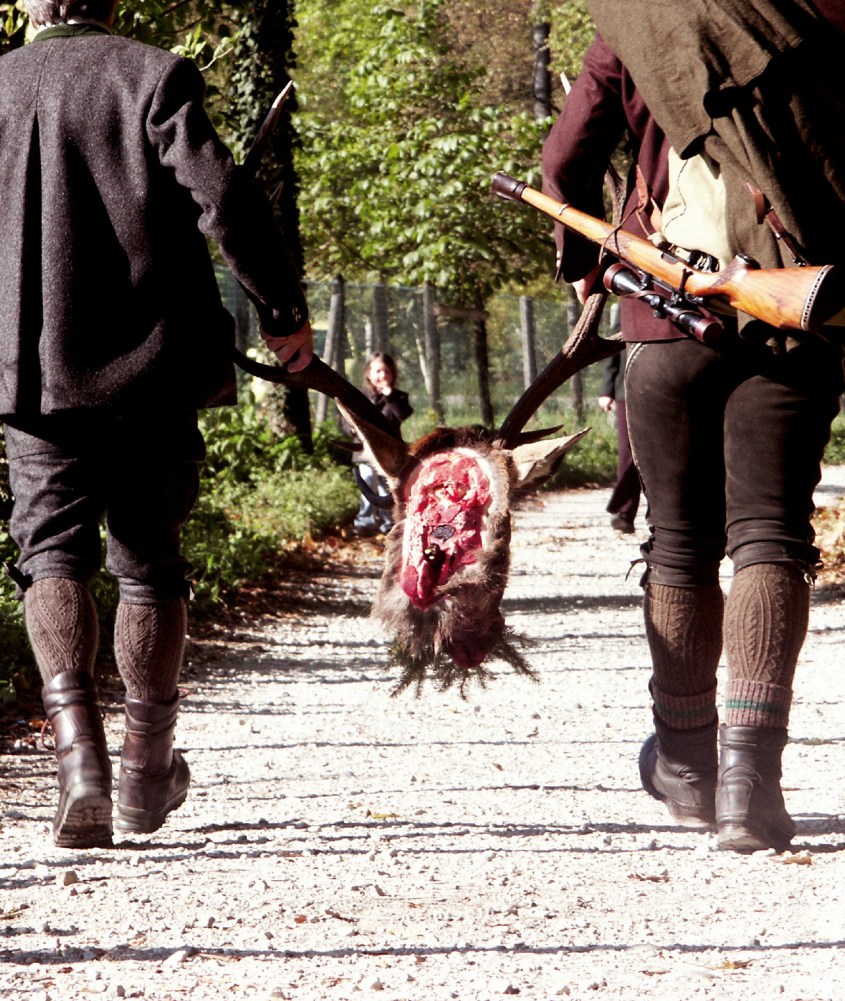

But not only St. Hubertus is abused for unholy conduct: the animal-hostile teaching of the churches is a betrayal of the animal-friendly teaching of Jesus.

According to legend, Hubertus was a passionate hunter. One day when he wanted to shoot a deer while hunting, it suddenly came up against him.
A cross shone between his antlers, and Christ said to him in the form of a stag:
“Hubertus, why are you chasing me?”
Hubertus got off his horse and knelt in front of the stag. From that moment on Hubertus stopped hunting and from then on led a simple life.

So much for the legend.

After his experience with the stag, Hubertus stopped hunting and became a serious Christian.
Because true Christianity and hunting just don’t go together. When he met the stag, he was given the choice, either he kills the animal – then he also kills Christ – or he does not do so and confesses to Christ.
Or spoken in the words of Matthew 25:40:
“What you did to one of the least of my brothers, you did to me.”

The meaning of the Hubertus legend is that man should live in harmony and peace with nature and animals.
He should not be the hunter, but the protector and friend of the animals.
As the saying goes in Mark 16:15: “Go out into the whole world and preach the Gospel to all creatures.”

This certainly does not mean hunting, but instead of making St. Hubertus the patron saint of animals, the church appointed him patron saint of hunters.

Neither is it written anywhere that Jesus Christ, whom both denominations venerate as the Son of God, ever hunted animals.
That would also be very absurd, because God’s 5th commandment is “You shall not kill”.

But every hunt is connected with killing.

In spite of all of this, the so-called Hubertus hunts and Hubertus masses take place in churches every year on November 3rd, Hubertus Day.

We owe the fact that the animals in our society have to suffer so unspeakably millions of times over, not least of all, to the anti-animal teaching of the two great churches

Priest: blessing for animal killers

Even if individual upright pastors or priests try to campaign for animal welfare within the church, they are in opposition to the teaching of their church.
Because the church doctrine justifies factory farming, animal transports, slaughterhouses, animal experiments and hunting to this day.

To this day, both churches deny animals the immortal soul.

Since the 4th century, when the emerging Roman power church ousted early Christianity, the church has been against animals – even though Jesus of Nazareth loved animals and the first Christians were vegetarians.

Animal rights activists within the churches are often dismissed by church circles as over-the-top, neurotic weirdos, so it’s no wonder that so many animal rights activists take the lead and leave the church.


All hunters shouldtake St. Hubertus as example and finally stop hunting

https://www.abschaffung-der-jagd.de/fakten/ethik/schlussmithubertusmessen/index.html

And I mean…When will God’s unworthy servants finally stop hypocrisy and betrayal of animals here on earth?

Can one imagine a hunting Jesus with a rifle who, with greed and joy, shoots, injures, cripples rabbits, deer and other animals?
Because many animals do not lie dead “in the fire” immediately, but only die miserably after days or weeks in terrible agony.
Jesus would – like the merchants from the temple once -, today the hunters with a whip out of the forest and meadow – and hunt church!
“Heavenly nefariousness with which the Christian mob treats animals, kills them while laughing, mutilates or tortures them” – Arthur Schopenhauer already formulated the moral reprehensibility of humans in their behavior towards their older relatives, the animals, in such clear words in the 19th century.

Servant of God: You are truly a “model” of the human species – in a negative sense. Be ashamed of yourself, be very ashamed of yourself.

My best regards to all, Venus

Comment 13/10

this german gentleman is a pastor and hobby-hunter. last week he mistook a father of a family for a bear in canada and killed him: https://videopress.com/v/LQ8EhTKP

USA: Eating Others Is NOT Humane !

With thanks to Stacey at ‘Our Compass’ as always;

Eating others is not humane … | Our Compass (our-compass.org)

Regards Mark

Honestly, folks, literally TRILLIONS of animals are butchered yearly, why do people actually believe that such a incredibly large number of animals can be killed in a peaceful, ethical manner? ALL killing is unethical, but people love to pretend that the animals they consume were “produced” in caring and nurturing environments. Come on, this is what “intellectually superior” humans believe? The industry is based on DEATH, thus NOBODY cares about animals who are controlled, mutilated, violated, and violently killed. Wake up, people, you’re being taken advantage of by slick PR and deceptive advertising.

NOT harming is better than HARMING. If you harm animals, you don’t care for them, regardless of the labels on dismembered, violently killed animal body parts. SL

WAV Comment – well said Stacey !

Source SURGE

Go into a supermarket and you’ll see labels like these plastered all over the meat, dairy and egg products that we buy.

Company names like the Happy Egg Co. A company that advertises their products with images of chickens in lush green fields, even though an investigation in 2021 into three farms that supply them eggs revealed that the hens were packed in industrial sheds, their beaks had been cut off and there were dead birds rotting on the floor. 

So just a little different to the imagery the company uses to sell their products.

In fact, even when we look at free-range as an industry-wide standard, free-range farmers can legally house 16,000 birds in a barn, which means they can house 9 birds per square metre of space, which gives each hen 11 square centimetres of space each inside the barns. Not exactly the image of being ‘free’ that you would expect.The Happy Egg Co and the term free-range are both examples of humane washing. But wait, what is humane washing? Well to understand what humane washing is, let’s first look at greenwashing.

In recent years, some of the biggest food corporations in the world, such as Starbucks and McDonald’s, have ditched plastic straws in response to growing public concern about their impact on the environment. Great news, right?

Well, not exactly. This is an example of greenwashing, a term that describes a form of marketing and PR which aims to persuade the public that an organisation is environmentally friendly, even when their wider actions show the opposite. 

In the case of the plastic straw, the strawless lid that Starbucks introduced to replace the straw actually contains more plastic than the original lid and straw combo did. And McDonald’s, well where do we even begin? Selling food that is linked to rainforest deforestation is probably a good place, not to mention the fact that they don’t recycle their new straws and the drinks still come in the same plastic-lined cups as their old plastic straws did. 

The meat, dairy and egg industries also regularly greenwash their products as well. For example, Danish Crown, the largest meat producer in Europe, have created their own sustainability certification which the farmers who are suppliers for them have then signed up to, and as a result the pork products they sell now come with a sticker that says they are ‘climate controlled’.

Continued on next page.

UK: Prince Charles Talks Reducing Meat Intake, Ending Factory Farming, And Greta Thunberg.

Prince Charles talks Greta Thunberg and activism, ending industrial farming, and reducing his meat intake
‘The more we disrupt it the more impossible it is’ Credit: Dan Marsh

Prince Charles Reduces Meat Intake, Talks Ending Factory Farming (plantbasednews.org)

Prince Charles Talks Reducing Meat Intake, Ending Factory Farming, And Greta Thunberg

The Prince of Wales highlights what we must do to help mitigate the climate crisis and create more ‘harmony’ in nature…

Prince Charles has revealed he’s stopped eating meat and fish for two days a week, and has so ‘for years’. He made the remarks in a major interview with the BBC, where he discussed environmentalism and deplored intensive animal agriculture, industrial fishing, and deforestation.

Princes Charles interview

When asked about how he felt about his grandchildren inheriting the world in its current state, HRH replied that he was ‘deeply worried’.

Speaking on The Big Interviews, which aired today, he said: “I’ve always felt that we are overexploiting and damaging nature by not understanding how much we depend on everything that nature provides and somehow not understanding or being trained to believe that nature is a separate thing from us.

“And, that we can just exploit and control and suppress everything about it without suffering the consequences.”

Humans’ disruption on the planet is ‘mammoth’, he adds.

And it’s because of this that he has changed his diet. ‘For years’ he has limited his meat and fish intake, taking two days off. And one day a week, he doesn’t eat dairy.

Moreover, if more people did the same, pressure on the environment would be greatly reduced, he said.

“…The business of what we eat of course is important.” 

Climate activism

And when asked about his views on Greta Thunberg, he said he’s always been thinking about the next generation. 

Across history, ‘nobody would address the issues’, he said. But upon meeting her, he says he shared her anger: “They see their future being totally destroyed… People should notice how despairing young people are.”

Further, when pressed on Extinction Rebellion, despite commending their efforts, he noted that activism isn’t ‘helpful’ when ‘done in a way that alienates people’.

“The difficulty is how do you direct that frustration in a way that is more constructive rather than destructive.”

Carbon footprint

On personal impacts on the environment, Prince Charles was reminded of his own carbon footprint: the heating of the royal family’s palaces cited as an example.

“The more we disrupt it the more impossible it is.”

Prince Charles

And, on whether people should reduce the amount they fly and their meat intake, Prince Charles responds: “Flying, hopefully, will become easier and more sustainable.”

Collective pressures are being made to help boost sustainable actions in the private sector, he notes. Here, there are trillions of dollars available, he says.

Charles also spoke about where animal products are sourced, advocating for grass-fed ‘quality’ meat over industrial farming.

He also brought the conversation round to ‘endless perverse’ subsidies in industrial fishing and intensive animal agriculture industries. This is ‘crazy’, he says and has led to scaling emissions.

On COP26 in particular, he hopes to ‘unlock’ vast investment and opportunities in the wake of COP26, to approach a more sustainable economy. “It’s a last chance saloon,” he says. 

The alternative? “It will be catastrophic, it’s already starting to be catastrophic because nothing in nature can survive the stress that is created by these extremes of weather…The more we disrupt it the more impossible it is.”

Regards Mark

UK: Bacon, Though. Yes I Know You Love Bacon, But That’s No Excuse For The Things We Do To Pigs.

Yes, I know you love bacon – but that’s no excuse for the things we do to pigs | The Independent | The Independent

Pigs are intelligent, emotional and loyal, but many meat eaters who struggle to justify their continued consumption can’t imagine giving up their favourite pork product.

Vegans like me seem to unsettle a lot of meat-eaters, particularly around the dinner table. It doesn’t even matter if we stay quiet about our chosen lifestyle; I find that carnivore friends spontaneously start justifying themselves to me, even though I didn’t ask. It’s as if their morality is challenged by the mere presence of someone who’s thought about it and decided to be vegan.

These sorts of meat-eaters have a favourite wisecrack: “Bacon, though…”

Vegans have heard it a million times. For many people, bacon is the deal-breaker. I’ve lost count of the number of times someone has said to me: “I would go vegan, but I wouldn’t be able to live without bacon.”

I wonder if people would allow the streaky snack to stand in the way of morality if they knew how intelligent and loving pigs are.

Researchers at Cambridge University discovered that pigs are as smart as three-year-old humans. They can follow logical processes, learn sign language and play computer games.

Neuroscientists at Emory University found that pigs can solve problems as well as chimpanzees. Even a slaughterman who killed pigs for a living said: “I reckon they got more sense than we have.”

Experts say that pigs have huge emotional depth: they display trust, empathy, forgiveness, grief, fear, sorrow and joy. In one study they were observed displaying empathy for others who were happy or stressed.

Pigs can dream and sing. In the wild they like to chase each other, play-fight, and roll down hills for fun. They show loyalty, and can remember someone they met as long as three years previously.

Bacon, though.

These wonderful animals have often saved people’s lives. A pig called Priscilla rescued a mentally challenged boy who was drowning in Texas’s Lake Somerville by swimming him to safety as he held onto her collar. A pig called Lucky saved a woman and her two grandchildren by waking them as their Illinois home began to burn down.

In Pennsylvania, a pig called Lulu saved the life of her owner, who had suffered a heart attack in her trailer. Lulu scraped her way out of the home and lay down in the road, bringing traffic to a standstill. When a driver got out of his car, Lulu led him back into the home, where an ambulance was called.

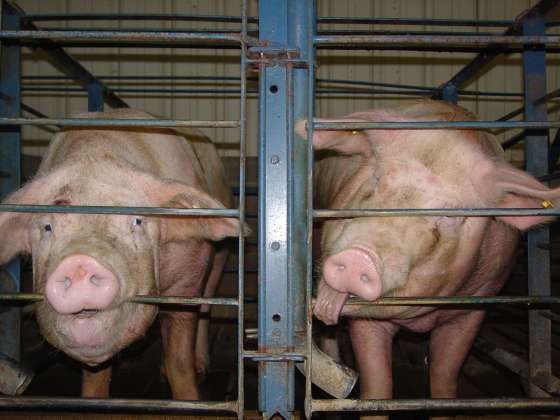
What love they show us – and what wickedness we show them in return. In intensive factory farms, sows are artificially inseminated over and over. The majority of sows reared in Britain are kept in metal crates just centimetres bigger than their bodies.

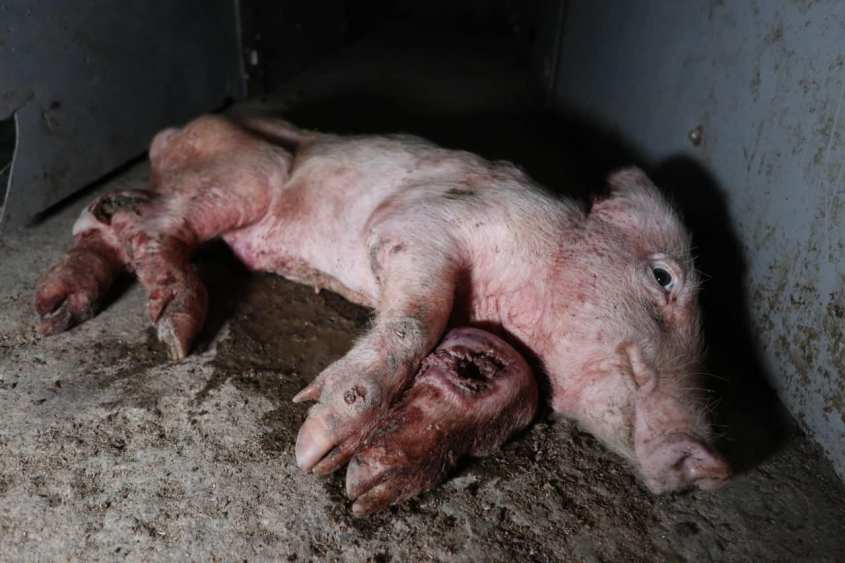
Even in farms with higher welfare standards, little piglets have their ears punctured, teeth clipped and tails cut without anaesthetic. On some farms, piglets who grow too slowly are killed by being slammed headfirst onto concrete floors. This standard industry practice is called “thumping”

Around 86 per cent of pigs slaughtered for food in the UK are killed in gas chambers. Yes, gas chambers. As Jane Dalton’s recent long read for The Independent revealed, pigs “scream in pain and gasp for breath while the gas acidifies their eyes, nostrils, mouths and lungs,” and “scramble to try to escape, panicking and in distress” before they “literally burn from the inside out”.

Bacon, though.

The human race’s complex relationship with pigs was shown in 1998, when two pigs escaped from an abattoir in Wiltshire, swam a river and ran off.

The pigs – Butch and her brother Sundance – spent a week on the run. They were dubbed the Tamworth Two and became a media sensation. Over 100 journalists drove to the south-west to search for them in muddy woods. Television crews hovered above in helicopters.

The pigs were mentioned in parliament and on Radio 4’s Thought for the Day. When their owner said that once they were found he would take them back to the slaughterhouse, there was a public outcry. These national heroes were eventually rehomed at a sanctuary. Sundance lived to be 14 years old.

The saga captured what scientists call cognitive dissonance. Most of the people cheering on the Tamworth Two were meat eaters. The same people tucked into pork chops or bacon sandwiches straight afterwards. But the thought of those two pigs getting killed still upset them.

It’s the same with pigs in popular culture. Peppa Pig and the piggy star of the movie Babe capture the hearts of all who watch. But what sort of love is it? Most of the same kids who are captivated by Peppa and her friends are also fed the flesh of other pigs – pigs that have had a hellish life and terrifying death. What would Peppa say?

As the vegan market rockets, there are now vegan sausages and bacon rashers that are just as good as their meat equivalents. I get that people love bacon. But if you can get the same salty taste and mouthfeel without hurting and killing a pig, wouldn’t that be better all round?

Regards Mark

USA: PeTA Exposé Reveals Sick, Injured, Stressed Greyhounds Imprisoned and Bled Repeatedly at Hemopet.

Exposé Reveals Sick, Injured, Stressed Greyhounds Imprisoned and Bled Repeatedly at Hemopet (peta.org)

A PETA eyewitness investigation of Hemopet—a canine blood “bank” in Garden Grove, California—found that this so-called “rescue” warehouses approximately 200 greyhounds bred for and discarded by the racing industry in tiny crates and barren kennels for about 23 hours out of every day—even when they were sick or injured in fights with stressed kennelmates—and boasts that it sells their blood to over 2,000 veterinary clinics in North America and Asia.

Barren Enclosures, No Space to Move Around

Hemopet kept many of the greyhounds in barren, rusty kennels. Others were locked in crates so small that they could barely turn around or even stand up or stretch, and could hardly even see any other dogs.

These greyhounds—who, like all dogs, were eager to run and play and longed for companionship—were taken out of their cages only to be bled, walked briefly, or put into barren concrete-floored pens for a few minutes. Dr. Emma Milne, a veterinarian who reviewed the footage, said, “The length of time they are spending in the cages is completely unacceptable, especially given the size and nature of the cages. Dogs are social animals with complex behavioural and social needs. These welfare needs are not being met at all in this environment” [emphasis in original].

Tails Severed and ‘Dangling by a Little Nerve’

If you’ve ever donated blood, you probably sat on a cushioned chair and enjoyed some orange juice before heading home. But at Hemopet, greyhounds—who are intelligent, gentle, active dogs—were confined for about 23 hours a day, every day, on hard surfaces for months or even years. This perpetual imprisonment caused them to suffer from hair loss, calluses, and pockets of accumulated fluid under the skin.

Continued on next page.

Spain becomes the main pork producer in the European Union.

Germany used to be the largest pork producer in the EU, but has lost China as a customer after the outbreak of African swine fever (ASF) in wild boars.

Germany is one of the largest meat exporters in the world.
So far, 56% of EU pig product sales have gone to China, making the country the largest export customer, according to data from the European Commission.

The EU shipped 3.3 billion kilograms of pork to China last year, almost three times as much as in 2018.

China’s desire for imported pork rose after its own ASF outbreak that killed more than 100 million pigs.

“The fact that China has been affected by African swine fever in recent years has made demand soar, “said Ramon Soler Ciurana, export manager at Faccsa-Prolongo, a Spanish pork producer in Málaga.

Spain produced 2.6 billion kilograms of pork in the first half of 2021, 4.1% more than in the same period last year, according to the European Commission.

German slaughterhouse in Spain

Since there are less strict animal welfare regulations in Spain than in Germany, Tönnies, Germany’s largest slaughterhouse, is building a pig slaughterhouse and a meat packaging plant in Calamocha in Spain.

According to Tönnies, the stricter animal welfare and environmental regulations in Germany have contributed to the decline in pig farming (!!!).

“Even if German farmers want to invest in new pigsties, they often do not get a building permit from the local authorities,” said Andre Vielstädte, a spokesman for Tönnies.

The new Tönnies slaughterhouse is scheduled to go into operation in Spain in 2023 and kill 10,000 pigs a day.
“The Spanish pig market is attractive, and the political framework conditions are positive,” said Andre Vielstädte

“Our new Spanish plant will be exclusively intended for export to markets such as pork ribs to North America, pork bellies to Japan and other products such as pork feet and ears to China and other Asian countries,” said Vielstädte.

He described the German animal welfare regulations as “one-sided” because other European countries do not demand the same from farmers, so that it is cheaper and easier to invest in pig farming in Spain than in Germany.

Continue reading “Spain becomes the main pork producer in the European Union.”

UK: Urge ABTA to Include Dolphin and Whale Captivity Among Its Unacceptable Practices.

Urge ABTA to Include Dolphin and Whale Captivity Among Its Unacceptable Practices | People for the Ethical Treatment of Animals (peta.org.uk)

WAV Comment – ABTA is the Association of British Travel Agents – the overseeing body to which travel agents belong.


Urge ABTA to Include Dolphin and Whale Captivity Among Its Unacceptable Practices

ABTA, a travel trade association, is letting dolphins and whales down! Remind it that marine animals need protection, too.

The company advises against the promotion of tourist activities such as bullfighting and elephant rides. Urge it to update its Animal Welfare Guidelines to add facilities that exploit dolphins and whales to its “unacceptable practices” list.

Why Marine Parks Suck

All animals deserve respect. They aren’t selfie props or circus attractions.

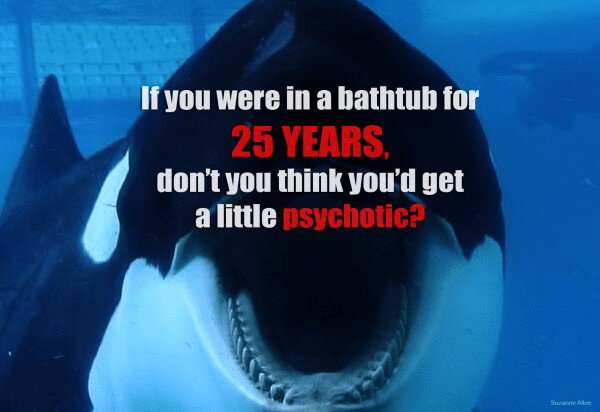
Whales and dolphins are complex, highly intelligent animals who have their own language and culture. In the ocean, orcas can swim up to 140 miles a day. Imagine how they feel being imprisoned in cramped tanks.

Orcas are left to languish in concrete tanks about 10,000 times smaller than their natural home range. They may also be drugged with diazepam and other tranquilisers. At SeaWorld, 140 dolphins are packed into just seven tanks. Their water is chemically treated, and they’re forced to perform confusing tricks. Life in a marine park is no life at all.

ABTA Needs to Do Better!

ABTA’s Animal Welfare Guidelines lists wild-animal performances  among its unacceptable practices. But why is it OK with letting marine mammals endure a life of misery in watery prisons?

The UK hasn’t had these cruel attractions since the 1990s, and Belgium, Canada, France, and India have banned cetacean captivity. Airbnb, British Airways Holidays, Your Co-op Travel , and Virgin Holidays refuse to promote marine parks. ABTA is now lagging behind, allowing members like TUI to continue to support these barbaric spectacles.

Take Action

PETA has highlighted the cruelty behind marine parks to ABTA, but the organisation is dragging its feet. Join us and urge it to live up to its “responsible tourism at home and abroad” claim by doing the right thing for whales and dolphins. 

Ask ABTA to revise its animal welfare guidelines and add promoting captive cetacean tourist destinations to its list of unacceptable practices:

Action – Urge ABTA to Include Dolphin and Whale Captivity Among Its Unacceptable Practices | People for the Ethical Treatment of Animals (peta.org.uk)

Regards Mark