Month: October 2021

#StopTheGrind-a laudable initiative from Brussels

Report by Martin Buschmann MEP *

Stop Grindadráp!

The slaughter of whales and dolphins in the Faroe Islands must come to an end.

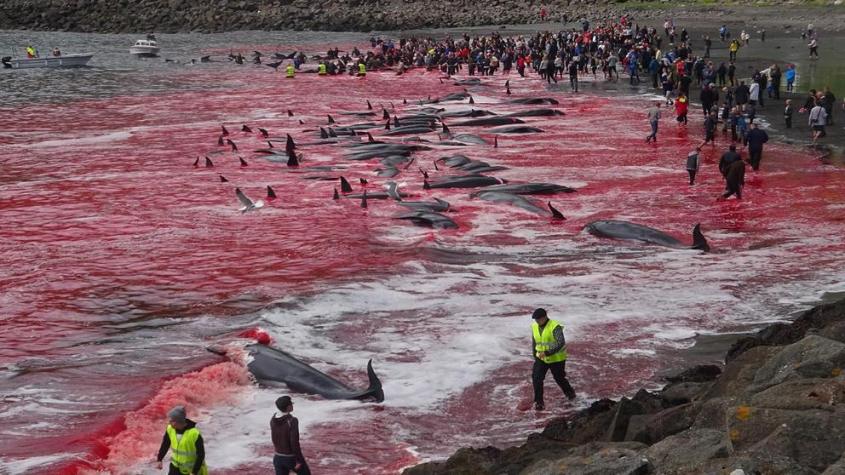
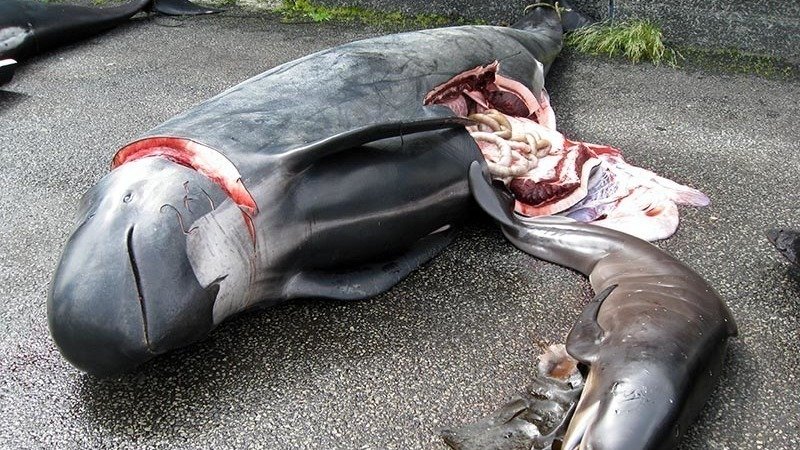
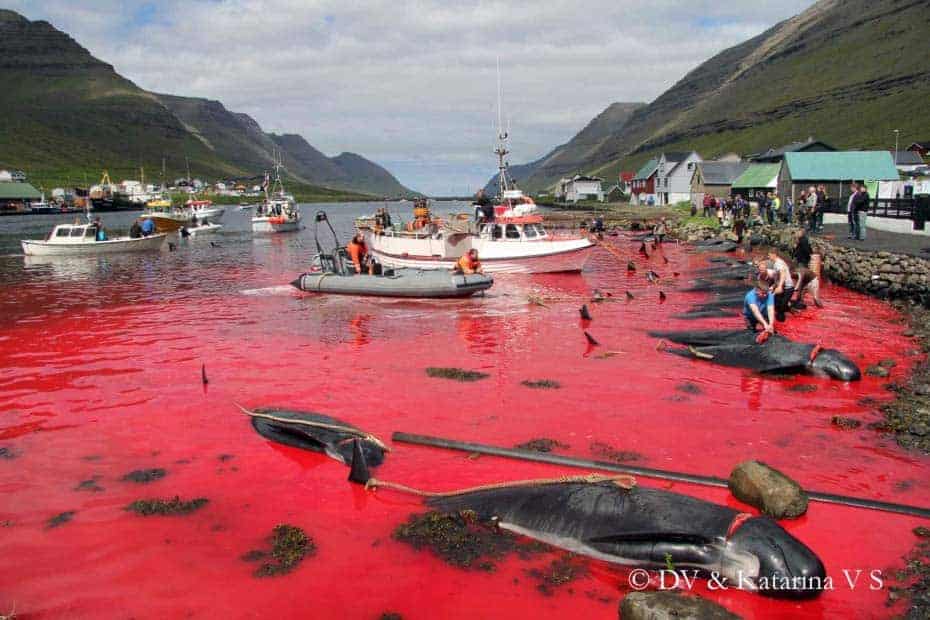
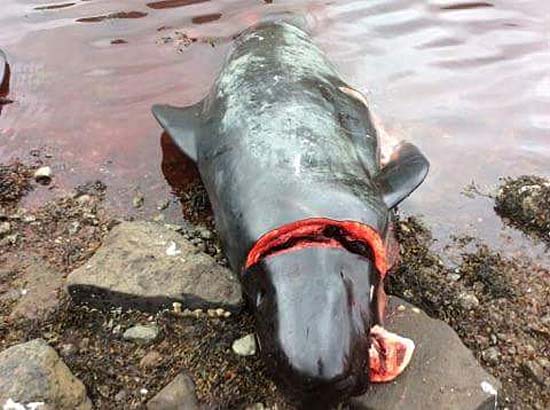
The driven hunts are not only incompatible with the requirement of species protection, they also involve enormous cruelty to animals. After the animals have been cornered, they are stabbed with metal lances.

Not all of them die immediately from the deep cuts, many animals lie twitching on the beach for a long time until they bleed to death.

The masses of dead animals, the sea stained red with blood – all of this outrages people around the world.
So many dolphins have been killed this year that the island residents cannot consume the meat.

Sea Shepherd environmentalists believe that much of it needs to be disposed of.

This senseless killing must not go on!

This is what I am committed to in Brussels. I will take further steps once the Commission has replied to my question. In cooperation with various animal welfare organizations, pressure is built up until we have achieved our goal!

In an open letter, I and the other supporters of “Stop the Grind” address directly to the Prime Minister of the Faroe Islands.

In six detailed points we show why the grindadráp has to stop.
I am confident that common sense will prevail and that we will succeed.
#StopTheGrind

* Martin Buschmann is a German politician.
In the 2019 European elections he was elected as a member of the European Parliament for the Animal Welfare Party.
From July 2019 to January 2020 he was a member of the GUE / NGL parliamentary group, at the beginning of 2020 Buschmann resigned from the parliamentary group and a little later from the animal protection party

More about the union against the Grindadráp can be found here:
https://www.stopthegrind.org/
#stopthegrind

And I mean…A ban on the whale massacre in Faroe Islands is a duty on the part of the EU Commission because members of the European Union are prohibited from killing whales.

The psychopaths slaughtered entire families of whales with pregnant mothers and young animals for the amusement of their own toddlers and families.
Some whales swim for hours in the blood of their family members and try to save them, frightened with fear, knowing what will happen to them too.

We, animal rights activists, and all civilized people are outraged by this massacre and will support every initiative to end this senseless bloodbath.
Which, by the way, is prohibited by European directives and international conventions.

This mass murder cannot be justified by invoking old, outdated traditions and brutally massacre up to a thousand pilot whales and dolphins every year.

Thank you Martin and everyone who leads this collective fight from Brussels with you.

My best regards to all, Venus

Pescetarianism means also massive cruelty to animals

More and more people all around the world are choosing to give up beef, chicken, and pork in the name of health and environmentalism…only to substitute with fish.

However well-intentioned, choosing to go pescetarian might not be as beneficial as you think.

While fish can seem like a healthy alternative to leaving other animals off of our plates, the science says otherwise. Here are the most common myths you may believe about pescetarianism and the truth behind them.

The term pescetarianism comes from the Latin word “piscis” and from the Italian“pesce” and means “fish”.
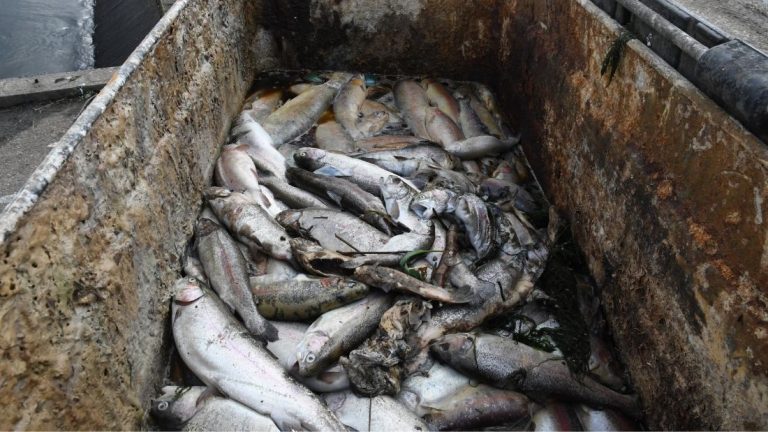
The difference between a vegetarian diet and a pescetarian diet is that vegetarians do not eat meat or fish, while the pescetarian diet makes an exception for animals that live in water.

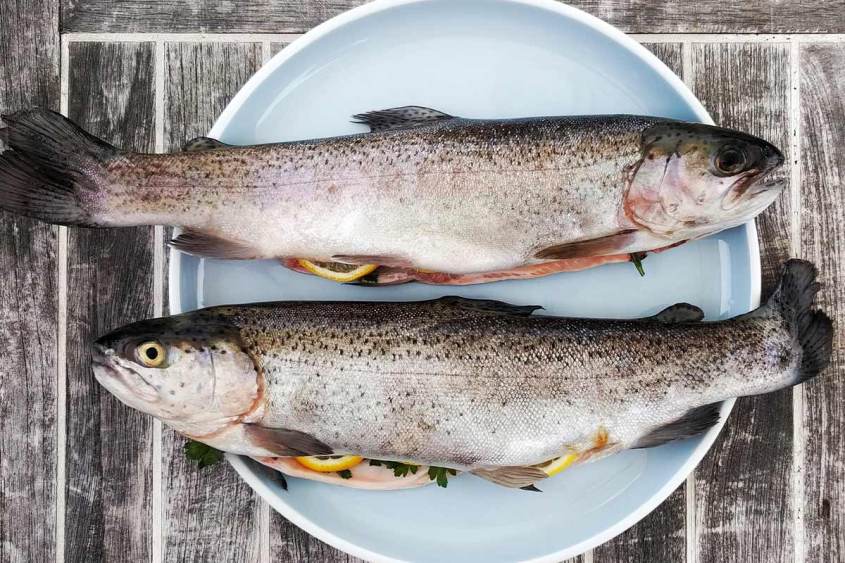
Pescetarians reject the consumption of meat from land animals – instead, in addition to plant-based foods such as vegetables and pulses, they eat various types of fish such as salmon, trout and the like.

Often with this form of nutrition, marine animals such as squids, mussels and other ocean dwellers are on the menu, which are either industrially bred for consumption or caught in the wild and sometimes tortured to death.
Other animal products such as eggs and dairy products can also appear in a Pescetarian diet.

There are various reasons why some people choose not to eat meat from land animals but instead eat meat from fish and other marine life: these include health considerations climate reasons and animal welfare.
Health reasons refer to the supply of protein and omega-3 fatty acids to the body.

But both proteins and omega-3 fatty acids are found in plants. Eating fish, on the other hand, can have negative health effects due to the high level of pollution.

As far as the climate and environmental aspects are concerned, you need to know the following:
American researchers studied the effects of fishing on our environment in 2015.
The data showed that industrial fishing is practiced in around 55 percent of the world’s oceans.

At around 90 million tons per year, fishing has remained at the same level for thirty years.The kilometer-long trawls used in industrial fisheries destroy the oceans significantly by plowing up the seabed.At around 90 million tons per year, fishing has remained at the same level for thirty years.

Continue reading “Pescetarianism means also massive cruelty to animals”

Hawaii: Swimming with dolphins is over

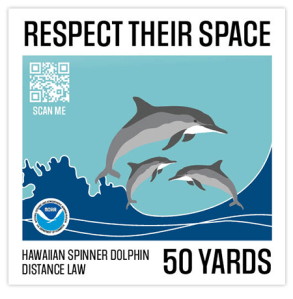
A final rule prohibits swimming with, approaching, or remaining within 50 yards of spinner dolphins. A proposed rule may establish time-area closures of select nearshore resting areas.

Like all animals, Hawaiian spinner dolphins need rest. Spinner dolphins are nocturnal feeders that perform critical resting behaviors during the day while in safe, nearshore areas. But for decades, spinner dolphins in Hawaiʻi have experienced intense viewing pressure from commercial and recreational wildlife viewers seeking close encounters with the charismatic marine mammals.

The natural behavior patterns of the animals are massively disrupted, which most people are not even aware of.
But that is over now: The USA has decided that from October 28, 2021, people will not be allowed to approach the spinner dolphins that are resident there less than 50 meters near the coast.

This new regulation will now require the public to respect spinner dolphins’ space so they can shelter undisturbed in their resting habitat close to shore.

The US government is thereby legally implementing the ban on contact between the marine mammals and us.

No swimming with, approaching, or remaining within 50 yards of spinner dolphins
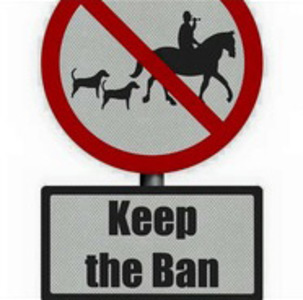
This has been confirmed by the National Marine Fisheries Service, NOAA. The new law applies to swimmers, divers, boats, and also to drones that are within two nautical miles of the coast of Hawaii’s main islands and designated waters between the islands of Lāna‘i, Maui and Kahoʻolawe.

Continue reading “Hawaii: Swimming with dolphins is over”

UK (England): Secret Filming Shows (Hunting) Hounds Being Shot Dead At Hunt Kennels.

WAV Comment:  The killing of hunt hounds is not new; it has happened for ages.

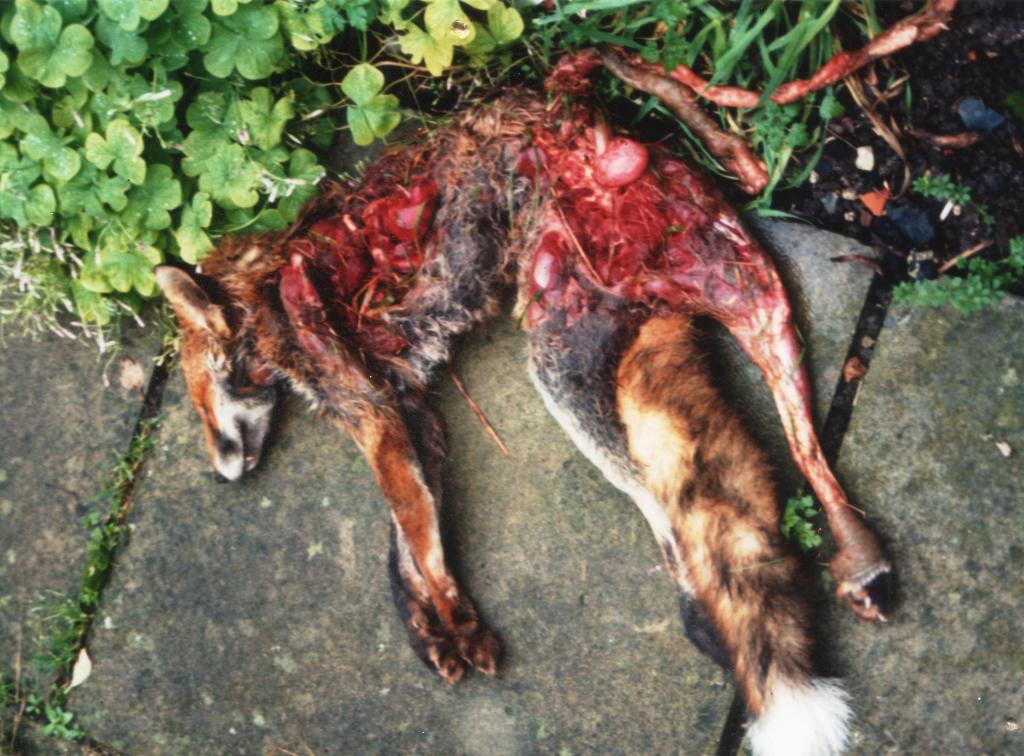
In the UK there was a thing known as the ‘cub hunting season’; where new hunt hounds were ‘tested’ out the innocent cubs of a fox pack to see if they had the ‘blood lust’ that was required of them.

Often, if they were found to be too docile and lack that killer instinct, then those hounds were ‘dispatched’ by the hunts – by that, we mean shot through the head and disposed of.  It has been captured on video in the past.

Regards Mark


Photo – Mark / East Kent Hunt Sabs.

Latest:

Secret filming shows hounds being shot dead at hunt kennels

ITV is a major British television station.

Secret filming shows hounds being shot dead at hunt kennels | ITV News

An anti-hunting activist told ITV News Correspondent Rupert Evelyn the dogs are killed and “thrown away like garbage” when they are no longer “fit for purpose”


Secret cameras have recorded huntsmen shooting and killing hounds that had been used for hunting.

The pictures, filmed by anti-hunting groups the Hunt Investigation Team and Keep the Ban and shared exclusively with ITV News, is the first time footage of a hunt shooting its hounds has been shown publicly.

Hounds can be killed for several reasons including being too old to hunt, or if they get ill or injured. The practice is not illegal.

The pictures were taken at the kennels of the Duke of Beaufort’s Hunt in Badminton, Gloucestershire. The Duke of Beaufort’s Hunt told ITV News that its hounds are “humanely euthanised” if they cannot be rehomed. It added that the majority of hounds are “unsuitable for rehoming” because “they are not house-trained and have only ever been used to living in a pack environment”.

The secret footage, recorded over several periods between April and September, shows four separate examples of hounds being shot:

  • In two cases, a huntsman is seen putting a gun to the head of the hound and killing it.
  • In another, the hound appears to be unwell and is carried onto the grass by the hunt staff before being shot.
  • Another shows the hound being shot twice, three minutes apart.

Watch the secret footage at a hunt’s kennels where hounds were filmed being shot dead – click on the above link.

Rob Pownall, Keep The Ban founder, said: “It’s some pretty upsetting footage but this is commonplace for hunts across the country. This is not an acceptable way to end an animal’s life. These hounds suffered immense pain.”The activities shown in the video aren’t actually illegal, but there’s no moral defence for what’s shown.”

The footage comes ahead of a vote later this month by National Trust members to decide whether trail hunts on its land should be banned during the next hunting season.

The National Trust suspended all trail hunting licences last year, alongside a host of other large landowners including Forestry England, following a report by ITV News about the content of webinars hosted by the Hunting Office.

Conservative MP Tracey Crouch, who is co-chair of the All-Party Parliamentary Group for Animal Welfare, said the footage of the hounds being shot dead is “absolutely heartbreaking” and “distressing”.

“I don’t understand why a dog…needs to be euthanised in this way and I am sure there are much more compassionate ways of putting a dog to sleep”, Ms Crouch told ITV News.

“We have many working dogs across this country in different sectors, such as, for example, the police or army, and I doubt very much that those kinds of dogs are put to sleep with a bolt to the head, so I don’t quite understand why it is appropriate for hunting hounds to be euthanised this way.”

After watching the secret filming, Mike Jessop, a fellow of the Royal College of Veterinary Surgeons, said that from what he saw, he did not believe the huntsmen were professionally trained in putting animals down.”There was no evidence of [the huntsperson] being veterinary trained or veterinary surgeons. The lack of use of any veterinary equipment that one would expect such as stethoscopes to ascertain the dogs were dead was just lacking”, he said.”The evidence from the video doesn’t show any illegal activity. My concern is whether there is any suffering after the shot, because nobody is being careful enough in checking the dogs are truly dead.”In one of the videos, the [hound’s] tail was still waggling very vigorously for quite some time, even when the dog was being loaded in the wheelbarrow.

Continued on next page.

Wolves in Berlin – and the media hysteria

In Berlin, wolves are sighted for the first time inside the motorway ring. The debate about the wolf has reached the capital of Germany!!

The headlines from the German press:
“a wolf pack at the gates of Berlin”
“wolves only 30 kilometers from the city center”
“wolves within the Berlin ring” …
“the wolf in Berlin: when will the first child be torn, people ask”Conservationists are happy, farmers are less enthusiastic. The hunting association is now reproaching the Federal Agency for Nature Conservation.
The most important question arises: do these strictly protected predators pose a threat?
How much wolf can Berlin take?

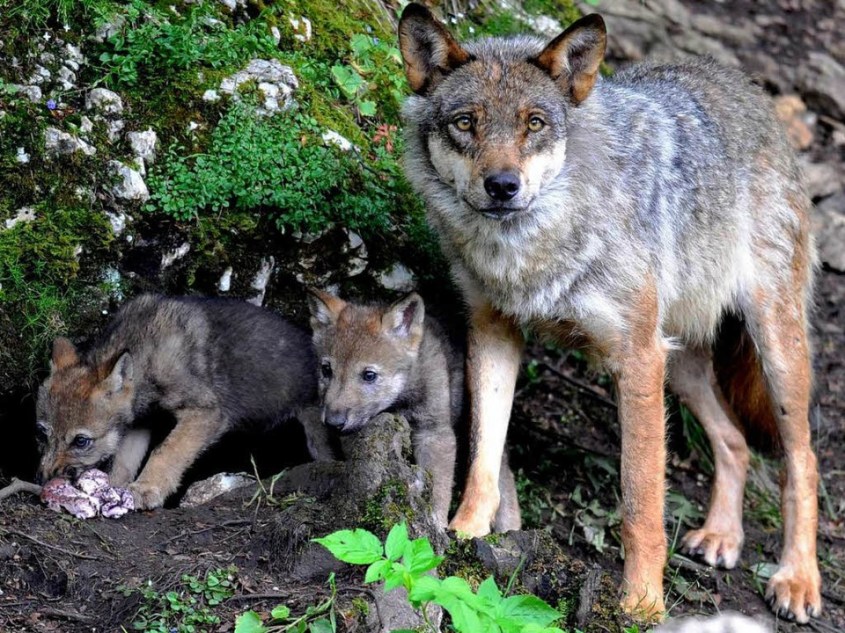
A wolf pack has settled west of Berlin in the nature reserve around Berlin.

About two weeks ago, two parents and four puppies ran in front of the lens of a photographer who was out and about in the 4,500 hectare nature reserve at the gates of Berlin and Potsdam for the “Heinz Sielmann Foundation”.

According to the foundation, the six animals have settled in a fenced area of around 1,800 hectares in the middle of the area – there they are largely undisturbed by humans.

The area is only around 30 kilometers from Alexanderplatz (in the center of Berlin). On Tuesday, the State Environment Agency (LfU) confirmed to the German Press Agency that the animals were wolves. Other wolf packs had not yet settled within the Berlin Ring.

It is very clear why the pack chose the protected area of ​​all places: Here they will find everything they need. Space, water, enough food and above all: peace and quiet.
The area is actually too small for a pack, but the animals would have a lot of food there due to the high number of game.

Deer and wild boars were not enough for the animals: In August and September cracks were reported from goats and sheep grazing there.

The population is increasing, the animals go where they can find game. According to the hunting association, the game population has already been drastically reduced in this area.
“I wonder what happens when the wolf runs out of wild animals” so a hunter

“Not only do wolves deserve protection, grazing animals also deserve protection. The pastures should not be “set tables” for wolves. “ says Federal Agriculture Minister Julia Klöckner.

The Ministry of the Environment says: … “And if a wolf repeatedly ventures too close to human settlements, then it is classified as a problem wolf and can be shot.”


https://www.berliner-zeitung.de/mensch-metropole/sind-die-woelfe-an-der-berliner-stadtgrenze-eine-gefahr-li.187708

https://www.tagesspiegel.de/berlin/brandenburg-erstmals-wolf-fotografiert-am-berliner-ring/12675608.html

And I mean…“And if a wolf repeatedly ventures too close to human settlements, then it is classified as a problem wolf and can be shot.”
Apparently man is now an endangered species, badly decimated in its existence by the predators around him.
Worse still, the other species keep humans industrialized and slaughter them by the millions every day.
The useless copies are shredded by the millions….
Or how was that?

The normal ‘collateral damage’ in “beneficial” animal husbandry is 100 times greater than all wolves combined could ever cause for their survival.

By the year 2000 the wolf had been exterminated from humans in Germany.
Purely informative: The wolf is not settled but turns back by itself.

The wolf is (still) protected by European (Fauna-Flora-Habitat Directive FFH-RL, Appendix IV) law, and as an endangered animal species it has a high protection status in Germany (Section 44 of the Federal Nature Conservation Act BNatSchG).

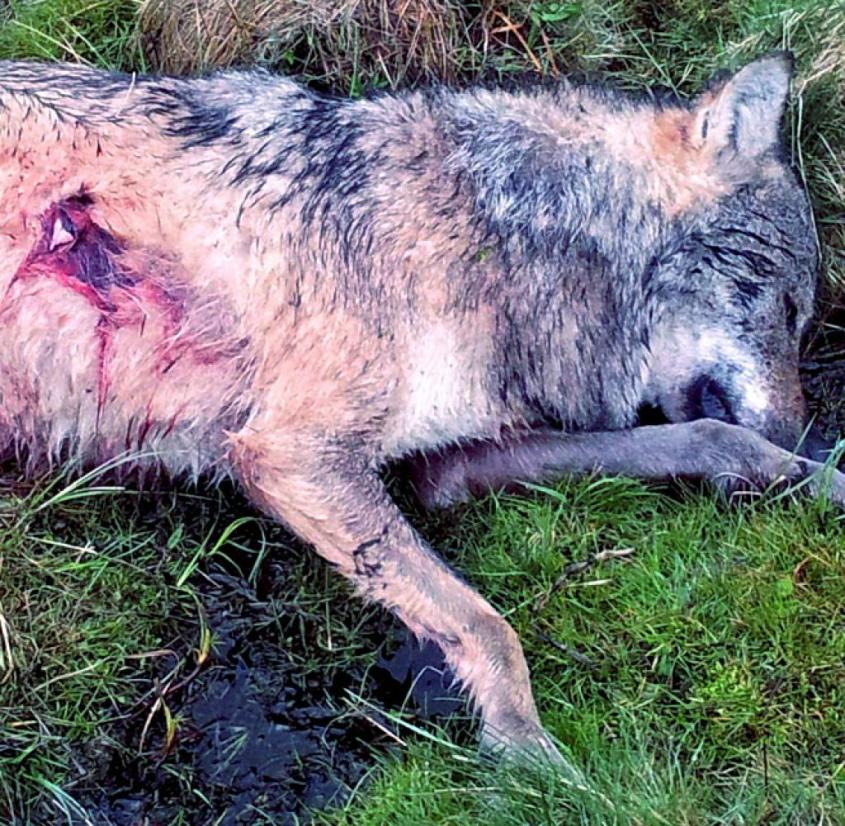
Well… a few psychopaths with hunting license are of the opinion that they don’t have to comply with “nonsensical” laws – since 2000 there have been 64 deliberately and therefore illegally shot wolves in Germany.
The number of unreported cases is higher, because even entire packs just disappear from the scene.

No case has been resolved so far, let alone brought to court

Wolves do not practice mass animal husbandry, they either eat what is there or starve to death.
In contrast to us humans, who not only shoot animals for fun, although we do not need their flesh and skin for life at all, but enslave them, torture and brutally kill them in order to eat them.

May the family live long and in peace

My best regards to all, Venus

UK: UK Public Now Eating Significantly Less Meat – Down 17%.

Red meat
Getty Images

UK public now eating significantly less meat – BBC News

UK public now eating significantly less meat

Daily meat consumption in the UK has fallen by 17% in the last decade, a study has shown.

That reduction though is not happening quickly enough to meet a key national target, according to scientists.

The aim is to reduce the environmental impact of our diets.

This goal, set by the National Food Strategy, is based on a review of the whole UK food system – from farming and production to hunger and sustainability.

It recommends meat consumption in the UK fall by 30% over the next 10 years.

“We now know we need a more substantial reduction,” said lead researcher Cristina Stewart from the University of Oxford.

The new study, published in the journal the Lancet Planetary Health, revealed that while most people are eating less red and processed meat compared to a decade ago, they are eating more white meat.

High consumption of red and processed meat can increase the risk of health problems including cardiovascular disease, type 2 diabetes, and even certain cancers.

Meat production also has a higher environmental impact – producing more planet-warming greenhouse gas emissions – than other types of agriculture and food production.

Not all meat is equal

This Oxford-based research team used data from the National Diet and Nutrition Survey – a detailed survey of the dietary habits of more than 15,000 people across the country.

This showed that daily meat consumption had reduced by about 17g per person per day.

What it did not reveal was the reason people were changing their diets. But market research in 2019 suggested that almost 40% of meat-eaters were actively trying to reduce their consumption, with many citing either health or environmental reasons.

Dr Stewart stresses that, for those who want to reduce the environmental impact of what they eat, “any reduction in meat will have an impact”.

“You don’t have to be vegetarian,” she said. “Although, in general, meat-free dishes will have a lower impact.

“But if you’re someone that eats meat every day, reducing your meat consumption by 30% just looks like having two meat-free days per week.”

There is huge variation in the environmental impact of meat; it depends on what livestock are fed and where and how the meat is produced.

This Oxford-based research team used data from the National Diet and Nutrition Survey – a detailed survey of the dietary habits of more than 15,000 people across the country.

This showed that daily meat consumption had reduced by about 17g per person per day.

What it did not reveal was the reason people were changing their diets. But market research in 2019 suggested that almost 40% of meat-eaters were actively trying to reduce their consumption, with many citing either health or environmental reasons.

Dr Stewart stresses that, for those who want to reduce the environmental impact of what they eat, “any reduction in meat will have an impact”.

“You don’t have to be vegetarian,” she said. “Although, in general, meat-free dishes will have a lower impact.

“But if you’re someone that eats meat every day, reducing your meat consumption by 30% just looks like having two meat-free days per week.”

There is huge variation in the environmental impact of meat; it depends on what livestock are fed and where and how the meat is produced.

The COP26 global climate summit in Glasgow in November is seen as crucial if climate change is to be brought under control. Almost 200 countries are being asked for their plans to cut emissions, and it could lead to major changes to our everyday lives.

“Locally produced meat has a much lower impact than meat that has been imported,” Dr Stewart pointed out.

She and her colleagues have also been studying the effect of “environmental impact labelling” on consumer choices. They have designed experimental labels that score a product based on its greenhouse gas emissions, biodiversity loss, water-use and water pollution.

“When you don’t have the information about environmental impact of food, it’s really hard to shop with that in mind,” she pointed out.

Having the support of those we eat our meals with, the Oxford researchers say, makes it easier for us to change our diets. And the availability and prominence of meat-free food options has an effect on people’s food choices, too.

“So, for example, if you’re at a restaurant, you often see a vegetarian options ‘box of shame’ at the bottom of the menu rather than at the top with chef’s specials,” Dr Stewart explained.

The team’s ongoing study of what drives people to reduce their meat consumption has revealed some simple strategies that participants have found helpful, including:

  • Trying one new vegetarian recipe;
  • Making one meal in a day vegetarian, rather than going a whole day without meat;
  • Reducing portion size: In a recipe that includes meat, like a bolognese, reduce the amount of meat and supplement that with lentils and vegetables.

“Hopefully this paper will help us understand the patterns and trends so we can tailor public health policies and behavioural nudges to help people choose more sustainable options,” said Dr Stewart.

WAV COP26 Links:

Search Results for “COp26” – World Animals Voice

Regards Mark

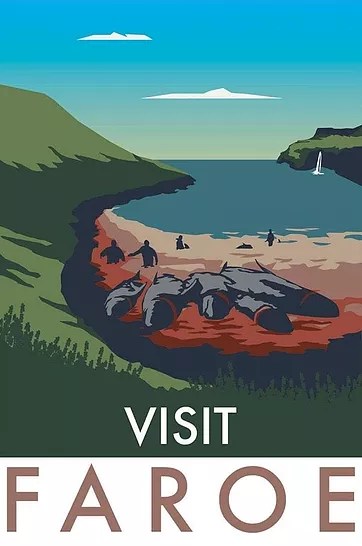
Denmark: Stop The Grind – New London Based Action Site Against The Killing Of Dolphins and Pilot Whales In The Faroe Islands.

FAROE TOURISM.jpeg

Stop the Grind | End Killing of Dolphins and Pilot Whales in the Faroe Islands

Gallery – Gallery | Stop the Grind

The world has watched in horror as the Faroe Islands government continues to allow thousands of pilot whales and dolphins to be massacred brutally and senselessly in the Grindadráp hunts.  Now is the time for change. We are calling on the Faroe Islands’ government to do the right thing and ban this outdated and cruel practice. Stand with us and be part of the global movement.

Stop the Grind | End Killing of Dolphins and Pilot Whales in the Faroe Islands

The Stop the Grind movement is based in London with members all over the world. The campaign is a partnership between Sea Shepherd and Shared Planet, an impact-focused consultancy. We bring together a global coalition of stakeholder organisations and individuals with the common interest of ending the Grind. Our aim is to show that the world no longer accepts the senseless killing and to demonstrate that the global community will not standby and watch the Faroe Islands’ government act irresponsibly in silence. We must act together to ensure that our voices are heard.

Continue reading and see all the supporters at:  About Us | Stop the Grind 

Our past posts on this issue:

Search Results for “faroe islands” – World Animals Voice

Regards Mark

U.S: a dangerous bill for farmed animals may not come into force

A terrible law for farmed animals has recently been proposed in Congress, and we need your help to defeat it!
The Exposing Agricultural Trade Suppression (EATS) Act would wipe out all the work animal activists have done to prevent sales of exceptionally inhumane animal products in states across the U.S.

If passed, the EATS Act would create a race to the bottom in terms of animal welfare standards.
It would give a commercial advantage to the cruelest, most cheaply produced animal products in the country, since the bill would prohibit states from banning any products on cruelty grounds.

This would be a huge step backward for farmed animal welfare.

We need your help to ensure that this dangerous and overreaching bill is not enacted!

Please urge your members of Congress to oppose the EATS Act using the form below.

Petition 1: (For U.S. citizens only) : https://animalequality.org/stop-eats-act/-laws

Petition 2: https://hslf.org/action-center/stop-dangerous-bill-could-wipe-out-animal-cruelty-laws

https://animalequality.org/stop-eats-act/

And I mean…The EATS act…. Sickening name for an sickening thing.
Farm animals have a shit life as it is. Why do we have to make their lives even shitter?
We cannot believe that, in 2021, U.S legislators are drafting asinine bills like this.
Like, can any decent human being read this bill and think, “yeah, great idea!”?

A good friend recently said to me: “An inner voice just repeats itself: “I don’t want to live on this planet anymore.”
But we have to – who else will take care of these things if we don’t.

Please sign and share both petitions

My best regards to all, Venus

England: Vegan Food At COP26. Why None ? – WAV Now Write To MP and Ask Him To Contact Mr Sharma For Responses. Keep Ramping It Up Sort Of Thing !

WAV Comment:

Over the past few weeks we have been drawing some attention to the fact that NO Vegan, or plant based food is being made available to delegates at the COP26 Climate Conference taking place soon in Scotland.

UK: Ever Visited Your GP With A Cough And Then Been Prescribed 20 Cigarettes A Day ? – World Animals Voice

Urge the COP26 Climate Summit to Serve a 100% Vegan Menu. – World Animals Voice

UK: UN COP26 Climate Summit – vegan eating can reduce food-related carbon emissions by 73%. Eating meat and dairy is part of what got us into this mess. So Why No Vegan Food At the Summit ???? – Take Action Below. – World Animals Voice

Taking into account that this is a climate conference, and we all know how rainforests are being destroyed by intensive livestock feedlot creation, along with the huge environmental destruction caused by animal farming; would you not think that COP26 would be the ideal place to set out a stall to support a plant based diet which is much more environmentally friendly ?

It still seems that this is not the case.

So today, 8/10/21, I have written to my own Member of Parliament (UK), to ask him to contact Alok Sharma MP; President of the conference; and ask why vegan plant based is not the only food that will be available to COP26 delegates who attend.

At my request, my MP  really has a duty now to contact Alok Sharma MP; COP26 Conference President; and ask for a formal response to my letter.

I will now  sit and wait to see if anything arrives in the next few weeks; and will naturally let you know the result.

Regards Mark

Here below is a copy of my letter on behalf of WAV dated 8/10/21 to my MP:

—————————————————————————–

Adam;

The 26th Conference of the Parties (COP26) climate summit is now weeks away.

Alok Sharma MP is the President of this important conference.

Climate protesters know that fishing, meat, dairy, and egg industries are not only intensively cruel to animals but also cause catastrophic damage to the environment. For decades, the United Nations has identified animal agriculture as a leading cause of deforestation, pollution, ocean dead zones, habitat loss, species extinction, and zoonotic disease spread. The UN is calling for a climate tax on meat, and the Committee on Climate Change says people must reduce their meat and dairy consumption.

The science is more than clear: animal-derived foods have far bigger carbon footprints than plant-based alternatives.  But is Alok Sharma, President of COP26 really clear on what is happening ?

Plant-based foods have a far smaller carbon footprint than their animal-derived equivalents.  A switch to vegan eating can reduce food-related carbon emissions by 73%. Intensive meat farming / production methods are and have been causing massive destruction in the Amazon rainforest regions for example, part of the reason why we now are globally in such a mess.

The COP26 Climate Summit Should Set an Example; but does it through the policies of Alok Sharma ?

Given everything we now know about the devastating impact of animal agriculture on the environment, the Alok Sharma attitude of serving meat, dairy, or eggs at a climate change summit would be like distributing cigarettes at a health convention.  Plants and plant based diets are the only way forward, and a vegan menu would not only allow attendees to experience the wonderful vegan options of today, but would also allow them (allegedly as environmentalists ?) to dine with a clear conscience and set an important example for the world to follow.

Given the vast availability of vegan food today, it would be easy for COP26 to create a delicious and sustainable plant-based menu that would impress delegates. Ensuring that all food served at COP26 is plant based would be a powerful way for the UK to show its commitment to action on the climate crisis while championing fresh British produce and British farming. 

Only vegan food should be served at COP26.

Please write to Mr Sharma MP on my behalf and ask him why environmentally friendly vegan food is not being served at COP26.

Mr Sharma is not setting a good example by his current actions; which says does it not, that his Conservative government is great on the ‘talk the talk’ front, but lacking in the real action department. 

I would be very interested to hear his reasons for, through his actions, of not supplying a plant based, environmentally friendly diet at a COP conference which will hopefully progress and get people AWAY from intensive animal agriculture, the basis of global forest destruction such as the Amazon.

Thank you

Mark Johnson

————————————————————————–

Additional:

SAO PAULO, Oct 7 (Reuters) – Nearly a third of the cattle bought by JBS SA (JBSS3.SA) in the Brazilian Amazon state of Para came from ranches with “irregularities” such as illegal deforestation, prosecutors found in a 2020 audit of the world’s largest meatpacker released on Thursday.

Revealed: rampant deforestation of Amazon driven by global greed for meat | Brazil | The Guardian

Revealed: rampant deforestation of Amazon driven by global greed for meat

The cows grazed under the midday Amazon sun, near a wooden bridge spanning a river. It was an idyllic scene of pastoral quiet, occasionally broken by a motorbike growling on the dirt road that cuts through part of the Lagoa do Triunfo cattle farm to a nearby community.

But this pasture is land that the farm has been forbidden to use for cattle since 2010, when it was embargoed by Brazil’s government environment agency Ibama for illegal deforestation. Nearby were more signs of fresh pasture: short grass, feeding troughs, and salt for cattle.

The vast 145,000-hectare (358,302-acre) farm is one of several owned by the company AgroSB Agropecuária SA – known in the region as Santa Bárbara. Located in an environmentally protected area, Lagoa do Triunfo is more than 600km (372 miles) from the capital of the Amazon state of Pará on the western fringes of Brazil’s “agricultural frontier” – where farming eats into the rainforest. To get there takes hours of driving along dirt roads and a ferry ride from nearby São Félix do Xingu, a cattle town accessible only by plane until a few decades ago.

AgroSB supplies cattle to JBS, the world’s biggest meat packing company and single biggest supplier of beef, chicken and leather globally, with 350,000 customers in more than 150 countries.

Continue reading by clicking on the above link.

The Expansion of Intensive Beef Farming to the Brazilian Amazon – ScienceDirect

Livestock and climate change: impact of livestock on climate and mitigation strategies | Animal Frontiers | Oxford Academic (oup.com)