Month: June 2022

England: WAV Write To UK Member of Parliament Over UK – Australia Free Trade Agreement (FTA).

Hi all; I have now completed and sent my letter today 8/6/22 (by e mail) to my Member of Parliament (England); you can read it below.

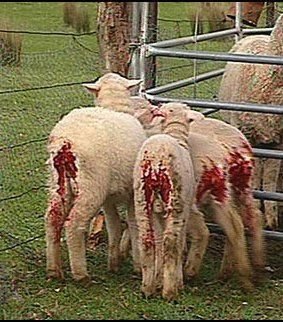
I have also sent him several pictures of sheep in Australia which have undergone ‘mulesing’ without any form of anaesthetic.

I hope the letter explains my position of the issue of a UK – Australia FTA;  and I now await response, which I will publish upon receipt.

Regards Mark

Dear Mr. Holloway Member of Parliament for Gravesham, Kent.

            You and I have met in the past, and you have also had letters from me relating to an issue that is very close to me – that of stopping live animal exports / transportation.  In lieu of the vote relating to Boris Johnson on 6/6/22; I now feel then need to write once again.

I have had the pleasure of knowing, working, and campaigning with Mr Philip Lymbery, Global CEO of Compassion In World Farming International, for over 30 years.  I recently met up with Phil at Ramsgate, when we joined the anti live export campaigners at a public meeting opposing the trade through the harbour.

There are two issues that I wish to bring to your attention; for me, important issues that will have a major influence on how I vote in future – and they are:

  1. Post Brexit Government promises to end live animal transport from the UK.

In June 2021, the UK government put forward legislation to ban the export of live animals for slaughter and fattening.  There was a Defra consultation on the issue; for which I personally submitted responses.  This consultation set the backdrop for the proposed legislation to ban animal exports.

The Animal Welfare (Kept Animals) Bill reached the House of Commons last autumn (2021), following massive public support and receiving cross party support from a number of MP’s.  BUT, despite intense lobbying since, the Bill has not been seen in Parliament since last November; and consequently it ran out of time to be passed in the 2021/22 Parliamentary session.

The dithering actions of the Conservative government and possibly opposition parties, means that today, 8/6/22, it is still legally possible for the export of live farmed animals to be undertaken from anywhere in the UK.  Exporter individuals such as Mr Onderwater, the Dutch exporter and haulier who has used Ramsgate so often in the past are effectively still legally able to use Kent ports for this sordid trade if they so wish.

Thus, I consider that the Animal Welfare (Kept Animals) Bill needs to be given priority in the new Parliamentary session in order that UK live animal exports can be confined to the history books which is the only place they now deserve.  I call on Mr Johnson, Mr Eustace and many other MP’s to give this issue the priority it deserves and get the legislation passed.  There are other issues which parliament should be acting on despite heating costs and the price of food; so please look at these other important issues and get the legislation through parliament.

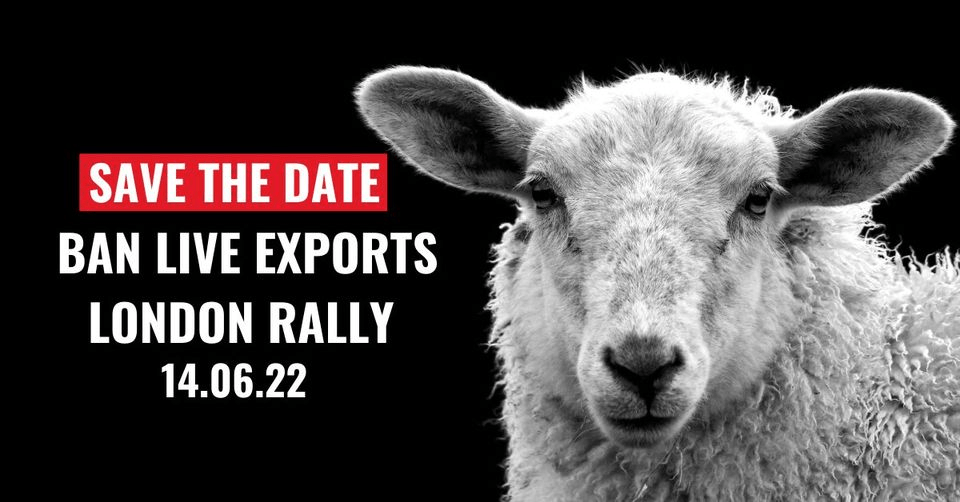
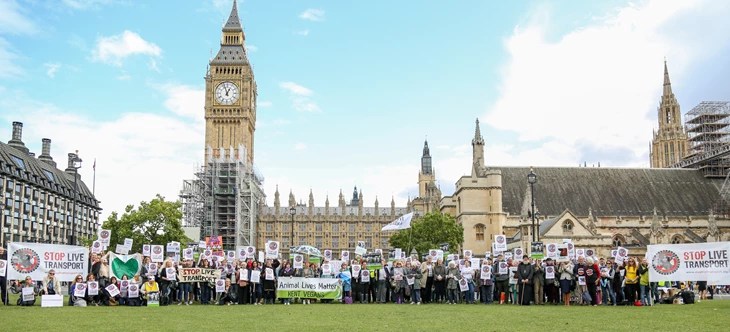
On 14th June, there is yet again another ‘Ban Live Exports’ International Awareness Day, which will be supported in London by several MP’s. The issue of the day is to (continue) to raise the disgusting trade in live animals being shipped and transported by various means all over the world – Ban Live Exports International Awareness Day | Compassion in World Farming (ciwf.org.uk)  and Ban Live Exports | Compassion in World Farming (ciwf.org.uk)

Campaigners against the trade from all over the planet will be taking part and demanding their governments do not just ‘talk the talk’, but actually pass legislation to stop this abhorrent business for once and all.  Recent actions on awareness days have seen NGOs and campaigners in over 40 countries – from Brazil, to Australia, to South Korea – global actions have included solidarity marches through Kathmandu, a petition launch in New Zealand and a giant projection on the white cliffs of Dover here in England.

I request the action of Mr Boris Johnson MP; Prime Minister, to live up to his promise of ‘the best is yet to come’; and to thus get the Bill relating to live animal exports passed to prevent future sufferings from here in the UK; hopefully setting a standard to which other nations will adhere.

  • The UK Government has now signed a trade agreement with Australia – which one can only consider as bad news for British farmers and British animals.

We all saw how Liz Truss MP thought it, the agreement, was the best thing since sliced bread.

But, in its 2019 Election Manifesto, the Conservative party asserted us voters that:

“In ALL of our trade negotiations, we will NOT compromise on OUR high environmental protection, animal welfare and food standards”.

So, possibly you can write and tell me where you Conservatives subsequently went wrong; keeping in mind the following issue on the deal with Australia.  Do I need to state:

  • Australia still allows pigs to be kept in cages during early pregnancy, whilst sow stalls have been illegal in the UK since 1999.
  • Confining hens in barren cages is still legal; and common in Australia, when the UK banned such systems in 2012.
  • The use of antibiotics on farm animals is rife in Australia.  Australian farmers are known to use up to 16 times as many antibiotics on farms as we use here in the UK. 

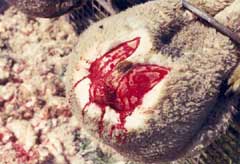
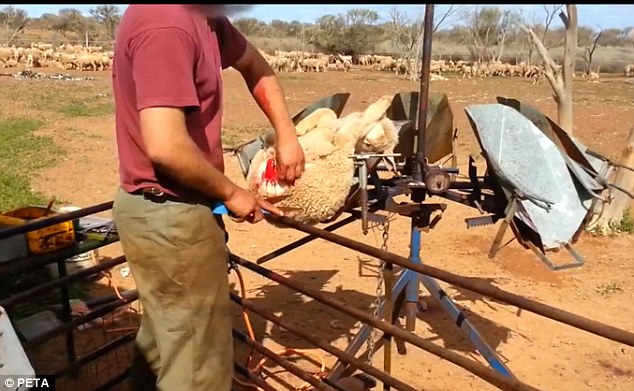
In Australia, sheep are mutilated every year through ‘mulesing’; a process undertaken on sheep stations, and without anaesthetic for the animals involved, where large chunks of its skin at their rear end, under the tail, are cut away.  Please refer to attached pictures and see how abusive this is and the suffering endured by every animal involved – “we will not compromise on animal welfare standards” ! – it looks as if you have failed by not getting Australia to act on this as part of the trade negotiations just as one example.
Around 40% of Australian beef comes from cattle fattened on cruel, intensive feedlots; unlike those systems used in the UK.

Yet the new UK-Australia FTA fails to prohibit imports that don’t meet UK standards.  Liz Truss can smile and consider herself good at trade deals; but when it comes to those between the UK and Australia, I personally think otherwise.

Even before tax parries are removed, Australian products like beef and lamb will have huge tariff-free quotas.  The latest UN Food and Agriculture Organisation data shows UK imports of Australian beef are currently around 1,600 tonnes a year.  In the first year after the FTA is implemented, the tariff free quota on beef alone will be almost 22 times higher than this.

If this deal is ratified by the UK Parliament, higher welfare farming methods used in the UK, when compared to Australia, could immediately be undermined by cheap, factory farmed imports.  Remember Conservative promises – “we will not compromise on animal welfare standards”.  Cheap factory farmed imports from Australia will encourage low welfare standards and practices to continue over there.  These actions by Australian producers will thus put additional pressure on British producers to cut their standards as a result; which begs the question, where will the UK be in relation to very high standards that it always preaches.

The UK – Australia trade deal is a betrayal of us all; and of our high welfare British farmers who have improved standards throughout these islands.  Of course, it will be the farm animals that will suffer most as a result of this Conservative policy in which we were all informed by government, In ALL of our trade negotiations, we will NOT compromise on OUR high environmental protection, animal welfare and food standards”.

As a voter and animal welfare campaigner, I feel the need to inform you that I consider you have already failed in standards with your actions for a FTA with Australia.

I hope to hear from you in the near future;

Yours sincerely

Mark Johnson.

Sent by e mail 8/6/22.

Thanks to CIWF (London) for the following data:

England: ‘Political’ Day 7/6/22.

Hi all;

Today I am doing ‘political’; hopefully giving MP’s a difficult time re live exports and the UK- Australia Trade deal.

Will put out my letter on the site for all to see when I have completed it.

May do other posts later, but depends on time;

Regards Mark

Remember –

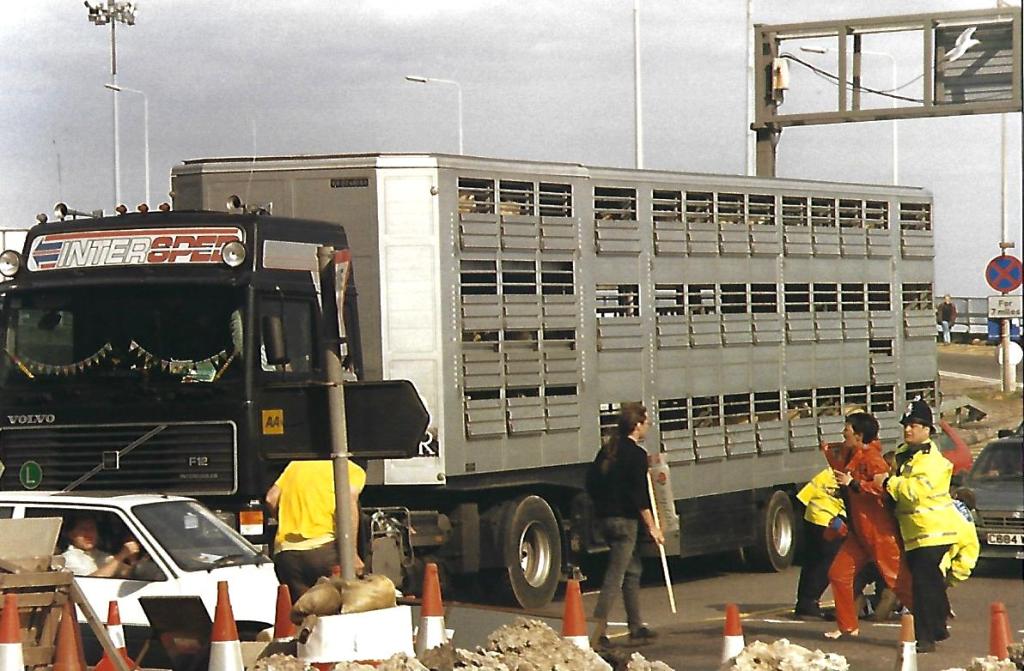
Dover, Kent, England Protest Action.

Canada: Poppy Barley’s New Accessory Collection Features First Vegan Products.

Poppy Barley’s new accessory collection features the Multitasker Backpack, Convertible Belt Bag, and Card Holder.

Canada-based luxury footwear and accessories brand Poppy Barley recently announced the launch of its first vegan line, PB Plant. The brand’s new line debuted with a new accessory collection—featuring the Multitasker Backpack (CAD$348), Convertible Belt Bag (CAD$158), and Card Holder (CAD$48)—made with Laguaro, Poppy Barley’s environmentally conscious cactus leather. Lined with cotton canvas, each accessory is ethically-crafted in solar-powered Mexican factories in line with the brand’s environmental and sustainability efforts. 

Founded by sisters Justine and Kendall Barber, Poppy Barley plans to introduce more innovative plant-based leathers in future collections. “Our customers have been asking for a leather alternative since day one, but there was never an option that we could stand behind—until now,” Justine Barber said. “After years of researching and testing, we discovered cactus leather basically next door to our manufacturing facility in Mexico. We finally found a leather alternative that wouldn’t compromise quality or our values when it comes to environmental impact. 

Made from cactus, not cows or plastic

Unlike traditional vegan leathers, Poppy Barley’s Laguaro is not made using plastics such as polyvinyl chloride (PVC) or polyurethane (PU). Instead, the leather is produced using harvested Mexican cactus leaves, leaving the rest of the cactus intact. Although the brand’s Laguaro leather is currently 80 percent biodegradable, Poppy Barley aims to reach 100 percent sustainability in the near future. “We believe the future of fashion has no choice but to consider the Earth and humanity, and we want to lead the way,” Justine Barber said. 

Plant-based vegan leathers 

Cactus leather made its global debut in 2019 after Mexican entrepreneurs Adrián López Velarde and Marte Cázarez launched Desserto, the first organic leather made entirely from the nopal (or prickly-pear) cactus. Since then, Desserto has been used to make the world’s first cactus-leather boxing gloves with plans in motion for handbags.

With an estimated worth of $85.05 billion by 2025, the faux leather industry has seen an increase in sustainable vegan leathers in recent years. Popular fashion brand Hugo Boss and retailer H&M have both introduced pineapple leather in their merchandise. In 2017, H&M also named “wineleather” made by Italian company Vegea Vegetal Leather a global changemaker. Vegan leather is also making its way into home decor. Last year, Canadian furniture designer Gus* Modern launched couches and lounge chairs made with Vegan AppleSkin Leather as part of its Fall 2020 collection.

Regards Mark

These New Luxury Vegan Leather Handbags Are Made from Cactus, Not Cows | VegNews

Beef Production Is Destroying The Amazon – Turns Out, Leather Is Too !

Beef Production Is Destroying the Amazon. Turns Out, Leather Is, Too. | VegNews

Beef production is a known driver of deforestation but a new report outlines the links between leather and Amazon destruction.

More than 100 fashion brands have been linked to deforestation by a new report compiled by Slow Factory with data provided by research group Stand.Earth. While the cattle industry has been the top driver of deforestation in the Amazon region, the link between leather and deforestation is less known. 

The group examined data from public or government sources—including 500,000 rows of customs data, websites, and annual reports—to find that due to a lack of transparency in various supply chains, leather products sold by more than 100 companies, including Zara, Asics, Adidas, and Clarks, could contribute to deforestation. 

“​​The Amazon rainforest is fast approaching the tipping point of irreversible ecosystem collapse, according to scientists,” the report states. “We’re calling on the world’s leading fashion brands to act immediately to protect the Amazon rainforest, its people, and our global climate future.”

Leather and deforestation

In the last decade, 16.5 million acres of the Brazilian Amazon rainforest biome have been lost, mostly due to the cattle industry. Brazil is home to the largest cattle herd in the world at 215 million animals and its leather products—80 percent of which are exported—accounted for $1.1 billion of slaughterhouse revenue in 2020. 

JBS is the largest cattle producer in the region and has been linked to illegal deforestation multiple times. Many of the 100 named companies source leather from JBS, either directly or indirectly, therefore contributing to deforestation. The report found that this issue is endemic to the Brazilian leather industry and tanneries such as Minerva and Fuga Couros, among others, are also contributors to deforestation. “Although none of these brands are deliberately choosing deforestation leather, they are working with manufacturers and tanneries that source from opaque supply chains and companies that have known links to cattle raised on recently deforested Amazon land,” the report states.

The report assessed the deforestation risk of the 100 named companies based on the number of links they had to Brazilian leather producers. One such company was Coach, which has a high risk of supporting deforestation with its 10 connections to the Brazilian leather industry. The company is also one of the 74 companies that have anti-deforestation policies in place and the report suggests that 30 percent of these companies are in breach of their own policies. 

According to the report, the Leather Working Group (LWG)—the world’s leading nonprofit in environmental certification of the leather industry—only links leather to tanneries and not farms or supply chains, making it incapable of guaranteeing that leather products are deforestation-free. “If you’re wearing leather shoes, a leather belt, or carrying a leather handbag, it’s highly likely that it was made from cowhide that contributed to the destruction of the Amazon rainforest,” the report states.

Vegan leather: a sustainable, compassionate choice 

Opacity in leather supply chains means that just about any leather product, regardless of brand, can be linked to deforestation. However, vegan leather—particularly the type made from plants and not plastic—is increasingly becoming a more accessible and sustainable option. And the choices are vast. 

Innovators worldwide are proving that just about anything can be turned into leather without the need to slaughter animals for their hides. In Mexico, entrepreneurs Adrián López Velarde and Marte Cázarez developed Desserto, a vegan leather made from nopal cactus leaves. Spanish designer Carmen Hijosa tackled the leather issue by looking to the pineapple industry, discovering that the would-be wasted leaves could be turned into a sustainable vegan leather she called Piñatex. In the fashion capital Milan, innovative startup Vegea is turning waste from the Italian wine industry into vegan leather that has been used in place of animal hides across industries. 

Fashion heavyweights are also getting into vegan leather, including Karl Lagerfeld, Louis Vuitton, and Hermès. Earlier this year, Gucci unveiled three shoe styles made with its own vegan leather. Inspired by Greek goddess of harvest Demeter, the new material (dubbed “Demetra”) is made from 77-percent plant-based raw materials, including wood pulp and viscose, and is tanned in the way leather would be but without animal cruelty or environmental harm.

Even brands named in the Slow Factory report are working to develop plant-based leathers to minimize their environmental impact, including Adidas. The athletic brand worked with eco-designer Stella McCartney to develop vegan versions of its iconic Stan Smith sneakers. Adidas and McCartney are also part of the Mylo Consortium, a group of fashion brands working with startup Bolt Threads to use its innovative Mylo vegan leather—which is made from mycelium, the fast-growing root systems of mushrooms. The partnership will result in new mushroom leather product launches in the coming months and hopefully, contribute to a shift away from Amazon-destroying animal leather in the years to come. 

Regards Mark

Beef Production Is Destroying the Amazon. Turns Out, Leather Is, Too. | VegNews

Environmental Benefits of a Vegan Diet.

4 Major Environmental Benefits of a Vegan Diet
 

World Environment Day? First established by the United Nations in 1973, this global holiday aims to raise awareness about the planetary challenges we face in our fight against the climate crisis. Wondering how you can do your part? Read about how you can fight waste with recycling and composting, learn how to welcome bees into your garden, and enjoy easy, low-waste recipes. Plus, read about the vegan brands working to keep plastic bags out of landfills, how mushrooms can help reduce deforestation, and the environmental benefits of a plant-based diet. Eat vegan and live sustainably today and every day.

20 VEGAN BRANDS JOIN COALITION TO KEEP THE EQUIVALENT OF 27 MILLION PLASTIC BAGS OUT OF LANDFILLS

Twenty plant-based brands are taking action to reduce plastic waste in their supply chain while creating a positive socio-economic impact for marginalized waste workers.  

Twenty plant-based food brands from the United States, Canada, and the United Kingdom are coming together to tackle plastic pollution. In partnership with plastic action platform rePurpose Global, brands such as Outstanding Foods, Myvegan, The Very Good Butchers, and V-Dog are working to remove plastic waste equalling over 27 million plastic bags, or three million plastic bottles, in weight from the planet.

Focusing on the value chain, rePurpose helps people and companies calculate, reduce, and offset their plastic footprint and advance a circular economy. To make their own impact, the 20 plant-based brands that signed on to rePurpose are reducing the plastic in their packaging and supply chains and financing the recovery of nature-bound plastic waste through rePurpose’s social enterprise waste projects, creating additional income streams for more than 10,000 waste workers and community members across three continents. 

According to rePurpose, of the 5.8 billion metric tons of plastic waste generated globally over the past 70 years, only about nine percent has been recycled, leaving the rest to be incinerated, sent to landfill, or littered in the environment. 

“Time is running out,” Peter Wang Hjemdahl, Chief Advocacy Officer and Co-Founder of rePurpose Global, said in a statement. “We are living in a plastic epidemic, where there is no single solution. Now more than ever, there is a critical need for like-minded brands to come together and use their collective strength to help tackle plastic pollution head-on.” 

Improving vegan sustainability efforts

Although vegan and plant-based products are already reducing carbon footprints and helping mitigate climate change compared to their animal-based counterparts, their climate action can be stunted by the use of plastic packaging that is frequently non-recyclable and ends up in landfills or oceans. According to Our World in Data, plastic packaging is the leading contributor to plastic waste, generating an estimated 141 metric million tons of plastic waste each year. 

“By using only plant-based ingredients in our products, we’re having a positive impact on the environment by reducing greenhouse gasses associated with meat and dairy products,” Bill Glaser, CEO and Co-Founder of Outstanding Foods, told VegNews. “We also want to be a steward for the environment with our packaging and have partnered with rePurpose Global to be certified plastic neutral. That means that we’re helping to take plastic out of the oceans and removing other plastic waste before it goes into the oceans. Outstanding Foods is committed to making a positive environmental impact in all we do and our partnership with rePurpose is a big part of it.”

rePurpose also offers a Plastic Negative certification, which is awarded to brands with ambitious plastic reduction commitments in their supply chains, enabling the elimination of at least twice as much plastic waste from nature as they create through their own plastic footprint. To produce products as a plastic negative business, companies help fund the recovery of low-value plastic waste through rePurpose’s Anant Pranay impact project in Aurangabad, India, while also supporting the waste workers working at the project, providing a living wage to fight plastic pollution.

“Many of our members are mission-driven and want to use their businesses to have a positive impact on our planet,”  Sabina Vyas, Senior Director of Impact Strategies at Plant Based Foods Association (PBFA), said in a statement. “They are already doing an incredible job to help consumers lighten their footprint by making delicious plant-based foods and sustainable packaging solutions are at the forefront for our membership.”

Repackaging to reduce plastic waste

Other brands have also taken initiative in reducing their plastic packaging. Last year, food and beverage brand Chobani repackaged its vegan oat milk-based yogurts in paper cups to make the product even more sustainable. The new cups, made from 80 percent paperboard, replace most of the plastic on its oat yogurt packaging, with the exception of a thin plastic lining that preserves the integrity of the yogurt. Chobani already packs its oat milk carton, cold brew coffee, and creamers in paperboard and is continuing its journey toward reducing plastic by repacking its oat yogurts in more sustainable cups. 

“We all have a role to play in protecting our planet,” Chobani Founder and CEO Hamdi Ulukaya said in a statement. “People have been asking for a paper cup, and we welcome this challenge to start reducing our plastic use, and to spark a conversation about how we can drive change together.”

Additionally, plant-based beauty brand Alpine Provisions has switched over all of its products to plastic-free packaging in an effort to support the plastic-free movement and inspire the body care industry to do the same. The company created aluminum body care bottles, paper deodorant tubes, paper lip balm tubes, and paper bar soap wraps because aluminum can be recycled an infinite number of times. According to the company, 84 percent of all the aluminum ever made is still in use today. And because the material is so lightweight, shipping aluminum saves millions of pounds of carbon emissions each year. 

Going plastic-free in fashion

A similar plastic-free movement is taking shape in the fashion industry. Last year, VH Corp.—the parent company of fashion brands Calvin Klein and Tommy Hilfiger—joined the plastic-free vegan leather movement by partnering with biotechnology company Ecovative. The partnership gives PVH priority access to Ecovative’s sustainable vegan leather made from fast-growing mycelium (mushroom root systems). PVH is also working directly with Ecovative to co-develop custom mycelium materials to bring a range of products to retail, from soft vegan leather accessories and garments to thick, durable belts and shoes.

Similarly, biotechnology startup Bolt Threads created the Mylo Consortium in 2020. This partnership includes major fashion brands Stella McCartney, Adidas, Lululemon, and Kering—which owns the luxury brands Balenciaga, Bottega Veneta, Gucci, Alexander McQueen and Yves Saint Laurent. Under the Mylo Consortium, these brands have exclusive rights to “mylo,” Bolt Threads’ mycelium-based vegan leather. McCartney already previewed the Frayme Mylo bag made with the innovative material during Paris Fashion week last year and will be releasing it to consumers through her ready-to-wear Spring 2023 collection. 

Mycelium-based vegan leather helps solve the sustainability challenges in the fashion industry by reducing the reliance on both animal-based leather and plastic vegan leathers like polyurethane. It also makes materials production vastly more efficient. While it takes months or years to raise animals for their skins, this process takes a matter of days and yields a ready-to-finish material free from plastic and petroleum.

For more on sustainable vegan brands, read:
Why South Carolina is the New Hub of Sustainable Vegan Mushroom Leather
Vegan Fish to Be Recognizes as “Sustainable Seafood”

Regards Mark

20 Vegan Brands Join Coalition to Keep the Equivalent of 27 Million Plastic Bags Out of Landfills | VegNews

USA: Petition – Workers Rights; We must stand up to the meat industry now!

American meat corporations have bad reputations, and for good reason. These companies have reached near-supervillain status for their inhumane treatment of cattle, pigs, and chickens. Not only do animals that suffer in meat-packing plants — these corporations abuse their workers, too. New reports indicate that this industry quite literally doesn’t care if its workers live or die, and it is time Congress did something about this.

In fact, a new report by the U.S. Congress reveals that even when meat companies knew their workers were at extremely high risk of catching COVID-19, they lobbied to keep their plants open anyway.

These corporations even went so far as to fabricate letters that falsely claimed America’s meat supply was at dire risk if plants temporarily shut down. As a result, former President Trump signed an executive order classifying meat plants as critical infrastructure, forcing their doors open amidst grave danger. Given what we know so far, upwards of 59,000 meat-packing workers caught COVID-19, and nearly 300 died. That’s not even counting the family, friends, and community members they spread COVID to after contracting it at the plants. On top of that, many meat-packing workers are immigrants, low-income, uninsured, or some combination of the three. These are communities that are already at an extremely high risk of contracting severe COVID, yet the industry decided profit was more important than human lives. The government must never allow this deadly manipulation to happen again.

Sign the petition now to put pressure on Congress and tell it: all workers deserve dignity and protection! We must stand up to the meat industry now!

P.S. The industry has blood on its hands — both from the animals mistreated, and from the workers it pushed into the COVID frontline.

Regards Mark

UK: A Party At ‘Buck House’. 70 Years As Queen.

The front of the palace portraying images of the Queen.

There was a party this weekend (4/6/22) at ‘Buck House’; or Buckingham Palace as it is better known.

Why ? – because Her Majesty the Queen is celebrating her platinum jubilee – a celebration held to mark an anniversary. Among monarchies, it usually refers to a 70th anniversary.  So 70 years as the head of the British Commonwealth and all its people.  There have been big events all over the UK and many other commonwealth nations to celebrate this rather amazing event.

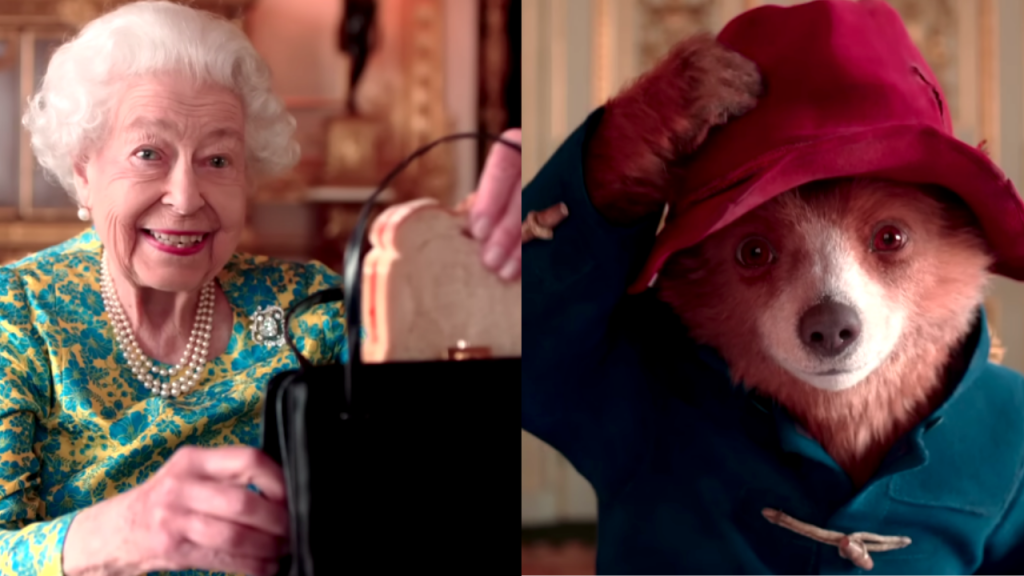
Her majesty joined in the fun by having Paddington Bear to tea, complete with marmalade sandwiches !!

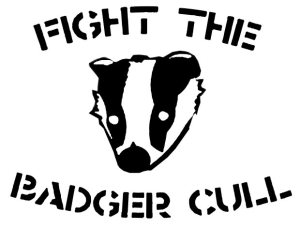
Our great animal advocate Brian May of ‘Queen’ started the party as always; and it was especially great to see him in his Badger suit; having done so much in recent times to help stop the badger cull.

Setts, Drugs and Rock n Roll by Dr Brian May:

Here is Brian in his badger jacket – right hand breast pocket area:  https://youtu.be/RvNYGDQiNWg

As the darkness arrived, the palace became a huge ‘screen’ showing an amazing record of the life of the queen, and a section given by Prince William on the environment and the importance of working to stop climate change and help protect the animal species of the world.

See the princes speech here – and you can see how the palace became an environmental screen for a few minutes on this issue – it was impressive !

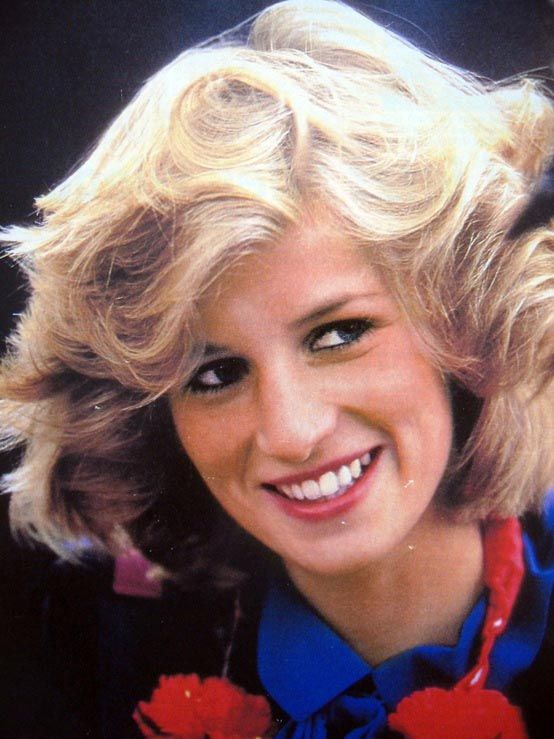
Personally, for me, there was just one person who was missing; and that was Princess Diana, the people’s Princess.  If she were still here today then she would have played a major part in the protection of the environment and animals – that was the kind of person we had in her.

Regards Mark

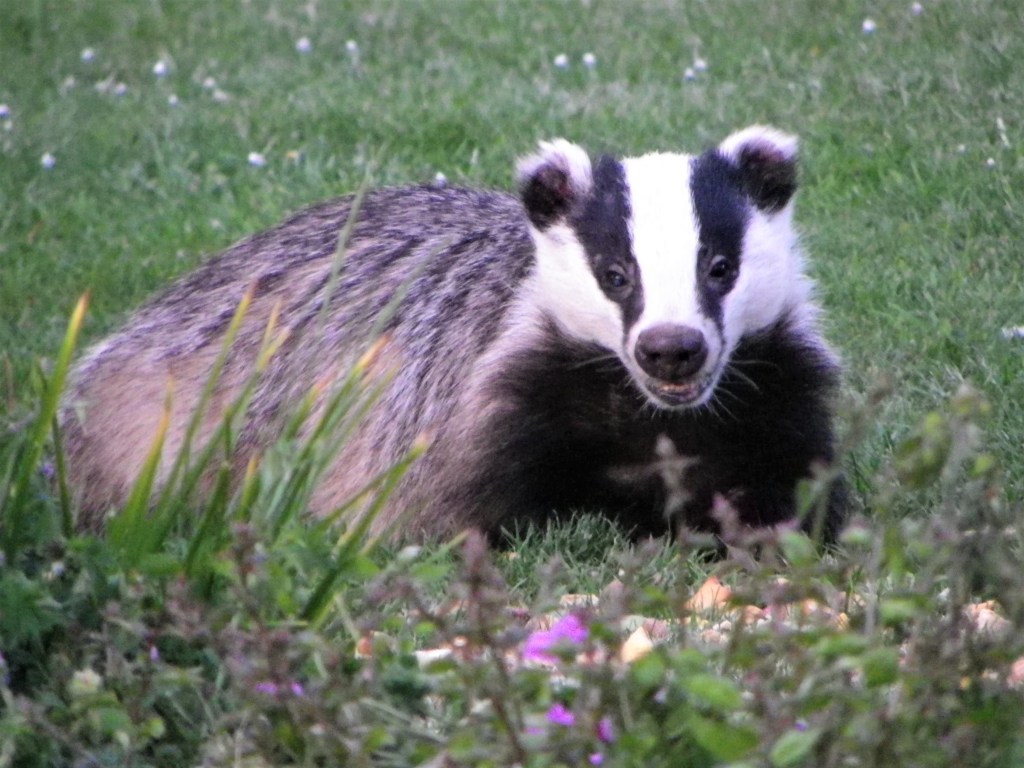
A Badger enjoys his visit to my garden – Photo: Mark (WAV).

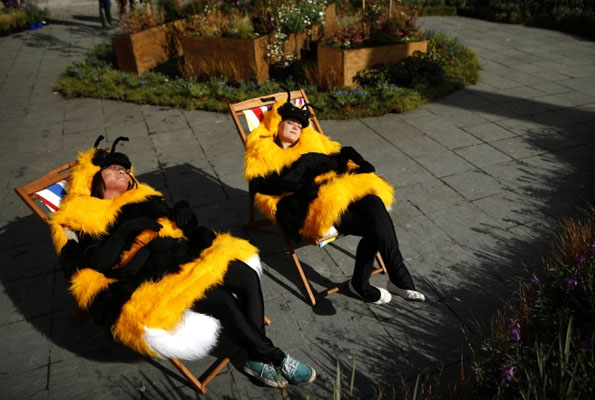
USA: ‘Bees are fish!’ Judge issues bizarre animal rights ruling amid row ‘great day for bees’.

A US Judge has ruled that bees can legally be classified as fish, in a bizarre move to protect endangered bees.

‘Bees are fish!’ Judge issues bizarre animal rights ruling amid row ‘great day for bees’ | Science | News | Express.co.uk

According to the decision made by a California appeals court, bees in the US can now be legally called a fish. While odd, this move will now allow the government in California to protect endangered bee species, many of which are under threat from climate change. The ruling came on Tuesday after agricultural groups sued California wildlife officials for attempting to list four bumble bee species under the California Endangered Species Act (CESA).

The judge reversed a previous ruling by a lower court, which then noted that threatened or endangered species of bees could be listed under the CESA category of fish as the definition of “fish” is broad and includes invertebrates.

Pamela Flick from Defenders of Wildlife, one of the case’s intervenor defendants said: “It is a great day for California’s bumble bees.

“Today’s decision confirms that California Endangered Species Act protections apply to all of our state’s imperilled native species and is critical to protecting our state’s renowned biodiversity.

“Bees and other pollinators are integral to healthy ecosystems and the crucial pollination services they provide serve all of us, making this decision exponentially more consequential.”

According to Xerces Society, a conservation group, this decision will pave the way for critical protections that are needed for four endangered bumble bee species that occur in California.

It will also allow the Commission to protect other imperilled insects under CESA, which provides protection for some of the most vulnerable plants and animal species in the region, providing a pathway for these species to boost their populations to ensure they don’t go extinct.

CESA rules define an “endangered species” to include a bird, mammal, fish, amphibian, reptile, or plant.

The issue arose when activists pointed out that this definition could leave out a number of other threatened species, such as insects.

Regards Mark

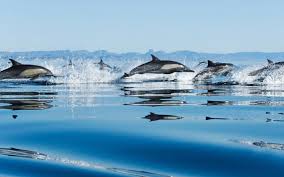
The weird reason dolphins drink each other’s pee.

For dolphins, friendship is a matter of taste.

Dolphins get to know their friends by tasting their pee, a new study finds. By sampling sips of each other’s urine, dolphins demonstrated a type of social recognition that begins with an exchange of whistles that are unique to specific individuals — much like human names. 

Scientists have long known that dolphins identify themselves using so-called signature whistles that are different for each dolphin and that they address one another by imitating such whistles. But researchers were uncertain if this copying showed that dolphins associate signature whistles with individual identity or with a more general concept such as “friend.” 

Recently, scientists learned that not only do bottlenose dolphins demonstrate name recognition, they also replicate this recognition with another sense: taste. 

By tasting each other’s urine and recognizing the source, the dolphins showed that they could keep track of dolphin identities using two types of sensory input. This means the animals could create and store a mental concept of other dolphins, according to the new study.

Flavorful friends

Researchers discovered that dolphins do this kind of identification via pee-tasting while investigating if the animals are truly calling each other by name when they copy whistles. The scientists conducted what is known as a cross-modal study, in which experiments test if an animal can recognize an object or another animal across multiple cues received from different senses. 

Scientists have previously used such experiments in a wide array of animals, including fish and monkeys. But communication systems in most animals lack sounds that are recognizable as labels for individuals, such as dolphins’ signature whistles, the researchers wrote.

However, finding a second sense in dolphins that was testable under laboratory conditions was challenging. Testing dolphin sight or echolocation would “involve moving giant monitors or even the dolphins themselves around, which is impossible,” said lead study author Jason Bruck, a biologist at Stephen F. Austin State University in Texas. But dolphins are known to swim through other dolphins’ urine plumes, mouths agape, and they may do so to get social information “the way a dog sniffs a hydrant,” Bruck told Live Science. 

“Except dolphins would have to do that with taste, not with smell,” as the cetaceans lack olfactory bulbs, he added.

A question of identity

Researchers found that dolphins spent roughly three times as long sampling urine from unfamiliar dolphins as they did from familiar ones. This suggested that the animals could identify known fellows by taste.

To test for persistence of identification across senses, researchers paired recordings of signature whistles with urine from dolphins: in some of the pairings, the urine came from the whistler, while in others it was produced by a different dolphin. The scientists then introduced dolphins to the sound of a whistle and the taste of a urine sample.

Related: This whale-dolphin hybrid is not a ‘wholphin.’ Here’s why.

When the pee matched the whistle, listening dolphins lingered closer to playback speakers. This indicated that the animals recognized the consistency in signals perceived by two senses — taste and hearing — and that both taste and sound came from the same dolphin.

These findings mean that for dolphins, whistles represent the specific dolphin’s identity in other dolphins’ minds, including the taste of that dolphins’ pee.

“We now know that when a dolphin produces that signature whistle, they really are referring to that dolphin they’re copying,” Bruck said. “They are using those whistles in much the same way that we use names.”

Lipid mechanisms?

Future studies could investigate the mechanisms behind this newly discovered dolphin ability, Bruck said. Dolphins’ taste-driven identification may be driven by lipid recognition; if so, dolphin research may reveal a lipid-sensitive taste bud that’s bigger and more robust than the human variety and therefore easier to study. Such a discovery could inform research into obesity in humans, Bruck said.

More fundamentally, these findings could open new avenues of dolphin research, Bruck added. “Transmitting social information from dolphin to dolphin [is] as easy as [using] an underwater speaker” and could offer insights into “how dolphins perceive each other as individuals,” he said.

The findings were published May 18 in the journal Science Advances.

Original article on Live Science.

Regards Mark