Month: April 2020

Romania and the dog mafia Europa`s


Places of death: the suffering of dogs in Romanian animal shelters

Romania

With around 600,000 dogs without a permanent home, Romania is the country with the most homeless dogs in Europe. Thousands of these animals end up in urban facilities and killing stations every year, where they are subjected to massive suffering.

AS A GENERAL RULE

In September 2013, Romania took the death of an unsupervised toddler in connection with the (alleged) street dogs to implement a law that contradicts the Council of Europe animal rights convention and many animal welfare laws, which is controversial even in Romania.

hundefaenger

The goal was: to solve the “street dog problem” by capturing and killing.
Another goal was to catch political voices.
The real goal is and was: to legally put public money aside and share it with each other.

The law, approved by the Romanian Constitutional Court in December 2013, allows the animals to be brutally caught using snares and dogs to be put to sleep if they are not adopted within 14 days.

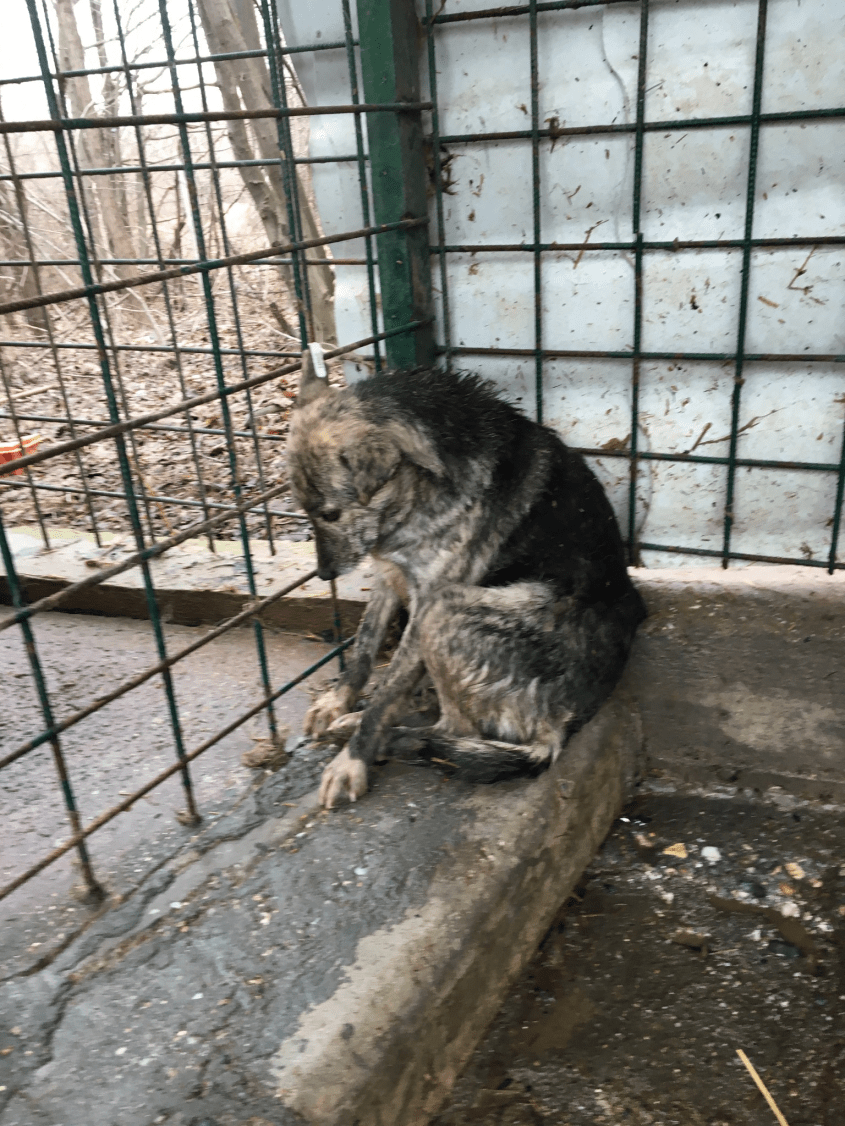
During this time they often have to live next to carcasses and rubbish.
Still, these facilities are a rewarding business for a number of unscrupulous people.
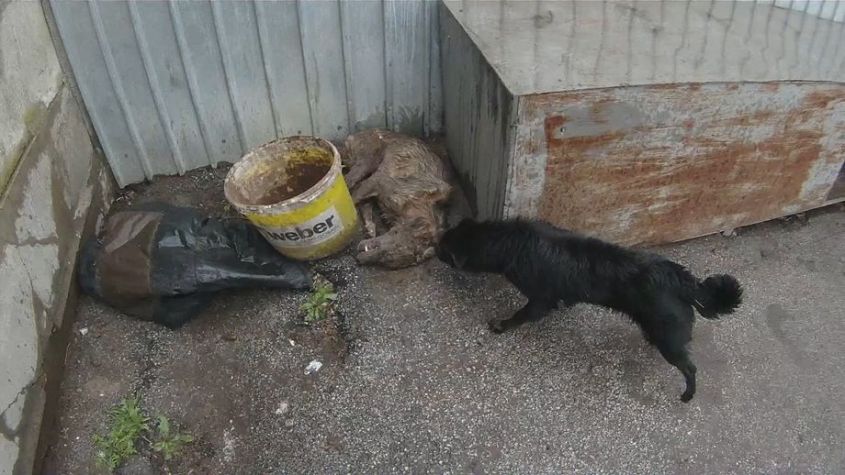
Straßenhunde / Rumänien

There are two types of facility in Romania that house captive dogs: killing stations and urban animal shelters. The incredible suffering of the dogs caught in these facilities is difficult to put into words.
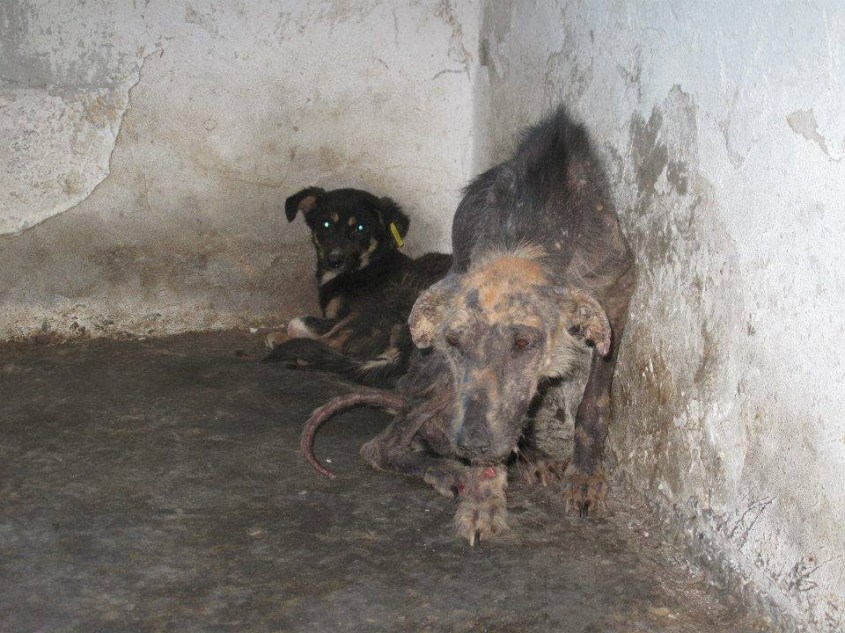
2014-Galati Shelzer, Rumänienpg

“Euthanasia” in Romania is not comparable to the pain-free sleep of Western European pets.
The dogs suffer from hell agony, they are simply slain or sprayed dead with chemical substances that are extremely cruel in their effect.
Injection of gasoline in the heart, antifreeze in the veins …

Their death is not a gentle slip into the hereafter, but always a death full of fear, characterized by pain, suffering and deprivation.
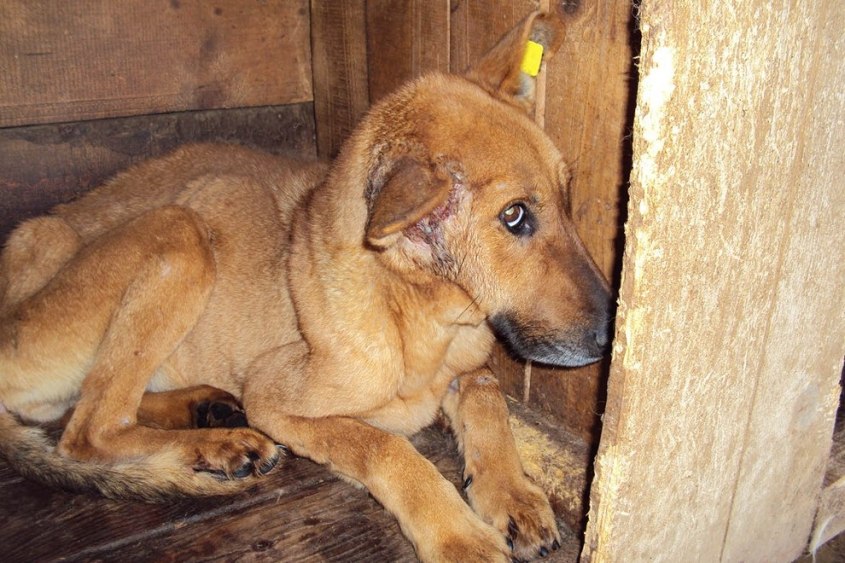
-Tierheime-Tötungsstationen-Rumänien-04-c-PETA-D

The law legalized the street dog as a source of money – this was also one of the reasons to whip the law. The funds shown in the city budget are now shared between officials from the authorities and those who receive those lucrative contracts for street animal management. Paper is patient. And the dogs are silent. They are starving. And they die.

In some Romanian cities, bounties are paid for every dog ​​brought to the state shelter. Dog catchers even have dogs stolen for money in order to meet their quota. Corruption is blooming on the backs of the street animals and a sustainable business has developed that can use an almost infinite number of dogs as starting material, if the only really working solution is not used.

RumänienHundefang
SOLUTION:
A national castration campaign for animals with owners and for street animals to stop the incessant offspring. Education about animal protection = human protection in schools, in the media and in public space
streune in shelterspng

http://www.ethia.de/tierrechte/rumaenien/
https://www.peta.de/tierheim-rumaenien


And I mean…As soon as we bring up the subject of Romanian strays, there is always the same hate slogan: “Romanian children die, Romanian people suffer, but the misanthropic animal rights activists worry about the dirty street dogs”.
Yes, exactly! we care about them too!

Animal welfare is not just loving and saving animals, it has become a political issue.
Politicians in most European countries go over dead bodies when it comes to animals. And that’s what it’s all about in Romania. About an industry that blooms with the cruel death of helpless stray dogs.

In Romania it`s about 600,000 strays, 600,000 individual fates, 600,000 dog lives that are in danger every day or mistreated every day.

In 2007, the Romanian government considered a law that would have introduced state-wide castration projects. The EU even gave subsidies of € 4.2 million for 2013 alone. Instead of using them wisely to solve a major problem, these funds have been lost (and still are) in the corruption swamp and in dog catcher`s business. Until today has nothing changed!

The nature of the killings remains a state secret. There is talk of gas and electricity death. Nobody is allowed to watch it.
The public should remain in the dark.

And this despite the fact that castration projects in Romania are having a great effect.

In Oradea, for example, the number of stray dogs fell from initially 5,000 in just 6 years of project work to 300.
In Lugoj, where the mayor is behind the castration project, a population of 2500 street dogs was reduced to 250 in just 3 years. And without killing a single dog.

It is not a feat to kill defenseless dogs and cats using medieval methods, but a perverse action by the corrupt Romanian government!
This was proven in the previous year with the fall of 70,000 sheep from Midia to Kuwait.

As soon as the EU stops the flow of animal welfare subsidies for Romania, the problem can solve itself or at least fewer and fewer criminals will take part in this business because it is no longer worth it.

My best regards to all, Venus

Asia’s biggest food companies silent on the welfare of farm animals.

China


Asia’s biggest food companies silent on the welfare of farm animals


Even as a pandemic threatens food supply chains, most firms, including China’s top pig and poultry producer, have shed no light on how they are managing risks and opportunities linked to farm animal welfare.


https://www.eco-business.com/news/asias-biggest-food-companies-silent-on-the-welfare-of-farm-animals/


Major food companies in Asia must improve the welfare of farm animals that they produce, supply or use, an annual benchmark of 150 of the world’s largest food companies has shown.

Out of 17 Asian companies in the benchmark, 15 emerged in the bottom tier for being virtually silent on how they are managing the risks and opportunities associated with farm animal welfare.

The 15 Asian companies—which made up half of the bottom tier—included China’s top pig and poultry producer Wens Foodstuff, feed and meat manufacturer and distributor New Hope Liuhe, retailer China Resources Vanguard and Japanese food producers Meiji Holdings and Maruha Nichiro.

The Business Benchmark on Farm Animal Welfare (BBFAW) 2019, released earlier this month, comes at a time when the Covid-19 pandemic is highlighting the fragility of global food supply chains and the need to do more to stop the spread of diseases from animals to humans.

“In a world where farm animal welfare is an increasingly important driver of both business value and investment risk, maintaining and improving animal welfare standards must be a focus,” said Dr Rory Sullivan, co-author of the 2019 report and chief executive of Chronos Sustainability, which serves as the BBFAW’s secretariat.

Pig production is big business for Asian companies, but there is also a focus on poultry and seafood.

Companies should begin by publishing commitments to improve farm animal welfare throughout their business operations, state how they will implement these commitments, and report on their performance, said Nicky Amos, managing director of Chronos Sustainability and executive director of BBFAW.

The BBFAW expects corporate policies on issues such as the avoidance of genetic engineering or cloning, avoidance of growth-promoting substances, and reduction or avoidance of the routine use of antibiotics. Companies should also declare their policies on pre-slaughter stunning for all animals, limiting long-distance live transportation and the provision of effective enrichment for farm animals (such as outlets to perform their natural behaviour), she said.

Hens in tiny cages, gestating pigs in crates

Two primary concerns for consumers, scientists and animal welfare organisations are the use of cages for hens reared to lay eggs, and crates for gestating pigs, the Humane Society International (HSI) told Eco-Business.

Producers as well as many food and food service companies worldwide have pledged cage-free systems for laying hens and group housing for sows, which are the higher welfare alternatives, the HSI said.

These alternatives allow the animals to perform some of their natural behaviour. For chickens, this means nesting, dustbathing, perching and foraging. For sows, this means more opportunity for movement, social interactions and to root (an exploratory behaviour where the pig uses its snout to nudge into something repeatedly).

In China, however… the majority of (egg-laying hens) are confined to cages so small that they cannot even fully stretch their wings, and each animal has less space that a letter-size sheet of paper or an iPad on which to spend their entire life,” said the HSI. Hens in cages are so severely restricted that they suffer from physical abnormalities due to lack of exercise, and the same happens to sows kept in crates.

“Beyond that, chickens raised for meat need more space and better conditions,” it said. China produces more pigs and chickens (raised for eggs or meat) than any other country.

In China… the majority of (egg-laying) hens are confined to cages so small that they cannot even fully stretch their wings, and each animal has less space than a letter-size sheet of paper or on iPad on which to spend their entire life.

Humane Society International

Researcher Michelle Sinclair of the University of Queenslands’ Centre for Animal Welfare and Ethics in Australia has interviewed members of Asia’s livestock industry and said many farms in China are making an effort to address animal welfare.

In research conducted in China, her team asked farmers and slaughter workers what they saw as the most important welfare issues. The top issue cited was the absence of adequate pre-slaughter stunning, which essentially renders an animal unconscious before the slaughter, until death. Quality of transportation was second, and the experience and attitude of workers was third.

Animal welfare issues that farmers and slaughter workers ranked as important also included avoiding stress from heat and cold, sufficient water and feed that was of adequate quality.

Practical solutions exist, such as the formation of prescriptive and locally relevant industry standards, clearly presenting the business benefits of better animal welfare, and building a body of local research, Sinclair and Professor Clive Phillips noted in a research paper last year.

Role of investors and avoiding ‘greenwash’


15 of the 17 Asian companies in the Business Benchmark on Farm Animal Welfare 2019 were in the bottom tier. Image: Eco-Business

Investors have an important role to play and need to be more active, said the BBFAW and HSI.

Investors should expect companies to be transparent about their business and improve their practices, said HSI. “Further, investors should encourage and incentivise producers and food businesses to create time-bound plans to fully implement animal welfare commitments.”

Challenges faced by the livestock industry include developing knowledge on what the issues are, and how to address them. Many countries do not have prescriptive laws or standards to follow, and the industry has to ensure profitability even as it improves animal welfare, said Sinclair.

Consumers can also make an effort to support companies that have animal welfare policies, and adhere to them. “Obviously they can also eat less meat (of higher quality), substituting for vegetables and other health foods where they can,” said Sinclair.

The HSI said it is important that retailers understand the differences between products, so they can provide customers with options that actually support animal welfare. Producers are able to “greenwash” their practices in a number of ways, such as by making claims that are general—“we treat our animals well, because a healthy animal makes a great product”—or labelling products as certified by an animal welfare scheme which has no significant requirements beyond the law, it noted.

The challenges can be overcome through collaboration among companies, researchers, governments, industry groups and animal advocacy organisations, said Sinclair. “In my view, there is a lot more to lose, and bigger challenges to come, if we don’t improve animal welfare globally. We see a major health and environment crisis semi-regularly and a lot of the time, these disruptions and risks can be tied to a lack of consideration of the animals we farm and share our world with.”

Thai, Chinese companies are best Asian performers

Companies in Asia that have made progress include Japanese retail giant Aeon, said Amos. Aeon recently changed products under its own brand to cage-free eggs, starting locally before expanding sales to all its locations worldwide by end-2022.

The two best-performing Asian companies in the latest benchmark⁠⁠—which was supported by BBFAW’s two founding partners, animal welfare organisations Compassion in World Farming and World Animal Protection⁠—were Thailand’s Charoen Phokphand Foods and China’s WH Group. Both companies placed in the fourth of six tiers, which means they published some information on animal welfare commitments, but did not have robust processes to ensure they are effectively implemented.

WH Group, one of the largest pork producers in the world, provided a general overview of its approach to farm animal welfare, and described the management structure for its sustainability policy that includes animal care, said Amos. Its Smithfield subsidiary, however, has a comprehensive approach and provides a detailed account of its performance. In addition, all of Smithfield’s pregnant sows are put in group-housing.

Meanwhile, Charoen Phokphand has published a farm animal welfare policy that Amos said includes partial commitments on key issues, such as the avoidance of close confinement and requirement of pre-slaughter stunning. It has also set animal welfare targets and reported its progress.

According to HSI, Charoen Phokphand has started cage-free egg production in Thailand. Multinational corporations Sodexo, Tesco and Carrefour have also introduced animal welfare programmes, such as committing to use or sell exclusively cage-free eggs, in some Asian countries.

The six companies in the top tier of the 2019 benchmark were Switzerland’s Coop Group and Migros, and United Kingdom’s Cranswick, Waitrose, Noble Foods and Marks and Spencer.

https://www.eco-business.com/news/asias-biggest-food-companies-silent-on-the-welfare-of-farm-animals/


Breaking! Animal Welfare Coalition Calls On World Health Organization To Focus On Testing On Humans Not Animals For COVID-19 Remedies.


Breaking! Animal Welfare Coalition Calls On World Health Organization To Focus On Testing On Humans Not Animals For COVID-19 Remedies


https://worldanimalnews.com/breaking-animal-welfare-coalitions-call-on-world-health-organization-to-focus-on-testing-on-humans-not-animals-for-covid-19-remedies/


In a joint statement released today by Cruelty Free InternationalCruelty Free EuropeEurogroup for Animals, and People for the Ethical Treatment of Animals Foundation (PETA), the animal protection organizations stress that it is essential that authorities, under the leadership of the World Health Organization (WHO), work together with a focus on humane, human-relevant research.

While everyone wants a safe and effective vaccine and other medicines for COVID-19 produced as quickly as possible, it should not be at the expense and undue suffering of thousands of innocent animals such as: monkeys, dogs, cats, ferrets, and mice.

Sadly, animal experimentation remains one of the approaches used in this research which adds to the unfathomable suffering caused by the COVID-19 pandemic. This, despite animal testing and experimentation being cruel and unreliable with a history of failure in the development of drugs used for humans.

“The impact of the COVID-19 pandemic will have a long-lasting effect on our societies and our work, and this change of paradigm should also be reflected in the way we carry out research, there is an urgent need to focus on advanced scientific techniques that are more representative of what actually happens in the human body, than old ways including the use of animals,” Reineke Hameleers, CEO of Eurogroup for Animals said in a statement. “It is crucial that the WHO and other authorities acknowledge that many animals are suffering as well, and that they help to focus the research efforts of governments, researchers, clinicians, and companies towards more humane and human-relevant approaches.”

As huge numbers of animals and billions of dollars, pounds, and euros are being directed towards trying to solve the problem, it is vital that the scientific and technical merits and ethical aspects of proposed research are robustly assessed in each and every case.

Countries and institutions must also try to coordinate their research, sharing data to prevent any duplication of effort or repeated testing on animals.

That is, until the ineffective and unnecessary testing and experimentations on animals stops completely. As many lives as possible must be spared from this pandemic, including animals.

The urgent need is for more resources to be directed towards studying the virus in humans to increase our understanding of the disease, treat patients, and limit the spread of the virus altogether.

You can help all animals and our planet by choosing compassion on your plate and in your glass. #GoVeg

Help us continue to bring you the latest breaking animal news from around the world and consider making a Donation Here!

https://www.paypal.com/donate/?token=Kb0ECpsdekh7rfb0sQnj2tn9oubs1b-Y25zA-33nruXGEe20s17FrvDwTFrfg-81pQsMqm&country.x=US&locale.x=US


Germany: murdered lambs and sheep in plastic bags

What makes a person kill a flock of sheep and lambs, maim the carcasses, stuff them in plastic bags and dispose of them in the forest?

banane rep deutschlandpg

The police are trying to answer this question after a scary find in the forest near the city Leipzig, in Saxony!

At around 7 p.m., a woman called the emergency service because there were numerous blue garbage bags along her stroll, over which flocks of flies circled.
A little later, firefighters exposed an outrageous discrace.

lämmer tot in LeipzigjpgPure terror is written on the faces of the firefighters when they look at the bags with the dead lambs. © Frank Schmidt
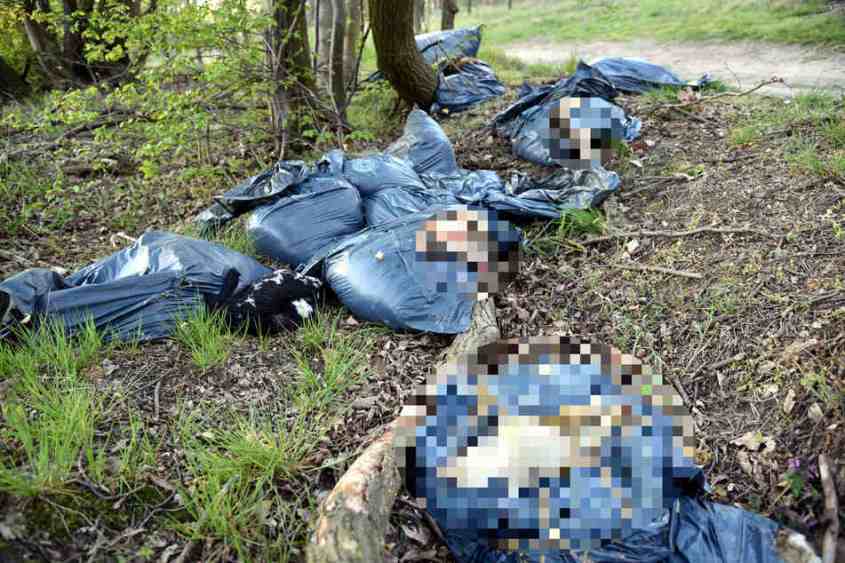
 

“There were dead lambs in the sacks,” said police spokeswoman. We counted a total of 28 bags of dead sheep and lamb carcasses. ”

The investigators have a bad suspicion. Shortly before Easter, the Saxon Sheep and Goat Breeders’ Association complained that many sheep farmers would not be able to get rid of their lambs due to the Corona crisis. Because the restaurants that traditionally serve lamb at Easter have closed.

Association chief Detlef Rohmann spoke of “great difficulties” (!!!). Because the oversupply of lamb also means that the wholesale prices at the bottom are rushing down and the raising of too many lambs is not profitable for the breeders, a sheep farmer probably has his “problem” in this way done.

leipzig, tote lämmerjpgThe dead animals were disposed of like garbage on the forest path. © Frank Schmidt
 

The one who deposited the dead animals in the forest wanted to cover up his tracks: “The ears with the animal’s identification tags were cut off, “ said the police.

https://www.tag24.de/leipzig/grimma-tote-osterlaemmer-im-wald-entsorgt-polizei-ermittlungen-1490371


My comment:The stupid President of Lower Saxony recently released three wolves of a pack (one of them is a pregnant wolf) for shooting. Until then, no one sheep had been wiped from the wolfs.  (https://worldanimalsvoice.com/2020/04/08/germany-wolfs-persecution/)

The farmers enforced it on the grounds that they are afraid for their sheep, which they love like their children.
As soon as they are worth nothing, the “children” end up in blue bags, murdered, disassembled, disposed of like garbage in the forest.

Now it was not the wolf that massacred the animals and packed them in blue bags, but a psychopath from the peasant front.

Of course, he won’t get a just punishment. We know how it will end.

Anyone psychologist will send him to Mallorca for dolphin therapy so that the “sensitive, anxious, poor farmer” can recover from the severe psychological trauma of the Corona period.

My best regards to all, Venus

Learned nothing despite Corona


corona-erde und virus karikaturpg

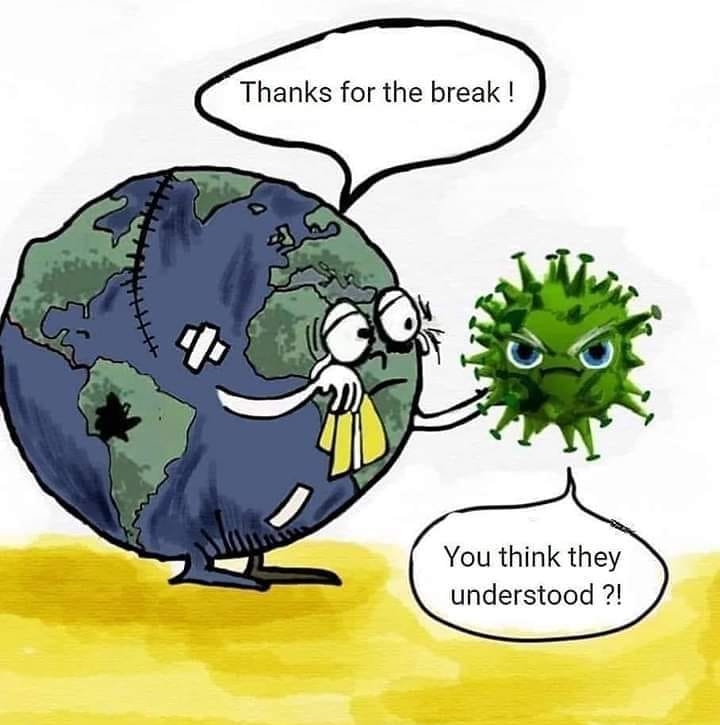
No! We still haven’t understood anything.
Because we are much more stupid than we can imagine.
And because we see Corona as a temporary, random thing that only happens from time to time …

Our greed and stubbornness to keep all old habits blinded us.
After Corona, will continue slavery, exploitation, torture and murders in animal barracks, where it all started.
Meat eaters can hardly wait for the extermination machine to start again.

No! we haven’t learned anything
The propaganda of the meat industry is very strong, which is why stupid and obedient meat eaters are its optimal victims and therefore the those of every virus.
Brain death in human heads is worse than the number of corona deaths.

My best regards to all, Venus

England: Crazy Fundraising for Gorillas -On the Streets of London.

gemalt-england-flagge-5d


We have been covering a lot of serious, bad things recently; so here is a light break which I hope you enjoy.


London – Sadly the Coronavirus has put a current halt to the massive fundraising ‘Gorilla Run’ which takes place in London each year to raise big funds for the protection of our close and very endangered cousins – the Gorillas.

Fingers crossed that this fantastic fundraising event will soon be back on the streets of ol’ London town.

Here is a video of one of the recent fundraisers – Take a Break and Enjoy !

Regards Mark


Ferdinand: the bull who wanted to live.

Happy ending: Bull Ferdinand in safety, a dramatic escape comes to a happy end.

Ferdinand peg

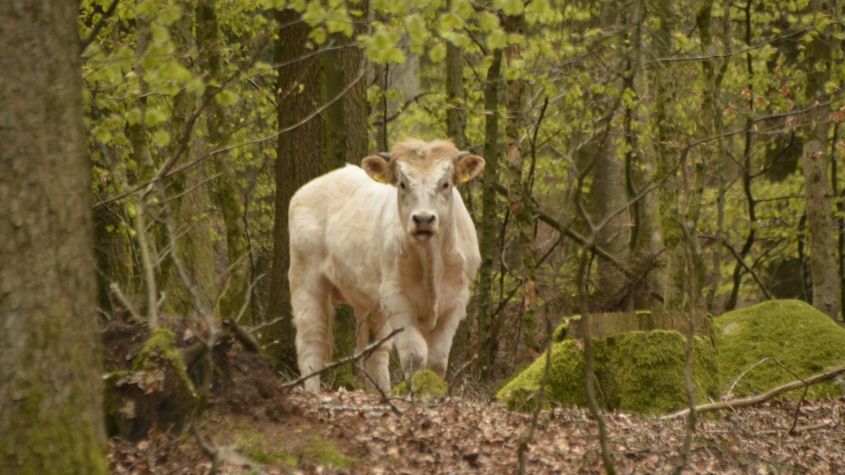
Ferdinand, the eleven-month-old Charolais bull, was taken to a butcher for slaughter on March 30th. Here he managed to escape from the killing box and hid in the forest, near Passau, Bavaria.

He was really disappeared! An execution was imminent.

Employees from the “Erdlingshof” (a sanctuary for “useful” animals) bought the animal and started a two-week fishing campaign with two bait cattle.
The animal rights activists pursued the bull until it finally gave up and could be loaded onto a trailer.

Ferdinand is now housed on the “Erdlingshof”.

ferdinand 3

According to Johannes Jung from the “Erdlingshof” sanctuary, the catching group was under great pressure. “The community gave us an ultimatum and threatened to shoot the 300 kg bull if we hadn’t caught it by tomorrow (April 16). It was said that it was a danger to traffic. We saw it differently, but then we started looking for him more. “

With success: The catching team discovered the young bull on the evening of April 16 and shot it with a stunning gun. Ferdinand is now housed on the “Erdlingshof”, he has already found a new friend named Ben!

ferdinand 4Ferdinand (right)  and his new frend Ben- Image “Erdlingshof”


❤ Ferdinand! look how he lives now ❤

He used to be terrified of people. Nevertheless, he has gained so much trust that it is almost too good to be true.

https://www.br.de/nachrichten/bayern/happy-end-stier-ferdinand-in-sicherheit,RwDmKSv


And I mean…A wrong-way driver is also dangerous for traffic.
If someone drives his car in the wrong direction on the highway, the police also issue an ultimatum, and will he be shot if he exceeds this ultimatum?
No! because he belongs to the human species and has rights.

For Ferdinand, there would have been no mercy, his execution was certain, although he was still no danger to anyone.
That is the morality of the ruling species.

According to our morality, Ferdinand received no mercy.
He has acquired a right that belongs to him, the right to life. Wich belongs to all animals!

We are very happy and grateful that the animal rights activists of the “Erdlinghof” see it exactly the same way.

My best regards to all, Venus