Month: April 2020

Turkey: Stray Dogs and Their Welfare – A Shining Example of What Other Governments (Serbia) Could and Should Learn. Turkey; 21st Century – Serbian Government; Middle Ages Still !

TURK0001


WAV Comment.


It started off as a simple idea one day – to be a voice for the strays of Serbia.  Since its foundation in 2005 to try and help the street dogs and cats of Serbia; our sister organisation, ‘Serbian Animals Voice’ (SAV) campaigned for a better deal for strays.


https://serbiananimalsvoice.com/about-serbian-animals/


https://serbiananimalsvoice.com/about-us/


https://serbiananimalsvoice.com/


As you can see in the link above – ‘about Serbian animals’, we worked with Serbian activists to get the government to change their attitude and policy of dealing with strays; enforcing the laws of Serbia which actually protect animals (see more via the link).

Unlike the Turkish government approach, which the Serbian government should follow finally and learn from, we have always found the Serbian government, municipalities and authorities to be the most primitive, ignorant and pig headed ‘legislators’ that you could ever wish to meet. They are ignorant; simple as that, listen to nothing which is presented to them, and continue to live in a policy for strays which belongs in the 1700’s, not the 21st Century.

We have gained a lot of very good, compassionate and very hard working campaigner friends in Serbia since our foundation; even today, they must never give up their fight, and we hope that the model of Turkey will eventually lead to Serbian authorities realising their many faults, and instead working to protect the animals rather than killing them.

We very much suggest that both articles below are read in the order that they are presented; but we draw especially to the second article from the ‘New York Times’ and the very positive approach that now is the norm within Turkish government when it comes to helping and protecting stray animals.

As we say and have shown so much on SAV, the Serbian government and its authorities are still living in the dark ages when it comes to their approach to animal welfare. All we can say to out Serbian activist friends is that Turkey’s approach must be used as a very positive signal; so much has changed there in very few years.

Most of all; continue to fight the fight; you know that you are correct in everything that you do – it is the government and authorities who are blind to the modern world, not you.


We have also a SAV Facebook page which allows activists to connect with each other; and just like Turkey, also allows dogs and cats to be found forever homes with people all over the world.


You can visit SAV Facebook by clicking on the following link:


https://www.facebook.com/groups/SerbianAnimalsVoice/


The most successful campaigns are usually the very ones which take many years, or decades, to win.    Serbian activists, YOU WILL WIN. The government is wrong and they have known it for decades; show them the situation in Turkey now – something which everyone must learn from.


With respect to all the Serbian activists in their fight for what is right !


Regards Mark.


indoor dog


Turkey feeds stray animals during Covid-19 outbreak


As the people of Turkey stay at home to contain the spread of Covid-19, the government is tackling the question of who will feed the country’s hundreds of thousands of stray animals.

The interior ministry has decided that the job falls to local councils nationwide, and has ordered them ‘to “bring food and water to animal shelters, parks, gardens, and other areas where animals are found”.

The ministry insists that “all necessary measures must be taken to ensure stray animals don’t go hungry”, adding that the animals’ shelters and dens should also be disinfected.

Activists, volunteers and residents usually feed Turkey’s army of strays, but self-isolation and restrictions on movement have hit animal welfare hard.

While councils sometimes provide services for street animals, it is unusual for the central government to order such a move.

In Turkey’s largest city Istanbul, which has the most confirmed Covid-19 cases, there are some 162,970 stray cats and 128,900 dogs, according to the city’s 2018 figures.

‘True friends’


Turkish social-media users have largely praised the move, with many thanking Interior Minister Suleyman Soylu.

The official Twitter account of Istanbul’s Bayrampasa district has shared photos of stray animals being fed on 5 April.

We are with our true friends, with whom we share life…” the district said.

An animal welfare foundation in the Black Sea region has called on people over 65 who have been banned from going outside to get in touch with their district governor to help feed the animals.

Turkey has so far refrained from imposing a nationwide lockdown, and instead urges the public to stay at home.

Justice Minister Abdulhamit Gul tweeted a photo of himself stroking a dog and saying ”we should not abandon our animal friends during these tough days”.

But not everyone appreciates the tweet, with one user telling the minister to “let the animals be… and think instead of the prisoners, because coronavirus does not distinguish between inmates“.

This is a reference to an draft law to release 90,000 prisoners on a temporary basis because of the Covid-19 outbreak.

The bill, which is due for debate in parliament this week, faces criticism for excluding political prisoners, including dozens of jailed journalists.

https://www.bbc.co.uk/news/blogs-news-from-elsewhere-52199691


A New Deal for Turkey’s Homeless Dogs


Oct. 2, 2019


https://www.nytimes.com/2019/10/02/opinion/turkey-stray-dogs.html


After 15 years of legislative changes, local initiatives and grass-roots activism, life has become more humane for animals that roam city streets.

ISTANBUL — Pinar Satioglu, 48, a dentist from the Anatolian part of Istanbul, leaves her clinic duties behind every Friday, as she has done for the past 20 years. Instead of treating dental patients, she spends her day at the Kadikoy Municipality’s Center for Street Dog Rehabilitation, feeding, walking and giving care to about 400 rescued dogs.

In Istanbul alone, a megacity of 15 million people, there are thought to be 130,000 dogs and 125,000 cats roaming free. These animals in all of Turkey’s urban centers now get services from local governments: shelter, regular feeding, sterilization and medical checks by trained veterinarians.

It wasn’t always that way. “Municipalities around Turkey poisoned hundreds of dogs in the late ’90s and early 2000s,” Dr. Satioglu said. “This poison is not only the most painful and inhumane way to kill the dogs, but it was also a public health hazard. It enters the soil, the water and gets in contact with children playing in the streets.” On one summer day in 1998, she saw a pile of bodies — perhaps 60 dogs. They had been poisoned with citrinin. She and fellow animal lovers staged a demonstration that day to protest the mass killings of street dogs.

Street animals, particularly dogs, are often a part of the urban landscape in developing countries. This endangers human health. They bite, and their feces on the street may be a serious hazard, containing microorganisms that not only are pathogenic to humans, but in some cases are also resistant to antibiotics. The most serious consequence is rabies. According to the World Health Organization, more than three billion people, about half of the world’s population, live in countries and territories where dog rabies exists. The virus takes 55,000 lives each year in Africa and Asia alone.

While some developing countries like Uruguay eliminated rabies in 1983, in Turkey it still remains a public health concern, according to the Turkish Ministry of Health. Research shows that dog destruction isn’t effective in eliminating rabies. Rahul Sehgal, a co-director of companion animals and engagement at Humane Society International, describes killing stray dogs as an “endless process” because of the sheer numbers. The dog populations are large, and access to the more dangerous dogs can be a problem, because they’re not always the ones closest to humans.

Culling is also a counterproductive approach, Mr. Sehgal said. He believes inhumane killings and cruelty toward dogs might accelerate the aggressive behavior in them, enabling a vicious cycle of conflict between human and dog populations in urban areas. “When you kill these dogs, you are killing the dogs closest to humans that are not necessarily even dangerous,” he said.

Nevertheless, street dogs in 80 developing countries where rabies is a risk are still killed in excruciating ways, like the ones Satioglu saw in 1998.

Murat Cirak, the lead veterinarian at the Kadikoy Center, has spent his career treating Istanbul’s street dogs. He confirmed the atrocities that Dr. Satioglu saw in 1998. “Municipalities had teams to exterminate dogs,” he said.

Things changed because the killings of dogs finally provoked demonstrations and public pressure, assisted by the rise of access to the internet, in the late 1990s and early 2000s. Asli Varlier, a street animal welfare activist, recalled 2004 as a year in which the awareness and anger started to peak. “Once those awful photos of the killed dogs started to be widely shared on the internet, there was an increasing public pressure for a law to protect the animals,” she said. “Many important columnists, artists or musicians started to talk about the abuse street animals suffered.”

Organizing online and using her background in event management, Ms. Varlier and some fellow activists — among them pop singers and prominent journalists — staged big public events and concerts for the benefit of the street animals, and in June 2004, the Turkish government passed a law requiring local governments to rehabilitate street animals rather than kill them. It requires the animals to be sterilized, vaccinated and taken back to the place where they were found.

Today, municipalities around the country have teams that scan the districts to look for animals in need of neutering. Once they catch, neuter and vaccinate them (they tranquilize them using a blowpipe and treat them for any potential medical complications, it sometimes takes 10 days for the animals to recover from these operations. Before the animal welfare teams return the dogs to the places where they were found, they plant a yellow digital chip on the animals’ ears, which gives them an identity number for tracking. These chips are also visual signs to the public, as well as the municipality workers, that a particular animal is tracked electronically and its medical data is accessible.

The dogs that end up in municipal shelters or rehabilitation centers like the one in Kadikoy tend to be animals with special needs or abandoned pets unaccustomed to street life. In Turkey’s cities, which have grown rapidly since the 1980s, owning dogs — especially poodles, Dalmatians and Labradors — is considered a status symbol. But in areas where most people live in apartments, it’s not uncommon for pet owners to be overwhelmed by the responsibility and abandon their dogs in the streets.

Having worked in different areas of Istanbul since the 1990s, Dr. Cirak of the Kadikoy center has seen the law lead to significant change. “We figured out most things by trial and error,” he said, “but now we have a good idea about what works for both animals and humans.”

These days, the municipalities around Turkey tap into government funds dedicated to street animal welfare, which they use to feed, sterilize and shelter animals in need, as well as provide regular medical care.

Dr. Cirak and his colleagues in Kadikoy neuter or treat about 50 dogs every day. Between 2004 and 2018, about 1.2 million street animals were neutered and 1.5 million vaccinated across the country. “The extermination teams are now the welfare teams that look after the dogs,” Dr. Cirak said. “This alone tells how much the mentality shifted.”

Dr. Cirak said social media have played a big role. He runs a Facebook group of over 10,000 people to support street animals in Kadikoy, his home district. Group members help his teams identify, catch and treat the animals in need. They also help many dogs find permanent homes: Dr. Cirak said that about 40 percent of the dogs in the center get adopted to be guard dogs in farms and factories, or by families. Many of these adoptions start on social media when he shares a picture of a dog in need of a home.

Social media has also spread memes celebrating Turkey’s new fondness for street animals. A critically acclaimed documentary, “Kedi,” which means “Cat” in Turkish, explored the history of Istanbul’s feline residents and their importance in urban culture — making the city’s cats world famous. Videos went viral around the globe of an imam petting cats in a mosque, a tram stopping to wait for a stray cat to finish drinking water from the ground and a shopping mall letting dogs sleep inside, wrapped in blankets, during a snowstorm. There are even statues of street animals in some cities.

Ahmet Kemal Senpolat, a lawyer who is president of the Animal Rights Federation, said that Turkey still has much still to do to protect street animals — that the laws have significant loopholes. Cruelty, he said, is usually not punished adequately, if at all. If a municipality team commits inhumane acts toward animals, it will probably be ignored, he added. He said such dangers to the animals are often found in municipalities not following the proper procedures, rather than being isolated cases caused by individuals.

“Some municipalities dump hundreds of dogs to forests to get rid of them,” he said. In the process, these dogs become wilder and more aggressive, posing a greater risk to the nearest communities. Dogs abandoned in the wild are also more likely to carry rabies because they are less likely to be neutered, vaccinated and controlled.

Furthermore, not all municipalities in Turkey have the same resources or levels of compassion toward animals, Mr. Senpolat said. And even if their intentions are the best, their methods might be inefficient. “They have big budgets now, but they don’t always manage it well,” he said. “Sometimes they waste millions.

Nevertheless, Mr. Senpolat also acknowledged progress. “Fifteen years ago, we wouldn’t even be having these conversations,” he said.

The love of street animals has become so much a part of the national psyche that it even brings people together in a politically polarized country. On March 31, Turkey held elections for new leaders in 81 provinces and 957 towns. Ahead of these elections, Mr. Senpolat created a manifesto titled “I promise.” It was a plea to protect and improve the lives of animals, particularly street animals.

HAYTAP, Mr. Senpolat’s organization, brought together leaders from all major political parties, asking them to sign the document. Much to his surprise, there was no resistance. No matter what their politics or worldview, all of them vowed to create a better future for animals.

The issue became so popular, now politicians cannot afford to alienate animal lovers any more,” he said. “Normally, they never agree on anything else, but they were all on the same page about the street animals.   This must be a historic moment.”

Didem Tali is a freelance multimedia journalist based in Turkey.


No one needs eggs, not even at Easter!

kücke tot _oPhoto: “Easter campaign with dead day-old chicks” by ARIWA Germany, April 2019


Around 50 million male chicks are gassed alive in Germany shortly after hatching each year. The reason: they are uneconomical because they cannot lay eggs and do not eat nearly as much meat as their specially bred counterparts.
Millions of other chicks that do not hatch in the automated hatchery in time for the “deadline” share this fate, regardless of gender.

 (The undercover video is from 2018 and was made by SOKO undercover in a hatchery for organic farming in Munich. It is in German, but you can even look at it without text, you understand everything that you should understand.).


Alternatives such as gender recognition in the egg, switching to “dual-use chickens” or “brother rooster” rearing only aim to consolidate the existing system of animal use – and not, for example, to fundamentally change anything.

kücken am Fliessband_n

In any case, the suffering of the laying hens would remain the same and all male animals would continue to be killed.

The desire for animal products free of animal suffering as “basic foodstuffs” is and remains an illusion.

We therefore call for the abolition of all animal husbandry!


And I mean…We are also calling for the abolition of factory farming.
We have been calling for the abolition of animal cages for a year.
We haven’t heard anything since.
The EU and European governments are happy that we are currently dealing with the corona pandemic and have put the “end the cage age” campaign on hold.
But WE have not forgotten it.
The cages must be abolished, we are 1.2 million people who demand it.
And according to the latest pandemic knowledge, we know that factory farming is the number 1 factor in the production of pandemics.

We remain combative and measure equal importance to the abolition of animal factories that work in front of our own door and cause terrible suffering to millions of animals, but also fatal diseases for people.

zwei Kücken pg

My best regards to all, Venus

Brazil: free beaches for baby turtles


Empty beaches – a blessing for baby turtles!

Because of Covid-19, the beaches in Brazil are almost deserted.
Good for these endangered turtles. Hundreds of babies hatch undisturbed.

Brasil pg

The corona pandemic is currently turning our everyday lives upside down. While we stay at home most of the day, are no longer allowed to travel or meet friends, and the economy has been shut down to a minimum, animals and nature breathe freely worldwide. In Italy you can see dolphins, in Europe the smog disappears and in Japan deer dare to enter the city (https://worldanimalsvoice.com/2020/03/20/we-are-the-real-virus/).

The spectacular sandy beaches of Brazil are therefore unusually empty despite tropical temperatures.

leere strände brasilien

The measures also have unusual side effects: on the coast of the city of Paulista, almost 100 sea turtle babies of the species Hawksbill turtle hatched and were able to make their way into the sea almost undisturbed.

“A total of 400 sea turtles were born on the Paulista coast in 2020, including 87 green turtles and 313 hawksbill turtles. Due to the measures to prevent the spread of the new corona virus, almost no people were present … “, says the ministry website. There are said to be four more nests that are supposed to hatch between April and May.

schildkröter brasil

https://tierisch.heute.at/a/46079534/leere-str%C3%A4nde–ein-segen-f%C3%BCr-schildkr%C3%B6tenbabys


And I mean…That and many similar free walks of animals show how much the animals had to suffer among us humans.

Everyone stays at home! then everyone benefits from it!!

My best regards to all, Venus

China signals end to dog meat consumption by humans.

China


China signals end to dog meat consumption by humans


Draft policy released by agriculture ministry cites concern over animal welfare and prevention of disease transmission as factors behind move

The Chinese government has signalled an end to the human consumption of dogs, with the agriculture ministry today releasing a draft policy that would forbid canine meat.

Citing the “progress of human civilisation” as well as growing public concern over animal welfare and prevention of disease transmission from animals to humans, China’s Ministry of Agricultural and Rural Affairs singled out canines as forbidden in a draft “white list” of animals allowed to be raised for meat.

The ministry called dogs a “special companion animal” and one not internationally recognised as livestock.

The city of Shenzhen recently approved the first ever mainland China ban on consumption of dog and cat meat, a move that has given hope to animal welfare groups worldwide that other parts of the country could soon follow suit. The new draft policy has provided even more.

“The signal is the first ever from a ministry that dogs are not food animals,” Paul Littlefair, international head of the Royal Society for the Prevention of Cruelty to Animals told the Guardian. “[This] leaves the door open for local governments to follow Shenzhen’s lead.”

While not officially a ban on the consumption of dog meat, the draft policy from the agriculture ministry could be a “game changer moment for animal welfare in China”, Wendy Higgins of Humane Society International (HSI) told the Guardian.

“That signals a major shift, recognising that most people in China don’t eat dogs and cats and want an end to the theft of their companion animals for a meat trade that only a small percentage of the population indulge in,” Higgins said.

HSI estimates that between 10 and 20 million dogs are killed in China for their meat annually, while Animals Asia puts the figure for cats at around 4 million per year.

Most of these are stolen animals and not raised in captive breeding facilities, Higgins said.

“Not only does it cause enormous animal suffering, but it is also almost entirely fuelled by crime and, perhaps most significantly right now, poses an undeniable

The temporary wildlife trade ban was imposed from late January in response to the Covid-19 outbreak, largely thought to have originated in the formal or illicit wildlife supply chain.

But campaigners hope the government will go still further. Peter Li, China Policy Specialist with HSI, told the Guardian: “Listing wild animals, including foxes and raccoon dogs, as ‘special livestock’ is concerning. Rebranding wildlife as livestock doesn’t alter the fact that there are insurmountable challenges to keeping these species in farm environments, their welfare needs simply can’t be met. In addition, there’s clear evidence that some of these species can act as intermediate hosts of viruses, such as Covid-19, which is why we’re urging China and all governments to stop trading in wildlife.”


https://www.theguardian.com/environment/2020/apr/09/china-signals-end-to-dog-meat-consumption-by-humans


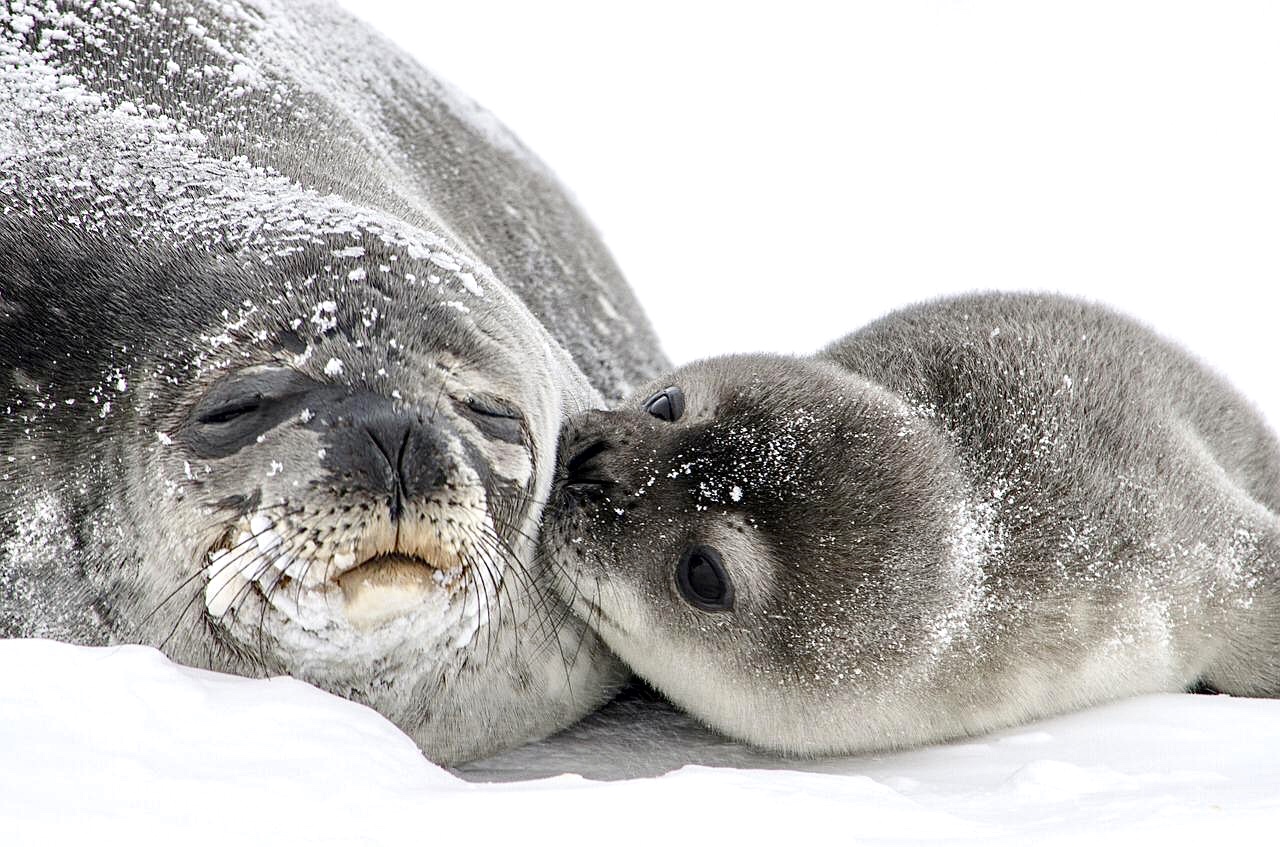
Call To Action! Sign Respect For Animals’ Urgent Letter Asking Norway To End This Year’s Barbaric Seal Hunt With A Quota Of 18,548 Harp Seals.

Norway


Call To Action! Sign Respect For Animals’ Urgent Letter Asking Norway To End This Year’s Barbaric Seal Hunt With A Quota Of 18,548 Harp Seals.


The Norwegian government is going ahead with their sickening seal hunt yet again this year. They have announced that the seal hunt can be conducted without an animal welfare inspector onboard. The reason is said to be the risk of COVID-19.


As noted in a statement by Respect For Animals, “among the crews to go hunting without inspection this year, are members who have been convicted of animal cruelty after several offenses during seal hunting in 2009.”

In 2010, these crew members received some of the highest fines ever given for animal cruelty in Norway. The men were convicted based on documentation from an animal welfare inspectors report, and video recorded evidence.

NOAH, the Norwegian animal protection group, is gravely concerned about animal welfare during the 2020 seal hunt, and is now demanding that the Government of Norway does the right thing and cancels the hunt. “To permit seal hunting crews to kill seals without inspectors is nothing but absurd. If the inspector must take considerations to prevent infection from (COVID-19) then of course this should apply to all crew. Considering animal welfare issues, the hunt should be cancelled when an animal welfare inspector is not allowed to be onboard. Hunting seals are not an “essential service,” that could legitimate temporary changes of laws during the corona-crisis,” Siri Martinsen, Veterinarian and Executive Director of NOAH said in a statement. “On the contrary, seal hunting is highly controversial and forbidden in several countries because of animal welfare concerns.”

Respect for Animals, NOAH, and many international animal protection groups are strongly concerned that rules for animal welfare and control are being changed in reference to the corona-crisis, while exploitation of animals continues unimpeded. The seal hunt is 80% subsidized, and should now be stopped to avoid animal suffering.

“I have travelled around the world documenting the different seal hunts, tying to get them banned, and wherever they occur, the horror and brutality is the same. Canada, Namibia, or Norway, the slaughter of seals often for their fur is cruel and unnecessary,” stated Mark Glover, Campaigns Director for Respect for Animals. “Seal hunters with appalling convictions for animal cruelty are being allowed to inflict carnage on innocent, helpless seals, without observation, has shocked people around the world. We urge the Norwegian government to take action and END the seal hunt, NOW!”

In 2015, the Norwegian government decided not to grant subsidies for 2016 and there was no seal hunt that year. Sadly, subsidies were re-established in the following years.


The quota for the 2020 seal hunt is set at 18,548 Harp Seals.


petition keyboard


ACTION

Please sign Respect For Animals’ letter to the Norwegian Embassy urging the government to cancel the barbaric seal hunt in Norway, HERE!

Help us continue to bring you the latest breaking animal news from around the world and consider making a Donation Here!


https://www.paypal.com/donate/?token=_X4d_5M1mLlbdWQzefiQ1W713obguXlR_d3Jd2QQtW4OO5bKyg6G3k5eIHTltT_ynYek5m&country.x=US&locale.x=US 


Please share our articles, follow us on social media, and sign up for our newsletter! Go Plant-Based!

“One Person CAN Make A Difference”


If One Positive Thing Comes From Coronavirus; It Could Be That The Environment Improves ! – Whatever; Mankind Needs To Learn From This !

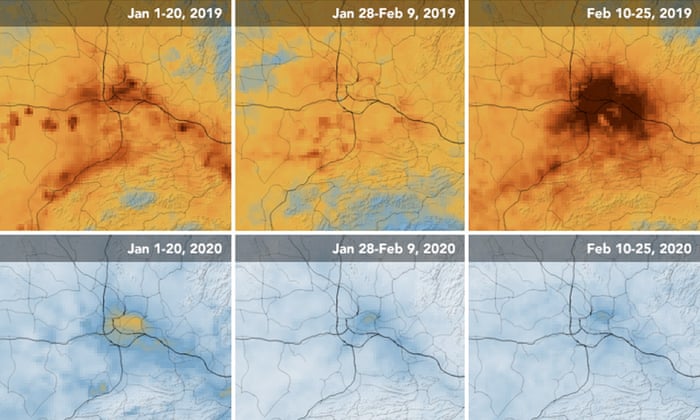
Dramatic fall in China pollution levels 'partly related' to ...

Nasa maps showing NO2 values over Wuhan during January and February. Photograph: Nasa Handout/EPA

https://www.theguardian.com/environment/2020/mar/01/dramatic-fall-in-china-pollution-levels-partly-related-to-coronavirus 


Mother Earth is having a bit of a Detox – and we think this is really fantastic. The Coronavirus / COVID has kept cars, planes and people, and their massive pollution off the streets and out of the towns and cities, and as a result, allowed the Earth to take some much needed ‘environmental medicine’ to help get itself and little better with regard the environment and cleaner air.

The pity is, that if and when it is all over; if it will ever be; huge numbers of humans will get back into their cars; board their planes, go back to their polluting jobs as if things never really changed much. If you can say one thing about the human race, it is that it never learns from its past mistakes.


Please click on the following link and read what some of the people have said.


https://www.boredpanda.com/himalayas-mountains-coronavirus-pollution-levels-drop/


People living in some parts of India are seeing the Himalaya mountains crystal clear for the first time in decades. This happened after the coronavirus quarantine reduced the amount of pollution in the country and helped the air clear up a bit.

Locals in the Jalandhar district in Punjab in Northern India, around 125 miles (just over 200 kilometers) from the mountains, are enjoying the majestic view. One of the people celebrating the unspoiled view is Indian cricket player Harbhajan Singh, with other Twitter users chiming in how pollution is a serious problem in India.

One person even said that this was the first time they could clearly see the Himalayas in nearly 30 years.


Researchers in New York told the BBC their early results showed carbon monoxide mainly from cars had been reduced by nearly 50% compared with last year.

Emissions of the planet-heating gas CO2 have also fallen sharply.

But there are warnings levels could rise rapidly after the pandemic.

With global economic activity ramping down as a result of the coronavirus pandemic, it is hardly surprising that emissions of a variety of gases related to energy and transport would be reduced.

Scientists say that by May, when CO2 emissions are at their peak thanks to the decomposition of leaves, the levels recorded might be the lowest since the financial crisis over a decade ago.

https://www.bbc.co.uk/news/science-environment-51944780


Melting Himalayan Glaciers: People, Environment, Economies | World ...


Germany and its disabled authority


Downer cow fate again /Authorities helpless.


banane rep deutschlandpg

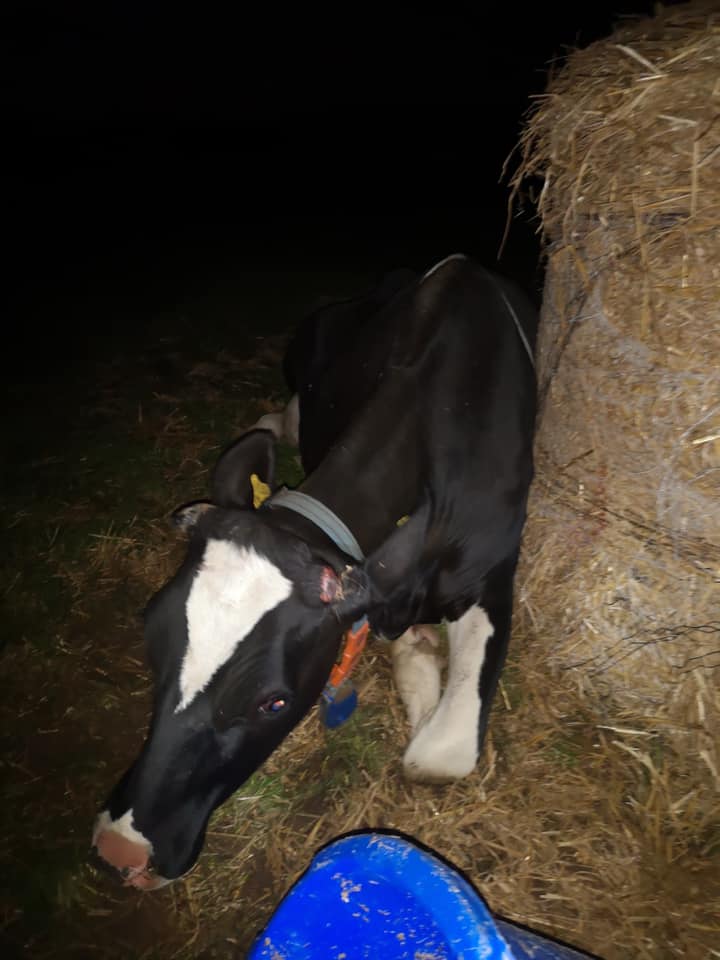
At a dairy farm in Schleswig Holstein, Germany, an injured Downer cow was reported to us last night. The poor animal lay next to a road without protection. Not connected because the owner knew that she would not get up. A deceased cattle was sighted in the same place yesterday morning. Then the next victim came.

down Kuh SOKOImage: SOKO Tierschutz

The condition of the animal was quickly checked. It had no access to water or food when checked. The cow was injured on the horn and one leg. A break is suspected. It rolled her eyes in pain. How did she get there? Not without violence.

down Kuh 2 SOKOjpgImage: SOKO Tierschutz


Then it got difficult. We informed the police that night. The first conversation with a policewoman was daunting. Because she said what would it bring if she goes out there and takes pictures?
In addition, they do not know about cows, she says (!!!)

At the veterinary office you would now reach no one at night and on Good Friday.
We then contacted the veterinary emergency call of the district of Plön.

Again, helplessness, because the veterinarian said he could not even go to the property and the best thing to do was to call the perpetrator to take care of him (!!!)

In a third phone call, we appealed to the police to go there with the vet team, secure evidence, and end the animal’s suffering in one way or another.

We particularly pointed out the danger that the animal would still be removed by force by criminal butchers and that this would cause even more suffering.

+++Update: The police informed us that they had spoken to the animal owner, who had assured that everything was fine and that the animal was only recovering after slipping.
When we asked whether it would be strange that an animal that could get up and walk again was stored right next to a busy road, there was no skepticism.

So everything is fine, again.
The animal is delivered to the keeper and his “vet-doctor” and no one is available today at Veterinary office!

Concentrated helplessness of the authorities. In what other act do the authorities want to call the perpetrator first before they go out? they march immediately because of a smashed window, but not of a smashed animal!
We have filed a complaint and a complaint and are staying tuned.

SOKO Tierschutz


And I mean…the german animal protection law says: Paragraph 2: “Whoever keeps, looks after or has to look after an animal, 1. must feed, care for and care for the animal appropriately according to its type and needs”…

Paragraph 3: “It is forbidden to enter the house to suspend or leave the company or other animal in the care of humans in order to get rid of it or to evade the obligation to keep or look after it ”!

Authorities in Germany are unwilling, unable, overwhelmed or corrupted.
Therefore animals – and especially the “useful” animals – only have the right to suffer and to die, that’s it.
Who is still involved in this shitty animal production?
The milk consumer!
Who else falls into the lie trap that the meat and milk mafia generates for its billions?
The meat and milk consumers!
They are the second-hand culprits and torturers of this fascist system.

Nobody can say “I didn’t know it” as in the time of National Socialism.
Today we know how the modern Dachau work.
Today WE have the decision to take part in the animal holocaust, or not!

Zitat über Mittäterschaftn

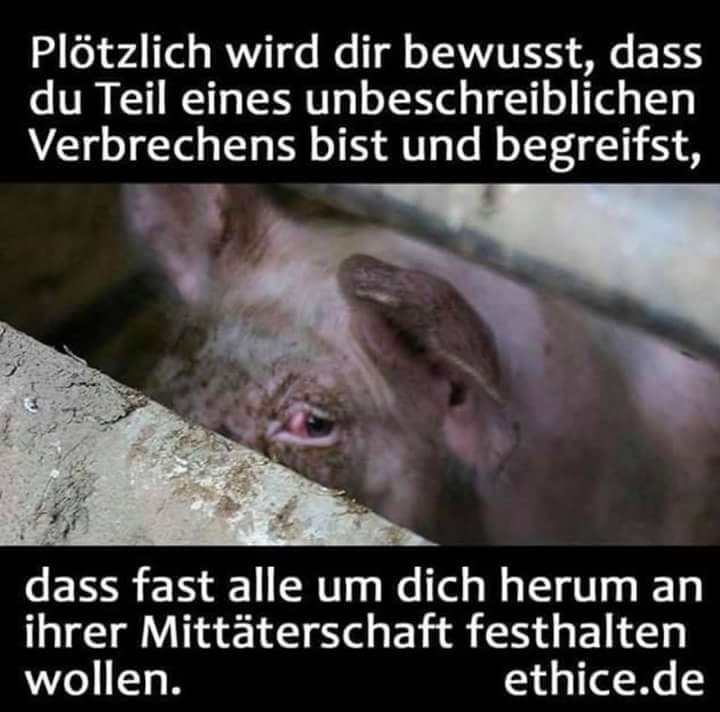
“Suddenly you realize that you are part of an indescribable crime and understand that almost everyone around you wants to hold onto his complicity” (ethice.de)


My best regards to all, Venus

the ideology of the Carnists

anonymous justicepng

-most people love animals.
-most would never slaughter an animal themselves or torture them to death.
-most do not directly associate their food choices with animal suffering or injustice.
-because they don’t see or don’t want to see this suffering.
-because the meat mafia, like every fascist system, keeps this suffering hidden and secret.
-whoever recognizes suffering as such has the responsibility to abolish it.
-that is why most people deliberately ignore the tragic facts in animal factories with a desire to get rid of them.

Regards and good night from Venus

Luxembourg: we say “thank you”!

fuchs mit kleinem

Success story: Fox hunting ban Luxembourg in the sixth year!!

luxembourg-flag jpg

With the enactment of the Hunting Season Ordinance of March 15, 2019, the Luxembourg Ministry of the Environment has extended the ban on fox hunting since 2015 not only for the 2019/20 hunting year, which will soon end.

For the coming hunting year 2020/21, foxes in Luxembourg were also protected: They are not listed as a huntable species in the current hunting regulations and therefore no hunting seasons have been set for them.

Fuchs Mama mit Welpe

No fox hunt? No problem!

The horror scenarios of sprawling fox populations or the spread of wild diseases, which the hunting association FSHCL had predicted, have of course not occurred.

Since the introduction of the fox hunt ban, the supporters of hunting have spoken out against the protection of the useful predators with flimsy arguments and massive lobbying and press work – fortunately without success, because the fox hunt ban is a true success story: nature and forest management have found no problems due to the fox hunt ban; there is no evidence of an increase in the fox population and the fox tapeworm infestation rate has decreased rather than increased since the ban on hunting.
While it only rose to 39.7% in 2014 with continued hunting, in 2017 it was only 24.6%.

Even before the administrative court, the Luxembourg hunting federation FSHCL failed miserably with its request to legally overturn the hunting ban.

Obviously there are no valid arguments in favor of the fox hunt and therefore there is no end in sight for the fox hunt ban.

The fox hunting ban in Luxembourg is in its sixth year

jagd total mit fuchsjpg

The hunt for foxes has been banned in Luxembourg since 2015.

Since then, the small country has stood as unmistakable, practical evidence of how unnecessary the massive and cruel killing of these prey, which is as useful as it is beautiful, is actually – even in the modern cultural landscape.

The Luxembourg government has kept its promise to consistently continue the success story of the fox hunting ban, because: The available scientific knowledge as well as previous experiences in Luxembourg speak clearly for the preservation of the fox hunting ban. This fact was clearly confirmed by the 2019 decree, which granted foxes protection for two years in advance.

Füchsleine
Luxembourg remains firmly on its trend-setting course, which Germany and other countries should finally join!

https://www.aktionsbuendnis-fuchs.de/post/luxemburg-fuchs


And I mean…Luxembourg has shown the peaceful, zivilized way of dealing with foxes, none of what the local hunting association FSHCL predicted has occurred.

The cantons of Geneva and Thurgau in Switzerland have shown the way and abolished fox hunting and construction hunting – because they are unnecessary and sadistic cruelty to animals.

§22 paragraph 4 of the German hunting law prohibits killing parents as long as they are necessary for the rearing of the offspring. This is to prevent young animals, which would not be able to survive on their own, to die from hypothermia, starvation or thirst.
And yet in Germany the closed season for foxes has been abolished.
Animals can be shot or trapped all year round.

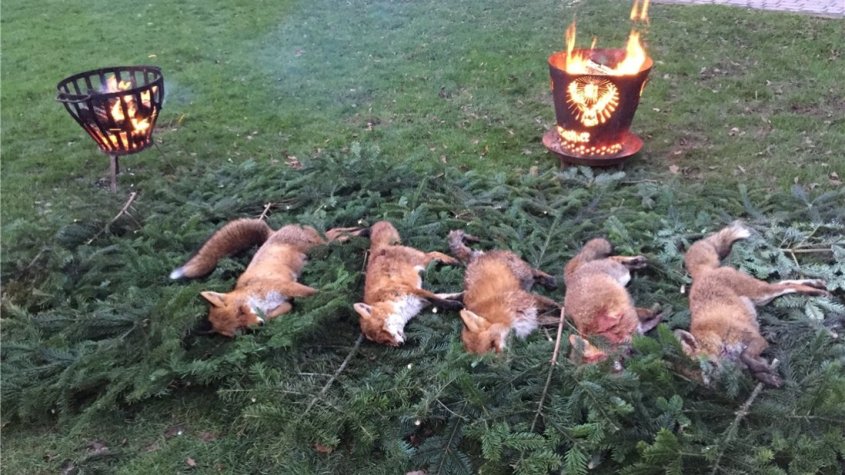
The first fox pups are born from mid-January, so that during the “fox weeks” (which take place in February) there is already a risk of actually killing parent animals and condemning their pups to a terrible starvation or frostbite. Fox weeks are legal!

As a leisure activity, psychopaths kill up to half a million foxes in Germany in the most cruel way every year.

Hunting is hypocritically described in the relevant circles as “fine regulation”, “two-stage system”, “dynamic management”, “development aid”, “population control” or such inhuman propaganda. Brainwashing as we know it from National Socialism.

Hobby hunting is a huge cancer that has spread over Germany.

Fuchswoche Fackel g

My best regards to all, Venus