Month: May 2020

USA: Hidden Video and Whistleblower Reveal Gruesome Mass-Extermination Method for Iowa Pigs Amid Pandemic.

american-flag-120402148


Full info link:

https://theintercept.com/2020/05/29/pigs-factory-farms-ventilation-shutdown-coronavirus/?fbclid=IwAR1i4kgw3dNiafRQCaGXZa1HLosm6WQzwAWCWkc9OKAIGiQw2YaEH89Yyu8

Hidden Video and Whistleblower Reveal Gruesome Mass-Extermination Method for Iowa Pigs Amid Pandemic

Glenn Greenwald

May 29 2020, 5:08 p.m.


Iowa’s largest pork producer, Iowa Select Farms, has been using a cruel and excruciating method to kill thousands of pigs that have become commercially worthless due to the coronavirus pandemic. As is true for so much of what the agricultural industry does, the company’s gruesome extermination of sentient animals that are emotionally complex and intelligent has been conducted entirely out of public view.

But The Intercept, as the result of an investigation by animal rights group Direct Action Everywhere, or DxE, has obtained video footage of the procedure and the resulting carnage that occurred at one of the company’s facilities in mid-May. Additionally, a whistleblower employed by Iowa Select has provided extensive details to The Intercept about the extraordinary methods now being employed to kill pigs — agonizingly and over the course of many hours — in increasingly large numbers.

What prompted both the DxE investigation and the whistleblower to come forward is Iowa Select’s recent adoption of the mass-extermination method known as “ventilation shutdown,” or VSD. Under this method, pigs at the company’s rural Grundy County facility are being “depopulated,” using the industry’s jargon, by sealing off all airways to their barns and inserting steam into them, intensifying the heat and humidity inside and leaving them to die overnight. Most pigs — though not all — die after hours of suffering from a combination of being suffocated and roasted to death. The recordings obtained by The Intercept include audio of the piercing cries of pigs as they succumb. The recordings also show that some pigs manage to survive the ordeal — but, on the morning after, Iowa Select dispatches armed workers to enter the barn to survey the mound of pig corpses for any lingering signs of life, and then use their bolt guns to extinguish any survivors.

The whistleblower told The Intercept that when Iowa Select began using the ventilation shutdown method in late April, it first experimented on a smaller group of hogs by just shutting off the airways into their barn and turning up the heat. Other employees told similar stories to DxE investigators. After those experiments failed — the oxygen-deprived pigs survived over the course of many hours, the whistleblower said, due to a failure to increase the heat to fatal levels — Iowa Select decided to begin injecting steam into the barns, to accelerate the accumulation of heat and humidity. That steam is visible in the video provided to The Intercept and is the culmination, at least thus far, of several attempts to perfect VSD. The whistleblower explained the process:

They shut the pit pans off, shut the ventilation fans off, and heat up the building. That’s what the plan is. It’s horrific as it is. It was first used on test cull sows: those were first given the VSD treatment. The first day they shut off all the fans and turned the heat up and the hottest they could get the building was 120 degrees. After four to five hours, none of the animals were dead. There was an attempt to induce steam into the building, along with the heat and the ventilation shutdown, and that is how they ultimately perfected their VSD operation. Every time they’ve been euthanizing the animals, it’s been a test in a sense. Piglets were killed off in a barn with gas generators.

The profit model of the agricultural industry depends, of course, on raising animals in ways that cause suffering for years and then ultimately killing them to convert them into meat. Though food lines are growing around the United States, the coronavirus pandemic has prompted factory farms to exterminate animals en masse because of the erosion of their commercial supply chains. Numerous slaughterhouses have been forced to close due to Covid-19 outbreaks among their insufficiently protected employees, and this has only increased the amount of “excess” animals the industry regards as worthless and disposable.

Rather than caring for these animals until pre-pandemic demand returns, or converting them into discounted or donated food for millions of people who have suddenly become unemployed and food insecure by caring for the animals until slaughterhouse capacity can accommodate them, many companies, including Iowa Select, have evidently made decisions driven exclusively by a goal to maximize profits. In sum, they are slaughtering these now “worthless” animals in vast numbers as fast as possible, using extermination methods that cause sustained suffering and agony, to avoid the costs of keeping them alive.

During the pandemic, mass slaughter has become commonplace at factory farms, even though many of these farms are not where large-scale killing is meant to occur. In normal times, the animals would be transported to slaughterhouses and killed there in ways that, at least in theory, minimize the cruelty by accelerating the death process. But mass killings that radically deviate from the normal slaughterhouse process are now rampant in this industry and are expected to increase. “At least two million animals have already reportedly been culled on farm, and that number is expected to rise,” The Guardian reported on April 29. Officials in Iowa “have warned that producers could be forced to kill 700,000 pigs a week due to meat plant slowdowns or closures.”

This mass extermination requires the use of life-extinguishing procedures which, prior to the pandemic, were not typically employed by this industry. And those procedures are anything but quick, painless, or humane, as this four-minute video produced by The Intercept demonstrates:


The Horrors of Ventilation Shutdown

The decision to kill healthy animals in unusually large numbers has led many factory farms to resort to methods that are novel and gruesome. The quickest and most merciful way to induce death for so many animals at once — shooting them in the head one by one — would be too emotionally traumatizing even for factory farm employees who are accustomed to raising animals in order to bring them to slaughter. Even when standard industrial methods of slaughter are used, factory farm work has been demonstrated to entail serious mental health harms for workers.

But the method of ventilation shutdown now being used at Iowa Select causes pigs to endure great anguish over many hours on their way to death. On the hidden audio recorders placed in the barn as part of DxE’s investigation, sustained screams of distress and agony are audible as the heat fills the building while the air supply is shut down. The deployment of armed workers to shoot any pigs who are clinging to life in the morning is designed to ensure 100 percent mortality. But the number of pigs in the barn is so great that standard methods to confirm death, such as pulse-checking, are not performed, making it quite possible that some pigs survived the ventilator shutdown, were not killed by bolt guns, and are therefore buried alive or crushed by the bulldozers that haul away the corpses.

Iowa Select has not responded to numerous questions submitted by The Intercept. But upon discovering that investigators from DxE had obtained video footage from inside one of its barns showing the suffering of pigs during this process, the company tried to preempt this reporting by admitting its use of VSD in an article published last week by a pork industry newsletter. “The thought of euthanizing entire herds is devastating,” a company spokesperson told the newsletter. “Sadly, Iowa Select has been forced to make this heartbreaking decision for some of its herd.”

To another industry outlet, the company “announced in a statement that they have been forced to euthanize some of its herd,” emphasizing not the pain endured by the animals that were exterminated, but the suffering of company executives: “‘It’s been hard on us to come to those decisions,’ says Pete Thomas, DVM at Iowa Select Farms.”

The video obtained during DxE’s investigation and provided to The Intercept viscerally conveys the inhumane cruelty of this extermination method. The video cameras placed inside the barn, along with audio recorders, were activated shortly after DxE investigators learned that a ventilation shutdown was scheduled for a particular night in mid-May.

Those video and audio devices recorded the start of the killing process, beginning with the sealing off of all airways, and continued all night as the pigs suffered and died. The devices continued recording through to the next morning, when Iowa Select employees entered the barn, finished the extermination process by shooting the pigs who managed to survive and then removed the corpses using bulldozers. The audio recorders document the noises of anguish emitted by the pigs during the procedure, as well as the sound of guns finishing off survivors. It also records discussions by Iowa Select Farms about what they were doing, followed by their eventual discovery that hidden cameras had captured everything that was done.

In an interview with The Intercept, the whistleblowing employee of Iowa Select, who originally wanted to speak on the record but changed their mind due to fear of reprisals from the industry that dominates their state, described the abuses that prompted them to reach out to DxE even prior to the pandemic. The whistleblower recounted how their pre-Covid-19 anguish escalated significantly over the last several months, and how they were pushed over the limits of their conscience by witnessing the unparalleled horrors of their employer’s use of ventilation shutdowns.

Prior to the outbreak of the coronavirus, the whistleblower decided to covertly communicate with DxE investigators after reading a study published by the group on the inhumane and often illegal confinement of factory farm pigs in which they linger for years with no adequate space even to turn around. The conditions in which the Iowa Select pigs were kept — with nowhere near enough room to be considered humane by the whistleblower — was increasingly weighing on their conscience. The whistleblower explained to The Intercept that a “massive increase” in pig production over 2019 led to the already cramped space for pigs becoming even smaller. Despite being around farms for decades, the whistleblower could hardly bear to see what was happening. “It’s immoral, hard to see every single day,” they said.

Months ago, the whistleblower even began conducting research into regulatory requirements, after observing that the pigs were being stored in ways that appeared to them to be “double what is permitted” by applicable standards. But they quickly determined that the state would have little interest in taking action.

Indeed, the agricultural industry has long used its economic dominance to influence both political parties and the legislative process to enact laws and regulations with little purpose other than to maximize their profit margins and conceal from the public the realities of how they operate. The industry succeeded even to the point of inducing the enactment of now-notorious and constitutionally invalidated “ag-gag” laws, designed to punish various forms of transparency intended to show the public the realities of what takes place inside industrial farms. A short documentary produced by The Intercept last year revealed pervasive abuses in Iowa’s meat industry and how those abuses are protected and enabled by industry-dominated politicians who receive substantial donations and dutifully subject themselves to industry lobbyist control.

The whistleblower’s growing concerns about the ethics of this industry “quickly evolved” as the coronavirus pandemic began seriously affecting factory farms. The pandemic caused “massive backups,” the whistleblower said. As market gluts and slaughterhouse shutdowns increased, the whistleblower began to suspect that “massive kill-offs of healthy pigs” were being planned by the company: Pigs, in the whistleblower’s words, “are now being killed for no reason.”

This realization of imminent mass extermination using methods that cause death slowly and painfully elevated the crisis of conscience to an entirely new level. “The weight of that was pretty heavy, to be honest,” the whistleblower said. Over the course of the last several months, the whistleblower began seeing Iowa Select implement new protocols and schedules for the transportation of pigs, reviewing documents describing new procedures, and hearing from other facility employees about plans for ventilation shutdown. That was when the whistleblower concluded that the reality of killing healthy pigs en masse was coming “very much sooner rather than later.”

The Iowa Select Farms whistleblower is far from being a coastal animal rights activist or vegan fanatic ideologically opposed to all animal agriculture. The source is virtually the opposite of that industry-peddled caricature: someone who has been around farming, including industrial agriculture, for their entire life. They are someone fully accustomed to the raising and slaughtering of animals for food, often under repressive and inhumane conditions. And yet, even with all of that mental conditioning and cultural immersion, the whistleblower was reaching the breaking point for what their conscience could withstand even before the Covid-19 pandemic. Once the pandemic ushered in all-new moral atrocities, they could no longer morally justify staying silent and complicit about an industry that has long provided them and much of their community with employment.

Rather than becoming inured to these abuses as the result of daily exposure, the whistleblower was becoming increasingly sickened by them. While this “is an industry I’ve grown up around,” the whistleblower said, “I wasn’t becoming numb to it. It was affecting me more and more every day: feeling the compassion and empathy for these animals that we were working with every day, then beginning to question” the ethics and morality of industrial practices.

As The Intercept has often documented, pigs are social animals at least as intelligent and emotionally complex as dogs, who experience the full range of emotions from life: joy, playfulness, love, connection, pain, loss, suffering, and grief. But at least prior to the coronavirus pandemic, even with all the immense suffering factory farm animals endure — bred by industrial agriculture to live in extreme deprivation, which often includes being confined for years in cages so small they can never even turn around, living in festering disease, and being genetically modified to be more profitable to the point that their own distorted bodies cause constant pain — the method of slaughter that finally ends their suffering is typically (though not always) free of sustained, enduring pain and agony.

But the pandemic, while having no effect on the inherent moral value of these sentient beings, has stripped them of their commercial worth. And that has resulted in the industry using extermination methods outside of the standard processes, producing new ethical and moral horrors in an industry that was already suffused with them.

To continue reading click on the link at the start of this post.

29/5/20 – VICTORY! China Makes Dog Meat Sales Illegal Finally Ending The Barbaric Dog Meat Trade!

VICTORY! China Makes Dog Meat Sales Illegal Finally Ending The Barbaric Dog Meat Trade!


https://worldanimalnews.com/historic-news-china-makes-dog-meat-sales-illegal-ending-the-barbaric-trade/


Read more from Animals Asia:

https://www.animalsasia.org/uk/media/news/news-archive/china-removes-dogs-from-the-approved-livestock-list.html

VICTORY! China Makes Dog Meat Sales Illegal Finally Ending The Barbaric Dog Meat Trade!


By WAN

May 29, 2020


We are beyond excited to report after learning from Animals Asia that China’s new National Catalogue of Livestock and Poultry Genetic Resources was announced this morning, with dogs not included on the list.

“This is a step by step process where the regulation bans the industry of selling live dogs and dog meat for food, rather than making it illegal to eat your own dog. You can no longer buy dogs in the markets or restaurants for consumption because they are selling dogs illegally for food,” Animals Asia told WAN.

However, if you breed your own dogs you can eat them – but you cannot sell them for consumption.

All of the dog meat restaurants, markets, and slaughterhouses countrywide selling dogs for food are illegal now – including of course Yulin,” continued Animals Asia.

“One more addition is that Shenzhen and Zhuhai have already made it illegal to both buy dogs for food and eat them (in any capacity). We hope that a precedent has been set with more cities joining this initiative as well,” concluded Animals Asia.

Although the legislation is not an outright ban on consumption, the regulation bans the selling of live dogs and dog meat for food. This is sending a message to the industry that dog meat consumption is not supported by the government.

The protection also extends to cats who are not and have never been on the Catalogue of Livestock, reflecting their status and importance as companion animals as well.

Animals Asia’s Cat and Dog Welfare team has worked for decades to see the building blocks towards this decision – quietly and sensitively behind the scenes with the authorities and local NGO’s. They have been encouraging responsible dog management, and a harmonious connection with companion animals in China, seeing the government and public increasingly supportive of ending the dog and cat meat trade. Their team can now report any illegal restaurants or facilities selling dogs as meat and help to strengthen this regulation by public education – thus slowly bringing the consumption of dogs (and cats) completely to an end.

The organization submitted four in-depth investigative reports to a number of national and local governments to help departments and officials understand the violations and dangers of the dog and cat meat industry. Their efforts were acknowledged by an official reply letter from the State Food and Drug Administration in 2017, which mentioned that they would protect consumers’ food safety by strengthening supervision and inspection of restaurants and other dog and cat meat sales across the country, collaborate with relevant departments to crack down on illegal dog and cat meat practices, and increase publicity and guidance to the public, amongst many other important measures.

This regulation is a cause for celebration, showing that Animals Asia’s programs working from within the country, nationwide, have been supported by the authorities and are now making the difference they had hoped for. It provides inspiration to continue their work to improve the lives of animals and humans alike, and is truly a shining example of kindness in action.

Thank you to Animals Asia and all of the compassionate people and groups worldwide who have worked tirelessly for decades to end the barbaric dog and cat meat trade in China and throughout Asia, you have exposed this shocking trade and proved that darkness can’t exist where there is light,” said Katie Cleary, President & Founder of WAN & Peace 4 Animals.


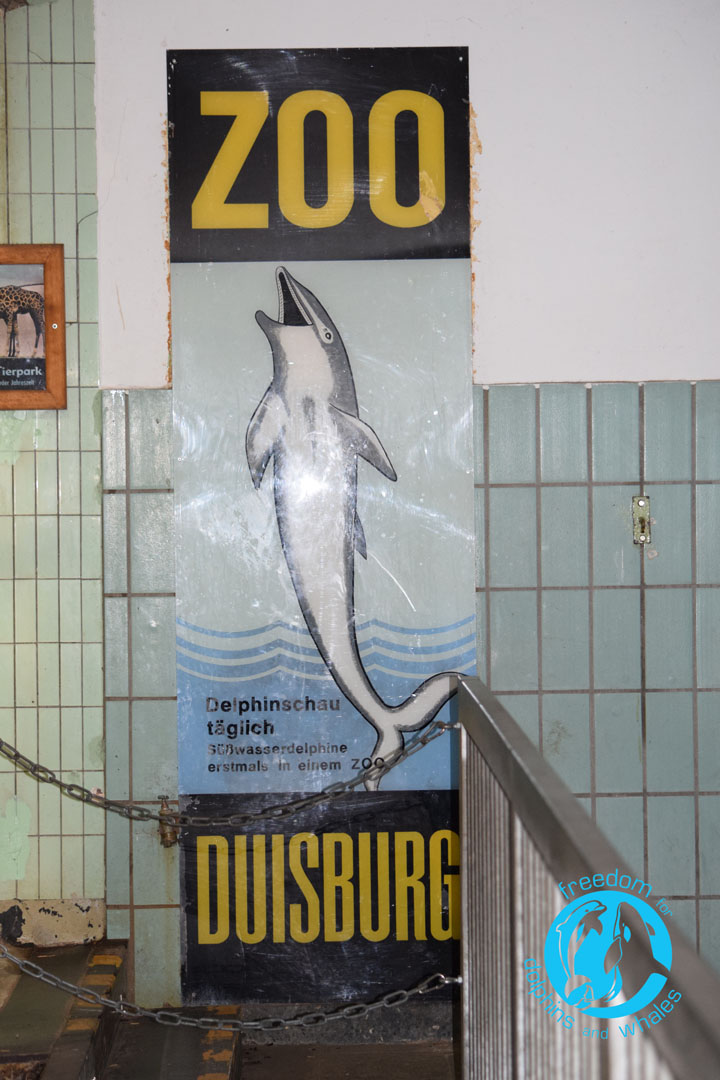
Duisburg Dolphinarium: the largest dolphin cemetery in Europe.

Reported by “Freedom for dolphins and whales”, May 24 at 8:58 pm public
Every Wednesday and Sunday at 8 p.m. we share the life story of a dolphin or whale with you.

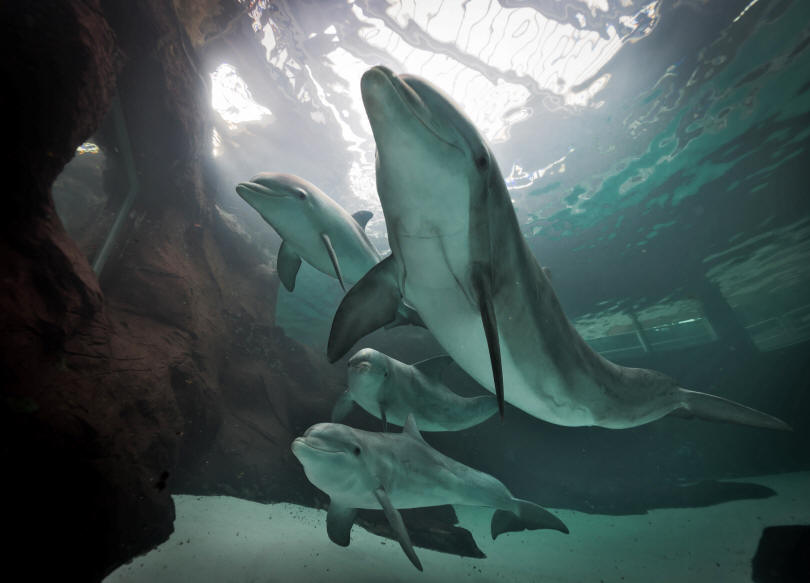
Today we report on the seventh fatality in the Duisburg Zoo, Germany, a male dolphin named Flip, who could have lived much longer if the Dusiburger Zoo had properly taken care of him.

delfin Flip
Flip’s story, Bottlenose dolphin, 5 years imprisonment, in the Duisburg Zoo, Germany.

In the middle of 1965, Flip was brutally caught with three other bottlenose dolphins in the waters off Florida for the Duisburg Zoo.

Zoo_duisburg delfine Große Tuemmler

In addition to the dolphin male Flip, the other three unfortunate bottlenose dolphins, another male dolphin that was given the name Flap and two female bottlenose dolphins which were given the names Perfect and Littlebit and died shortly after being caught.

delfine duisburgjpg
First, the dolphins were brought to the Miami Seaquarium, and the son of the Duisburg Zoo director at the time, Hans-Georg Thienemann, flew to Miami to inspect the four new prisoners for the Duisburg Zoo.

On July 11, 1965, the first four bottlenose dolphins reached the Duisburg Zoo. They were locked in the basin called a dolphin with a size of approx. 10 x 10 meters and a depth of three meters and in this basin, which could not in the least reproduce their natural habitat, they should also die.

The two females were the first victims of the Duisburg Zoo.

 Perfect died after 13 days, the death of Little Bit came on 44 days later.

Continue reading “Duisburg Dolphinarium: the largest dolphin cemetery in Europe.”

Volga-Dnepr Airlines and the deportation of live monkeys

Monkey-Primate-Box-Cage-Crate-jpeg

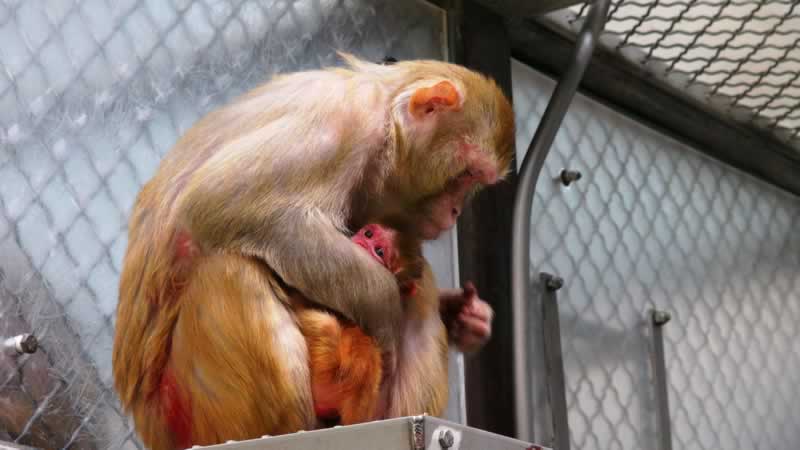
We have just received disturbing information alleging that more than 600 monkeys destined for laboratories will be shipped to Chicago on a Volga-Dnepr flight leaving Cambodia on May 29.

Please take action below right away!

russland jpg

We’ve received disturbing reports that the Russian airline Volga-Dnepr Airlines, under its parent company Volga-Dnepr Group, allegedly transported a shipment of monkeys for use in laboratories in the U.S. and maybe planning to do it again.

Insiders allegedly at Ted Stevens Anchorage International Airport reported that Volga-Dnepr Airlines transported a shipment of live monkeys from Cambodia to the U.S., where they will be sent to laboratories and used for cruel and deadly experiments.

We confirmed that the airline did indeed operate flight VI3236, which departed Phnom Penh International Airport in Cambodia on April 30, 2020, and arrived at George Bush Intercontinental/Houston Airport in the U.S. on May 1, 2020, after making two stops—at Khabarovsk Novy Airport in Russia and Ted Stevens Anchorage International Airport.

We were told that the cargo on board this flight was live monkeys destined for experimentation.

We contacted Volga-Dnepr Airlines’ executive team and global offices multiple times, but they are refusing to answer our questions about transporting monkeys for experimentation.

Volga-Dnepr Airlines: Come clean! Are you transporting monkeys to laboratories?

Monkey+NC+DB

Continue reading “Volga-Dnepr Airlines and the deportation of live monkeys”

Antimalarial drug hydroxychloroquine against Covid 19! Big Pharma loves us

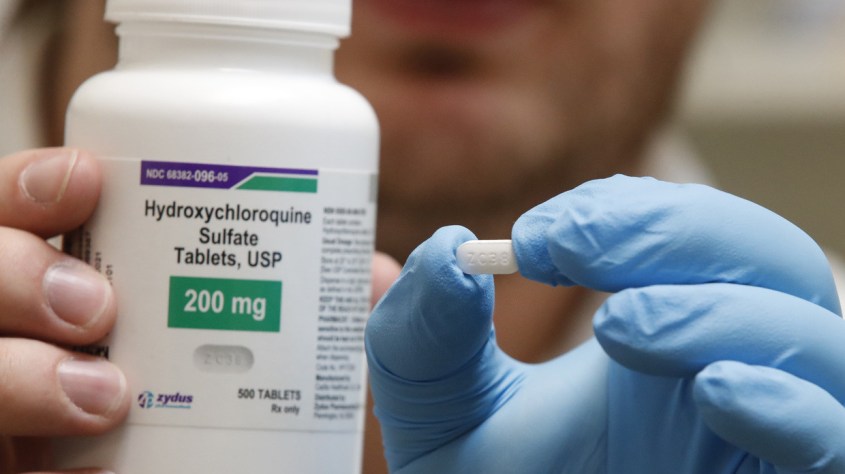
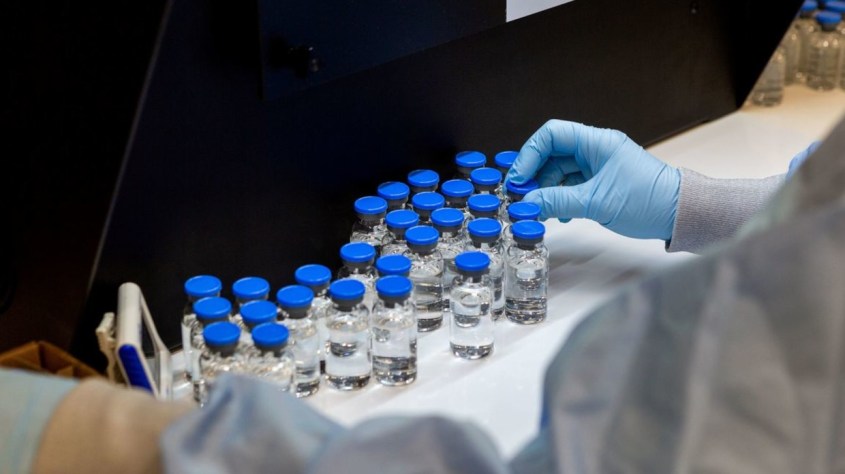
Italy and Belgium have joined France in​ moving to ​​ban the​ use of the controversial hydroxychloroquine​ to treat Covid-19 patients, as questions continue to mount over its safety.

corona gift

On Wednesday, France revoked its decree authorizing the prescription of the anti-malarial drug for the novel coronavirus following a decision from the government’s health advisory agency.

Now Belgium’s health body has warned against using the drug outside of ongoing registered clinical trials.

corona antimalaria jpg

Italy’s health authorities also concluded that there is too little evidence to support the use of hydroxychloroquine for Covid-19 and that the lack of proof means it should be banned outside of clinical trials.

The Italian Medicines Agency (AIFA) also cited new clinical evidence on the use of the drug which “indicates an increased risk for adverse reactions with little or no benefit.”

“Pending obtaining more solid evidence from the clinical trials that are underway both in Italy and in other countries of the world,” the decision was made to suspend the authorization of its use in hospitals and at home, AIFA said.

corona Impfung JPG

A new study published in the Lancet medical journal could not confirm the benefit of taking the drug as a treatment against the virus.

It found that taking the drug was actually associated with increased risks of in-hospital death for Covid-19 patients.

Britain’s pharmaceutical regulator also said Wednesday that a hydroxychloroquine trial by the University of Oxford has been “paused” less than a week after it began due to safety concerns. It said other trials of the anti-malaria drug for the treatment of Covid-19 remain “under close review.”

The drug became a massively controversial treatment for the virus after it was touted by US President Donald Trump as a potential miracle cure.

Trump even said this month that he was taking a course of the drug as a “preventive measure” against the infection (!!!)

https://www.rt.com/news/489904-italy-belgium-france-hydroxychloroquine-coronavirus/

My comment:  WANTED: Human guinea pigs for big pharma. Must be willing to risk the health and possibly their lives in the name of profits. Must waive all rights of recourse against said vaccine creators.

At the moment, only French, Belgian, and Italian guinea pigs are not in demand.

My best regards to all, Venus


An Everyday Guide to Vegan Foods – Its Not Just Nut Cutlets Now !

The following is reason enough to go Vegan;


mark 3


https://www.vegan.com/foods/


If you want to discover great new vegan foods you can add to your diet, you’ve come to the right place.

This page offers a comprehensive assortment of links to every imaginable sort of vegan food. But depending on what you’re looking for, you might actually be more interested in our vegan cooking guide, our vegan grocery shopping list, or our handy collection of the best vegan foods sold by Amazon.com.

Note that the below list can feel overwhelming since it covers every single food-related page on Vegan.com. In case you’re looking for the quickest and most convenient possibilities, we have a separate page devoted entirely to easy vegan foods.

KEY LINKS

The quickest way to discover all the great things vegans can eat is to click through to each of the following five pages. The variety of fantastic vegan options is truly staggering.


VEGAN COOKING

VEGAN MEATS & FISH

VEGAN MILK & DAIRY

ALL OTHER VEGAN FOODS


Now that you’ve looked over all these foods, why not get cooking? Check out our Guide to Vegan Cookingand our listing of the best recent vegan cookbooks. If you’re new to vegan foods, you may also find our “How to Go Vegan” page of interest.


Get well very soon Brian; you are needed in animal rights (and music !):


Filthy ‘Wet Markets’ Still Peddling Animals and Flesh Despite COVID-19 – WHO and World Governments Do Nothing to Resolve A World Issue !


Hi Mark,

After releasing footage taken inside “wet markets” in Indonesia and Thailand in early April – months after the COVID-19 outbreak began – PETA Asia investigators observed more filth, misery, and death at nearly a dozen other animal markets elsewhere in Asia.

At one market, the flesh of wild boars, snakes, dogs, and rats was sold openly, and even cats were slated for slaughter – huddled together, terrified and exhausted, in a crowded, dirty cage.

Since PETA released the initial footage in April, more than 200,000 people have joined PETA and our affiliates in urging the World Health Organization (WHO) to call for an end to deadly live-animal markets around the globe. More than 60 bipartisan congressional lawmakers followed in our footsteps, too, writing their own, similar letter to WHO urging the agency to request the closure of all such markets immediately. And as hundreds of thousands of human lives have already been claimed by COVID-19, it’s more critical than ever that we all take action.

Please join us in urging the World Health Organization to call for an end to live-animal meat markets.

Thanks for all you do for animals.

Sincerely,

Simon P-H
PETA UK


After releasing footage taken inside “wet markets” (also called “live-animal markets”) in Indonesia and Thailand in early April—months after the COVID-19 outbreak began—PETA Asia investigators observed more filth, misery, and death at nearly a dozen other animal markets elsewhere in Asia. Despite a growing death toll, calls by world leaders for a ban on such markets, and the continued importance of flattening the curve, they and others like them are still conducting business as usual.

These Live-Animal Markets Could Be Where the Next Pandemic Originates

This new footage, shot just days ago, takes viewers inside live-animal markets in Cambodia, China, Indonesia, the Philippines, Thailand, and Vietnam, where chickens, ducks, fish, and dogs as well as bats, monkeys, and other exotic animals are sold. 

Terrified live animals, bloody carcasses, and rotting flesh were all being peddled for human consumption. At multiple sites, investigators observed marketgoers walking around in flip-flops on floors covered with bodily fluids and handling raw flesh and touching blood-streaked countertops with their bare hands. At two other markets, civet cats and bats were sold for food—even though they’re a reservoir species for severe acute respiratory syndrome (commonly known as SARS), another deadly coronavirus.

Blood and Rotting Flesh Everywhere

Weeks before, PETA Asia investigators had visited wet markets in Indonesia and Thailand and were shocked even back then that any were still operating. At the Tomohon Market in Indonesia, the flesh of wild boars, snakes, dogs, and rats (whose babies like to put their arms around their mother’s neck while being bathed) were openly sold at the market. Gloveless workers and customers were seen handling the body parts of animals who had been killed on site. A mutilated snake was curled up on a table, blood staining the white tiles red. Chickens with open wounds were bound to other birds slated for slaughter.


Enough Is Enough

All wet markets are potential breeding grounds for zoonotic diseases, such as COVID-19, SARS, and MERS. At such markets, feces and other bodily fluids can easily get on traders’ and customers’ shoes and be tracked into restaurants and homes. The workers who handle the animals often don’t wear gloves (as seen in the video footage) and can also spread bacteria. Flies swarm around the bodies of dead pigs and other animals, and the countertops and floors are streaked red with the blood of gutted fish and slaughtered animals.

PETA Asia has written to health officials in Cambodia, China, Indonesia, the Philippines, Thailand, and Vietnam to call for an end to deadly live-animal markets.

Shutting down foreign wet markets isn’t good enough. To prevent more diseases like COVID-19, we must do more than crack down on these markets only in certain areas of the world. All live-animal markets must go.

Live Birds Caged With Their Dead Companions

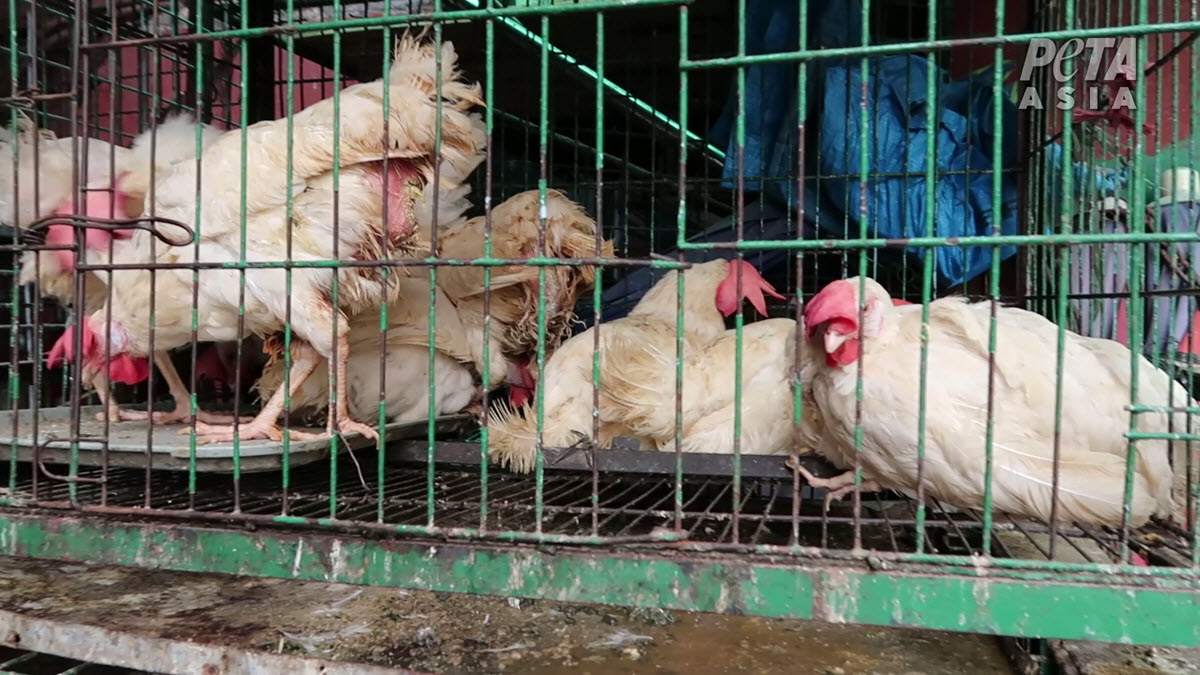
Live ducks and chickens (who have their own unique language, with more than 30 different sounds) were kept in cramped, filthy cages, sometimes with the bodies of birds who’d already been purchased and killed. Live turtles (some of whom can hold their breath under water for over 100 days) and other “exotic” sea animals were also available for purchase. Like all animals, they just want to be left in peace, not killed for food.


Suffering and Death in a Thai ‘Wet Market’

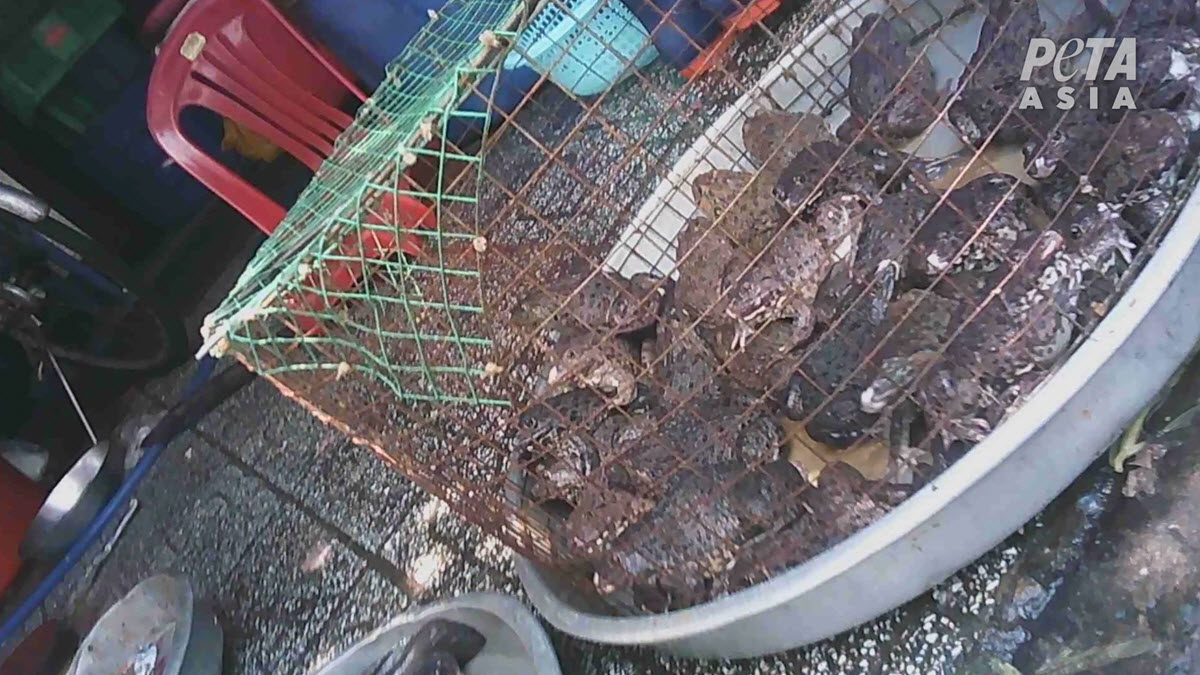
At Bangkok’s Khlong Toei Market, PETA Asia’s investigator saw mesh bags jam-packed with live, frightened frogs (some of whom use trees as “drums” to send messages to one another) being plunked down next to the mutilated bodies of other slaughtered frogs.

Cats Are Caged and Sold for Meat, Too

Terrified, exhausted cats—sensitive and intelligent, just like the cats we share our hearts and homes with—were kept in a crowded, dirty cage without food or water until they were purchased for their flesh.


TAKE ACTION:


Help Prevent the Next Global Pandemic: Take Action Now!

Take Action Link:

https://secure.peta.org.uk/page/60272/action/1?utm_source=PETA%20UK::E-Mail&utm_medium=Alert&utm_campaign=0520::veg::PETA%20UK::E-Mail::Asian%20Wet%20Markets::::aa%20em&ea.url.id=4740277&forwarded=true#action


Animal hoarding: what’s this?


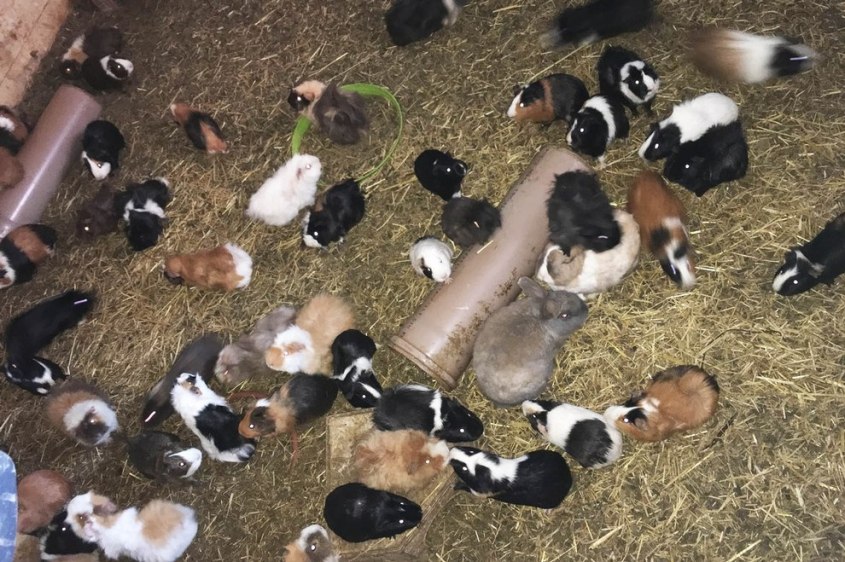
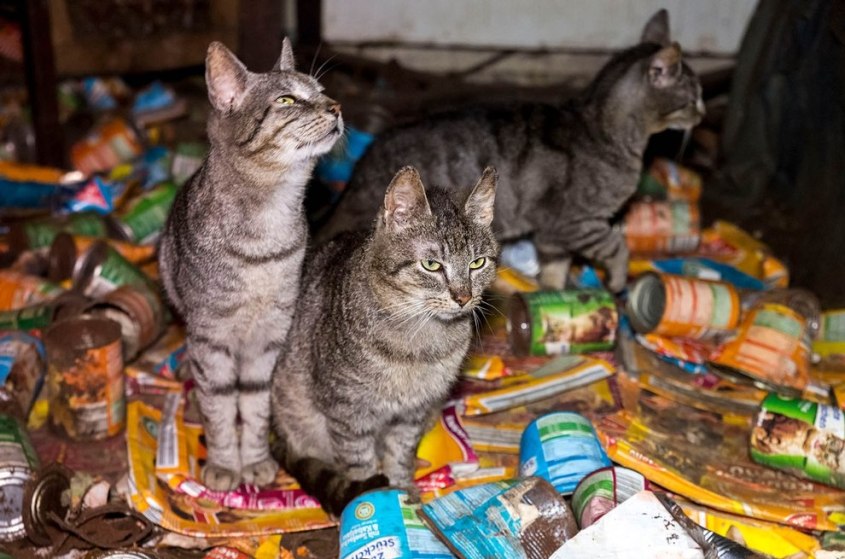
Animal hoarding describes the morbid addiction to collecting animals – a widespread phenomenon not only in Germany.

People who hoard a large number of animals in this form usually cause terrible animal suffering: they often do not provide food, adequate hygiene, and veterinary care. Again and again, countless animals have to be saved from terrible circumstances in which they lived with animal collectors.

Animal-Hoarding-PETA-D1

What is animal hoarding?

Animal Hoarders are mostly not aware of the suffering they cause to the animals in their care – even if it seems obvious to other observers. The animal collectors are also characterized by the following striking behaviors:

-They collect a large number of animals, often kept in too little space.
-They don’t care about the most basic needs of animals, such as freshwater, feed, shelter, veterinary care, and hygiene.
-They make excuses or deny the miserable conditions under which their animals – and other people in the household – have to live.

Even if the well-being of oneself or other family members are endangered, the people affected usually no longer respond.

animal hoarding c-PETA-DPETA, Germany


“It is often a process that develops over a long period of time. The keepers are increasingly losing track of animal husbandry. At some point in the stables, apartments, and barns you will find critically ill or dead animals “-says Jana Hoger, a specialist at PETA.

Continue reading “Animal hoarding: what’s this?”

England: Coronavirus: the danger of live animal export.

Sheep legs


https://theecologist.org/2020/may/27/coronavirus-danger-live-animal-export


Coronavirus: the danger of live animal export

Abigail Penny


27th May 2020

As society shifted from liberty to lockdown, life as we know it changed. This global crisis warrants a global response and that’s what we’re giving it… or are we?

We’ve seen schools close and pop-up hospitals open. As planes sat idle, airlines sought bailouts. Anti-bac became our everyday elixir. We’re now living a life full of hand-sewn face-masks, never-ending Zoom calls and supermarket home-deliveries.

In France police patrol the streets checking people’s permits to stroll outside. In Spain some residents resorted to walking toy dogs in an attempt to dodge imposed restrictions. And finally, after two long months of strict lockdown measures, Italy has taken a collective deep breath of fresh air.

So, as we battle this deadly pandemic, it’s only right that ‘Stay Home, Save Lives’ became our quarantine mantra.


Journeys

As many of us keep safe inside, farmed animals continue to roam — though they too are not free. With a one-way ticket to an international destination of the industry’s choice, they are shipped great distances for ‘fattening’ and butchery.

Earlier this month Animal Equality’s team in Spain released heart-breaking scenes of disorientated young lambs and sheep crammed into trucks and ships.

Forced to travel many miles from where they were born, footage showed them in small metal pens, their hooves caught between the bars and their journeys lasting for days or even weeks. Some are pregnant or become injured along the way; most endure extreme temperatures with little food, water or rest; all are unaware of the chilling fate that awaits them.

Last month animal protection organisations, Eyes on Animals and L214, released undercover footage of calves from Ireland transported on long journeys to France for veal, where they were callously kicked and beaten with sticks.

And just a fortnight ago coverage of a newly published European Commission report highlighted that the welfare of millions of animals exported from the EU is being put at risk by failings, “including heat stress, bad planning and a lack of information from the destination country”.

Here in the UK thousands of live sheep, calves, pigs and even horses continue to be exported to countries in the EU and beyond. The cliffs of Dover are witness to lambs on their way to slaughter.


Disease

So, why one rule for the animal agriculture industry and another for the rest of us?

A particularly poignant question at a time when researchers are suggesting that the consumption of animal products may be linked to the coronavirus crisis and when science tells us that 75 percent of new and emerging infectious diseases in people come from animals.

Forcing animals to live in intensive conditions, travel great lengths in restless confinement and suffer a merciless death leaves us in a more precarious position than ever before.

Vets and epidemiologists keep sounding the alarm that live animal export significantly increases the likelihood of diseases to spread; coronavirus knows no borders. The animal agriculture industry is making a mockery of everyone’s social distancing efforts and putting us all in grave danger.

Live export is certainly not necessary on animal welfare grounds, nor for reasons of public safety, so why exactly is this practice still permitted in the current health crisis?

As I write, animals are struggling in overcrowded lorries and ships, stuck in even longer queues than usual as COVID-19 further disrupts transport links. We cast-off these blameless animals with no controls in place for how they are to live or die: once they depart British soil, they may as well already be dead to us.


Profits

Workers too are in imminent danger. Truckers, vessel crews, animal handlers and others are all in close proximity with these frightened animals and will be amongst the first to catch any deadly pathogens that lurk. No one should be forced to be at risk just to make a living.

Though can we really be all that surprised that the meat industry is prioritising profits over people?

Weeks ago we saw workers stage a walkout of a poultry plant operated by Moy Park — one of the UK’s largest chicken producers, responsible for raising and slaughtering over 312 million birds here each year — due to fears over lack of PPE and inadequate measures to combat the spread of coronavirus.

And stories from slaughterhouses and meat packing facilities continue to dominate our screens, with coronavirus cases especially prevalent in abattoirs throughout the US and Ireland. This from an industry that prides itself on ever-increasing ‘kill line’ speeds, where workers are typically in close proximity and made to work as quickly as possible, all to maximise profits.


Inaction

Worldwide, an estimated two billion live animals are transported long distances each year. Since we went into lockdown in the UK on 23rd March, over 350 million live animals have been exported around the world. The numbers are staggering… the risk to us all equally so.

Boris himself has spoken out in the past in favour of a ban, claiming that by “abolishing the cruel live shipment of animals” the UK can demonstrate that “we will be able to do things differently” post-Brexit.

Despite this, no legislation has been put in place. Animal Equality is among many animal protection groups calling for action, including Compassion in World Farming, Eurogroup for Animals, KAALE and more.

The export of live animals poses a serious threat to humans and animals and now, more than ever before, we cannot afford the further spread of disease. The Government must end live animal exports.


This Author

Abigail Penny is executive director for Animal Equality. Animal Equality will be joining Compassion in World Farming’s global twitterstorm on 14 June 2020 to raise awareness of this issue and to signal to policymakers that this cruel practice must end now. Learn more from its website.