PETITION TARGET: Minister of Agriculture, Land Reform and Rural Development Angela Thoko Didiza
In a devastating setback for animal conservation, elephants, rhinos and other endangered animals on the brink of extinction could be list as “meat” in a proposed legislative amendment in South Africa.
These animals, along with giraffes, hippos, zebras, and even the critically endangered white antelope, could soon be added to the Meat Safety Act. A vast array of wildlife would be viewed as food rather than the majestic, sentient creatures they are.
“South Africa is preparing to expand and intensify captive breeding of wild species and sell their meat in the food markets,” according to the African Conservation Foundation. “The proposal is to expand the number of non-domestic but edible species ‘that can be slaughtered as food for humans or for animal consumption.’”
Killing and eating wild, endangered and threatened animals isn’t just cruel and reckless — it poses a serious risk to human health, as the coronavirus pandemic clearly demonstrates. Wild animals carry a host of zoonotic diseases that can — and do — jump to humans and spread rapidly throughout our own populations. Elephants alone can spread tuberculosis, anthrax and salmonella, potentially sickening and killing any humans they come in contact with.
We must send a clear message to the government of South Africa: endangered animals are NOT food.
Sign this petition urging the Minister of Agriculture, Land Reform and Rural Development, Angela Thoko Didiza, to halt this terrible amendment, preventing the slaughter and consumption of some of South Africa’s most rare and wonderful animals and potentially saving humans from another global tragedy.
Do you remember Ferdinand?
It was the young bull who managed to jump out of his killing box on the way to the slaughterhouse and escape into the forest.
Erdlingshof employees bought the animal and started a two-week fishing campaign with two bait cattle.
Ferdinand is in this wonderful courtyard today and here is the current video and report about his new life:
“Ferdinand has been on the “Erdlingshof ” for 2.5 weeks now. And he already has so much trust in us that we wonder how it can be after everything he has already gone through.
🐮😢 We are overjoyed that he gives us his love and trust and even lies on the floor with Johannes as if it were the most normal thing in the world. 😲 ❤ Ferdinand, we are so happy that you managed to escape death in the slaughterhouse and hope that your story will open many hearts! 🙏”
I think...There is nothing better than watching happy animals!
Watch this video and share as much as possible … the world needs to know that this is still happening.
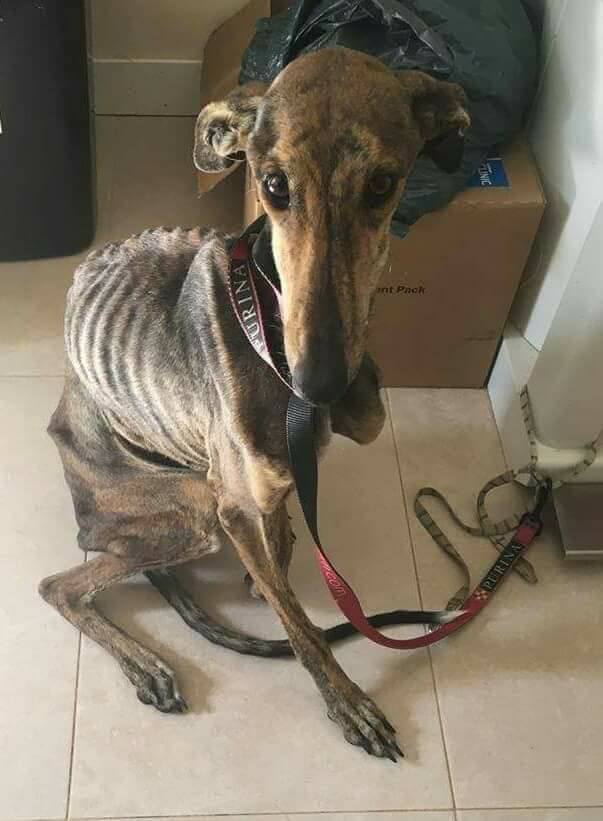
Abuse and killing of galgos must stop !!
Spain is one of the few countries where it is legal to hunt with greyhounds. At the end of the hunting season, many dogs are eliminated or abandoned.
Lax laws allow this practice to be maintained.
After the hunting season, galgos and podencos are still slain, hung up, thrown into wells, tied up somewhere where they starve, thrown alive in crevices or disposed of in some other bestial way.
It’s the damn hunters who use these practices.
The most common method of killing animals is hanging from trees; this type of killing is called “playing the piano”.
The name refers to the dogs’ desperate attempts to stay alive when hung so that their hind feet still lightly touch the ground (this is to maximize animal suffering).
It can take hours for the animals to die painfully.
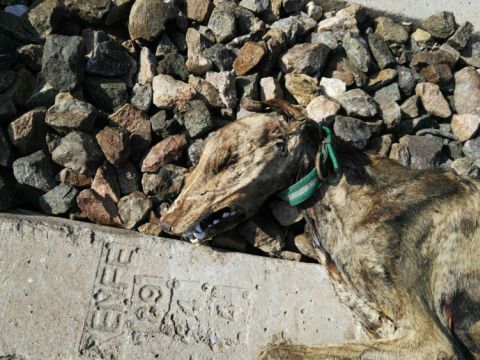
An obvious new way to get rid of their “beloved” dogs, mostly hunting dogs, is this: the animals are tied to the tracks to be killed by a train!
Dozens of carcasses still attached to the tracks have been found in Seville, or in the villages!
Some were smashed by the train. Some of the dead dogs are even marked with a chip.
(The documentation in the video is from February 2018).
A terrible sight! the discoverers of the mass grave were horrified when they discovered the 30 partially preserved, decayed or skeletonized galgos that lay in a hidden trench in Tarancón (Cuenca- Castilla region)
The dogs were all hunting dogs, mostly galgos. After initial investigations, the Seprona confirmed that due to the state of decay, some of the carcasses have been in this mass grave for a long time, others only recently.
The officials also assume that some of the animals were certainly thrown into the pit alive so that they suffer a slow and painful death,there is no escape from the trench!
Many of the galgos have been shipped, and one is confident that the animal torturers can be identified.
And I mean…It is important to know that every Spanish autonomy has its own animal protection laws.
Other regions may also come up with the idea of excluding hunting dogs from animal welfare, just as bullfighting -as a tradition- is also excluded from animal welfare at EU level. (On November 7, 2013, bullfighting was declared as cultural heritage in Spain, thus legally protecting this bloody slaughter).
Hunting is a hobby for psychopaths that is run by the circles of governments, judges, lawyers, doctors and other financially well-protected sadists and moves millions of euros annually.
But Spain also has many animal welfare organizations and animal rights activists who save as many dogs as possible each year.
We would like to thank them from here for their great work and we wish them a lot of strength in their tough fight.
Spanish writer Chesús Yuste delivered a moving speech about this tragedy in Madrid in 2018.
He complains of animal abuse, speaks of shelters that collapse due to the large number of abandoned dogs, and above all he complains about the impunity of hunters who abuse their animals and a society that ignores these crimes.
Excerpt from Chesús Yuste’s speech:
“The government must act immediately. The Galgos tragedy must be history. And when that day comes, it will come thanks to the work of many people in many communities who do things big and small. Organizing demonstrations by activists who use it to expose the crimes of hunting, document them in films, spread the message and provide them on social networks, the people who offer rescue and home for these dogs and do a thousand other things. On behalf of the animals, let me thank them for that.
Friends, friends! As Víctor Hugo said: “There is nothing stronger than an idea whose time has come”. Have no doubt. If the 19th century was the end of human slavery and the 20th century was equal rights for women, we are absolutely convinced that the 21st century will be the recognition of animal rights. We are working to achieve this. We will all make it together.
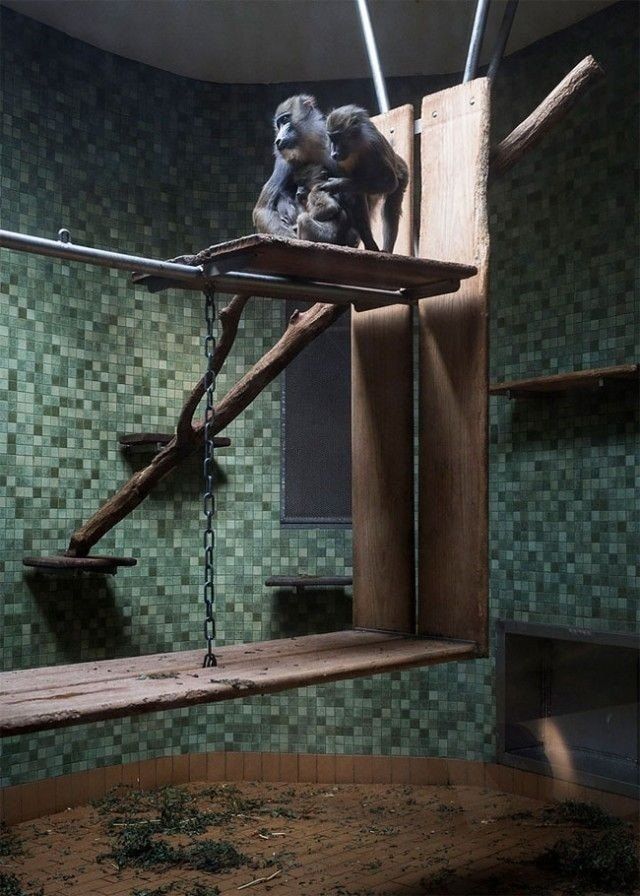
The Pata Zoo is located above a shopping center in Bangkok, Thailand and is one of the saddest places in the world.
PETA Asia’s latest investigation shows that the caged animals are in bare, dark cages. Enrichment, e.g. through employment material, there is little or no. The animals are obviously doing badly – such as the orangutan (www.peta.de/orang-utan-sandra-…)
Kat, who has almost nothing available for mental stimulation and who is never even close enough can move.
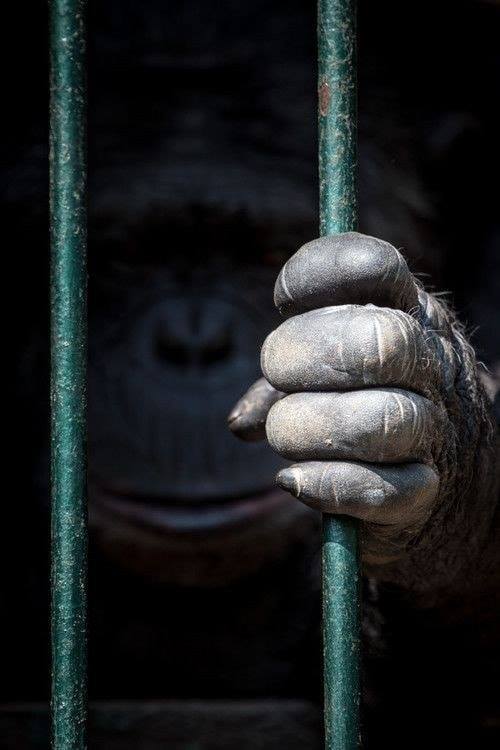
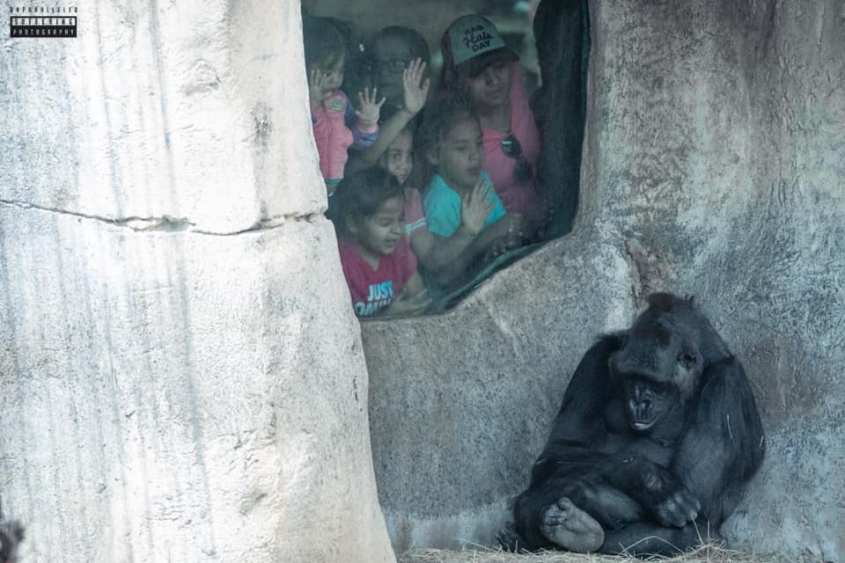
Or Bua Noi, a gorilla lady who is all alone and has been behind bars since 1983.
In November 2019, activists from PETA Asia held a colorful protest (www.petaasia.com/news/colorful…) in front of the shopping center.
This led to a meeting with the owner of the zoo to discuss the conditions in the zoo and the possibility of taking the animals to a recognized sanctuary.
PETA Asia has offered to transfer all animals to a sanctuary, where they would have trees to climb, grass to roll, and many other animals to play with.
Although the owner has promised open communication to further discuss this matter, PETA Asia has received no response since then. …
My comment: Even under the best of circumstances at the best of zoos, captivity cannot begin to replicate wild animals’ habitats.
Animals are often prevented from doing most of the things that are natural and important to them, like running, roaming, flying, climbing, foraging, choosing a partner, and being with others of their own kind.
Zoos teach people that it is acceptable to interfere with animals and keep them locked up in captivity, where they are bored, cramped, lonely, deprived of all control over their lives, and far from their natural homes.
Zoos often kill the animals when there are “too many” of a particular species.
There are hundreds of cases where animals are starved to near death. Zoo animals are treated like prisoners.
Zoo use animals to make some money out of it.
It is an ugly lie to tell people zoos are educational for the kids or any age person.
We can learn everything about any animal online, we can watch videos, read articles, books and so.
Just like we all know much about dinosaurs even if we never seen them in real. There is no need to make animals suffer in the name of education or any other reason.
The best education is to teach your kids never to visit a zoo.
The EU Commission with its 27 members (after Brexit) is a supranational body and has the executive’s tasks in the political system.
In other words: it is the “police” of the EU area.
It is called the “guardian of the treaties” and makes sure that all EU countries abide by the law.
As soon as a violation in animal transport is sufficiently proven (and there are not only sufficient videos of it, but also shocking), it can turn the EU Court of Justice against a member state.
This means that the Commission must intervene in the event of suspected violations of European law.
One thing has to be said about this: the members of the EU Commission are not elected by the EU citizens, but by the EU Parliament.
The same applies to the head of the EU Commission, Ursula von der Leyen.
Of course, the majority of the EU Parliament is necessary for the EU Commission election (members and presidents), but if we take into account that EU is = Germany, we know who is voting for whom!
The EU tolerates constant breaches of contract, and one of them is their shameless inaction against the video-documented manure stands during animal transport.
And not only!
– The EU Commission finally dropped the 8hours campaign (under the then health commissioner John Dalli, who was removed due to corruption), despite the 1.2 million signatures.
-The EU Commission refuses to ban animal transports to third world countries.
-To date, the EU Commission has ignored the end the cage age campaign with 1.1 million votes. In Portugal and Spain, the alternative forms of keeping hardly play a role. Cage systems dominate there with over 90% of hens. Poland also primarily relies on cage systems (88.5%)
– About 13 million pigs end up in animal carcass annually because they die on the farm or have to be killed. Germany’s Agriculture Minister Julia Klöckner has extended the (illegal) pig box for another 17 years.
– Every year around 7 billion male chicks are killed-gassed or ground- as soon as they hatch just because they are male. The German parliament decided in 2016 not to ban the practice. It was feared that a ban would weaken German agriculture.
The EU Commission is not taking any action.
All of this, and is just a few examples, takes place with the subsidies and support of the largest agricultural lobby, the EU Commission.
The animal rights activists, but also the enlightened citizens of Europe are fed up with the fact that in Brussels a caste of oligarchs, shamelessly and without respect for agreed laws, acts practically against the animals.
Eurogroup for Animalswrites: “We trust that the Commission’s assessment – and the accompanying consultation – will lead to concrete measures aimed at improving existing legislation and introducing new legislation to adequately protect other species”.
It takes a great deal of naivety to speak of “trust” if we have only experienced ignorance, inaction and indifference from the EU Commission in the past.
We, the complainants (Fairbrother, Kemp, others) welcome the decision made by the Advertising Regulatory Board (ARB) Appeal Committee regarding the ruling Fair Cape Dairies vs Kemp, Fairbrother, others on 30 April 2020.
22.1 The use of the phrases/words “#HappyCows” and “humane” by Fair
Cape in its advertising is in breach of clause 4.1 and 4.2.1 of the Code [of Advertising Practice].
22.2 Fair Cape is instructed to withdraw the phrases/words “#HappyCows” and “humane” from its advertising in accordance with clause 15.3 and 15.5 of the Procedural Guide.
We are in agreement with the statement by the ARB Appeal Committee that
”In our view, humane treatment means more than freedom from violence, pain and disease; it means treatment characterised by tenderness, compassion, and sympathy. It does not include many of the practices complained of, such as the forced impregnation of cows, the forced separation of calves from their mothers immediately after birth, and the slaughter of male calves thereafter.
It follows then, in our view, that the cows cannot be described as happy, or as humanely treated.”
We would like to thank the Advertising Regulator Board for their commitment to fairness and transparency during the course of our complaint and appeal. We also applaud their commitment to responsible and honest advertising. In addition, we would like to thank Animal Law Reform South Africa for their assistance with this matter, including the provision of research, compilation of information and points of issue and review of the Code and documents submitted.
Consumers care about their food choices and many care deeply about animals. For these reasons consumers are increasingly demanding transparency from these industries. To meet these demands it is unfortunate that green-washing and humane-washing advertising techniques are extremely common and heavily on the increase. These advertising techniques are designed to purposely manipulate and exploit the good faith of well meaning consumers.
Fair Cape Dairies has a history of misleading consumers with so-called ‘free-range’ claims and their use of the terms ‘humane’ and ‘#happycows’ in their advertising is no exception. Fair Cape Dairies do not only directly misinform consumers, but they actively conceal many of their practices while creating an illusion of transparency.
Unfortunately, the majority of people in South Africa are not aware of the many horrific standard practices in the dairy industry. The dairy industry thrives in obfuscation. They have an interest in omitting and obscuring the facts about dairy, and it is done through ‘omission and silence and in the presentation of an incomplete and idealised picture’ (¹).
We encourage all those who value truth and justice and who abhor cruelty to animals to investigate the dairy industry and to inform yourselves. This cruelty is not an anomaly, but is standard practice inherent in the industry. To be informed, is to be empowered. When we are informed we can make consumer choices that are authentic and genuinely in line with our values.
We believe we have extensively covered many of these standard practices in our appeal (Section d. Facts and Research). In our appeal we also address many of the claims made by Fair Cape Dairies, we provide multiple facts on the dairy industry, and we provide information on consumer awareness of dairy practices in in South Africa.
While our original complaint was dismissed by the ARB, we felt confident that the ruling had grounds to be challenged and we subsequently submitted an appeal. Our complaint then found itself in front of the ARB Appeals Committee which ruled in our favour.
In our commitment to transparency we have provided all documents relating to the initial complaint, appeal, supporting documents and final rulings, ordered by date below.
Take PETA’s Cruelty-Free Shopping Guide along with you next time you head to the store! The handy guide will help you find humane products at a glance. Order a FREE copyHERE
Searching for Cruelty-Free Cosmetics, Personal-Care Products, Vegan Products, or more? Click HERE to search.
Want to do more than go vegan? Help others to do so! Click below for nominal, or no, fees to vegan literature that you can use to convince others that veganism is the only compassionate route to being an animal friend:
Children also need to know the truth about animal testing.
The sooner the better.
We have a responsibility to educate young people conscientiously and not to make them system-compliant individuals.
German federal states further limit live animal transport
18 May 2020
Four Paws
News
Four Paws announced that Lower Saxony and Saxony will no longer approve live animal transports to and through the Russian Federation, while Lower Saxony will also prohibit transports to North Africa, particularly to Algeria and Morocco.
Part of the joint call for a national ban and an EU-wide ban on the export of live animals to third countries, it is a success to see two German federal states expanding the list of those countries.
This is due to animal welfare violations since, according to official information, there are no supply stations for the animals in the Russian Federation. Federal states Hesse and Bavaria have included Russia in their list of banned third countries last year.
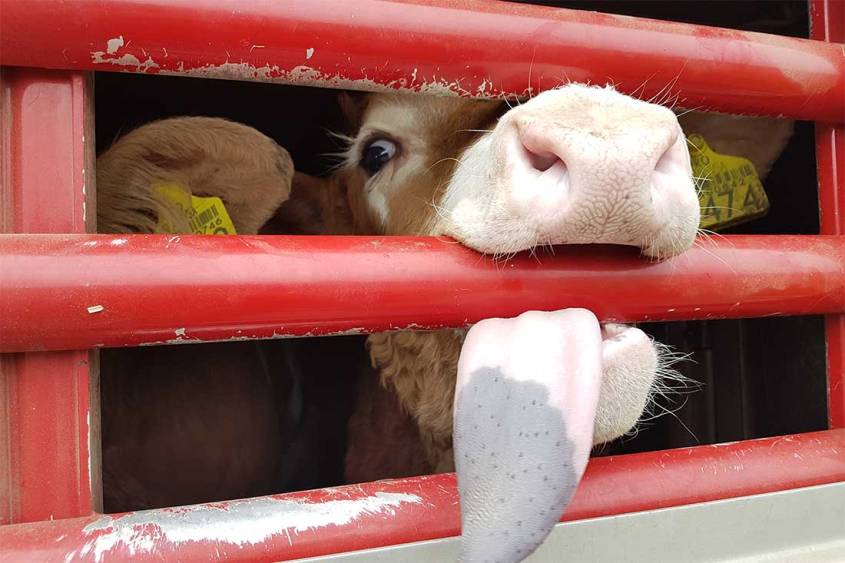
We welcome this decision, but there should a nationwide ban in place. The cattle is still being transported to the high-risk countries concerned via other federal states. It is obvious that the animals are exposed to the worst agonies and an unimaginable torture during transport and also at the destination. In Lebanon, Algeria, Libya, Morocco and Iran, among others, the animals are killed under the cruelest conditions.
Rüdiger Jürgensen, Managing Director FOUR PAWS Germany
The post ‘German federal states further limit live animal transport’ is modified from an article published by Four Paws in their original language.
We don’t want another strategy. We want meaningful change for animals
9 April 2020
EurogroupforAnimals
News
The European Commission has called on citizens and organisations to take part in an online consultation to gather information and views on the EU Animal Welfare Strategy 2012-2015.
The consultation goes hand-in-hand with the Commission’s evaluation on the strategy, which will assess the extent to which it delivered on its objectives, and whether they are relevant and consistent today. It will also look at efficiency and whether the strategy usefully complements national efforts in this field. This has to be done before any new actions are brought forward.
This evaluation of the Animal Welfare Strategy will inform the actions that come after, so it’s vital that the animal movement contributes its opinion to the consultation with a unified voice, even though we may want to stress different aspects of policy or different priorities.
However, we can all agree on some things. The Animal Welfare Strategy resulted in no demonstrable overall improvement for the welfare of animals. Instead of meaningful progress for animals on the ground, we are left with no ‘foundation’ on which to build, and eight years have passed by in the meantime.
The strategy should serve as a lesson: strategies in themselves don’t lead to anything. We need actions, not words, and we hope that this new Commission will deliver real improvements to the lives of animals through the revision of existing legislation as well as the introduction of new law to adequately protect all species.
To help you formulate your responses, Eurogroup for Animals has put together some detailed information to help us all come across with a unified voice and call for legislative changes instead of a new strategy.
We trust that the Commission’s evaluation – and the accompanying consultation – will lead to concrete actions focused on the improvement of existing legislation, as well as the introduction of new laws to adequately protect other species.







 World Animals Voice