Month: August 2020

England: August Fur News from ‘Respect for Animals’. It Takes 40 ‘Dumb Animals’ to Make A Fur Coat – But Only 1 Dumber One to Wear It !

August news from ‘Respect for Animals’, Nottingham, England.

Over 1 million mink killed in the Netherlands due to coronavirus outbreak More than 1.1 million mink have been killed on 26 Dutch farms that have recorded outbreaks of Covid-19 amongst workers and animals, according to the Netherlands Food and Consumer Product Safety Authority.

The government also announced that mink at a 27th farm also were infected and all mink would be killed. The Netherlands, which has some 160 mink farms, is the world’s fourth-biggest producer of the prized fur after Denmark, China and Poland, according to Wim Verhagen, director of the Dutch federation of fur farmers. Fur farming is in the rocess of being phased out in Holland, and Respect for Animals has joined the Fur Free Alliance in strongly urging authorities to not allow the infected farms to re-open.

Covid-19 is now also on mink farms in Spain Spain has ordered the slaughter of nearly 100,000 mink on a farm as coronavirus wreaks havoc in the European fur farming industry, highlighting the terrible conditions embedded in fur factory farming. Officials said it was not completely clear if “transmission was possible from animals to humans and vice versa” The outbreak at the Spanish mink farm near La Puebla de Valverde, a village of 500 people, was discovered after seven of the 14 employees, including the owner, tested positive in late May, said Joaquín Olona, regional chief of agriculture and environment.

Two other employees got infected even after the operation was shut down. More than 92,000 minks were ordered killed at the farm in the Aragon region of northeastern Spain, with nine out of 10 animals estimated to have contracted the virus. Spain has 38 active mink breeding operations, most of them in northwestern Galicia. Not a single mink left in Estonian fur farms  


The Estonian animal advocacy organization Loomus, colleagues of Respect for Animals in the Fur Free Alliance,has reported that, according to assurances from the Ministry of Rural Affairs and a verification visit by Veterinary and Food Board, Estonia does not have a single mink farm active and running. The ministry said that due to the market situation, Estonia’s largest mink farm has halted its farming of minks at the end of 2019.

In 2016, Estonia’s fur farms held about 130,000 American mink. Mark Glover, Campaigns Director for Respect for Animals, said: “Fur farming is unsustainable, both economically and environmentally, while perpetuating inherently cruel levels of animal welfare. Loomus deserve our sincere thanks for their sterling work against the fur trade and we support their continued efforts to ensure fur farming ends for ever in Estonia.”


Ireland: fur farming ban included in Programme For Government document Fianna Fáil, Fine Gael and the Green Party have formed a new Irish government, with all three parties agreeing on a programme of government.

Respect for Animals is delighted that the document includes a firm commitment to end fur farming in Ireland as a matter of urgency. The document, known as “Our Shared Future,” has been formally approved, with a new Prime Minister, or Taoiseach, and a new Agriculture minister now confirmed. Here is the key part of the document in relation to fur farming: • Immediately prioritise the drafting of legislation for the phasing out of fur-farming, publishing legislation in this area as soon as possible.

The moment when fur farming is finally banned in Ireland is now much closer! The Cabinet agreed in July last year to produce legislation to finally end fur farming in the country. This came after a strong campaign in which Respect for Animals was closely involved, along with animal protection groups NARA and ISPCA. However, the legislation has been delayed, not least because of issues faced by the Irish government (and DAFM in particular) due to the challenges of Brexit, a snap general election- which transformed the political landscape- and, of course, the current coronavirus crisis.

There are currently three fur farms in Ireland, with around 190,000 mink housed in cages and factory farm conditions. Last month, a spokesperson told us: DAFM is in the process of preparing a Bill to provide for the phased introduction of a ban on fur farming which will include a prohibition on mink farming. Along with animal welfare considerations, social and economic aspects in relation to the industry need to be taken into account, provide for an orderly wind down of the sector and allow time for employees to find alternative opportunities. The necessary work to prepare the appropriate legislation is ongoing within the Department. It is not envisaged that the Covid-19 pandemic will have any effect on this process.
 

News from Canada: seals and mink farms   It is known around the world as one of the most shocking scenes of bloodshed, a painful reminder of the bloody impact of the fur industry, but the Canadian seal hunt has seen a huge drop in the number of seals killed with the majority of the commercial hunt being closed. This is due to the impact of Covid-19.

According to preliminary figures on the website of Canada’s Department for Fisheries and Oceans (DFO), only 388 seals have been reported killed to date in this year’s hunt in the province of Newfoundland and Labrador, which would usually run from mid-April through late May. In all of 2019, the number of seals killed numbered 32,071. While still a significant number, this was only 8% of the 2019 quota of 400,000. This year’s numbers represent an even greater overall reduction.

Canada’s mink farms are also facing scrutiny. The financial crisis enveloping the fur trade has been closely monitored by Respect for Animals over recent years. North America’s fur trade has been particularly hit. Last year the North American Fur Auction (NAFA) had been taken over by Finnish fur group Saga Furs, having descended into near financial ruin. Now an in-depth report by Canadian news outlet CBC has revealed the astonishing extent of taxpayers’ money being wasted on failed attempt to prop up a cruel and unnecessary industry: Analysis of bankruptcy and government records suggests that, since 2014, over $100 million in provincial and federal money has been spent in Canada, often unsuccessfully, to keep individual mink farms afloat, or is tied up in loans that will likely never be repaid.

So long and steep has been the fall of the mink sector that the bailouts dwarf what the industry is now worth. Last year, farms across Canada sold just $44 million worth of pelts, down from $254 million in 2013, according to Statistics Canada. The precise amount of public money that’s been spent trying to rescue the mink industry after global prices took a nosedive in 2014 remains secret, however. The federal Department of Agriculture refuses to release information on payments to the sector, even under access-to-information laws, citing among other things “international affairs” and “economic interests of certain government institutions.” This is a damning indictment of the fur industry and another example of why taxpayer money should not be used to prop up one of the world’s most inhumane industries. Fur factory farming should be allowed to die out and farmers supported to diversify into sustainable agriculture that does not rely upon terrible conditions for its profit margins. It is clear that the Canadian fur factory industry is financial unviable and a disastrous failure for animals, unable to meet even the most basic standards of animal welfare.

Respect for Animals hopes that Canada soon joins the UK and many other countries by introducing a fur farm ban once and for all. Fur Trade’s Online Fur Auction Disaster Saga Furs, the major fur auction house owned by the Finnish fur industry, has published its half yearly report, with a decrease in sales of over 50%. In desperation for working capital, Saga had applied for a loan guarantee for the covid-19 pandemic from Finnvera, the state-owned Finnish financing company, but this request was rejected. In May, the company decided to suspend pre-financing for producers, a financial disaster for fur farmers, citing ‘liquidity tightening’.

Saga Furs had held its previous fur auction online, having been forced to abandon staging the usual auction due to the global coronavirus crisis.   In late March, the online auction tried to sell the skins of millions of animals raised in terrible factory farm conditions, including 3559808 mink, 537593 fox, 56019 finnraccoon and 25152 sable.

The online stream showed skins of foxes and finnraccoon constantly going unsold. Mink furs sold at higher rates but at dismally low prices as the auction continues. The Kopenhagen Fur auction followed in April with similar results. Many furs were not even made available and those that did sold were sold below the cost of production.

Another Saga auction began in early July with over 4 million mink skins offered This is a financial catastrophe for the fur industry and means many fur farms are in a precarious economic position. Respect for Animals encourages fur farmers to abandon the morally and financially bankrupt fur industry for good.

Fur Trade Blog Calls Covid-19 a ‘silver lining’       The dire outlook for the fur trade contrasts sharply with the attitude recently expressed in a fur industry propaganda blog, which shockingly described the coronavirus crisis as a ‘small silver lining’ and ‘an opportunity’ for the fur trade, with animal protection organisations unable to mount effective campaigns. Please return the enclosed donation form to help prove them wrong.  
Ask your MP to sign EDM 267   (UK citizens)

The import and sale of fur is allowed even though the main ways fur is obtained, including fur farming, are banned in Britain. The law must change.  Killing animals just for their fur is cruel and barbaric, and we must stop funding it by banning imports of real fur immediately. Fur import bans have been successfully implemented elsewhere. There is an EU-wide ban on the import of domestic cat and dog fur and California is banning the sale of real fur.

The UK should take a lead and become the first country in the world to ban fur imports. We have over 100 MPs already, but we need much more to make a difference for animals. Please contact your representative and ask them to back our calls for a Fur Free UK by signing Early Day Motion 267.

Ecquador: Tell Mining Companies to Back Off From Attempting Mining In Protected Forest and National Parks.

Mark,

Reserva Los Cedros, in western Ecuador, is a true biodiversity gem. This cloud forest is home to around 200 imperiled species, from spider monkeys and jaguars to rain frogs and orchids found nowhere else on Earth. Los Cedros is remote, rugged and stunningly beautiful.

los cedros ecuador – Google Search

35mm_scan_13 | Los Cedros Preserve, Ecuador - reservaloscedr… | Flickr


But in 2017 the Ecuadorian government granted two foreign companies mining permits covering 68% of Los Cedros. If mining exploration proceeds, it’ll tear down forests, bring destructive roads, and pollute the area’s pristine rivers with sediment.

Ecuador’s highest court has taken up the case and will soon decide whether the country’s constitution, which uniquely recognizes the “rights of nature,” applies and whether the government must consult local and indigenous peoples before moving forward.

los cedros ecuador – Google Search

Hooded Leaf Mantis, Los Cedros River Valley, Ecuador Wall Art ...

Tell the mining companies to simply back off — and urge officials to pull all mining permits in Ecuador’s protected forests and add Los Cedros to an adjacent national park.

Take Action – tell the mining companies to back off:

Center for Biological Diversity:

https://www.biologicaldiversity.org/

Help Shut Down India’s Wet Markets.

Please donate now

Animal Markets Breed Disease and Suffering

Dear Mark,

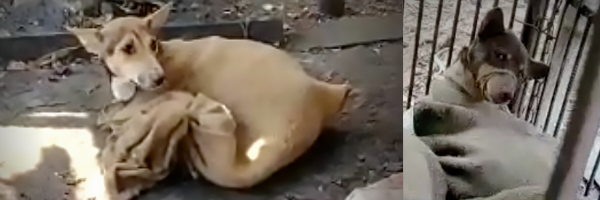
A captured dog struggles in a gunny sack, her eyes wide with terror. She’ll soon be clubbed to death, and her flesh will be sold for human consumption.

Crabs and eels flail in water-filled plastic sacks, crammed together by the hundreds – while catfish jostle for space in tubs and desperately gasp for breath before they’re plucked from the water and slashed open.

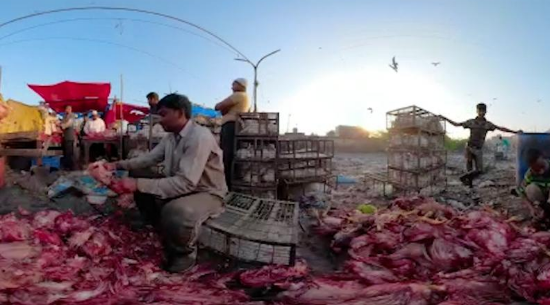
Bare-handed workers slit the throats of chickens and other live animals before heaping their body parts onto bloody tables teeming with flies. Nearby, the charred remains of boars, porcupines, and monkeys – their hands curled into blackened fists – are hawked near the remains of other wild animals.

Read more via this link.

https://e-activist.com/page/email?mid=d8f28050fb374566873a9f04c809a3b7

sweet news from Switzerland

After hearing from PETA affiliates, Switzerland-based chocolatier Barry Callebaut – the “world’s leading manufacturer of high-quality chocolate & cocoa products” – has announced that it will not conduct, fund, or commission any animal experiments, unless they are explicitly required by law.

In another kind move for animals, earlier this year, the multibillion-dollar company announced plans to open a completely vegan production facility in Schleswig-Holstein, Germany.

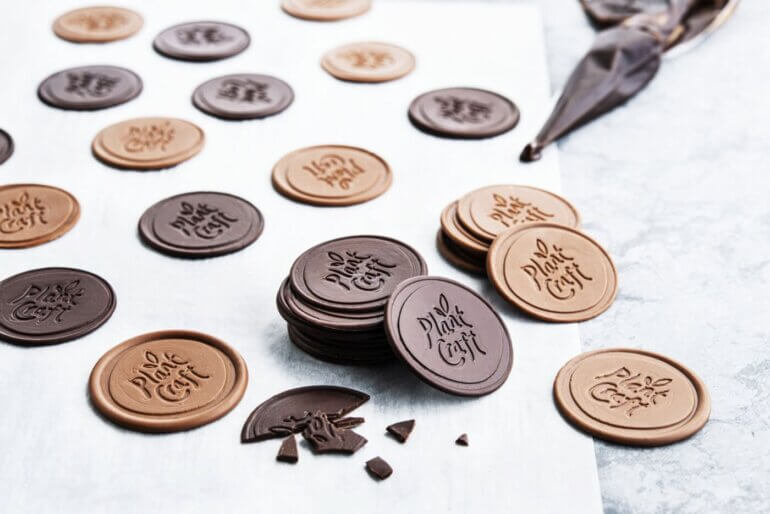
Image shows vegan chocolate© Barry Callebaut Group


By no longer contributing to any cruel and deadly experiments on animals, Barry Callebaut, which operates production facilities in the UK, joins the ranks of other progressive food-industry giants, including Barilla;

The Coca-Cola Company; General Mills; House Foods; Kikkoman; Lipton; Nissin Foods Holdings Co, Ltd; Ocean Spray; PepsiCo; POM Wonderful; Sapporo Holdings; Welch’s; and Yakult Honsha.


What Do Animals Endure in These Types of Experiments?

PETA US had uncovered experiments on animals published between 2007 and 2019 – which were not required by law – that Barry Callebaut contributed to.

As part of our campaign to end animal testing in the global food industry, PETA and our affiliates have exposed that for decades, manufacturers have pursued cruel laboratory tests in which thousands of animals have been cut open, tormented, and killed – all in misguided attempts to make marketing claims about products ranging from ramen noodles to chocolate bars to breakfast cereals to alcohol.


By pledging not to conduct experiments on animals after discussions with PETA US and PETA Germany, Barry Callebaut is committing to sparing other animals a similar fate.


The company also sets a progressive example for other food and drink producers to follow.

Conscientious shoppers play a huge part in driving the vegan revolution, and they don’t want to buy products that were cruelly tested on animals.

You Can Help Prevent Other Animals From Suffering in Experiments

Animals suffer in pointless food and drink industry tests in many countries all over the world.

PETA and our international affiliates are leading a global effort to spare the lives of thousands of animals used in deadly food-industry experiments and replace them with humane, effective, economical, and modern animal-free research tools.

https://www.peta.org.uk/blog/chocolate-barry-callebaut-bans-animal-testing/
 Learn more about food testing:  https://www.peta.org/features/victories-food-drink-companies-refuse-animal-tests/


And we say…Such news makes us very happy and confirms our struggle and all our efforts for a world without animal suffering and exploitation.

Thanks, PETA, thank you Barry Callebaut!!.
Chocolate has high quality only if it is not made from the suffering and death of animals.

My best regards to all, Venus

Animals Asia – The Only Cure Is Kindness.

VIDEO: Global superstars demand end to animal mistreatment as two moon bear cubs rescued

https://www.animalsasia.org/uk/media/news/news-archive/video-global-superstars-demand-end-to-animal-mistreatment-as-two-moon-bear-cubs-rescued.html

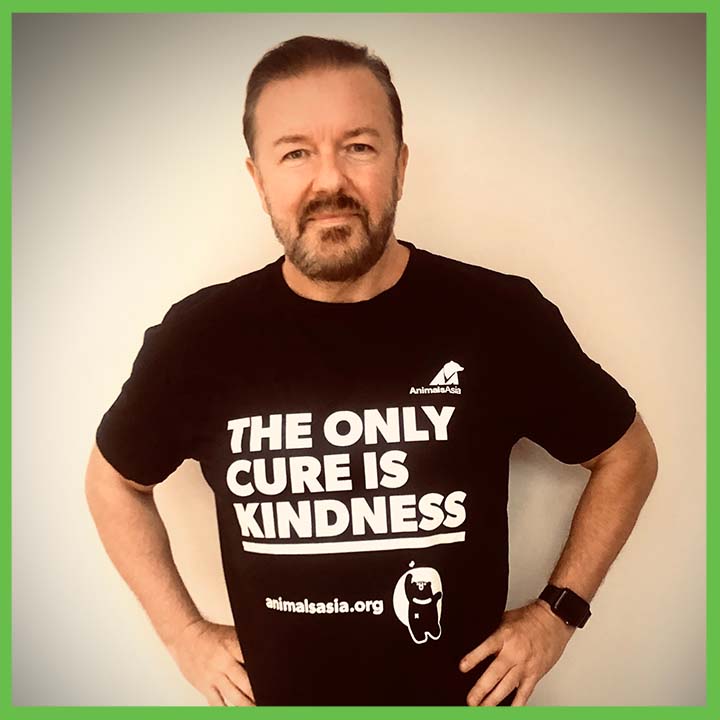
As a galaxy of global superstars, lead by German actor Louis Hofmann, comedian Ricky Gervais, pop star Mýa, actors Dame Judi Dench, Olivia Newton John and Tzi Ma, and renowned conservationist Dame Jane Goodall, have come together​ to record an impassioned video ​calling for a reset of humanity’s relationship with nature in the wake of the Covid-19 crisis and its zoonotic origins, two baby bears have attempted to steal the limelight.

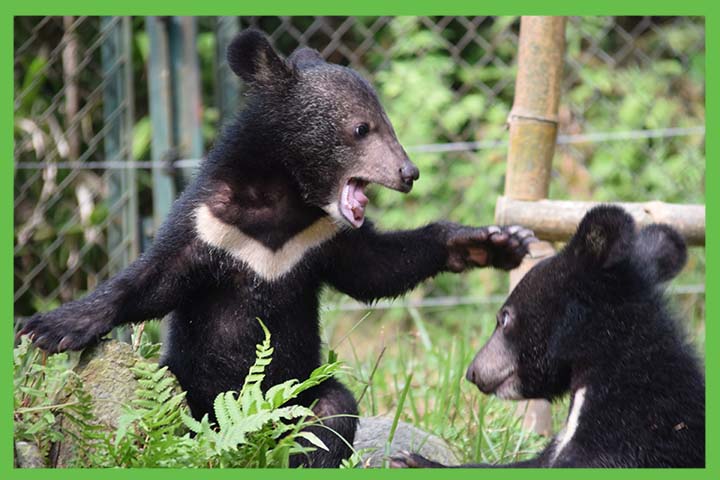
In mid-July, as the celebrities recorded ​their video messages​, Animals Asia rescued two three-month-old moon bear cubs that had been illegally trapped and put on sale on the black market, and are now taking care of them at the NGO’s sanctuary in Tam Dao, Vietnam

“It’s heartbreaking to see these bears with their beautiful dark coats and stunning and unique moon bear crescents on their chests, spending their lives trapped and suffering in tiny cages”, said ​Dark​ star Louis Hofmann. “The extraction of bear bile is unnecessary – there are herbal and synthetic alternatives. Animals Asia are on the cusp of being able to end bear bile farming in Vietnam for good and are showing how it can be done with kindness and respect. Medicine is supposed to relieve suffering, not cause it. Animals Asia is working to restore balance by taking these bears to sanctuaries where they can live out their lives in peace. Because the only cure is kindness.”

“If this crisis has taught us anything, it’s the power of leaving nature alone – and that The Only Cure is Kindness”, said British comedian Ricky Gervais. “We’ve got so much to learn from animals and nature – and there is so much we can do to help. Animals Asia are actively harnessing that kindness to end bear-bile farming, rescuing bears and taking care of them. Let’s be kinder to nature, and kinder and more forgiving to each other too”.

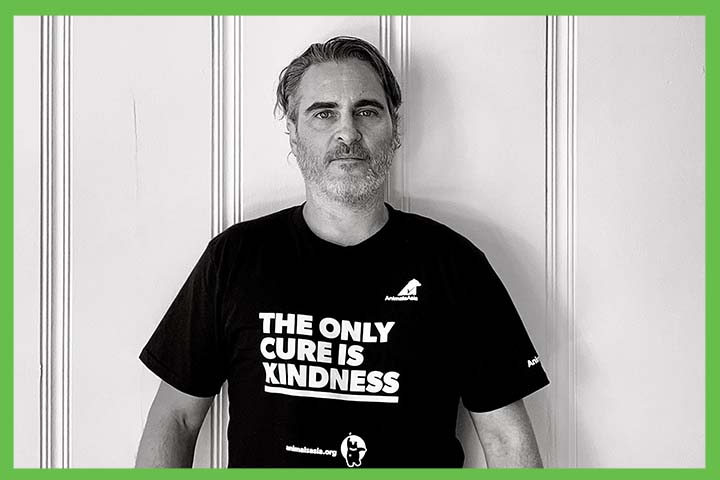
Joaquin Phoenix wearing a t-shirt bearing the words “The Only Cure is Kindness”

The actors, musicians and conservationists came together – virtually​ – to raise awareness of the plight of the Asiatic black bear, or ‘moon bear,’ and the urgent need to end the practice of bear bile farming – where bears are held in tiny cages so that their bile can be extracted for use in traditional medicine.

Animals Asia, which created the video to mark Moon Bear Day on August 8th, aims to rescue 500 bears currently in bear bile farms in Vietnam by 2022, so they can live out their lives in a sanctuary with world class care. To date, Animals Asia has rescued 634 bears, and has agreement with Vietnamese authorities to completely end bear bile farming in Vietnam by 2022.

The video​, featuring Ricky Gervais, Jane Goodall, Dark ‘star’ Louis Hofmann, Mulan star Tzi Ma, Dame Judi Dench, Downton Abbey stars Peter Egan and Lesley Nicol, Guns’n’Roses rockers Slash and Matt Sorum, and actors Dame Olivia Newton John AC DBE, Virginia McKenna OBE, Joanna Lumley OBE, James Cromwell, Alicia Silverstone, Daniel Gillies, Celina Jade, Maggie Q, Dustin Nguyen, Kristin Bauer, Michelle Forbes, Tara Buck, poet Benjamin Zephaniah, Vietnamese TV Presenter Minh Trang Nguyen, musician Rick Wakeman and singers Han Geng and Mýa, highlights the mistreatment animals as a root cause of pandemics such as the Covid19 crisis, in response “The Only Cure is Kindness”. Actor Joaquin Phoenix, who doesn’t appear in ​the video​, is also spreading the message, appearing on social media wearing a t-shirt bearing the “The Only Cure is Kindness” message.

“It’s absolutely amazing, because just as the international stars were recording their video clips, our team in Vietnam got a call saying that two baby bears needed to be rescued”, said Jill Robinson MBE, founder and CEO of Animals Asia, who also appears in the video.

“It’s brilliant to be able to welcome all of these household names into the Animals Asia family. By helping us mark Moon Bear Day and our historic agreement with the Vietnam Government, these global stars are raising awareness about the suffering caused by the bear bile industry”, she continued.

“Our supporters have been so generous in supporting our work, but the task ahead is formidable”, continued Robinson. “Animals Asia plans to help rescue up to 500 bears from 142 farms in Vietnam, so they can live out their lives in a sanctuary with world class care.

This will take time, effort and resources – by lending their voices, these luminaries are sending a message to each and everyone one of us: that

The Only Cure is Kindness.”

Ireland: ‘Sarah M’ (En Route to Libya with 2,000 Bulls) – Latest Position.

You can run but you cannot hide !

Gonna take my time – I have all the time in the world (to fight this disgusting, abusive trade)

Regards Mark

https://www.vesselfinder.com/vessels/SARAH-M-IMO-7808463-MMSI-352548000

Read More at:

https://worldanimalsvoice.com/2020/08/06/eu-european-commission-accused-of-gross-cynicism-toward-farmed-animal-welfare/

EU: European Commission Accused of “Gross Cynicism” Toward Farmed Animal Welfare.


Our past related information:

https://worldanimalsvoice.com/2020/08/02/ireland-peta-are-now-on-board-re-irish-live-exports-to-libya-please-sign-the-petition-and-crosspost-to-contacts/

https://worldanimalsvoice.com/2020/08/02/ireland-peta-are-now-on-board-re-irish-live-exports-to-libya-please-sign-the-petition-and-crosspost-to-contacts/

https://worldanimalsvoice.com/2020/08/02/ireland-peta-are-now-on-board-re-irish-live-exports-to-libya-please-sign-the-petition-and-crosspost-to-contacts/

https://worldanimalsvoice.com/2020/08/02/ireland-peta-are-now-on-board-re-irish-live-exports-to-libya-please-sign-the-petition-and-crosspost-to-contacts/

European Commission Accused of “Gross Cynicism” Toward Farmed Animal Welfare

Advocates are calling for a ban on live animal exports to war-torn Libya, where missile fire threatens animals arriving on cargo ships from Ireland. But welfare officials continue to drag their feet.

Nongovernmental organizations (NGOs) have accused the European Commission of “gross cynicism” and questioned its refusal to ban the export of live animals to war-torn Libya, thousands of which come from Ireland.

Last week, Ireland’s fourth shipment this year left the southern Irish port of Cork, headed for the Libyan port of Misratah, with about 2,000 bulls on board.

The shipment puts the total number of Irish animals exported to Libya this year at about 7,600. In 2019, according to emailed data from Ireland’s Department of Food, Agriculture and the Marine (DAFM), cattle exports to Libya totaled 13,122 animals.

Two of the companies known to ship cattle from Ireland to Libya are Purcell Brothers and Curzon Livestock. Neither responded to calls, texts, or emails asking for comment. No comment was provided either by the European Commission.

In May this year, a letter from over 30 welfare organizations to EU Agriculture Commissioner, Janusz Wojciechowski, and EU Health and Food Safety Commissioner, Stella Kyriakides, called for a ban on animal exports to Libya. Commissioner Kyriakides is charged with enforcing animal welfare laws.

Libya has been in chaos since 2011. The NGO letter argues that animals in Libya risk missile fire, the potential use of chemical weapons, and the possibility of COVID-19-related quarantines at anchorage, potentially adding an extra 14 days to any journey. From Ireland, livestock ships take about nine days to reach Libya. The animals’ eventual slaughter, the letter said, likely entails “extreme and prolonged pain and fear.”

The Commission’s response to the NGOs, which came in a letter last week, has sparked outrage. “The Commission’s reply is a disgrace,” says Compassion in World Farming lawyer, Peter Stevenson. The letter, he said, shows “gross cynicism” and is surprising and disappointing given Commissioner Kyriakides’ “personal commitment to animal welfare.” 

“Her letter says exports to Libya are taking place in a context of private operations and that the Commission cannot prevent such operations as long as they are carried out in accordance with EU legislation. With respect to the Commissioner, this is nonsense,” Stevenson said. 

“One of the key roles of the Commission and the EU member states is to regulate what private operators do, either through legislation or policy frameworks,” Stevenson said. Sending animals on long sea journeys to a war zone is “clearly at odds” with Article 13 of the Treaty of the Functioning of the European Union which stipulates the Commission and member states pay full regard to animal welfare, he said.

Records from three previous Irish shipments this year show animals have died en route to Libya. In May, during a shipment by Purcell Brothers onboard the Atlantic M, four animals died, with the ship’s records showing the cause of death as “(POOR AND SKINNY) PNEUMONIA [sic].” The ships’ records were obtained under the Freedom of Information Act.

In March, during a shipment by Curzon Livestock on the Sarah M (also known as the Sarah), animals began to die mid-voyage due to a “respiratory problem.” Six died in total. During a January shipment, again by Curzon Livestock on the Sarah M, one animal died from a respiratory problem. Records indicate the bull was sick from the start of the journey. Sick animals are not supposed to travel.

Asked about the deaths, Stevenson said it was likely “many more animals may well have suffered from respiratory disease even though they did not die. Respiratory problems are likely to arise from poor conditions on board ship—a combination of high ammonia levels and inadequate ventilation.”

“It is disheartening to see that for the sake of profit, EU member states continue to send animals to war zones and the European Commission feels that they cannot put an end to this cruel trade,” says Olga Kikou, Head of Compassion in World Farming EU. “What is taking place in regions of conflict, such as Libya, constitutes systematic and continued cruelty against EU farmed animals. These are not some unfortunate events, they are not the exception but, rather, the rule.”

Caroline Rowley, founder of Irish welfare organization Ethical Farming Ireland, voiced similar skepticism about the Commission’s reply. “It’s not possible for the Commissioner to claim that live export to Libya is ‘carried out in accordance with EU legislation’ because, for one thing, as soon as cattle are unloaded at the port [in Libya], nobody knows what happens to them.”

Rowley said she saw irony too in the Commission’s reply, coming as it does in the run-up to a European Parliamentary inquiry into the “alleged failure of the Commission to act upon the evidence of serious and systematic infringements” of EU animal welfare regulations during transport “across the Union and to third countries.” The inquiry was launched this summer and begins work in September.

Rowley pointed as well to issues with one of the livestock ships used by Ireland. “There are questions hanging over the Sarah M because it is approved by two EU member states, Romania and Ireland, when it should only be approved by one.”

In emailed replies, Ireland’s DAFM said it was “working with other MS’s [member states] to resolve the [double approvals] issue as soon as possible which is of an administrative nature.” The DAFM said the double approval did not affect its ability to “regulate, enforce national and EU legislation” or its ability to check, inspect and monitor livestock vessels. Nor, it said, would the double approval impact animal welfare.

In July, the French department of agriculture (Ministère de l’Alimentation, de l’Agriculture et de la Pêche) confirmed that a similar double approval by France and Spain for livestock carrier, Shua Queen II, was recently resolved by France canceling its approval.

Asked about the deaths during the voyage to Libya, DAFM said: “The Department has a continuous and strong interest in the welfare of animals and engages with the livestock industries with the objective of improving animal health and welfare and thus reducing the mortality rate of animals. Whilst some deaths do unfortunately occur during transport, the mortality rate across the three shipments you mention was 0.19 percent, which is significantly less than the comparable cohort that remains on [the] farm.”

The DAFM added that the “export of animals is a critical part of Ireland’s livestock industry … [and] … plays a significant role in stimulating price competition and providing an alternative market outlet for farmers.”

“The EU must realize that unless to stop such immense animal suffering, we cannot be calling ourselves leaders in animal welfare,” says Kikou.

Whoever abandons his best friend is a criminal


Hund Urlaub verlassenjpg

There is no more miserable sin than to leave the one who believed in you.

There is nothing to justify betraying your best friend.
Only if you’re an asshole.

Right now on vacation, we find more and more abandoned animals every day on race cities, motorways, in the forest …

If this summer during a road trip you witness an abandonment, act!

If you can, write down the vehicle’s license plate or take a photo, and immediately report it to the Civil Guard or the Police.
It’s in your hand! Don’t look away!

verlassener Hundjpg

My best regards to all, Venus

Romania: bison population boosted by eight more animals!

A herd of eight European bison has just arrived in the Southern Carpathians rewilding area and will soon join the 57 bison that are already roaming free here. A keystone species, the animals are part of a rewilding initiative that is benefitting local communities.

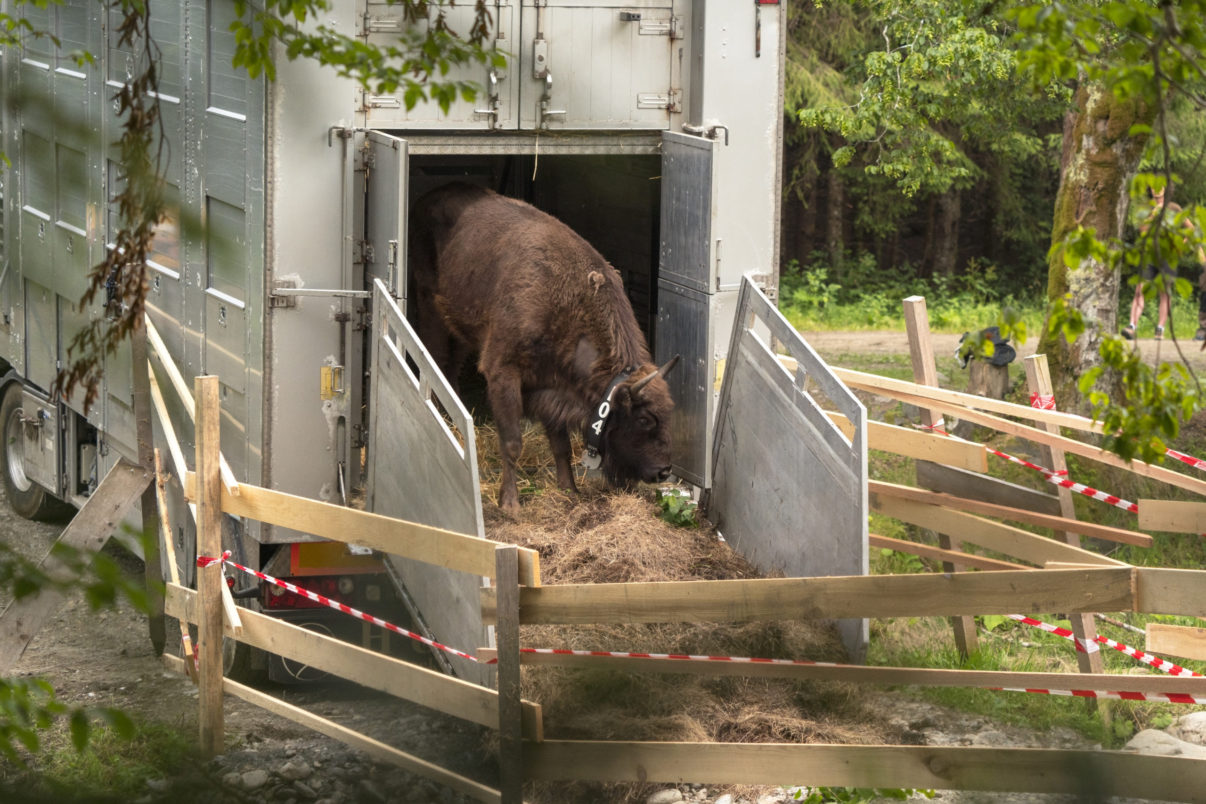
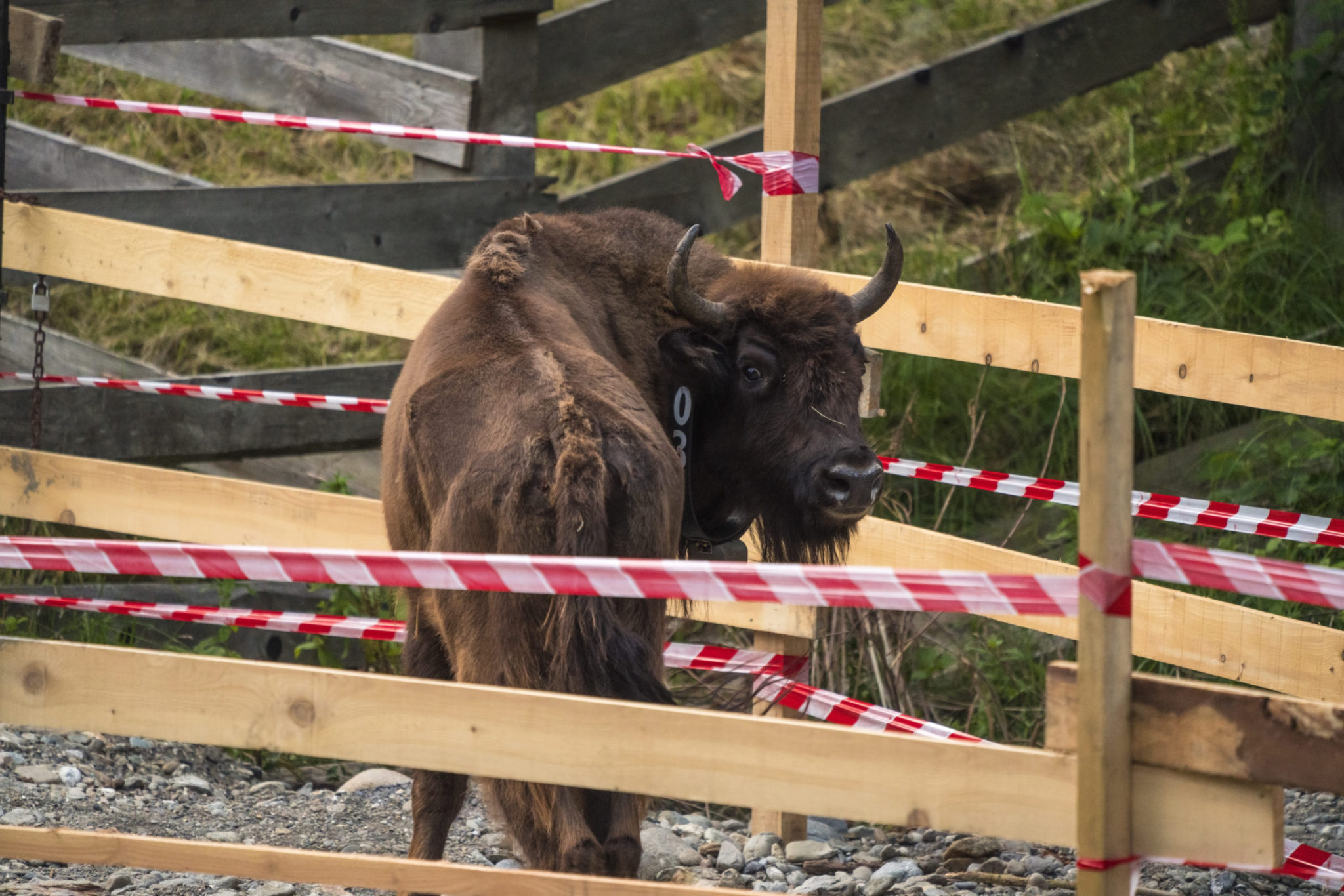
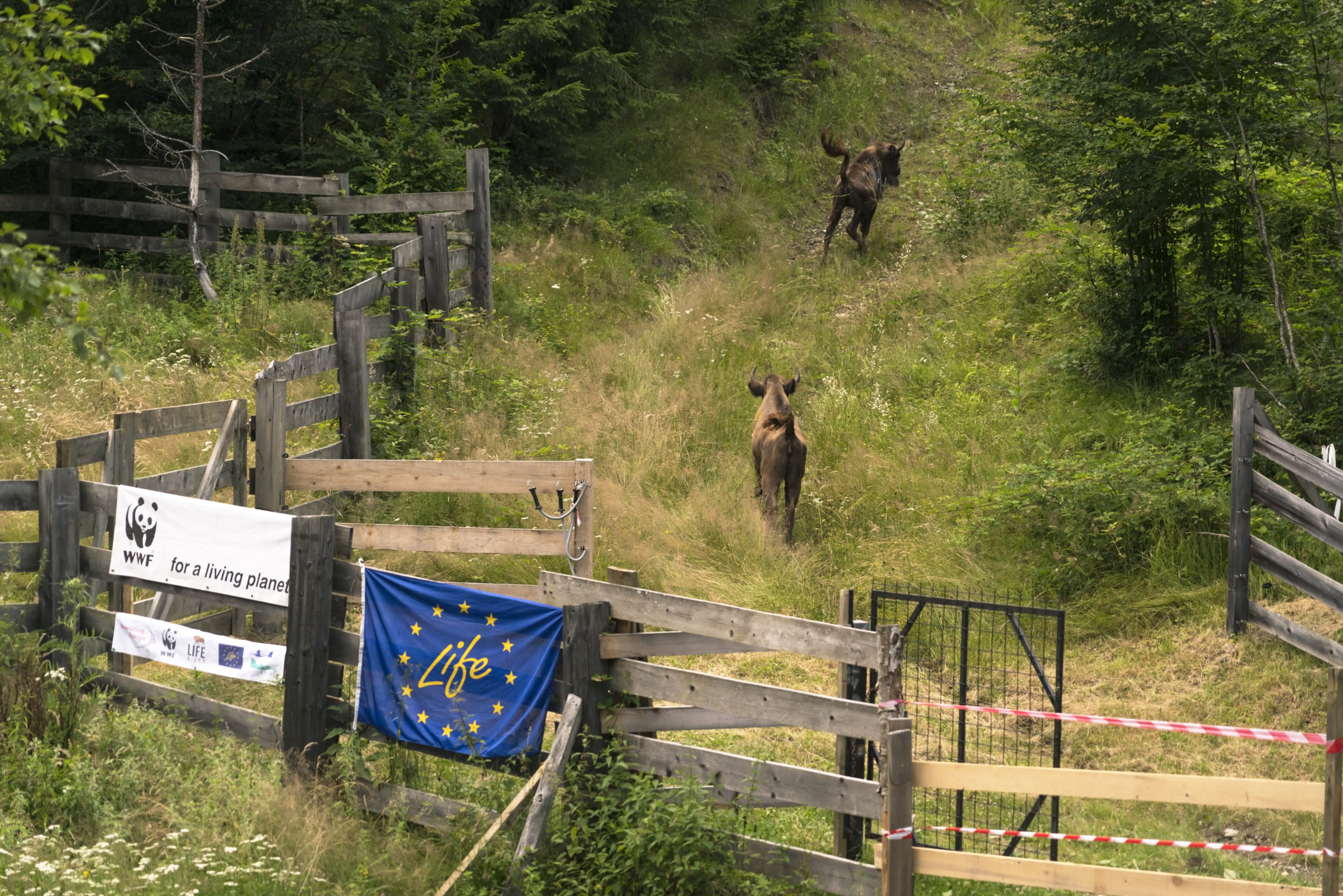
bison-Rumänien jpgThe moment of release for one of eight European bison added to the herd in the Southern Carpathians. Daniel Mirlea
Record-breaking rewilding

A herd of eight European bison (two males, six females) arrived in the Southern Carpathians rewilding area in Romania yesterday evening, and will soon join the 57 animals that are already roaming free here.

Rewilding Europe and WWF Romania have been reintroducing bison into the Țarcu Mountains (part of the Southern Carpathians) since 2014, with this record-breaking initiative creating the largest wild bison population in Romania for 200 years.

Bison-Rumänien 6

The European bison is a keystone species that have a large impact on the landscape, allowing many other species of flora and fauna to thrive through their grazing, browsing, and other interactions with their habitat.

Rewilding Europe and WWF Romania are also using the return of the bison to the Țarcu Mountains as a way to support local communities, by developing the area as a nature tourism destination, and through community-based and educational initiatives, scientific research and technological innovation.

“Every bison reintroduction and every birth in the wild is a success for the conservation of these vulnerable animals,” says Southern Carpathians rewilding team leader Marina Drugă. “Going beyond this, they can benefit local wild nature and people in so many different ways. In this regard, they are more than a keystone species here.”

The journey to freedom

The two males and six females began their long journey to the wild from five reservations in Germany (Wisentgehege Springe, Wisentgehege Donaumoos, Nationalpark Kellerwald-Edersee, Nationalparkverwaltung Bayerischer Wald and Wisentgehege Hardehausen).

The Springe reservation hosted the females for several months in order to form a compact herd, a method that ensures the group has a smoother transition to its new environment.

“The transport required extensive preparation,” explains Florin Hălăștăuan, a project officer attached to the Rewilding Southern Carpathians team. “From the bison selection process, which is important for genetic diversity, right through to the fitting of GPS collars, we always focus on the wellbeing and successful reintroduction of the animals.”

Bison-Rumänien 2 pgThe newly released European bison explore their acclimatization enclosure. Daniel Mirlea


Continue reading “Romania: bison population boosted by eight more animals!”