Month: June 2021

USA: Dairy is Dead on Arrival.

Animal Outlook – Exposing Truth / Inspiring Chage

Dairy is dead on arrival:

Dec 2020 Update: The New York Times published a story featuring our investigation, asking “Is Dairy Farming Cruel to Cows?” Our answer: Unequivocally, yes. “Some farms might be less cruel than others, but there is no such thing as cruelty-free milk.” – Erica Meier, President of Animal Outlook


VICTORY: Shortly after we released our hard-hitting footage inside Dick Van Dam Dairy, Dairy Farmers of America dropped this facility as a supplier. While this is a big step in the right direction, we’re not letting DFA off that easily. Join us in urging the dairy giant to shift 20% of its supply chain to plant-based alternatives.

After a two-year career working undercover inside several factory farms, Animal Outlook investigator Erin Wing now reveals her identity, stepping out of the shadows to shine a light on the stomach-churning horrors she witnessed at her most recent — and last — investigation at Dick Van Dam Dairy, a factory farm in Southern California.

Investigations

Dairy: Dead On Arrival

Animal Outlook investigator reveals her identity and exposes the truth behind the closed doors of the dairy industry.

Video | Photos | Rescue | Act Now | Press | Donate

Dec 2020 Update: The New York Times published a story featuring our investigation, asking “Is Dairy Farming Cruel to Cows?” Our answer: Unequivocally, yes. “Some farms might be less cruel than others, but there is no such thing as cruelty-free milk.” – Erica Meier, President of Animal Outlook


VICTORY: Shortly after we released our hard-hitting footage inside Dick Van Dam DairyDairy Farmers of America dropped this facility as a supplier. While this is a big step in the right direction, we’re not letting DFA off that easily. Join us in urging the dairy giant to shift 20% of its supply chain to plant-based alternatives.


After a two-year career working undercover inside several factory farms, Animal Outlook investigator Erin Wing now reveals her identity, stepping out of the shadows to shine a light on the stomach-churning horrors she witnessed at her most recent — and last — investigation at Dick Van Dam Dairy, a factory farm in Southern California.

https://www.youtube.com/embed/GM5lwhO2RvY?&enablejsapi=1&origin=https://animaloutlook.org&wmode=transparent While there, Erin documented some of the most egregious cruelties she has seen in her career, along with barbaric (yet standard) dairy industry practices. She was also able to rescue a calf who now lives at a sanctuary (more on the calf rescue below).

What Erin witnessed was one of many dairy farms in its death throes with innocent cows caught in the middle of a battle between a world progressing and an industry fighting tooth and nail to keep us entrenched in the past.

This shocking footage underscores the urgency to end this inherently cruel industry once and for all. It’s time for consumers to ditch dairy, and for companies like Dean Foods to pivot to vegan products.

Animal Outlook’s undercover footage revealed:

• Cows so sick or injured they are unable to walk subjected to extremely cruel treatment by workers who sprayed them in the face with high powered water hoses; kicked, jabbed and shocked them; and closed metal gates on them.

• Workers routinely lifting these so-called “downer” cows with a tractor and dragging them with a metal device called a “hip clamp.” They lifted one suffering cow this way and dangled her almost 20 feet in the air to move her over a wall, and then dragged her backward over a cement slab.

• Sick cows left to suffer without medication, veterinary care or euthanasia. They languished for days until they died on their own, with no access to food or water while they were unable to stand.

• Workers and a manager hitting cows with wooden canes and metal pipes in daily acts of extreme aggression and violence, sometimes as a form of retaliation against the animals.

• Workers and managers punching and kicking cows, and twisting their tails.

• Squalid and filthy conditions – cows forced to walk through thick feces and newborn calves unable to escape thousands of flies covering their fragile bodies.

• Shocking mortality rates of cows and calves, as well as high rates of injuries and illnesses – likely resulting from the putrid conditions and lack of care and treatment. One calf was born dead,  and was pulled roughly from his or her mother. The mother cow didn’t have the benefit of pain management during this incredibly painful and rough incident.

• Cows repeatedly shocked with an electric prod as they were taken away to slaughter.

• Workers cruelly using automated gates to try to force cows to move in tightly packed spaces.

Regards Mark

Slovakia bans chain for dogs-great!

By “Humánny pokrok”

Excellent news for animals: Yesterday, Parliament approved a ban on keeping dogs on a chain !!!
Congratulations to the activists of the animal rights organization Animal Freedom, which is behind the ‘No to Chains’ initiative 👏💙.

They won a ban on chains for dogs in Slovakia, for which they deserve one huge thank you 🐾!

96 of the 117 deputies present voted in favor of the ban, saying NO to the chains! The petition was signed by up to 97,000 Slovaks who so clearly expressed their disagreement with the injustice committed on dogs in Slovakia ✊.

👉 The amendment to the Veterinary Care Act prohibits the breeding and keeping of a dog tethered in a breeding facility, except for the breeding or keeping of a dangerous dog, tethering a service dog and a special purpose dog during guarding or work for which the dog is intended, or during training , and short – term tethering of the dog under supervision during the cleaning of the breeding area, feeding or during the treatment of the dog.

The law applies to newborn dogs from January 1, 2022, to dogs born before this date from January 1, 2024.
We from Humane Progress, we look forward to being one step closer to better animal welfare in Slovakia!

Source: TS Sloboda zvířat

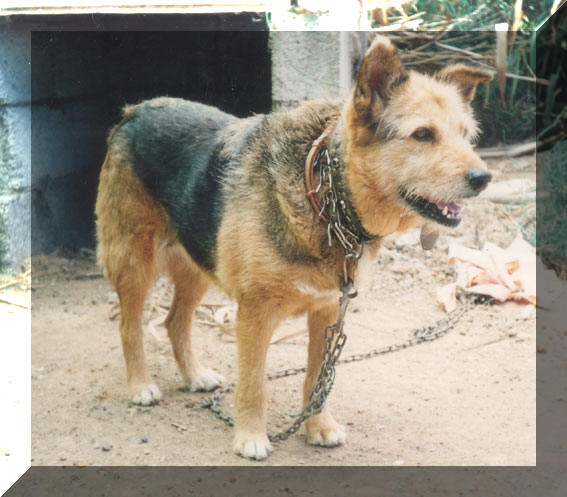
And I mean…As in many other areas, Germany is lagging behind in this area.

If you see this photo it is assumed that it was taken in Poland, Hungary or any other country without a large animal welfare lobby.
But that’s the way it is here in Germany, this type of dog keeping still exists.
On farms (“that’s how we always kept our dogs like this”) or in small villages where no one would dare to “blacken” their neighbors, unfortunately, chain dogs can still be found. But this type of dog keeping is not only a thorn in the side of animal lovers, it is also prohibited by law

One doesn’t own dogs like a collection of art or books.
Dogs cannot be switched on or off depending on what you want at the moment, and then ignore them and lock them away the rest of the time.
There will never be a real human-dog relationship on this basis.

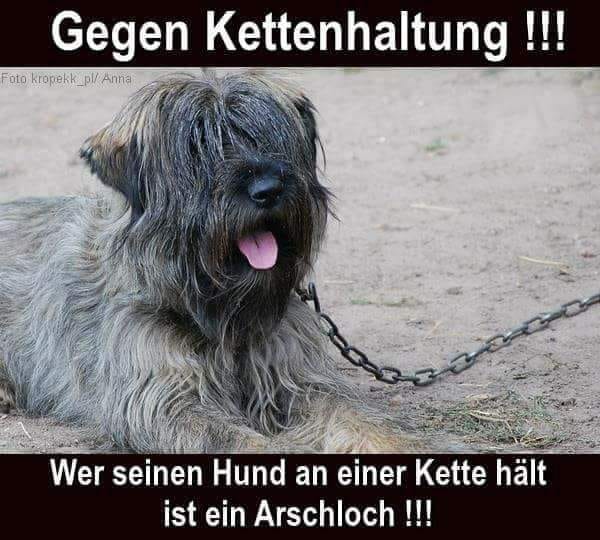
If you keep your dog on a chain, your animal will suffer!
Chaining – social isolation – is the worst thing a person can do to his friend, his dog.

“whoever keeps his dog on a chain is an asshole!!!”
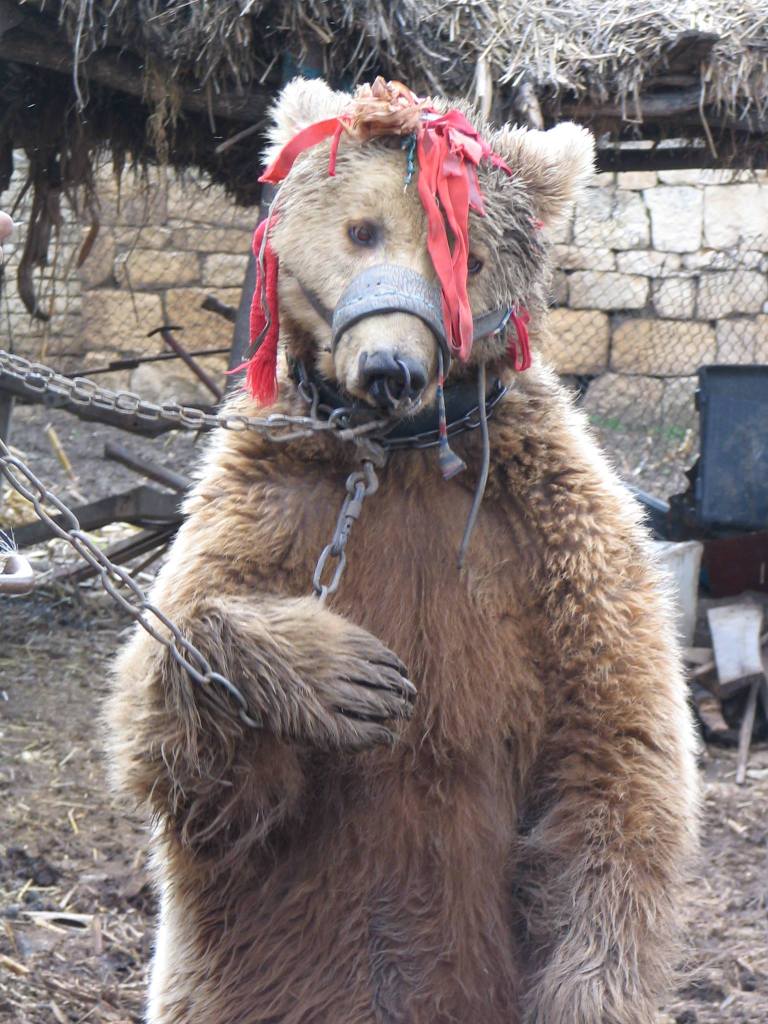
We condemn chain binding for ALL animals as cruelty to animals, and loathe people who do it.
We fight against them, and therefore the decision of Slovenia is a small success to our fight

My best regards to all, Venus

Operation “Lord of the Rings” in Italy – the fight against poaching

Hundreds of songbirds confiscated: Italian hunters need live decoys to hunt songbirds.

Because of the lawsuits brought by the committee against the bird murder and its partner LAC, the catching of birds has finally been banned since 2014, the hunters have to fall back on bred birds.
But there are doubts about aviculture in Italy.
As part of Operation “Lord of the Rings”, the Carabinieri have started to control the alleged breeding facilities.

It is now clear: something is wrong with many breeders.

They either do not have the facilities to successfully breed birds at all or they have far more young birds on offer than the existing adult birds can breed at all.
They simply rob the chicks from their nests in the wild or catch them illegally with nets.

They then come on the market with forged or manipulated cultivars.


In the last few months alone, there have been a dozen large police checks throughout Italy, during which hundreds of song- thrushes and blackbirds were seized, as well as protected species.

Committee members were there in May and June as experts and appraisers and helped to identify the birds illegally stolen from the wild.
The confiscated thrushes are now being prepared for their release in reception centers.

https://www.facebook.com/Komitee.CABS/

And I mean…An entire branch of industry has grown around bird hunting in Italy.
Hunting outfitters, off-road vehicle manufacturers and restaurants benefit from the hunting bacillus.

The state collects more than 700 million euros annually in the form of fees for hunting and gun licenses, catch and shooting permits and taxes on weapons, ammunition, vehicles and hunting equipment.

In 1993 a new national hunting law was passed in Rome, which largely forbids catching birds and placed almost all songbirds under nature protection.
Even so, almost 30 years later, the authorities are very reluctant to get the poaching under control. And the still legal form of hunting is an affront to nature and animal protection.

But there is reason to be hopeful.
In the big cities of Italy in particular, hardly anyone wants to endorse hunting anymore, and the hunters have great problems with their offspring.
The environmental and animal protection movement has produced numerous, very motivated associations that successfully promote broad animal protection and environmental awareness in Italy.

And the authorities are cracking down on poachers and bird trappers – as the committee reported to us in this case.
It’s a long process that comes with a lot of small successes.

In 10 years if there are really high penalties we will see a decrease in poaching

My best regards to all, Venus

Breaking: 24/6/21 – Canada Goose Goes Fur-Free.

From ‘Respect for Animals’ – Nottingham, England.

Canada Goose goes fur-free

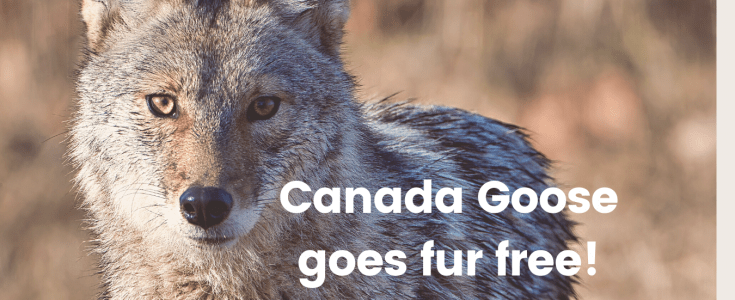
Respect for Animals is delighted at the news that the retail giant Canada Goose is to end the use of real fur in all its products. The company has been notorious for using coyote fur trims on its parka coats, taken from animals caught in cruel leghold traps in North America, methods banned in the UK and the European Union. The decision to bring this to an end is a major blow to the cruel and unnecessary fur industry.

In a statement, Canada Goose said:

“Today, Canada Goose announced that it will end the use of all fur in its products… Through a phased approach, Canada Goose will end the purchase of fur by the end of 2021 and cease manufacturing with fur no later than the end of 2022.”

Respect for Animals welcomes this historic move and encourages all remaining retailers to listen to consumers and adopt fur-free policies as a matter of urgency.

Thank you to all those activists who have devoted time, effort and money over the years trying to convince Canada Goose to ditch the cruelty of real fur.

The future of fashion is fur-free!

The anti-fur movement is celebrating the news that the retail giant Canada Goose is to end its use of real fur in all its products. The company has been notorious for using coyote fur trims on its parka coats, taken from animals caught in cruel leghold traps in North America, methods banned in the UK and the European Union. The decision to bring this to an end is a major blow to the cruel and unnecessary fur industry.

In a statement, Canada Goose said:

“Today, Canada Goose announced that it will end the use of all fur in its products. This announcement is driven by its focus on its purpose-based platform, HUMANATURE, relentless innovation, and expanding lifestyle relevance. Through a phased approach, Canada Goose will end the purchase of fur by the end of 2021 and cease manufacturing with fur no later than the end of 2022.”

The move by Canada Goose is a further devastating blow to the fur trade’s baseless attempts to present itself as ‘sustainable’ through debunked schemes such as FurMark.

According to CNN:

“Thursday’s announcement is part of Canada Goose’s mission to become more sustainable. Earlier this year, it released it’s “most sustainable parka to date” that uses 30% less carbon and requires 65% less water during production compared to its current parka. The Toronto-based company said it’s committed to achieving net-zero carbon emissions by 2025.”

Respect for Animals welcomes this historic move and encourages all remaining fur-selling retailers to listen to consumers and adopt fur-free policies as a matter of urgency.

Thank you to all those activists who have devoted time, effort and money over the years trying to convince Canada Goose to ditch the cruelty of real fur.

The future of fashion is fur-free!

For the animals, 

The Respect for Animals team.

Fighting the international fur trade.

Respect for Animals | Campaign against animal fur – Fur for Animals

Regards Mark

Canada: Federal “Ag Gag” Bill Could Punish Negligent Farmers After Amendments at Committee.

Federal “Ag Gag” Bill Could Punish Negligent Farmers After Amendments at Committee

June 22, 2021

A legislative committee studying the proposed federal agricultural gag, or “ag gag”, law has amended the bill in response to concerns raised by Animal Justice and other animal protection groups, legal scholars, and even the Canadian Food Inspection Agency (“CFIA”). 

Bill C-205 was introduced by Conservative MP John Barlow, and was originally designed to target animal advocates and concerned citizens. The Bill threatened these individuals with huge fines and even jail time for going onto a farm without permission.

Bill proponents said this was necessary to protect biosecurity on farms and prevent disease outbreaks, because people on farms without permission could introduce pathogens that harm animals. Yet the Bill would have exempted farm owners and operators—even though disease outbreaks caused by the actions of farm owners and operators are numerous, well-documented, and have had devastating consequences for animals and public health.

A new Animal Justice report, based on data from CFIA investigations, shows that disease outbreaks are regularly linked to standard farming practices and poor adherence to biosecurity protocols by farm owners and operators. Many of the outbreaks investigated by the CFIA were traced back to troubling practices like sharing needles and equipment, feeding animal parts back to animals, failure to properly disinfect trailers, and the exposure of farmed animals to virus-carrying wild animals.

Meanwhile, there has never been a single documented case of an animal advocate causing or contributing to a disease outbreak in Canada. And of course, entering farms without permission is already illegal. 

Many Members of Parliament on the House of Commons Agriculture Committee clearly paid heed to the evidence about the disease risks regularly caused by farmers (despite not hearing oral testimony from Animal Justice or any other animal protection groups). At a meeting on June 17, 2021, the Committee amended the Bill so that it applies to farm owners and operators, and not just animal advocates.

If the Bill passes, farm owners and operators could be held accountable for breaching biosecurity protocols and exposing animals to pathogens that could reasonably harm them.

Research has shown that adherence by farmers to biosecurity protocols is notoriously poor in Canada and around the world, so this amendment is an important step toward protecting the health of animals on farms.

However, more needs to be done. Canada doesn’t comprehensively regulate biosecurity on farms. The CFIA publishes voluntary biosecurity guidelines, developed in cooperation with the farm industry and government. But following these guidelines is not a legal requirement for farmers. Instead, there should be clear rules that farmers must follow to prevent disease, and greater accountability for farmers that break the rules and cause devastating consequences for animals and the health of Canadians.

Now that the Committee has completed its study of Bill C-205, the Bill will return to the House of Commons for a third reading vote, which is unlikely to occur until much later this year because Parliament is about to break for the summer. If the Bill passes a third reading vote, it will then go on to be considered by the Senate.

Regards Mark

Stacey says:

Animal farmers are inherently negligent, subjecting all animals to control and violent death.

Thanks Stacey

Canada: “IT IS GOING TO HAPPEN IN MY LIFETIME, AND IT’S A WIN-WIN SITUATION FOR EVERYONE INVOLVED.”

Dr. Charu Chandrasekera - Executive Director of the Canadian Centre for Alternatives to Animal Methods.
Dr. Charu Chandrasekera – Executive Director of the Canadian Centre for Alternatives to Animal Methods.

Click on the link to see all the photos.

Dr. Charu Chandrasekera – Unbound Project

IT IS GOING TO HAPPEN IN MY LIFETIME, AND IT’S A WIN-WIN SITUATION FOR EVERYONE INVOLVED.”

On a warm October day in Halifax, Dr. Charu Chandrasekera is attending the inaugural Canadian Animal Law Conference, to speak on a panel entitled, ‘Ending Animal Experimentation: New Advances.’ That same weekend, coincidentally, the Canadian Cancer Society’s CIBC Run For The Cure is also taking place, to raise funds for breast cancer research. As Dr. Chandrasekera and I sit in a coffee shop to discuss her work, participants jog by and she quips: “I wish I could tell them they are not running for a cure. They are running from a cure.”

And so began a conversation both enlightening and enraging, detailing Dr. Chandrasekera’s journey as a biomedical scientist growing increasingly disenchanted by the system within which she works, specifically due to the use of animal models in research.

Though her story lands her today as the Executive Director of the Canadian Centre for Alternatives to Animal Methods at the University of Windsor in Ontario, Canada, it surprisingly didn’t start with concern for animals.

“The journey didn’t start with anything to do with animals,” she says, “it was me trying to be a scientist.” In her postdoctoral training following her PhD in biochemistry and molecular biology, Dr. Chandrasekera says she actually specifically worked in animal research labs, “because it was ingrained in you that animal research is absolutely essential; and I believed it, I trusted it.”

Heart failure was her area of research, mice and rats her test subjects. “Some of the labs I worked in also had rabbit models, and I saw people working dog models of heart failure as well,” she says. Soon into the work, however, Dr. Chandrasekera says, “it became very obvious that the work I was doing was not translatable [to humans] the way I thought it was.” And though she would continue this work for a few years, she would also continue to question the purpose and effectiveness of testing on animals. “In the field that I was involved in, nothing was really reproducible; there were so many discrepancies and contradictions even among the top-notch researchers in that field.”

Today, she notes, drugs tested to be safe and/or effective in animal models have a 95 percent failure rate in human trials. Yes, read that over again.

During this period, says Dr. Chandrasekera, “while I was going through this whole experience in these animal research labs where scientifically they weren’t working, I was also going through a personal, moral journey at home.” Becoming visibly choked up, Dr. Chandrasekera speaks of her dear cat Mowgli, a grey tabby with green eyes.

“She [Mowgli] taught me all about animal sentience for the first time in my life, about who animals really are. That they are just like us, they feel pain, they feel joy, they are mischievous, they get mad, they like to enjoy, and they are conscious.”

Dissected cat at a veterinary school. Canada, 2007.

There was a certain innocence and purity in Mowgli’s eyes, she says, that captivated her heart. “And soon enough, there were times when I would go into the lab and I would see the exact same innocence and purity in the eyes of a mouse. And to me, there was no difference between Mowgli and the mouse I was giving heart disease to.” Combined with the scientific failures of animal research, she says, “it was no longer justifiable.”

It was around this time Dr. Chandrasekera also adds, that she viewed the documentary Food, Inc., and immediately went vegan.

But it was in 2011 that Dr. Chandrasekera says she reached a point she describes as life-altering when her father had a heart attack and required bypass surgery. After staying at his bedside for weeks, she returned to the lab where they were working on heart failure research, specifically regarding certain receptors, if activated properly during a heart attack could be protective of the heart. “We had a number of different animal models of this,” she says, “and when I came back to the lab I talked to my professor I was working for, and I said ‘Do you think these receptors were activated in my dad during his heart attack?’ and he said –I’ll never forget this– ‘How the hell would I know? We’ve never looked at this in the human heart.’”

It was at that moment, she says, “everything within me sort of froze, and I thought, ‘What am I doing this for?’”

By 2012, Dr. Chandrasekera left traditional academia. She joined the American non-profit, The Physicians Committee for Responsible Medicine, which promotes plant-based eating, as well as preventive medicine and alternatives to animal research. “It was during this period that I was exposed to this whole other world. I got to interact with big players across the globe, people who were legitimate scientists, who were regulators, who were pharma industry, who were investing and actively promoting alternatives to animal testing.” She calls it an awakening, an awakening within her, as well as within the scientific community.

Dr. Charu Chandrasekera

“There was a huge global shift. Countries like the Netherlands just came up and said, ‘We’re going to end all animal testing for chemical safety by 2025’; all these things were happening,” she says.

“From Brazil to East Asia, there are many countries that have dedicated federally funded research to shift away from animal testing.”

Whenever she would attend international meetings however, “people always asked, ‘How come there is no centre for alternatives in Canada?’” That’s when Dr. Chandrasekera knew what she needed to do next.

So in 2016, Dr. Chandrasekera approached the Vice President of Research and Innovation at the University of Windsor with a proposal, and said “How would you like to have a centre like that here?” He was fully on board, she says, as was the new Dean of Science, and in less than a year the Canadian Centre for Alternatives to Animal Methods was established. With the help of a “transformative gift from the Eric S. Margolis Family Foundation,” she says, the centre now works in three main areas: biomedical research, regulatory testing, and developing courses and degrees focused on “training the next generation to think outside the cage.”

Dr. Chandrasekera says she can now foresee a future without animal testing.

“It is going to happen in my lifetime, and it’s a win-win situation for everyone involved.”

As another Run For the Cure participant saunters by the coffee shop window, Dr. Chandrasekera concludes: “This is about animals and this is about people like my dad. Alternatives to animal testing are where the world is headed, whether the scientific community likes it or not.”

Photos of Dr. Charu Chandrasekera by Frank Michael Photography. All other photos by Jo-Anne McArthur. Interview and story by Jessica Scott-Reid.

Jessica Scott-Reid is a Canadian journalist and animal advocate. Her work appears regularly in the Globe and Mail, New York Daily News, Toronto Star, Maclean’s Magazine and others.

Dr. Charu Chandrasekera

Regards Mark

Sustain Blog says:

Thank you for the post on animal testing.

No problem – thanks for your comment.

Denmark and the “Final Solution to the Wild Boar Question”

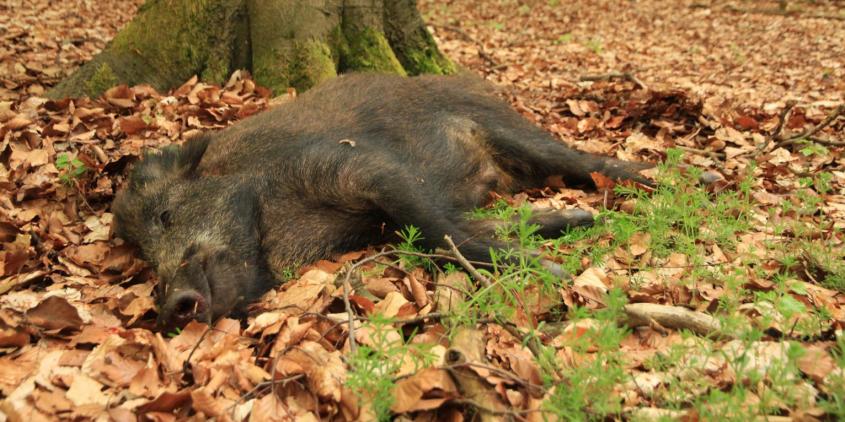
Wild boar number “157”, the last known animal in the wild, was shot in the course of ASF prevention.
Denmark is thus temporarily free of wild boar (!!)

With the slaughter of wild boar “157”, there should currently no longer be any wild boar in Denmark (symbol picture)

“157” was observed in South Jutland for months.

Attempts to catch or kill the wild boar had been unsuccessful until then.

The national nature authority assumes with some certainty that there are no more wild boars in the country at the moment.
At least no other animals could be detected for months.


Hunted a total of 157 wild boars to prevent disease

The reason for the total kill are the preventive measures against African swine fever.

In 2018, the inventory was estimated at just 100 black smocks. A total of 157 wild boars have been shot since then.

The Danish wild boar population has always been very manageable compared to Germany.

https://www.jagderleben.de/news/afrikanische-schweinepest-letztes-wildschwein-daenemark-erlegt-712776

And I mean…Denmark has done its homicide task.

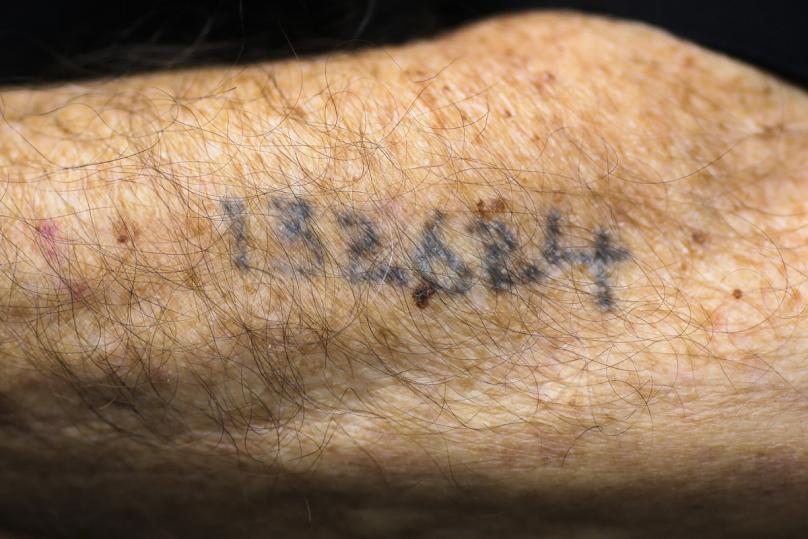
From July 1941 the aim of the fascist regime in Germany had as aim to murder all of them “as Jews defined persons” in Europe and beyond.
Hermann Göring had called it the “Final Solution to the Jewish Question”.

Denmark reminds us that fascism against the weak is not a thing of the past

My best regards to all, Venus

Ireland: Breaking News 22-23/6/21 – Cabinet Approves Introduction of Legislation to BAN Fur Farming. Approximately 120,000 Fur Farmed Mink Covered By Proposed Legislation.

WAV Comment – YEEEES !! – Congrats to all those who worked so hard for many years to achieve this.

Regards Mark

Cabinet approves introduction of legislation to ban fur farming

Updated / Tuesday, 22 Jun 2021

The Minister for Agriculture, Charlie McConalogue, has received Cabinet approval to introduce legislation that will lead to the banning of fur farming.

Society has changed and attitudes to keeping animals in captive specifically for their fur… attitudes have really changed significantly towards that“, he told journalists outside Government Buildings this afternoon.

The measure, to prohibit the breeding of mink specifically for their fur, is contained in the programme for Government.

There are 120,000 mink left in the country, spread across three mink farms in counties Laois, Donegal and Kerry.

Charlie McConalogue described the bill, known as the Animal Health and Welfare (Amendment) Bill 2021, as comprehensive and measured.

It contains provisions for a compensation package for the farmers, which will take into account earnings, redundancy payments and demolition fees.

It’s estimated that the industry is worth around one to two million euro to the economy each year, employing roughly 12 fulltime staff. This increases to 30 during the busy season.

Minister McConalogue said this type of farming was once “very much promoted” by Government, from its origins in the 1960s. However, he explained that the activity is no longer supported.

He told reporters that the three farms in question have always maintained and upheld the highest animal welfare standards and Government has been engaging with them for the past year.

Minister of State Pippa Hackett said it was a sensitive issue, but she welcomed the moved.

She explained that in the past, well-meaning people have sometimes released mink from captivity into the wild, which “has caused absolutely catastrophic issues for wildlife and continues to do so”.

Cabinet gives green light to ban fur farming (rte.ie)

From ‘Respect for Animals’, Nottingham, England – Fighting the Fur Trade:

On Tuesday 22 June 2021, Cabinet approval was granted to abolish fur farming in the Republic of Ireland. The measures will be part of an amendment to the Animal Health and Welfare Act 2013, and are likely to include a provision that chinchillas and foxes and mink can not be farmed for their fur or skin. There are currently three fur farms in Ireland, which kill around 100,000 mink annually.

Successive governments have pledged to ban fur farming in Ireland for some years, after a campaign co-led by Respect for Animals. As we reported earlier this year, the fur farming ban formed a part of the programme for government and was listed as a priority bill when the 2021 new year’s legislative programme was published.

This latest development will escalate the process of phasing out fur farming, with the farms expected to be closed down by 2022. The Bill will be published as the Animal Health and Welfare (Amendment) Bill 2021.

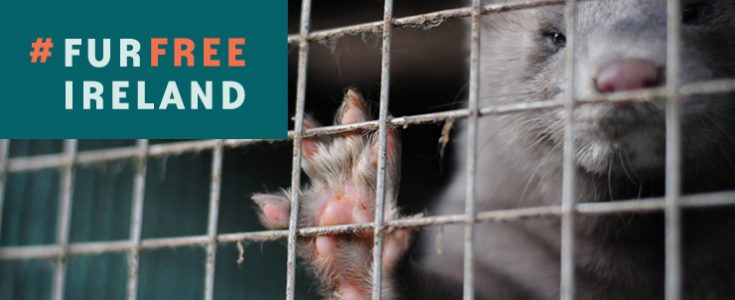
Respect for Animals is delighted at this latest development, having campaigned for a #FurFreeIreland for a number of years, alongside colleagues at NARA and the ISPCA.

Fur farming has been in decline in Ireland over the past few years following a government agreement in 2019 to phase the practice out. 

As is standard practice in legislation prohibiting fur farming, the three mink farms will be compensated for their compensated for the closing down of their operations, with a package which is likely to take into account earnings, redundancy payments and demolition fees.

Speaking outside Government Buildings in Dublin, Minister for Agriculture, Food and the Marine Charlie McConalogue confirmed that he had received Cabinet approval to introduce legislation ending fur farming In the Republic of Ireland

As part of the Fur Free Alliance, Respect for Animals worked closely with former TD Ruth Coppinger, who brought forward a Fur Farming Prohibition Bill a few years ago, which forced the then Irish government to change policy and agree to prepare a ban. 

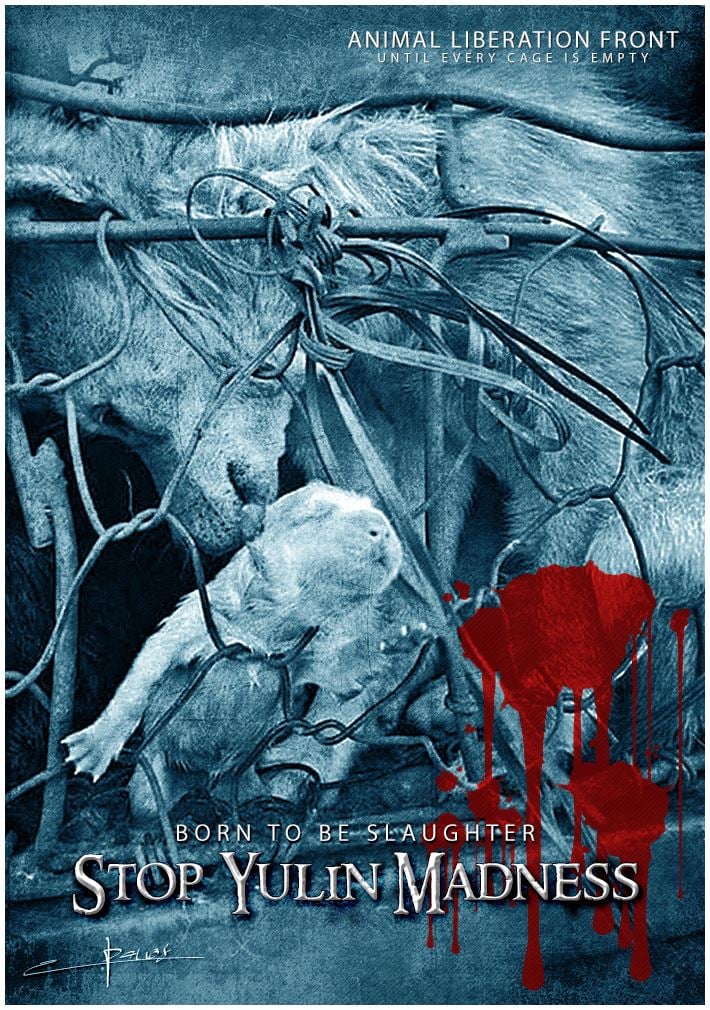
YULIN: the same massacre this year

In Germany alone, 40,000 piglets end up in the rubbish bins every day, they are rubbish and are not needed.
Per day!
Half dead, lying helplessly dying, they die a painful, slow death after being hit on the floor.
The cattle are hung by one leg, their necks cut off, millions of animals die the same gruesome death for minutes, not just at a week-long festival, but every day.
Only these “other” animals were not declared as pets by humans.
One wonders if Yulin would get that much attention when it came to pigs or calves.

Of course, the Yulin massacre is not justified by the fact that it could be worse in every country with different “animal species”.

ALL animals have the same feelings and exactly the same right to a happy life without suffering and without being killed for their bodies in the end.
The same pain is for ALL animals, there is no difference, the difference is only in our mind and our upbringing.

Therefore: If we have not understood it for hundreds of years, we should finally understand it NOW that animals are not our slaves, are not food, they have their right to live as roommates in peace on this planet.

Anyone who is against the massacre in Yulin should be vegan in principle. Everything else is hypocrisy.

My best regards to all, Venus