Month: June 2021

waste

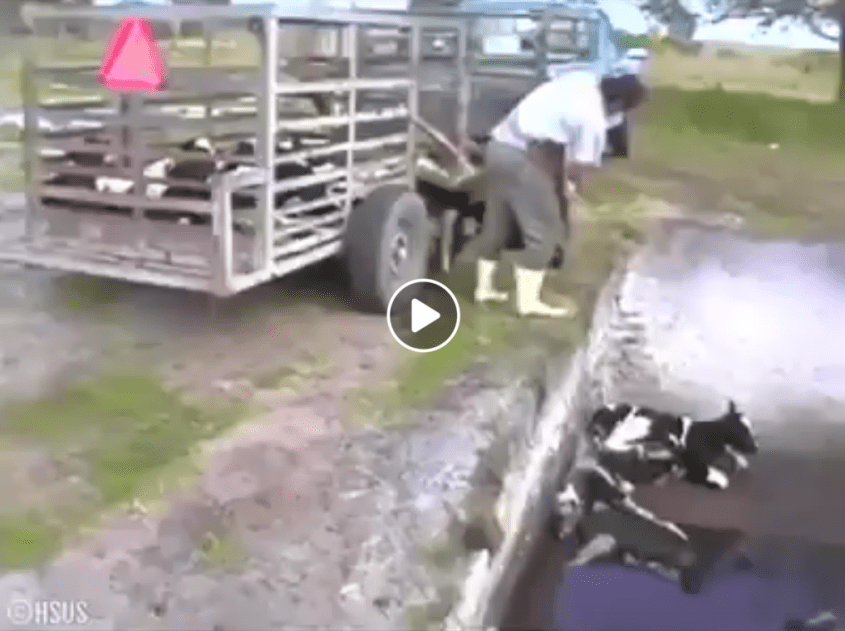
These puppies are the scraps of your #milk and are thrown away like garbage.
If you consume milk and dairy products then stop doing it, instead of playing the skit of those who suffer in front of these images, because you are the only real responsible for all this.

(Original text by Giustizia Animalista)

Scarti
Questi cuccioli sono gli scarti del tuo #latte e vengono gettati come spazzatura.
Se consumi latte e derivati allora smetti di farlo, anziché recitare la scenetta di chi soffre davanti a queste immagini, perché sei l’unico vero responsabile di tutto questo.

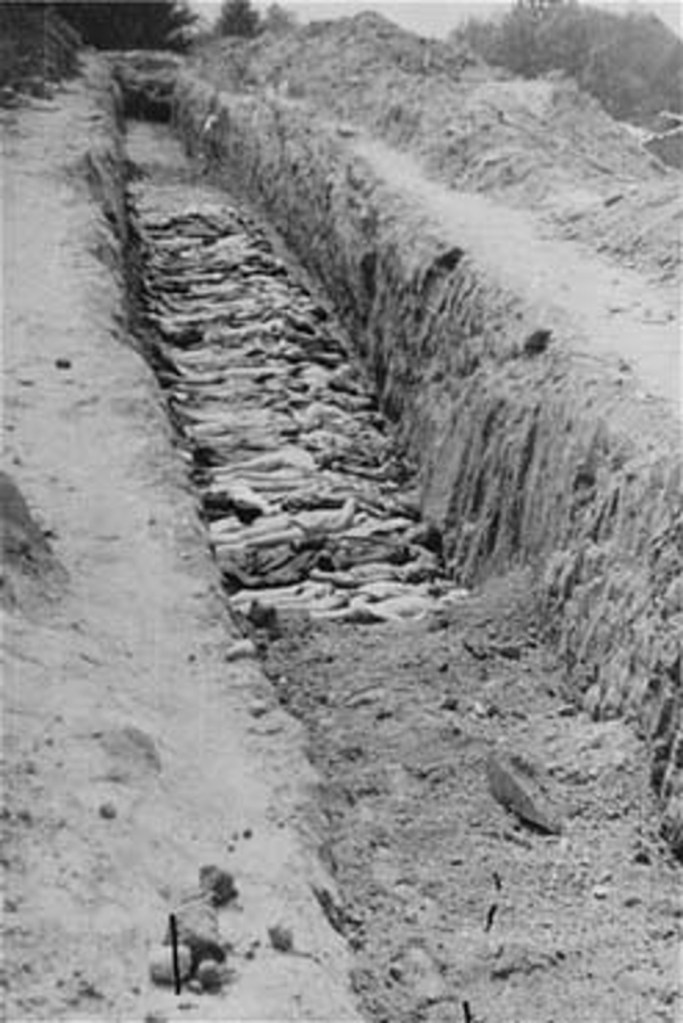
And we thought that the fascist right to annihilate the weakers is over. But obviously not!

My best regards to all, Venus

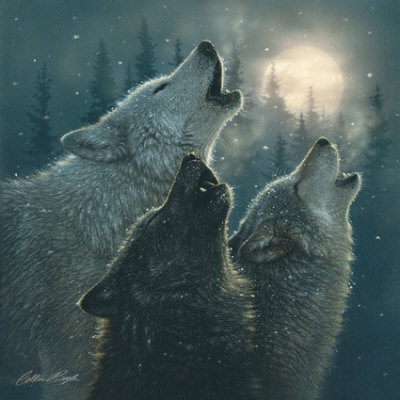
USA: Howl Like Hell ! – Be A Voice For Idaho’s Wolves – Take Action Here – Project Coyote Action Alert.

Dear Mark,

Now that the heinous legislation SB 1211 allowing the slaughter of 90 percent of Idaho’s 1,500 wolves has become law effective July 1, the Idaho Department of Fish and Game is seeking public comment on regulations to align with SB 1211 and allow wolves to be killed with traps, snares, dogs, and in dens along with pups.

What we are witnessing is a return to an old form of brutal wolf hatred and it is clear that Idaho is on a warpath to eradicate wolves by any means. We must speak out against this hatred. Even if you don’t live in Idaho, you can still speak up. This action will take less than a minute and the deadline is June 13, so please take action NOW!

Tell Idaho Fish and Game You Stand with Wolves!

1. Go to this ID Fish and Game page and scroll to the bottom.

a. Indicate whether you are a resident

b. Select NO for the second question.

c. Complete the contact information (all fields are required).

TAKE ACTION NOW red Rubber Stamp over a white background.

2. Email the Director of Idaho Fish and Game, Ed Schriever, and the Commission, using the talking points below and copying the following emails:

rules@idfg.idaho.gov, ed.schriever@idfg.idaho.gov, MagicValley.Commissioner@idfg.idaho.gov, tim.murphy@idfg.idaho.gov, brad.corkill@idfg.idaho.gov, clearwater.commissioner@idfg.idaho.gov, lane.clezie@idfg.idaho.gov, derick.attebury@idfg.idaho.gov, salmon.commissioner@idfg.idaho.gov

3. Sign our Petition and share this action alert and infographic with friends and family and on social media!

Talking points to craft your message (and please personalize):

The majority of Idahoans and Americans support wolf recovery at levels where wolves can fulfill their ecological functions. Almost no one supports wasting tax dollars to recover wolves, just to exterminate them again.

Thank you for acting TODAY to protect Idaho’s wolves and their ecosystems!

For Wild Nature,

Camilla Fox
Founder & Executive Director
Michelle Lute, PhD
National Carnivore Conservation Manager

Howl like hell – make the difference;

Regards Mark

Plenary vote on an end to cage farming in the EU on June 10th

On June 10th, the European Parliament will vote on the European citizens’ initiative “End The Cage Age”.

Report: Animal Equality Germany

After the hearing in the European Parliament on April 15th, at which the European citizens’ initiative “End The Cage Age” had the opportunity to argue in front of the committees for a ban on cage management, it is now the turn of the European Parliament to get out of the cage and to debate the future of agriculture in the EU.

The MEPs will vote on whether cages for animals in agriculture should be banned in the EU in the future.

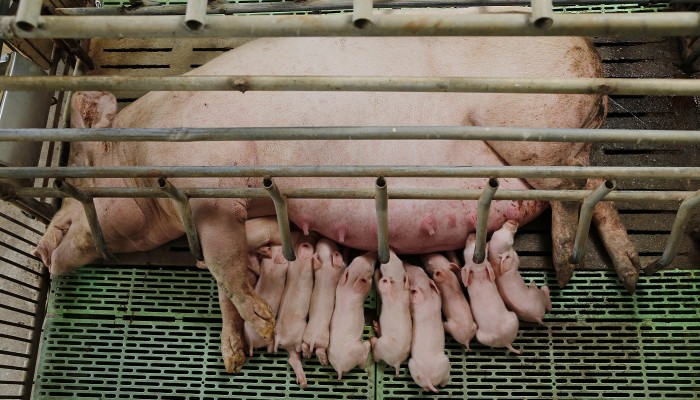
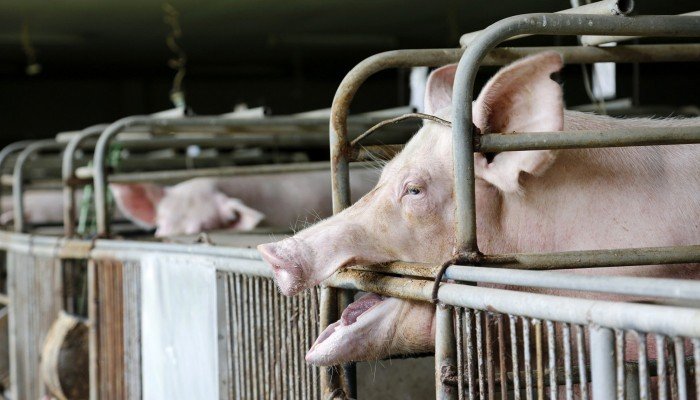
Hundreds of millions of animals are currently living a dreary existence in narrow, barren cages in the EU.

Sau mit Ferkeln im Kastenstand.
The plenary session and the subsequent vote are scheduled for June 10th.
Our aim is, of course, for Parliament to vote in favor of banning cages.
That is why we will again specifically urge the German members of the European Parliament, who have not yet expressed their support for the campaign, to vote for an end to cage management until the plenary session.

Please support us on Twitter by retweeting our tweets or posting your own tweets – today through Wednesday, at 12:00 p.m. and 5:00 p.m.!

But there is also a petition from the “Albert Schweitzer Foundation”.
It goes to German MPs, but anyone can sign it.

Schwein in Kastenstand.

Animal Equality Germany

And I mean…We are asking for a ban on the use of cages in animal farming.

In detail, we are asking for legislation prohibiting the use of:
• cages for laying hens, pullets, broiler breeders, layer breeders, quail, ducks and geese;
• farrowing crates for sows;
• sow stalls for sows, where not already prohibited
• individual calf pens, where not already prohibited

Even single boxes for calves should no longer be allowed in the EU.

The first stape is done, because…

….in April there was a sign of hope from Brussels for an end to cage farming; it was an overwhelming approval from the MEPs who spoke out in favor of abolishing cage farming in the EU and called on the EU executive to quickly submit a proposal for it.

The Commission has to officially respond to the ECI within the next three months.

We know from the past how closely the EU Commission supports industrial animal husbandry.
We have made the experience that the EU has totally failed in animal transport.
That is why we always must have a plan B when we negotiate with the EU Commission.
Because unfortunately she has the last word in this debate.

My best regards to all, Venus

UK: New Animal Welfare Bill Launched With Positives For Animals. What Leaving the EU Can Do.

New Animal Welfare Bill launched to protect pets, livestock and wild animals – Defra in the media (blog.gov.uk)

New Animal Welfare Bill launched to protect pets, livestock and wild animals

There is positive coverage today following the launch of our Animal Welfare (Kept Animals) Bill to improve welfare standards across Great Britain. The story was covered by the MirrorEvening Standard and Daily Express. The UK’s Chief Veterinary Officer Christine Middlemiss was also interviewed by the Daily Mail about our new measures to tackle puppy smuggling.

The UK has long history of leading the way on animal welfare and now that we have left the EU, the Government is committed to improving our already world-leading standards by delivering a series of ambitious reforms, outlined in the Action Plan for Animal Welfare.

The Bill will raise animal welfare standards in five key areas:

  • Puppy smuggling: The Government will introduce new powers to tackle the unethical trade of puppy smuggling by reducing the number of pets (dogs, cats and ferrets) that can travel under pet travel rules. It will also include powers for the Government to bring in further restrictions on the movement of pets on welfare grounds, for example by increasing the minimum age of imported puppies and restricting the import of pregnant dogs and dogs with mutilations such as cropped ears and tails.
  • Live exports: Live animals can endure excessively long journeys during export, causing distress and injury. EU rules prevented any changes to these journeys, but the UK Government is now free to pursue plans which would see a ban on the export of live animals for slaughter and fattening. We will become the first European country to end this practice.
  • Banning keeping primates as pets: Primates are highly intelligent animals with complex needs and require specialist care. The Government will deliver on its manifesto commitment to introduce a ban on keeping them as pets, ensuring that all primates being kept privately in England are being kept at zoo-level standards and that those unable to meet the standards are phased out.
  • Livestock worrying: The Bill will give new powers to the police to provide greater protection to livestock from dangerous and out of control dogs. The Bill will also extend this protection to other species such as llamas, ostriches and game birds.
  • Zoos: The Zoo Licensing Act will be amended to improve zoo regulations and ensure that zoos are doing more to contribute to conservation.

Environment Secretary George Eustice said:

The Kept Animals Bill will bring in some of the world’s highest and strongest protections for pets, livestock and kept wild animals.

As an independent nation outside the EU we are now able to go further than ever on animal welfare by banning the export of live animal exports for slaughter and fattening, prohibiting keeping primates as pets and bringing in new powers to tackle puppy smuggling.

This builds on the launch of our Action Plan for Animal Welfare and Animal Sentience Bill last month as part of our work to build on our status as a world leader on animal welfare.

The Bill is the second piece of legislation introduced in the last month aimed at driving better standards of animal welfare, after the Government’s decision to formally recognise animals as sentient beings in domestic law through the Animal Welfare (Sentience) Bill. The Government will also announce a series of further reforms this year related to microchipping, pet theft, farm animal welfare and tackling wildlife crime.

Follow Defra on Twitter, and sign up for email alerts here.

Regards Mark

Happy Animals Make for Tastier Meat—or at Least We Like to Think They Do

Australia: Breaking 8/6 – Big Win In the Court For Greenpeace.

Wow. This is big. We won.  

Together, we defeated Australia’s biggest climate polluter in the courts!  

I’ve just stepped out of the Federal Court in Sydney where the Honourable Justice Burley has handed down his landmark ruling on the AGL v Greenpeace legal battle – in our favour!   Sitting there in the court listening to the Judge clearly lay out why our campaign materials targeting AGL were fair and legal, I felt overwhelmingly proud and optimistic about the impact we can have together when we take on big challenges.  

And there is no bigger challenge than taking on a $5.1 billion climate-polluting giant.   Today is an incredible and important outcome. We’ll double down on the main game again tomorrow – forcing AGL to ditch their filthy coal-burning power stations for renewables.

But for now, take a moment to soak in the win and share the good news – because this moment is for you.  
This judgement is a victory for free speech, for people power, and for people like us who want to stand up to big polluting corporations to keep them accountable.   It sets a powerful precedent about how the fair dealing exception in the copyright act is applied. The court found that “copyright protects the owner’s interest in the artistic work, it does not provide a mechanism for protecting a copyright owner’s reputation…it is not the use of the AGL logo in the campaign that causes damage, but rather the…message” – that AGL is Australia’s biggest climate polluter.  
It sets a powerful precedent that will help protect charities, advocacy organisations, comedians and the general public from expensive and crippling litigation from big polluting corporations.   We just couldn’t have done this without you. And I know that together, we can win this bigger fight for action on climate change. Together, we can force AGL to become the genuine renewable energy leader they spruik themselves to be.  

Even if we lost our court battle today, we would have won.  

AGL’s decision to flex its legal might has had one major consequence. Across the world, over 900 news stories have been published about the case. And almost every one of them includes some variation of the phrase “AGL, Australia’s biggest climate polluter.”   For a company so desperate to hide behind its false green credentials, it’s hard to see this as anything other than an enormous own goal.  

Right now, our campaign is in an incredible place. The momentum is all ours. Meanwhile, AGL is in turmoil.    AGL’s CEO abruptly resigned just weeks ago. Thanks to the flood of cheap renewable energy, power prices have plummeted, sending the share price and value of the big coal players like AGL through the floor.   Major and respected international bodies like the United Nations and the International Energy Agency are calling for AGL’s coal-burning power stations to be shut down by 2030.  

And now they’ve just lost a major court battle, drawing even more attention to their terrible climate record in the process.   Something has to give.

The conditions are ripe for positive change. I know that together, we can do this.   Let’s make the most of this amazing court win and turn it into a major victory for the climate and future generations.  

Thank you!     Glenn, on behalf of the team at Greenpeace Australia Pacific

The Fiji Times » Marshall Islands deliver a moral call to arms to  high-polluting nations: Greenpeace

Sweden 🇸🇪 – as the world leader in cruelty-free research?

Doctors Against Animal Experiments

#Press release#

Fifth country takes a step towards “phasing out animal experiments”
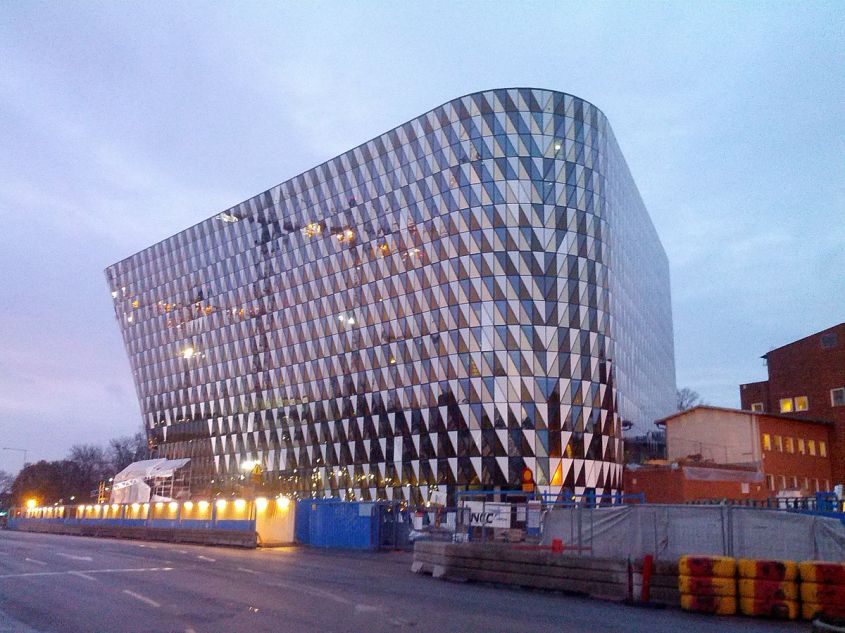
The renowned Karolinska Institute in #Sweden# has published a discussion paper on new methods without animal testing, which is clearly aimed at a paradigm shift in which animal testing is no longer the “gold standard”.

Karolinska Institutet in Stockholm

The Swedish government had already announced that it could become the world leader in animal-free research.

The German association “Doctors Against Animal Experiments” is pleased about the 5th country after the Netherlands, USA,  the Great Britain and Norway, which is taking an important step away from animal experiments.

“The Karolinska Institute’s paper does not yet speak of an exit from animal experiments, but an important first step has been taken, namely to recognize that the future belongs to methods that do not involve animal experiments,” explains Dr. med. vet. Corina Gericke, Vice Chairwoman of “Doctors Against Animal Experiments”.

A placement, not a replacement, is required, i.e. the establishment of animal-free procedures instead of a 1-to-1 replacement of animal experiments.

The word “alternatives” is also not chosen, but rather “new methods” are used.

These are not just a substitute or an alternative, as they offer many more options than animal experiments.

The authors are convinced that the new technologies hold great potential for science, the human environment and health, as well as for the innovative strength of industry.

Several actors from the fields of research, authorities, politics and industry (L’Oréal and AstraZeneca) were interviewed in the 114-page paper.
Many question animal testing as the “gold standard”.


Mice would be cured, but transmission to humans often doesn’t work.
Research needs more human relevance.
The first aim of the report is to promote communication between researchers and other stakeholders.

The Swedish government presented a roadmap for research over the next four years in December 2020.

It says: “Sweden can become a world leader in the field of alternative methods, which can contribute to new jobs as well as new companies. The demand for faster, cheaper and safer test methods is great. “

The Karolinska Institute near Stockholm is one of the largest and most respected medical universities in Europe.
The Nobel Assembly at the Karolinska Institute annually determines the winner (s) of the Nobel Prize in Physiology or Medicine.

Sweden joins the list of countries that are taking steps to phase out animal testing: the Netherlands, USA, Great Britain and Norway.

In a joint campaign with the german Association of “People for Animal Rights” and 13 other organizations,” Doctors Against Animal Experiments” is calling for the German government to develop a concept for phasing out animal experiments.

The demand can be supported by signing an online petition:  http://www.ausstieg-aus-dem-tierversuch.de

https://www.facebook.com/aerztegegentierversuche

Further information and sources: Karolinska Institutet: Att communicera om nya metoder utan djurförsök. 02/2021
https://www.ausstieg-aus-dem-tierversuch.de/helfen

And I mean…Directive EU / 2010/63 on animal experiments:
“From an ethical point of view, there should be an upper limit for pain, suffering and fear that must not be exceeded in scientific processes.
To this end, the implementation of procedures that are likely to cause long-lasting and unreliable severe pain, severe suffering or anxiety should be prohibited. “

The EU bans, but Germany does not!
Why are nevertheless animal experiments of severe degree still being carried out in Germany?

Because: The EU prohibits excessive suffering in the laboratory, but allows the member states to make exceptions.
And that is exactly what the German government did with the new version of the Animal Welfare Act: under pressure from the animal experimentation lobby, it has made use of the exception and, apart from a few cosmetic changes, the most important ones remain unchanged.

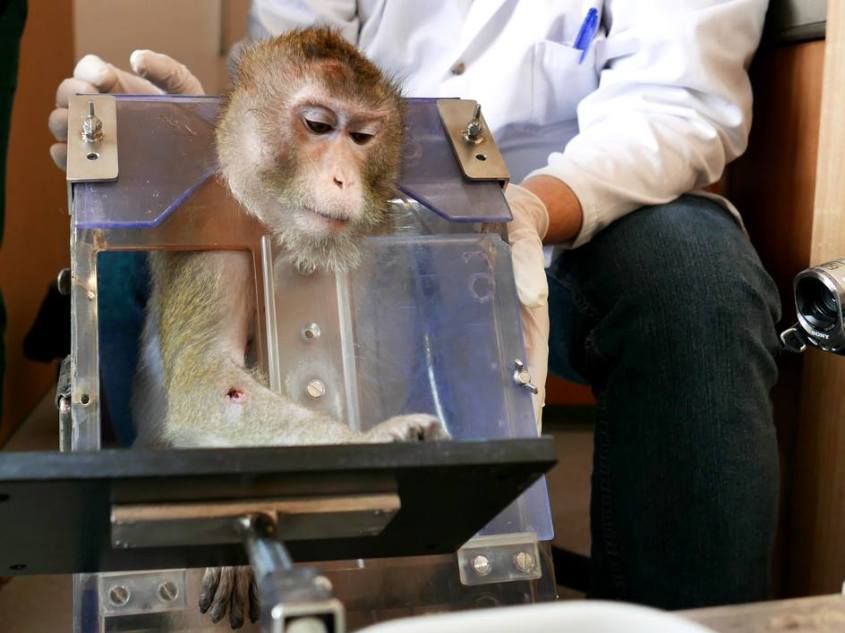
Therefore, severe animal experiments are still carried out in Germany.

Germany, Tübingen-Max Planck Institute- SOKO undercover


Every civilized, informed and morally developed person disgusts this senseless torture in the name of a pseudoscience, and only a bunch of idiots in laboratories and government posts try to sell the animal experiment business to the public with hollow, factually false and implausible arguments.

Let us now hope that other countries will follow Sweden’s positive example, because in a modern Europe this senseless cruelty to animals has no place.
Most people nowadays do not miss how corrupt, primitive, unscientific work is done in the field of animal testing.

My best regards to all, Venus

England: 7/6/21 – Vegan Bites.

You can put the chicken before the egg, by choosing delicious, affordable, bird-friendly alternatives…

Re-thinking eggs | Animals Australia

Vegan Strawberry Muffins

Vegan Strawberry Muffins | A Virtual Vegan


Vegan Pasta e Fagioli

Vegan Pasta e Fagioli – Best of Vegan Pasta Soup

Top 3 CrossFit Competitors Are All Vegan: ‘My Body Doesn’t Need Meat’

Top 3 Crossfit Competitors Are All Vegan: ‘My Body Doesn’t Need Meat’ (plantbasednews.org)

Ready Burger become latest opening to join London’s new wave of beef-free burger kings

Ready Burger restaurant: Joins London’s new wave of beef-free burgers | Evening Standard


One Great Vegan: Meet the chef who’s singing her way through recipes on TikTok

One Great Vegan: Meet the chef who’s singing her way through recipes on TikTok (yahoo.com)


Rhubarb, Chocolate and Ginger Vegan Spread

Rhubarb, Chocolate and Ginger Vegan Spread – Animagus Eats

Supermarkets ‘misled customers over chicken cruelty and shut down social media objections’

Supermarkets ‘misled customers over chicken cruelty and shut down social media posts’ | The Independent

Pride Month Vegan Challenge

Pride Month Vegan Challenge (rainbowvegan.org)

Aldi Launches Plant-Based BBQ Range As Nearly Half Of Brits ‘Don’t Know How To Cater For Vegans’

Aldi Launches Plant-Based BBQ Range In UK | Plant Based News


 Regards Mark

Light In A Dark Forest – Animal Photojournalism – Exposing The Reality The Business Does Not Want You To nSee.

Hidden book Jo-Anne McArthur listing image

Above – Award-winning photographer, journalist and campaigner Jo-Anne McArthur – author of Hidden: Animals In The Anthropocene (Image credit: © Animal Equality)

WAV Comment: 

Every photographer, professional, amateur, or simply casual, hopes that maybe one day, one of their images will have that ‘something extra’ that makes it so special in different ways for so many people to view with awe or amazement.  As a youngster, I can remember one such image from the Viet Nam war showing a little girl who’s village had just been bombed with napalm.  Decades on, this image is one of those which captured my sesnse into the reality of war and what it does to people – do you remember it ?

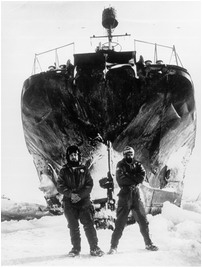
Or, as an activist, one of my all time favourite photos (below); Watson and Hunter on the ice; stoopping the seal hunter ship from continuing with its disgusting business. 

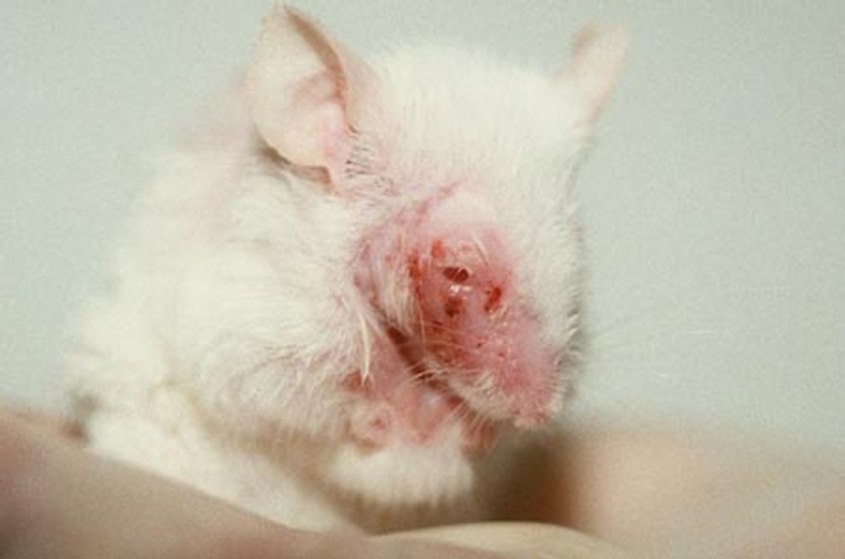
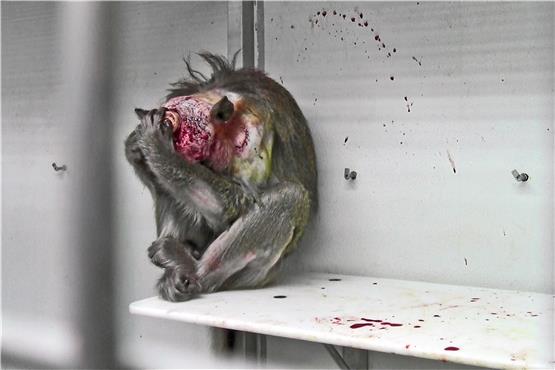
Or the very recent article by Venus, showing the suffering calves in Austria – Calf fattening in Austria: Animal suffering and fraud – World Animals Voice  – different images which all show the viewer the reality of the issue; often in the case of animal abuses, which are so different to the yukspeak the industry pumps us with; now we see the ‘reality’, as opposed to the spin and ‘happy cow’ images churned out by the trade and industry.

Thanks to those involved with Animal Photojournalism, the tightened lid of the abuse and suffering of so many animals is now being unscrewed and the contents of reality are being exposed to the world.  We thank all animal Animal Photojournalists in so many locations for making our work easier, by supporting what we say and have always said with the images.  Now, the abusers can run but they cannot hide – their cruelty is being exposed every minute of every day, and long may ‘normal’ people continue to be shown the real side of their dinner; or their clothes, or how their handbags are produced.

The lid has been taken off and the world is being educated for the better.

Regards Mark

One of my photos which hopefully puts the hunters claim of a ‘quick kill bite on the back of the neck’ into the disgusting reality it really is – fox hunting does not know the term ‘quick kill’:

New book Hidden shows why animal photojournalism really matters right now | Digital Camera World

New book Hidden shows why animal photojournalism really matters right now

By Graeme Green April 15, 2021

This emerging genre focuses on humankind’s relationship with nature – and these images are not for the faint-hearted

“Animal Photojournalism is extremely urgent and relevant to the issues of today,” says Jo-Anne McArthur, an award-winning Canadian photographer, journalist and campaigner. 

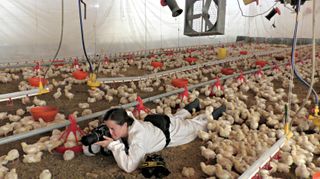
She has coined the term Animal Photojournalism (APJ) for an emerging genre of photography that focuses on people’s relationship with nature and highlights the suffering of billions of animals on the planet from human activities, including factory farms, breeding facilities and animal experimentation. 

The abuse of nature isn’t just bad for animals; it’s impacting all of our lives, from climate change to the global pandemic (said to have come from bats or pangolins in China’s wildlife markets). McArthur is also the author of Hidden: Animals In The Anthropocene and the founder of We Animals Media. 

We sat down with her to discuss animal photojournalism, and why it is so important. 

How do you define Animal Photojournalism? 

I call it an emerging genre, coming out of a number of different kinds of photography. Wildlife photography became a lot more about conservation photography, but conservation photography still excludes a number of animals, namely domestic animal and the billions of animals in labs and factory farms. 

Because these animals are sentient and relevant, Animal Photojournalism likes to include all of them. That’s why we call them the ‘hidden’ animals, – they’re hidden from the public conscience, hidden from the media. We’re trying to bring those animals and stories forward.

It’s also a mix of a bit of conflict photography and street photography.

Animal issues are affecting everyone on the planet. Do you see APJ as a growing area?  

Yes, that’s why I wanted Animal Photojournalism to mean something in its own right. Journalism is usually newsy and timely. I wanted to define it as its own thing and as something that overlaps with other current important issues. 

For example, factory farming contributes to climate change, it overlaps with labour rights, it overlaps with human health issues and with the pandemic right now, which is caused by our animal use. That’s all part of the definition. 

Who would you flag as great examples of animal photojournalists? 

There’s a Spanish photographer who goes by the pseudonym Aitor Garmendia. He’s won a number of awards and won in the World Press Photo awards this year in the Environment category for his investigations of pig farms. 

And there’s a Polish photographer, who also uses a pseudonym, Andrew Skowron. These guys are absolutely relentless and tireless in their work. They produce a lot of investigative work that’s been used by NGOs globally.

Many photos by you and other animal photojournalists are disturbing to look at and many people will want to turn away. How challenging is it as an area to work in?

Yes, we’re not producing images for people’s walls. They sometimes end up on walls at exhibits on the topic. 

But these images are largely for campaigners. They’re for the education of the general masses. We want them to end up in major media outlets. 

That’s our piece of the puzzle, when it comes to changing things for animals. Journalists are out there to show the public what’s happening behind closed doors. We often provide material evidence for NGOs to show the public.

These photos need to communicate a story or a message and need to be visually striking. What is your creative approach and how do you balance those elements? 

We can talk about an individual image or a narrative. Photojournalists are working on both. We want a storyline. We want to show the big picture. 

What’s really interesting about animal industries is that these animals are being farmed in the billions every day. We can go into a hen farm or a boiler chicken farm, and we might meet 900,000 birds in all the barns. It’s absolutely insane. So we want to show scale, whether that’s with a drone or with the wild angle. 

But then we also want to show the individuals who make up those millions. As with war photography, we can relate much better when we make eye contact with an individual, seeing their suffering up-close through the lens. 

A lot of my most relatable images have been ones where I’m actually up-close with an animal, with a wide angle, so I’m showing the individual looking at me, but also showing the context and situation this animal is in. 

Is this photography that’s all about having an impact?

I wish I could hold up an image of animal torture to people and have them say, “Oh my God, I’m never doing that again.” 

But people don’t do that. People are defensive and very attached to the way we do things. I understand that. 

That’s why it’s important to have context and narrative, working with NGOs, giving solutions… It’s not just about the field work.

‘Hope In A Dark Forest’, your photo of an Eastern grey kangaroo and infant in Australia’s forest fires, won the Man & Nature category in Wildlife Photographer of the Year 2020. Was that a difficult photo to get? 

I knew that photo was going to be a killer picture before I shot it. It’s in an eucalyptus plantation, so everything was in rows. 

Through the diagonal rows I could see that the kangaroo was there, and I started walking towards the angle I wanted. 

I wanted to shoot straight down through the plantation. I could see the colours and the quality of the light, her fur, and I was thinking “Oh no, oh no”, in case she moved. I got to where I needed to be and she stayed there and just watched me. I took a picture but I knew the picture I wanted was if I was more eye-to-eye, so I crouched down. I had time to get a few photos, then she bounced off. 

It was one of those moments when you want to put that image on your hard drive and in the cloud and back it up a few times because you know you captured a poignant moment. 

Sure enough, other people agreed. That photo is quite well-known now. It has been used and printed the world over. 

Hidden: Animals In The Anthropocene is on sale now

Featuring images by 40 animal photojournalists and a foreword by Joaquin Phoenix, Hidden: Animals In The Anthropocene by Jo-Anne McArthur, is on sale now and is published by We Animals Media.

For more about Jo-Anne’s work, click here

Jo-Anne also co-founded Unbound, a multimedia documentary project highlighting women in conservation.