Month: August 2021

England: GOOD FARM ANIMAL WELFARE AWARDS GO VIRTUAL – From CIWF London.

GOOD FARM ANIMAL WELFARE AWARDS GO VIRTUAL

Good Farm Animal Welfare Awards go virtual | Compassion in World Farming (ciwf.org.uk)

Today (24th June), we hosted our virtual Good Farm Animal Welfare Awards.

The annual awards were streamlined this year to allow businesses affected by the COVID-19 pandemic to progress towards the delivery of their existing animal welfare commitments. But, despite a difficult 12-months for the industry, we are pleased to recognise 10 leading food businesses for their inspiring and often innovative work in the field of farm animal welfare and sustainable food production.

CLEVER MARKETING PUTS ANIMAL WELFARE ON THE POLITICAL AGENDA

This year’s Best Marketing Award was presented to French, higher welfare poultry producers, Les Fermiers de Loué, whose clever combination of humour and political relevance generated huge public interest with their street marketing campaign promoting their higher welfare credentials.

INNOVATION IN ANIMAL WELFARE

Hilton Seafood UK and Danone both received Special Recognition Awards for their innovative work and their capacity to provide a global baseline for best practice in animal welfare. Danone stood out for its global assessment tool for dairy cow welfare and Hilton Seafood UK’s more humane method of slaughter of King Prawns will benefit more than 100 million animals in its first year, with the potential to benefit billions of animals across the industry!

CHAMPIONING ‘LESS AND BETTER’

Italian manufacturer Barilla was awarded a Special Recognition Award under the Planet Friendly banner for successfully implementing cage free eggs across its entire operation in over 100 countries, benefitting over 2 million hens each year. In addition, Barilla has significantly reduced its greenhouse gas emissions, by decreasing its use of egg as an ingredient and by the impressive achievement of offsetting three of its brands’ CO2 emissions completely.

SUSTAINABLE FOOD AND FARMING ACCOMPLISHMENTS

Small producers Lynbreck Croft and Hollis Mead Organic Dairy were awarded in the Sustainable Food & Farming category for producing higher welfare meat, dairy and eggs in ways that protect, improve and restores wildlife and the environment.

McDonald’s UK & Ireland was a worthy winner of a Sustainable Food & Farming Corporate Award for their Regenerative Beef Project. Their rotational grazing approach helps to rebuild the soil, recharges watersheds and increases biodiversity. With over 4 million customers every day to McDonald’s in the UK alone, this project demonstrates the game-changing potential for the industry.

GOOD EGG AND RABBIT ACHIEVEMENTS

Leading Italian producer, Galbusera, received a Good Egg Award for its commitment to sell only cage-free eggs, and Chinese producer Happy Eggs received the very first Good Egg Award in China. Additionally, Nature d’Eleveurs owned by LDC in France received a Good Rabbit Commendation for committing to higher welfare, cage-free production for fattening rabbits.

OVER 2.2 BILLION ANIMALS BENEFITTING

I’m humbled to share that, since our Food Business programme and awards began in 2007, the total number of animals benefitting is over 2.2 billion,” says our Global CEO, Philip Lymbery. “This is a truly amazing impact, which fills me with great hope for the future, for animal welfare, humankind and our planet. I’d like to congratulate and thank all of this year’s winners for all they are doing to make life better for millions of farmed animals.”

Read more about our Food Business impact.

Regards Mark

USA: For US Citizens To Sign – Tell Costco That Animals Deserve Better.

ASPCA

This is for US citizens to sign.

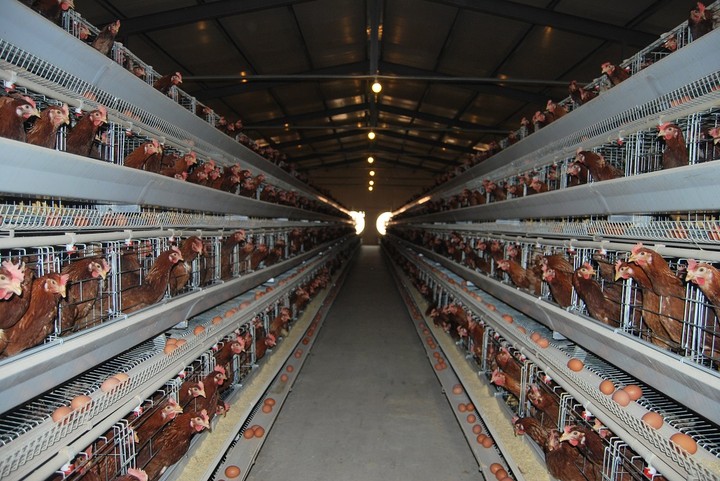
A recent investigation by Mercy For Animals into a chicken farm supplying wholesale grocery giant Costco revealed absolutely horrifying conditions. Tens of thousands of birds are spending their short, painful lives crowded together in sheds—many suffering from open skin sores and agonizing injuries related to their hyper-fast growth rates.

Whatever you eat, we can all agree that this is not okay. Costco needs to hear this from its customers and the American public.

Sign our open letter to Costco below, which we’ll deliver to executives as we ask them to address this urgent issue by adopting meaningful and transparent animal welfare standards.

Action Link – Tell Costco: Animals Deserve Better | ASPCA

Regards Mark

98% Of Emperor Penguins Could Be Extinct In 80 Years, Climate Crisis To Blame.

Emperor Penguins Could Be Extinct In 80 Years, Climate Crisis To Blame
Emperor penguin populations are at risk due to the climate emergency Credit: Adobe.

98% Of Emperor Penguins Could Be Extinct In 80 Years, Climate Crisis To Blame

Whilst the species isn’t listed as endangered under environmental law, scientists say this is the case because governments don’t want to accept responsibility for climate change…

Almost the entire population of the Emperor Penguin species will face extinction within the century, scientists warn.

Furthermore, most colonies will hurtle toward death by just 2050.

And, accelerated sea ice loss due to climate change is the cause, according to a major new study.

Emperor Penguins in danger

By 2100, a staggering 98 percent of the iconic penguin species will face being wiped out entirely, the Global Change Biology report reads. ‘Almost all’ colonies will be quasi-extinct, meaning the species is doomed for extinction even if some remain alive.

Currently, the birds – the largest of all penguins – form colonies on sea ice in Antarctica. But due to hiking greenhouse gas emissions and climate change, their lives are under threat.

“The need for legal recognition and enhanced precautionary management for emperor penguins is now urgent,” they state. This is because the threats are ‘within the foreseeable future’.

Scientists behind the study include Judy Che-Castaldo Judy, Shaye Wolf, Marika Holland, and Sara Labrousse.

Endangered Species Act

However, Emperor Penguins are not listed as an endangered species under environmental law, the US Endangered Species Act (ESA).

If they were added to the list, ‘enforceable tools’ are used to help save species, such as protecting habitats.

But the authors claim it could be unlikely that the species will be protected by the ESA because it would force governments to change the way they approach environmental issues.

In the report, they state: “ESA listing would require all US Federal agencies to evaluate and ensure that their activities do not jeopardize the species or their habitat, which could include limiting GHG emissions for species endangered by climate change.”

Animal agriculture and climate change

Creatures at risk of extinction due to climate change is the fault of many human behaviors. Experts and scientists globally state that the biggest driver of this is the meat industry.

A report published last year indicated forests burned for animal agriculture for thousands of years is one of the causes of staggering greenhouse gas emissions.

Furthermore, annual methane emissions are found to cause more global warming issues than all fossil fuel sources combined.

98% Of Emperor Penguins Could Be Extinct In 80 Years, Climate Crisis To Blame (plantbasednews.org)

Regards Mark

GROUNDBREAKING: Plant Based Food Market To Skyrocket To $162 Billion, Says Bloomberg.

GROUNDBREAKING: Plant Based Food Market To Skyrocket To $162 Billion, Says Bloomberg

A new report by Bloomberg Intelligence has found that the plant-based meat and dairy sectors are growing at an unprecedented rate

A groundbreaking new report has predicted that the plant-based food market will exceed $162 billion within the next decade. A growing preference for sustainable, healthier foods is pushing the movement.

‘Explosive growth’

Bloomberg Intelligence (BI) produced the report, called Plant-Based Foods Poised for Explosive Growth. BI provides research on more than 2,000 companies, 135 industries, and all global markets. 

The plant-based food market was valued at $29.4 billion in 2020. This means if BI’s predictions are correct, the market will soar by 451 percent. 

Major plant-based meat and dairy brands like Beyond Meat, Impossible Foods, and Oatly are driving some of this growth. Their partnerships with restaurants, fast-food chains, and global food manufacturers are making vegan options more accessible to the masses. Additionally, the collaborations are challenging stereotypes around plant-based food.

Source: Bloomberg Intelligence, OECD FAO Agricultural Outlook 2021-2030, GFI 2020 State of the Industry Report

‘Here to stay – and grow’

According to BI’s Senior Consumer Staples Analyst, Jennifer Bartashus, the meat-free movement isn’t slowing down.

“Food-related consumer habits often come and go as fads, but plant-based alternatives are here to stay – and grow,” she said.

“The expanding set of product options in the plant-based industry is contributing to plant alternatives becoming a long-term option for consumers around the world.” 

Vegan dairy, in particular, could take up 10 percent of its global market shares in the next decade. Meanwhile, BI predicts that the alternative meat market will surge from $4.2 billion to $74 billion in the next decade.

But plant-based meat sales could actually surpass $74 billion, hitting $118 billion by 2030. This would be ‘a more aggressive but still realistic scenario’, BI said.

Population growth

The planet’s ever-growing population could also tip the scales in favor of plant-based eating as resources become more scarce. 

The production of meat and dairy products requires significantly more resources than plant-based foods, including water, land use, and crops. Experts have warned that our current food system won’t be able to support the world’s snowballing population.

A 2018 study published in Elementa: Science of the Anthropocene found that we already grow enough food to feed the 9.7 billion people that are anticipated to be on Earth by 2050. But large amounts of it are funneled into animal agriculture.

Livestock consume roughly 34 percent of global crop production, the study found. Less than half of the world’s cereals are consumed by humans. 

Flexitarians

The number of vegans in the world climbs higher all the time. Currently, around 5 percent of the population identifies as vegan, BI’s report noted.

But it’s not just vegans and vegetarians driving the plant-based market. Flexitarians are boosting it in a big way, too. Flexitarianism refers to lifestyles whereby people mostly eat plant-based foods but occasionally include animal products in their diet. BI named flexitarians a ‘key demographic’ for alternative meat products, now making up a third of the US population.

https://plantbasednews.org/news/economics/plant-based-market-skyrocket/

Regards Mark

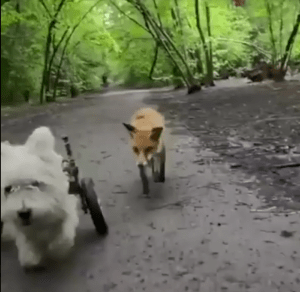
Pumpkin and Jack- a rare friendship

(to see the video click on the picture)


Video Text:

“Pumpkin the fox was found in dire condition
and went through a long period of rehabilitation
his progress has been astonishing
but they noticed something strange in the way he was acting
and then they found out that he was blind
but he’s such a sociable fox
that he made a great friendship with Jack
a small dog in a wheelchair
who became his faithful companion
the sound his wheels make when he walks
shows Pumpkin the way forward
and helps him to orient himself
Jack is a very dedicated guide
a true blind leader
who has taken responsibility to protect Pumpkin and overcome adversity

Thanks to this beautiful friendship
there’s nothing that can separate them “

Actually, the support between the two disabled animals works better than it would have worked between humans.
You don’t even notice their difficult fates.
They both enjoy life.

We can learn a lot from animals and also from the people who gave them this chance

My best regards to all, Venus

Norway is the first country in the world to prohibit deforestation

Norway is so woke to deforestation, it’s the first nation to outlaw it.
On May 24, Norway committed to zero deforestation, reports UN partner Climate Action. The groundbreaking move means that the nation pledges to ban any product in its supply chain that contributes to the deforestation of rainforests through the government’s public procurement policy

Tributary of the Amazon River.

“This is an important victory in the fight to protect the rainforest. Over the last few years, a number of companies have committed to cease the procurement of goods that can be linked to destruction of the rainforest,” Nils Hermann Ranum of Rainforest Foundation Norway said in a statement on the organization’s site.

“Until now, this has not been matched by similar commitments from governments. Thus, it is highly positive that the Norwegian state is now following suit and making the same demands when it comes to public procurements.”

The foundation has campaigned for years to make this a reality.

At the UN Climate Summit in New York in 2014, Norway, Germany and the U.K. pledged to “promote national commitments that encourage deforestation-free supply chains,” through public procurement policies and to sustainably source products like palm oil, soy, beef and timber.

Virgin Amazon rain forest surrounds patches of deforested land prepared for the planting of soybeans.

According to Climate Action, production of palm oil, soy, beef and wood products in seven countries with high deforestation rates (Argentina, Bolivia, Brazil, Paraguay, Indonesia, Malaysia and Papua New Guinea) contributed to 40 percent of total tropical deforestation and 44 percent of associated carbon emissions between 2000 and 2011.

This is not Norway’s first anti-deforestation rodeo, either.

In 2008, Norway gave Brazil — which is home to 60 percent of the Amazon $1 billion to help fight deforestation.
And Brazil delivered.

Mato Grosso State in the Amazon jungle, one of the Brazilian states of greatest deforestation. 

By 2015, the South American nation reduced deforestation by a whopping 75 percent, saving more than 33,000 square miles of forest and keeping 3.2 billion tons of carbon dioxide kept out of the atmosphere — an amount that’s three times bigger than the effect of taking all the cars in the U.S. off the road for a year, according to National Geographic.

Aerial view of Amazon rainforest in Amazonas State, Venezuela,

“Other countries should follow Norway’s leadership and adopt similar zero deforestation commitments,” Ranum said.

“In particular, Germany and the UK must act, following their joint statement at the UN Climate Summit.”

https://www.huffpost.com/entry/norway-first-nation-zero-deforestation_n_57559b5be4b0eb20fa0e7b79

And I mean...Europeans and Latin Americans have been working on a trade agreement, the Mercosur, for 20 years.

In June 2019 Angela Merkel sent a letter to Brussels. Together with six European counterparts, the otherwise indecisive Chancellor called for the EU Commission to finally conclude the free trade agreement with the South American Mercosur states after endless negotiations.

“A historic strategic opportunity,” she called the desired treaty with Argentina, Brazil, Paraguay and Uruguay, and Merkel (including loyal partners), and urged Jean-Claude Juncker, the head of the Commission at the time, to act quickly.

The word climate protection did not appear in the letter.
There have long been warnings that this agreement threatens to become a climate killer.

Because it would enable the Mercosur countries to export more beef and other agricultural goods to Europe.
And more agriculture in South America means destroying more rainforest to build pastures for the animals and soya plantations.

Although under Jair Bolsonaro the deforestation of the rainforest has increased dramatically and the planned agreement Mercosur would be a bit in the wrong direction, “the EU and the South American confederation Mercosur agreed on an ambitious and comprehensive free trade agreement on June 28, 2019” ( Quotation from the website of the EU Commission)

The EU Commission remains optimistic, it said.
That is the other word for irresponsibility, greed for profit and ignorance of the climate.
It is therefore very likely that Germany will disregard the joint declarations of the UN climate summit. For business reasons.

Because the opposite would be a conflict with his contractual partner from Mercosur.

My best regards to all, Venus

Nestlé’s Meal Delivery Service Launches 6 Vegan Options For The First Time; and Wunda Pea Milk Also.

Nestlé’s Meal Delivery Service Launches 6 Vegan Options For The First Time
Freshly just introduced six new vegan options Credit: Freshly

Nestlé’s Meal Delivery Service Launches 6 Vegan Options For The First Time

Freshly is seeing growing demand for meat-free, plant-based options

Nestlé-owned brand Freshly just launched its first-ever vegan ready meal range.

Freshly is a weekly subscription service that delivers fresh, cooked meals. A team of chefs and nutritionists developed the meals without artificial ingredients, chemical preservatives, and highly processed sugars.

Purely Plant

Freshly is introducing six plant-based options under its Purely Plant brand. Customers can reheat the meat-free meals in around three minutes.

The vegan items include the Creamy Buffalo Cauli Mac and Cheeze, Farmstead Baked Pasta with Melty Cashew Cheeze, and an Indian-Spiced Chickpea Curry Bowl.

Freshly also offers a Moroccan Herb Falafel Bowl, the Rainbow Harvest Plant-Based Burger, and its Unwrapped Salsa Verde Burrito – also known as a ‘naked burrito’.

Surging demand

Demand for plant-based food climbs higher all the time. A report from earlier this year found that the US vegan food market increased by 27 percent during 2020.

This is nearly twice as fast as the total US retail food market, which grew by 15 percent.

According to Freshly, 65 percent of its customers identify as ‘flexitarian’. Flexitarians eat mostly plant-based meals but occasionally consume animal products.

Freshly Founder and CEO Mike Wystrach said the company is ‘thrilled’ about the new additions.

“We’re thrilled to provide our customers with a convenient way to incorporate minimally processed, plant-based meals into their routines,” he said.

“We recognize that it can be challenging to eat a more plant-based diet without sacrificing on taste; but with the launch of Freshly’s Purely Plant, we’re laser-focused on delivering a variety of delicious, convenient, and better-for-you meal options, while also supporting flexitarians looking to make simple changes towards a more plant-based lifestyle.” 

Nestlé controversy

Some consumers may be weary of supporting Nestlé for ethical reasons.

The world’s largest food and beverage company has been accused of using child labor, unethical water mining, and causing significant deforestation.

Read more about the issue here.

Nestlé To Launch New Plant-Based Pea Milk In UK Stores Next Week

The Wunda range is rivalling Swedish plant-based giant Oatly on its quest to ‘offer something different to what’s already on the shelves’…

Nestlé is bringing its range of plant-based pea milk to UK stores next week under the Wunda brand.

It comes after the food giant launched in Europe last month.

Wunda pea milk

The Wunda range is made from protein-packed yellow peas sourced in France and Belgium and promises to offer ‘strong nutritional value’ in comparison to similar products on the market.

Nestlé claims the range is high in fiber, low in sugar and fat, and enriched with calcium. Moreover, they are a source of vitamins D, B2, and B12.

Customers in the UK and Ireland will be able to find the products in Tesco and Coop stores from June 28. And, each 950ml carton retails at £1.90.

Nestle is set to launch its Wunda plant-based pea milks in the UK and Ireland later this month
We want to offer a drink that tastes great and makes using a plant-based milk alternative a tasty, positive, no-compromise experience’ Credit: Instagram

Nestlé launch

Managing Director of Food and Dairy at Nestlé’s UK and Ireland team is Honza Dusanek.

He told The Grocer that the company is ‘really excited’ to bring Wunda to the area and that the expansion is part of a wider aim of making plant-based milk alternatives popular among people who enjoy dairy.

‘We want to offer a drink that tastes great and makes using a plant-based milk alternative a tasty, positive, no-compromise experience that is good for you and good for the planet’, he said.

Moreover, the brand is looking to ‘disrupt the market’ and ‘offer something different to what’s already on the shelves’.

In Europe, the brand said it was already witnessing a ‘quiet revolution’ in the plant-based dairy sector.

Plant-based pea milk

The plant-based milk market is certainly expanding – including one of the industry’s leaders, Oatly.

The Swedish oat milk brand recently announced plans to open one of the world’s largest plant-based factories in the UK.

Additionally, another renowned brand – Linda McCartney  – is also launching plant-milks in the UK this summer.

Competition is rife, however.

Oatly launched a legal battle against one of its rivals Glebe Farm Foods earlier this month over accusations the brand had too similar a packaging style. 

The giant is seeking damages and calls for Glebe to stop using the PureOaty name.

Read our in-depth piece on whether vegans should support Nestlé here

Nestlé To Launch Plant-Based Pea Milk In UK Stores Next Week (plantbasednews.org)

Everyone has to accept it now, the future (thankfully) is plant based !

Regards Mark

Horses are not sports equipment! What we should learn from the Tokyo Olympics

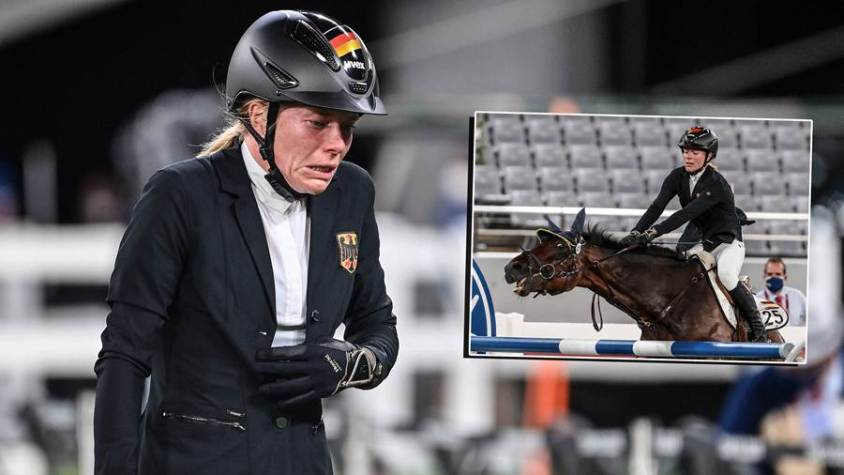
The German rider (and pentathlon fighter) Annika Schleu from Berlin lost her medal, which was already believed to be safe, because the horse “Saint Boy” she had been given bucked in show jumping and she therefore received 0 points.
31st place instead of the Olympic podium.

Schleu cried violently on the horse’s back, desperately trying to get the animal on course by hitting it with the whip.

All to no avail- And the gold dream was over!

The whole spectacle could be seen live on TV, but a shameful scene still triggered a more spectacular shit storm:
When “Saint Boy” refuses to even run into the riding course, national trainer Kim Raisner rushes to the fence, just wanting to help the rider.
That is not enough! She also becomes active herself.

First the trainer boxed the horse in the side, then she asked Schleu: “Hit it right! Hit it!”
Finally, the trainer was officially excluded from the Olympic Games, Annika Schleu was out anyway, but also received a violent shit storm as a result of her hideous behavior, which forced her to delete her account.

Saint Boy showed massive signs of panic, overwhelming, stress, fear and helplessness.

The allegations to Schleu and trainer Raisner: Beating the obviously nervous horse is cruelty to animals.
In addition, Schleu behaved completely hysterically and transferred her own frustration to the animal.

Since this incident, the press has been forced to show solidarity with the human actors in this drama.
Thousands of times every day we had to listen to interviews with justifications, explanations, even cheeky accusations against the horse, all with a single purpose: to save the brutal business with horses from public anger.

It was about business again and this business is worth billions and is run by the rich who “train” not only horses but also the media!

The association also had a say for us: “… the international association has to change the rules.
It needs to be redesigned to protect horse and rider. The welfare of the animals and fair competition conditions for the athletes must be the focus. “

Apparently the association wants to save the own business and therefore speaks of a change in the rule, and not of the abolition of equestrian sport in the Olympia, where the animals are only used as means for the purpose, and are beaten if they say NO!

But as soon as the association sees the number (104.000) of people who have signed many petitions for the abolition of equestrian sport, something will understand.
Or must understand!

Action must be taken now! We demand: The immediate PARTICIPATION STOP of horses at the Olympics! Cruelty to animals is neither compatible with the Olympic spirit nor with animal welfare!

1.Sign and share: https://www.change.org/p/der-deutsche-olympische-sportbund-teilnahmestop-von-pferden-bei-olympischen-spielen

2.https://www.change.org/p/ioc-reitsport-bei-olympia-absaffen

3.https://www.change.org/p/internationales-olympisches-komitee-moderner-f%C3%BCnfkampf-ohne-reiten-olympics-dosb-iocmedia-worldpentathlon-pentathlonger-pferd-tierqu%C3%A4lerei

My best regards to all, Venus

Regarding The Pain Of Farmed Animals.

With thanks as always to Stacey at ‘Our Compass’ – Regards Mark

Regarding the Pain of Farmed Animals

by Stacey

All animals exploited for food, die for food. As long as animal exploitation exists in an accepting, apathetic world, animals will suffer: no animal farm is a humane animal farm, that’s the lie people exploit to validate the violence they inflict on animals. And don’t forget that globally, >90% of animals exploited for consumption were “produced” in intensive operations, and that figure rises to >95% in the USA.

Stop pretending there is a right way to do the wrong thing, if you care about animals, you’ll stop your participation in their exploitation. And even if you don’t care about animals, that still doesn’t give you the privilege to abuse their bodies and kill them. You don’t have to love or care for animals, you just have to not hurt them. SL

Source United Poultry Concerns

By Karen Davis, PhD, President of United Poultry Concerns

Factory farms are places in which large numbers of genetically and chemically manipulated animals are warehoused to grow into food for human consumption. In these places, animals are mired in the squalor that results when groups of creatures of any species are crowded together in accumulating waste. We now know that these animals are not only forcibly confined in environmental filth including toxic gases, but that they are caged in bodies wracked with painful deformities and diseases inflicted on them by human beings. They are locked into what the twentieth-century animal rights activist Henry Spira referred to as “the universe of pain and suffering” from which there is no escape but in death.

By “we,” I mean those of us in the animal advocacy movement who focus particularly on the plight of farmed animals and who track the evidence reported by agribusiness researchers specializing in farmed animal “diseases of production” and “welfare.” For example, in “Pain in Birds,” animal scientist Michael Gentle writes that the “widespread chronic orthopedic disease in domestic poultry,” added to the fact that there is a “wide variety of receptors in the joint capsule of the chicken,” including pain receptors, supports the behavioral evidence that the birds are in chronic pain.

In 1990, the American Association of Avian Pathologists identified three of the most common bone pathologies associated with the forced rapid growth of present day poultry: Angular bone deformities, in which the bones become bowed in or out or twisted; tibial dyschondroplasia, in which the bones develop fractures and fissures; and spondylothesis, in which the vertebra become dislocated and/or cartilage proliferates in the lower backbone, pinching on the spinal cord and lower back nerves.

For all of these tortures, no pain relief is offered. Having been in a “pain management” program since May following my spinal surgery, I both can and cannot imagine the unrelieved suffering of these birds. I think about their suffering in its own right and also in terms of our society’s expectation of immediate pharmaceutical relief for everything from mild depression to minor stomach upset.

Before Factory Farms

In his book Animal Revolution, Richard Ryder (who coined the term “speciesism”) offers a glimpse of how animals were prepared for meals in the typical 18th-century English household during the Age of Enlightenment. Alexander Pope, the great English poet of the time, described “kitchens covered with blood and filled with the cries of creatures expiring in tortures.”

Many people believe that the pre-factory-farming era was idyllic, or nearly so, for chickens, turkeys, and other farmed animals. In reality, factory farming is an extension of age-old attitudes and practices toward animals raised for food. For example, Keith Thomas, in Man and the Natural World, observes that poultry and game birds in previous centuries “were often fattened in darkness and confinement, sometimes being blinded as well.”

Geese were thought to put on weight if the webs of their feet were nailed to the floor, and “it was the custom of some seventeenth-century housewives to cut the legs off living fowl in the belief that it made their flesh more tender.” The London poulterers, Thomas writes, “kept thousands of live birds in their cellars and attics” in conditions forecasting today’s factory farms.

In A Natural History of the Senses, Diane Ackerman describes culinary practices that arose in eighteenth-century England, when “bored city dwellers became fascinated by sadism,” including the idea that “torturing an animal made its meat healthier and better tasting.” One recipe starts out: “Take a red cock that is not too old and beat him to death.” Another instructs:

Take a goose, or a Duck, or some such lively creature pull off all her feathers, only the head and neck must be spared: then make a fire round about her, not too close to her, that the smoke do not choke her, and that the fire may not burn her too soon; not too far off, that she may not escape free: within the circle of the fire let there be set small cups and pots of water, wherein salt and honey are mingled; and let there be set also chargers full of sodden Apples, cut into small pieces in the dish. The Goose must be all larded, and basted over with butter: put then fire about her, but do not make too much haste, when as you see her begin to roast; for by walking about and flying here and there, being cooped in by the fire that stops her way out the unwearied Goose is kept in; she will fall to drink the water to quench her thirst, and cool her heart and all her body, and the Apple sauce will make her dung and cleanse and empty her. And when she roasteth, and consumes inwardly, always wet her head and heart with a wet sponge; and when you see her giddy with running, and begin to stumble, her heart wants moisture, and she is roasted enough. Take her up and set her before your guests and she will cry as you cut off any part from her and will be almost eaten up before she be dead: it is mighty pleasant to behold!

Eighteenth-and nineteenth-century literature offers additional testimony regarding the treatment of chickens and other domestic fowl. In Tobias Smollett’s novel The Expedition of Humphry Clinker, published in 1771, the Welsh traveler Matthew Bramble complains during a visit to London that “the poultry is all rotten, in consequence of a fever, occasioned by the infamous practice of sewing up the gut, that they may be the sooner fattened in coops, in consequence of this cruel retention.”

In order to whiten their flesh, calves, sheep, birds, and sometimes lambs, were stuck in the neck so that the blood would drain out slowly for hours and days. The wound would be stopped up and the animal would be left to linger alive for another day or so. In The Rural Life of England, William Howitt describes the practice of hanging live turkeys in the kitchen upside down by their heels to bleed out “through a vein opened under the tongue,” to improve their color. This is also how calves became veal prior to the adoption of the veal crate in the twentieth century – they were suspended upside down from the kitchen ceiling.

Continued on Page 2

How To Transform The Way The World Produces, Consumes & Thinks About Food.

WAV Comment – Firstly, we would like to welcome our new friends from Thimphu, the national capital of Bhutan.  We both hope you will find some of our articles of interest; and take the information with you forwards, for the benefit welfare of all animals and people in your beautiful region of the world.

Regards Mark and Venus

Philip Lymbery | How To Transform The Way The World Produces, Consumes & Thinks About Food

How To Transform The Way The World Produces, Consumes & Thinks About Food

 This is a 3 page article.

Why the UN Food Systems Summit is Already a Success

Transformation – denoting a complete change to make things better – is the ambition of the UN Food Systems Summit scheduled for New York in September.

The Summit aims to awaken the world to the fact that we all must work together to transform the way the world produces, consumes and thinks about food. It is a summit for everyone everywhere – a people’s summit. It is also a solutions summit that will require everyone to take action to transform the world’s food systems.

It was convened by United Nations Secretary-General António Guterres with the words, “It is time to change how we produce and consume, including to reduce greenhouse emissions. Transforming food systems is crucial for delivering all the Sustainable Development Goals.”

Big Change

What excites me about the Summit is that word, transforming food systems. What has been missing from previous narratives by policymakers about food is that tweaking the system isn’t nearly enough. That big change is needed. And the first step to big change is recognition. Recognition that there is a problem of a scale that needs game-changing solutions. That the only thing that will save the day is transformation

The Summit itself is recognition that without transformational change in the global food sector, then the world will fall perilously short of sustainability targets set by world leaders for 2030. By Compassion In World Farming’s own analysis, without a move away from industrial animal agriculture – factory farming – several crucial Sustainable Development Goals (SDGs) will be rendered unreachable.

The fact the Summit has been called at all is big news. For many years, sustainability, health, the environment and animal welfare issues have worked against a backdrop that food matters have generally been low on the political agenda.

For decades, there has been a marked complacency about food and the way we produce it. Governments have seen cheap food at any cost as a meal ticket to popularity.

Policymakers at national and international level have long failed to recognise the pivotal role of food to addressing so many of the major challenges facing our society: climate change, the collapse of nature, sustainability (or the lack of it). Food, particularly resource-intensive meat and other animal-sourced foods have barely registered in climate talks. Biodiversity conferences have largely ignored the elephant in the room – that the industrialisation of food has driven the collapse of nature.

Health considerations too have largely been disconnected from food, at least until recently. The Covid pandemic has highlighted the interconnectedness of issues, including how keeping animals in industrial breeding grounds for disease could be brewing up the next pandemic. The EU’s ruling Council in Brussels, for example, recently described industrial agriculture as increasing the “risk of future pandemics” and went on to say that it “needs to be tackled” alongside other major issues including climate change and deforestation.

And then there is hunger, the UN Secretary General’s starting point when convening the conference. Guterres pointed out that, “Today, more than 820 million people do not have enough to eat. It is unacceptable that hunger is on the rise at a time when the world wastes more than 1 billion tonnes of food every year”. And he’s right. The world produces enough food for twice the number of people alive today. Yet, four billion people’s worth of food is feeding factory farmed animals who then waste the vast majority of calories and protein in conversion to meat, milk and eggs.

On top of this, industrialised animal agriculture outcompetes small-scale farmers, especially women and indigenous peoples in the developing Global South, robbing them of the ability to produce their own food, often leaving them too poor to buy the industrialised products, causing serious food security issues. 

Continued on next page