Month: October 2021

Mark Hankinson found guilty of telling others how to hunt illegally!

A prominent huntsman from Dorset has been ordered to pay £3,500 for giving advice to countrymen about how to covertly carry out illegal fox hunts.

The senior fox hunter Mark Hankinson has been found guilty of encouraging and assisting people to evade the ban on fox hunting.

Recordings of Mark Hankinson, a director of the Master of Foxhounds Association, speaking to around 100 senior hunters in two private webinars in August 2020 were leaked online.

We have reported about it:

https://worldanimalsvoice.com/2021/09/20/foxhounds-association-of-uk-sometimes-the-shot-goes-backwards/

The prosecution argued he was giving advice on how to avoid the law. Speaking to 103 hunt-masters on the call, he explained how “to create a smokescreen” to enable them “to portray to the people watching that you’re going about legitimate business”

The defence said he was advising what to do if saboteurs disrupt legal hunts (!!!)

https://fb.watch/8GjQgEdSoS/

At Westminster court Deputy Chief Magistrate Tan Ikram said “I am sure that the defendant through his words was giving advice on how to illegally hunt with dogs.”

In my judgement he was clearly encouraging the mirage of trail laying to act as cover for illegal hunting,” he added.

Hankinson was fined £1,000 along with a contribution of £2,500 towards legal costs.

Continue reading “Mark Hankinson found guilty of telling others how to hunt illegally!”

England: Top Animal Welfare Campaigner Member of Parliament (MP) Is Stabbed To Death Today (15/10/21) At Constituency Meeting.

WAV Comment    – 15/10/21 – Today is a very sad day for democracy here in England.

Sir David Amess MP, was stabbed to death whilst holding a normal constituency surgery this morning.  For overseas visitors, a surgery is a meeting between the regional MP and (public) members of the electorate for that area, so they can talk issues, actions with a view to making further progress on any issue covered. Surgeries often take place each week.

All we currently know is that David was stabbed to death by a man aged 25; who is now in police custody.  He leaves a wife and 5 children; and our thoughts go out to them all at this time.

David was a fantastic animal welfare / rights campaigner.  He was one of just a few patrons at the Conservative Animal Welfare Group; and his attributes include introducing the legislation for the Protection Against Cruel Tethering Act in 1988 giving protection to tethered horses and ponies, sponsoring the Horses and Ponies Bill in 1984-5, the Pet Animals Bill in 1990 and also sponsoring the Responsible Pet Ownership Competition for MPs and Peers.

In 2011 he won the Dods Animal Welfare and Environment Award for his leading role in and commitment to animal welfare. The award is given to the Parliamentarian who has done the most to tackle issues concerning the welfare of animals and the natural environment.

In recent years Sir David has successfully campaigned to stop the unethical practice of testing domestic products on animals, tackled the illegal wildlife trade and fought to put an end to puppy farming. He was always a prominent voice on the issue of the culling of badger’s debate, speaking in defence of badgers; and he also consistently voted against any changes to the Hunting Act in order to protect the animals from culling.

David was a great friend and advocate voice for animals and animal welfare; he will be greatly missed in Parliament.

We at WAV thank him for his devotion and commitment to the issue of animal welfare / rights; if there were more like him in the world, then it would be a much better place.

Regards Mark.

https://www.davidamess.co.uk/news/sir-david-appointed-patron-conservative-animal-welfare-foundation

Thursday, 24 November, 2016

Lorraine Platt, Co-Founder of the Conservative Animal Welfare Foundation, commented:

“We are delighted and honoured that Sir David Amess is joining us as our Patron along with Henry Smith MP and Sir Roger and Lady Suzy Gale.”

The Conservative Animal Welfare Foundation was established earlier this year to raise awareness of the billions of animals reared on intensive farms around the world, and how this impacts upon animal welfare, the environment and people’s health.

Hamburg : Art action dedicated to all the victims of animal experiments worldwide

“Hamburg Town Musicians”: Riddle about sculpture on the Alster/Hamburg

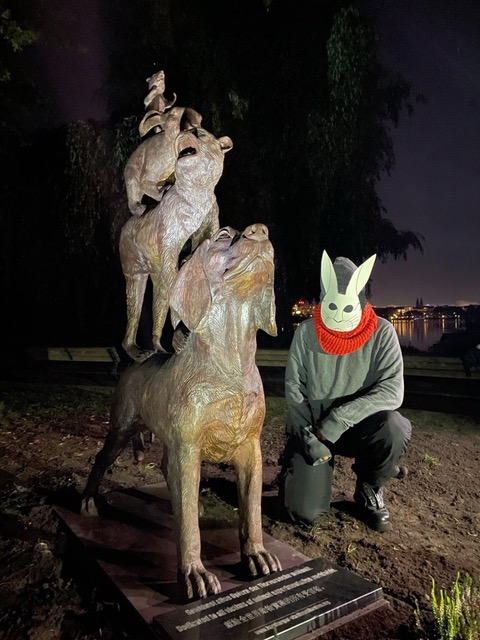
A dog, a monkey on its back, a rabbit on it and a rat at the top: a sculpture has been on the picnic area on the Outer Alster since Wednesday, erected in a nightly action by unknown animal rights activists.

The “Hamburg Town Musicians” are supposed to be a protest against animal experiments.

The animal figures by the unknown artist appear very lively, the sculpture is heavy, and presumably even made of bronze. The base is embedded in the ground, there is a commemorative plaque:

“Dedicated to all the victims of animal experiments worldwide”, even Chinese characters are engraved.

In a “confessor writing” it says on the website hamburger-stadtmusikanten.org:

“We, the ghosts of the killed laboratory animals, erected a memorial for the victims of animal experiments on October 12, 2021 on the picnic meadow in Uhlenhorst / Hamburg. It’s the Hamburg Town Musicians. ”

And a photo: A person with a hoodie, his face hidden behind a rabbit mask, crouches next to the plastic.

The background of the elaborate art campaign is explained in small notebooks that the anonymous activists on site tied to trees.

It reads: “The Hamburg Town Musicians – a current fairy tale, inspired by the Brothers Grimm”.
It tells the story of the test dog that escaped from the qual laboratory of the LPT company (Laboratory of Pharmacology and Toxicology now renamed Provivo Biosciences GmbH and Co. KG).

https://worldanimalsvoice.com/2020/05/21/germany-the-death-laboratory-lpt-is-now-history/

The dog meets the monkey, which was intended for an experimental laboratory in Bremen, the rabbit, whose eyes were supposed to be tested for cosmetics, and finally the rat, which has escaped from a laboratory.

And like the Bremen Town Musicians, the Hamburg animal quartet also sets out in the fairy tale according to the motto …
“We find something better than death everywhere.”

In Germany, according to conservative estimates, animal experiments are funded with at least four billion euros, research on alternatives with around 20 million, according to the opponents of animal experiments.
At least three million laboratory animals die every year, according to animal rights activists.

The “monument” meets with approval from passers-by, many stop and take photos.
“That should stay here for ever,” demands a walker.
Someone has planted some heather in front of the statue.
Are the “Hamburg Town Musicians” tolerated on the Alster?

The northern district says vaguely: “We first check whether the sculpture poses a hazard.”

https://www.mopo.de/hamburg/hamburger-stadtmusikanten-raetsel-um-skulptur-an-der-alster/

And I mean…A hazard situation for animals and us, humans, arises with certainty in the experiment laboratories, not from the monument.

People are already laying flowers there, silently kneeling down to commemorate the victims.
The work of art was secretly concreted into the ground on the anniversary of the LPT discovery, according to unconfirmed information.

We thank the brave and great artists for this memorial.
So that the victims are not forgotten.

My best regards to all, Venus

UK: Overseas abattoir workers to get temporary visas.

https://britishmeatindustry.org/industry/workforce/

Meat processing in the UK employs around 97,000 people of which approximately 62% are EU nationals.  Some producers report workforces of up to 85% EU nationals.

https://www.bbc.co.uk/news/stories-50986683

Confessions of a slaughterhouse worker

Published  6 January 2020

Overseas abattoir workers to get temporary visas – BBC News

Overseas abattoir workers to get temporary visas

The (UK) government is to allow 800 foreign abattoir workers into the UK on temporary visas, after warnings from farmers of mass culls.

It previously said businesses should pay higher wages and invest in skills.

The shortage of butchers has already seen farmers destroy 6,600 healthy pigs due to a backlog on farms, the National Pig Association (NPA) said.

The government also announced plans to allow thousands more HGV deliveries to address a chronic driver shortage.

The meat industry blames the butcher shortage on factors including Covid and Brexit.

Thousands of healthy pigs have been culled since last week, when the tally was about 600.

Last week, the National Farmer’s Union (NFU) warned that pig farmers were “facing a human disaster” due to the shortage of butchers.

It said that “empty retail shelves and product shortages are becoming increasingly commonplace and Christmas specialities such as pigs in blankets are already under threat”.


Butcher scheme

The government is temporarily extending its seasonal workers scheme to pork butchers, it said.

Up to 800 pork butchers will be eligible to apply until the end of the year for six-month visas.

Environment Secretary George Eustice said: “A unique range of pressures on the pig sector over recent months, such as the impacts of the pandemic and its effect on export markets, have led to the temporary package of measures we are announcing.

“This is the result of close working with industry to understand how we can support them through this challenging time.”

The government added that the temporary visas “are not a long term solution and businesses must make long term investments in the UK domestic workforce to build a high-wage, high-skill economy, instead of relying on overseas labour”.

Alongside the temporary visas, the government announced a package of measures for the industry, including:

  • Animals being slaughtered and processed on a Saturday
  • Longer working days in the meat industry, where possible
  • A “private storage aid scheme” which will allow processors to store slaughtered pigs for three to six months
  • Suspending nearly £1m of tax on pig farmers and producers in November

It said there had been “a suspension of approval to export to China for some UK pork establishments” and that it was working with the Agriculture and Horticulture Development Board to identify other export markets.

The extension of visa requirements for butchers follows the announcement of temporary visas for lorry drivers and poultry workers, as the government seeks to limit disruption in the run-up to Christmas.

Regards Mark

China / UK: China Bans British Beef Again Over Mad Cow Disease. Watch the Video For Information On BSE.

https://www.bbc.co.uk/news/business-58866581

China bans British beef again over mad cow disease

China has banned British beef imports of cattle under 30 months of age after a case of bovine spongiform encephalopathy (BSE), or mad cow disease, in the UK last month.

The ban took effect from 29 September, according to a statement from the General Administration of Customs.

China has yet to restart buying beef from the UK after agreeing in 2018 to lift previous restrictions.

Beijing imposed a ban in the 1990s during earlier outbreaks of BSE.

In September, the UK’s Animal and Plant Health Agency (APHA) said a case of BSE had been confirmed on a farm in Somerset.

In 2018, China ended a two-decades-long ban on imports of beef from the UK, which was first introduced after the outbreak of BSE in the 1990s.

At the time, the UK government said the lifting of the ban would be worth £250m to British producers over the next five years.

It came after years of site inspections and negotiations between officials in London and Beijing.

In response to the latest move, the UK’s Department for Environment, Food and Rural Affairs said it was working to reassure Chinese authorities that the case of BSE had been successfully managed and to ensure that import conditions can be met.

The UK’s chief veterinary officer, Christine Middlemiss, said: “We have some of the highest levels of biosecurity in the world, which are supported by robust control systems. Our products are safe and should continue to be traded.”

In September this year, the US announced it was lifting its decades-old ban on imports of British lamb.

The US had stopped British lamb imports since 1989, following the first outbreaks of BSE.

The previous year British beef exports to the US resumed for the first time in more than 20 years.

British beef was banned by Washington after the BSE outbreak in 1996.

China Bans Beef Import From UK As ‘mad Cow’ Disease Emerges Again

https://www.republicworld.com/world-news/china/china-bans-beef-import-from-uk-as-mad-cow-disease-emerges-again.html

What is it ?,

Look and learn here – watch the very informative video:

Brazil: 2021 – 2 Confirmed Cases of BSE. – World Animals Voice

Regards Mark

Cruelty to animals is inexcusable!

“Hedgehog burned!”, “Cat drowned!”, “Dog poisoned!”, “Cows beaten!” – the headlines don’t stop …
Cruelty to animals is a ubiquitous crime that is committed daily in both private and industrial settings.

What is unimaginable for you as an empathetic person is usually an alleged and extremely perfidious “strategy” to “solve” internal conflicts for those who torture animals.

Psychic crack or ugly character?
What drives animal abusers to their atrocities?
What goes on in a head that feeds on actively exercised violence against other creatures?

Prof. Kolja Schiltz, head of forensic psychiatry at the Ludwig Maximilians University in Munich, is of the opinion that one cannot generally describe animal abusers as “sick“.
Cruelty to animals alone does not justify a psychiatric diagnosis, but is merely an indication of a possible tendency towards psychological abnormalities.
Rather, animal tormentors would strive for a feeling of power in order to push their low self-esteem and to be able to endure themselves, with all their subjectively perceived deficits.

“There are people who seek animals as victims in order to gain a feeling of superiority and omnipotence through the humiliation of the victim, in order to stabilize their self-esteem, in order to be able to cope with themselves at all.
These are people who have an uncertain self-worth, with a problematic personality or even a personality disorder, “ explains Professor Kolja Schiltz, Head of Forensic Psychiatry at the LMU.

In this category one could also classify those people who, for example, lay out poisonous bait to harm dogs whose barking and legacies they perceive as unreasonable.

Animal tormentors abuse animals as frustration valves and act out their inner tensions on them.
Their urge to torture living beings results from a lack of self-management skills, self-reflection and regulation.

They externalize (move outwards) their impulsive emotions and transfer them to innocent living beings by causing them great suffering and humiliating them.
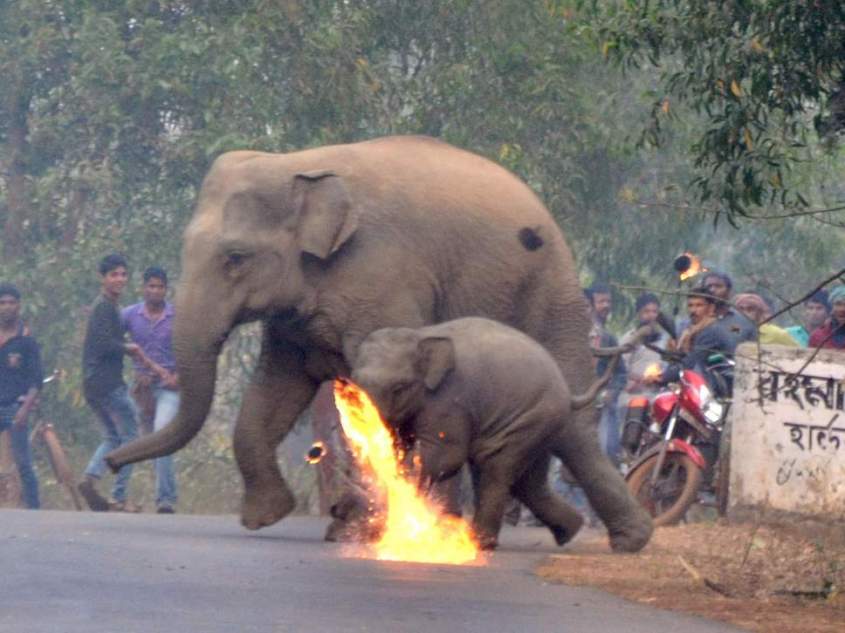
Above all, those animals that are considered cute and not able to defend themselves are victims of animal cruelty:

“We know that pets are particularly popular, especially cats, because they are small and cannot defend themselves as effectively.
Other animals that are also popular are horses, as they are often perceived as cute. You can also experience an increase in self-esteem and an aggressive act if you humiliate, harm or harm other cute animals, “explains Professor Kolja Schiltz.

Source: https://www.br.de/nachrichten/bayern/psychiater-was-tierquaeler-zu-ihrem-grausamen-handeln-triebe,Qklcnq1

Factory farming and the animal industry – cruelty to animals as a profitable production model:

The successful business with meat and animal products as well as the cruel production practices, as they are carried out in the animal industry, are based, among other things, on the deliberate objectification of living beings.

In order to be able to exploit these as effectively as possible, cows, chickens, pigs etc. are declassified as “farm animals”they are denied their ability to suffer and any right to life.
Producers and consumers hide the suffering of the animals in this way – cruelty to animals on a large scale, which is “legitimized” by deliberately devaluing life.

Cruelty to animals is inexcusable!

As the assessment of LMU Professor Schiltz indicates, the “excuse” of the pathological behavior abnormality with regard to cruel offenses does not apply.
Cruelty to animals cannot in principle be assessed as a pathological phenomenon that absolves those who perform them from their responsibility and their ability to make decisions.

Cruelty to animals is an active and willful act of cruelty.
An inexcusable crime against sentient beings.
It is up to each person to take responsibility for how they channel their inner tensions – whether they torture innocent animals or use adequate coping strategies.

Likewise, everyone has the choice whether or not to indirectly witness the collective crime of industrial cruelty to animals.

Whether in the slaughterhouse, in the test laboratory, in a circus ring or in the garden arbor next door – cruelty to animals is a criminal offense and inexcusable!
Do not look away when you witness animal cruelty!

https://animalsunited.de/blog/warum-menschen-tiere-quaelen-warum-das-unentschuldbar-ist/

Additional information on this topic: The dark side of man has many facets.
Psychologists from Ulm, Landau and Copenhagen have now shown that egoists, Machiavellians, narcissists, psychopaths and sadists have more in common than what separates them.
The researchers succeeded in tracing many of these problematic personality traits back to a few basic principles: the “dark factor” (D-factor) of personality.

The study was published in the internationally renowned journal Psychological Review.

https://psycnet.apa.org/record/2018-32574-001

“At the core of this dark factor in personality is an exaggerated egoism that has negative effects on others or on society in general.
This is accompanied by convictions that prevent feelings of guilt, remorse and moral scruples, ”explains Professor Morten Moshagen.

When it comes to the D-factor, the scientists explicitly speak of an extreme form of individual benefit maximization, which literally goes beyond corpses, i.e. willingly accepts or even deliberately causes damage to others.
This tendency is accompanied by the tendency to justify one’s own behavior to oneself and to others.

In their analyzes, the scientists examined nine personality traits.
These include egoism, hatred, Machiavellianism, moral disinhibition, narcissism, psychopathy, sadism, self-centeredness and exaggerated expectations.
The researchers found that practically all of these characteristics can be traced back to the D-factor as the dark core of the personality.

A new study comes to the conclusion that people with these so-called dark character traits have a tendency to always and above all pursue their own interests. In many cases, such people also like to torture others.

In practical terms, this means that, for example, people with a high narcissistic tendency are more likely to show pronounced Machiavellian and psychopathic personality traits.

In addition, people with a strong D-factor are statistically likely to become criminal, violent, or otherwise violate social rules, according to the researchers.

https://wildbeimwild.com/psychologie/psychopathen-narzissten-sadisten-und-hobby-jaeger-teilen-einen-dunklen-kern/22594/2018/11/24/

My best regards to all, Venus

EU: 1 million EU citizens ask Commission to ban wild animals in circuses.

1 million EU citizens ask Commission to ban wild animals in circuses

Members of the Stop Circus Suffering campaign gathered outside the European Commission’s Berlaymont building on Wednesday (13 October) to celebrate the collection of 1 million signatures on a petition to ban the use of wild animals in circuses.

The ceremony was led by the animal welfare association Eurogroup for Animals and wildlife protection coalition InfoCircos, who started the petition in 2018. The two groups handed the petition over to MEPs Eleonora Evi (Greens/EFA) and Anja Hazekamp (the Left), who will submit the signatures to the Commission.

“One million citizens have spoken. Now we need to turn this public mobilisation into political engagement. Only an EU-wide ban can guarantee the end of this outdated entertainment and provide a coherent and effective solution to the physical and emotional suffering of wild animals in circuses,” said Reineke Hameleers, CEO of Eurogroup for Animals.

In a February 2021 survey across seven member states, the Eurogroup for Animals found that 68% of respondents felt that using wild animals in circuses is cruel and that wild animals should not be used for public entertainment.

“European citizens have had enough of wild animals being abused in circuses,” said Marta Merchan, coordinator of InfoCircos.

Four Paws, one of the 81 animal advocacy groups within the Eurogroup for Animals, was present at Wednesday’s ceremony.

“It is beyond time to end this cruel practice and adopt a coordinated and full ban on the use of wild animals in circuses EU-wide,” said Pierre Sultana, director of the Four Paws European Policy Office.

Risks and solutions

Nineteen EU member states have adopted national bans on the use of wild animals in circuses, three of which prohibit the use of all species, according to a recent report from the Eurogroup for Animals.

The UK and five EU member states have brought forward general restrictions to protect animals in circuses. Still, the organisation says regulations tend to differ between countries and do not yet exist in several member states.

Many EU countries still allow circus animals to be transported across their borders to get to countries without restrictions where the circuses can perform. This poses a severe public safety risk and health and welfare risks for animals, experts said.

“Wild animals in circuses greatly suffer from physical and social deprivations, and their training is frequently based on punishment. Animals who are forced to live in unnatural conditions can react in ways which pose a risk to their tamers,” Evi said.

Organisation leaders emphasised the importance of an EU-wide ban because national bans do not prevent the cross-border transportation of wildlife.

Eurogroup for Animals recorded 14 EU countries with a total of 254 circuses that house wild animals. Germany topped the list, with 75 circuses and approximately 200 wild animals, excluding camelids (a category of animals that includes camels, alpacas and llamas).

The report also includes information on rescue centres and sanctuaries in Europe and South Africa, all of which have been deemed “particularly appropriate to rescue circus animals.”

“Public support for the use of wild animals for entertainment is long gone,” said Hazekamp. “It’s time to show future generations that animals deserve our respect and protection and should not suffer in circuses.”

1 million EU citizens ask Commission to ban wild animals in circuses – EURACTIV.com

Regards Mark

Greyhound racing in Spain

⚠️ Did you know that greyhound racing is still practiced in Spain?
📹 We have managed to infiltrate a team in several races to show how alive one of the practices that causes thousands of abandonments and deaths of greyhounds every year follows.

https://fb.watch/8DY-3QGw16/

Dogs are forced to undergo tough training and are treated as mere tools to win competitions and bets. When they are not in their best physical condition, they are abandoned or killed in horrible ways.

In many places, hunting and racing dogs are considered work tools, so many companion animal welfare regulations do not apply to them.

The dogs used in hunting are the forgotten victims of this terrible activity.

They spend their days confined in cheniles and small cages, starving and cold, with almost no contact except when the hunters collect them. And once they are old and useless for the activity, they are abandoned or killed.

Greyhound racing is very popular in Spain, especially in Andalusia. Dogs are forced to run to exhaustion, maintaining tough training and treated as mere tools to win competitions and bets. When greyhounds are no longer in peak physical condition, they are killed in horrible ways.

There is no single registry to obtain abandonment data and thus be able to have official figures on the situation of greyhounds, hounds and other dogs used in hunting and racing.
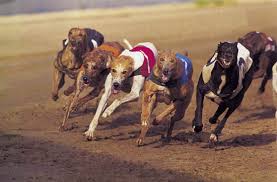
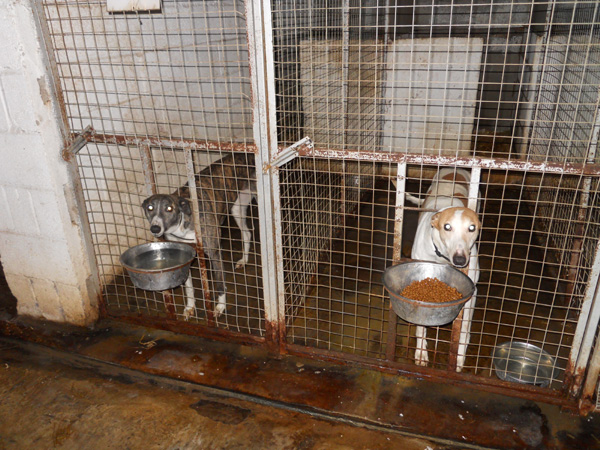
Only through a total census in Spain can these animals be controlled and protected, as well as prosecute the irresponsibility of those who are in their charge.

We are working to achieve a state animal welfare framework law that ensures maximum protection for these animals and the modification of the animal protection laws of each Autonomous Community, as well as toughen penalties for abandonment and abuse.

We are working so that the “rehalas” (groups of between 16 to 40 hunting dogs) are no longer considered objects of “cultural interest”, eliminating all public subsidies intended to promote this practice.

We work to prosecute the mistreatment and abandonment of these animals so that no case goes unpunished before the law.

We are working to ban the training of greyhounds tied to motor vehicles.

The Spanish greyhound is a breed used both for hunting and for racing in different regions of Spain, especially in Andalusia, Castilla La Mancha and Castilla y León.

Only in Seville, it is estimated that 5,000 abandonments occur annually, and some estimate that in Spain about 50,000 greyhounds and other hunting dogs are abandoned.

The need to nip the problem at its roots is imperative, changing the laws that (un) protect greyhounds and dogs used for hunting in general.

✍️ Sign NOW to help us demand equal protection for all animals, because none should ever be considered a mere work or competition tool

https://www.salvemosalosgalgos.org/

Sign and share: https://www.salvemosalosgalgos.org/

And I mean...For centuries the greyhound was used as a hunting companion for the nobility. He belonged to the elite among the dog breeds, was considered a status symbol and was, accordingly, well looked after.

However, this once so valued and cherished breed was degraded at the beginning of the 20th century, through its use in modern dog races, to pure sports equipment, to a commodity “greyhound”.
From that point on, greyhound breeders, dog track operators, dog owners and trainers exploited them mercilessly.

They are bred for one purpose only: to win races.
Because greyhound races bring big money.

Most problematic in Spain is the large number of unofficial competitions organized privately by the Galgueros.
Galgueros, the breeders of this breed, use the animals in Spain for hare hunting and greyhound races.

A really good galgo that takes part in competitions can be worth up to 30,000 euros, so galgos are often stolen.
Some breeders therefore keep their valuable specimens in bunkers.

A lot of money is involved here – as well as the reputation of the breeders.

Because of the Galgos, around 1 billion euros are turned over annually and 27,000 jobs are directly related to them, the entire hunter community moves 3 billion euros annually.
And wherever there is a lot of money, an animal is always degraded to a commodity.

Galgos are a disposable product for most growers these days.
Tens of thousands of them are cruelly killed in Spain every year.
Even a champion hardly stays with his owner for more than four years, and the animals can reach an age of 15 years.

Those who are not fast enough for the races are mercilessly and often painfully killed: shot, drowned or abandoned with broken limbs in the woods, or end up in a rescue station, a so-called perrera, which are considered killing stations.

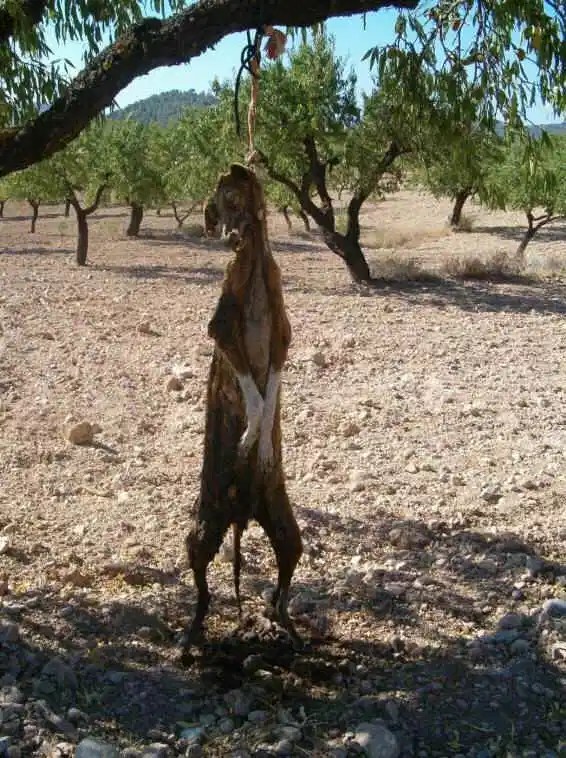
Thanks to the efforts of animal rights activists, at least one particularly cruel tradition could be banned: death by “playing the piano”.

Animals that “disgraced” their breeder were hung from a tree just high enough for their toes to touch the ground.
In the agony of death, the dogs tapped their paws up and down in panic, which is vaguely reminiscent of playing the piano.
This method is now prohibited by law.

Spain is the only EU country where hunting with galgos is still allowed.
How long does the European Community want to watch this barbarism inactive?

My best regards to all, Venus

Crash tests on killed animals by FORD.

Decades after banning all crash tests on animals—following a PETA campaign—Ford has dirtied its hands once again.
In a study titled “Side Impact Assessment and Comparison of Appropriate Size and Age Equivalent Porcine Surrogates to Scaled Human Side Impact Response Biofidelity Corridors,” at least 27 pigs were killed and their bodies were hung by wires through their spines and slammed by a high-impact pendulum.

The study’s authors state the following:

“We would like to acknowledge and thank Ford Motor Company for its funding and support of the current research project. Funding for this study was provided by Ford Motor Company through its University Research Program” [Emphasis added.]

No other car company is known to have performed such abominably cruel tests in many, many years, and it’s time for Ford to get back in its lane and commit to helping drivers and animals by renewing its ban on car crash tests on other species.

The world has moved on to crash test dummies and high-speed computers from cruel and archaic tests on animals who feel pain and value their lives just as much as we do.

A pig’s anatomy is very different from that of humans, so the data obtained from these horrific animal experiments are not applicable to human car-crash victims.

Ford assured PETA in 2009 that the company did “not directly conduct or fund development of products that involve live animal testing, and is unaware of directing any such testing in the past three decades.”

If Ford is going back on that commitment now, PETA will ensure that the public is fully aware so that car buyers can make informed decisions about which automakers to support and which to drop.

https://www.peta.org/blog/ford-crash-tests-animals-27-pigs-killed/

And I mean…The fact that FORD is pulling down the tests on dead pigs is of course better for the animals.
But they have to be killed for it.

Why doesn’t FORD do the same test on dead people?
After all, these tests makes the company for the safety of its customers, and these are human animals.

My best regards to all, Venus

USA: Wolf Pups ‘Adopted’ by Idaho High Schoolers Killed by Trigger Happy (? Obsessed ?) USDA Federal Agents.

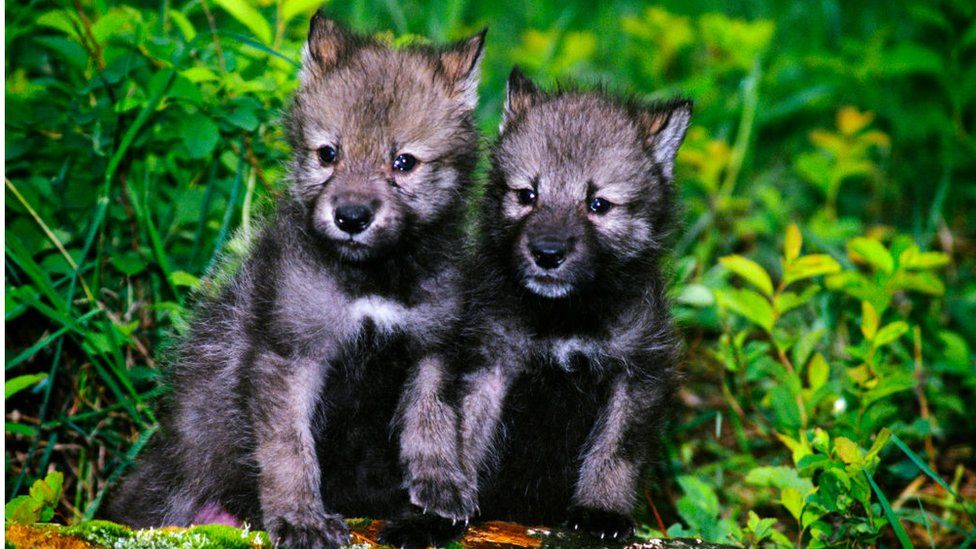
Grey wolf pups
Grey Wolf Pups – Getty Images

Wolf pups ‘adopted’ by Idaho high schoolers killed by federal agents

Wolf pups ‘adopted’ by Idaho high schoolers killed by federal agents – BBC News

Conservation groups have expressed outrage after the US Department of Agriculture revealed it killed eight young wolves in an Idaho forest.

The pups were part of the Timberline pack, a group of wild wolves tracked and studied since 2003 by students at the local high school in Boise.

Federal officials have defended their actions as a “necessary” measure in reducing the predators’ population.

But local wildlife groups say wolves are “under attack” in the region.

Earlier this year, lobbied by the livestock ranching community, Republican-dominated legislatures in Idaho and Montana passed measures that made it easier to hunt and kill wolves.

Idaho’s version of the law allows hunters to kill an unlimited number of wolves each year, up from a 15-wolf annual limit, and triples the budget for population control efforts.

Under the terms of the legislation, wolves can be baited into snares, aerially gunned down via aircraft and even mowed over by hunters in ATVs or other motorised vehicles.

Environmental groups have warned the aggressive tactics will whittle down Idaho’s wolf population by 90%, from roughly 1,500 to 150, which is the minimum limit enshrined by a 2002 conservation law.

The Timberline wolf pack – unofficially “adopted” by students at Boise’s Timberline High School over the past 18 years – appears to have been among the targets. Their den, on public lands in Boise National Forest, was found empty this spring.

An official from the Agriculture Department confirmed federal agents had killed the animals in order to force the adult wolves to relocate.

Grey wolves were once nearly wiped out across the contiguous US.

The Endangered Species Act of 1974 created federal protections that saved the species from extinction and led to sustained population recovery efforts.

But the animals were delisted by the Trump administration last October and management of the species has since fallen to the states.

Supporter of the Idaho wolf-culling law have said wolves pose a threat to wildlife, particularly cows, sheep and other livestock.

Van Burtenshaw, the state senator and livestock dealer who introduced the bill, said reducing the wolf population would benefit “our cattlemen, our woolgrowers and outfitters”, as well as the big game hunters forced to compete with the wolves.

But environmental groups have slammed the culling tactics as inhumane. A spokeswoman for the Humane Society of the United States called it “a death warrant for hundreds of Idaho’s iconic and beloved wolves”.

The Biden administration is reportedly considering relisting grey wolves on the Endangered Species List.

Students at Timberline High have told US media they are penning a letter to President Biden over the pup deaths, a sign of the renewed urgency many Idahoans feel to see federal protections reinstated.

“Idaho, Montana and Wyoming are in an all-out frontal assault on wolves,” Dick Jordan, a former science teacher at the school, told the local Idaho Statesman.

“Something has to be done. It’s inhumane, it’s unethical and it’s not ecologically sound.”

Regards Mark

Please read some of the Comments associated with this – lots of sad;