European agriculture ministers are pushing for acceptance of a vaccination against highly pathogenic avian influenza (HPAI) in poultry. The disease, also known as bird flu, has spread widely across the continent during the past two years, with the EU set to explore the potential of using vaccines to prevent the spread, rather than culling.
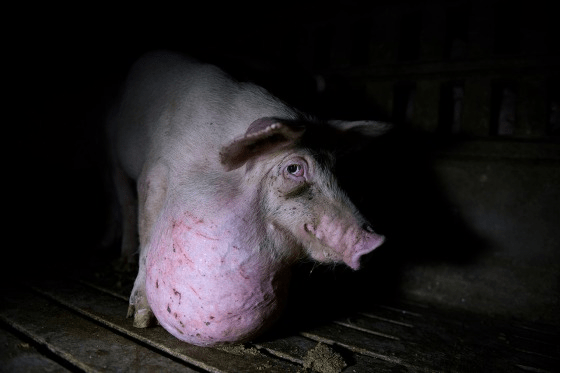
Veterinary neglect is common to all farms visited. Animals that suffer from innumerable health problems are not treated for reasons of economic profitability. / October, 2019. Castilla la Mancha, SourceTras Los Muros
No laws can protect animals bred to be dead, why people champion regulations or laws that REQUIRE violent death, is bizarre. In slaughterhouses, where animals are violently killed after brief existences of suffering, there is NO REGULATION that can protect animals – it’s a SLAUGHTERHOUSE.
I disagree with the “transparency” term for the above reasons, same as I don’t praise CCTV in slaughterhouses: slaughterhouses are where animals go to violently die, how anyone can praise a recording of animals violently dying, is bizarre. If people are so happy to use CCTV as demonstrative of animal “protection”, what is more protective of animals than NOT KILLING ANIMALS?
Following a lawsuit, the USDA released the below records establishing the frequent torture that occurs IN ADDITION TO animal violation and suffering and violent death. It’s almost as if, despite the “humane-treatment-of-animals” mantra of anag cheerleaders, they’re admitting to the abject horrors defenseless animals are forced to endure: if killing animals is so “humane” there would be no reason to try to withhold slaughterhouse “violations”.
Veganism is the ONLY humane and the ONLY logical protection for animals. SL
USDA source links, all records below following article:
Marking a step towards transparency in food production, the U.S. Department of Agriculture (USDA) has disclosed on its website records revealing the handling of farmed animals in slaughterhouses. The records, dating back to January of 2017, were made publicly available following a settlement between the federal agency and animal protection organizations Animal Welfare Institute (AWI) and Farm Sanctuary.
“This is the biggest step in improving government transparency at slaughter since the USDA began disclosing these records pursuant to [the Freedom of Information Act],” said Erin Sutherland, a staff attorney with AWI’s farmed animal program.
The release of the USDA records, despite a failed attempt by the agency to have the case dismissed, offers what AWI calls “a rare window into a heavily guarded aspect of food production.” The group believes that the proactive disclosure of animal handling records could boost transparency and safety in the U.S. food system.
While traditional FOIA requests require federal agencies to release information upon request, the process can be lengthy. “The delay associated with fulfilling these requests renders the records almost useless by the time they are received,” AWI’s farmed animal program director Dena Jones said in 2018. But according to the law, FOIA also requires federal agencies to “proactively” disclose records subject to frequent FOIA requests.
In the fiscal year 2019, the USDA received a total of 26,458 FOIA requests, the majority—77 percent—going to its Farm Production and Conservation program which includes such agencies as the Animal and Plant Health Inspection Service (APHIS) and the Food Safety and Inspection Service. That year, the USDA reported that it is taking steps to increase its proactive disclosures, including making FOIA information more accessible on its websites and publishing monthly APHIS FOIA logs.
The settlement brings an encouraging step. Yet there is much to be done when it comes to transparency in animal agriculture. The industry is protected by industry favoring ag-gag laws that silence investigators and whistleblowers who often provide the public’s only insight into the realities faced by animals and workers inside factory farms and slaughterhouses. Corporations also wield immense power over their supply chains, compounding the secrecy in food production and complicating the role of government oversight.
While there is a long way to go, Farm Sanctuary general counsel Emily von Klemperer said the agreement by the USDA to publicly post slaughter records constitutes “a huge victory.”
“These records routinely expose inhumane treatment of animals at slaughter facilities and are critical to our efforts to educate the public and hold the agency accountable to enforce what minimal legal protections farm[ed] animals have,” she says.
Take PETA’s Cruelty-Free Shopping Guide along with you next time you head to the store! The handy guide will help you find humane products at a glance. Order a FREE copyHERE
Searching for Cruelty-Free Cosmetics, Personal-Care Products, Vegan Products, or more? Click HERE to search.
Free PDF of Vegan & Cruelty-Free Products/Companies HERE
Want to do more than go vegan? Help others to do so! Click below for nominal, or no, fees to vegan literature that you can use to convince others that veganism is the only compassionate route to being an animal friend:
New Zealand is to introduce a tax on sheep and cattle burps in an attempt to tackle one of the country’s largest sources of greenhouse gases. It would be the first country in the world to charge farmers for the methane emissions from the animals they keep. There were more than 36 million sheep, beef and dairy cattle in New Zealand in 2020.
New Zealand has unveiled a plan to tax sheep and cattle burps in a bid to tackle one of the country’s biggest sources of greenhouse gases.
It would make it the first nation to charge farmers for the methane emissions from the animals they keep.
New Zealand is home to just over five million people, along with around 10 million cattle and 26 million sheep.
Almost half the country’s total greenhouse gas emissions come from agriculture, mainly methane.
However, agricultural emissions have previously not been included in New Zealand’s emissions trading scheme, which has been criticised by those calling for the government to do more to stop global warming.
“There is no question that we need to cut the amount of methane we are putting into the atmosphere, and an effective emissions pricing system for agriculture will play a key part in how we achieve that,” New Zealand’s climate change minister James Shaw said.
Under the proposal farmers will have to pay for their gas emissions from 2025.
The plan also includes incentives for farmers who reduce emissions through feed additives, while planting trees on farms could be used to offset emissions.
Andrew Hoggard – who is a dairy farmer and the national president of Federated Farmers of New Zealand – told the BBC that he broadly approved of the proposals.
“We’ve been working with the government and other organisations on this for years to get an approach that won’t shut down farming in New Zealand, so we’ve signed off on a lot of stuff we’re happy with.”
“But you know, like all of these types of agreements with many parties involved, there’s always going to be a couple of dead rats you have to swallow,” he added.
Mr Hoggard also highlighted that the fine details of the plan’s rollout have not yet been agreed.
“There are still the nuts and bolts to be hammered out, like who actually implements the scheme, so there’s still stuff to work through with the government.”
The money raised from the scheme will be invested in research, development and advisory services for farmers, the country’s environment ministry said.
Last month, New Zealand’s finance minister committed NZ$2.9bn (£1.5bn; $1.9bn) for initiatives to tackle climate change, which would be funded by an emissions trading system that taxed polluters.
Meanwhile on Thursday, investors managing $14tn of assets urged the United Nations to create a global plan to make the agriculture sector sustainable.
Methane is the second most common greenhouse gas after carbon dioxide (CO2).
It is one of the most potent and responsible for a third of current warming from human activities. Individual methane molecules have a more powerful warming effect on the atmosphere than single CO2 molecules.
At last year’s COP26 environmental conference in Glasgow the US and the EU agreed to cut emissions of the gas by 30% by 2030. More than 100 countries, including New Zealand, have also signed up to the initiative.
How is methane emitted?
Around 40% of CH4 comes from natural sources such as wetlands but the bigger share now comes from a range of human activities, ranging from agriculture, such as cattle and rice production, to rubbish dumps.
One of the biggest sources is from the production, transport and use of natural gas and since 2008 there has been a big spike in methane emissions, which researchers believe is linked to the boom in fracking for gas in parts of the US.
In 2019, methane in the atmosphere reached record levels, around two-and-a-half times above what they were in the pre-industrial era.
What worries scientists is that methane has real muscle when it comes to heating the planet. Over a 100-year period it is 28-34 times as warming as CO2.
Over a 20-year period it is around 84 times as powerful per unit of mass as carbon dioxide.
However, there is much more CO2 than methane in the atmosphere and individual molecules of it can remain there for hundreds of years.
As the summer season approaches, Welfarm launches its new campaign to end the suffering of farm animals in hot weather.
Climate change will increase the intensity and frequency of heat waves, posing increased risks to farm animal welfare. The IPCC Sixth Assessment Report recently showed that climate change is causing a steady increase in temperature. This increase is not without effect on farm animals.
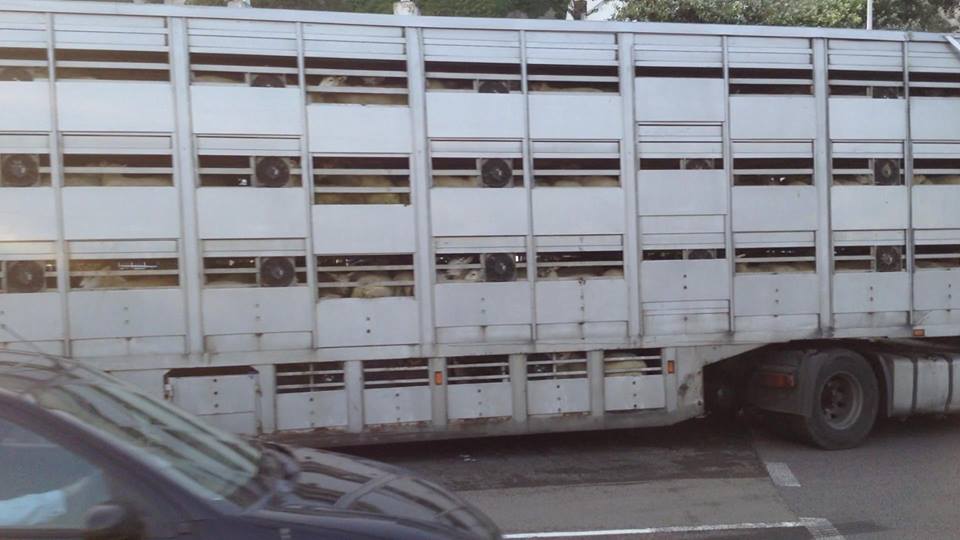
For several years, Welfarm has been reporting on the suffering of animals transported by extreme temperatures. On 19 May, Welfarm decided to go one step further by alerting the general public and institutional actors to the consequences of global warming for farm animals whether on farms or in trucks and boats.
With this new campaign Welfarm calls on authorities to radically change the conditions under which animals are kept and transported to put an end to the suffering they endure during heat waves.
Welfarm’s demands are as follows:
With regard to livestock
Reduce densities,
Ensure an appropriate environment for the animals (access to open-air for terrestrial animals, shaded ponds for fish).
With regard to transport
No transport of animals at temperatures above 30°C,
Ban on export of live animals to non-EU countries.
Regarding transport, Welfarm has relaunched its Truck Alert application, which makes it possible to report trucks transporting animals during hot weather.
For more information on the campaign or to sign the petition: click here.
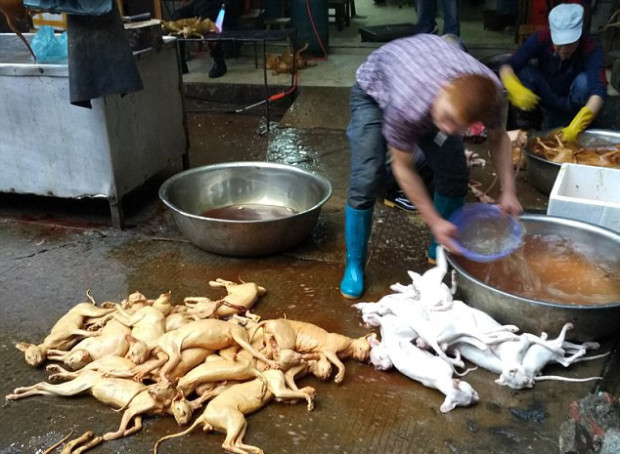
11/6 – we are not really able to get any positive news about what is happening this year; but it does look likely that the Yulin festival WILL go ahead.
I am providing a few links here for you to read if you wish:
There’s just LESS THAN A WEEK TO GO until Ban Live Exports: International Awareness Day!
Will you stand up for animals on Tuesday 14th June?
This year we’re going all-out to highlight the horror of the ‘once in a lifetime’ trips that sheep, cattle, and pigs are forced to ensure during live export.
At CIWF UK, we’re all set for our ‘Hell Tours’ London Rally, which is taking place at Parliament Square, on June 14th from 12.30pm-2pm. And today we are launching a brand-new action to end the horror of live exports.
The European Commission has opened a new consultation to inform the drafting of a Framework Sustainable Food Systems law.
Due end 2023, this law will be the key piece of legislation under the Farm to Fork Strategy whose objective is the sustainable transformation of the EU’s food system.
According to the Commission, “this framework law should promote policy coherence at EU and national level, mainstream sustainability in all food-related policies and strengthen the resilience of food systems.”
Although animal welfare is part of the Farm to Fork strategy, it is not yet fully envisaged as an integral part of a food system’s sustainability. Furthermore, the Farm to Fork strategy recognises the need to move towards a more plant-based diet. However, few concrete measures have been proposed to date. It is, therefore, important for the Commission to receive numerous responses highlighting the importance and role of animal welfare in a sustainable food future and supporting a transition towards a more plant-based diet to keep the food system within planetary boundaries.
** The consultation is available here and is open until 21 July at midnight CET. **
18 European NGOs have formed a coalition to demand the end of the killing of chicks and ducklings. This cruel practice is currently allowed under EU law but could be prohibited as part of the revision of EU legislation on farm “animal welfare,” which is slated to take place in 2023 – 2025.
In an open letter to the Council of the EU sent on 1 June 2022, the animal advocates urge the EU Ministers of Agriculture to support a ban on the systematic gassing and grinding of male chicks and female ducklings. EU citizens can also reach out to their Agriculture Minister with prepared draft messages via a new website launched today.
For every hen raised for egg production purposes, one male chick is ground or gassed. Male chicks are deemed “unproductive” for the egg industry, as they do not lay eggs, and their meat has no economic value for the meat industry. For this reason, 330 million day-old male chicks are eliminated annually. As early as a few hours after hatching, male chicks are first sorted by workers, and while female chicks are sent to lay eggs on farms, the males are killed. Tens of millions of female ducklings suffer the same fate, given that the liver of female ducks is less desirable for foie gras production, and as a result, foie gras producers only raise and force-feed male ducks.
The killing of young animals at such a massive scale remains a secretive industry practice, which explains why images are so rarely disclosed, although they are shocking. These images show the elimination of male chicks by grinding or gassing, the two killing methods allowed under EU law, with some countries preferring one method over the other.
In France, hatcheries have until the end of 2022 to transition to using in-ovo sexing devices and to end the systematic killing of male chicks. To ensure producers comply with the law, hatcheries have received 10 million euros in public funding to aid in transitioning to alternative methods. The cost of this new technology is estimated to increase the retail cost of eggs by only 1 cent per egg.
There are several reasons why a ban on the systematic killing of male chicks is attainable: the societal demand in support of a ban is high, alternatives to the systematic killing of male chicks exist, and two countries have already prohibited this practice. Last but not least, the revision of the EU legislation on the “welfare of farmed animals” represents an unprecedented opportunity to ban this practice throughout the EU.
The EU is currently revising its legislation on “farm animal welfare.” This revision is paramount. The European Commission, which is tasked with proposing a new legal act in 2023, is considering the possibility of prohibiting the systematic killing of chicks in the EU. Stella Kyriakides, the Commissioner for Health and Food Safety, who retains competence on the issue, said that “The killing of large numbers of day-old chicks is, of course, an ethical issue.”
Such a statement is largely supported by the results of the public consultation launched by the European Commission on the topic, as more than 94% of the almost 60,000 respondents declared they were in favor of a ban on the practice. Furthermore, these numbers resonate with public opinion, as only between 9 and 18% of citizens support grinding and gassing chicks and ducklings.
The European Commission will propose new legislation to better regulate practices in animal agriculture; however, the Council of the EU will decide on the adoption of the reform. It is therefore crucial that each of the ministers of agriculture from all 27 Member States support this reform, to ensure it is adopted.
For this reason, 18 animal protection organisations are asking each of the ministers of agriculture from the Member States to support the efforts undertaken by France and Germany. Specifically, the organisations ask the ministers to extend the prohibition on the killing of male chicks to all of the EU, and to ensure that the new law also prohibits the killing of female ducklings, who, so far, have been unfairly excluded from these reforms.
Live mink can no longer be legally imported or bred in Bulgaria, following concerns over threats to native ecosystems and biodiversity from escaped animals.
On 1 June, the Bulgarian Minister of Environment and Water Borislav Sandov announced that he had signed the order to bring the ban into effect.
The decision was taken based on concerns over the environment and biodiversity, as the risk of American mink (Neovison vison) escaping from fur farms poses a serious threat to native species.
Conditions at the only mink farm in our country are unfavourable and are the reason that in recent years mink have escaped to enter territories of wildlife and cause damage.
Borislav Sandov, Minister of Environment and Water
The American mink is now widespread throughout the European Union and has caused significant adverse impacts on native wildlife, after individuals escaped from fur farms.
According to the Ministry, the species is included in the list of 100 most dangerous invasive alien species in Europe and is a priority invasive alien species for Bulgaria.
We thank Minister Sandov for this really important and very useful decision for the nature of Bulgaria. This decision is based on scientific and expert data on the damage from the breeding of the species American mink. At the same time, it is a solution that will prevent huge damage to wildlife and end the suffering of millions of American minks that are bred for their fur in cruel conditions! It’s just a ban order, but it’s so important to nature and the animals.
Petya Altimirska, head of CAAI
Whilst this ban will effectively render mink farming impossible in Bulgaria, it does not cover other species commonly farmed for their fur such as foxes, chinchillas and raccoon dogs.
Our member CAAI is calling for a wider ban on the breeding and keeping of any species for the purpose of fur farming in the country.
The European Citizens’ Initiative Fur Free Europe asks for a ban on all fur farming and the placement of farmed fur products in the European Union.
















 World Animals Voice