Eating Our Way To Extinction: Both Entertaining and alarming, this powerful documentary will change the way you look at the food industry – forever! Credit: Eating Our Way To Extinction
New Kate Winslet-Narrated Film Set To Explore Ecological Impact Of Diets
‘Time is running out’, pleads Kate Winslet in the film dubbed to deliver ‘hard truths’ about food production
A new documentary narrated by academy award winner Kate Winslet and featuring Richard Branson is unraveling the impact of diet on the ecological and climate crisis. Eating Our Way To Extinction specifically focuses on animal agriculture to deliver ‘hard truths’ about our global changing landscapes.
Eating Our Way To Extinction
It takes audiences on a journey around the world from Scotland to the Amazon Rainforest, hearing stories about food production and its effect on the environment.
Throughout the documentary, people at the very forefront of the climate crisis relay their experiences. It also features local activists and celebrities, as well as scientists who add their verdicts on ‘the most pressing issue of our generation’.
Its goal is to create conversations and help people, industry leaders, and governments question their ‘everyday choices’.
‘When food costs the earth, who pays the price?’
The trailer, which was released this week, depicts shocking examples of natural disasters and human destruction – among pictures of farmed animals. And it’s dubbed to ‘make you never look at your food or the food industry in the same way again.
‘Time is running out’, Winslet – who is also executive producer – exclaims. The film is directed by Ludo Brockway and Otto Brockway.
Moreover, renowned actor Leonardo DiCaprio says it’s is the film future generations ‘will be wishing everyone watched today’.
Eating Our Way To Extinction is out on September 16 via a limited theatrical release for one night only.
The digital release will be coming this Autumn, on multiple online platforms. We will release more information as we get it. You can sign up for more information here
Simmons’Cruelty supplies Cracker Barrel and Kroger, among others
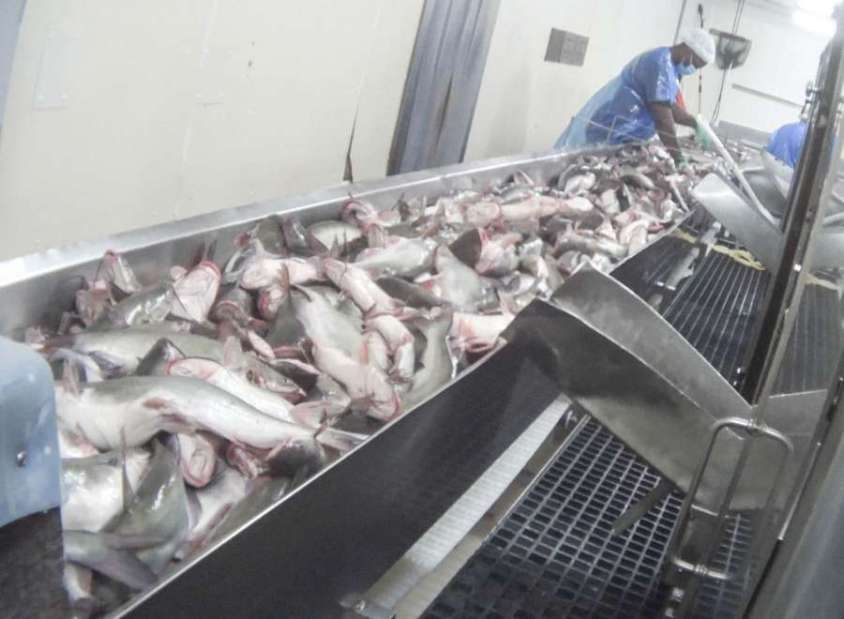
In the fall of 2020, Animal Equality investigated Simmons Farm Raised Catfish slaughterhouse, located in Yazoo City,Mississippi.
Simmons isone of the largest USDA inspected catfish slaughterhouses in the U.S., supplying grocery stores Kroger, Save a Lot, and Piggly Wiggly, as well as restaurant chains Cracker Barrel and Captain D’s.
Our investigative team found numerous instances of animal abuse and suffering—incidents that are in violation of existing state animal cruelty laws.
For example, we documented fish kept out of water for prolonged periods up to an hour before they were finally beheaded while conscious.
Contrary to the investigator’s findings, Simmons claimed the fish are processed “within 30 minutes” and in a “swift{and}sterile” manner.
Animal Equality filed complaints with state attorneys general in Alabama, Georgia,Louisiana, Mississippi, and Tennessee, alleging that Simmons’s false and misleading claims about its products and production practices constitute unfair or deceptive trade practices under those states’ consumer protection laws.
In response, Simmons agreed to remove from its website the claim that the fish are processed “within 30 minutes.”
Simmons Farm Raised Catfish slaughterhouse kills 21,000 catfish per day—animals who are raised in the company’s intensive confinement ponds
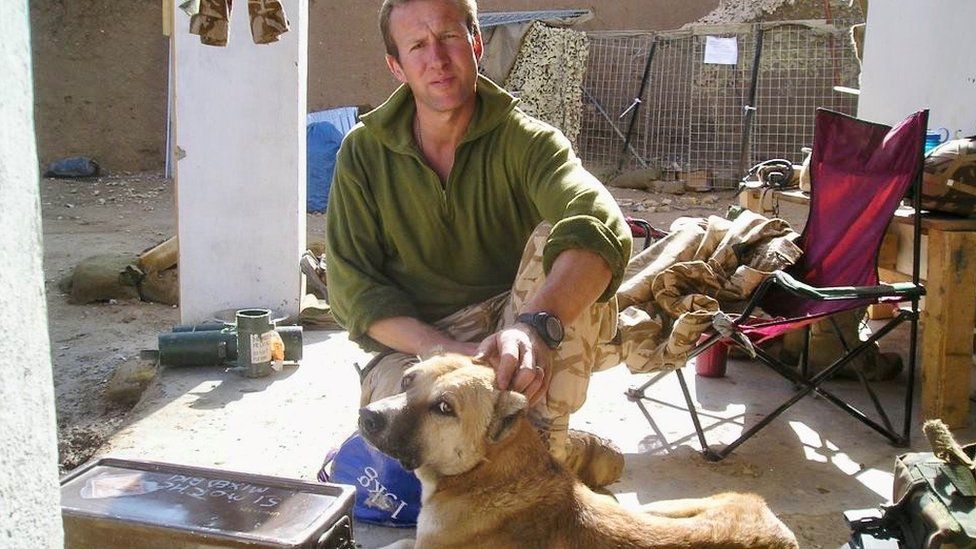
A Royal Marine veteran, who founded an animal sanctuary in Kabul, has made an impassioned plea to the UK government to help his staff leave Afghanistan.
Paul “Pen” Farthing said he would not leave them behind to “suffer a fate” that the West has put upon them.
His charity, Nowzad, wants ministers to “do the right thing” by flying 71 people to the UK from Afghanistan after the Taliban seized the capital city.
The Foreign Office said it was in contact with Mr Farthing to offer help.
Mr Farthing set up the charity 15 years ago, helping to increase awareness of animal welfare in the country and to rescue stray dogs and abused donkeys.
His clinic trained Afghanistan’s first fully-qualified female vets but now he fears for their futures.
“I don’t think there are words to describe what they are feeling right now,” he told the BBC News, from Kabul.
Mr Farthing, who served with the Royal Marines as a commando in the Afghan province of Helmand in the mid-2000s, said the West “should hang our heads in shame for what we have just done to this country”.
Dogs are often made to fight one another in Afghanistan
“We gave people hope, aspirations, dreams for the future. In a matter of weeks, we have just ripped them from them.”
He said he was not hopeful the Taliban regime had changed for the better.
For now, the eyes of the world were watching the Taliban, he said.
But in two months’ time, the international community would be gone, the US would have left the airport and no-one would be watching – and if they did go back to their ways, no-one was coming to interfere in Afghanistan again, he added.
The British and US servicemen and women who died in Afghanistan – including two of his marines – had died “in vain”, he said.
“We have achieved nothing now – we have just thrown everything away.”
His clinic trained Afghanistan’s first fully-qualified female vets but now he fears for their futures.
“I don’t think there are words to describe what they are feeling right now,” he told the BBC News, from Kabul.
“What do you say to someone who is probably going to be told they will have to marry a Taliban fighter and end up living at home, never being allowed to leave and just raising children with someone they absolutely detest?”
Brigitte Bardot describes the decision of the Prefect of the Department of Oise, who approved the killing of 3,000 foxes a week ago as a “massacre”.
3,000 of the predators are supposed to be hunted in the French department of Oise, but the former actress wants to prevent that.
Brigitte Bardot is outraged.
The former diva of the French film and meanwhile radical animal rights activist wants to prevent a “massacre” in her own words. 3,000 foxes are to be shot north of Paris, in the French department of Oise, in the next few months.
In an open letter on Wednesday, August 18, 2021, Brigitte Bardot denounced the “stupid decree” and wants to take it to court.
“Your murderous decree is nothing more than submission to the hunting lobby”( Brigitte Bardot )
“These animals are a wealth for biodiversity,” writes Brigitte Bardot to Corinne Orzechowski, the prefect of the region.
She trusts that the pressure from hobby hunters will not be given in. The decree was simply issued in the town hall, without a public hearing – which is mandatory.
The hunters defend themselves against the allegations
The dispute over foxhunting had already started in the spring. It was then announced that the number of wild animals was to be decimated.
But animal rights activists in France made the matter public, threatened with protests and the decree was unceremoniously withdrawn by the administration in view of the public attention.
So now follows the second attempt to open the hunt for the foxes in the Oise department, write the “Stuttgart News”
However, the wild animal killers are now speaking out vehemently and are unjustly pilloried. Guy Harlé d’Ophove, President of the Oise Hobby Hunters Association, admits that of course no animal in the forest is really harmful.
But above a certain number it becomes problematic. “The fox has no natural enemies and reproduces quickly,” explains Guy Harlé d’Ophove with his hunter ramblings.
It is not about exterminating the foxes. It is even useful because the robber eats sick animals and carrion.
But in nature there has to be a balance between the species, and in this case hobby hunters take care of that (!!!)
The aim is to limit the fox population that has grown due to the canceled hunts during the corona lockdown.
A petition on the Internet aims to stop the massacre
Brigitte Bardot and her colleagues, however, consider this to be an advanced argument. Because for the hobby hunter, the foxes are an unwelcome competition.
The predators would also prey on small game such as hares or partridges, these are the preferred targets of the numerous wild animal killers in France.
Numerous associations and citizens were outraged about the approval to kill 3,000 foxes. A petition has so far collected over 45,000 signatures against the decision of the Oise Prefecture. Brigitte Bardot has now joined forces to defend the foxes.
And I mean: The hunters have in fact failed.
Therefore they try to justify the approved massacre with lies
I mean, you don’t have to be an anti-hunter to find such arguments shitty.
In nature it is intended that every living being becomes food so that every species can survive. Those who have a lot of “predators” produce a lot of offspring in order to preserve their own species.
That is normal.
If this were not the case, an imbalance would arise.
However, this balance is severely disturbed by hunting.
It is a deliberate lie to claim that hunting can significantly reduce the fox population. The opposite is the case, as scientists and wildlife biologists can show.
That means: the hunt favors high fox populations!
The more vehemently these animals are chased, the higher their reproductive rate.
They compensate for the losses through more births and / or increased immigration.
Nature arranged it that way.
The hunters have absolutely no interest in the fox population.
They only want to decimate hawks, weasels, foxes and the like because they want to beat and collect their prey themselves.
They hunt because they enjoy shooting animals, leaving them bloody on the ground and letting them die in agony.
The times are apparently finally over when the hunters in the woods could do what they wanted.
And anyone who disagreed was intimidated “eclectic”.
There is no hunter ideology,only a fraction of what the majority of the population wants is implemented
Not what a minority of militant animal killers would like.
Parmigiano Reggiano, or Parmesan, is one of the world’s most famous cheeses. It is marketed as “premium,” “traditional,” and an example of Italian “excellence.”
Yet, the vast majority of cows farmed to produce this renowned cheese are still being prevented from expressing some of their most basic, natural behaviors. Most never set foot on grass. Some may even spend their lives tied to a post inside their shed.
Please send the message below to the President of the Parmigiano Reggiano Consortium. Call on the Consortium to do more to protect the welfare of every Parmesan cow.
In 2017, Compassion in World Farming Italia undertook an investigation into the welfare conditions for cows supplying milk for Parmesan cheese.
The majority of farms supplying milk to Parmigiano Reggiano are “zero pasture,” and our investigators found animals confined, thin, in some cases lame, being kept in squalid conditions.
Compassion’s investigation caused a public outcry, and the Parmigiano Reggiano Consortium have subsequently taken some steps to improve animal welfare in their supply chain. In particular, they have committed €10 million ($11.8 million) to a 3-year voluntary animal welfare program.
But, while this is a good first step, it is not enough. A voluntary scheme cannot ensure protection for all Parmesan cows. And the Consortium have not yet formally committed to eliminating tethering or to giving all animals access to pasture.
Heavy metal icon Rob Zombie, real name Robert Bartleh Cummings, has been vegan for nine years.
The star, who is a founding member of the band White Zombie, made the announcement in a recent interview with GQ.
Why Rob Zombie went vegan
He told the publication he ditched animal products while at school after watching a film ‘on how brutal’ factory farming is. Several years later he cut out dairy and eggs too – dubbing them ‘disgusting’.
“Once I went vegan, it was, like…now there’s nothing to eat,” Zombie said.
“Every day it gets easier, and every day the food gets better. Veggie burgers used to be like tasteless hockey pucks, and now they’re so delicious.”
Vegan meat
Zombie also described faux meats such as the Beyond Burger as ‘transitional’ – stating that he and his wife no longer consumes them.
“Your tastes change and what you consider healthy changes,” he explained. “But it is a process, and if someone tries to go hardcore instantly they might fail.”
“You just realize, ‘oh’. This is one giant brainwashed lie we’re fed from the moment we’re born.”Rob Zombie, Singer-Songwriter
‘One giant brainwashed lie’
The singer-songwriter then talks about how veganism was prevalent in the punk era due to its link to being anti-establishment.
“Once you make these decisions, you can’t help but learn more about it. And every day you uncover what an evil industry everything is,” Zombie says.
“Dairy is the leading cause of breast cancer, yet Dannon is a big sponsor of the pink ribbon walks. It’s like Marlboro sponsoring the lung society or something.
“And you just realize, oh, this is one giant brainwashed lie we’re fed from the moment we’re born. You have to uncover each layer of the sham. “
WAV Comment – You could say in response that the beef, (general) meat and dairy industries are getting concerned about the amount of people switching to a plant based diet.
An ad commissioned by members of the meat industry claims eliminating beef consumption is not realistic Credit: Adobe.
Dear Wall Street Journal: Anti-Vegan Propaganda Isn’t Just Wrong, It’s Dangerous
The beef industry paid for a major ad to be placed in Wall Street Journal. The ad claimed that meat is not damaging the planet
Last week, major international newspaper Wall Street Journal (WSJ) published a full-page ad that praised the sustainability of the meat industry. The ad also took a swing at the vegan movement, claiming that if every American stopped eating animal products, greenhouse gas emissions would only fall by 0.36 to 2 percent globally.
The ad was, unsurprisingly, paid for by the Beef Checkoff, a program designed to increase the consumption of beef.
The Center For Consumer Freedom (CCF) also worked on the ad. The CCF – which has meat industry representatives on its advisory board – runs campaigns attacking environmental protection groups and animal rights organizations.
“Beef’s environmental footprint may drive headlines, but the truth is, eliminating beef is not a realistic or impactful solution for climate change,” part of the ad reads. It carries on, saying that raising cattle actually helps protect the planet.
But the claims lack meaningful evidence. And while the meat industry’s editorial tantrums are not a new concept (see the similar ads it placed in WSJ and The New York Times in 2019), they are arguably more damaging than ever.
The global climate emergency is accelerating at an unprecedented rate. We cannot afford to be spreading misinformation on such a major scale (WSJ distributes around 2,834,000 copies a day).
So, here is an open letter to the publication, urging it to correct the advertisement. You can read the full version below.
Dear Wall Street Journal, Dear Mr. Murray,
We were forwarded the attached advertisement with manipulated science displayed in the Wall Street Journal on August 14, and we would like to ask your help in rectifying the advertisement, as continuing to promote beef consumption will cause tremendous damage to our planet.
This advertisement is based on questionable data. It is not credible, and contradicts data supported by the international scientific reports and data from institutions such as the FAO, UNEP, and the IPCC (leading international climate data sources).
Total emissions from global livestock: 7.1 Gigatonnes of Co2-equiv per year, representing 14.5 percent of all anthropogenic GHG emissions … Cattle (raised for both beef and milk, as well as for inedible outputs like manure and draft power) are the animal species responsible for the most emissions, representing about 65 percent of the livestock sector’s emissions … feed production and processing (this includes land use change) and enteric fermentation from ruminants are the two main sources of emissions, representing 45 and 39 percent of total emissions, respectively.
The US figures for livestock production are lower but typically do not include any emissions caused elsewhere, for example for the production of livestock feed, usually in South America, which are a key driver of greenhouse gas emissions.
Furthermore:
Switching to a plant-based diet could reduce your food-related emissions by up to 50 percent.
We would prefer the Wall Street Journal to disassociate itself from the advertisement, and a confirmation it will not advertise such misleading data again.
We would be grateful if this message could be forwarded to the correct department within the Wall Street Journal.
Yours truly,
Jasmijn de Boo, Vice President, ProVeg International
A very good guide from PETA about the different varieties of plant milk
Soy milk, oat milk, rice milk, dozens of types of nut milk … The choice of vegan milk is growing all the time.
We’ll break that down.
Sure, almost everyone knows soy milk by now.
But you can make vegan milk from all kinds of legumes, nuts, seeds and grains.
Basically, all types of plant milk can be used just like cow milk, and very few people will need more than one type in the refrigerator.
In addition to personal taste, it is then above all worthwhile to pay attention to whether you prefer to buy sweetened milk(which is usually as sweet as cow’s milk) or unsweetened milk and whether you value the addition of calcium and vitamin B12.
Our list will help anyone looking for milk for a specific purpose.
Soy milk
The classic and usually the first alternative to cow’s milk that can be found in cafes or supermarkets. Soy milk comes in all possible variations and mixed forms (for example with rice milk), even if some people still claim to taste the beans through.
Otherwise the perfect all-rounder, as long as you are not allergic.
Oat milk
Another great all-purpose milk that isn’t quite as common as soy milk yet, but is working on it.
Not only great for soy allergy sufferers, but also for people for whom the soy milk in coffee always curdles despite everything. The best latte art can be conjured up with oat milk.
Rice milk
The most watery and neutral type of plant milk. That can be annoying if you like the hot chocolate rather creamy, for example, but it can also be great if you don’t want to have an exaggerated extra taste with cornflakes, for example.
Nut milk
The plant milk with the strongest taste of its own – and that includes not only hazelnut milk, but also that made from cashews, coconut and almonds, even if they are not nuts from a botanical point of view.
In any case, great for coffee and other drinks that no longer need syrup to taste great.
Rather less suitable for everything that needs neutral milk.
And often simply too expensive for large cookie campaigns and other occasions where the taste is lost anyway.
If you are looking for a specific purpose, our list will help.
The list could go on forever, and there are sure to be people for whom nothing but lupine milk, spelled milk, hemp milk or quino milk comes into their homes.
For a start, however, it is usually enough to start at the top of the list and work your way down until you have found your favorite milk for your favorite purpose.
And I mean…For the majority of our society, the vegan lifestyle is considered an extravagant lifestyle that only people with a lot of money could afford.
This impression can come from looking at the prices charged for many vegan foods – including soy milk.
Vegan alternative products are often 50-100% more expensive than their animal counterparts.
But reality looks different…A vegan way of life is the most cost-effective way of life – if you also include the “hidden costs” of animal production in the calculation.
These include global warming, the destruction of primeval forests, pollution of the world’s oceans and the increasing diseases of civilization that are putting a strain on the health system.
But that’s not all.
In order to produce animal milk, artificially inseminated cows have to be forced to produce milk for life. The suffering of animals is enormous
This is an actual cost.
And there are real problems that cannot always be solved with money and that affect not only those who caused them, but all inhabitants of the earth (and future generations).
In the supermarket, however, it looks exactly the opposite: soy milk often costs significantly more than cow’s milk there.
Animal products would be significantly more expensive than vegetable products if there were no government subsidies.
Practically every agricultural operation also receives subsidies for the cultivation of plants, but the subsidies for factory farming are significantly higher.
No wonder dairy products are so cheap.
Animal products are the main cause of the worst ecological problems – and yet they are so easy to avoid when people become vegans.
Also because there are very good, plant-based alternative products that do not have to go without anything.
They taste good and they protect the environment and animals
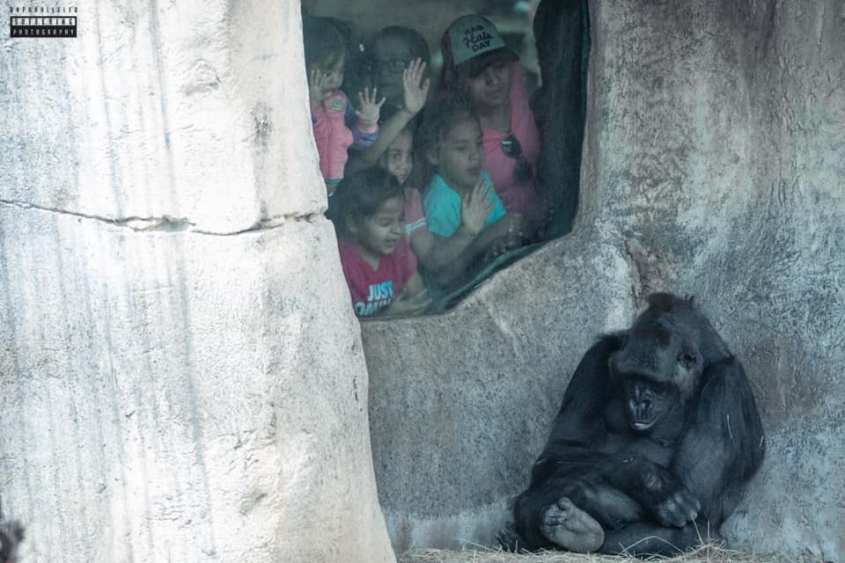
“Even if zoos claim that there is no place of learning where one can observe and learn to understand nature better, the exact opposite is the case: Zoos are suitable for nothing less than establishing a clear reference to nature.
Rather, zoo visitors are systematically instructed to misunderstand the distorted images, clichés and caricatures of nature presented in cages and concrete bunkers as nature itself.
That is why they do not notice the suffering of the caged animals, robbed of their freedom and dignity: They learn to see the unnatural as the natural.
At most, zoos encourage visitors to buy their own cages, terrariums or aquariums and to place exotic wild animals – monkeys, parrots, geckos, ornamental fish, etc. – as decorative elements in the living room: seen in the zoo, bought in the zoo animal trade.
Myriads of exotic wild animals are imported into Germany every year in order to disappear, completely uncontrolled, in some private households (where they are often kept under even more inadequate conditions than in zoos and / or are “disposed of” after a short time if the maintenance costs become too high or interest in them wanes).
It is not uncommon for the zoos themselves to sell “surplus” animals to private owners”.
(from the book by Colin Goldner** : The Zoo – No Place for Animals, Aschaffenburg, Germany 2017)
“Not a single one of the zoos comes up with the idea of encouraging zoo visitors through appropriate information and education to make a personal contribution to animal, nature and environmental protection.
And to discourage them from eating dead animals or food made from animal products at least on the day of their visit to the zoo.
Quite the opposite: the food on offer in most zoo restaurants is extremely meat-heavy and corresponds to that of a below-average factory canteen or motorway service station (…) Nowhere is it more obvious than on the menu of a zoo restaurant.
The message to the zoo visitors: Animals can be gazed at in the zoo just as safely as they can be eaten in the zoo restaurant: after all, there are only animals that are there for this very purpose. ”
(From the book by Colin Goldner: Lifelong behind bars – The truth about gorillas, orangutans & Co in German zoos)
*The Great Ape Project, initiated in 1993 by the philosophers Paola Cavalieri and Peter Singer, calls for the great apes – bonobos, chimpanzees, gorillas and orangutans – to be recognized because of their great genetic similarity to humans and their similarly complex cognitive, affective and social ability to recognize certain basic rights that have hitherto been reserved for humans: the basic right to life, to individual freedom and to physical and psychological invulnerability.
**Colin Goldner (* 1953 in Munich) is a German psychologist who also works as a non-fiction author and science journalist.
In 2011 Goldner was entrusted with the relaunch of the Great Ape Project, which demands basic rights for great apes, and speaks about this at home and abroad.
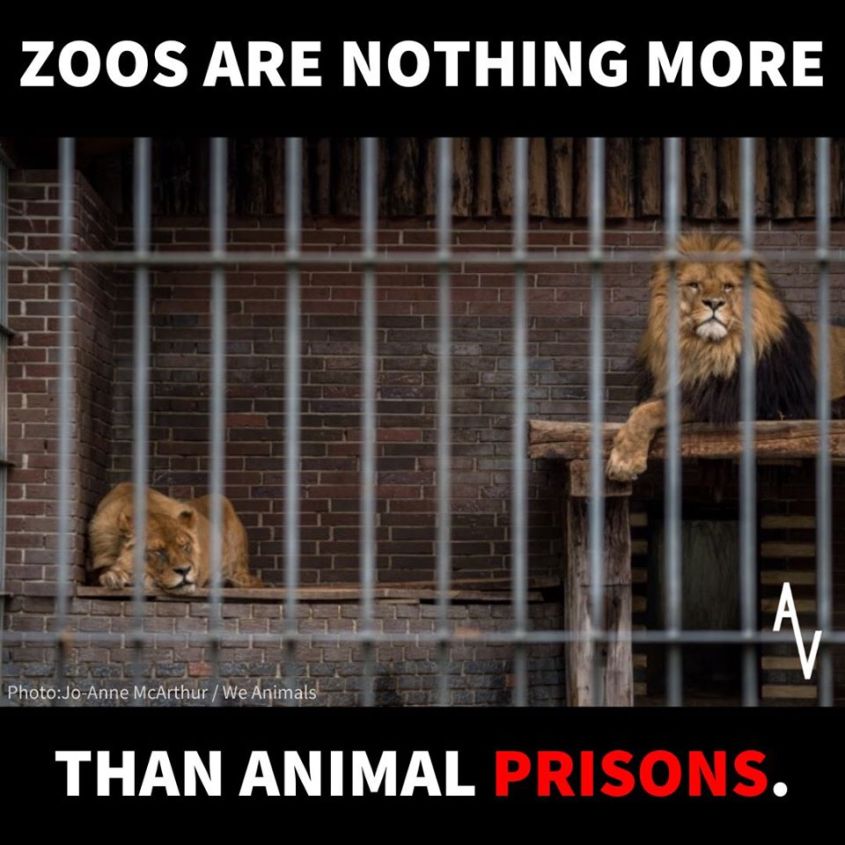
And I mean...Zoos are open air prisons.
In Europe, these prisons – which are even funded by the EU – operate as follows: Young wild animals are separated from their mother, the natural environment in which they lived and their family and sold to owners of open prisons, where they are kept for life in some pitiful squares of land but mainly in narrow cells.
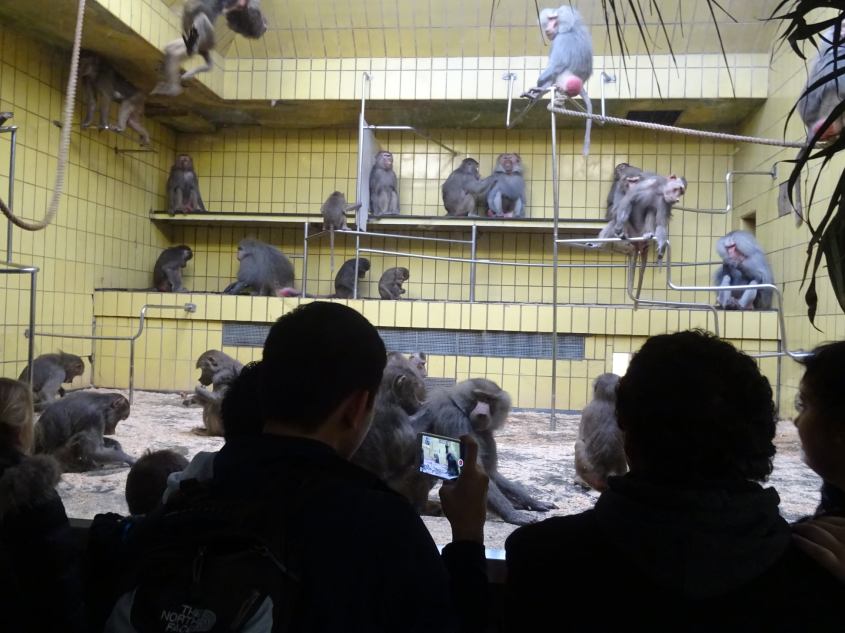
Frankfurt Zoo: 50-year-old facility that looks like the toilets of a train station
There they spend a life in restriction and monotony, winter and summer, with a unique freedom of movement the “come and go” without the ability to behave and act as dictated by the needs of their species. Depression, mental trauma, unusual aggression, premature death are some of the consequences of slavery.
The inmates receive daily visits.
Like all the uneducated, ignorant, uninformed, some fall victim to the dirty advertising that the outdoor prison company sells on the internet and go out with their wives and children on the weekends because … “it is a place of knowledge and recreation for young and old”.
A solid portion of dementia and anesthesia is required for a parent to choose animal prisons as a place of education for their children and to even pay for their maintenance with a ticket.
No civilized and sensitive person should find fun and enjoyment at the sight of a daily tragedy of animal creatures
In terms of our moral behavior towards other animals we still live on trees.
WAV Comment – we have experienced exactly the same scenario working with stray dogs in Serbia; which started in 2005. See https://serbiananimalsvoice.com/about-serbian-animals/ for more details of the work / legislation. The Serbian government have always attempted to kill strays in different regions as they considered it most effective at reducing numbers. In reality, we have always argued that killing strays in any area simply creates a void; (less dogs in ‘the area’ initially, for a week or so max); which very quickly opens the door to strays from other areas to wander in and fill the void as they often find more opportunity for food left by the culled strays.
As they are un sterilised, and with a more adequate food supply; the strays that have entered a newly culled region multiply rapidly, often ending with stray numbers above and beyond those experienced before the cull (planned to reduce numbers !). In addition, there is always the risk that specific animal diseases not experienced in a particular region (in the past) may now become infected with new disease due to animals moving in to fill the cull void. Culling makes no sense.
Killing strays does not work; but sterlilisation of strays, so that they can no longer reproduce, does reduce stray animal numbers significantly over a relatively short time. This (sterilisation – NOT kill) was always our argument with the government; and we were ignored by the ‘kill’ mental vision attitude of the Serbian government, which they continue to enforce to this day.
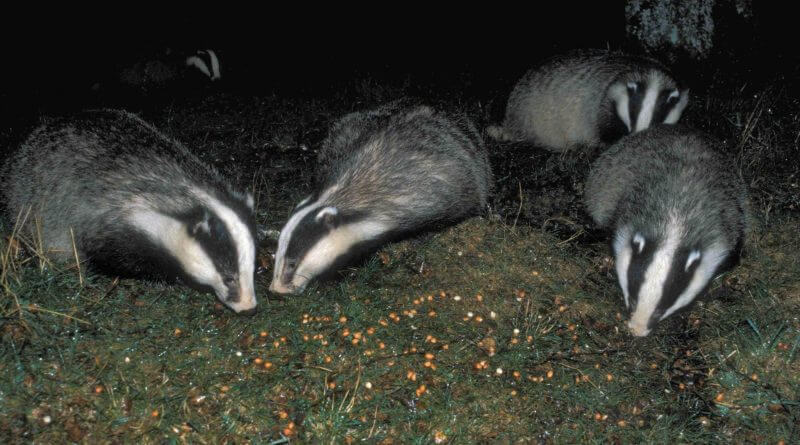
Are we not witnessing exactly the same type of thing here with the badger cull in the UK ? – read the article below – Killing off badgers sees the beautiful animals that survive cover 61 per cent more land each month, say scientists from the Zoological Society of London and Imperial College of London.
After a cull, the odds of a badger visiting a new area increases 20-fold. Researchers believe this could be linked to reduced competition and increased food availability as (culled) badgers are removed from the population. As with Serbia, here, others move in to fill the void left.
Increased food availability is the reason why these animals wander over greater areas; they take up the remnants in the food chain which has been left by murdered animals. Culling Serbian strays, and Culling British badgers; two of the same very wrong government approaches in reality.
The worst thing is that in both circumstances; governments are convinced that their approach is the only way forward. We are very happy to view things from a different angle, and strongly disagree from our own experiences.
Separate research published in March also suggested culling badgers actually spreads TB. It found that culls disrupt local populations and drive them into previously uninfected areas. It makes no sense, other than a blood lust shown by Serbian shinters and UK badger killers.
Culling badgers actually spreads TB, latest study suggests
Odds of a badger visiting neighbouring territory after a cull increased 20-fold – which spreads infection
The government’s claim that culling badgers reduces tuberculosis rates in cattle has come under fire after a major study suggested it could be making the problem worse.
Killing off badgers sees the creatures that survive cover 61 per cent more land each month, say scientists from the Zoological Society of London and Imperial College of London.
After a cull, the odds of a badger visiting a new area increases 20-fold.
This is because new territories open up as individuals are removed – which increases the risk of TB transmission to both cattle and other badgers, according to the paper published in Applied Ecology.
The badger cull is designed to halt the spread of bovine TB, which costs taxpayers more than £100m a year in compensation payouts to farmers.
The practice is highly controversial, with farmers and ministers often squaring off against campaigners who have called it “the biggest destruction of a protected species in living memory”.
Lord John Krebs, emeritus professor at the University of Oxford, commented: “This research shows how important it is to find out about badger behaviour. It shows that culling badgers can cause surviving individuals in an area to move around more, and as a result they could come into contact with infected cattle and help to spread TB.
“The ill-thought out plan to control TB by killing badgers could therefore backfire.”
Scientists say the changes were witnessed as soon as culling began, meaning even badgers that were killed may have first spread the infection over wider areas while the scheme was being implemented.
However, the animals spent less time outside of their setts in culled areas – on average, 91 minutes less per night.
Researchers believe this could be linked to reduced competition and increased food availability as badgers are removed from the population.
The research group, from ZSL’s Institute of Zoology and Imperial’s MRC Centre for Global Infectious Disease Analysis, studied 67 badgers across 20 cattle farms in areas with and without farmer-led culling in Cornwall, collecting GPS-collar data between 2013 and 2017.
Separate research published in March also suggested culling badgers spreads TB. It found that culls disrupt local populations and drive them into previously uninfected areas.
Scientists at Scotland’s Rural College found that unless strict rules are followed, it may be better to carry out no culling at all rather than continuing an ineffective operation that makes things worse.
Lead author and ZSL-Imperial PhD researcher Cally Ham said: “Badgers spend a large proportion of the night foraging for food above ground, and as culling reduces the size of the population, competition for food will also be reduced.
“We believe this accounts for the reduced activity levels, as well as bold individuals becoming obvious targets for culling and being quickly removed from the population.
“Because culling partly relies on shooting badgers moving around at night, the fact that badgers were active for fewer hours per night could actually be undermining culling efforts to further control badger numbers.”
Last year the government commissioned a review of its strategy for tackling bovine tuberculosis in livestock amid ongoing controversy about badger culling to control the disease.
Measures to tackle the disease include cattle testing and movement controls, improving “biosecurity” or protective measures to prevent disease spread on farms, developing vaccines for cattle and badgers, and culling badgers – which can spread TB to cattle – in 32 areas of England.
The independent review found farmers must do more to tackle the spread of TB between cattle, which is a bigger part of the problem than badgers.
While it said that culling showed a “real but modest effect” and was a judgement call for ministers, the review led by Sir Charles Godfray said poor uptake of biosecurity measures and trading in high-risk livestock was hampering disease control.
Since the government implemented the culling policy in 2011, ZSL scientists have been working to understand whether badger vaccination could be used to reduce the infection of TB in the UK’s badger population, and so help control TB in cattle.
Ellie Brodie, senior policy manager at The Wildlife Trusts, said: “This new study further shows that instead of helping to control TB, culling badgers can in fact contribute to spreading the disease across ever larger areas.
“Badgers live in tight-knit groups but culling disrupts their normal behaviour as survivors roam to new fields that can be shared with cattle. Vaccinating badgers is a positive solution to controlling TB in the badger population and one we urge the government to invest in”.
A spokesperson for the Badger Trust said: “The latest research from ZSL shows that this mass destruction of a protected species could be resulting in perturbation, increasing the risk of TB spread in badgers and possibly cattle.
“Badger vaccination is the most cost effective and humane way of reducing TB in badgers that do not have the disease. It also removes the risk of perturbation and brings farmers and wildlife protection groups together in a spirit of mutual respect, trust and confidence.
“The government should halt the culling of badgers and move to a national badger vaccination strategy.”
A Defra spokesperson said: “Bovine TB remains the greatest animal health threat to the UK, costing taxpayers over £100m every year as well as causing devastation and distress for farmers and rural communities.
“There is no single measure that will provide an easy answer to beating the disease and we are pursuing a range of interventions to eradicate it by 2038, including tighter cattle movement controls, regular testing and vaccinations.”


 Simmons Farm Raised Catfish slaughterhouse kills 21,000 catfish per day—animals who are raised in the company’s intensive confinement ponds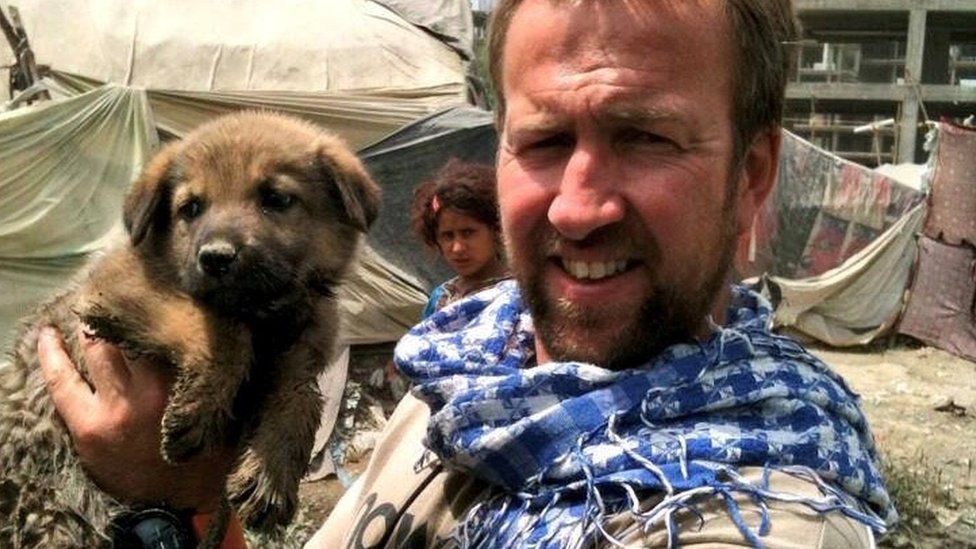









 Frankfurt Zoo: 50-year-old facility that looks like the toilets of a train station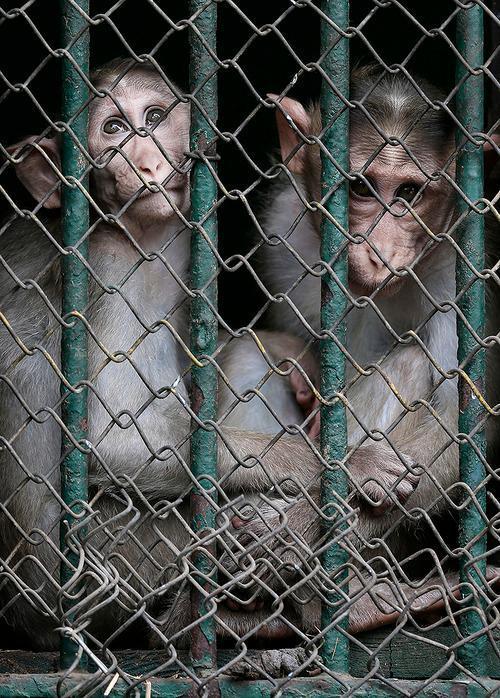



 World Animals Voice