In a good 100 years from just 100 to 3,700 today – with falling poaching!
The IRF, an advocate for all things related to the rhino, publishes an annual report entitled “The State of the Rhino,” which this year highlights that even in the midst of a rare pandemic, there are committed people in a dozen Countries are working to keep the rhinoceros healthy and recover.
In fact, the IRF has invested $ 20 million in rhinoceros conservation projects around the world over the past 10 years and its work is paying off in many countries.
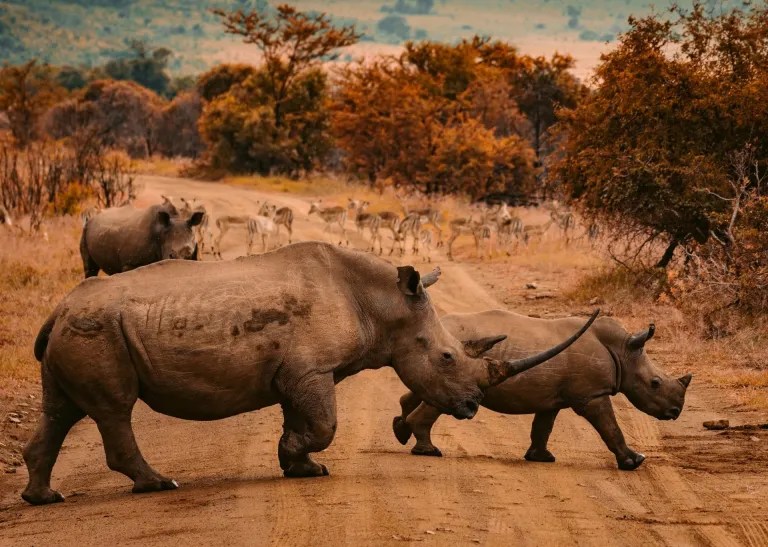
The greatest success is undoubtedly the great unicorn rhinoceros.
The rhinoceros, native to India and Nepal, were only 100 left at the beginning of 1900.
Today there are 3,700 and their number is constantly increasing.
In the past eight years, poaching incidents have decreased from 41 in 2013 to just one.
In the Indian state of Assam there are rhinos in four protected areas and this year the population in the magnificent Manas National Park on the border with Nepal has reached 47 animals, after it was founded only a few years ago with 4 animals.
107 larger unicorn rhinos were also counted in Nepal.
The Javanese rhinos in Indonesia gave birth to four new calves, bringing the number of the critically endangered species to 75, significantly reducing the number of natural deaths. This means that the number of Javanese rhinos has almost doubled compared to 2011.
In Africa, the black rhinoceros population has risen by 16 to 17% over the past decade, while the South African “rhinoceros court”, which was set up exclusively for poaching cases, reopened in April this year, giving rangers the opportunity to target suspects testify without having to travel to a bigger city.
In Zimbabwe, black rhinos have been reintroduced after a 30-year absence and are steadily increasing, while in Kenya, thanks to efforts to combat poaching, the number of rhinos killed has fallen to 0 this year from 59 in 2013.
“We must act today to ensure that these wonderful animals can continue to grow for future generations. Let’s continue to build on our successes in the great unicorn, black and Javanese rhinos and reverse the decline in Sumatran and white rhinos by working together to keep rhinos growing on Earth”. Nina Fascione, managing director of the IRF
And I mean…This is great news!
In the jungle of horror reports that we read, hear, see about animals every day … these positive news work like opium for our souls.
The belief that the struggle each of us against animal exploitation, animal cruelty and animal slavery could bear fruit is growing stronger.
We remain vigilant, active, hopeful
British slaughterhouses threaten to run out of carbon dioxide to stunning the animals – with consequences for the food supply.
Many energy suppliers in the country also have problems because of the high prices.
After tens of thousands of truck drivers are missing, and many food items such as fruit, vegetables and milk have therefore not been picked up from the farms at the usual speed for a few days, the gas is now also running out.
More precisely, the carbon dioxide, which is urgently needed, especially in the food industry.
For example for the production of meat.
Both during slaughter and packaging afterwards.
80 percent of British pigs are processed in just 10 slaughterhouses, and they all rely on CO2 stunning, reports “Tagesschau” magazine. If there is no gas, the animals can no longer be removed from the slaughterhouses and have to be slaughtered on the farms.
Exactly this scenario is now imminent, as the British meat producers warn.
Immediately afterwards, the supply of regional fresh meat will collapse, according to the producers.
The background to the CO2 shortage is that the US operator CF Industries has temporarily closed two of its fertilizer companies in northern England due to the sharp rise in energy prices.
The production is currently not profitable.
The carbon dioxide that the food industry so urgently needs is a by-product of this very fertilizer production.
In the production of fertilizers, there is also a strong reliance on gas, which is now becoming a scarce commodity.
As a result, factories have recently been closed, which further reduces the available quantities.
Now there is criticism of the enormous market concentration, which leads to extreme dependence on a few companies.
England’s Economics Minister Kwasi Kwarteng has signaled that he is in talks with the US operators of the fertilizer companies with the aim of restarting production as soon as possible.
But another trouble spot seems more urgent for the government: the looming bankruptcy of energy suppliers.
Because in view of the sharp rise in energy prices – caused by the recovery of the global economy after the corona crisis – a number of companies will not survive.
Prime Minister Boris Johnson, who is on his way to talks in the US today, tried to spread optimism. “The situation will improve once the markets have sorted themselves out again,” said Johnson
And I mean…With Nord Stream 2, Russia wants to once again significantly increase the supply of natural gas from Western Europe.
Anti-Russian politicians and many conservative media are spreading fear that the new pipeline through the Baltic Sea could be used as a geostrategic weapon
The Nord Stream 2 project was recently completed, but the certification process at the EU is artificially delayed by various actors such as Poland.
This Nord Stream 2 pipeline will supply the European Union with natural gas, thereby increasing the security of supply.
The EU has never been enthusiastic about Nord Stream 2 and has left its future “solely in the hands of the Germans”.
Various conspiracy theorists have spread fear and concern that “the pipeline would make Europe dependent on Russian gas supplies and give the Russian oligarchs a substantial injection of money.”
It also weakens the position of Ukraine, because this country is collecting a lot of money for the gas that is currently still being transported through its territory.
And thus the false conviction was generated that the construction of a second pipeline through the Baltic Sea was primarily for political reasons.
The Russian state-owned company Gazprom is the sole owner behind Nord Stream 2 and is also assuming half of the planned total costs of 9.5 billion euros.
Our Ex-Chancellor Gerhard Schröder is the head of the Nord Stream 2 Shareholders’ Committee.
With 55.6 billion cubic meters, Germany is the largest importer of natural gas from Russia within the European Union.
And Germany will continue to be dependent on Russian natural gas for some time to come.
England, luckily, no longer belongs to the EU.
So there are two alternatives for the British:
Either convince the abandoned fertilizer companies to go back to business, or …
to be the first country in Europe to get out of factory farming.
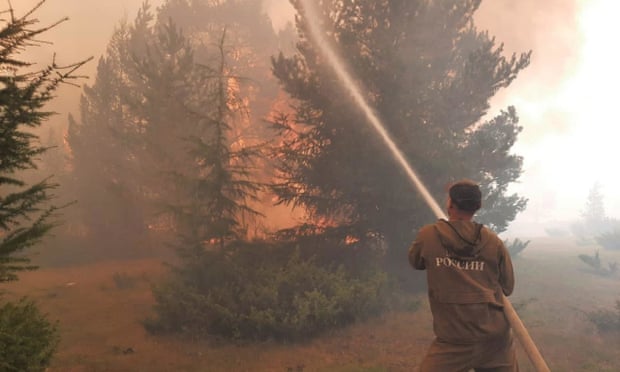
A firefighter trying to extinguish wildfire in the republic of Yakutia, Russia, in August 2021. Photograph: Emercom Of Russia Handout/EPA
Russia forest fire damage worst since records began, says Greenpeace
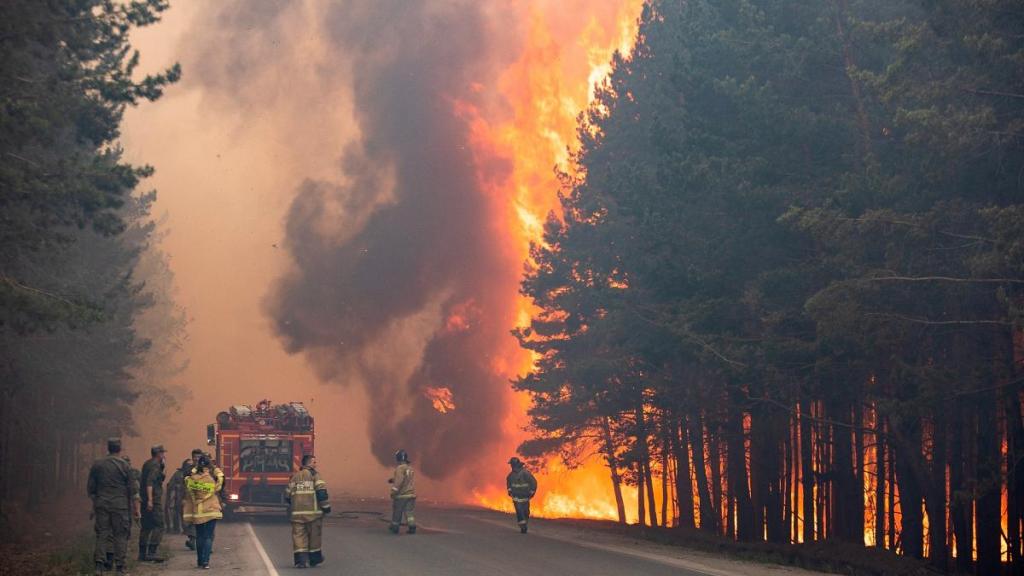
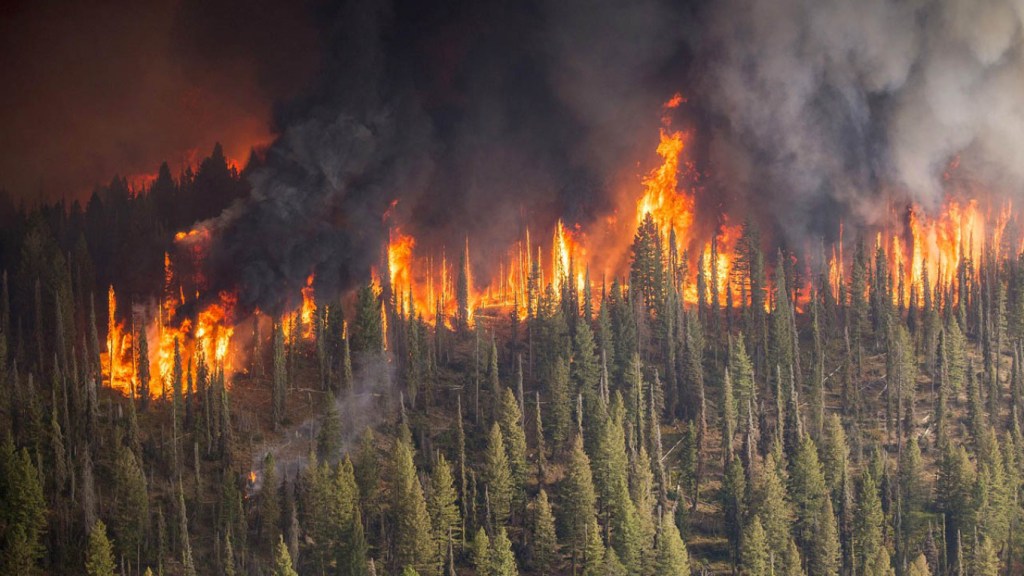
Analysis shows over 18.16m hectares were destroyed in 2021, an absolute record since satellite monitoring beganRussia has endured its worst forest fire season in the country’s modern history, according to recent data from the Russian Forestry Agency analysed by Greenpeace.
Fires have destroyed more than 18.16m hectares of Russian forest in 2021, setting an absolute record since the country began monitoring forest fires using satellites in 2001. The previous record was set in 2012, when fires covered 18.11m hectares of forest.
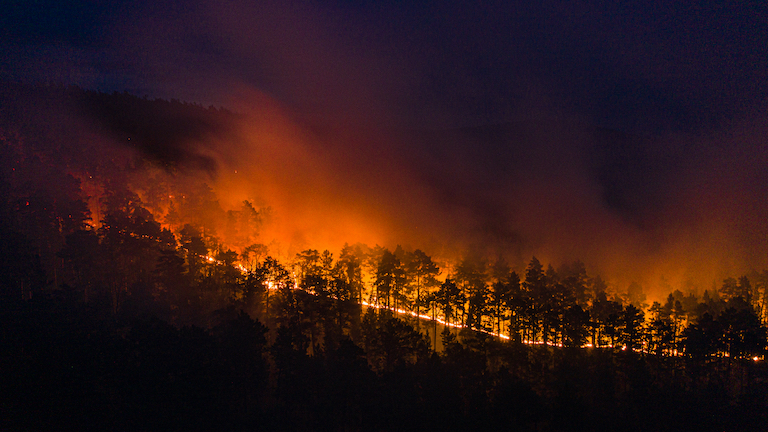
The record was surpassed late last week after a long fire season that has also produced unprecedented levels of global wildfire emissions and upturned daily life for hundreds of thousands of people living in Siberia and elsewhere in central Russia.
“For the past several years, when the area of the fires has surpassed 15m hectares, it has become, in all likelihood, the new normal in the conditions of the new climate reality,” Greenpeace Russia wrote.
Those fires have primarily affected communities in Siberia, where dry, hot summers have turned the vast taiga forests into a tinderbox. In Yakutia, a northern Siberian region that has been particularly hard-hit, smog covered the capital city, Yakutsk, for weeks, and villagers have had to come together in last-ditch efforts to save their homes.
“Emergency workers have come and villagers are also fighting the fires but they can’t put them out, they can’t stop them,” Varvara, a 63-year-old from the remote village of Teryut, said by telephone in July. “Everything is on fire.”
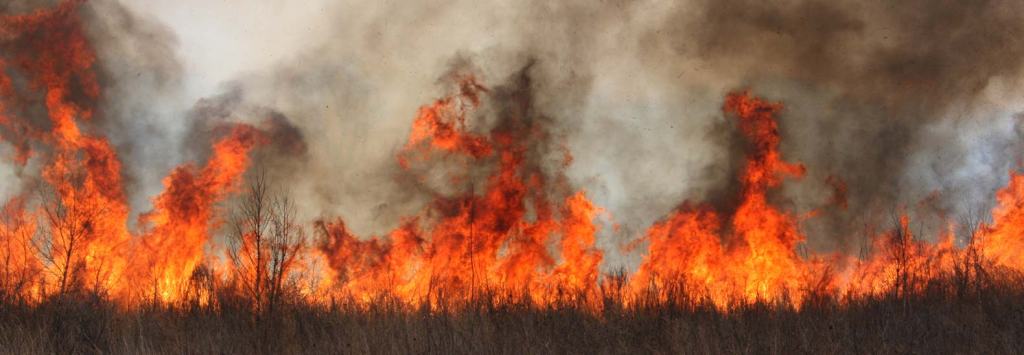
The statistics do not record other types of fires taking place outside Russia’s forests. “If we counted all the fires – grass, reed, tundra, where there is no forest fund – then we would see an even higher number,” wrote Grigory Kuksin, the head of Greenpeace Russia’s firefighting project. The total area could be as high as 30m hectares, he said, an area the size of Italy or Poland.
Burning forests in Russia helped produced some of the worst global emissions in recent months. The Copernicus Atmosphere Monitoring Service of the EU found that burning forests released 1.3 gigatonnes of carbon dioxide last month, the highest since the organisation began measurements in 2003.
The taiga forests of Siberia pumped 970 megatonnes of carbon dioxide into the atmosphere between June and August – more than all the forests in the rest of the world put together. The fires in Yakutia played an important role in that, as the fire season lengthens and pushes farther north, amid unusually high temperatures and lower than normal soil moisture.
According to Greenpeace Russia, the fires in Yakutia are continuing, including north of the Arctic Circle. “That is not characteristic for this time of year,” Kuksin wrote.
Grassfires are also ongoing mainly in Russia’s southern regions of Rostov, Volgograd, Astrakhan and Orenburg, Greenpeace said. Climate change will also make it more difficult for emergency workers to manage Russia’s regular peat fires, which have enveloped Moscow and other cities in noxious smog in past years.
Sustainable Food Systems: the intersection of trade and animal welfare
21 September 2021
News
Ahead of the 2021 UN Food Systems Summit Eurogroup for Animals and The Good Lobby organised a high level event to discuss the intersection of animal welfare and trade in international policymaking
The COVID-19 crisis has reminded the world of the limits of unconditional trade liberalisation, which tends to favour corporate interests while ignoring the effects of the intensification of animal agriculture on the planet and on the animals. This has contributed to the three key challenges the planet is currently facing: zoonoses, antimicrobial resistance, and the overall climate and biodiversity crisis.
At the moment, international trade and economic policies are fuelling rather than countering the expansion and negative impacts of intensive livestock farming by prioritising profits and free trade above all. For example, the trade deal between the EU and Ukraine has led to a surge in cheap chicken meat imports, and the ones planned with Australia and Mercosur countries are expected to also fuel beef production – mostly on feedlots – according to the EU’s own analysis.
Indeed, there seems to be a disconnection between the conversations on the much needed transformation of our food systems and the international trade agenda.
Both panels investigated the best ways to ensure that trade agreements and international trade rules not only avoid negative impacts on animal welfare, but also intrinsically contribute to a global transition towards a more ethical and sustainable way of producing.
The first panel focused on how bilateral trade agreements can help to promote higher animal welfare and thus to move towards sustainable food systems.
“We want to step up cooperation [under EU Trade Agreements] and make a big difference,” said Claire Bury, Deputy Director-General for Food Sustainability at DG SANTE. She also underlined the importance of developing work programmes for the animal welfare cooperation with each partner country, “so we have concrete plans about what to do with the country. It’s not a talking shop, it’s about making a change”, Bury added.
Recognising animal welfare has never been as high on the agenda, Pascal Durand MEP called for products derived from animal exploitation – as well as biodiversity and human exploitation – not to be allowed on the EU market.
The EU is not the only place where trade policy is at the centre of important debates. Chris Sherwood, CEO of the RSPCA, portrayed the tensions reflected by the current UK debate on trade policy. “There are real tensions at the heart of the UK government – between ensuring high standards locally, and wanting to have a Global Britain negotiating trade deals all around the world”.
EU trade policy is also monitored by non-EU Civil Society Organisations. “We need to bring [higher animal welfare and sustainability-related] standards within the [EU-Mercosur] agreement to push up Mercosur standards”, said Maureen Santos, Project Officer at FASE.
The second panel’s focus was on multilateral issues and how animal welfare can be addressed at WTO level and throughout the value chain.
“There is an increasing interest for animal welfare within our members”, said Jean-Marie Paugam, deputy Director-General at the World Trade Organisation. “The debate can be open, and the WTO is open to support a trade policy enhancing animal welfare”, he added.
“It is possible to build up a progressive interpretation of [WTO] rules. That would be a huge evolution about how article XX [and its exceptions to trade liberalisation] was being read in comparison to what it was when WTO was created”, said Ignacio Garcia Bercero, Director General for Trade at DG TRADE. “If we are going to [restrict trade based on animal welfare], we will need to have solid, strong evidence to show it is grounded in widely perceived ethical concerns, not tainted by economic considerations”, he added.
Dr Laura Nielsen also mentioned the role that tiered labelling, intertwined with tariff reductions, could play in incentivising businesses all around the world.
A key part of the solution to ensure that trade contributes to a transition towards more sustainable food systems is thus to better address the impact of trade policy on animal welfare.
Asked about his expectations from the UN Food Systems Summit, Pascal Durand concluded that “we must understand that our current production methods are not sustainable for humans nor for animals, and that we must improve the life of all living beings. Once this is understood, policies will follow.”
Now more than ever, we must seize the opportunity the UN Food Systems Summit presents to leverage the emerging global awareness that the health and wellbeing of humans are inseparable from those of animals and the planet. In doing so, we must break down silos to go beyond the traditional animal welfare and sustainability narratives and rethink trade policy, at both bilateral and multilateral levels.
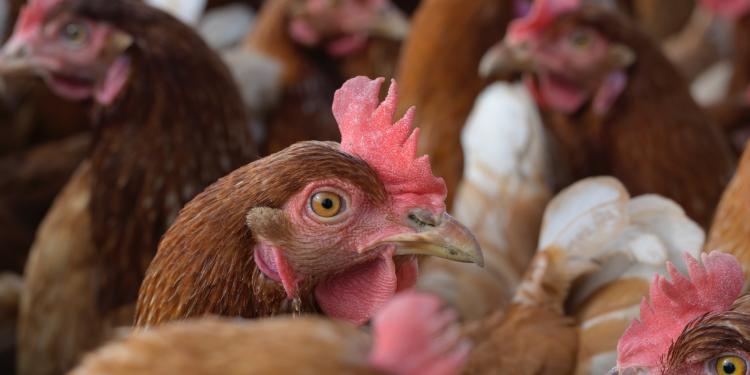
New research from the University of Copenhagen shows that 85 percent of laying hens in Danish production have fractures of the sternum due to the intensive breeding of smaller hens which lay many large eggs. Animal Protection Denmark is taking action.
Laying hens have reached their limit, and it is unacceptable to have a production that causes such extensive and serious damage to animals. This is the main message from Animal Protection Denmark and the National Organic Association, who have joined forces to invite the industry to find common ground on a solution. The meeting will be held on 1 November, and the entire industry has been invited together with Minister of Food, Agriculture and Fisheries, Rasmus Prehn to participate in the presentations and debates, as well as suggestions for future solutions.
We are, of course, appalled by the study’s documentation of how widespread fractures of the sternum in laying hens are. It is completely and utterly unacceptable that this is the rule rather than the exception for hens in all branches of egg production. We are furthermore painfully aware that this also applies to the hens that we normally recommend, namely organic eggs and eggs under our brand “Recommended by Animal Protection”. That is why we have immediately taken up our producers, who are even taking it very seriously and in fact are already now initiating measures that can hopefully remedy the problems in the short term, while we work on the sustainable solutions in the slightly longer term.
Britta Riis, Director of Animal Protection Denmark, Britta Riis.
Report of Association respect animals (Verein RespekTiere)
Comprehensive recordings of ritual slaughtering from two companies in Lower Austriashow massive control deficits.
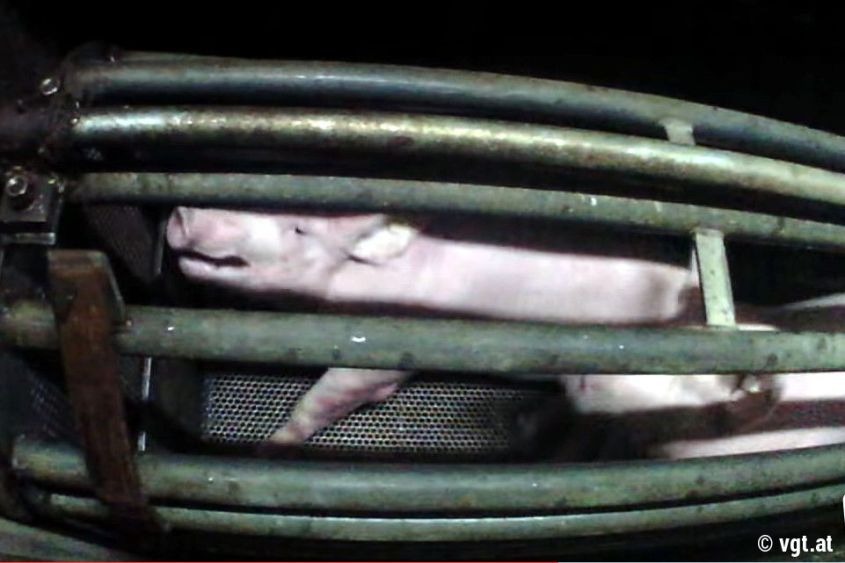
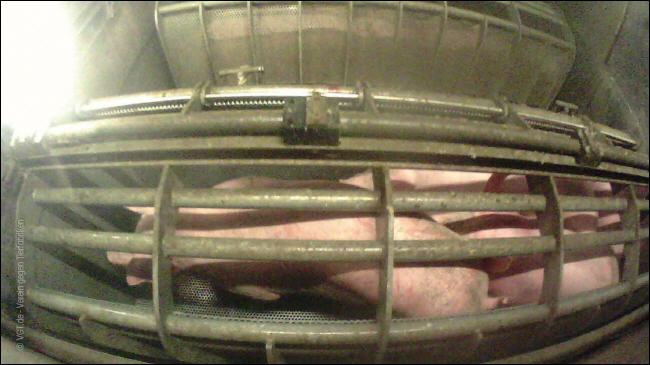
07/20 / 6:30: The slaughter is already in full swing. The slaughterhouse veterinarian in the gray coat can only be seen between 6:30 and 8:30 in the long-term shots. The slaughtering continues until 6:30 p.m. – in his absence and without any anesthesia!
Uncovered – Comprehensive recordings of ritual slaughtering from two companies in Lower Austria show massive control deficits. Association against Animal Factories(www.vgt.at )and Respect animalsassociation (RespekTiere) were leaked incredible pictures from slaughterhouses! criminal charges were filed with the public prosecutor’s office!
The list of allegations is endless:
-Hundreds of sheep continuously killed without any stunning–
-even a non-company person makes the cut – authority failure without end—
-Officials not on site or only at very short notice
-Sheep that are still alive in the cutting process –
-Terrible ‘re-cutting’, moreover often only painful minutes after the first cut–
-Disregard of any legal requirements—
-Heads are completely severed immediately after stunning – purest animal cruelty, day after day –
-Heads of sheep that do not show any signs of anesthesia, whose skull bones were split with an ax, could be secured in the animal body recycling!
In this slauterhouse, animals were still ritually slaughtered outside of the festival of sacrifice – illegally without anesthesia! According to the authorities, there was no permit for this.
And these are just the corner components of this incredible scandal!
The company claims that the responsible veterinarian was permanently present.
“If that was the case, then he saw and allowed animal cruelty to be committed systematically in front of his nose. That too requires a complaint for abuse of office. What do they havethen thought about it? “ so David Richter of Association against animal factories
A single sheep at the end of the slaughter day was also killed on this farm without any anesthesia. A complaint for cruelty to animals was brought against both companies.
The incredible video, the chronology of the scandal can be found here:
We turned on the prosecutor, handed over the minutes of the madness and filed a complaint! The toughest consequences are now required.
Is the long overdue ban on slaughtering without anesthesia coming????
The Association against Animal Factories and Respect animals association have brought criminal charges for animal cruelty against the two companies to the responsible public prosecutor’s offices, as well as a complaint against the control bodies for abuse of office.
And I mean…The sentence alone, “ritual slaughter with a special permit for religious reasons”, is a bankruptcy declaration of our morality in the 21st century.
Most European countries generally forbid slaughter without prior stunning, but allow exceptions for “ritual slaughter”.
Slaughtering without prior stunning is generally forbidden in the Austrian Animal Welfare Act and the Most European countries , but allowed in the case of “religious commands or prohibitions of a legally recognized religious community”.
And so … in Austria “ritual slaughter” is allowed, but with a small compromise: animals must be anesthetized immediately after their necks have been cut and slaughter may only take place in the presence of the official control organs.
But the disregard of the Animal Welfare Act and the Slaughter Regulations at both companies in Austria took place in the absence of the slaughterhouse veterinarians.
The scandal is not that a butcher has screwed up an entire country here, but that there are two-legged human animals who believe that it is ethically acceptable to keep animal beings prisoner for extermination purposes, in extermination “camps” and in the name of religion brutally massacre them and then to eat them.
The slaughterhouse operator puts the responsibility on the controllers , even though he is present at these illegal slaughters, and the vets do not know anything about illegal slaughtering, although they claim they were always present!
The only thing missing now is investigations that are discontinued for “flimsy reasons” and the picture of a corrupt system is complete.
We are no further today than we were 100 years ago!
And no one really cares, even religious carnivores only see the suffering animal as a steak- and sheep do not scream
So, a climate conference which debates the issues of global warming. Vegan eating can reduce Carbon emissions by up to 73%; so we are more than angered to find that at this present time, there is not even a plant based option for food being delivered at the conference ! – Read more:
We know and understand how the mafia does everything to protect its business; but here we are talking about a global conference and the amount of emissions that animal farming is responsible for – because it is the second-biggest source of damaging global emissions.
If you cannot get the UN to get a grip on these facts, and then do something about it, then where are we going ?
In recent months we have witnessed environmental devastation on (literally) a global basis – wildfires, floods, temperature extremes etc; and yet the light does still not appear to be in the ‘on’ position when it comes to conference debates in the name of ‘UN actions’.
Maybe the UN is happy to protect the meat industry at the cost of everything else, who knows ? – but not currently having even plat based food at the conference just sums it all up really.
Maybe it would be better to call the conference ‘COP OUT 21’.; as that may be a more descriptive term.
Regards Mark
Jo Lumley
Stephen Fry
Moby, Joaquin Phoenix and Billie Eilish urge world leaders at climate talks to curb animal farming
Exclusive: Joanna Lumley and Alesha Dixon also among 18 stars warning world will fail to limit disastrous temperature rises without radical changes
A host of stars including Billie Eilish, Moby, Joaquin Phoenix and Stephen Fry are urging the government to get world leaders to debate animal agriculture at the upcoming climate crisis summit because of the environmental damage it causes.
Eighteen celebrities have written to MP Alok Sharma, president of the Cop26 conference, asking him and other delegates to “formally and publicly recognise the role of animal agriculture as one of the largest contributors to climate change”.
Other stars signing the letter are: Ricky Gervais, Joanna Lumley, Deborah Meaden, Harry Potter star Evanna Lynch, singer Leona Lewis, Chris Packham, actors Alicia Silverstone, Alan Cumming and Daisy Ridley, singer-songwriter Alesha Dixon, model Lily Cole, singers Finneas O’Connell and James McVey, and reality TV star Lucy Watson.
They argue that animal farming should be on the Cop26 agenda because it is the second-biggest source of damaging emissions, after burning fossil fuels for electricity and heat.
The UN’s Food and Agriculture Organisation says global livestock accounts for 14.5 per cent of carbon dioxide emissions, but other research has concluded it is nearer to 16.5 per cent.
This is similar to levels produced by all the world’s transportation combined – and the proportion is forecast to rise.
The celebrities – all on plant-based diets – warn that without large-scale change to animal farming systems, the world will fail to keep rising temperatures to 2C, as agreed.
The letter, coordinated by Humane Society International/UK and seen by The Independent, reads: “With animal agriculture being such a major source of greenhouse gas emissions, it is impossible to meet goals set out in the Paris Agreement without making changes to our global food system.
“Even if all other major sources of emissions were reformed, we will still fall short.
“Addressing these urgent areas in the Cop26 meeting would help propel governments around the world to take action and would provide world leaders with another high-impact option to add to their toolbox for tackling climate change.
“We call on the UNFCCC [United Nations Framework Convention on Climate Change] to formally and publicly recognise the role of animal agriculture as one of the largest contributors of climate change and to open a greater space for dialogue.”
They want Mr Sharma to put three proposals to the summit: shifting subsidies away from animal agriculture to more sustainable agriculture; offering incentives to develop alternatives to animal agriculture and changing government procurement priorities in the public sector.
Moby said: “The science is clear and overwhelming that adopting a more plant-based diet is one of the most impactful actions we can take to avert catastrophic climate change.
“So if we want to protect our planet, we must include intensive animal agriculture in climate change mitigation strategies. Cop26 is one of our last vital chances to reform our global food systems.”
At least 88 billion land animals are bred and slaughtered for food globally each year, taking up nearly 80 per cent of global agricultural land, yet producing less than a fifth of the world’s calories.
Animal agriculture is also a major driver of deforestation, species extinction, land degradation, pollution and exhaustion of water resources because of the vast tracts of land used to grow the crops to feed them on, a system long criticised by experts as highly inefficient.
A series of reports have concluded meat consumption must be reduced to curb CO2 emissions.
World-leading scientists on the IPBES (Intergovernmental Science-Policy Platform on Biodiversity and Ecosystem Services) even floated the idea of a meat tax.
A 2019 study showed that by 2030, the livestock sector is projected to account for almost half of the world’s emissions budget for 1.5C without radical change.
The campaign for Cop26 has been dubbed The Cow in the Room, a play on the phrase “elephant in the room” because HSI claims the conference is ignoring the second-biggest factor in the climate crisis.
Producing meat, milk and eggs also requires huge amounts of water – up to three times as much as producing cereals, one study found.
The Independent has asked the UNFCCC for their response to the letter’s demands.
After a wolf tear: Farmer hangs up dead cattle in the village!!!
In a Brandenburg town, a wolf is ripping off a cattle in a paddock.
The farmer hangs it up so that it can be seen by pedestrians and drivers.
To this end, he writes on a cardboard sign: “Wolf sacrifice. Thanks to the dreamers in this country. “
In a small town in Brandenburg, a farmer caused quite a stir. Jens Schreinike keeps cattle in a paddock.
According to him, one of them fell victim to a wolf on Friday night.
He and his father had hung the torn cattle on the family property in such a way that it was visible to passers-by and motorists, reports the “Märkische Allgemeine Zeitung” (MAZ).
A cardboard sign above said: “Wolf sacrifice. Thanks to the dreamers in this country. “
In the afternoon, by order of the police, Schreinike had to remove the cattle again. “It was a spontaneous action after the wolf tear. We wanted to show people that behind the numbers in the crack statistics there are such images, ”the farmer explained to the“ MAZ ”.
They are pictures that he and his colleagues in Brandenburg would see on a regular basis.
For the farmer Schreinike it is incomprehensible that the wolf is strictly protected throughout Germany. Violations can result in severe penalties – up to five years in prison are possible:
“This is exactly how it looks in reality when snatched animals are rescued from the pasture,” Schreinike told the newspaper. “We are not allowed to defend our property, we have to accept it. As a grazing animal owner, you feel like someone who is tied up and also being beaten, ”he said.
Only through actions like these would the location of the grazing animal keepers be made visible. “Otherwise nobody would notice.”
Schreinike: “High protection status no longer justified” (!!!)
Schreinike calls on politicians at federal and state level to rethink and act. The wolf population must be regulated. The wolf population in Brandenburg is so large “that the high protection status is no longer justified,” the farmer told the newspaper “MAZ”.
And I mean…And when his beloved animals are “torn” by the butcher – he then also hangs them up in public with a cardboard sign: “Human sacrifices. Thanks to the meat eaters in this country “?
Same thing, other perpetrators.
Every day in Germany “according to the Federal Statistical Office, an average of more than two million animals are slaughtered”.
Per day!
And … “150 billion animals are slaughtered worldwide every year, 4756 per second …”
All wolves in the world won’t even manage that in 100 years!
Shepherds howl when wolves, bears or eagles steal a sheep from them, but I have never seen a shepherd cry in front of a three-story truck that carries sheep hundreds of kilometers on top of each other through a heat of 35 ° or even 40 °.
Their “grazing” animals are ultimately also brutally killed in slaughterhouses without any control and carted into the mobile coffins on all the highways of the world.
And that is subsidized.
But woe oh woe, when the wolf comes and kills an animal, because predators do not practice environmentally damaging factory farming, they eat what is there or starve to death.
Then the ambitious hunter and the “animal-loving” farmer, including the press, transform into courageous “Bambi”- protectors.
And then it goes happily on the witch hunt against the bad wolf!
The wolf is not the culprit.
The real criminals are those who enslave animals out of economic interest, torture them and finally give them to the slaughterhouse for massacre
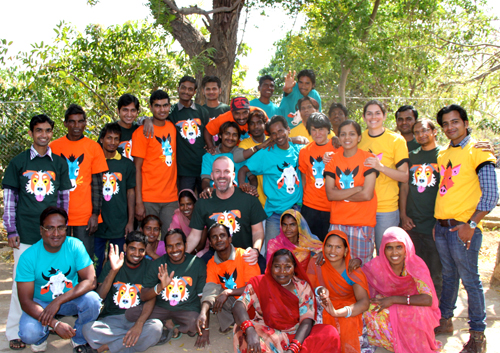
The expression “rain or shine” gets a whole new meaning in the intense weather of Rajasthan. We’re experiencing a late monsoon, and we want to take a moment to thank our incredibly cheerful, often drenched, staff. Our kennels and animal treatment areas are protected, but because we have nearly year-round sun and extreme heat most areas are outside and do get muddy when it rains. The smiling faces we see, with rain sometimes soaking right through their rain gear, not only boosts the spirits of the other staff, but it affects the animals too with the loving encouragement they need. Thank you for appreciating our tenderhearted and stalwart crew.
Elvis’s sadness lifted as he healed,and then he started singing!
Precious Elvis, a teenaged puppy, screamed in pain when his rescuers tried to lift him.
His feet had been run over by a vehicle, andone paw was crushed. His toes were splayed and swollen to twice their normal size. Standing was too excruciating to bear. Had he been an older dog with more brittle bones, Elvis might have been facing an amputation, but since puppy’s bones heal much faster than adults we decided it was worth trying to save his legs. We treated his wounds and wrapped his intensely painful feet in thick bandages, which we changed every day. The little guy was one of the most careful young patients we’ve ever had. He seemed determined to cause no fuss. But he was so inward we wondered if he was depressed. Then, when he’d progressed a bit on his healing journey, well, this boy burst out in song.
A wild piglet was seriously hurt with multiple puncture wounds from an animal attack. Even hours after her wounds were cleaned and bandaged, this young sweetheart trembled with fear. She would need incredible bravery, but snuggled deep into her blanket for the feeling of the comfort she had known sleeping with her siblings against her mother’s big body. Now she was all alone. Though she ate well, she was facing a long recovery, and she may have been significantly depressed. But someone very special was waiting for her, though none of us would have guessed.
Just one week after her admission, we rescued another little piglet with similar puncture wounds–a little boy piglet full of his own noisy squeals and twirls. As we treated his wound, we told him he was in for a beautiful surprise. As soon as we had secured his bandages, we delighted in introducing him to his new friend. Though they were a few weeks different in age, pigs are such social and emotional beings that no questions were asked! They bonded within minutes. We felt we could see their healing accelerate from the sheer joy in each other’s comfort and…play! Meet Luke and Leia, tumble-bunnies in action.
Mauled by a leopard,but Beesie’s love of life won!
We can only imagine that the leopard was interrupted, though no one saw the attack–maybe Beesie fought back too hard.
He was in utter shock for hours after the attack to his throat and chest. Residents from a nearby village hurried him to our hospital. Saving his life seemed an almost impossible task. But his strength was phenomenal, and the jaws of the leopard had closed on him just millimeters short of killing him. His astonished eyes stayed wide as adrenalin ran through his body long after arriving in our hospital.
A great amount of flesh had been simply taken, and there was insufficient skin remaining to stitch closed the wounds. We kept them clean and snuggly bandaged, and changed them every day for 2 months. To our amazement, this dignified boy completely healed. Meet Beesie today!
This sweet little baby was injured so seriously she couldn’t move or even really cry out in pain. Her mother and siblings seemed to sense something was wrong, and when our rescuers arrived, they were completely cooperative as they reached down and lifted up the limp little bundle.
When we cleaned her wound and bandaged her up, she started feeling much better and we were delighted to find she had a good appetite and was “all heart” when it came to healing. Within just 10 days her strength was completely restored and she could be reunited with her family again. We were so delighted by her great recovery.
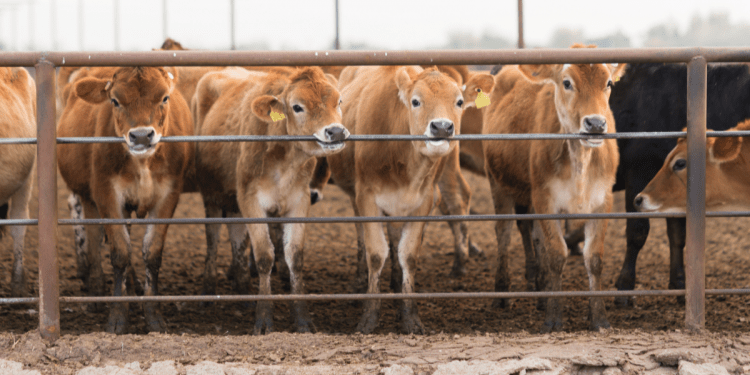
Greenhouse gases released by New Zealand’s 6 million-cow dairy industry have hit an all-time high. Agriculture made up more than half of the country’s total industry and household emissions. The increase continued a longer-term rise in emissions from New Zealand agriculture, up 5.5% in the past decade.
Emissions from cows on New Zealand dairy farms reach record levels
This article is more than 1 month old
Calls for further regulation after latest data after latest data from Stats NZ shows greenhouse gas emissions rose another 3% in 2019
Greenhouse gases released by New Zealand’s dairy industry have hit an all-time high, according to the latest data.
Data from Stats NZ, just released for the years 2007-2019, showed dairy emissions rose 3.18% in 2019, to a total of 17,719 kilotonnes of carbon dioxide equivalent that year. That rise helped drive an overall increase across the agricultural sector, which released almost 42,000 kilotonnes that year.
Agriculture made up more than half of the total industry and household emissions measured by Stats NZ, with most of that split between dairy, sheep and beef farming. The increase continued a longer-term rise in emissions from New Zealand agriculture, where emissions were up 5.5% in the past decade.
The emissions created by the digestive systems of New Zealand’s 6.3m cows are among New Zealand’s biggest environmental problems. Agriculture is one of the country’s biggest producers of the greenhouse gases that cause global heating and the climate crisis.
Greenpeace spokesperson Steve Abel said it was “no surprise that when you let corporations and industries regulate themselves, they basically maintain the status quo of their pollution profile”.
“You have to step in and regulate and legislate to lower greenhouse gas emissions,” he said.
The president of Federated Farmers, Andrew Hoggard, said: “Food isn’t a nice-to-have, it’s a must-have, and New Zealand farmers are amongst the best in the world at producing food in a very low footprint.”
“For New Zealand to go off on some virtue signalling crusade to shut down its agricultural sector, just to say ‘Hey, we’ve reduced a heap of emissions’ hasn’t solved anything,” he added.
The sector is hopeful that new scientific developments, such as methane inhibitors, breeding, and using different forms of feed would continue to reduce methane emissions, Hoggard said.
In 2019, New Zealand passed multipartisan climate legislation setting a net zero by 2050 target for CO2 emissions, and set up the Climate Change Commission to map out a pathway there. The government is legally bound to formulate a policy response to the commission’s report, which was released in June – but has not outlined what those policy steps will be. The commission’s report found that some of the work to reduce methane emissions could be done through improved farm practices and breeding animals that produced less gas – but it would also require a drop in the number of total herd numbers by 10%-15%.
Hoggard also said methane emissions were down from 2006 – although data shows methane emissions spiked particularly high that year. Methane emissions since 2008 have been trending mostly up.
Abel said Thursday’s data release should be considered a conservative estimate, because it did not include emissions from transport, coal used to dehydrate milk powder, or the emissions of palm kernel imported for food.
“All of the promises of the dairy industry that it will self regulate and take charge of the problem are clearly not working, and that is borne out by the actual emissions data,” Abel said.
“We need farming, but farming needs to stop being this industrial polluter – it needs to move to making the land healthy, keeping our rivers healthy, keeping our fresh water healthy and not driving extreme weather events through climate change.”
 The greatest success is undoubtedly the great unicorn rhinoceros.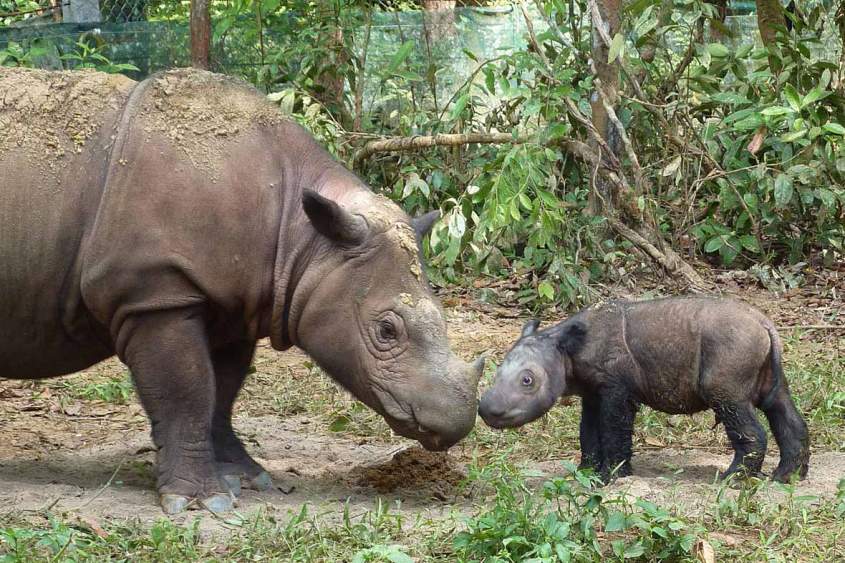





 07/20 / 6:30: The slaughter is already in full swing.
 In this slauterhouse, animals were still ritually slaughtered outside of the festival of sacrifice – illegally without anesthesia! According to the authorities, there was no permit for this.
 A single sheep at the end of the slaughter day was also killed on this farm without any anesthesia. A complaint for cruelty to animals was brought against both companies.







 World Animals Voice