Month: December 2021

Medina Spirit- the new victim of the horse racing mafia

Update: December 10, 2021

After PETA requested a thorough investigation into the sudden death of 3-year-old racehorse and Kentucky Derby “winner” Medina Spirit, we’re taking it a step further to protect other horses trained by Bob Baffert. Yesterday, we called on the California Horse Racing Board to protect the surviving horses in trainer Bob Baffert’s barn by issuing what amounts to a restraining order against him.
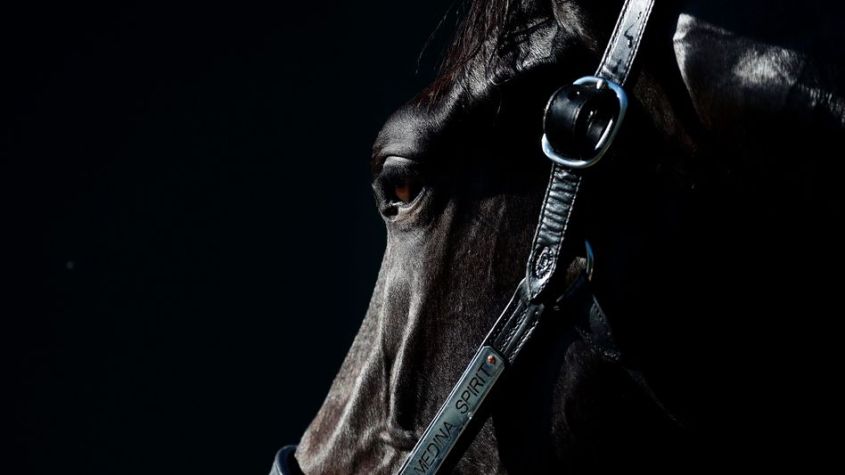
Medina Spirit

Pending necropsy results, PETA is calling for 24/7 security guards and additional drug testing. We’re also pushing the board to ban Baffert from having unsupervised contact with the horses in his barn and from making any veterinary decisions about them, as well as appointing an independent veterinarian to make all medical decisions.

Update: December 7, 2021

Medina Spirit collapsed and died during a workout at Santa Anita racetrack.

Trainer Bob Baffert claimed that the horse died of a heart attack—but this isn’t the only time one of his horses has suddenly dropped dead.

Medina Spirit

Seven of Baffert’s horses died mysteriously during a 16-month period that was suspiciously linked to his reckless and routine administration of the powerful hormone thyroxine to horses without thyroid conditions.

He has continued to be embroiled in drug controversies since then, right up until Medina Spirit’s notorious positive drug test in the Kentucky Derby.

All of Medina Spirit’s veterinary records must be seized, and a thorough investigation must be conducted. Baffert’s attorneys must not be allowed to control the narrative.

PETA urges Del Mar and Santa Anita racetrack officials to bar Baffert pending the outcome of an investigation and necropsy.

Medina Spirit –  Bob Baffert

UPDATE: June 3, 2021

Now that a second sample from the Bob Baffert–trained horse Medina Spirit has tested positive for a prohibited substance, bettors who’ve been cheated by putting money down on the rigged Kentucky Derby may contact PETA or attorneys who are filing class-action lawsuits.

But it’s important to remember the other victim here: Medina Spirit.
He should be thoroughly examined by independent veterinarians to find out why he was administered a powerful medication and whether it was through injections to his joints rather than with a topical cream.
The racing industry must at last stop buying Baffert’s nonsensical excuses and kick him out for good.

Bob Baffert and Medina Spirit, the morning after the May 1 Kentucky Derby.

“Doping horses has got to stop—not only is it cruel, it’s also race fixing. This settlement serves as a shot across the bow to trainers who care more about their bank accounts than about horses: Stop cheating or risk having to pay up.”
(PETA Senior Vice President Kathy Guillermo)

Performance-enhancing drugs often mask horses’ pain, allowing them to race and train with injuries that would otherwise be disabling.
Illegal doping and the overuse of medication are rampant and frequently lead to injury, broken bones, and death.

As a PETA investigation showed, illegal drugging is common in horseracing, as is the misuse of anti-inflammatories, painkillers, muscle relaxants, and more to keep injured horses on the track and bringing in money when they should be recuperating from strains and injuries.

An average of three horses die every day on racetracks in the U.S.

https://www.peta.org/blog/bettor-sues-horse-trainer-owner-doping/

And I mean… Kentucky Derby winner Medina Spirit was training on a California racetrack. Then suddenly the horse collapsed.
Betamethasone has been detected in Medina Spirit.
This is an anti-inflammatory steroid that can be administered no later than 14 days before a race.
Of course Baffert did not want to know anything about it, he emphasized that he had not given the horse the remedy.

In recent years, however, Baffert has repeatedly been targeted by the state horse racing authorities, as permanently prohibited substances have been detected in horses from his stables.

Many people view horse racing as a harmless sport in which the animals are willing participants who enjoy the thrill to the fullest.
The truth is that behind the scenes lies a story of immense suffering.

The life of a horse used for racing is miserable and painful:

-The use of performance-enhancing and pain-masking drugs is rampant in the racing industry. The horses are more likely to suffer from pulmonary bleeding and catastrophic injuries on the track as they’re pushed beyond their physical limits.

– While their bones are still growing and not yet strong enough to handle the speed of racing, the abuse of yearlings and 2-year-olds in training is commonplace, resulting in catastrophic injuries and often death.

– Jockeys have been known to whip horses so mercilessly that the animals’ eyes have hemorrhaged and they’ve sustained other injuries.
As if the races themselves weren’t hard enough, the horses endure repeated auctions, serial ownership, and constant travel throughout their careers.

Racehorse at the slaughterhouse – Australia

Retirement equals slaughter.
Whenthe animals are no longer making money, they’re shipped to Mexico, Canada, or Japan to be slaughtered for food.

The easiest and best way to speak out against the horceracing Mafia is by not supporting these tragic events.

We want an end to all horse racing because it is a cruel and exploitative industry.
We can all help: Avoid anything horse racing related and educate your friends about the cruelty to animals practiced by unscrupulous veterinarians and business people to make money from horses.

My best regards to all, Venus

EU: Commissioner Stella Kyriakides & (England) Dr Jane Goodall: Improving animal welfare is in the interest of all of us.

Commissioner Stella Kyriakides & Dr Jane Goodall: Improving animal welfare is in the interest of all of us

14 December 2021

Last week, Commissioner Kyriakides and Dr Jane Goodall took part in the high level Conference “EU Animal welfare today & tomorrow”, gathering the main players in the field of animal welfare from the EU and beyond.

Animals are sentient beings. This is recognised in the EU treaties, and we have a moral and societal responsibility to ensure that on-farm conditions for animals reflect this. The reality is however that today, billions of animals around the world are kept in intensive conditions. Millions are shipped for very long distances. The fact that each farmed animal is a sentient being that is able to feel fear, despair and pain is at times ignored. They are not always treated with the care and respect they deserve. Changing this is a priority for the EU.

The Jane Goodall Institute has worked tirelessly, in partnership with local communities and farmers, to improve the lives of people, animals and the environment, introducing sustainable livelihood options that address local needs. These values mirror the beliefs and ambitions of the European Union, which places sustainability at the centre of improving its citizens’ lives, rights, working conditions, and the environment.

The EU is also leading by example on animal welfare in many areas. Since the adoption of the first EU animal welfare legislation in 1974, laws, regulations and multiple actions that protect our animals have been consistently expanded and reinforced, resulting in a better quality of life for millions of animals. 

A strong commitment to animal welfare is among citizens’ growing concerns and demands. Everyone can help make a difference, and in the EU, citizens have been given the power to do just that. In 2020, over one million people joined together through a European Citizens’ Initiative calling on the EU to ‘End the Cage Age’. This led to unprecedented action and the EU Commission’s commitment to propose, in 2023, to phase out and finally prohibit cages for animals such as sows, calves, rabbits, hens, ducks, and geese. 

But we still have a long way to go. Where possible, animals should live in an environment where they can behave naturally, and us, citizens, we need to move towards a more plant-based diet with less red and processed meat. 

As we all know, climate change and loss of biodiversity are threatening our future. The health of humans, animals, plants, and even our planet, are all intrinsically linked. We humans are part of the natural world and depend on it for air, food, water – everything. But we also depend on healthy ecosystems, each one made up of interconnected plant and animal species. 

The harm to the environment driven by our current demands on resources has led to increasing recurrences of droughts, floods, and new pests that pose significant threats to our food systems and habitats. To our future. They only highlight the need for sustainability in every aspect of our lives, including our food systems. 

Our task is to build a robust and resilient food system that guarantees citizens a sufficient supply of affordable food, of good and safe quality and with the wellbeing of farmed animals front and centre. Animal welfare and health is both a cornerstone of this shift and the way forward.

The Commission’s ambition is, with the help of farmers, industry, animal welfare organisations and consumers, to maintain the EU’s status as world leader in animal welfare. We can only achieve this objective by putting people and partnerships at the centre of our approach. 

The EU’s Farm to Fork Strategy is an unprecedented commitment to making food systems fair, healthy, environmentally and animal friendly and based on sustainable models of agriculture. A shift in this direction would not only benefit millions of farmed animals, but also the quality and safety of our food, our health, as well as the environment. 

With the Farm to Fork Strategy, we have a unique opportunity to improve the lives of every being, both human and animal, always having as our guiding force that animal welfare matters.

Let us aim high to the benefit of farming families, consumers, animals and our planet.

– Commissioner Stella Kyriakides & Dr Jane Goodall

Regards Mark

Jane studies primates as a young lady

Europe: Golden Jackal Spreading Across Europe as Climate Warms.

© Getty Images/iStockphotoGolden jackals are native to Asia, north Africa, the Middle East and the Balkans, but are now advancing north and west into Europe

Golden jackals are spreading out across western Europe for the first time in centuries, with the reclusive mammal spotted in places such as Italy, the Netherlands and Norway.

The dog-sized creatures are commonplace in southern Asia, north Africa and the Middle East but in recent years environmentalists have spotted them in regions hundreds of miles from their normal ranges.

Last week, one was snapped by a photo trap in Tuscany, in the heart of Italy close to the city of Florence.

Earlier this year a farmer stumbled across a jackal in the Netherlands, managing to grab a photo of the little-known animal on his phone before it fled.

The reasons for this sudden migration, thought to be one of the largest mammal movements ever seen in modern times, are highly debated.

Many believe golden jackals might be benefitting from climate change. As Europe warms, there are fewer periods of heavy snow in many countries, which suits the jackals.

Others argue they are flourishing as wolves, their larger canid competitor, are persecuted and hunted out of the ecosystem.

Golden jackals are from the same family as the more famous grey wolf but are smaller, closer in size to a large dog, and with a fur coat with varies from a creamy yellow to dark tawny beige depending on the season.

They are an adaptable scavenger and predator species which live in breeding pairs and will eat almost anything, from insects, fruit, birds, small mammals, rodents and human refuse.

Their traditional range has included a large swathe of southern Asia and the Indian subcontinent, much of the Middle East and Gulf, and parts of the Balkans and south-west Europe.

However, in the past five or so years it has increasingly been spotted in western and northern Europe, including as far as Norway where a camera trap snapped one jackal in 2020.

“It is one of the largest range expansions for a mammal that we have ever witnessed, anywhere in the world,” Nathan Ranc, an ecologist and golden jackal expert from the University of California Santa Cruz, told The Daily Telegraph.

“It’s a continent-wide trend. This week, for instance, we had the first report that golden jackals are reproducing in Germany. Jackals are turning up in new places.”

Mr Ranc believes the spread of the animal into new ground is related to the decline of wolves, which were once endemic across Europe but were mostly hunted to extinction by the early 20th century.

“We think there’s a correlation,” he said. “This is what happens when the population of a dominant carnivore goes into decline. We think the persecution of wolves was a trigger.”

However, others disagree, noting wolf populations bottomed out more than a century ago and since the post-war period have actually been rapidly bouncing back as they acquired environmental protections across Europe.

John Linnell, from the Norwegian Institute for Nature Research, said he believed a reduction in the use of poison by Eastern European nations since they joined the EU in the 2000s could have made the continent more jackal-friendly, since the scavengers regularly eat dead livestock they stumble across.

Mr Ranc said another factor could be climate change, which was warming Europe and leading to less snow. Jackals are known to avoid heavy snow drifts which they struggle to traverse.

Although the return of wolves since their near extinction in western Europe has been highly controversial with farmers and others, the emergence of the golden jackal has been broadly welcomed.

They never attack humans and while they might kill some small domestic farm animals such as chickens or lambs, they are not likely to cause major concerns, said Prof Luigi Boitani from Rome University, the chairman of the Large Carnivore Initiative for Europe.

Regards Mark

Saudi Arabia: Sadly True: – Camels Enhanced with Botox Barred From Saudi Beauty Contest.

Yes, Very Sadly; It Is True.

$66 Million in prize money would feed a few hungry children or animals for quite a while.

The world has gone crazy in some ways !

The image below is not real. A simulated graphic only of a pathetic event.

Camels enhanced with Botox barred from Saudi beauty contest

Dozens of animals disqualified after owners manipulate their looks with hormones, fillers and facelifts

Saudi authorities have carried out their biggest crackdown on camel beauty contestants, disqualifying more than 40 “enhanced” camels from the annual pageant, according to the state-run Saudi Press Agency.

The camels disqualified in the competition, at the King Abdulaziz camel festival, were judged to have received Botox injections and other artificial touch-ups.

The popular festival, which started this month, invites the breeders of the most beautiful camels to compete for about $66m in prize money.

Botox injections, facelifts and other cosmetic alterations to make the camels more attractive are strictly prohibited. Jurors decide the winner based on the shape of the animals’ heads, necks, humps, dress, and postures.

Judges at the month-long festival, held in the desert north-east of the Saudi capital, Riyadh, are escalating their clampdown on artificially enhanced camels, the official news agency reported, using “specialised and advanced” technology to detect tampering.

This year, the authorities discovered dozens of breeders had stretched out the lips and noses of camels, used hormones to boost the animals’ muscles, injected heads and lips with Botox to make them bigger, inflated body parts with rubber bands, and used fillers to relax their faces.

“The club is keen to halt all acts of tampering and deception in the beautification of camels,” the SPA report said, adding organisers would “impose strict penalties on manipulators”.

The camel beauty contest is at the heart of the massive carnival, which also features camel races, sales and other festivities typically showcasing thousands of dromedaries. The extravaganza seeks to preserve the camel’s role in the Bedouin tradition and heritage as the oil-rich country ploughs ahead with modernising mega projects.

Camel breeding is a multimillion-dollar industry and similar events take place across the region.

Its a sad, sad, bad, bad world when things like this happen !

Regards Mark

Source – ‘The Guardian’ (England).

Camels enhanced with Botox barred from Saudi beauty contest | Saudi Arabia | The Guardian

Shark Fin Trade Still Allowed in EU – 50 Days to Put it to an END. Please Sign Now.

Shark fin trade still allowed in EU – 50 days to put it to an end

13 December 2021

Only 50 days left to collect one million votes from EU citizens needed for a successful EU citizens’ initiative: A group of citizens from across Europe have united and demand the end of the shark fin trade in the EU, so as to increase the protection of sharks. If successful, a political process will be initiated.

Every year, between 63 and 273 million sharks are killed, and many species are increasingly threatened worldwide. Europe is one of the major players in the global fin trade. Globally, sharks are targeted for their meat and liver oil, but the biggest threat remains shark finning. Sharks commonly have their fins removed while alive on fishing boats, and are then left to asphyxiate or returned to die in the water.

In the EU, the cruelest way to get shark fins – so-called finning – is officially banned. Finning means cutting off the fins of sharks on board a fishing boat and throwing the shark itself overboard. This practice was used to save cargo space and bring only the profitable fins ashore. In the EU, a regulation has been in place since 2013, according to which caught sharks had to be brought ashore with their fins.

However, the hoped-for success failed to materialize:

Although the catch numbers initially declined, they quickly recovered. This is shown for example by the numbers of the blue shark, the most caught species in the Atlantic. Initially, the numbers fell, but they reached an unimaginable 53,000 tons again as early as 2016, even higher than in 2013. Added to this are a high number of unreported cases and concealment. In shark fin shipments, it is often not documented where the shark was caught, what species it is, or whether it was caught legally. Once the fins are on the market, no one can account for them. Thus, in the past, protected species have been discovered in shark fin shipments again and again, mostly by accident, even in Europe.

How long are we going to accept a hunt that serves to turn the animals’ fins into a prestigious and expensive soup? The end of the shark fin trade is urgently needed. Many ecosystems in the world’s oceans depend on stable shark populations.

The demand of the EU Citizens’ Initiative has already been joined by more than 400,000 citizens

50 days before the end of the vote, the EU Citizens’ Initiative will raise awareness about the EU’s role in the shark fin trade in many major European cities (Berlin, Paris, Rome, Lisbon, Barcelona, Dublin, Athens and many more).

Sign the European Citizens’ Initiative here.

Regards Mark

Mexico- brutal treatment of fish in aquaculture industry

Latest news and updates from Animal Equality

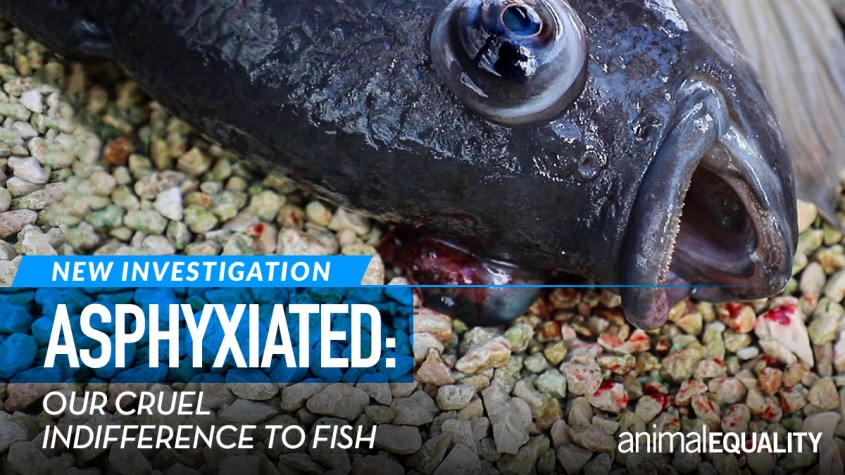
This new investigation exposes the suffering of fish that have no protections under Mexican law.

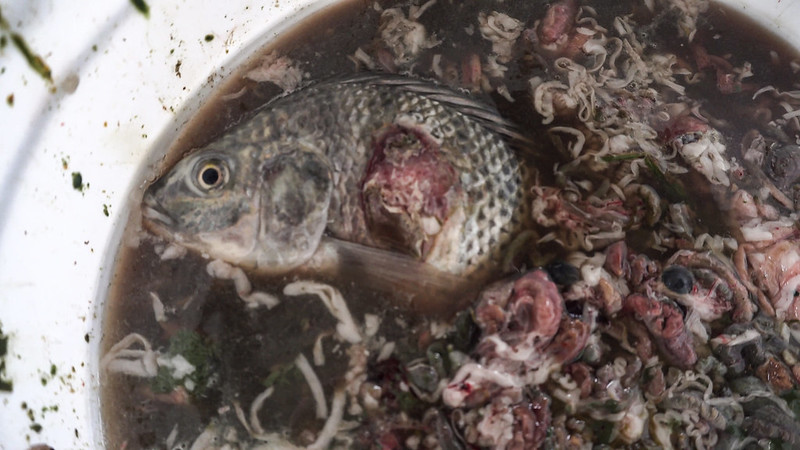
Animal Equality infiltrated tilapia farms in Mexico for the first time and uncovered the suffering of these animals at the hands of aquaculture due to the lack of laws protecting them from cruelty.

ASFIXIADOS: LA CRUEL INDIFERENCIA HACIA LOS PECES EN MÉXICO

In Mexico, according to the National Service of Health, Safety and Agri-Food Quality of the Ministry of Agriculture and Rural Development, there are no “Mexican Official Standards or other regulations that regulate the sanitary processing of fish meat and other aquatic animals.”
And the National Commission of Fisheries and Aquaculture (CONAPESCA) claims that they leave them to die of asphyxiation out of the water despite evidence that the fish feel pain.

Our investigators documented shocking scenes showing the cruel practices, including:

-baby fish handled violently, killed by being crushed by the weight of others and, like the females, discarded as they are not considered economically profitable;

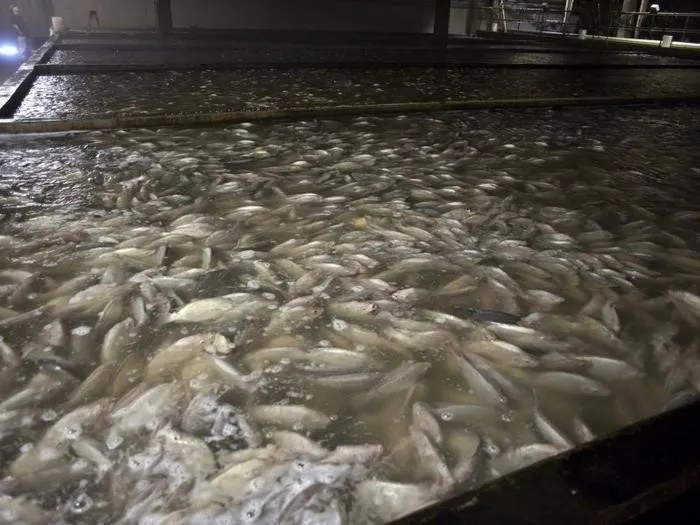
-up to 400 kg of fish packed into the same container and crushed against each other;

-cannibalism: In one of the farms, the operators mentioned that the fish had not been fed for at least 6 months, so they began to eat each other;

-how injured fish are thrown into the trash or used as food for other animals;

-witnessing the larger 2-4 year old fish being left on the floor to die from suffocation;

-switching fish from one tank to another over a 6-8 hour period, during which they kept the fish with little oxygen, exposed to direct sunlight and with so little water that they could barely change position or move around.

Killed While Fully Conscious

In addition to the deplorable hygienic and sanitary conditions in which the fish are forced to live in the farms investigated, it is common practice in the industry for them to be killed without being stunned.

Only in one farm did they try to do so using ice, but with an inadequate method that only prolonged the stress and suffering of these sensitive animals.

Similarly, their organs are removed while they are still conscious, and even after this, some show signs of life such as opening their mouths, expanding their gills and wriggling.

ASFIXIADOS: LA CRUEL INDIFERENCIA HACIA LOS PECES EN MÉXICO

Fish Feel

According to Dr. Lynne Sneddon, Director of Bioveterinary Sciences at the University of Liverpool, fish experience pain on a level comparable to mammals.
And behaviorally, they also exhibit some of the same traits as mammals: forming relationships, remembering their own actions, making decisions (i.e. evaluating risks and benefits), expressing emotions (experiencing positive and negative affective states) and also having some level of consciousness.

Despite this evidence, fish have no legal protections in Mexico.
In fact, the Federal Animal Health Law does not even recognize them as animals and the norms that establish methods of transport, stunning and slaughter do not apply to them.

“The practices that are applied to fish for breeding and consumption would be considered illegal if they were used with land-raised animals such as cows and pigs, yet they are practiced regularly and there is no legislation to prevent it”.
(Dulce Ramirez, Director of Igualdad Animal México)

ASFIXIADOS: LA CRUEL INDIFERENCIA HACIA LOS PECES EN MÉXICO

Unlike other countries where there are laws that do not allow fish to be subjected to cruel treatment, in Mexico there is no regulation on fish welfare, neither mandatory nor voluntary certifications.
Leaving the fish in the hands of people who are not trained properly or trained on the specific needs of species, means more immense suffering for these animals.

Even if their moans and cries of pain cannot be heard by us, it is clear that fish feel pain and do not want to suffer.

ASFIXIADOS: LA CRUEL INDIFERENCIA HACIA LOS PECES EN MÉXICO

Please support our investigations that educate consumers and help change laws for animals.

https://animalequality.org/news/disregard-for-fish-in-mexico/

(Photos: Animal Equality)

And I mean…The life of the fish is difficult for us to understand because their world is alien to us.
We rarely see them as individuals, but mostly speak of them as mass, which is given in kilograms and tons.

Fish cannot scream or show their pain sensations in any other way.

Whether from aquaculture breeding or as caught in water it makes no difference: in most countries there are no legal regulations on how fish are to be treated and killed.

The focus here is only on the benefits for humans associated with the exploitation of non-human animals. The main aim is to breed as many fish and aquatic animals as possible for consumption and to keep costs as low as possible.
This leads to an indifference to the interests of these living beings, who have to lead a miserable, unreasonable life and die a cruel death.

In breeding farms, a large number of fish is usually kept in a very small space, the available space is minimal and in some cases consists of only one cubic meter of water per fish.

Fish farming in aquaculture causes unspeakable suffering. According to the Fishcount organization, between 51 and 167 billion fish are raised and killed on aquaculture farms each year.

And this despite the fact that science has long proven that fish feel stress and pain in a similar way to mammals, birds and reptiles.

Industrial fishing as well as aquaculture have catastrophic effects on the environment too.
Aquaculture means nothing else than factory farming under water. It contaminates the water with ammonia, nitrates and parasites.

Fishing is devastating for the marine ecosystem.
The gigantic trawlers’ nets destroy much of the marine life.
40% of the marine animals fished are considered useless “bycatch” and are simply thrown back into the water – dead or seriously injured.

Many stocks have already been used up or are about to run out.

Ethical and ecological reasons prohibit the consumption of fish.

Let us let the animals live in peace and let us not contribute to the destruction of the marine life for a culinary delight.

My best regards to all, Venus

Of all things life is the measure!

Glass Walls

“No skin, just bones. Left by owner to suffer until death. What do you think? Is there a crime here? And why isn’t there a law against it?” (Text-Glass Walls)

What I think…We owe the first step in downgrading animals to the commodity level to the theory and conviction of the Church.

“Animals have no soul, animals only have instincts and are therefore automatically not the same as humans who have mind and soul – given by God” !!

Much earlier, in ancient Greece, the philosopher Protagoras created the saying, which is still highly valued today: “Of All Things Man Is The Measure”! which every idiot still considers the manifesto of human rights today.

In the Middle Ages, the existence of animals was under catastrophic conditions.
The animal hater and philosopher René Descartes (1596-1650) gave “spiritual” support to the laboratory experimenters for the cruelest animal torture of all time with his insane saying “Cogito ergo sum”.

With which he wanted to signal nothing else than that the animals are senseless and numb reflex automatons and their screams of pain when psychopaths slash them alive in the laboratory, like the squeak of a machine should be viewed.

If we want to claim today that we have developed in art, mathematics, medicine, architecture and, last but not least, in animal welfare, we should not regard animals as commodities, and certainly not treat them as such.

That would actually be the sign that we have developed spiritually and morally.

But we still don’t do that.
Because we are still depriving animals of their rights today, in the 21st century

In this sense we have not moved essentially from the Middle Ages, and like Protagoras – although there are over 2,500 years in between – we are still of the fascist conviction that “Of All Things Man Is The Measure”!
The measure of all things is not man; it is the life!

We are a species of torturer.
A disgusting malformation of evolution.

regards, Venus

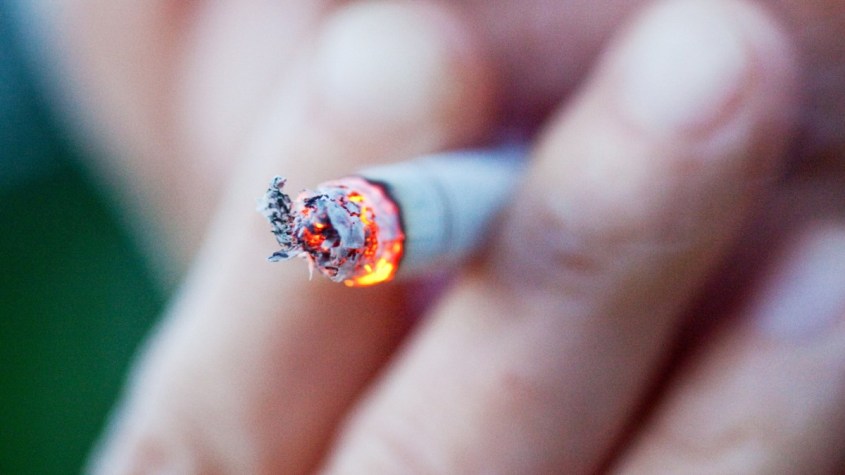
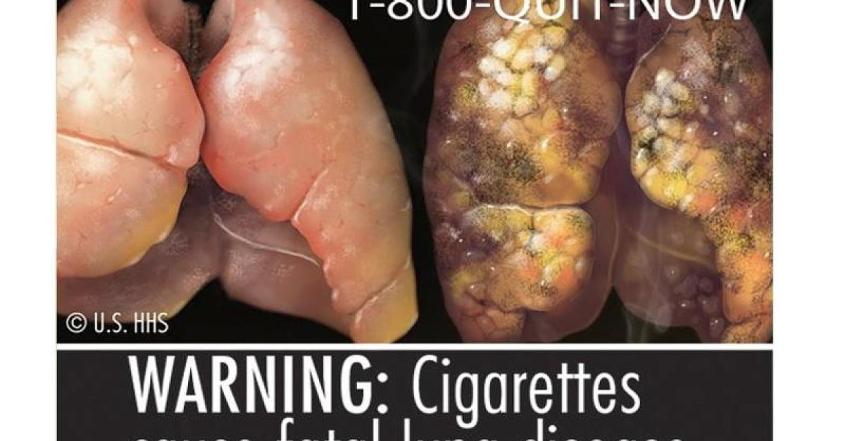
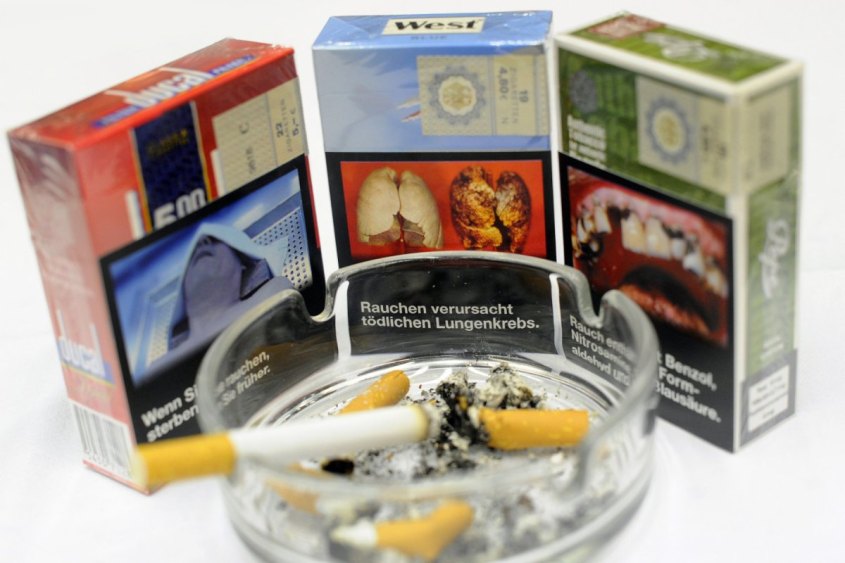
New Zealand plans to become a smokefree nation!

New Zealand plans to increase the purchase age for cigarettes in a bid to become a “smokefree nation”.

The Smokefree Action Plan introduced by the government on Thursday plans to slowly increase the purchase age from 18 currently to 21 or 25 by 2025.

But not overnight, but first of all, smoking cigarettes is no longer possible only for under 14-year-olds.
And then every year the age limit increases by exactly one year.
So those who currently smoke can all continue to do so without any problems.
But future generations won’t start with it.
Nicotine addiction should therefore not even arise.
Most people inevitably develop an addiction to nicotine while smoking; few people are genetically immune to it.

The government argued this will make it harder for teenagers under the age of 18 to be exposed to older pupils who smoke and to access cigarettes, citing research that states that 80% of smokers start before the age of 18 while nearly 97% start before they turn 25.

“This is a historic day for the health of our people,” Associate Minister of Health Dr Ayesha Verrall said in a statement.

“We want to make sure young people never start smoking so we will make it an offence to sell or supply smoked tobacco products to new cohorts of youth. People aged 14 when the law comes into effect will never be able to legally purchase tobacco,” she added.

Other measures the government wants to roll out to curb smoking include reducing the number of shops allowed to sell tobacco products; decreasing nicotine levels in smoked tobacco products to make them less addictive and help people quit; and banning the sale of cigarettes with filters as some people who smoke are “under the misconception that filters mitigate the harm of smoking.”

“Smoking rates continue to head in the right direction but there is a lot more mahi (work) ahead of us,” Population Health and Prevention Group Manager Jane Chambers said.

“Smoking kills approximately 4,500 to 5,000 people every year in New Zealand – that is around 12 to 13 deaths every day due to smoking or exposure to second-hand smoke. Smoked tobacco products take too many lives, and the impacts disproportionately affect Māori and Pacific people.”

“We must move swiftly and strategically to address these marked inequities and the disastrous impacts of smoked tobacco products so tamariki (children), rangatahi (young people) and our future generations are protected from harm” she added.

The Action Plan notes that most of the measures being considered have not been tested elsewhere and that New Zealand would be the first country in the world to introduce them.

The bill will be put before Parliament in mid-2022 and if passed, could come into effect on January 1, 2023.

https://www.euronews.com/2021/12/09/new-zealand-to-ban-future-generations-from-buying-cigarettes-in-bid-to-become-smokefree-na

And I mean…There are already a lot of critical to angry comments against such bans, mainly with the argument: Ultimately, people’s freedom is restricted!!
“A state that treats its citizens with prohibitions instead of education meets with skepticism and resistance” is the basic reaction.

From the comments in German forums:
“We do not need (and I want) no government that educates responsible citizens”!
– “… people have a right to self-determination …”
– “I detest it when such prohibitions encroach on a person’s personal sphere”.

What do you think of New Zealand’s law, dear readers, that increases the minimum smoking age year after year?

I mean .. Our freedom has been looking pretty bad since Corona.
Because not everyone and not in time fought for the values ​​that define freedom.
But woe oh woe, if someone wants to pass a meaningful law for the next generations, then every hobby revolutionary stylizes himself as a courageous freedom fighter in the fight against the dictatorship of the smoking ban.

I am for the smoking ban.

My best regards to all, Venus
Netherlands: ‘Dutch highly eurosceptic!’ Nexit calls erupt as only 10 percent of Dutch want more EU.


‘Dutch highly eurosceptic!’ Nexit calls erupt as only 10 percent of Dutch want more EU (msn.com)

‘Dutch highly eurosceptic!’ Nexit calls erupt as only 10 percent of Dutch want more EU

Euroscepticism is growing in the Netherlands, despite a lack of debate in the media over the EU’s role in the country, according to EU expert Gabriel van de Bloemfontein. The Nexit Denktank researcher told Express.co.uk that only 10 percent of Dutch people now believe more EU integration is needed.

Mr van de Bloemfontein argued that anti-Brexit scaremongering reports might have lowered the number of people believing the Netherlands is better off outside the EU.

But he added that, according to recent polls, 40 percent of Dutch people still want out, which is “quite high” considering the lack of debate, he said.

He said: “In 2016, 2017, polls showed that there was a majority in the Netherlands for leaving.

“After that, it has declined a bit. I can’t really explain why maybe because of the project fear making people scared in the media.

“But right now, I saw a poll of a Dutch public broadcast company, and they showed that around 40 percent would like to leave the EU, which is not low at all without any campaign going on.

“And recently, the news are all about coronavirus. Even at the last elections, not one bit was discussed about the EU.

eu news nexit netherlands eu referendum
© GETTY eu news nexit netherlands eu referendum – Image – Mr Rutte

“So I think it’s actually quite hight. Despite the scary stories we constantly hear.

“What’s even more interesting is that it also shows that only 10 percent of the Dutch people want more EU integration, which is very low.

“But yet it still happens. But this is a promising statistic.

“It shows that the Netherlands is actually very eurosceptic.”

In 2005, the Netherlands, like France, voted in a consultative referendum on the Treaty establishing a constitution for Europe.

Official results say that 61.6 percent of voters rejected the Constitution, on a turnout of 63.3 percent.

Last month, Royal Dutch Shell said it would scrap its dual share structure and move its head office to Brexit Britain from the Netherlands, pushed away by Dutch taxes and facing climate pressure in court as the energy giant shifts from oil and gas.

The company, which long faced questions from investors about its dual structure and had recently been hit by a Dutch court order over its climate targets, aims to drop “Royal Dutch” from its name – part of its identity since 1907 – to become Shell Plc.

The Anglo-Dutch firm has been in a long-running tussle with the Dutch authorities over the country’s 15 percent dividend withholding tax, which Shell sought to avoid paying with its two share classes. Its new structure would resolve that issue.

In a further knock to its relations with the Netherlands, the biggest Dutch state pension fund ABP said last month it would drop Shell and all fossil fuels from its portfolio.

The move infuriated Nexit campaigners who were quick to blame the Dutch government’s submission to the EU for Shell’s decision.

Nexit Denktank representatives wrote: “Shell moves to the United Kingdom and becomes fully British on paper. Very unfortunate for the Netherlands, but were we not told in 2016 that all companies would leave the UK due to Brexit? Another lie.

“In 2002, when the euro was introduced, the British were also warned that all companies would leave if they did not adopt the euro as their national currency. That was also a lie. The EU and the euro are not necessary to attract companies.

“The real proof is in the relocations of Shell and Unilever, which are among the largest companies in the world. They wouldn’t leave the Netherlands for the UK if they didn’t take advantage of that. We don’t need the EU, we need a good trade agreement.

“So we are again losing a piece of Dutch pride and history because our Europhile cabinet was more concerned with undermining Brexit than with the interests of the Netherlands. Our government cares about the interests of the EU, not the interests of the Netherlands.

“According to Rutte, we can close the port of Rotterdam, we will lose all our jobs and our economy will collapse if we leave the EU. It’s all scaremongering and EU propaganda. Such things don’t happen in the UK. Shell is the reality NOW.

“We are losing prestige because of the EU. In the long run, it turns out that we can’t do anything ourselves. The unelected bureaucrats in Brussels determine everything for us. The British can have their own policy. Stop believing the scaremongering and EU propaganda. Nothing bad is going to happen after Nexit.”

Regards Mark

UK: ‘UK’s largest ever’ bird flu outbreak reported in Northern Ireland.


Outbreaks of bird flu have been reported across the UK
© PA Outbreaks of bird flu have been reported across the UK

‘UK’s largest ever’ bird flu outbreak reported in Northern Ireland (msn.com)

‘UK’s largest ever’ bird flu outbreak reported in Northern Ireland

The cases were identified in a commercial poultry flock of 14,000 birds near Markethill in County Armagh and a commercial duck flock of 22,000 in Coagh, County Tyrone.

Disease control measures including the humane culling of the affected birds have been put in place.

Two positive cases were confirmed earlier this month in each of the counties, at Aughnacloy and Broughshane.

Chief veterinary officer Dr Robert Huey has called on flock keepers to “urgently review” their biosecurity measures.

Bird flu has been affecting a range of poultry operations. File pic
© Reuters Bird flu has been affecting a range of poultry operations. File pic

“Unfortunately notifiable avian influenza is strongly suspected in two further commercial flocks in Northern Ireland,” he said.

“This is now not only the largest ever outbreak of HPAI in the UK but also in Northern Ireland and we must do all we can to protect our flocks, protect our businesses and protect the economy.

“I cannot stress enough how important it is that flock keepers reassess all of their biosecurity measures immediately.”

About half a million birds have been culled so far, according to UK chief veterinary officer Christine Middlemiss, who said there were 38 infected premises in England, Scotland and Wales.

‘We cannot afford to be complacent’

Northern Ireland Agriculture Minister Edwin Poots warned a “critical point” had been reached in managing the outbreak.

“This strain of H5N1 spreads quickly and could wipe out an entire flock in a matter of days,” he said.

“I am urging all bird keepers to proactively assess your current biosecurity measures and redouble your efforts to keep this disease out of your flocks.

“We cannot afford to be complacent and must act now to protect our flocks.”

Temporary control zones (TCZs) have been introduced at the sites of suspected cases and samples have been sent to the National Reference Laboratory for testing.

If avian flu is confirmed, the TCZs will be replaced with a three-kilometre protection zone and 10km surveillance zone.

Some 22,100 ducks were culled earlier this month after the bird flu case in Aughnacloy, with the same measured applied to the “small backyard flock” in Broughshane.

Flock owners will receive compensation for their lost livestock.

Regards Mark