Month: August 2018

USA: Visit Mypetneedsthat.com To Learn More About The Asian Dog Meat Trade.

USA

yulin new 3

We have kindly been contacted by Olivia Williams – Editor
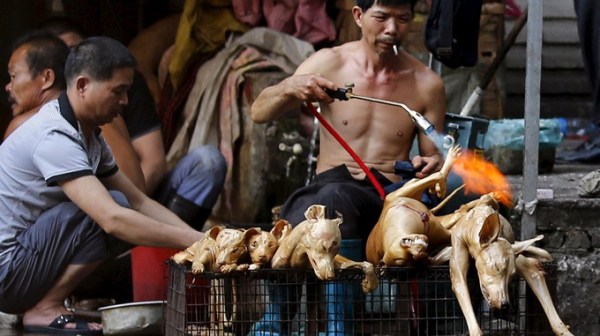
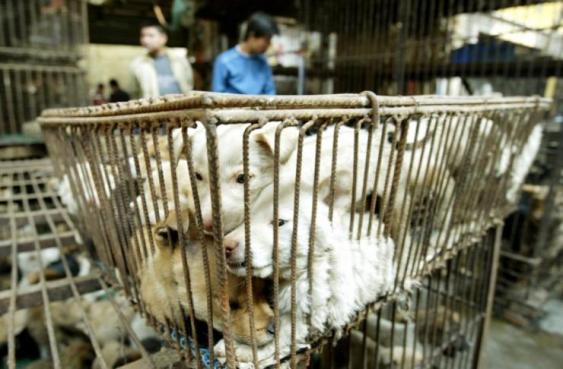
– MyPetNeedsThat.com  in the USA regarding an excellent post on the ugly truth of the dog meat trade in the Far East.

If you click on the following link you should be given access to the article – ‘the ugly truth behind the dog meat trade’.

Please check it out and gather more info on the Asian dog meat trade.

https://www.mypetneedsthat.com/dog-meat-trade/

Please take time out to view all the rest of the site, which we know you will find interesting.

yulin dogs

yulin 16 3

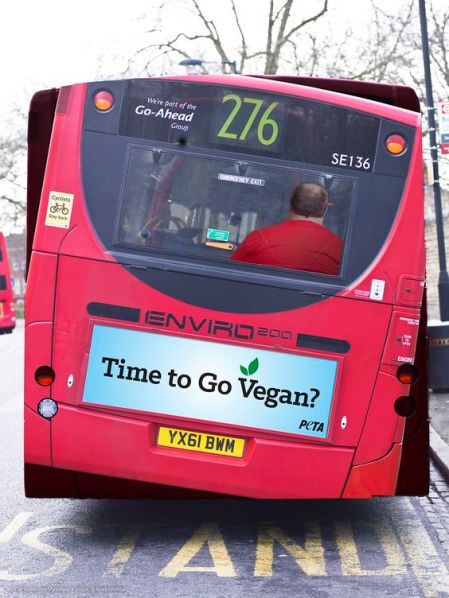
The Best Veggie and Vegan Eating Places In The World.

mozza3

https://youtu.be/d0LeL9BUPtA

meat out

  1. Wild Food – in Granada, Spain
  2. Grassroots Health – in Edinburgh, Scotland
  3. AtayaCaffe – in Berlin, Germany
  4. The Butcher’s Son – in Berkeley, California
  5. Dosa Bar – in Tel Aviv, Israel
  6. Piante Pizzeria – in Breckenridge, Colorado
  7. Vegan Beat – in Athens, Greece
  8. Veganeats Caffe – in Lisbon, Portugal
  9. PickyWops – Fulham – in South West London, England
  10. Arashiyama-kan – in Kyoto, Japan
  11. Plant – in Asheville, North Carolina
  12. Hoi Banh My Chay – Food Stall – in Hoi An, Vietnam
  13. T’s Tantan – Tokyo Station – in Tokyo, Japan
  14. The Cheeze Factory Restaurant – in Baraboo, Wisconsin
  15. Reform Kafe – in Chiang Mai, Thailand
  16. Urban Orchard – temporarily closed – in Madrid, Spain
  17. La Tecia Vegana – in Venice, Italy
  18. The Wala Room – in Torremolinos, Spain
  19. All Chay – in Salt Lake City, Utah
  20. Comet 984 – 50’s Diner – in Playa Del Carmen, Mexico
  21. Cafe Thrive – in Southampton, England
  22. Dall’Albero – in Rome, Italy
  23. Sova Vegan Butcher – in Dublin, Ireland
  24. What The Pitta – Shoreditch – in East London, England
  25. Vegab – Starowiślna – in Krakow, Poland
  26. Caju – in Nice, France
  27. Ao 26 – Vegan Food Project – in Lisbon, Portugal
  28. Sweet Theory Baking Co. – in Jacksonville, Florida
  29. Offbeet – in Wickham, England
  30. The Vurger – Calle Quart – in Valencia, Spain
  31. Ma Ma Wok – in Charlotte, North Carolina
  32. My Vegan Sweet Tooth – in Virginia Beach, Virginia
  33. Bamboo Vegan Mini Market and Cafe – in Athens, Greece
  34. Arvore do Mundo – in Porto, Portugal
  35. Gnome Cafe – in Charleston, South Carolina
  36. Lime Bistro – in Athens, Greece
  37. Spiral Diner & Bakery – in Fort Worth, Texas
  38. Gioia Plant-Based Cuisine – in Marbella, Spain
  39. Chef Tanya’s Kitchen – in Palm Springs, California
  40. Peloton Supershop – in Bali, Indonesia
  41. Phuc Quang Chay – in Ho Chi Minh City, Vietnam
  42. Zad’s – in Manchester, England
  43. Berben and Wolff’s Vegan Delicatessen – in Albany, New York
  44. GustaV – in Salzburg, Austria
  45. Le Corail at Latifa – in Essaouira, Morocco
  46. The Pitted Date – in Playa Del Carmen, Mexico
  47. The V Factor – in Lanzarote, Canary Islands
  48. Morpho Cafe – in Kyoto, Japan
  49. Vegan Junk Food Bar – Staringplein – in Amsterdam, Netherlands
  50. Purezza – in Brighton, England
  51. Green Point – in Cusco, Peru
  52. Veggie House – in Las Vegas, Nevada
  53. Simply Green Cafe – in Ramsey, New Jersey
  54. Portershed – in Christchurch, New Zealand
  55. Virtuous Pie – Main St – in Vancouver, British Columbia
  56. Trivoli Vegan Kafeneio – in Athens, Greece
  57. Dona Flor Cafe – in Lisbon, Portugal
  58. Falafel Corner – in Coventry, England
  59. Anastasia – in Tel Aviv, Israel
  60. La Palanche d’Aulac – in Paris, France
  61. Picnic – in Glasgow, Scotland
  62. Edamame Vegan Sushi – in Warsaw, Poland
  63. Ain Soph.Ripple – in Tokyo, Japan
  64. Vegana By Tentugal – in Porto, Portugal
  65. El Vergel Veggie Restaurant – in Tarragona, Spain
  66. Men Impossible – in Amsterdam, Netherlands
  67. Thuc Duong Bao An – Bao An Macrobiotic – in Da Nang, Vietnam
  68. Cheeky Yam – in Cairns, Queensland
  69. Momencik – in Warsaw, Poland
  70. Avo – in Nashville, Tennessee
  71. Bonita Cafe and Social Club – in Bangkok, Thailand
  72. Brammibal’s Donuts – Maybachufer – in Berlin, Germany
  73. Balans Bistro – in Bratislava, Slovakia
  74. Spiral Diner and Bakery – in Dallas, Texas
  75. The Very Good Butchers – in Victoria, British Columbia
  76. Mitasie 3 – in Huntington Beach, California
  77. Fox & Fig – in Savannah, Georgia
  78. Tasty Vegan – Seminyak – in Bali, Indonesia
  79. Peas – in Athens, Greece
  80. Plant Power Food – in Copenhagen, Denmark
  81. The Greyhound Cafe – in Malvern, Pennsylvania


vegan day 4

https://www.standard.co.uk/lifestyle/travel/18-of-the-best-vegan-restaurants-in-the-world-a3440316.html


https://www.happycow.net/best-restaurants/top-rated-vegan-restaurants


https://theculturetrip.com/europe/articles/15-best-vegetarian-restaurants-from-around-the-world/


https://www.olivemagazine.com/travel/best-vegetarian-restaurants-around-the-world/


felix cartoon 2

https://www.amexessentials.com/worlds-best-vegetarian-vegan-restaurants/


https://www.huffingtonpost.com/the-daily-meal/top-25-vegetarian-restaurants-in-the-world_b_6515570.html?guccounter=1


https://www.standard.co.uk/lifestyle/travel/19-of-the-best-vegan-restaurants-in-the-uk-a3266876.html


https://www.olivemagazine.com/restaurants/best-plant-based-restaurants-in-the-uk/


veganfaces1

veganfaces2

An Insight Into Vivisection.

viv1

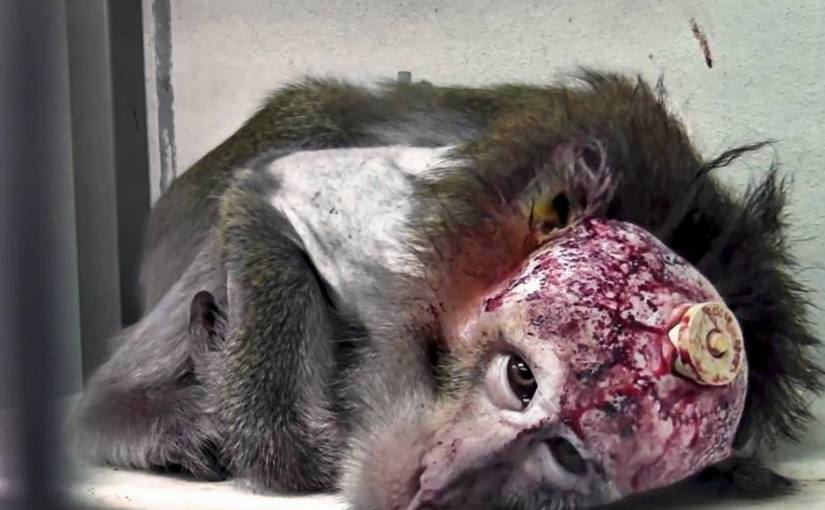
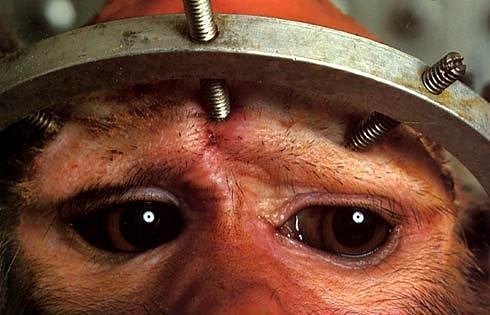
Vivisection has been defined as “The act of cutting into or dissecting the body of a living animal, especially for scientific research.” (The word is derived from the Latin, vivus, for alive, and the English section, which means cut). The term has come to mean any harmful or invasive technique used on animals in experimentation or dissection.

https://www.navs.org/the-issues/the-cruelty-and-waste-of-vivisection/#.W3aUeuSWzIU


Failure of the Animal Model

https://www.navs.org/the-issues/failure-of-the-animal-model/#.W3aU3uSWzIU

The Issue

The use of animals as stand-ins for humans can give rise to misleading results because of the intrinsic differences between humans and other species. Human disease and human response to drugs and other chemicals should be studied in human-relevant systems.

 viv2

Animals Used in Product Testing

https://www.navs.org/the-issues/animals-used-in-product-testing/#.W3aVMuSWzIU

The Issue

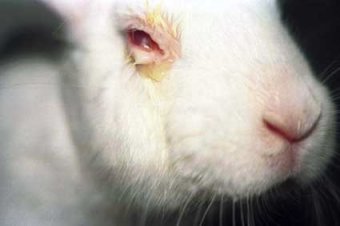
Each year, millions of animals are used to measure the safety of household and personal care products. These toxicity tests were developed in the early 1900s and have been criticized for their extreme cruelty and inability to provide reliable data that can be extrapolated to humans.

 viv3

Animals Used in Cosmetics Testing

https://www.navs.org/the-issues/animals-used-in-cosmetics-testing/#.W3aVeuSWzIU

The Issue

People trust that the cosmetics and personal care products that they purchase are safe for all their family members, including their companion animals, but object to the use of animals in toxicity testing to assess the safety of these products and their ingredients. Polls have shown that most consumers would prefer to use products from companies that do not test on animals. And innovative alternative testing methods are now available that are more humane, faster, less expensive and better able to predict how these products will affect people. Despite this, the use of animals to test the safety of cosmetics continues in the U.S. and throughout the world.

 viv4

Animals Used in Research

https://www.navs.org/the-issues/animals-in-research/#.W3aVu-SWzIU

The Issue

Despite the inherent limitations with the animal model and advances made in technology, it is estimated that over 100 million animals are used every year by the research industry, which includes universities, pharmaceutical and diagnostic laboratories, as well as military, agricultural and marine mammal facilities.

Indonesia: Take Action Against The Worst of the Worst When It Comes To Palm Oil Rainforest Destruction.


Indonesia

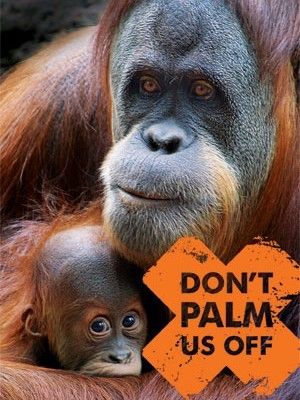
Nestlé’s palm oil business partner Indofood is the worst of the worst when it comes to producing palm oil. The Indonesian giant has gotten away with rainforest destruction and worker abuse for too long.

This impunity could end soon!

palm oil cost

The palm oil industry’s main certification body, the Roundtable on Sustainable Palm Oil (RSPO) could finally kick the rogue company off its certification scheme. The RSPO complaints panel meets next week, so we need to act fast.

This decision will be a crucial step in getting Nestlé to finally cut deforestation and abuse out of its supply chain.
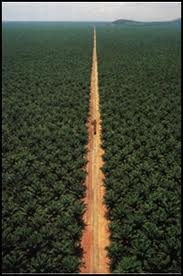
palm oil 4

Together, we can expose the RSPO’s greenwashing and put its reputation at risk so it doesn’t stick to business as usual and overlook Indofood’s gross violations.

Sign the petition to demand the RSPO suspends Nestlé’s business partner Indofood.

Owned by Indonesia’s richest man, Indofood has been exposed in multiple investigations for exploiting workers, paying poverty wages (and female workers even less), dangerous working conditions, and intimidating communities off their land for illegal deforestation.
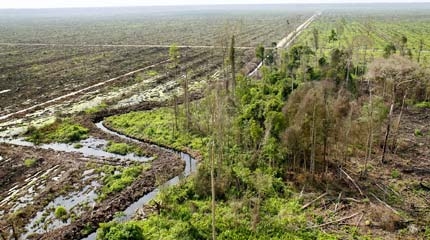
palm oil greenpeace uk

It also ignores the RSPO’s guidelines on protecting precious orangutan habitat and is guilty of logging on carbon-rich peat land, intensifying climate chaos.

Nestlé is in on this game. The snack food giant co-brands products in the South Asian market, and profits from a lucrative Joint Venture Partnership with Indofood — cheating on its palm oil commitments.

Getting the industry’s main certification scheme to suspend Indofood could force Nestlé to take strong action against Indofood, or risk public backlash. A suspension would give us even more evidence to call for Nestlé to permanently cut ties with Indofood.

There’s very little time before Nestlé’s business partner gets its verdict.

Sign the petition to pressure the RSPO into suspending Indofood — NOW.

Together, we’ve forced some of the palm oil industry’s biggest players to change their destructive ways before. Last year a huge SumOfUs petition shone light on another one of Nestlé’s dodgy palm oil partners — REPSA in Guatemala. The exposure and media fall-out forced Nestlé to cut ties with the Guatemalan palm oil offender!

The RSPO often fails to enforce its own standards, but if we pile on the pressure it could be forced to sanction Indofood. Recently, the RSPO froze Nestlé’s membership for several weeks when it failed to comply with its rules.

The suspension was a blow to Nestlé’s public image, and zoos and retailers around the world refused to stock its products for the period. That’s why we want to send a strong message to the industry by getting Indofood suspended for good.

Sign the petition to demand the RSPO suspends Nestlé’s business partner Indofood.

petition keyboard

 Sign the Petition 

Thanks for all that you do,
Rebecca, Fatah and the team at SumOfUs

https://actions.sumofus.org/pages/tell-rspo-to-sanction-nestle-and-pepsi-business-partner-indofood/?akid=45946.7697051.P5qKy4&rd=1&source=fwd&t=12


Additional Information.


palm1

In 2012, the annual revenue received by Indonesia and Malaysia together, the top two producers of palm oil, was $40 billion.[36] Between 1962 and 1982 global exports of palm oil increased from around half a million to 2.4 million tonnes annually and in 2008 world production of palm oil and palm kernel oil amounted to 48 million tonnes. According to FAO forecasts by 2020 the global demand for palm oil will double, and triple by 2050.[37

Indonesia

Main article: Palm oil production in Indonesia

Indonesia is the world’s largest producer of palm oil, surpassing Malaysia in 2006, producing more than 20.9 million tonnes.[36][38] Indonesia expects to double production by the end of 2030.[11] At the end of 2010, 60 percent of the output was exported in the form of crude palm oil.[39] FAO data show production increased by over 400 percent between 1994 and 2004, to over 8.66 million metric tonnes.
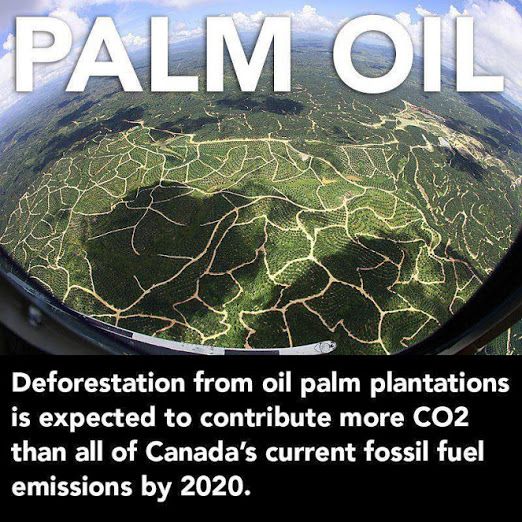
Palm2

Malaysia

Main article: Palm oil production in Malaysia

In 2012, Malaysia, the world’s second largest producer of palm oil,[40] produced 18.79 million tonnes of crude palm oil on roughly 5,000,000 hectares (19,000 sq mi) of land.[41][42] Though Indonesia produces more palm oil, Malaysia is the world’s largest exporter of palm oil having exported 18 million tonnes of palm oil products in 2011. China, Pakistan, the European Union, India and the United States are the primary importers of Malaysian palm oil products.[43]

Nigeria

As of 2011, Nigeria was the third-largest producer, with approximately 2.3 million hectares (5.7×10^6 acres) under cultivation. Until 1934, Nigeria had been the world’s largest producer. Both small- and large-scale producers participated in the industry.[44][45]
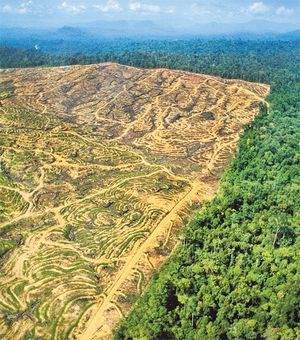
palm3

Thailand

Thailand is the world’s third largest producer of crude palm oil, producing approximately two million tonnes per year, or 1.2 percent of global output. Ninety-five percent of Thai production is consumed locally. Almost 85 percent of palm plantations and extraction mills are in south Thailand. At year-end 2016, 4.7 to 5.8 million rai were planted in oil palms, employing 300,000 farmers, mostly on small landholdings of 20 rai. ASEAN as a region accounts for 52.5 million tonnes of palm oil production, about 85 percent of the world total and more than 90 percent of global exports. Indonesia accounts for 52.2 percent of world exports. Malaysian exports total 37.9 percent. The biggest consumers of palm oil are India, the European Union, and China, with the three consuming nearly 50 percent of world exports. Thailand’s Department of Internal Trade (DIT) usually sets the price of crude palm oil and refined palm oil. Thai farmers have a relatively low yield compared to those in Malaysia and Indonesia. Thai palm oil crops yield 4–17 percent oil compared to around 20 percent in competing countries. In addition, Indonesian and Malaysian oil palm plantations are 10 times the size of Thai plantations.[46]

Colombia

In the 1960s, about 18,000 hectares (69 sq mi) were planted with palm. Colombia has now become the largest palm oil producer in the Americas, and 35 percent of its product is exported as biofuel. In 2006, the Colombian plantation owners’ association, Fedepalma, reported that oil palm cultivation was expanding to 1,000,000 hectares (3,900 sq mi). This expansion is being funded, in part, by the United States Agency for International Development to resettle disarmed paramilitary members on arable land, and by the Colombian government, which proposes to expand land use for exportable cash crops to 7,000,000 hectares (27,000 sq mi) by 2020, including oil palms. Fedepalma states that its members are following sustainable guidelines.[47]

Some Afro-Colombians claim that some of these new plantations have been expropriated from them after they had been driven away through poverty and civil war, while armed guards intimidate the remaining people to further depopulate the land, with coca production and trafficking following in their wake.


 

palm oil 2

Vietnam: Bears Hoa Tra and Hoa Lan have been rescued at last!

viet nam flag

Dear Mark, 

Bears Hoa Tra and Hoa Lan have been rescued at last!

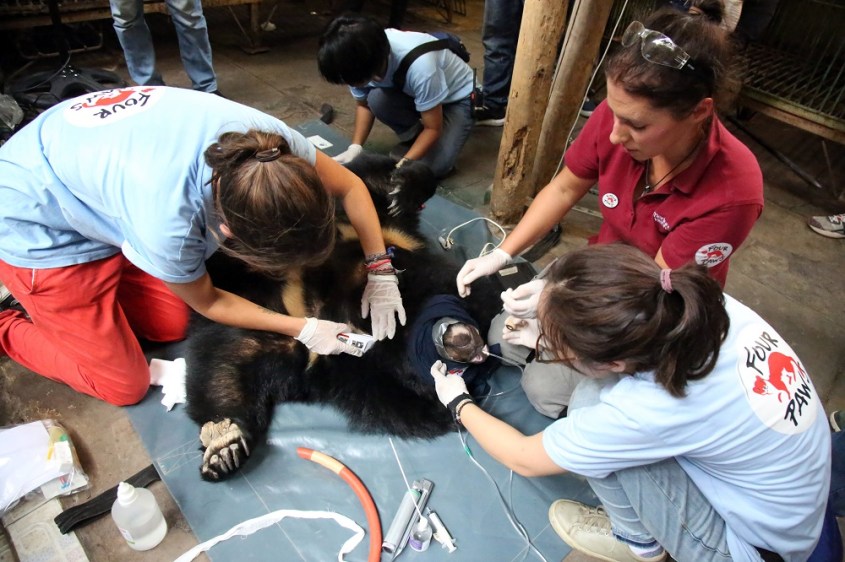
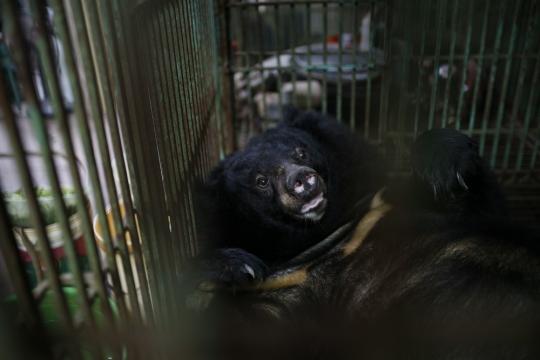
After an all-day rescue operation, the two bile bears arrived safe and sound at our bear sanctuary in Vietnam late last night.

Being kept without sunlight or fresh air for twelve years has clearly taken its toll. Both bears are obese from a lack of exercise and a poor diet, while Hoa Lan’s teeth are in bad shape – some were pulled out yesterday, and she’ll likely need more dental work in the future.

Rescue of bears Hoa lan and Hoa Tra 2018 Vietnam

Thankfully, the bears will finally receive the specialised attention they desperately need.

FP 2 Aug

Now in quarantine at our sanctuary, the two bears will receive veterinary care, fresh food and enrichment. And once they’re ready, Hoa Tra and Hoa Lan will be released to the outdoor enclosure where they can finally experience fresh air, sunlight and grass beneath their feet.

UK: British Forces To Malawi To Help Stop Rhino and Elephant Poaching.

uk

british forces protect rhino

https://www.bbc.co.uk/news/newsbeat-45113932

Animal poaching: British soldiers’ Malawi mission to stop poachers

The Majete Wildlife Reserve sits in a large basin in the south of Malawi, and the roads that lead there are busy at 6am.

Not with vehicles, but with endless cyclists as Malawians make the most of the low light and cooler air to start their days.

The appearance of two British Army 4x4s turns heads as they leave the sights and smells of the villages, and head into the bush.

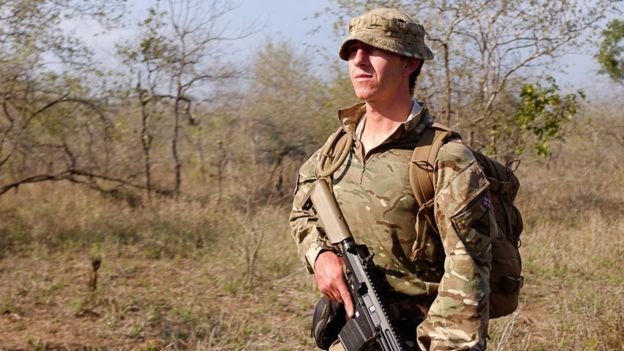
Lance Corporal Chad Spalding is one of those on board.

The 23-year-old is about to spend the next few days with local rangers Boston Phiri, who’s pretty new to the job, and Retief Chomali, with ten years’ experience.

“You don’t really have time to think,” explains Chad. “Most of the time you’re concentrating on the environment itself.

“You’re constantly looking, watching dangerous game, anything that might sneak up on you.”

Chad, who’s originally from Zimbabwe, is one of 14 British soldiers in Malawi trying to help stop poaching. Ministers announced the British Army’s involvement after a successful pilot last year.

Chad says the wildlife and the environment are important to him and he feels a sense of responsibility to make sure that others get to experience them.

“If we start chopping down trees and killing animals what will be left for future generations? Just a bunch of pictures in a book,” he reflects.

Chad remembers working with lions when he was growing up on a project in Gonarezhou, Zimbabwe.

“After I’d seen the wildlife and what it’s actually like out in the bush, I just really really bit into it. As soon as this came across the table, I took it straight away.

The illegal wildlife trade is a big business, thought to be worth £17bn a year worldwide. A rhino horn is more expensive than cocaine, heroin or gold.

In the last 50 years global black rhino numbers have dropped from 70,000 to 5,500, African Parks says. The organisation runs the Majete Reserve and two others in Malawi.

“Most jobs out here don’t pay well, whereas if they get a rhino horn it’s a pretty big pay day,” Chad says.

“I know in Zimbabwe, South Africa, Mozambique, Tanzania there’s quite a lot of heavy poaching.

“Most of the poaching that goes on is organised by higher syndicates which are funding these Chad knows what he would say to a poacher if he met one though.

“I would ask his reasons for doing it, and what he thinks the consequences will be if he does get caught.

“It’s not a matter of if he gets caught it’s a matter of when he gets caught. If he does carry on he is going to get caught, and he will go to jail.”

Follow Newsbeat on Instagram, Facebook and Twitter.

Listen to Newsbeat live at 12:45 and 17:45 every weekday on BBC Radio 1 and 1Xtra – if you miss us you can listen back here.

“Which is making it a lot hard for the rangers to keep up with the funding they’ve got. For now the rangers seem to be winning, let’s hope it stays that way.”

The military-style approach, along with tougher sentences, seems to be working for now though.

No elephants or rhinos have been poached in Majete for 15 years.

Shares Tumble After Cancer Court Verdict.

bees win monsanto

bee

https://www.reuters.com/article/us-monsanto-cancer-lawsuit-bayer/roundup-cancer-verdict-sends-bayer-shares-sliding-idUSKBN1KY0M5

FRANKFURT (Reuters) – Bayer (BAYGn.DE) shares plunged as much as 14 percent on Monday, losing about $14 billion in value, after newly acquired Monsanto was ordered to pay $289 million in damages in the first of possibly thousands of U.S. lawsuits over alleged links between a weedkiller and cancer.

https://www.bloomberg.com/news/articles/2018-08-13/bayer-drops-after-monsanto-loses-verdict-in-roundup-cancer-trial

https://www.cnbc.com/2018/08/13/bayer-shares-down-after-monsanto-ordered-to-pay-damages.html

https://www.cbsnews.com/news/bayer-shares-slump-after-289m-monsanto-roundup-verdict/

Marriott to Ditch Plastic Straws in All of Its Hotels.

Marriott to Ditch Plastic Straws in All of Its Hotels

Last year, major hospitality company Marriott International pledged to commit to more environmentally friendly practices, with the ultimate goal of reducing landfill waste by 45 percent and responsibly sourcing its top 10 product purchase categories by 2025. Based on their decision last month to ditch plastic straws in all of its hotels by June of 2019, it seems like Marriott is well on its way to meeting that goal.

Marriott Joins Growing Number of Companies to Ban Straws

With more than 6,500 properties across 30 brands around the world, disposable plastic straws and stirrers easily add up. Marriott estimates that they currently go through about 1 billion plastic straws and a quarter billion stirrers each year.

“We are proud to be among the first large U.S. companies to announce that we’re eliminating plastic straws in our properties worldwide,” said Arne Sorenson, President and Chief Executive Officer of Marriott International.

In addition to Marriott International, Starbucks, Disney, Hyatt, American Airlines, and Royal Caribbean are among the few major companies to do away with plastic straws.

“Removing plastic straws is one of the simplest ways our guests can contribute to plastic reduction when staying with us – something they are increasingly concerned about and are already doing in their own homes,” Sorenson added. “We are committed to operating responsibly and – with over one million guests staying with us every night – we think this is a powerful step forward to reducing our reliance on plastics.”

Single-use Plastic Items Are Unnecessary and Harm Animals

The decision comes as people grow more aware of the problem that disposable plastic, including straws and stirrers, cause in the environment. On average, people only use a plastic straw for about 20 seconds before throwing it away. Although normally plastic can be recycled, unfortunately straws cannot. Small and thin, they fall through the conveyor belts at recycling plants. In the end, all straws end up in the garbage, going into the ground or slipping into waterways.

Plastic in the ocean and along beaches is not only an environmental concern, but a big problem for seaside hotels and resorts that thrive on tourism. This motivates both administrators and guests alike to cut out their use.

Plastic Use Pollutes and Threatens Oceans

“Our guests come to stay with us to enjoy Maui’s beautiful environment and incredible marine life, so they’re as eager as we are to reduce harmful pollution,” General Manager of Marriott International’s Sheraton Maui Resort & Spa Tetsuji Yamazaki explained. “By eliminating plastic straws, we have been able to create a substantive dialogue with our guests about the importance of protecting the ocean and endangered animals like the honu (green sea turtle).”

According to a 2014 study, there are 270,000 metric tons of plastic in the ocean, and the number is only growing. Although straws only make up a little over 7 percent of the plastic that ends up in the environment in general, because they are so unnecessary for most people, it’s a potentially easy way to help reduce plastic waste. If we don’t stop these wasteful habits, there will likely be more plastic than fish in the ocean by 2050.

Right now, Americans alone toss out 500 million plastic straws each day, which won’t decompose for 450 to 1,000 years. By phasing out plastic straws, companies like Marriott International can make a big difference not just in ending single-plastic use, but also in raising awareness.

Cities and Countries Take Steps to Ban Single-Use Plastic

Even more importantly, many cities and states are taking the initiative to create laws limiting or banning single-plastic use items. Plastic straws only make up a small portion of the plastic that’s contaminating the environment, so targeting other items, like packaging material, fishnets, food containers, and plastic bags is even more important.

Several cities in California have already imposed bans, and the entire state is in the process of developing limitations. Just this year, Taiwan developed a plan to eliminate single-use plastic bags, straws, takeout containers, utensils, and cups by 2030, and Chile passed a law banning the use of plastic bags for businesses.

Every little bit helps toward changing habits and reducing plastic waste. In addition to stopping straw use, Marriott International is eliminating single-use toiletry bottles typical to most hotels by installing shampoo dispensers in the showers. The new toiletry dispensers are expected to be in place at more than 1,500 hotels in North America by the end of this year.


https://youtu.be/4wH878t78bw