Month: May 2020

England: Moo Free May !

gemalt-england-flagge-5d


Go Vegan World has accused the National Farmers' Union of ...


Moo Free May:


This MooFree May we’re taking our actions online – sharing information about animal welfare, human health and the environment, while encouraging the British public to ditch dairy once and for all.


This year our MooFree May campaign enters its third year! Launched in 2018 the initiative has been a huge success and we hope to reach even more people this year. Obviously, the circumstances are very different from those previous but we hope you’ll still join us digitally.

Last year our online campaign was supported by lots of Street Action events, when we visited cities all across the country to promote veganism. Together with our volunteers we reached thousands of people. With COVID-19 threatening people’s lives, we won’t be able to take MooFree May out on the street with us. However, this year it’s more important than ever to raise awareness about the impact of animal agriculture with three quarters of the world’s new or emerging infectious diseases coming from animals, mainly through trade in wildlife and factory farming.

While this pandemic is turning our world upside down and claiming lives around the globe, we can’t forget that the animals including cows in the dairy industry are still going through horrendous suffering every single day. With fewer staff being allowed to work on farms and financial pressure due to this crisis, welfare standards are likely to be even worse than under normal circumstances.


Scary Dairy | Scary Dairy

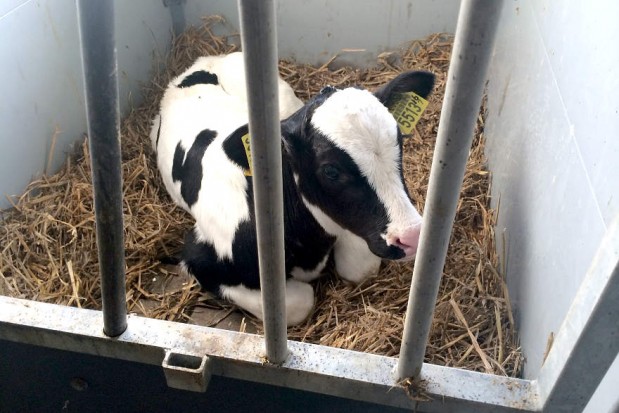
calf eoa


Scary Dairy

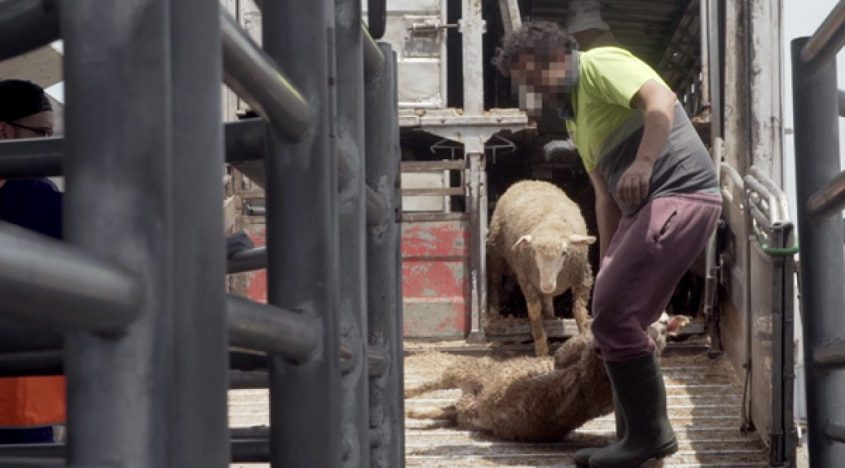
We’re brought up believing in an idyllic image of dairy cows grazing fields, eating grass and magically producing milk. Yet in reality, dairy cows are subjected to a perpetual cycle of artificial insemination, calving and milking year after year in order to keep their milk production up.

After a nine-month pregnancy, all dairy cows are separated from their young between 24-48 hours after birth. This happens across the board, whatever the system – organic, ‘free-range’ or zero-grazing. If born a boy he’ll likely be shot in the head as a useless by-product and if born a girl she’ll be reared as a milk machine to eventually replace her mother in the milking herd.

This continuous exploitation of a dairy cow’s reproduction system causes unnecessary suffering on an industrial scale but with so many amazing plant-based alternatives now available to us, it’s never been easier to go dairy-free.


Victory! ASA Rejects Complaints about TRASH Billboards | Scary Dairy


Do you need help going dairy-free?

Viva! has a vast amount of resources to help you go dairy-free. You can order our Everyone’s Going Dairy Free guide or have a look at our online section. If you’ve got a friend who’s been wanting to go dairy-free but hasn’t quite managed yet to give up cheese, why not get them one of our brilliant guides to help them with their journey?!


Happy Moo Free May everyone!


https://www.viva.org.uk/blog/moofree-may-2020?mc_cid=619d80533e&mc_eid=26c03356b8


https://www.viva.org.uk/blog/moofree-may-2020?mc_cid=619d80533e&mc_eid=26c03356b8


https://youtu.be/oOJ_8IWMpOA


Enjoy these great Vegan meals from Viva! –


French Toast Vegan Style:

https://www.veganrecipeclub.org.uk/recipes/french-toast-vegan-style?mc_cid=619d80533e&mc_eid=26c03356b8


Fast and Healthy Cereal Bars:

https://www.veganrecipeclub.org.uk/recipes/fast-healthy-cereal-bars?mc_cid=619d80533e&mc_eid=26c03356b8


Cheesy Broccoli and Tomato Quiche:

https://www.veganrecipeclub.org.uk/recipes/cheesy-broccoli-tomato-quiche?mc_cid=619d80533e&mc_eid=26c03356b8


The Ultimate Vegan Pizza:

https://www.veganrecipeclub.org.uk/recipes/ultimate-vegan-pizza?mc_cid=619d80533e&mc_eid=26c03356b8


Chocolate and Raspberry Torte:

https://www.veganrecipeclub.org.uk/recipes/chocolate-raspberry-torte?mc_cid=619d80533e&mc_eid=26c03356b8


China: They Gave the World Covid; Now China’s Scientists Accused of ‘Playing God’ by Creating ‘Monstrous’ Cloned Apes and Primates

China


… and the governments of the world who have experienced the Covid curse in recent months simply sit by and let them continue yet again; without question !


https://www.thesun.co.uk/news/11571796/china-scientists-cloned-apes-gene-edited-babies/


FRANKENSTEIN MONSTERS

China’s scientists accused of ‘playing God’ by creating ‘monstrous’ cloned apes and primates with human organs


 Five cloned macaques monkeys, engineered to have brain disorders, at a research institution in Shanghai


CHINESE scientists have been accused of being real-life Dr Frankensteins who play God by cloning apes and editing the genes of babies.

Some of their work has been dubbed “monstrous” while other cutting edge research could lead to cures for Parkinson’s and Alzheimer’s.

It’s important to note that the US and the UK are not immune from conducting tests on animals and in fact carry out THOUSANDS of experiments on primates every year.

However, China has become the capital of research on apes and monkeys believing that our closest relatives hold the key to understanding brain disorders that destroy lives.

Incredibly, the Institute of Neuroscience (ION) in Shanghai, cloned five infant monkeys last year from an adult macaque who had been genetically-edited.

PUSHING ETHICAL BOUNDARIES

The result was baby primates intentionally born with a mutation that disrupts their wake-sleep cycle.

By giving the monkeys new drugs to treat their pre-existing brain disorders, the scientists hope to develop treatments for illnesses such as Alzheimer’s disease.

It’s no wonder the ION has been dubbed the “Cern of primate neurobiology”.

The Institute successfully cloned two macaque monkeys in 2018 – a world first – giving the experts confidence to push ahead with further experiments.

Heaping praise on the research, the Chinese Academy of Sciences said: “The achievement heralds a new era in which China can produce batches of standardised monkey clones, which will serve as animal models in the research of the brain’s cognitive functions, early diagnoses and interventions of diseases, as well as research and development of drugs.”

While China allows genetic manipulation on animals it has banned the use of gene-editing on humans – but that hasn’t stopped some of its scientists “playing God” with unborn children.

Scientist He Jiankui, 35, rocked the scientific world when he revealed he had altered the embryos of twin girls in 2018.

In December last year, it was revealed that a third child born to a different mum had also been gene-edited.

Heaping praise on the research, the Chinese Academy of Sciences said: “The achievement heralds a new era in which China can produce batches of standardised monkey clones, which will serve as animal models in the research of the brain’s cognitive functions, early diagnoses and interventions of diseases, as well as research and development of drugs.”

While China allows genetic manipulation on animals it has banned the use of gene-editing on humans – but that hasn’t stopped some of its scientists “playing God” with unborn children.

Scientist He Jiankui, 35, rocked the scientific world when he revealed he had altered the embryos of twin girls in 2018.

In December last year, it was revealed that a third child born to a different mum had also been gene-edited.

GENE-EDITING BABIES

The rogue expert said he used a tool called Crispr to disable a gene that allows the AIDS virus to enter cells in a bid to make the children immune from the disease.

But why have such experiments been dubbed “monstrous” by others within the scientific community?

Experts claim gene-editing in people could “divide humans into subspecies” and can cause mutations, genetic problems and even cancer.

Dr Kiran Musunuru, an expert in this area from the University of Pennsylvania, called the experiment “unconscionable … an experiment on human beings that is not morally or ethically defensible.”

Professor Julian Savulescu, of the University of Oxford, said: “If true, this experiment is monstrous.

“The embryos were healthy. No known diseases. Gene editing itself is experimental and is still associated with off-target mutations, capable of causing genetic problems early and later in life, including the development of cancer.

“There are many effective ways to prevent HIV in healthy individuals: for example, protected sex.”

Last December, Mr Jiankui was jailed for three years after news of the third child’s birth was revealed.

He was convicted of practising medicine without a licence and fined £330,000 by a court in Shenzhen, the Xinhua news agency reported.

One of the most controversial experiments to date was the creation of embryos that were part human and part primate.

MONKEYS WITH HUMAN ORGANS

Last year, Spaniard Juan Carlos Izpisúa Belmonte led a team of Chinese researchers with the end goal of creating monkeys which have entirely human organs such as kidneys or livers.

The organs will then be used for human transplants.

Based in China, the team made the chimeras – a single organism with cells from more than one genotype – by injecting human stem cells into a fresh monkey embryo.

Biologist Belmonte previously tried adding human cells to embryos of pigs but the disturbing experiment was not successful.

However, because primates are genetically related to humans, the chances of the new research being successful is much greater.

The scientists also use gene-editing technology to disable certain cell formations in the animals to give the human cells a better chance of thriving.

In the US and other western democracies, such research is banned – however in China, experts are allowed to push the boundaries of scientific ethics.

Importantly, no Frankenstein monster has been born as a result of this research… not yet anyway.

Instead, the hybrid embryos are allowed to develop for around two weeks so their progress can be studied.

Mr Belmonte defended his work with the Chinese, saying: “History shows us time and time again that, over time, our ethical and moral standards change and mutate, like our DNA, and what yesterday was ethically unacceptable, if this really represents an advance for the progress of humanity, today it is already an essential part of our lives.”


Archive 2019:

World’s first human-monkey hybrid created in China, scientists reveal

Researchers pledge to continue using primates in search for transplant organs 

Friday 2 August 2019


https://www.independent.co.uk/news/science/human-monkey-hybrid-china-organ-transplant-stem-cells-embryo-a9037506.html


Scientists say they have created the world’s first human-monkey hybrid in a laboratory in China.

The researchers, who want to use animals to create organs for human life-saving transplants, say creating the hybrid was an important step.

And they pledged to continue their experiments using primates.

The team revealed that they had injected human stem cells capable of creating any type of tissue into a monkey embryo.

The experiment was stopped before the embryo was old enough to be born.

But the scientists – who were Spanish but held the trial in China to get round a ban on such procedures at home – said a human-monkey hybrid could have potentially been born.

The embryo had first been genetically modified to deactivate genes that control organ growth.

Ethical concerns were raised over the trial, partly over fears that human stem cells could migrate to the brain.

Angel Raya, of the Barcelona Regenerative Medicine Centre, said experiments on organisms with cells from two species faced “ethical barriers”.

He told El Pais: “What happens if the stem cells escape and form human neurons in the brain of the animal? Would it have consciousness? And what happens if these stem cells turn into sperm cells?”

But Estrella Nunez, of Murcia Catholic University (UCAM) and the project collaborator, said mechanisms were put in place so that if human cells did migrate to the brain, they would self-destruct.

“The results are very promising,” Ms Nunez said.

The research, which was financed largely by the university, was costly. “If we combine the human/pig, human/rat and human/monkey research, it is many hundreds of thousands of euros,” she said.

Dr Raya said scientists have traditionally set a “red line” at 14 days’ gestation, which is not long enough for the embryo to develop a human central nervous system. All chimera embryos are destroyed before that time.

Juan Carlos Izpisua, who created the world’s first human-pig hybrid in 2017 and led the latest experiment, said: “We are now trying not only to move forward and continue experimenting with human cells and rodent and pig cells, but also with non-human primates. Our country is a pioneer and a world leader in these investigations.”


First Human–Monkey Chimeras Developed in China

The researchers aim to grow transplantable human organs from primate embryos.

Nicoletta Lanese
Aug 5, 2019


https://www.the-scientist.com/news-opinion/first-humanmonkey-chimeras-developed-in-china–66231


An international team of researchers has created embryos containing both human and monkey cells, the Spanish newspaper El País reported July 31. The controversial project was conducted in China, rather than in the US where the project leader is based, “to avoid legal issues,” according to the newspaper, and ultimately aims to grow viable organs for transplantation into humans.

Juan Carlos Izpisúa Belmonte of the Salk Institute in San Diego is spearheading the project with scientists from his own lab and those from the Murcia Catholic University in Murcia, Spain. The team wants to develop chimeras—organisms composed of cells from two or more species—capable of growing human organs.

Similar experiments using pig or sheep embryos have faced technical challenges, likely because the animals are genetically distant from humans. Primates, being more closely related to people, may offer more promise. “The human cells did not take hold. We saw that they contributed very little [to the development of the embryo]: one human cell for every 100,000 pig cells,” Pablo Ross, a veterinary researcher at the University of California, Davis, who previously researched pig-human chimeras at Salk, tells El País.

Ross adds that he doesn’t see the utility of growing human organs in monkeys. “I always made the case that it doesn’t make sense to use a primate for that. Typically they are very small, and they take too long to develop,” he says in an interview with MIT Technology Review.

The National Institutes of Health forbids the use of federal funds to create human-monkey embryos. China, where Izpisúa Belmonte’s experiments are taking place, has no such restriction. The crux of the controversy, according to The Guardian, is that it is difficult to restrict human cell growth to just one organ of interest. Should a human-animal hybrid develop a human-like nervous system capable of consciousness, or be brought to term and display human-like behaviors, the ethical consequences could be extreme.

See “Bioethicists Concerned over Japan’s Chimera Embryo Regulations

So far, the human-primate embryos have only been allowed to develop for a few weeks at a time, before organs have formed, according to Estrella Núñez, a biologist and administrator at the Catholic University of Murcia whose institution partially funds the research. “In no case is the gestation brought to full term,” she says in an interview with El País.

“I don’t think it is particularly concerning in terms of the ethics, because you are not taking them far enough to have a nervous system or develop in any way—it’s just really a ball of cells,” says Robin Lovell-Badge, a developmental biologist from the Francis Crick Institute in London, in an interview with The Guardian. “[But] if you allow these animals to go all the way through and be born, if you have a big contribution to the central nervous system from the human cells, then that obviously becomes a concern.”

In July, Japanese researchers—including Hiromitsu Nakauchi of the University of Tokyo and Stanford University—first received permission from the government to create human-animal embryos to be transplanted into surrogates. Japan had previously banned animal embryos containing human cells from developing beyond 14 days, let alone implanting them in a surrogate uterus. Although legal now, it remains unlikely that any of these animals will soon be brought to term as the proportion of monkey-to-human cells in the chimeras still has to be perfected, according to The Guardian.

It doesn’t make sense to bring human–animal hybrid embryos to term using evolutionarily distant species such as pigs and sheep because the human cells will be eliminated from host embryos early on, says Jun Wu, who researches human–animal chimaeras at the University of Texas Southwestern Medical Center in Dallas, in an interview with Nature last week.

“The evolutionary distance between humans and monkeys spans 30 to 40 million years, so it is unclear if this is even possible,” says Alejandro De Los Angeles of the Yale University School of Medicine, in an interview with The Guardian.

Beyond organ production, the research could address questions of evolutionary distance between species and investigate basic mechanisms in molecular biology, Ross tells MIT Technology Review. The results could also be used to develop better animal models of human disease, says Los Angeles to The Guardian.

“The ultimate goal would be to create a human organ that could be transplanted but the path is almost more interesting for today’s scientists,” says Núñez in an interview with Vice. “What we want is to make progress for the sake of people who have a disease.”



Cleveland Clinic Labor: a gang of Frankensteins

Animals were injected with toxins that damaged their bodies, cut open with minimal pain relief, deliberately bred so that their internal organs would protrude outside their bodies, and kept in severely crowded cages.

A worker even described preventable animal deaths there as “acceptable-ish.”

american-flag-120402148
All this took place in the laboratories of one of the best-known and largest taxpayer-funded research facilities in the country.
PETA has conducted a six-month undercover investigation into the laboratories of the Cleveland Clinic, which, in 2019 alone, received more than $100 million in taxpayer money through the National Institutes of Health (NIH).


Skulls Cut Open

Experimenters at the Cleveland Clinic call it a “cranial window.” Less euphemistically, it’s a hole in a mouse’s skull exposing the brain and covered by a pane of glass.

cleveland clinic 1
Experimenters cut into the head, drill into the skull to expose the brain, and use suction to remove portions of it, exposing the hippocampus. A glass coverslip is placed over the exposed portion of the brain, and a stainless steel “head cap” is glued onto the mouse’s skull.

The mouse receives pain relief only on the day of the surgery and the next day.

These painful, invasive experiments are ostensibly carried out to monitor what happens to “the brain condition.” However, the “structure, function, and behavior” of the mouse brain has little relevance to the human brain.

Animals with their insides hanging out

Experimenters at the Cleveland Clinic deliberately breed mice who are prone to pelvic organ prolapse—in which the uterus, bladder, or rectal tissue falls out of place and even protrudes outside the body.

One mouse, named Daisy by PETA’s investigator, had a bloody rectal prolapse—a very painful condition in which part of the rectum protrudes from the anus.

She had to drag her protruding rectal tissue through her bedding for at least 10 weeks, and she walked with her back legs unnaturally spread, appearing not to want to put pressure on her lower abdomen.

cleveland 2 pg
Daisy and other mice, some of whom had “enormous” prolapses, according to the experimenter’s aide, were bred repeatedly and denied pain relief.

Asked about giving Daisy something to make her more comfortable, the aide replied, “No, there’s nothing.”!

She added that when mice like Daisy “just linger” and stop breeding, after a year of such misery, only then would they be gassed to death—which was ultimately Daisy’s fate.

Another mouse, named Lily, walked slowly and leaned forward with her legs spread widely apart because of her painful, untreated condition. Imagine a dog or cat being treated this way. But of course, mice suffer just as much as they do—the extent of their pain isn’t proportional to their diminutive size.

Paralyzed mice drag themselves along to eat

Experimenters injected mice with a chemical that caused an inflammatory disease of the central nervous system, which left them struggling to walk and dragging their hind legs.

Apparently, this is done to “model” multiple sclerosis—even though what happens in mice bears little resemblance to what happens in humans with the disease. The mice’s painful condition was expected, so, according to one worker, their agony went unreported to veterinary staff unless their paralysis also affected their front legs or they developed a skin condition such as urine scalding caused by the inability to move their back end.
PETA’s investigator saw that some mice suffering in this experiment lost strength in their lower limbs and could not walk at all. They had no choice but to try to crawl and drag themselves along in order to reach their food.
Experimenters cut into their backs and separated their muscles from their vertebrae so they could take images of their spinal cords.

Kill them because they’re ugly’
Mice used in a kidney disease experiment developed raw, red, massive skin growths and lesions. One mouse scratched continuously at a growth that covered nearly half her face and kept pushing at her eye.

When veterinary technicians told the experimenter that these mice were in pain, the experimenter apparently replied that they wanted to “kill” the mice “just because they’re ugly.”
One mouse had a sore stretching across his entire back, about 3 inches long. His hair was gone, and his skin was red. Another mouse had a thumb-size sore on her lower back covered by a thick scab. Yet another mouse had a 2-inch-long sore on his right side.

A veterinary technician said that these mice were “scratching and biting the crap out of” the lesions, as mice used in the experiment “always” did.
But PETA’s investigator never saw these mice receive any treatment or relief for their wounds, such as anti-itch ointment or painkillers.

Animals driven mad by extreme crowding

Mice at the Cleveland Clinic were crammed into shoebox-size cages—up to five adult mice apiece or two adults with a litter of babies. Those housed alone in a cage fared no better—instead of companionship, they were given little more than a single paper towel.

cleveland 3 pg

Staff often failed to remove litters or additional adults from cages before new litters were born. This led to trampling and even cannibalizing of the babies by their severely stressed parents in the intolerably unnatural conditions.
A veterinary technician at the Cleveland Clinic said that “in the grand scheme of things,” such deaths were “acceptable-ish.”

cleveland 4
Other mice were simply left somewhere and forgotten.
Three mice were abandoned with no food or water in a cardboard bucket for hours.

When no experimenter’s group took responsibility for them, a supervisor said that “it isn’t like they would get in trouble for it” anyway.

Six more mice were found abandoned in another bucket. Two were found in a cage bound for the garbage. One experimenter’s aide left a mouse gasping and laboring to breathe for more than an hour before she was finally euthanized.

Pigs used as living, Breathing practice dummies

Other species at the Cleveland Clinic also suffered. Social, playful pigs were kept alone in barren pens. A worker said that some were used as “practice for new doctors,” while others were subjected to experimental rectal surgery.

You Can Help these Animals!

PETA has submitted these findings to NIH and has requested an investigation. Please join PETA in calling on NIH to stop funding cruel experiments at the Cleveland Clinic, beginning with the Frankensteinian cranial window experiments.

https://investigations.peta.org/cleveland-clinic-animal-experiments

(The petition is also in the link. Sign and share)


My comment: The neurosurgeon and brain researcher Professor Robert Joseph White from Cleveland, Ohio, was a recognized surgical technician in the 1980s and spent decades in this horror laboratory dealing with the problem of head transplantation.
White beheaded rhesus monkeys and put his head on another monkey’s.

The inverted heads remained functional on a foreign body for a maximum of seven days: they could see, hear, feel and, as far as possible.

White said he would not hesitate to transplant human heads: “The technical problem has been solved,” he said at the time.
“It would be even easier for humans than for the much smaller rhesus monkey. We don’t have to wait 200 years, we can do it right away.”

This “science”, which White tried to practice, already meant fidgeting and desecrating the primates, consuming them by the dozen, leaving them paralyzed, vegetating them for a few days and then moving them towards the garbage like a broken toy throw.

The most heinous and frightening thing of all about this research practice was the indifference with which such (practically) illegal crimes against animals were committed.
Obviously, and after today’s undercover investigation, not much has changed in Cleveland Clinic Labors.

I can only say one thing: The human experiments in the concentration camps during the Nazi era should also serve non-profit medical purposes.

My best regards to all, Venus

Switzerland: Executions of deer possible

Wild deer in the Hörnli cemetery in Basel cause ever greater costs. Individuals are now to be shot, as the city garden center explains to “Schweiz aktuell”.

-flagge-schweiz-hht33t

The Basel Hörnli cemetery is the largest in Switzerland with 54 hectares. It lies on the outskirts of the city and borders on the forest.
That is why deer live there.
For them, the cemetery is a land of milk and honey: practically every day graves have fresh flowers to eat, and there are no enemies – neither dogs, cars nor disturbing bikers.

Rehe jpg

“Deer breed terrific”

Even the visitors do not scare the animals away, but behave extremely calmly. “The deer are multiplying terrific,” says Emanuel Trueb, head of the Basel city garden center.
In recent years, the population has increased from around 15 to around 25 animals (!!!). They live in the cemetery, many were also born there.

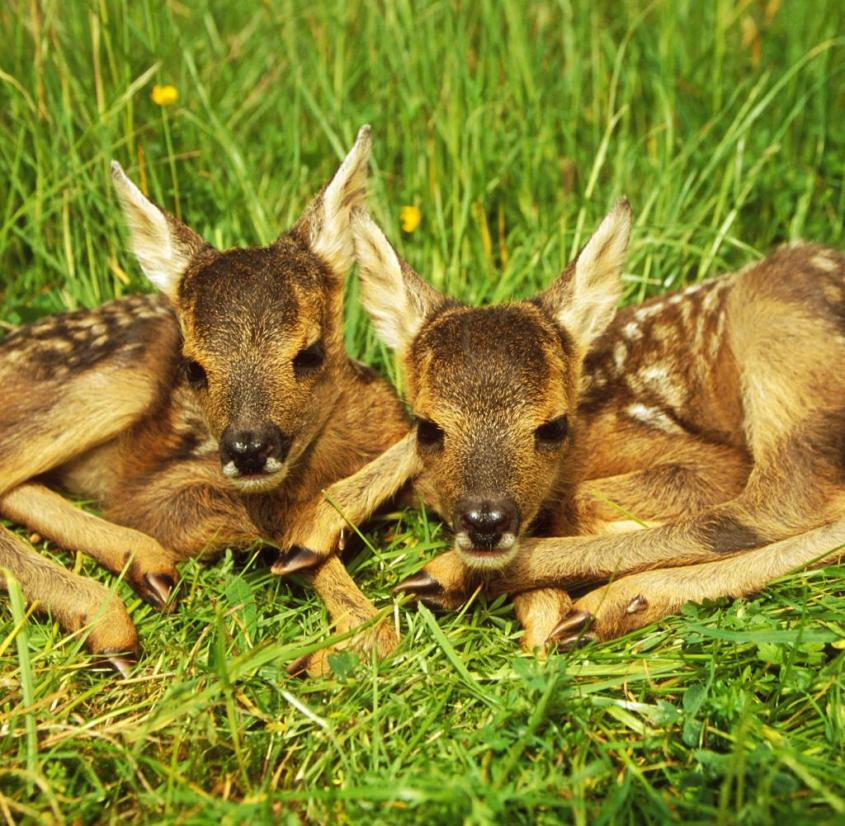
Rehkitz

As cute as the deer look: they cause great damage. On the one hand, the graves would have to be repaired, on the other hand, one tries to keep the deer away, for example with butyric acid, says Emanuel Trueb. The costs for all countermeasures and maintenance measures would now amount to CHF 100,000 per year.

Deer cannot be driven away

That is why the city must take action now, Trueb told “Schweiz aktuell”, and targeting individual roebucks.
Because the previous measures would have brought little or nothing. “We also tried repeatedly to drive the animals out of the area, but they were back the next day.”

Because the cemetery is in the area of ​​Riehen, it is responsible for a kill. The town council of Riehen therefore investigated the matter.

“The focus was not on the damage caused by the deer, but on the welfare of the animals” (!!!), says councilor Christine Kaufmann.

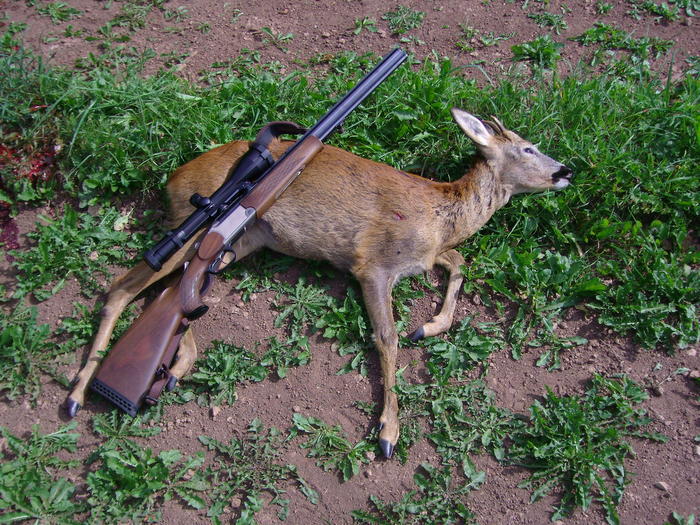
erschossenes Rehejpg

“We found that the number of roe deer in the cemetery is three times larger than in the forest in a corresponding area,” says Kaufmann, who is also a veterinarian (!!!). And that leads to stress in the animals.”

That is why Riehen supports the cemetery’s wish to kill the deer population with kills.

My beautiful picture

Special approval required

However, since the cemetery is a hunting ban area, where shooting is not permitted, Riehen has submitted a shooting application to the canton. This is now with the Basel Security and Justice Department and should be answered shortly. There is nothing more to be learned.

https://www.srf.ch/news//grosse-schaeden-basler-friedhof-will-rehe-abschiessen

 
And I mean…Why can’t the city of Riehen protect the cemetery with a fence?
The Swiss also do it with their motorway, a method which is good for the animals as well as for drivers.

The deer did not come from heaven.
We take away their living space, their houses, their food, hunters kill their children and destroy their families.
The animals try to find peace and security in the cemetery.

“The deer are multiplying terrific,” said the gardener
People too!
“Deer cannot be driven away and cause great damage”
People too!

So… do we want to use the killing method for human pests too?
To regulate the population, as the hunters would say!

My best regards to all, Venus

Canada: ALF brings red message to laboratory

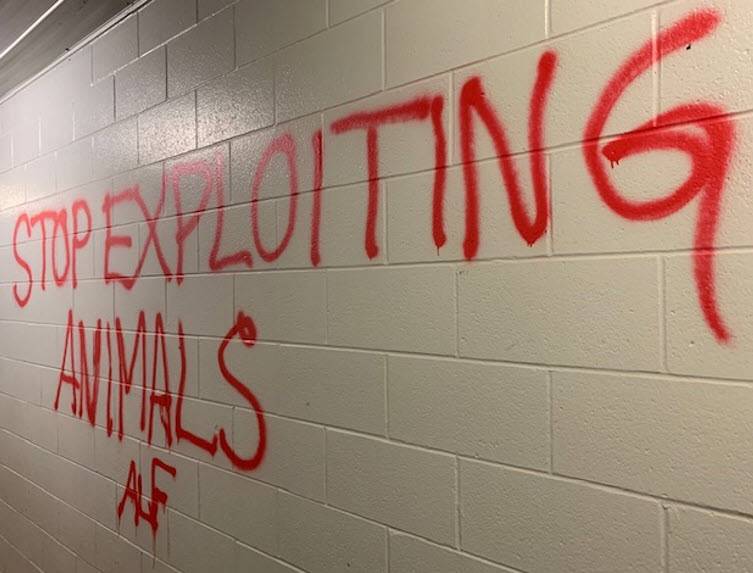
ALF stop exploiting animals pg

BY MATT CARTY
Global News- Canada
[Press Office note: No claim for this action has been received by the Press Office as of this posting.]

Wellington County OPP say vandals broke into the University of Guelph’s swine research site in Puslinch, spraying paint onto walls and equipment with animal rights messages.

Officers were called to the facility on Arkell Road on Tuesday morning to find walls and a tractor spray-painted. Red spray paint reading “stop exploiting animals” in capital letters was scrawled on an interior wall.

OPP believe that someone entered the facility between 3 p.m. Monday and 6:30 a.m. Tuesday and wrote messages that “consisted of profanity and slogans in support of animal rights.”

A vehicle captured on surveillance is described as a metallic blue four-door Ford Focus from either 2008 or 2009.

https://animalliberationpressoffice.org/NAALPO/2020/05/06/university-of-guelph-research-site-vandalized-with-animal-rights-graffiti-2/


And I mean…No slogan, no graffiti from the ALF can be as brutal as animal testing.

As soon as you write the truth on the wall of a horror laboratory, that’s vandalism.
When animals are tortured, massacred or cruelly killed in laboratories, the perpetrators speak of freedom of research.

The freedom of research stops when others have to suffer.

On behalf of the animals, thank you ALF!

Best regards to all, Venus

EU: The main culprit for animal suffering

A new investigation from Animal Equality shows the pain and torment of Spanish lambs as they are shipped across long distances, with journeys lasting up to ten days, and slaughtered while fully conscious after arrival.

THE DETAILS: In distressing footage shot by our investigators, we documented how lambs, all less than a year old, are treated during their live transport from Spanish farms.

Tens of thousands of lambs are first shipped hundreds of miles by truck to Spanish port cities and then forced to travel by sea to countries in the Middle East to meet the demand for meat coinciding with Ramadan and the feast of the Sacrifice of the Lamb. Lambs are particularly sensitive animals that become paralyzed when they are afraid.

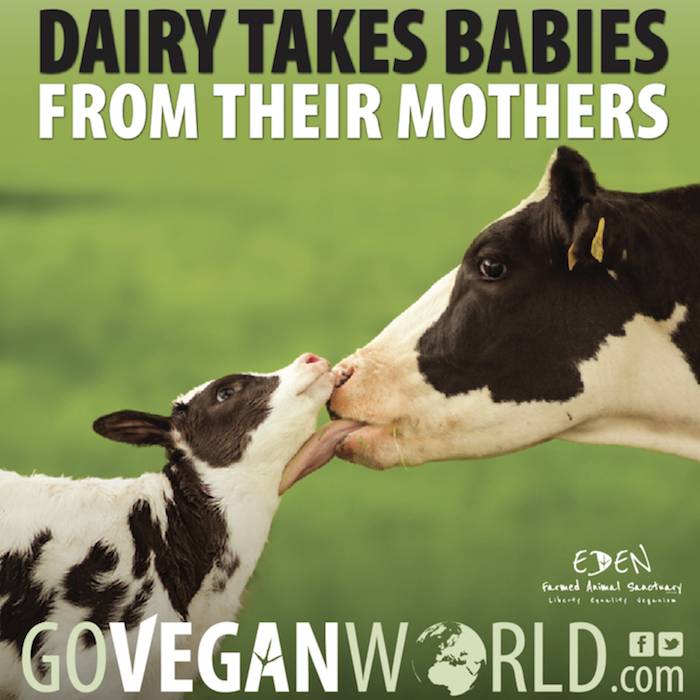
During the journey, workers are shown throwing the animals and grabbing them by their legs to prevent them from retreating.

spain_lambs_2pg COVID-19 A FACTOR: The meat industry is utilizing the exports of lambs to Middle East countries as a way of compensating for the lack of domestic demand due to the COVID-19 pandemic, as 90% of these animals are consumed in bars and restaurants. Data indicates that this year alone more than 250,000 lambs will be sent to countries in North Africa and the Middle East for Ramadan celebrations.
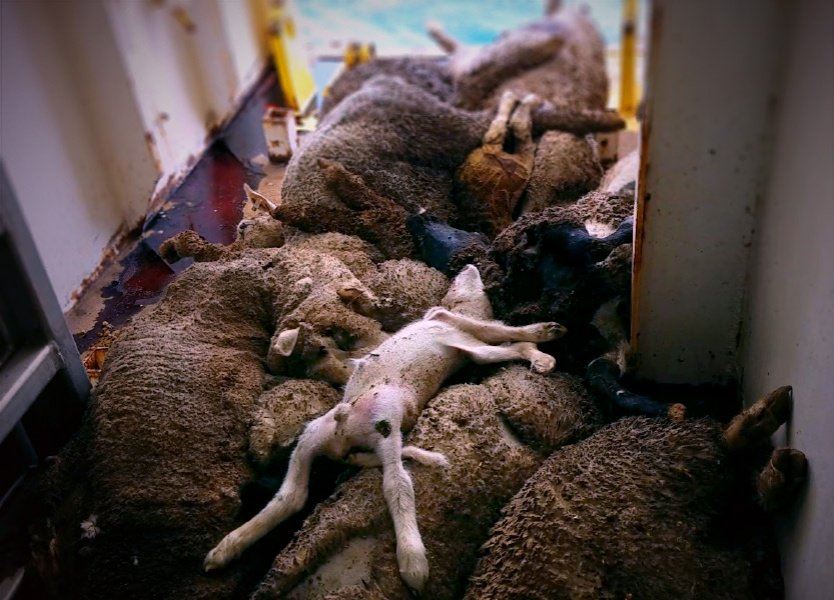
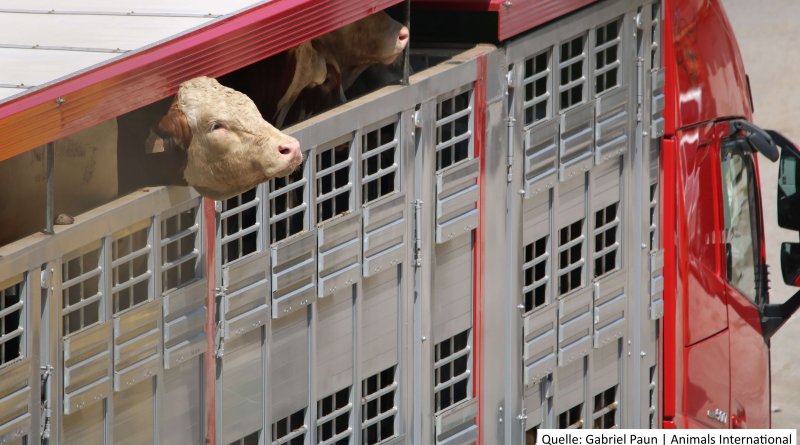
BILLIONS OF ANIMALS ENDURE CRUEL LIVE TRANSPORT: Worldwide, more than two billion farm animals undergo long-distance of travel each year as a means of transporting live meat. Thousands also die during long sea journeys, with their bodies thrown overboard, appearing on beaches days later.

Schafe_Lämmer_Schifftransport_834.600_0_0__95

In a 2019 report following an accident in which 14,000 sheep drowned in the Black Sea while being transported from Romania to Saudi Arabia, the European Commission acknowledged numerous deficiencies in this type of long-distance transport.

The report points out that the welfare of these animals depends largely on the conditions of the ship and because there are no suitable inspections carried are carried out, there are no guarantees that these ships have an adequate drainage or ventilation systems.

tiertransport zum Appel an die EU-Kommissionpg

In fact, for ships bound for Saudi Arabia, port operators or livestock owners are not even allowed access to the vessels’ interior. 

WHAT WE’RE SAYING: “Our investigations have clearly documented the mistreatment of lambs on these trips. It’s time to demand that both the Spanish government and the European Commission ban long-distance travel of live animals,” says Silvia Barquero, Executive of Animal Equality Spain.

WHAT ELSE WE’RE SAYING: “From farms to slaughterhouses, animals exploited for food suffer tremendously. What is often forgotten in this never-ending cycle of violence is the immense cruelty that happens when these animals are transported to be slaughtered. It’s more than time for this cruelty to be stopped and Animal Equality will continue to use its investigations to expose these truths,” says Sharon Núñez, President of Animal Equality.

LIVE TRANSPORT OF ANIMALS OUTSIDE OF THE EU MUST END: In Europe, Animal Equality launched a petition addressed to the European Commission and the Ministry of Agriculture, Food and Fisheries calling for an end to long-distance transport to countries that do not guarantee basic EU animal welfare standards (!!)

We are hopeful that our efforts will lead to much-needed change and will prevent the suffering of hundreds of thousands of animals every year. In the meantime, you can make a difference for animals by sharing out our investigations and ditching animal products.

Saving lives starts with consumer choices, and you can help end suffering by making the switch plant-based.

The animals, the planet, and your health will thank you.


https://animalequality.org/news/investigation-animal-equality-shows-torment-of-eu-animals-shipped-for-slaughter/


And I mean…Since the judgment of the European Court of Justice in April 2015, the legal situation has been clear: The EU animal welfare transport regulation No. 1/2005 must be observed until the animals’ final destination, even if it is outside the EU.

The longer the transport, the more the animals suffer.
The lower the financial ‘value’ of the animals, the worse the transport conditions – mostly with live exports from the EU.

In order to get rid of the overproduction of animals, the member states of the European Union export over three million animals per year to countries outside the European Union, especially cattle and sheep.

Sooner or later the animals will be slaughtered in the countries mentioned without anesthesia. The methods for fixing animals are inconceivable and far from the EU animal welfare laws for animal transport.

And now the following question arises: Why do we need EU law if it is constantly broken?

Has the EU Commission considered what happens to the ships that want to enter the ports of non-EU countries and are not allowed if the countries close their borders because of Corona?
Who will check whether Regulation 1/2005 is complied with in these countries?

The EU Commission has so far confirmed that they are indifferent to the suffering of animals in transports, farms, laboratories, circuses, aquariums, zoos…

Close the altar that worships power, excess, animal torture and tyranny
Let the bloated bureaucrats find real jobs in the fast food industry.

Turn these palatial EU buildings into nature wildlife parks for zoos animals
A Europe without an EU will be a win for everyone!

My best regards to all, Venus

don’t be part of the evil machine

anonymous diary industriejpg

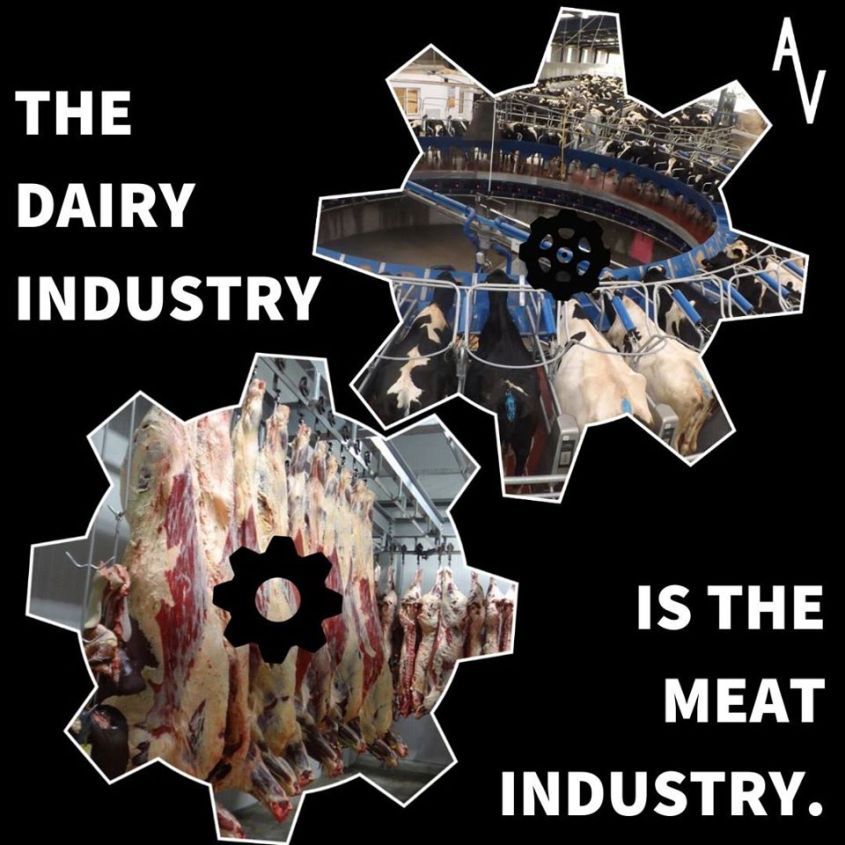
Many people seem to be under the impression that by buying a glass of milk is somehow “different” to buying a steak—not true.

The reality is that dairy is beef and beef is dairy.

You CANNOT fund one without funding the other.

Here’s how: when you buy a dairy product like cheese or milk, you pay for a cow to be fisted in order to impregnate them (so they can lactate) and create someone’s future steak.

Males will be murdered shortly after birth, and females will grow up as sex slaves having that whole process repeated to them until they, too, are sent to the slaughterhouse.

Schlachtwanne

And the same is true of the other products of abuse that people buy.

The egg industry is the chicken industry.
The wool industry is the lamb industry.
To buy eggs or wool is to fund murder and slavery.

Stop being a cog in the evil machine.

Anonymous for the Voiceless


Regards and good night from Venus