Month: November 2021

EU: Member States – Insects Authorised for Human Food and Animal Feed.

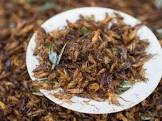
House Crickets

Insects authorised for food and feed

25 November 2021

If the legal framework is still in development, why are authorisation procedures moving forward?

The European Commission (EC) will ask Member States to authorise two new insect species for human consumption on 30 November (Comitology). Previously the EC had told Members of the European Parliament (MEPs) in a written answer that “the Commission will continue to develop the legal framework for insects”.

During the last meeting of the Standing Committee on Plant, Animals, Feed and Food (PAFF), an Implementing Act authorised the sale of Locusta Migratoria, commonly known as grasshoppers, as a novel food. On 30 November, the Commission will present a draft implementing act to authorise Tenebrio Molitor, mealworms, and Acheta Domesticus, house crickets as a novel food.
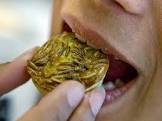
Mealworms

These authorisations follow an amendment to the “Feed Ban” which allowed the use of processed insects in poultry and pig feed. Although authorisations for feed and food products may differ from a toxicological point of view, in terms of the market for the insect producing industry, both are connected and share similar areas of concern. 

The time is now to have a broader political discussion on how to develop an appropriate framework for this growing industry. There is still a significant lack of knowledge surrounding insects and how best to rear them industrially. Taking hasty authorisation decisions today may prove costly further down the line.

Specifically, Eurogroup for Animals suggest considering carefully the following points:

  • Industrial insect farming’s ecosystem impacts: Large scale insect farming may have consequences for local ecosystems, threaten food security and biodiversity. In addition to the destruction of crops or forests, high insect concentrations pose a health hazard as they can spread pathogens, can be parasitic and create extra competition for resources for other species. 
  • The changing climate increases the capacity of invasive alien species to establish: An increased risk of insect-borne pathogens would pose an additional threat to already struggling wild-living insects that are essential for the ecosystem, such as pollinators. Beyond the economic impact, the impact on local ecosystems would compromise both biodiversity and food security. Accidental releases from insect farms can, therefore, lead to inordinate concentrations of a species in a given area or the introduction of invasive alien species into European ecosystems. The economic consequences could be significant, considering that invasive species are the cause of a 14% reduction in global food production.
  • Industrial insect farming is energy intensive and has potential high climate and environmental impacts: While insect protein is touted as an alternative feed that requires less land use, this case can only be made if the insects are fed on by-products. In practice, most producers do not rely on food waste to feed their insects. Life Cycle Analyses (LCA) show that insect farming is energy intensive and uses more land than generally assumed. The EU’s goal “to reduce the environmental and climate footprint of the EU food system” by ensuring that the food chain has a neutral or positive environmental impact may be incompatible with the generalisation and intensification of insect farming. In fact, the EFSA notes that the environmental impact of insect farming will be comparable to other forms of animal production.
  • Placing industrial insect production into the EU’s broader goals: promoting a sustainable food system instead of boosting factory farming: Insect-derived protein is presented as a solution to diminish the use of imported soy and other feed crops linked to deforestation, as well as replacing the use of fishmeal from depleted oceans. Promoting industrial insect production will, ultimately, sustain intensive animal production models instead of facilitating the transition to a sustainable food system as envisaged by the European Green Deal.  A sustainable food system should focus on reducing the amount of animal products and supplying them from systems with higher welfare standards. Animal consumption patterns, therefore, should shift primarily to plant-based diets. Boosting industrial insect production for animal feed will sustain factory farming with its serious animal welfare and environmental concerns. Indeed, the European Commission’s Agricultural Outlook forecasts that the increased supply of insect meal and lower prices could support conventional intensive animal production if the practice is fully commercialised and existing restrictions lifted. 

Read the position paper:

File

Position Paper – Insect farming: a false solution for the EU’s food system – October 202148


Or you can go Vegan !

Regards Mark


New report presents key recommendations to improve animal welfare under the modernised EU-Chile trade agreement.

25 November 2021

Press Release

In the midst of national elections in Chile, Eurogroup for Animals and Vegetarianos Hoy launched a report calling on the EU and Chile to better address animal welfare in their modernised trade agreement. The conclusion of the first EU-Chile agreement, back in 2002, was followed by increased intensification in the Chilean livestock and aquaculture sectors. The new text must do better and contribute to a transition towards sustainable food systems, in which the animals’ wellbeing is promoted and respected.

The first round of the Chilean presidential and parliamentary elections just occured last weekend. In the run up to these elections, the debate around the finalisation and ratification of the modernised EU-Chile association agreement increased in the EU. The two leading candidates that will run against each other in the second electoral round (19/12) have not expressed clear opposition to concluding such an agreement with the EU. 

In 2002, when the EU and Chile concluded their first trade agreement, they added, for the first time ever, provisions on animal welfare cooperation. Even if this cooperation was only based on animal welfare standards established by the World Organisation for Animal health (OIE), the inclusion of these provisions contributed to fast-forwarding the adoption by the Chilean government of a national law on the protection of animals in 2009. 

As negotiations are ending, Eurogroup for Animals and the Chilean based organisation Vegetarianos Hoy reiterate their call on both partners to seize the opportunity offered by the modernisation of the EU-Chile agreement to guarantee that EU-Chile trade does not have a detrimental impact on animals, and that the new trade deal contributes to a transition towards sustainable food systems that would benefit animals, people and the environment.  

The timing has never been better for the EU to engage with Chile on this topic: the Chilean Parliament is currently debating two pieces of legislation about the legal status of animals and cage-free egg production. 

There is also urgency to act. Since the entry into force of the 2002 trade agreement, the livestock industry in Chile has grown and intensified significantly. Exports of Chilean salmon, chicken and pig meat to the EU have increased as well, and, as the 2002 agreement did not condition trade preferences with the respect of any animal welfare-related conditions, this trade between the EU and Chile has indirectly contributed to the spread of this more intensive model of livestock farming – which is not only detrimental to animal welfare, but also fuel global challenges such as the spread of zoonoses, the surge of antimicrobial resistance, biodiversity loss, deforestation and climate change.  

This phenomenon could even worsen as Chilean producers indicated more market access would provide them with more incentives to develop their exports to the EU. If the modernised EU-Chile trade agreement were to provide such significant market access to Chilean animal products, it should also condition this preferential access to the respect of EU-equivalent or higher animal welfare standards. Moreover, the modernised deal must include ambitious provisions on animal welfare cooperation, with a recognition of animal sentience and cooperations aiming at regulatory alignment with EU rules.

The first EU-Chile agreement was a turning point for animal welfare in trade policy. Yet, the intensification of livestock farming and aquaculture that followed shows that stronger tools are needed to ensure trade policy does not negatively impact animals. The EU must use the modernisation process around the EU-Chile agreement  to condition the granting of further market access on the respect of EU-equivalent animal welfare standards. By doing so the EU would not only contribute to improving the welfare of animals, but also incentivise farmers and producers to switch to more sustainable and humane methods of production.

Reineke Hameleers, CEO, Eurogroup for Animals

All eyes are on the EU to reconcile the objectives of the Green Deal, and, as foreseen in the Farm-to-Fork strategy, use its trade policy to “obtain ambitious commitments from third countries in key areas such as animal welfare”.

Chile – Animal Protection in EU Trade Negotiations

File

Briefing: Chile | Animal Protection in EU Trade Negotiations – November


Regards Mark

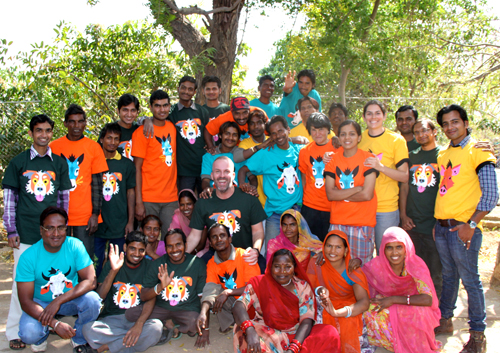
India: A Message Of Thought From Erika At Animal Aid Unlimited (India).

See all the fantastic work of Animal Aid Unlimited by viewing our past posts at:

https://worldanimalsvoice.com/?s=animal+aid+unlimited

I communicate regularly with Erika, joint founder of the superb AAU; and she sent this very sentimental message tonight. Use the above link if you wish to make a donation to this superb rescue organisation.

Regards Mark

—————————————————-

Dear Mark,

Even if, when you give to help the animals here, you are not consciously thinking “this gift is in memory of xyz,” it possibly is, in a sense, given in their memory—a tribute to the way they have shown us, given us profound, unforgettable, sparkling new love. And then they left us one day. If ever that sense of “he had to go;” “she needed to continue her journey” “they are angels called home,”—whatever phrasing comes to you, your heart pleaded for things to be otherwise, but in the end you said goodbye. Yet they stay in your heart.

I feel like whatever I do for animals, whether very modest and small (like fundraising for their food) or very spectacular and grand (like cleaning a LOT of poop and pee over the years) – some aspect of my service is done in the memory of someone(s) I have loved and had to say goodbye to. Or maybe it is not really right to say “in their memory”—it’s more like, they gave me the fuel I need now. They poured themselves into me and their sweetness somehow multiplies, grows, never fades, never leaves us, and then somehow merges and blends with other love we have for other animals, and for one another.

So I want to share with you right now that I fostered a dog—Bebe—for the first time in ages, inside the house in the beginning of October. I’d had sort of a moratorium on foster dogs because I have so many animals just outside the gate in Animal Aid, and they always triggered a trauma in the cats. But for some reason I decided to foster an abandoned little French bulldog-y type of about, I guess 2 years. She had one eye, severe anemia, seizures, rolling fevers and she wasn’t house trained at all. I don’t know if she’d ever spent time outdoors. She trembled if a voice was raised. She would pee inside and then try to hide. You could guess the history. We thought, at first, that maybe she had an infection somewhere, causing fever that triggered seizures. We treated her with antibiotics and anti-seizure medication. For a happy week she seemed to be on a recovery trail. Her fever went down, she got a bit of energy and even chased balls and trotted around the house and always ate like a trooper. But suddenly, she fell apart. This time her fever raged and she couldn’t hold down a drop of food. There was blood in her stool. We gave her drips that increased the production of blood plasma, liver tonic, antacid, anti-seizure medication, anti-nausea medicine, multi vitamins, –but after 2 weeks she was almost comatose and we had to say goodbye.

It astonishes me how much I miss her.  I live in the midst of 400, 500 dogs, and dozens of them are absolutely my darlings, but Bebe I fell in love with like an explosion. Now, sitting here writing this, my arms are oddly empty. My fingers feel pointlessly efficient, no longer having to contort myself to reach the keyboard without her pug nose and bulging eye and velvety fur interfering with me on my lap. Without glancing down to see her ears that so innocently, so humbly flattened backwards like a blush. And best of all, her complete melting on my lap, to sleep, to dream, pliant in her total trust.

She came and left my life in less than a month, but time has no meaning in love. Habits, yes; we may miss some of our habits and they intensify with time, but I’m not talking about habits. I’m talking about the miracle of love that overtook me somewhere, somehow during these few days of cleaning her pee at 4.30 in the morning, her effort to be just a good girl, just the best girl, shining so brightly through her one protruding over-bred eye.

Well, now I have shared this episode with you and I feel a little better because I know, even if you can’t find time to write me back, I know you know. I know you’ve been here in your own version of this feeling of emptiness.

And I know, too, you’ve gone on to love again, (and again,) even more familiar with love, even more, ever more. We have these Beings to thank for that gift of love which is at the heart of all the animals you’ve helped save with your donations. How beautiful they were, how beautiful they have made you.

Erika

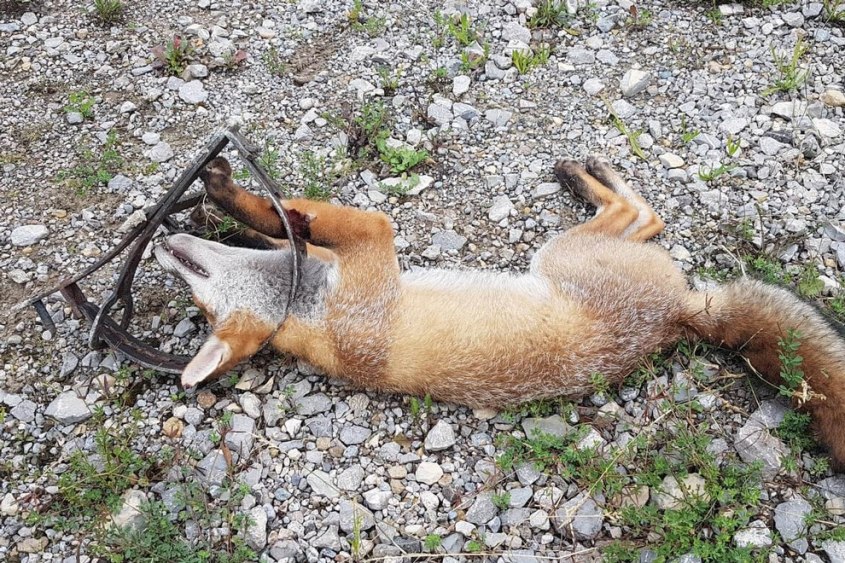
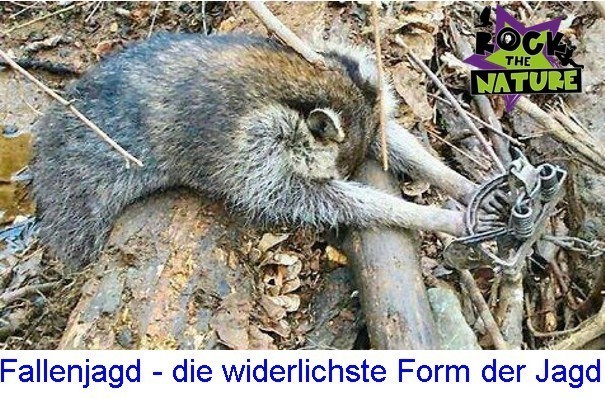
Germany’s medieval hunting methods- manslaughter traps

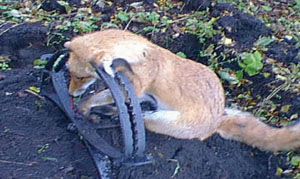
It’s hard to believe that these cruel manslaughter traps are still allowed. Animals often suffer miserably for hours!

Many people do not know that the cruel manslaughter traps are still allowed almost everywhere in Germany.

In theory, manslaughter traps are supposed to kill immediately, but often they don’t. Many animals die a slow and agonizing death in these traps.

They get in with their paws or face and are often badly mutilated or slowly crushed to death.

Cats and endangered species also fall victim to homicide traps

Manslaughter traps must be set up in so-called trapping bunkers, gardens or boxes to ensure that people do not step in and that only certain animal species can fit in. However, this is not the case.

Often cats or protected animal species also fall into the traps. In Hessen, for example, the protected ermine was listed in the trap statistics on the 2016/2017 hunting route. Even the friendlier sounding live traps end with a headshot for the trapped animal.

Animal suffering remains largely hidden from the public eye. However, we always receive whistleblower reports that bring to light the suffering of the animals through the hunt.
In Baden-Württemberg, Berlin, Hesse, North Rhine-Westphalia, Saarland and Thuringia, homicide traps are already completely or largely prohibited.

However, in these federal states, too, an application for trapping can usually be made with the approval of the hunting authorities.

Continue reading “Germany’s medieval hunting methods- manslaughter traps”

Big cats in South Africa – Bred for death

Report: Together for the animals

BIG CATS IN SOUTH AFRICA – BREED TO BE KILLED!
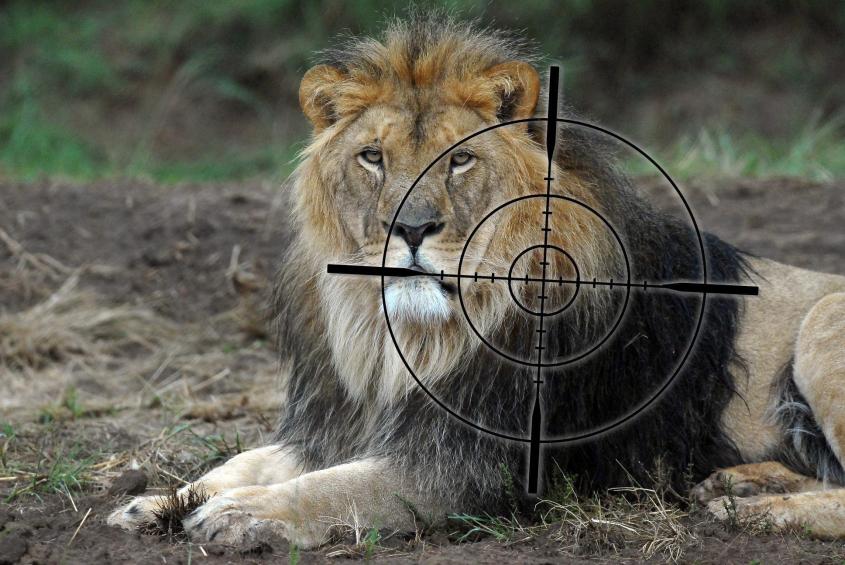
A new surveillance video that was leaked to “Four Paws” shows the true extent of the horrific big cat breeding in South Africa.
The images show countless of these sensitive animals in completely overcrowded and dirty cages and enclosures.

Experts assume that around 12,000 lions and an unreported number of tigers suffer this fate in South Africa.
And they were born just to die.

The country rose to become today’s largest exporter of big cats and their body parts in the world.
The majority is sold to China, Vietnam, Laos and Thailand.

Not only does the absolutely unspecific breeding of animals cause unspeakable animal suffering, no, it also promotes species extinction and the development of zoonoses.
Quote from Fiona Miles, director of “Four Paws” South Africa:

“The images show that tigers in South Africa are intensively bred for commercial purposes and that enormous animal suffering is caused in the process.”
But unfortunately not just tigers.

Continue reading “Big cats in South Africa – Bred for death”

November 25th – Thanksgiving for USA

Thanksgiving dinner’s sad and thankless
Christmas dinner’s dark and blue
When you stop and try to see it
From the turkey’s point of view.

Sunday dinner isn’t sunny
Easter feasts are just bad luck
When you see it from the viewpoint
Of a chicken or a duck.

Oh how I once loved tuna salad
Pork and lobsters, lamb chops too
‘Til I stopped and looked at dinner
From the dinner’s point of view.
—-Shel Silverstein

And I mean…Thanksgiving is the biggest festival in America, more important than Christmas because everyone celebrates it, regardless of denomination, whether they go to church, synagogue, mosque, Hindu temple or no place of worship at all.
It also draws its charm from the fact that gifts are largely avoided.

Just not the turkey. It should not be missing at any Thanksgiving festival that deserves its name.
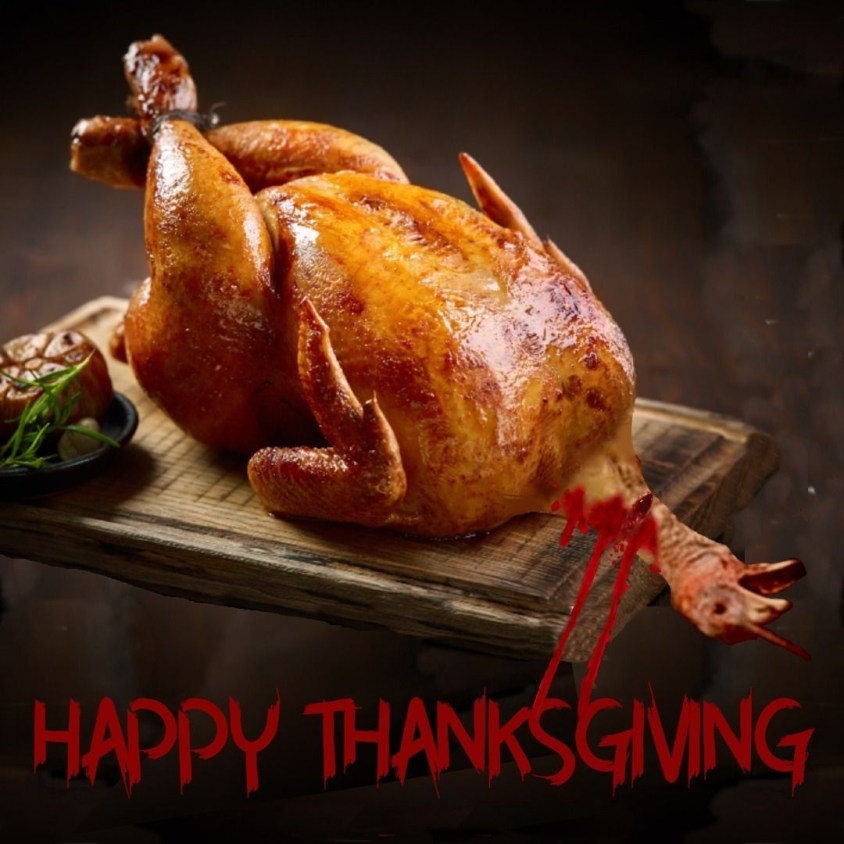
For that single day, 46 million of these intelligent animals will be murdered.

The number of turkeys bred in the United States approaches 250 million each year, and soon there will be more turkeys than humans in the country.
So.. would “Mordgiving for Turkeys” be more correct?

My best regards to all, Venus

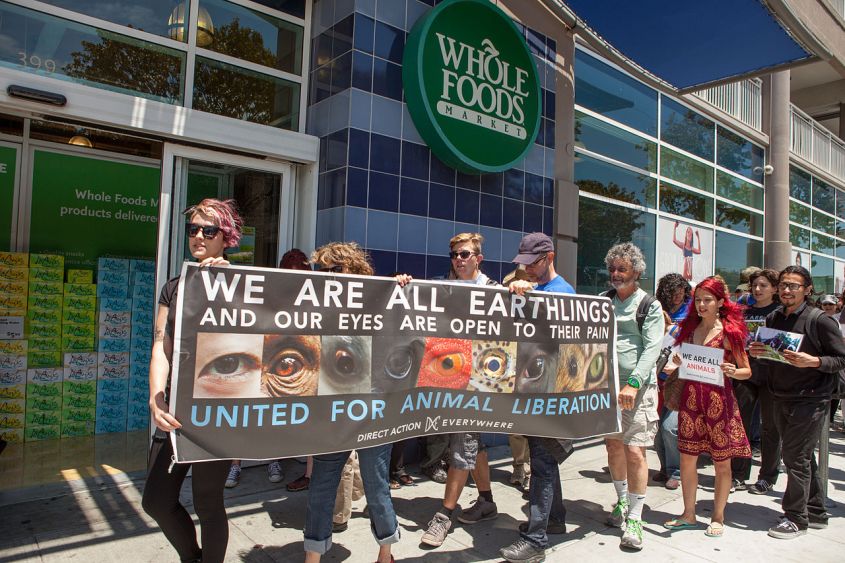
Direct Action Everywhere are animal rescuers, not criminals

Direct Action EverywhereDxE

BREAKING: The felony case against Wayne Hsiung and Paul Darwin Picklesimer for rescuing turkeys from a Utah farm in 2017 was just “dismissed by compromise.”
The company and prosecutor agreed that “the criminalization of this nonviolent investigation and rescue is unnecessary.”

This is a step toward the #RightToRescue!

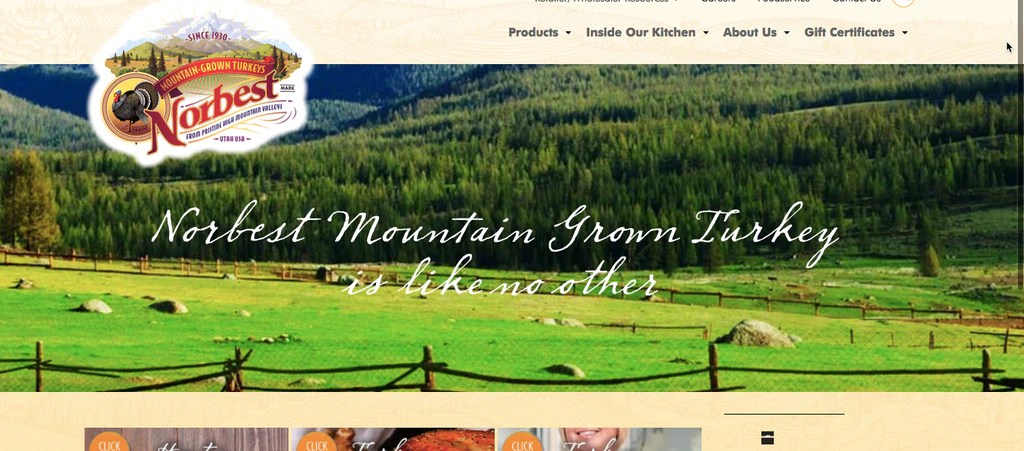
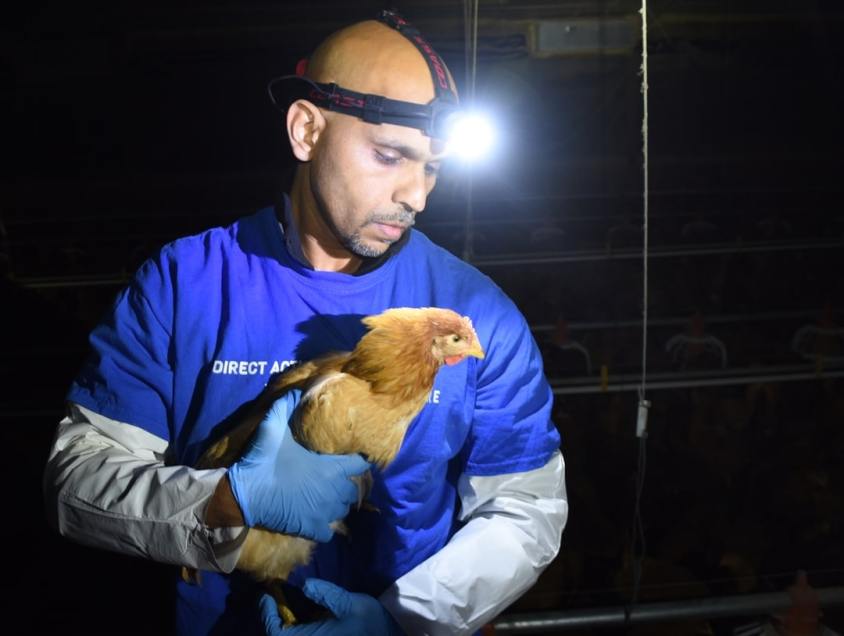
Background: In January 2017, the six activists entered a farm in Moroni, Utah, that supplies turkeys to Norbest, a large company that aggressively markets itself to the public as selling “mountain-grown” turkeys who are treated with particularly humane care.
Its marketing materials feature bucolic photographs of Utah nature, designed to create an image that its turkeys are raised in fresh and healthy natural settings, accompanied by assurances that its “practices are humane” and ethical, “with the health and comfort of the birds of paramount importance.”


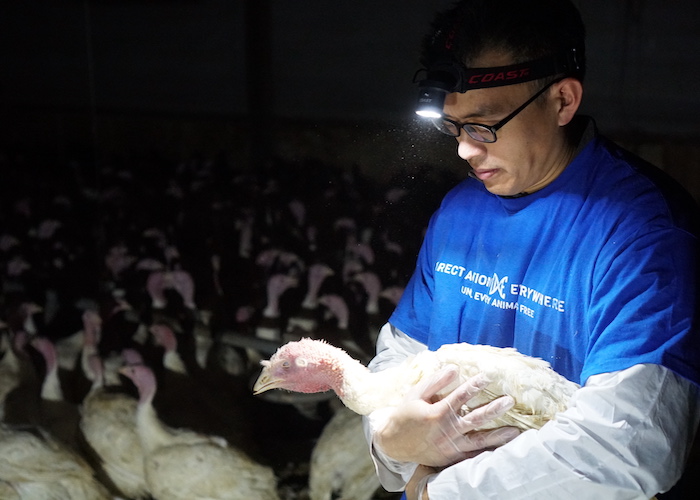
What the activists found at the farm was something radically different: tens of thousands of turkeys crammed inside filthy industrial barns, virtually on top of one another.
The activists say the animals were suffering from diseases, infections, open wounds, and injuries sustained by pecking and trampling one another.
Countless chicks and adult turkeys were barely able to stand, or were lying in their own waste, close to death.

The activists, all volunteers with the animal rights group Direct Action Everywhere, or DxE, filmed and photographed the conditions inside the farm.
“In my 20 years of investigating animal abuse, I’ve never seen conditions this horrifying at a corporate farm,” Hsiung told the Intercept.
“We saw animals that looked dead but were still breathing; animals, languishing, who had virtually been pecked to death; many animals collapsed on the ground in their own feces and filth.
It was as bad as it gets.”

The activists also rescued three turkeys who were clearly suffering from extreme disease and injury and on the brink of death, part of a tactic known as “open rescue,” in which activists choose a symbolic handful of animals from industrial farms who are close to death, provide them with veterinarian care, and then publicly post film of their recovery at a shelter.

The three birds removed from the farm have no commercial value, because they were virtually certain to die within days, if not hours.
DxE activists estimate that up to 25 percent of animals at industrial farms die before they can make it to the slaughterhouse due to the conditions in which they are kept.

In November 2017, DxE published video and photographic findings from its investigation of the Norbest-supplying farm. The publishing of the investigation was highly embarrassing to Norbest, as the materials received substantial local press coverage.

The activists also rescued three turkeys who were clearly suffering from extreme disease and injury and on the brink of death, part of a tactic known as “open rescue,” in which activists choose a symbolic handful of animals from industrial farms who are close to death, provide them with veterinarian care, and then publicly post film of their recovery at a shelter.

The three birds removed from the farm have no commercial value, because they were virtually certain to die within days, if not hours.
So severe and horrifying was the abuse and disease documented by DxE that Norbest executives proclaimed themselves highly “disturbed” by what they saw.
The Fox report filmed Norbest CEO and President Matthew Cook watching the video for the first time.
Cook said he felt “deep disappointment” at what he saw, adding: “This just shouldn’t happen.”

The company then issued a formal statement on its site, proclaiming itself “deeply disappointed that our standards were not upheld by the farmer in question.”

Given that Norbest itself admits that the conditions revealed by DxE were horrifying, and given that it led to reforms, why would the activists be prosecuted for their investigation?
And given that they took nothing of commercial value, why would they be prosecuted for felony theft charges that, aggregated, carry a possible punishment of 10 years in prison?

For their successful efforts to expose these abuses and force reforms, Hsuing (lawyer, founder of the activist group Direct Action Everywhere, and lead investigator) and his five fellow activists now face prosecution and the possibility of prison terms.

Thus appears the same dynamic seen in so many other American realms, from torture to illegal spying to Wall Street fraud: The most powerful actors responsible for the most egregious acts are immunized from consequences, while the only ones punished are the ones who expose them.

https://theintercept.com/2018/05/04/six-animal-rights-activists-charged-with-felonies-for-investigation-and-rescue-that-led-to-punishment-of-a-utah-turkey-farm/

And I mean…We are glad to hear the great news.
Thanks to the team for the great work!

Stealing a live animal is a punishable offense, but stealing its life is fine.
This is how thieves and criminals think, and move on that way because they simply legalized their crimes according to this principle and have gotten through for decades.
Through such actions the naive consumer learns where his “happy thanksgiving turkey” comes from.
And the meat industry gives up and finally learns that not everything that does not suit them can be criminalized
Good this way.

Whether the meat consumers wake up after these videos and find that the meat industry not only tortures animals, but also deceives them as consumers is questionable.
The fact is that with every new scandal the meat industry gets serious cracks, and so the likelihood of its disintegration increases.

My best regards to all, Venus

Latest Report Shows Companies Continue To Make Progress On Their Commitments To Source Cage-Free Eggs.

Latest report shows companies continue to make progress on their commitments to source cage-free eggs

24 November 2021

CIWF

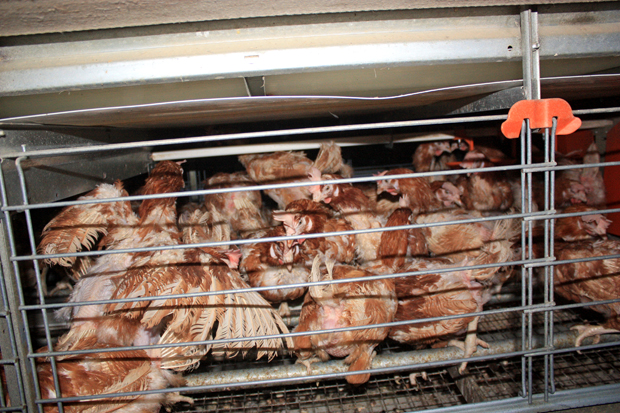
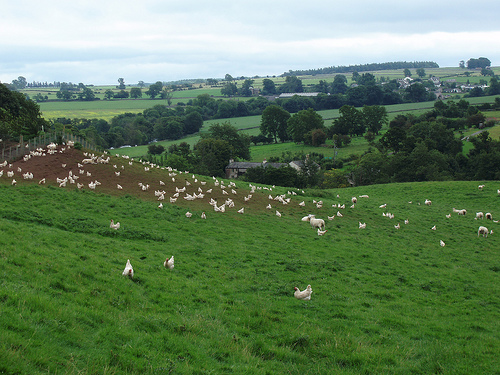
Eurogroup for Animals’ member Compassion in World Farming launched its latest GLOBAL EggTrack report which shows that, despite supply chain disruptions caused by the COVID-19 pandemic, companies continue to make progress on their commitments to source cage-free eggs.

According to the 2021 report, 156 of 219 (71%) tracked companies are reporting progress against their cage-free commitments – up from 63% in 2020. Of the 47 companies with global commitments, 26 (55%) reported progress against these commitments, and since last year, an additional 12 companies have expanded their commitments to cover their entire global egg supply.

Highlights from the report:

  • Overall, 71% of companies tracked are reporting progress against their cage-free commitments
  • 12 companies expanded their commitments to cover their entire global supply including CarrefourGroupe Holder and Restaurant Brands International
  • Two companies – Danone and Hormel Foods – met their global cage-free commitments this year
  • Of the 116 companies with European commitments (as part of a regional or global commitment), 84% reported progress
  • Two companies – Nestlé and Yum! Brands (for its KFC Western Europe Subsidiary) – met Europe-level commitments in 2021
  • 9 companies have recognised the need to eliminate combination systems from their egg supply chains including BarillaDomino’sEurovo and Metro Group
  • 13 companies met their country-level commitments within Europe including Aldi Sud (Hofer Italy), Domino’s (Ireland and UK), Greggs plc (UK), and Schwarz Group (Lidl Spain)

Find out more about EggTrack and read the full report here.

Read more at source

Compassion in World Farming

Regards Mark


Iceland: Animal Welfare Violations On Blood Farms – 5 Litres Of Blood Taken Each Week From Pregnant Mares.

Iceland: animal welfare violations on blood farms

23 November 2021

AWF

Press Release

New investigation from Animal Welfare Foundation on blood farms in Iceland uncovers a business involving around 100 establishments and 5,000 Icelandic horses. The investigators discovered a sequence of animal welfare violations, contrary to all statements made by the pharmaceutical companies, blood farmers and veterinary authority involved. Eurogroup for Animals reiterates its call to ban the import of eCG, the hormone derived from the mares’ blood, into the EU.

Around 90,000 horses live in Iceland where they contribute to the country’s economy through industrial animal breeding, tourism, sport and meat production. There is also another, less known, use: the blood of pregnant mares is collected to obtain eCG (equine Chorionic Gonadotropin), also known as PMSG (Pregnant Mare Serum Gonadotropin), which is used in animal breeding to induce follicular growth, ovulation and estrus. 

To this end, five litres of blood are drawn from each mare every week, for up to ten weeks. In order to extract eCG from the blood, the mares must be pregnant. The foals are thus a by-product and usually end up in the slaughterhouse. Prices for foals are now at rock bottom and exploiting the mares’ blood has become much more lucrative, further stimulating the growth of the sector.  

Arnthor Gudlaugsson, CEO of Isteka ehf, the Icelandic pharmaceutical company working with the farms that Animal Welfare Foundation investigated, confirmed that production has tripled since 2009. This translates into revenues of around 10 million euros per year. Isteka operates several blood farms and is a contractual partner of more than 100 other blood farms.

The business has been booming for years due to the demand from pharmaceutical companies, such as MSD/Intervet and Ceva Santé Animale, and from animal producers in the EU.

York Ditfurth, AWF|TSB board member

The blood collection violates animal protection laws in force in Iceland, and in the EU. Most of the mares are semi-wild, they have hardly any contact with humans. The film recordings made during the blood collection show workers beating the horses and using dogs to move them around.

Since only veterinarians are allowed to carry out the blood collections, according to Icelandic law they would have to intervene immediately in case of animal welfare violations and report them to the veterinary authority. However, this does not happen because the veterinarians earn good money from the blood business too, as informants confirmed to us.

Sabrina Gurtner, Project Manager, AWF|TSB

AWF and TSB submitted the video footage to the Icelandic animal welfare lawyer Árni Stefán Árnason and his verdict is clear “The beating scenes depict cruelty to horses which is strictly forbidden. This can be punished with a heavy fine or imprisonment of up to two years, as well as with a prohibition to keep animals”. 

Professor Stephanie Krämer of the Department of Veterinary Medicine at Justus Liebig University in Giessen (Germany), described the blood collection procedure as a repetitive traumatisation of the mares. 

After the numerous investigations led on blood farms in Latin America, the case of Iceland further demonstrates the need for the EU to take action. Together with several international animal welfare organisations, Eurogroup for Animals, AWF and TSB call upon the European Commission to follow the direction indicated by the European Parliament in its resolution on the Farm to Fork Strategy, and  to ban the import and domestic production of eCG.

The full investigation report is available upon request. 

Iceland – Land of the 5,000 Blood Mares 


Regards Mark

MILKED – White Lies In Dairyland.

WAV Comment – with thanks to Stacey at ‘Our Compass’ as always for sending over the info. Great and very informative as always.

Regards Mark

https://our-compass.org/author/ourcompasses/

MILKED: White Lies in DairyLand by Stacey

Stopping animal exploitation doesn’t require human benefit, but that it DOES and humans still radically embrace animal cruelty as their “right/choice/blahblahblah” is disturbing. You literally drink the breastmilk of a different species, beyond infancy and with teeth, that requires the suffering, pain, misery, and violent death of the other species.

Animals don’t belong to you; what comes out of their bodies doesn’t belong to you. That you can be ethical but deliberately choose to not be is a perversion. Stop defining others’ suffering in manners that brings you comfort but does nothing to ease the suffering of your victims. I recently read about how adding cameras in slaughterhouses will help to decrease cruelty. In SLAUGHTERHOUSES. A slaughterhouse is INHERENTLY CRUEL, it’s where animals die in fear, blood, and often torturous manners in some grotesquely defined “humane” ethic slander. Slaughterhouses do not attract people who care about animals, and the evidence is in: animals experience abject fear; they smell and hear the death of their death-mates; and they die in often agonizing, torturous manners.

Euphemistic morals serve only those whose intentions are the absolute antithesis of morals but do nothing to help their animal victims: HUMANS.

SL

Photo – Mark WAV

Source MILKED

MILKED is a topical feature documentary that exposes the whitewash of New Zealand’s multi-billion-dollar dairy industry. 

Young activist Chris Huriwai travels around the country searching for the truth about how this source of national pride has become the nation’s biggest threat. It’s rapidly gone from a land with no cows to being the biggest exporter of dairy in the world, but the industry seems to be failing in every way possible. 

Featuring interviews with high-profile contributors such as Dr Jane Goodall, environmentalist and former actress Suzy Amis Cameron, and Cowspiracy co-director, Keegan Kuhn, MILKED reveals the behind-the-scenes reality of the kiwi dairy farming fairy-tale. It uncovers alarming information about the impacts of the industry on the environment and health, leading up to the discovery that we’re on the edge of the biggest global disruption of food and agriculture in history. 

An impactful global story told with a local eye, the film also points to what New Zealand and other countries can do to change their fate.

MILKED facts:

Photo – PMAF

See More About What You Can Do HERE

Download Your FREE Vegan PDF HERE

Order a FREE vegan kit HERE

Dairy-Free Info HERE

Take the Dairy-Free Challenge HERE

Click HERE for more Dairy-Free

Fish alternatives can be found HERE

Learn about eggs HERE

Find bacon alternatives HERE and HERE

Take PETA’s Cruelty-Free Shopping Guide along with you next time you head to the store! The handy guide will help you find humane products at a glance. Order a FREE copy HERE

Searching for Cruelty-Free Cosmetics, Personal-Care Products, Vegan Products, or more?
Click HERE to search.

Free PDF of Vegan & Cruelty-Free Products/Companies HERE

Click HERE to find out How to Wear Vegan!

Want to do more than go vegan? Help others to do so! Click below for nominal, or no, fees to vegan literature that you can use to convince others that veganism is the only compassionate route to being an animal friend:

PETA HERE

Vegan Outreach HERE

Get your FREE Activist Kit from PETA, including stickers, leaflets, and guide HERE

Have questions? Click HERE

Photo – PMAF
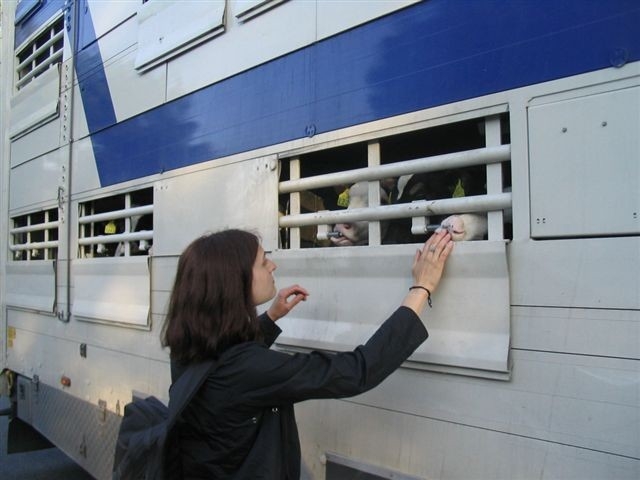
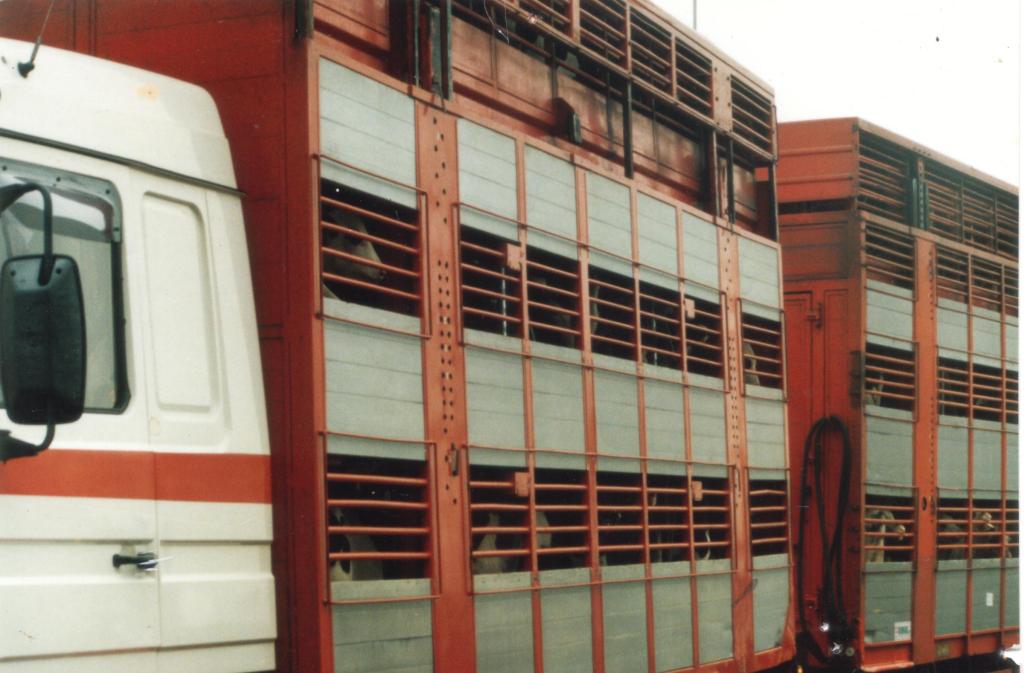
Photo – Mark WAV – If you look carefully on the rear trailer especially, you can see the baby calves, desperate for milk from their mums; which they will never experience again. They suckle the bars to try and get milk – milk for them, NOT us. The dairy industry really gets me – I say to them, come down and see this, hear their cries, smell the smells – Go Vegan Now.


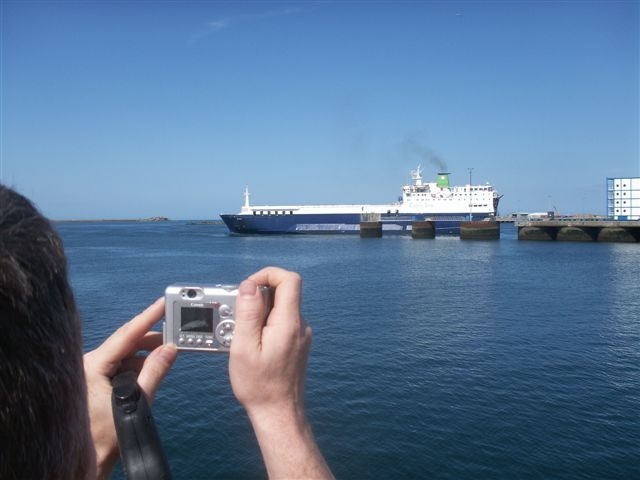
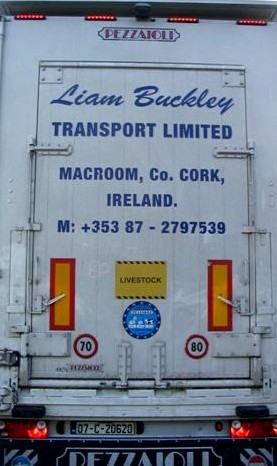
All the above photos were used for a report I presented to the EU – 5 undercover investigations with EU animal welfare organisations on the live calf transport trade between Ireland and France (EU member states).

I may upload the report for you to view soon. In the meantime here is just one of the investigation reports which I know will show you how absurd the EU live animal transport regulations are.

Read, rage and repent !

Regards Mark

Liza and Mark - Dover
With friends Ellie and Liza Protesting against the live calf trade at Dover, England.