Month: January 2022

UK: Listen To The APPG Webinar On The Banning Of Trophy Hunting.

On 9/1/22 we published news that a webinar was to be held by the (UK) All-Party Parliamentary Group on Banning Trophy Hunting.  It took place and we can now provide you with a link that will enable you to view and hear the webinar.

Please click on the following to see our original post:

Webinar On Why Britain Should Ban Hunting Trophies – 11/1/22 at 11.00AM GMT. See Below for Details. – World Animals Voice

View the APPG webinar of 1/01/22 here:

Why Britain Should Ban Hunting Trophies ASAP – Webinar 11/01/2022 – YouTube

Regards Mark

They still exist … the good people

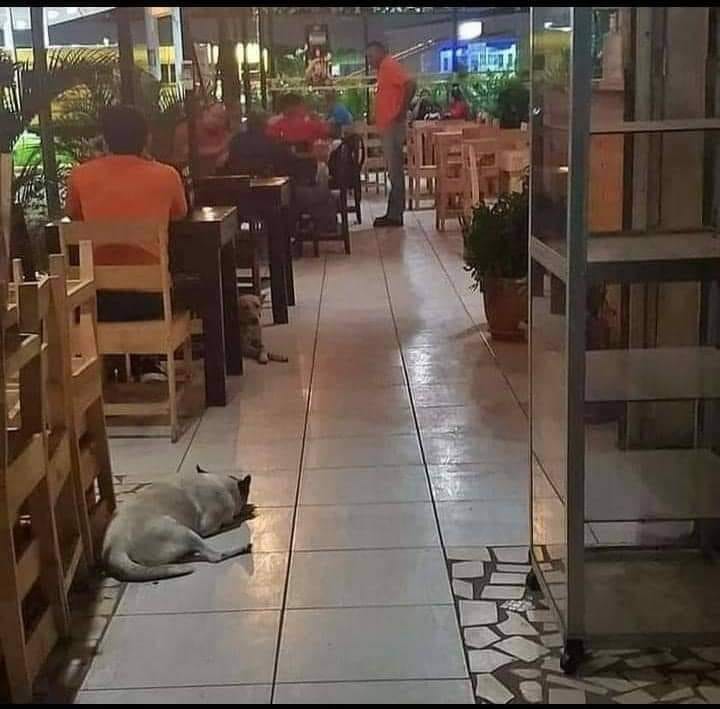
At the bar entrance, a sign says this:

“We ask all our customers with all our heart not to be bothered by the number of dogs (street) in the Amazon bar. We are a suitable place for pets and love. We give water and food to these sweet angels.
Sorry if it’s hard, but they’re not doing anything – they’re just coming to find food or shelter from the rain.
Thank you so much for the blessings “

(Text: Randika Madhumal)

There are a few who hear, who understand, who think and reflect, who have learned to respect the lives of “other” animals.

In principle, one could also use examples from the “few” to self-critically question one’s own morality, instead of clinging to convention and system-loyally act over and over again.
This is a very good example of acting ethically!

My best regards to all, Venus

“Time to act” for EU Parliament!

by Animals ’Angels e.V.

Your voice for the animals: Calls on the members of the EU Parliament to limit animal transports to 8 hours!

An important vote will take place in January – every vote counts! The Greens / EFA have set up a website with a sample letter for this purpose: https://act.greens-efa.eu/de/tiertransporte. Animals ‘Angels also put strong pressure on the MPs before the vote.

To the background:
The EU laws on the protection of animals are finally being revised.
The “Animal Transport” investigative committee of the EU (ANIT) has already made recommendations on this and, among other things, has spoken out in favor of limiting “slaughter” animal transports to 8 hours.
That’s good, but not good enough.

Because long animal transports are torture for all animals, not just for animals for slaughter. ‘Fattening’ and ‘breeding’ animals should – if at all – only be allowed to be transported for a limited time.

Soon, in January members of the European Parliament will vote on the recommendations of the special inquiry committee for Animal Transport (ANIT).
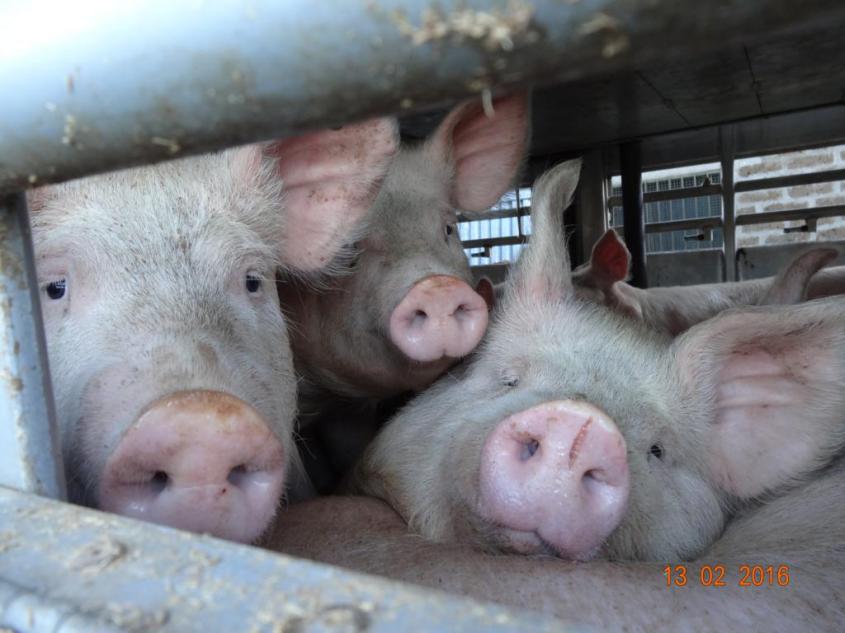
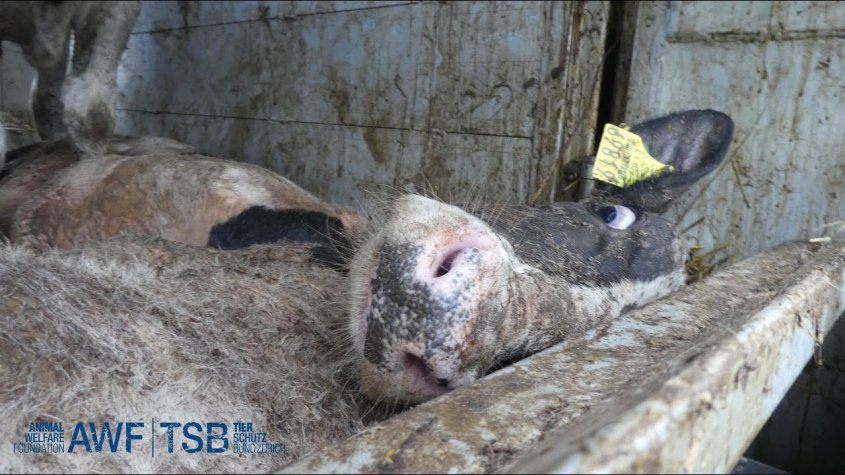
This is our chance to limit animal transport.
We want to include an absolute maximum time limit of eight hours for the transport of live animals – and an even shorter time limit for young animals.

This is our chance to put an end to this cruel system of dragging animals all over Europe in horrible conditions.

We’re asking for:
-A complete ban on transporting unweaned animals younger than 5 weeks
-2 hours of maximum transport time for unweaned animals older than 5 weeks
-8 hours of maximum transport time by air and road
-24 hours of maximum transport time by sea
-A ban on exporting animals to countries outside the EU which don’t respect EU animal welfare standards.

But we need to do this together.
We need you to ask MEPs from other political groups to support our demands.

Send your MEPs an email and ask them to support the maximum of 8 hours for animal transport. Use our tool to select the MEPs from your country that have not yet decided which way they will vote.
If you’re in a rush, we’ve even prepared an email for you.

More about our “Time to Act” project, with which we are campaigning in the EU for a better law to protect animals during transport, at: https://act.greens-efa.eu/animal-transport
Please sign!

The more people express their support, the louder our demands will be heard!
That is why it is important to ask your friends to sign as well.

Petition: https://act.greens-efa.eu/animal-transport

And I mean…In January 2022, the European Parliament will vote in plenary on the report and the recommendations of the ANIT committee.
We have often reported on the betrayal of the investigative committee (ANIT) to the animals (https://worldanimalsvoice.com/2021/12/04/anit-committee-vote-an-anti-animal-welfare-work/)
The task now is to correct the bad work done by these well-paid EU officials.

The ship transports with animals, for example: they can take days or even months, and thus they do not violate EU regulations.
This was the case several times in 2021 alone, for example with the ships Karim Allah and Elbeik or with the blockade of the Suez Canal.
And yet those “responsible” for ANIT see no need in their report to limit or even stop these grueling journeys.

Road transport must generally be limited to a maximum of eight hours.
ANIT also failed there.

Through our mobilization and actions there remains one last hope, albeit a rather weak one, to convince the MEPs in the European Parliament not to turn a blind eye to the horror and cruelty to animals on the European roads any longer.

“Time to act” for EU Parliament!
The current EU regulation is out of date and inadequate in all areas: implementation, controls and consequences in the event of violations of EU regulations.

It would be a shame, after all the tragedies at sea and on the roads that have become known, to tolerate the irresponsible policy of the EU Commission in relation to animal transports.

My best regards to all, Venus

Belgium: Record Number of MEPs Demand An EU Commissioner For Animal Welfare.

10 January 2022

GAIA

Press Release

This is the most-signed thematic oral question tabled by members of the European Parliament (MEPs) in this term and beyond. The Conference of Presidents is now called to decide on its scheduling in a plenary meeting for the Commission to answer within the next three months, and on its transformation into a resolution.

Over 150 MEPs and more than 140,000 citizens recently expressed their support to the #EUforAnimals campaign, promoted by over forty animal protection organisations across the EU, which demands that more relevance is given to animal welfare by making this responsibility explicit in the name of the relevant Directorate-General and the job title of the competent EU Commissioner. In the present context, the Commissioner’s responsibility would become for “Health, Food Safety and Animal Welfare”.

Today MEPs have made history again by putting together – in impressive numbers – the foundations for a European Union that cares more consistently and constantly for animal welfare, as its citizens are demanding, by establishing an EU Commissioner explicitly in charge of Animal Welfare. The EU institutions should not miss this opportunity to ensure that their efforts will not be thwarted by a different attitude in future EU Commissions.

Michel Vandenbosch, President, GAIA

We thank enormously Mr Fuglsang and the other MEPs who tabled the oral question, which represents a milestone in the work for animal welfare in the EU. The acceptance of this proposal by the European Commission would be a natural complement to its present efforts, and we would be delighted to see Ms Kyriakides become the first EU Commissioner for Animal Welfare.

Reineke Hameleers, CEO, Eurogroup for Animals

A survey conducted in June by Ipsos shows that 70% of Europeans think there should be an EU Commissioner for Animal Welfare. While animal welfare is very close to the heart of European citizens, who constantly support initiatives aimed to improve the way animals are treated, the attention it has received within Brussels has fluctuated depending on the priorities of the Commission in office at the time.

We are fortunate to have a committed Commission at present, which has initiated a review of the existing legislation relating to animal welfare and has repeatedly announced its intention to prepare ambitious improvements for the years to come. However, previous Commissions’ actions on this front had been nearly absent, and this could be again the case when the next Commission starts operating in late 2024.

A new period of inaction on animal welfare should and can be prevented, and the way forward is clear: an EU Commissioner explicitly in charge of it.

ENDS

Notes

Text of the oral question:

Art 13 TFEU recognises animals as sentient beings. European citizens care about animals as testified by the Eurobarometer responses and would like to see their welfare improved through clear legislation, effective policies and the commitment of adequate resources. 

EU legislation on animal welfare has been elaborated since 1974, but the approach of the EU institutions has been inconsistent, contributing to the problem of poor enforcement on various fronts. 

The Commissioner responsible for animal welfare should receive more influence and powers in the EU institutions on this topic whose importance has been clearly acknowledged by this Commission. 

Over 125,000 EU citizens and over 120 MEPs from all political groups have already joined the #EUforAnimals campaign to demand that more relevance is given to animal welfare by making this responsibility explicit in the name of the relevant Directorate-General and the job title of the competent EU Commissioner. 

Presently, the Commissioner’s responsibility would become for “Health, Food Safety and Animal Welfare”, thus greatly supporting both legislative progress and proper enforcement. 

This would be a significant political decision leading to more accountability of the EU institutions for animal welfare and would therefore increase the consistency, effectiveness and impact of policy making in this field. 

One of the immediate effects of this proposal would be to establish a specific Directorate on animal welfare within DG SANTE, thus adequately recognising its specific relevance. 

  • Is the Commission planning to respond positively to this proposal? 
  • If so, what procedures aimed to implement it have been activated?

The oral question was promoted by Niels Fuglsang MEP (S&D, DK), with the co-promotion of MEPs Sylwia Spurek (Greens/EFA, PL), Petras Auštrevičius (Renew, LT), Manuel Bompard (GUE/NGL, FR), Sirpa Pietikäinen (EPP, FI), Michal Wiezik (Renew, SK), Emmanouíl Fragkos (ECR, GR), Anja Hazekamp (GUE/NGL, NL), Johan Van Overtveldt (ECR, BE), Emma Wiesner (Renew, SE), Maria Noichl (S&D, DE) and Francisco Guerreiro (Greens/EFA, PT).

Citizens who want to support this campaign can sign the online petition.

The full survey results can be found here

Regards Mark

EU: Avian Influenza Emergency – Are We Headed Towards the Next Pandemic ?

11 January 2022

News

As Europe struggles with its largest avian influenza outbreak to date, the need to introduce a vaccination strategy is more prominent than ever.

Highly contagious and prone to mutations, the avian influenza virus is wreaking havoc in the European poultry sector. Both animal advocates and the poultry industry agree that a vaccination strategy is by now  indispensable to limit the spread of this deadly disease.

In their report published on 23 December 2021, the European Food Safety Authority (EFSA) stressed that current biosecurity measures appear insufficient in stopping the spread of the disease and stated that, aside from reinforcing biosecurity, the “reduction of the density of commercial poultry farms and possible appropriate vaccination strategies, should be implemented.” Indeed, in the absence of a vaccine, housing orders and the culling of millions of birds every year remain the only solutions available to Member States to try and curb this disease. 

It is by now recognised that the extreme industrialisation of poultry farming in the EU amplifies and is co-responsible for the devastating effects of outbreaks of Highly Pathogenic Avian Influenza (HPAI). 

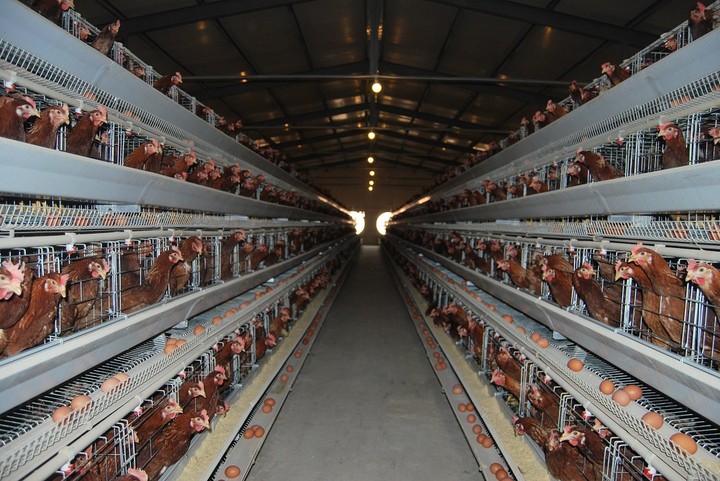
The geographical concentration of millions of domestic poultry kept in intensive systems is the main culprit for the outbreaks we are witnessing every year, with devastating consequences not only for kept poultry but also for wild birds (who are now also dying in large numbers). 

Prof. Thijs Kuiken, professor of comparative pathology at the Erasmus MC hospital in the Netherlands, recently stressed that the current strain of HPAI originated in 1996 among domestic geese in China, from where it further spread to domestic poultry in Asia. That outbreak could not be kept under control and in 2005 the virus infected wild birds in the region of Qinghai Meer in China. Since then, wild birds have become vectors of the disease during their seasonal migrations. 

Millions of animals are currently suffering from the effects of illness and mass killing for disease control, and considering that vaccinations are highly likely to curb the spread of the virus, idleness in implementing a comprehensive vaccination strategy aggravates the situation.

Developing a vaccine becomes even more urgent if we consider that, between 1997, when the first human case was identified, and 2015, 907 people were infected with HPAI H5N1 globally. The most recent human case occurred in the UK only a week ago. So far there is no proof of human-to-human transmission and the risk of infection for the general population remains low. However, due to its specificities, this virus is considered a public health threat and its genetic changes are monitored accordingly.

The current situation proves yet again that for reasons of disease control, sustainability and animal welfare, the EU must set a course away from intensive farming. 

The reduction of numbers of reared animals is imperative to achieve these goals and the time to act is long overdue: two years into the COVID-19 pandemic, one does not have to look far to see the effects of human negligence concerning zoonotic diseases.

Regards Mark

French zoo shot four wolves after the wolf pack escaped

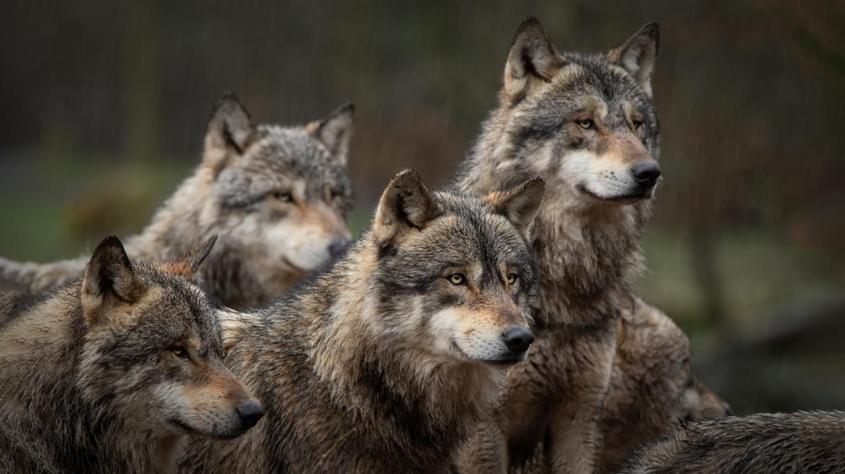
In December of 2021, nine wolves tried to escape their small enclosures at Trois Vallées zoo. They didn’t pose any immediate threat to humans nearby, but simply destroyed safety hatches and climbed a fence.

In fact, they never even left the zoo. But four were almost immediately shot dead for “dangerous behavior” by park workers. This is what happens when you run a zoo without animal welfare or safety concerns in mind — innocent animals end up dead.
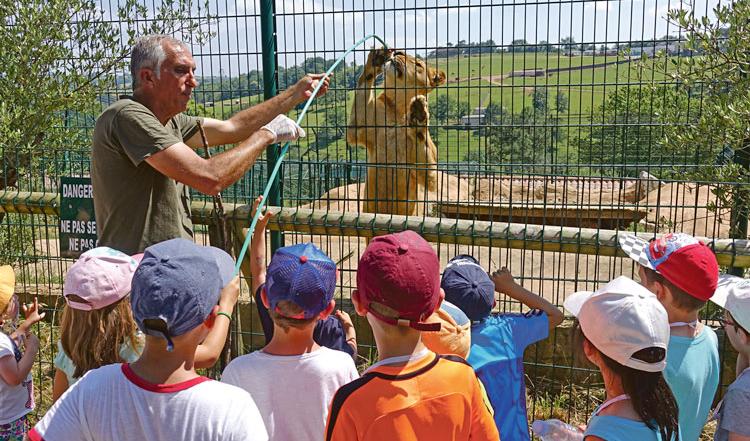
This isn’t the first time Trois Vallées zoo has come under public scrutiny.

In fact, just over a year ago, the zoo was ordered to close over animal, staff, and visitor safety concerns due to “security breaches,” but a court order allowed it to reopen.
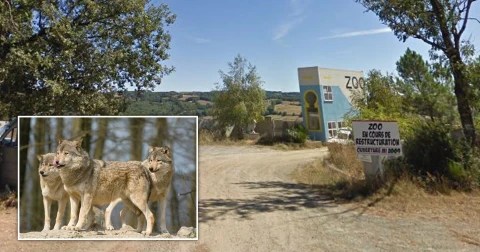
There is little evidence the zoo has taken any steps to improve the safety or wellbeing of the animals living at the zoo.
Following the incident, the zoo is temporarily closed, but supposed to reopen in less than a month, according to its social media page.
Now is the time for the Minister of the Ecological Transition to step up and shut down this dangerous zoo — which repeatedly shows a lack of concern for animal life and wellbeing – for good.

The blood of four dead wolves is on the hands of the zoo, and ultimately, Barbara Pompili if she does not act to stop this murderous institution from reopening.

Sign now to demand Barbara Pompili (French Ecological Transition Minister) permanently shut down the Trois Vallées zoo!
Sign now if you agree!

https://www.thepetitionsite.com/de/377/165/264/a-french-zoo-caused-the-death-of-four-wolves.-its-time-it-gets-shut-down-for-good.

And I mean...The park’s owner Sauveur Ferrara told that the wolves, whow were newly arrived at the attraction, escaped after destroying security installations but never went outside the zoo itself.

“Due to the abnormal and dangerous behaviour of some of them, four wolves were sadly killed by the park personnel,” he added, emphasising that members of the public had immediately been evacuated from the park.

Due to urgent work, the zoo is closed from December 23 to mid-January 2022”, the director promised a “reopening under the best conditions” (!!)

But the story has an air of déjà vu for the Trois Vallées Zoo which, on October 22, 2020, was already hit by an administrative closure measure, on the order of the Minister for Ecological Transition, Barbara Pompili.

At issue: “Serious breaches” endangering the safety of some 600 animals of 70 different species on the premises, but also that of staff and visitors”.

Starving animals, unsanitary enclosures: I asked the Tarn prefect to immediately close the 3 valleys zoo. The animals will be transferred to suitable establishments. I will have no tolerance: when we welcome wild animals, we respect the rules. pic.twitter.com/mFFlxUQ2TZ

– Barbara Pompili (@barbarapompili) October 23, 2020

Terrified, the owner of the Three Valleys, Sauveur Ferrara, had then denounced a “Relentlessness” authorities against him, even speaking of “conspiracy” near the Dépêche du Midi.

The prefectural decree was suspended on the following November 2 by the Toulouse administrative court, “because of the serious and clearly illegal infringement of the right to property, the freedom to conduct business and the freedom of trade and commerce industry ”, for lack of prior notice, according to a press release from the TA.

Unfortunately the zoo was finally able to conserve its animals.

The right of ownership was put above the welfare of the animals! zoo should have been closed forever the first time it was violated.

But it is not the sole fault of the owner of the zoo and of every zoo.

A large part of this misery is caused by all visitors who want to spend a nice day at the zoo and parents who visit these open-air prisons with their children so that children can “learn” something about nature and animals and and aditionally support this nonsense with their ticket.

Please sign the petition; there is a good chance that this prison station will finally be closed.

My best regards to all, Venus

UK: You Have Done It ! – Money Raised To Show Viva Vegan Advert on UK Television.

WAV Comment:  we are really pleased to have donated twice towards the reaching the target amount required to show this advert on UK television and make many non vegans get a grip into understanding that meat comes from live animals.

Regards Mark

You have helped us exceed our £40,000 target, which means over 16 million Channel 4 viewers will get to see it!

Thank you so much to every single one of you who has donated, shared, or spread the word about this campaign. You’ve helped to make this Viva!’s biggest crowdfunder to date. But we’re not finished yet… we still have 8 hours before the campaign officially ends and we want to give it one final push.

The more money we raise, the longer we will be able to air our ad, and the more people we will reach with our vegan message.

This is the biggest opportunity Viva! has ever had to reach the UK public on such a massive scale.

If you haven’t already, please donate today because this really is the final countdown!

£ 40,644 raised (and increasing) towards the goal of £40,000.

You have helped us exceed our £40,000 target, which means over 16 million Channel 4 viewers will get to see it!

Thank you so much to every single one of you who has donated, shared, or spread the word about this campaign. You’ve helped to make this Viva!’s biggest crowdfunder to date. But we’re not finished yet… we still have 8 hours before the campaign officially ends and we want to give it one final push.

The more money we raise, the longer we will be able to air our ad, and the more people we will reach with our vegan message.

This is the biggest opportunity Viva! has ever had to reach the UK public on such a massive scale.

If you haven’t already, please donate today because this really is the final countdown!

Yours for the animals,

Juliet Gellatley
Founder and Director

Webinar On Why Britain Should Ban Hunting Trophies – 11/1/22 at 11.00AM GMT. See Below for Details.

Hello Mark!

I know it’s short notice, but TUESDAY, January 11th at 11:00AM GMT is Ban Trophy Hunting’s webinar…  Jane Goodall and the former Pres. of Botswana (who banned trophy hunting) are both listed as speakers)

(20+) Why Britain should Ban Hunting Trophies ASAP | Facebook

Event by All-Party Parliamentary Group on Banning Trophy Hunting

Public  · Anyone on or off Facebook

The UK Government has pledged to ban hunting trophies – but isn’t able to say when.

A new report by the All-Party Parliamentary Group on Banning Trophy Hunting (APPG) reveals that British imports of hunting trophies from protected species may be going up – and that official figures may be just the tip of the iceberg.

The APPG is calling on the government to name a date for the introduction of its bill, or to instead adopt the Hunting Trophy Import (Prohibition) Bill promoted by backbencher John Spellar MP which has won cross-party support and is scheduled for debate on Friday, 14 January.

On Tuesday 11 January, the APPG launches its new report ‘Shooting up – Are Britain’s Trophy Imports & Hunting Companies Booming?’ in a webinar open to the public, and challenges the government to bring a swift end to imports of hunting trophies into Britain.

Panelists include world-famous conservationist Dr Jane Goodall; Lt Gen Serestse Khama, former President of Botswana; Professor Phyllis Lee of the Amboseli Trust; Sir Roger Gale MP (Con); Baroness Sue Hayman (Lab); Dave Doogan MP (SNP); Lord Chris Rennard (Lib Dems); Hywel Williams MP.

Join us on:

Zoom –
https://us02web.zoom.us/j/87432433558

Facebook Live – Link to be posted on the day of the event.
YouTube – Link to be posted on the day of the event. 

Regards Mark

Drought in Africa

Drought in Africa-By Martin BuschmannMEP

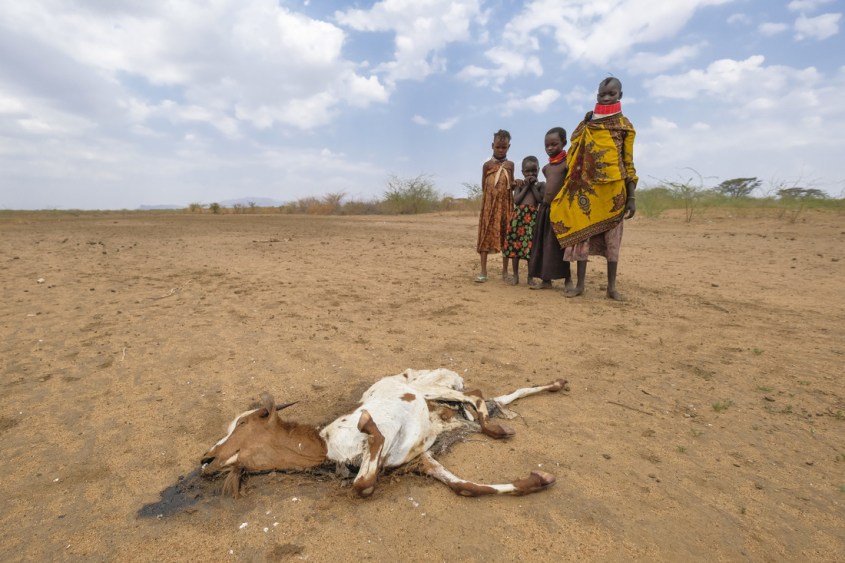
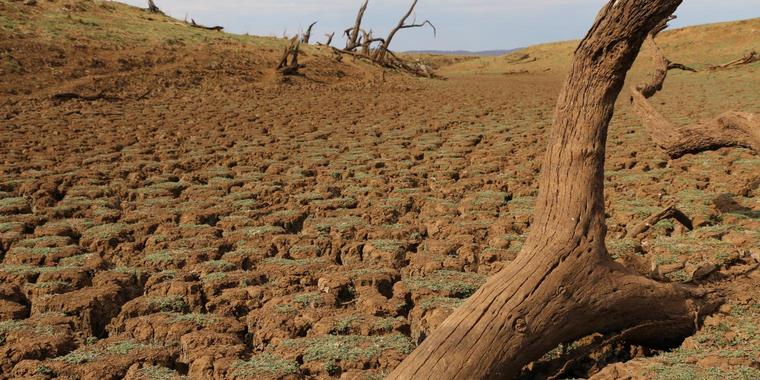
The rain doesn’t come any more. It has not rained in eastern Kenya for over a year.
Somalia, South Sudan and Ethiopia are also affected. The ground has dried up, nothing grows anymore.
Millions of people in East Africa are at risk of starvation.

The animals are also affected. Giraffes die of thirst in the wildlife parks, the wildebeest and zebras never migrate.
Without water, nothing grows along their migration corridors.

First it hit the hippos, which need large amounts of water and mud to live.
60 carcasses could be counted.
40 bodies of Grevy’s zebras were also found. They became infected with anthrax, the spores of which remain in the dry soil for decades.
All herbivorous animals struggle to survive during the drought.

Monkeys band together and attack water tankers or food vans along the streets.
Because of man-made climate change, the rain cycle is permanently disrupted.
And if it does rain a bit, the rock-hard ground cannot absorb the water.
Disastrous floods are the result.

Large parts of the country are becoming uninhabitable and people can no longer make a living.
Disaster seems inevitable.

https://www.facebook.com/Tierschutzabgeordneter/

And I mean... drought in Kenya, tornadoes in the USA … Europe / Germany will be soon the next one.
Germany produces more Co2 than the entire continent of Africa.

Such droughts are undeniably caused by climate change; therefore we MUST understand such reports not as NATIONAL, but as INTERNATIONAL disasters.

But every time people find a different excuse that someone else is to blame and that we don’t have to / can’t do anything.
That is simply wrong and only works in a conspiratorial dream world without any reference to reality.

If you think you have “nothing” to do with what is going on around you and whether it is a meter or a thousand away from you, then you are just that, one … one who pollutes the environment!

It’s time to pull the emergency brake.
Otherwise, potentially catastrophic climate change and the sixth mass extinction of biodiversity can no longer be prevented

My best regards to all, Venus

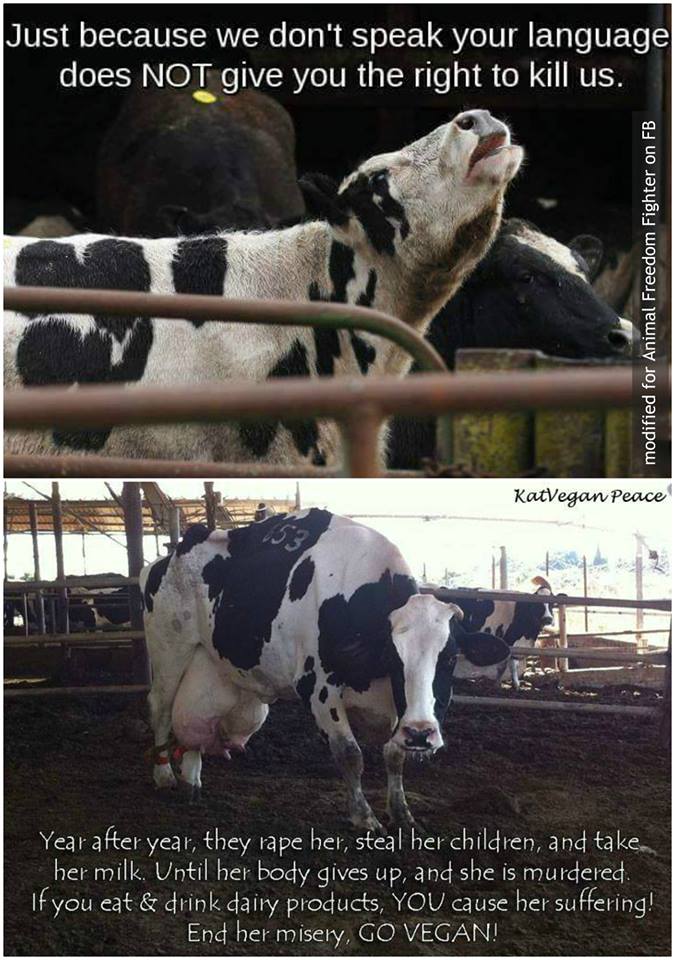
Will the dairy industry be out soon?

A number of dairy farmers in the US are already turning their backs on the industry.

Among them, California’s oldest dairy farm, Giacomazzi, which has existed for 125 years, is closing down.
It gets rid of the cows and will instead grow almonds.

He is not alone.
A number of dairy farmers are turning their backs on the industry.
His colleague Cornell Kasbergen told ABC: “It is better if you invest your money in trees…. Almonds, pistachios, grapes… ”. There are many alternatives that produce a higher yield than milking cows. “

On the other side of the pond, in the UK, dairy farmers are also giving up their businesses.
According to new research, one dairy farmer leaves the industry every week.

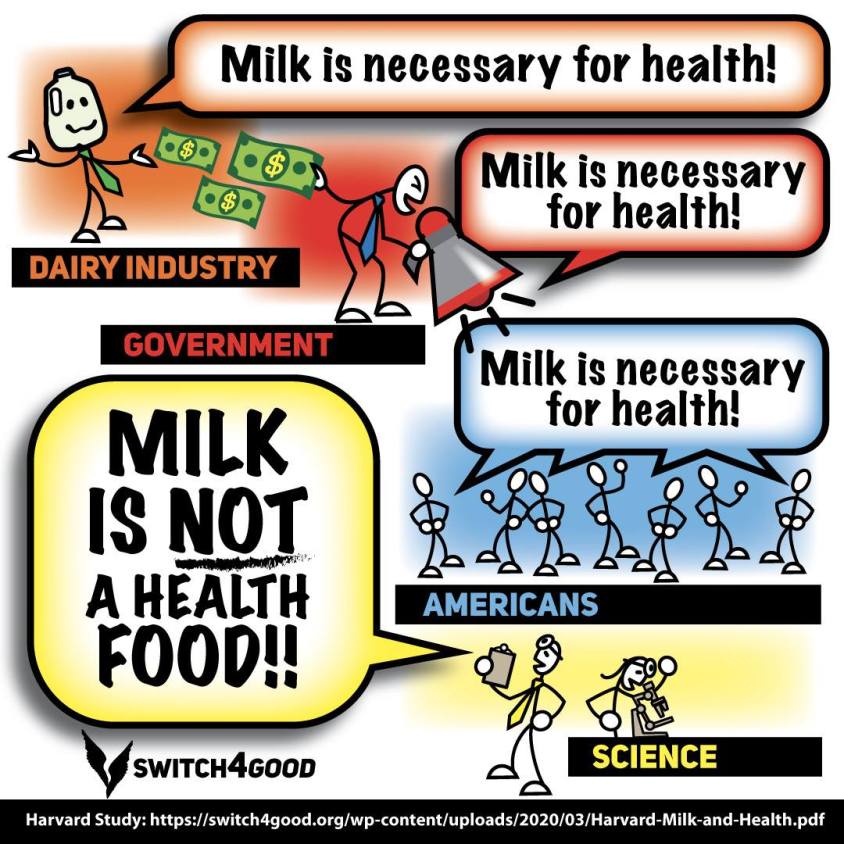
More and more studies show that cow’s milk is good for calves, but not for us humans.


More and more consumers are therefore opting for milk alternatives such as oat, soy or almond milk.
There was already an outcry from the milk lobby and so the European Court of Justice (ECJ) decided in 2017 that the designation “soy milk” is no longer permissible.
However, the names coconut milk and Leberkäs, but also peanut butter, were spared the madness.

Not only the oldest dairy farm in California has opted for an alternative to conventional milk, there is also a dairy in Germany that has recognized the nutritional trend and will also offer a plant-based milk alternative.
There are many reasons why more and more people are choosing an alternative to milk, from their own health to ethical reasons to environmental protection.

Germany is one of the world’s leading milk producers and can look forward to ample subsidies.
So much milk is being produced that it has resulted in an enormous surplus.
“Milk made in Germany” has long been landing in Africa, India, Latin America and China.
Around 33 million tons of milk are produced in Germany each year.
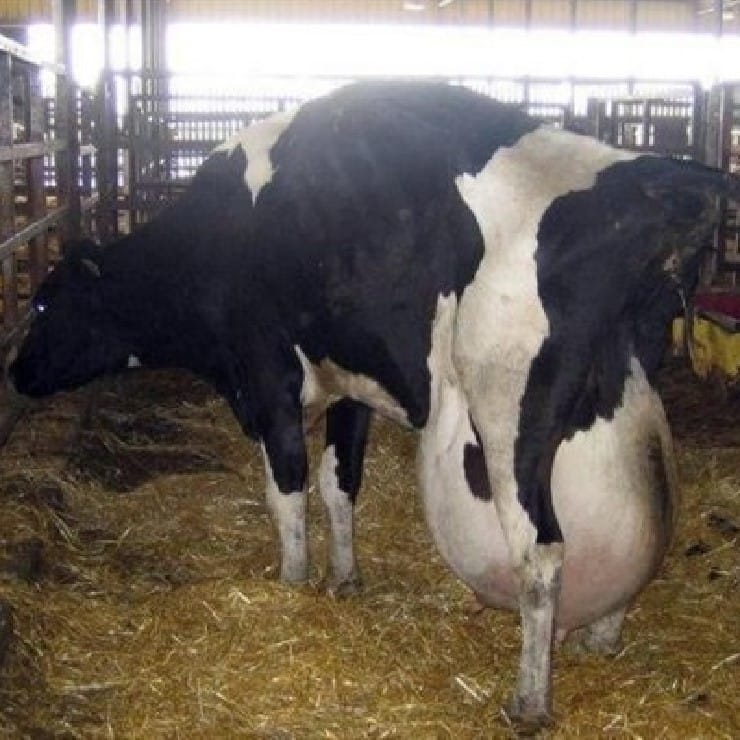
The turbo cows make it possible.

Everyone should be familiar with the grievances in factory farming by now.
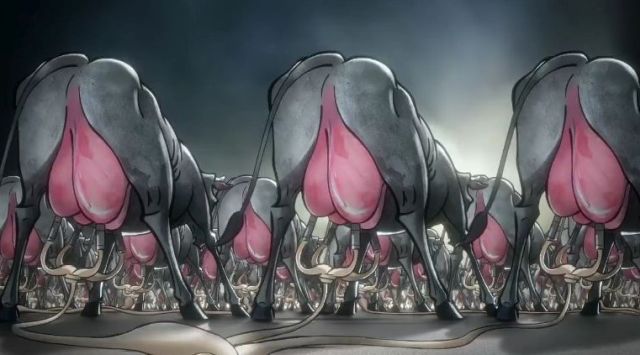
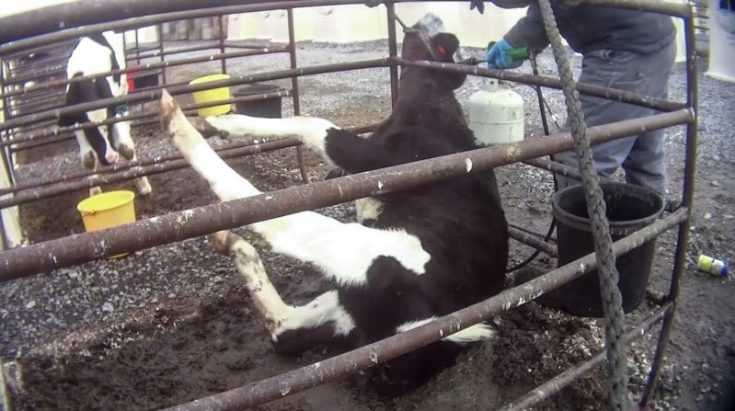
Incidentally, the production of a glass of milk leads to almost three times the greenhouse gas emissions compared to non-dairy products, according to a study by the University of Oxford.

According to a study, it takes 5 liters of water to make 1 liter of milk and 650 square meters of land are required to produce one glass of milk a day. That corresponds to two tennis courts.

According to a study by the University of Oxford, the production of one glass of milk leads to almost three times the greenhouse gas emissions of non-dairy products.

Germany is one of the largest milk producers in the world. Around 33 million tons of milk are produced in Germany every year! Animal suffering is subsidized with taxpayers’ money.

A lot of money is involved, as the sales of the largest dairies show.

For example, the largest dairies come from France. Before Danone with a turnover of 18 billion euros, the French dairy Lactalis is even bigger with an annual turnover of 20 billion euros.

The largest dairy in the world is Nestlé. The group generates over 24 billion euros.
https://netzfrauen.org/2019/11/07/dairy-3/

And I mean…In reality, nothing is true about the image of the idyllic dairy farming, which has been romantically transfigured to this day.
Instead, the milk business has turned into a multi-billion dollar industry, which ensures that milk consumption is constantly increasing all over the world.
And the suffering of the animals that produce the milk too.

And this despite the fact that almost two thirds of all adults worldwide are lactose intolerant.
A huge branch of industry has developed, the dairy industry is even the largest in the German food industry.
And for a few years now, the lactose intolerance business has also been flourishing
The new, lucrative trend towards lactose-free dairy products, however, serves less health than the manufacturers’ wallet.

But what is really behind the milk production?
How did the cows become suppliers for a high-tech dairy industry?
How are they suffering?
Who are the people behind it?
What effects does milk have on our health?

The dairy industry goes to great lengths to keep its secrets.
But thanks to the numerous undercover investigations in recent years, the reality and truth about this industry are becoming more and more public.

Regardless of whether in Europe, Asia or Africa – through this continued milk consumption we keep the infant in a permanent state. By nature, it is not intended that we can still process milk as adults.
Humans are the only mammals that will continue to consume milk in adult life.
And many people feel this in their lactose intolerance.

Therefore, myths and other long-established fairy tales of “oh so healthy milk” should each of us banish from our adult lives.

My best regards to all, Venus