

Hi Mark,
There is more historic progress for animals to celebrate!
Today, I’m writing to you with great news coming from Mexico, and its impact is more far-reaching than you might think.
The problem of intensive farming and slaughterhouses is so widespread that it’s necessary to take strategic global actions to fight it effectively. Animal Equality is based in eight countries all over the world for precisely this reason.
For example, our team in Mexico is committed to pushing its institutions to enact laws to protect animals raised and killed for food, and we’ve worked for years to get results like what I’m about to tell you:
The Congress of the State of Puebla has approved a bill banning unregulated slaughterhouses and the slaughter of animals without stunning with overwhelming, almost unanimous support.
Thanks to this resolution, which comes after a series of meetings Animal Equality had with government authorities, more than 100 million animals will no longer be brutally killed in illegal facilities without stunning.
Read the news here:
This reform will impact countless animals and brings us one step closer to a world in which all animals are protected.
In a historic move for animal protection, Puebla, Mexico voted to pass a law that will criminalize unregulated slaughterhouses (also known as “backyard” or “underground” slaughterhouses) and slaughter at live animal markets. The new law will also make it illegal for land animals in the state to be slaughtered without being stunned prior.
Under the new law, which was passed after Animal Equality Mexico participated in talks with various agencies of the Government of Puebla, any unregulated slaughter operations will be shut down and anyone caught slaughtering an animal without prior stunning could face one to four years in prison and a fine.
Following Jalisco, Puebla slaughters the most animals in Mexico and approximately 70 to 80 percent of the meat comes from unregulated slaughterhouses. This reform will impact countless animals and is the second initiative of this type, after a similar ban was put in place in Jalisco in 2019.
The horror of backyard slaughterhouses – video:
But that’s not all.
All unregulated slaughtering operations will be prohibited and sanctioned, and violators of the new law will face criminal charges with a prison sentence of one to four years.
This is not the first time that a state in Mexico has approved such a revolutionary reform because of our efforts.
In 2019, following our investigations inside several Mexican slaughterhouses, the state of Jalisco approved a historic reform of its criminal code and adopted new laws to protect more than 200 million animals raised for food in the area.
This means that in just three years, our work in Mexico has impacted more than 300 million lives!
These victories show that institutional change is possible thanks to the investigative work and political pressure of Animal Equality and our supporters.
Billions of farmed animals suffer every day without the ability to defend themselves. We have the power and the responsibility to demand they are protected under the law.
Tomorrow, I will tell you about the work we’re doing around the world to expose what slaughterhouses try to hide from you.
In solidarity,
| Sharon Núñez President |
P.S. Mark, the Mexican state of Puebla has approved a law that prohibits unregulated slaughterhouses and the slaughter of animals without stunning. This is a huge step forward that will impact the lives of more than 100 million animals!
Regards Mark


WAV Comment – Sounds better than it has been, but we want more than words; like actions ! – we will be watching and reporting any issues that do not take animal welfare to ‘the next level’. Do things right – stay out of the news; do them wrong, make headlines for all the wrong reasons – simple really.
SPRINGDALE, ARK. – After making the decision to take the next step in its animal welfare approach from the industrywide adoption of the “Five Freedoms” framework, Tyson Foods Inc.’s Office of Animal Welfare team is leading the company’s global transition to adopting the “Five Domains” science model, which focuses on assessing the mental state of animals to determine their needs and improve animal welfare practices.
By implementing the Five Freedoms across the company’s global operations officials from Tyson’s Office of Animal Welfare said the company can realize its vision to lead the industry in animal welfare by combining compassion with science.
“Part of being a leader means being open to creative thinking, innovation, and evolving knowledge and practices,” Tyson said.
While the Five Freedoms focused on avoiding the negative aspects of animal care, the Five Domains focus on how nutrition, physical environment, health and behavioral opportunities ultimately play a role in the mental state of animals.
“For decades, the Five Freedoms have provided an essential foundation for conceptualizing animals’ welfare needs,” said Candace Croney, PhD, professor of animal behavior and well-being and director of The Center for Animal Welfare Science at Purdue University. “As animal welfare science has advanced, however, the importance of promoting positive (physical, behavioral, and mental) states of welfare in addition to minimizing negative states is increasingly recognized. Incorporation of the Five Domains reflects the leadership mindset needed to facilitate thought processes, actions, and outcome measurements aligned with achieving these goals.”

According to Tyson, research-based learning and the evolution of ideas is part of continuous improvement, and the Five Domain program facilitates a better understanding of assessing how a range of factors effect animals’ mental state and how they influence anima welfare outcomes.
“Incorporating the Five Domains into our daily conversations and actions is essential for Tyson Foods to drive continuous improvement in our welfare program and culture throughout our global operations,” said Ken Opengart, DVM, vice president of global animal welfare at Tyson Foods.
The Five Domains spotlight positive opportunities versus the emphasis on the negative experiences of animals that have been the hallmark of the Five Freedoms for the past 25 years. The new approach focuses on the components effecting the mental welfare of the animal to assess its overall welfare and apply the knowledge-based science to each species’ behavior, biology and ecology.
“Tyson’s adoption of the Five Domains represents an admirable commitment to embrace animal welfare improvements in a scientifically sound, evidence-based way,” said Dorothy McKeegan, PhD, senior lecturer in animal welfare and ethics at the University of Glasgow. “The Five Domains model represents the forefront of current efforts to conceptualize and assess animal welfare.”
For more information on Tyson Foods’ animal welfare and sustainability practices, please visit tysonsustainability.com.
Tyson takes animal welfare to next level with its ‘Five Domains’ platform | MEAT+POULTRY
Regards Mark


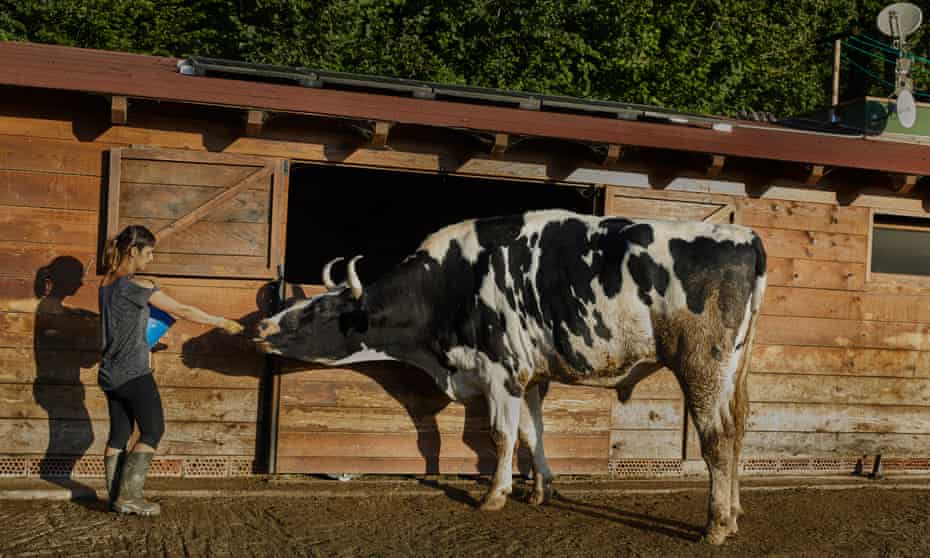
Spain may be famous for its love of meat – but sanctuaries across the country are coming to the rescue of its doomed cows, bulls, pigs, sheep and geese
In the north-east Spanish region of Catalonia, an enormous bull called Pedro is poking his head over a barn door to look at some sheep. He’ll stay there for two hours if the sanctuary volunteers let him; he’ll have to be tempted away with treats so that the sheep can be let out to graze. Pedro knows the routine; he’s been here since he was a calf, when he was bottle-fed by volunteers. He lives a charmed life – he is fed, he roams, he watches sheep, he sleeps; and when he dies, it will be of natural causes.
“He’s enormous!” I say to Olivia Gómez de Zamora, a veterinary assistant from Madrid who spends a lot of time coaxing Pedro from the barn.
Gómez de Zamora tells me this type of cattle is bred for its milk. “The adult males are slaughtered for meat,” she says. “So we never see them.”
Fundación Santuario Gaia, where Pedro lives, and El Hogar are two of about 20 animal sanctuaries in Spain where vegan activists dedicate themselves to rescuing animals, creating a place where they can live without being put to work or slaughtered. The employees and volunteers spend a huge amount of time in each other’s company. Some might call it intense: they live and work together, cook and eat together, and there are leisure activities such as movie nights and debates. The sanctuaries are connected via WhatsApp, where they share veterinary information and coordinate animal rescues.
We’re used to seeing dogs and cats saved from abuse or neglect, but at Gaia and El Hogar – around two hours’ drive apart on either side of Barcelona – most of the animals are pigs, cows, goats and chickens. Gaia co-founder Coque Fernández Abella, 43, an animal rights activist and vet, says: “We wanted it to be for so-called farm animals because they are the most forgotten. No one takes care of them because they’re seen as products.
“Growing up,” he adds, “it was typical to kill pigs to eat at home. Since I was small I had to help with it – it was horrible, because of the screams, but you had to do it. I remember when we rescued our first pig, the memories of the killings came back to me. After everything bad I’ve done in the past, it’s right that I should help animals now.”
The sanctuaries are havens for animals that, rather than being killed for meat or shackled for dairy production, live happily and freely. They are fed and exercised, given medicine if they’re sick, rehabilitated if they’re injured and – the main privilege denied to most farm animals – allowed to live long lives.
Veganism and such care for animals may seem surprising in Spain. Matador directly translates as “killer”. Surely animal-rescuing vegans are an oddity in the land of bullfighting and pata negra?
“It’s true we are very much into ham and bullfighting,” says photographer Ana Palacios, who stayed at both sanctuaries for two weeks, capturing their daily goings-on. “But in the UK, you guys hunt foxes!” While the carnivorous tradition is there, especially in the south, “it isn’t that popular among young people,” Palacios says. But veganism is increasing in popularity in many countries – even the ham capital of the world. Between 2017 and 2019, Spanish study the Green Revolution found a trend towards plant-based eating. In 2017, 0.2% of Spaniards identified as vegan; by 2019, it was 0.5%. Vegetarians account for 1.5% of Spain’s population. Animal welfare was the second most common reason cited for going vegetarian or vegan (23.8%) after health (67%).
Gaia employee Marta Sampaio, 24, says her parents were concerned when she made the decision to stop eating meat, aged 15. Now, any time she’s ill, her enthusiastically carnivorous father is convinced her diet is to blame. She travelled to Spain from Lisbon to find a place to work with animals. After training for a few months as a veterinary assistant, she Googled vegan sanctuaries in Spain, and started as a volunteer at Gaia. She found herself empathising, unexpectedly, with chickens. Her first was a chick called Angie, brought in by a girl who found her wandering alone in the road. Because chickens are bred to produce eggs every day, all year round (rather than in cycles of a week or so, two or three times a year), they’re frequently sick. Sampaio has gained a reputation as the “crazy chicken lady” for her habit of taking the sick ones home. “Angie was a baby and didn’t have any brothers or sisters, so she couldn’t be with the other chickens,” she says. “I kept her at home and she slept with me, in the crook of my shoulder.”
Gómez de Zamora left her veterinary assistant job in Madrid to work at Gaia, and stayed for two years. Now back in Madrid, she still collaborates with the sanctuary, but is filled with grief for one animal she cared for there. Her eyes well up and her voice cracks as she remembers Juana the goat, who had a mass on her spine that caused paralysis. “The time I spent with Juana was very beautiful and very painful, because we were aware of her complicated prognosis and that the moment was coming when we wouldn’t be able to do any more,” she says. “It was hard: you had to be OK for her, because her mind was still OK, even if her body wasn’t. You had to make sure she was still enjoying life, and going out in the sun in her wheelchair.”
It’s easy to imagine vegan animal sanctuaries as soft, emotional places, but there is a steely side. Animals aren’t just rescued from the sides of roads: sometimes they’re swiped from state execution. In 2017, the El Hogar sanctuary made headlines after rescuing a bullfighting cow called Margarita.
Margarita had an irresponsible owner. “When he got drunk with his friends, they would chase her on horseback,” says El Hogar founder Elena Tova. “She is still afraid of men.” The authorities discovered he hadn’t legally registered Margarita; under Spanish law, unregistered cows must be killed as without a vaccine record, there is a risk their meat could make people ill, or even cause a pandemic.
“They couldn’t be reasoned with,” says Tova, who explained again and again that she wanted to take Margarita to a vegan sanctuary to live out her natural life; they could guarantee she would never be used for meat. “They didn’t want to change the law or make exceptions. So we created a page on change.org calling for Margarita not to be killed. It got 190,000 signatures in less than a month.” She convinced the owner to let them take Margarita. “But it wasn’t enough: the vets still wanted to kill her. They made excuse after excuse and drowned us in red tape, until a judge who felt for us wrote to me to say, ‘They’re not going to give you the cow’ – they already had a date to kill her. So I went one night, under cover of darkness, and stole Margarita.”
Continued on Page 2
Australian crocodiles to be cruelly slaughtered on new Hermès farm
French luxury brand Hermès plans to greatly expand their farming of Australian saltwater crocodiles in the Northern Territory, if plans for an additional crocodile facility proceed.
 The report outlines that three to four crocodiles are killed to produce skins ‘fit’ for high-end items such as Hermès handbags.
Our new report Fashion Victims finds that 50,000 more Australian saltwater crocodiles could be cruelly farmed and killed for their skins unless the Federal Government acts.
Australia already accounts for 60% of the global production of saltwater crocodile skins, with two thirds coming from the Northern Territory.
The report outlines that three to four crocodiles are killed to produce skins ‘fit’ for high-end items such as Hermès handbags.
These sentient animals are farmed in crowded, plastic-lined enclosures to protect their skin from damage before a brutal slaughter.
Crocodiles experience pain and pleasure and in the wild will live for around 70 years but in captivity are killed at around two to three years of age.
 Head of Campaigns at World Animal Protection, Ben Pearson said:
“Farmed crocodiles are wild animals, not handbags.
They are sentient beings who deserve to enjoy a wild life, not languish in plastic-lined pens for the profits of French fashion houses. They don’t deserve to pay the hefty price of their life for an expensive handbag.”
“We are calling on the Minister for Environment, Sussan Ley, to stop the expansion of this cruel and barbaric industry, by rejecting an export permit for the Hermès crocodile farm.
As Environment Minister she has obligations to promote the humane treatment of wildlife. Crocodile farming is the exact opposite”.
The new Hermès farm comes as the use of exotic skins is becoming increasingly controversial.
Leading brands such as Chanel, Victoria Beckham, Mulberry, Karl Lagerfeld, Vivienne Westwood and Tommy Hilfiger have committed to, or are moving away from, using exotic skins and wild animals in their products, shifting to humane and sustainable alternatives.
Continue reading “Australia: crocodiles are wild animals, not handbags.”

WAV Comment. The UK has high animal welfare standards and should be proud of that. Most people dont want antibiotic ridden meat on their plates and produce that comes from nations which employ lower welfare standards. In the end cost is probably one driving factor, but another issue is that all meat products should be clearly labelled to inform the buyer of the standards that ‘their’ chunk of meat was produced around – was it UK or overseas produced ? – if overseas, then where from ? – was it from a non EU caged system ? – was it ritually slaughtered or stunned (properly) at the time of slaughter ?
Thus, clear labelling on food products thus gives the consumer a clear choice about what they purchase. If it bad welfare and cheap, from the far east then the consumer will know. If it is more expensive, but from cage free systems, and with less antibiotics and water in the meat, and killed to an acceptable standard, then the consumer still has the knowledge to buy a product which will cost more. In the UK, research shows that consumers are prepared to pay more for meat which is produced to better welfare standards.
If lower welfare US produced meat does not sell well in the UK, then the British customer has sent a message to the US – simple.
At the end of the day, it should be down to the well informed (clear labelling) consumer to decide. Personally, I think the UK consumer will pay more for higher welfare standards – it has been shown. Farmers, supermarlets, the government, get a grip and tell people the reality about products.
Regards Mark
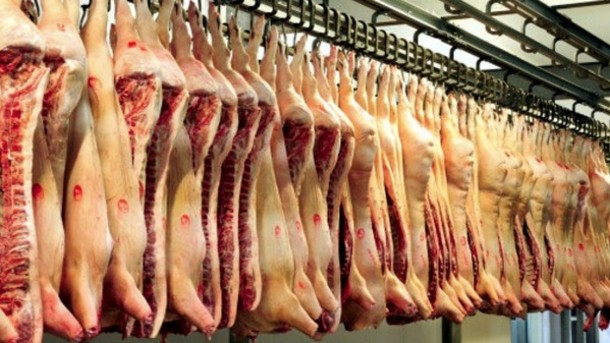
An end to UK pig confinement is in sight, but producers fear they will be left carrying the cost of high-welfare options in the face of cheap imports
After more than a decade trialling the removal of pig cages on her Yorkshire farm, Vicky Scott has lost confidence in being able to make it permanent.
Doing so would require building a new shed to create enough space to freely house all her pigs, she says. “No one will pay for this. They [the retailers] want products as cheap as chips and consumers want cheap meat.”
Yet, the UK and EU are expected to ban all forms of confinement in pig rearing.
In June, the European Commission confirmed it would table a proposal to phase out the use of farrowing crates, which are used to confine sows before and after birth, by the end of 2023. The UK – and Boris Johnson himself – have made clear that the long-term aim is to do the same.
Crates are used to confine expectant sows until their piglets are weaned after four weeks. They restrict the sows’ movement, reducing the risk of crushing the piglets.
However, as well as restricting sows’ natural behaviour and movement, including nest-building and interacting with her piglets, there is also evidence the crates increase the risk of stillbirth.
Piglets are vulnerable to being crushed by sows if they are not in a crate, but the overall mortality rates can be managed, says pig specialist Emma Baxter, from Scotland’s Rural College. Outdoor pig systems, where pigs are not confined, consistently return average piglet mortality rates similar to indoor ones where the pigs are confined, she says.
Given the majority of pigs in the UK are reared indoors because outdoor rearing is limited by soil type, producers will need to be able to adopt high-welfare indoor alternatives to farrowing crates, says Baxter.
Continued on Page 2
Animal rights activists occupy pig farms
July 20, 2021, 6:20 p.m.
Animal rights activists occupied a pig farm in the St. Pölten district (Austria) on Tuesday.
Their allegation was that the pigs were kept in conditions that were cruel to animals. The official veterinarian has meanwhile started the examinations.
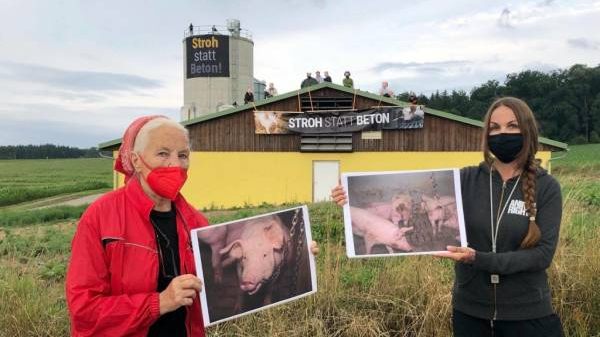
The farm is approved for 1,200 animals that are kept on fully slatted floors.
The activists climbed on the roof of the building in the morning and put up banners with “straw instead of concrete”.
Among other things, they called for mandatory straw litter, a ban on fully slatted floors and twice as much space for the animals.
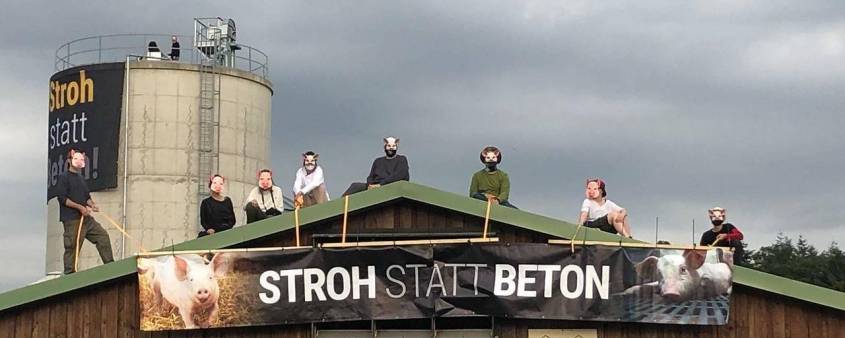
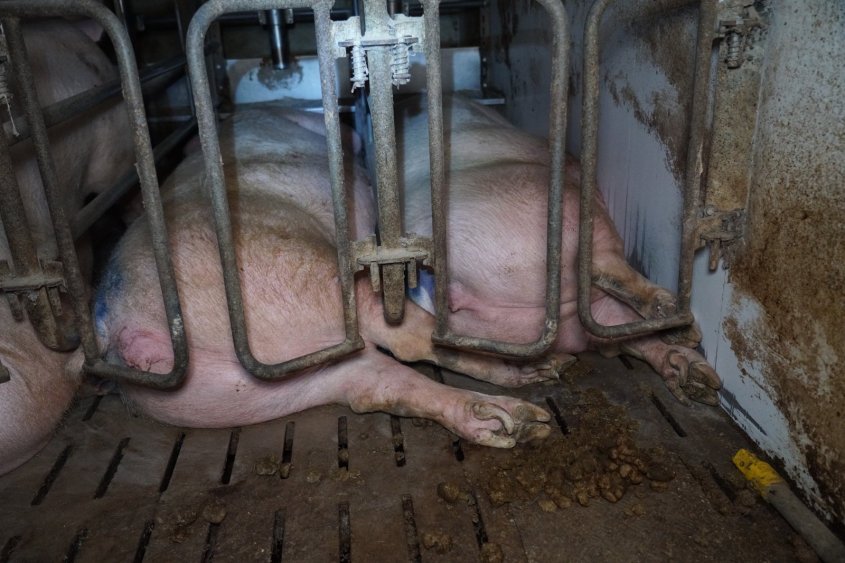
The association against animal factories (VGT) locates “horrific conditions” based on interior shots.
“The animals have large, bleeding wounds, bitten off ears and tails. In addition, everything is stuck with feces, the poor pigs completely filthy. With their bleeding wounds, the animals have to lie in the mud without being cared for, ”said the VGT.
The scenes show gaping open back wounds, bloody tail stumps, bitten ears, umbilical hernias, injured joints – and everywhere feces and dirt.
VGT chairman DDr. Martin Balluch: ” The fact that the animal health service has nothing to complain about in these conditions speaks volumes. Or didn’t they look closely?
How can it be normal that pigs are so injured and suffered by the housing conditions!
How can it be normal that these animals are totally defecated?
Why is nothing being done about it? On site it is required that the responsible official veterinarian carry out an inspection and talk to us about what these injuries to the pigs are all about.
Really nobody can accept such conditions. If that is normal for the fully slatted floor, then the fully slatted floor must be banned immediately! “
The AMA rejects the accusation that Agricultural market Austria tolerates this. The company was closed in the previous year after massive deviations from the specifications for the AMA quality seal program, it is said.
(A notice: The “AMA seal of approval” is an officially recognized quality mark. It provides reliable information about traceable origin, high quality and that it has been independently controlled).
District administration was informed
The police were there with two patrols, the situation was described by the officers as calm. The district administration was informed of the action, it said.
It will be decided in the next few days whether the owner will face any consequences.
The animal rights activists are threatened with a property violation lawsuit (!!!)
https://noe.orf.at/stories/3113508/
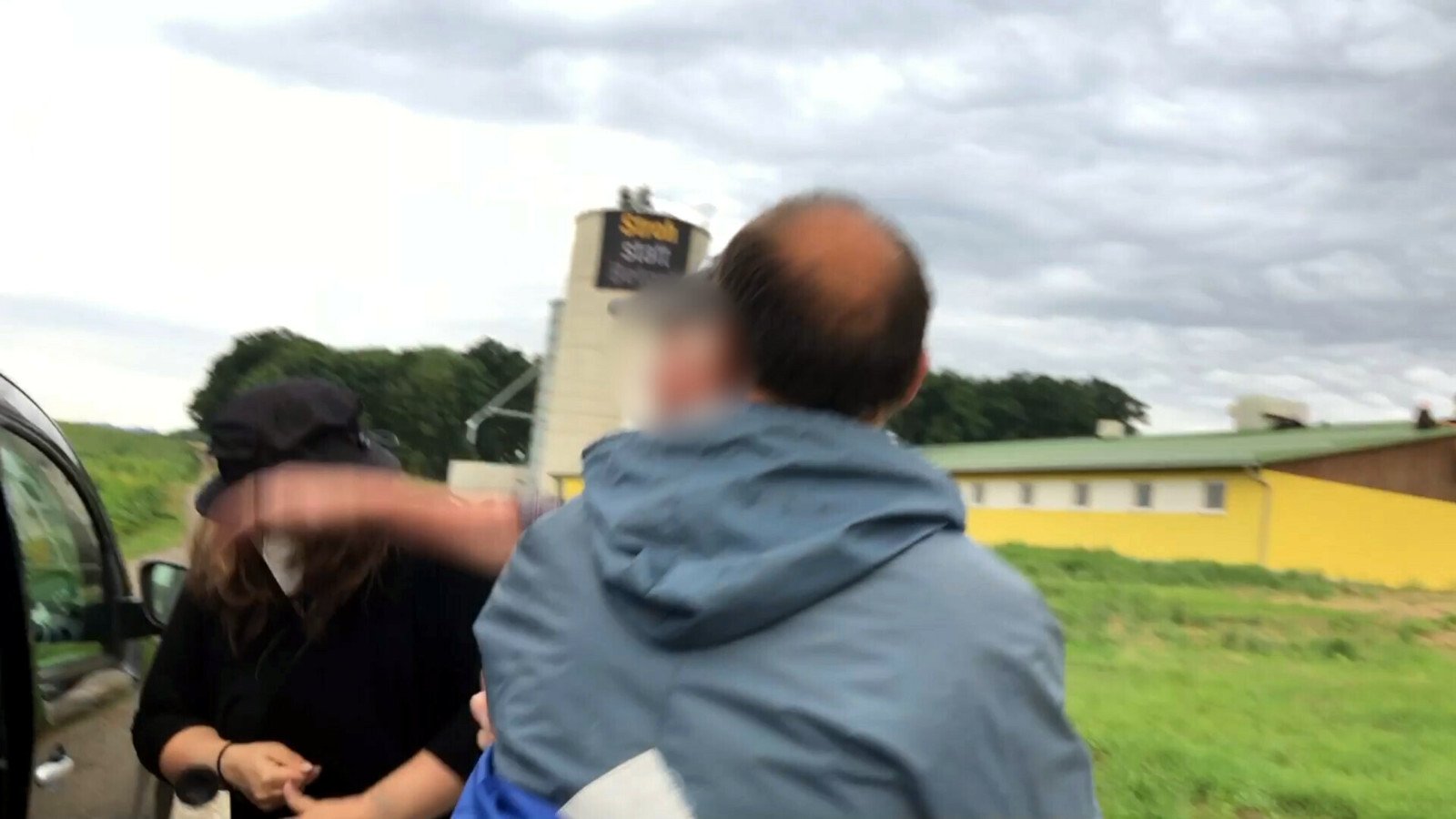
Last update: The “association against animal factories” (VGT) presents video evidence: Farmer attacks animal rights activists and says that “it is good when such people are beaten”.
The occupation of the large fully slatted pig factory north of St. Pölten continues.
Before the police arrived, a farmer came, drove his car into the demonstrators at the entrance and attacked an animal rights activist, a woman!!
Video: https://vgt.at/presse/news/2021/video/2021_VSB_Angriff_v2.webm
After being pacified by two activists, he suddenly attacked again for no apparent reason and hit one of the women on the head. VGT chairman Balluch on this:
“You couldn’t talk to this person. He was incredibly aggressive and threatening. Only the presence of the police let him keep his distance and finally he drove away again.
We will file a complaint with the public prosecutor. “
The animal rights activists have our full support and appreciation for the crew.
The government has failed, the authorities have failed and, last but not least, a cowardly society is complicit in these crimes, which despite information and education from the very well organized animal rights scene, tolerates, shows itself indifferent and ultimately cooperates with an exploitative system.
My best regards to all, Venus


New Swedish report shows extensive spread of SARS-CoV-2 within and between mink farms
22 July 2021
Djurens Rätt
News
Djurens Rätt, together with about 40 other organisations, sent a combined plea to the Swedish government and parliament on June 23, calling for a decommissioning plan for mink farms in Sweden. The government imposed a temporary breeding ban in 2021 after SARS-CoV-2 was transmitted on the majority of Sweden’s mink farms in the autumn of 2020.
In January of this year, the Swedish government stated that breeding minks would be prohibited during 2021. The decision came after nearly a year of warning reports regarding the development of Covid-19 among minks on Swedish fur farms.
Djurens Rätt, along with 44 other organisations, has written a joint appeal to the Swedish government and parliament, addressed to the Rural Affairs Minister Jennie Nilsson, calling for the permanent closure of mink farms. This is due to the significant dangers of infection propagation on densely populated mink fur facilities.
Moreover, the Veterinary Institute in Sweden has recently released a report on infectious disease surveillance in animals and humans during 2020, the results of which being disastrous when it comes to mink farms. They found:
Sweden has enough evidence to phase out this unethical industry. It is time to ban farming of minks in the country and to make sure that the current ban on breeding becomes permanent
Camilla Bergvall, President of Djurens Rätt
Read more at source

I have given a couple of links to the programme at the end.
If you are NON UK then please try these to view. I dont know if you can view or not elsewhere in the world. I am keen to know if NON UK visitors can view. Please let me know with a short and simple response in our comments – thanks, Mark.
(Mark WAV) – Yesterday, 19/7, we issued a post relating to a Panorama tv broadcast on the BBC (yesterday evening) on horse and race horse slaughter investigation.
Here is additional news in today (20/7) from Animal Aid:
Dear Mark,
We know it isn’t easy to see or read about animal cruelty – so we really appreciate you taking the time to read this email. Having such wonderful supporters helps to keep us going.
Animal Aid’s ground-breaking investigation into horse slaughter was featured exclusively on BBC1’s Panorama last night, The Dark Side of Horse Racing. Our harrowing footage reveals, in heart-breaking detail, the fate of those horses who find themselves ‘unwanted’.
Arriving at the abattoir either singly from private owners – or in large truck loads – we see nervous horses being led to a kill room, shot in the head and then hoisted into a butchery where their throats are slit: The majority of the meat is destined for human consumption.
Animal Aid investigators worked tirelessly to film this incredibly distressing footage, showing the slaughter of 267 horses and ponies, between October 2019 and February 2020.
Some of these animals would have once been much-loved companions. A number were from the horse racing industry, whilst others seemed to be from managed feral herds. We saw ponies shot in front of one another – and, disturbingly, our cameras even captured the slaughterman swearing at scared, anxious horses.
We have launched a petition, calling for basic measures to protect horses from this fate. This includes a government-imposed limit on the number of horses bred each year, to reduce the number of ‘unwanted’ horses. We can stop this pointless suffering – but we need your help!
Please sign the petition:
Please share our films:
Please make a donation:
Animal Aid: Make a donation (netdonor.net)
Help us to keep the pressure on and make real progress for horses.
No animal should have to face slaughter – please take action and be their voice.
Thank you.
Fiona
Campaign Manager
If you missed the programme then can watch it here – but note this is only for BBC Tv I player and may not be visible to non UK residents. We will try and get a copy of the footage when we can
Or try this link; it may work ???
https://www.bbc.co.uk/iplayer/episode/m000y2xm/panorama-the-dark-side-of-horse-racing
A gamble – sorry but out of my control.
Regards Mark

