The Cologne Administrative Court has banned 132 pregnant cattle from being transported to Morocco on the grounds that the cattle there are often not slaughtered in accordance with animal welfare standards.
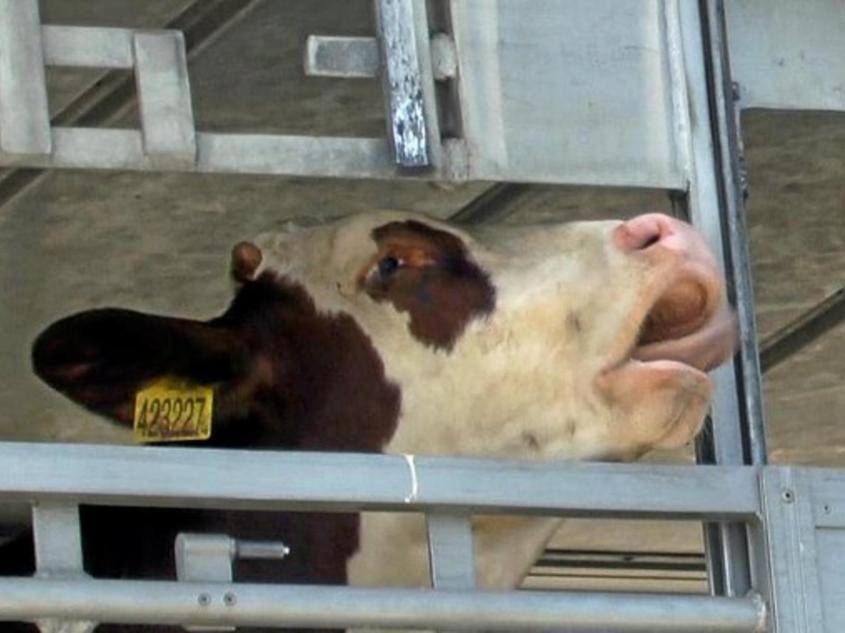
The 132 Holstein cows were pregnant and, according to the carrier, should go to a Moroccan dairy farm. The judges didn’t believe that, however.
According to the court order, the sales contract and the logbook show that the buyer was a slaughterhouse.
Berlin, November 24th, 2020:
PROVIEH welcomes the decision of the Cologne Administrative Court to ban the export of live animals to Morocco.
Before the Cologne Administrative Court decided in favor of the ban, the veterinary office had initially refused permission to transport the pregnant cattle to Morocco.
Two exporters had sued against this – and lost in an urgent procedure.
The transport planned for November 18, 2020, was not allowed to take place because the judges in Morocco feared that the animals would be slaughtered in a manner that was not appropriate to animal welfare.

“The decision of the Cologne Administrative Court evaluates PROVIEH as a success for animal welfare. There is a very high probability that the cattle in Morocco would have been slaughtered under conditions that were contrary to animal welfare, ” comments Patrick Müller, Head of Capital at PROVIEH.
“The decision was intended to encourage other veterinary offices not to process any transports that are expected to contain animal welfare violations en route or in the destination country.
We finally need nationwide uniform regulations for animal transports so that there are no more blatant misjudgments, such as the one from the Potsdam Administrative Court a few weeks ago, where the transport of pregnant cattle was permitted with reference to the EU regulation.
The European regulation for the protection of animals during transport must also be interpreted uniformly and completely in terms of animal welfare. “
Time and again, massive animal welfare violations occur in the case of live animal exports.

Problems arise from the fact that the animals are not regularly and insufficiently fed and supplied with water, even at high temperatures.
Supply breaks are not observed, appropriate supply stations, especially in third countries, are not approached or do not even exist. In the EU, the regulations are completely inadequate, but compliance with these minimum requirements is not even ensured in third countries.
The applicable law is repeatedly circumvented when live animal exports to third countries: The animals are often declared as breeding animals, although experts doubt that the animals are actually used for breeding. Usually neither the climate is suitable, nor is there a suitable food base for the animals in the destination country.
The animals are “consumed” within a short time and are often slaughtered under dire conditions.
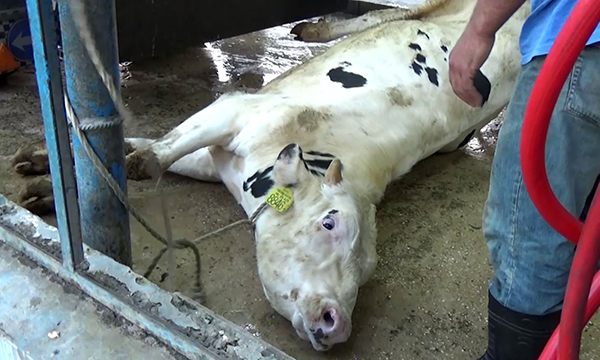
This has now also been recognized by the Cologne Administrative Court, at least in the case of a transport to Morocco.
Continue reading “Germany: Transport ban of 132 pregnant cattle to Morocco”







 World Animals Voice