Month: July 2021

England: Is the EU actually starting to listen to its voting citizens ? – Opinion From the Dogs Mouth.

Is the EU actually starting to listen to its voting citizens ?

On 23 June 2016 an EU referendum took place and the people of the United Kingdom (UK) voted to leave the European Union (EU).

The UK formally left the EU at the end of 31 January 2020, after being an EU member state since joining on 1st January 1973, along (at that date) with other nations Denmark and the Republic of Ireland.

Why did the UK vote ‘out’ – or ‘Brexit’ ?  – a lot of UK citizens were seeing the EU and many (most) of its MEP politicians and Commissioners, as monolithic invertebrates who did little for the wishes and demands of the electorate; the requests of the ‘normal’ EU citizen, it was simple a case of the politicians riding the EU ‘gravy train’; often bettering themselves (in many ways), whilst dismissing the wishes of good European people with ‘yukspeak’ returns to their letters and e mails, asking them why this and that was not being addressed in the EU Parliament.

So, after years of basically very little worthy of mention from the EU, the vertebrate citizens of the UK said they had been given enough rubbish by the EU; and so they voted out, to leave, Brexit.  People wanted their personal parliament back with regards rules and regulations, free to decide rather than be told to by the EU.

Personally I was one of them – an ‘outer’.  It was not a simple question to ask yourself at tea time one day – do I stay or do I go ? type thing; I debated the issue with myself for months in advance; largely keeping my opinions to myself.  There were reasons for this which only other animal campaigners probably understand.

As an animal activist, and having been to the EU in Brussels many times on animal issues; and authoring endless amounts of complaints, reports and investigations into animal suffering issues within the EU, I had over the years, simply been lied to, given false promises, and made to believe time and time again that there were all the regulations and rules in place by the EU masters which thus prevented the evidence I presented at the table from being ‘true’.  In other words; the EU political system was basically calling me a liar, and the evidence which I personally presented, along with many other wonderful groups and people in the EU, was simply being dismissed and put into a file known as the ‘EU trash bin’.

As a person with decades of experience dealing with animal transport abuses along with many others; a voice had to be shouted and my opinion noted.  Consequently, I voted out of the EU, monolithic, invertebrate, gravy club; and decided that ‘going it alone’ would be the only way for the UK to get back the legislation needed as required by the citizens of the UK.  For example; for decades I had been attending demonstrations all over England asking for a ban on the live transport of animals.  But, under EU rules, and this is still the case for other EU member states; they (member states) are not allowed to introduce their own national legislation to ban live animal transport.  The EU says ‘No’, so no it is; despite overwhelming evidence from a multitude of EU animal welfare organisations showing the EU legislation, in the form of Reg. 1/2005 for the so called ‘protection of animals in transport’, simply was not working.  It never has worked, it does not work now, and it never will work in the future.  ‘Yukspeak’ to the EU citizen from Brussels; as I have said before.

So, I have been somewhat surprised and amazed to read over the last few weeks, that there is going to be progress in the form of bans on animal cages in the EU.

Ref:

CIWF London: 15/4/21 – Time to End the Cage Age – a ban on cages for farmed animals receives overwhelming support at EU Parliament hearing. – World Animals Voice

EU: End the Cage. It Started As A Dream; But Now the Dream Has Become Official Reality. – World Animals Voice

And the news this morning, 12/7/21; that the European Parliament, is answering to a call from cross party MEPs to clarify how the Commission is planning to deliver on its commitment to proactively reduce and replace the use of animals in EU laboratories

EU: MEPs say now is the time for a comprehensive plan to end European animal experiments and transition to human-relevant science. – World Animals Voice

Finally, is the requests of the EU citizen; the ‘normal’ person; being listened to, and more importantly, acted on, by the hierarchy in the ivory tower known and EU Brussels ?

Is there a reason for this ? – are all the years of bullshit and non sensical returns from the EU starting to show them that there are dissident things brewing around Europe ? – is it finally a case of bullshit no longer; the common man now sees clearly through the smokescreen that we, as a EU Parliament and Commission(s), have hidden behind for decades ? – is the emperor starting to lose his clothes ?

The link (source) given at the end is very interesting reading:

Italy would be the most likely of the “Big Four” member states to consider exiting the European Union if Brexit proves to be beneficial to Britain, according to a Euronews-commissioned poll.

Data from the Redfield and Wilton Strategies survey found that nearly half of Italians would be likely to support their country leaving the EU if the UK and its economy are regarded to be in good health in five years.

In the event, France and Spain both showed moderate support for changing its relationship with the bloc, while Germany was the member state least likely of the four major players to consider leaving the Union. 

Source:  https://www.euronews.com/2020/08/10/nearly-half-of-italians-would-support-leaving-the-eu-if-brexit-is-successful-according-to

The time came many years ago when the EU should have listened and acted to the wishes of its voting electorate.  They failed big time; and only now are we witnessing this rash of new promises and proposals which should make life a bit better for suffering animals.  The truth will be in the results and the realities.

On animal transport; as always, there is nothing in the way of real improvement.  I read nothing about a ban on live animal long distance transport; instead, I am fed spoonful’s of ‘farm to fork strategies’ on how things are going to be so much better – or in other words; am kind of acceptance by the EU masters that the current system does not really work.  Hmm; has this not been said by many for decades ? – why now does the sleeping monolith awaken ?

With the UK being out of Europe, it does not mean that we wipe our hands of EU animal issues; far from it.  It does mean though that by getting out, we can set our own better standards in the UK as well as continuing the fight for animal rights with all of our wonderful friends in Europe.

Oh, and by the way; since the UK left the EU a little while ago; the UK government is now putting legislation through parliament which will BAN the export of live animals from British shores.

Search Results for “uk live export ban” – World Animals Voice

People power works – be part of it.

Regards – Dogs Mouth Mark
This image has an empty alt attribute; its file name is dogs-mouth.jpg

Germany: The number of pig farmers in Lower Saxony falls by 44 percent!

There is hardly a farm in Lower Saxony that earns its money raising and selling pigs, chickens and cows.

Most farmers have specialized in keeping one species of animal in order to meet the world’s highest standards.(!!)

For many farmers, however, the legal requirements and standards were also a reason to give up their animal husbandry.
For example, the strict regulations of the new fertilizer ordinance, the prohibition of non-anesthetized castration and the renouncement of the docking of curly tails in pigs as well as the requirements for keeping sows in crate stalls.

This trend has accelerated especially in the past three years, writes the “Landvolk =(one of the largest regional farmers’ associations in Germany)- press service”.

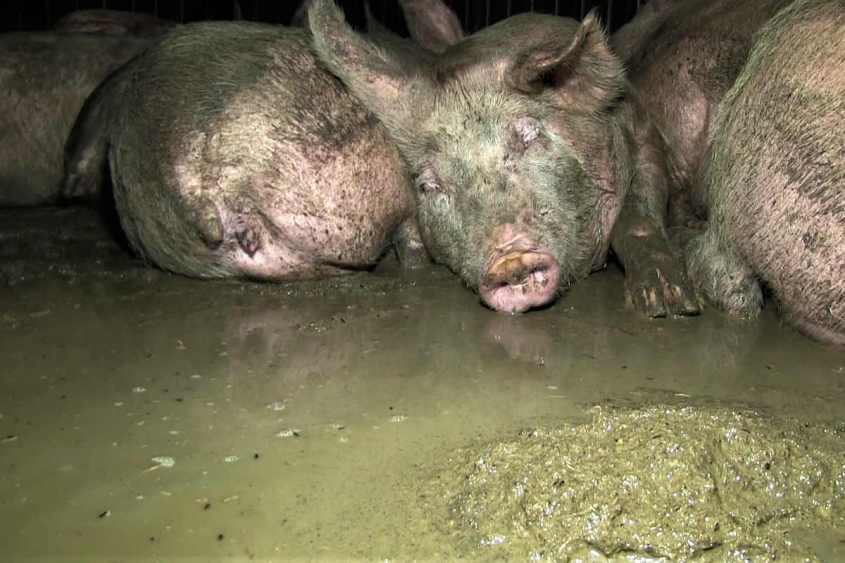
Image: SOKO Tierschutz

“Before the farmers convert or renew their stables with high investment sums in an uncertain market situation, they prefer to opt out, especially since there are usually major hurdles to overcome for building permits,” says “Landvolk” Vice President Manfred Tannen, who only gave up sow farming a few years ago .

He and his professional colleagues miss clear, reliable statements on how they can face the challenges of the future.
According to the results of the 2020 agricultural census, of all 35,348 farms in Lower Saxony, only 25,431 farms (71.9 percent) kept livestock in 2020.
This means that the number of livestock farms has fallen by 22.3 percent over the past ten years.

The number of dairy cow farms has fallen by 41.8 percent over the past ten years.
On the dairy farms there is a clear structural change towards fewer but larger farms.
The number of pig farmers decreased even more than the number of dairy farmers.

Therefore, more and more pet owners would also opt out due to the immensely increased construction costs and the lack of planning security.

https://moderner-landwirt.de/zahl-der-schweinehalter-in-niedersachsen-sinkt-um-44-prozent/

And I mean …The world’s highest standards?
In Germany? in the pig farms?

In the last few years one scandal chases the next other, corrupt veterinarians and authorities sell the “black- sheep”– theory and cover animal cruelty and the worst animal abusers.
Undercover activists who bring this to the public are being criminalized.
The “Landvolk” do not mention it.

These abuses in German companies can be found on almost every farm, but the Ministry of Agriculture is silent in order to enable the slaughterhouses to do their business.
This is how perpetrators are made victims

Well.. from now on, when the farmers cannot sleep, forget the sheep, because from today only pigs will be counted!

My best regards to all, Venus

EU: MEPs say now is the time for a comprehensive plan to end European animal experiments and transition to human-relevant science.

Photo – Rachele Totaro

MEPs say now is the time for a comprehensive plan to end European animal experiments and transition to human-relevant science

8 July 2021

Press Release

Today in the European Parliament, answering to a call from cross party MEPs to clarify how the Commission is planning to deliver on its commitment to proactively reduce and replace the use of animals in EU laboratories, Commissioner Adina Ioana Vălean described the Commission’s actions. MEPs from all political groups unanimously agreed that progress in replacing the use of animals has been slow and more needs to be done.

Members of the European Parliament are calling for a coordinated action plan to move Europe towards more humane and human-relevant science without the use of animals in research, regulatory testing and education. 

Cross party Members of the European Parliament have joined forces to request that the Commission sets up a high-level taskforce to work with Member States and relevant stakeholders in putting together an EU-wide plan to phase-out the use of animals in Europe’s laboratories. 

An oral question to the Commission on this issue has been debated today and the Parliament will formally adopt its position in September.This has been a major objective of the Animals in Science working group of the Intergroup on the Welfare and Conservation of Animals.

Opinion polls show that ending animal experiments is a priority for EU citizens.

Nearly three quarters (72%) of European citizens agree that the EU should set binding targets and deadlines to phase out testing on animals.

The Members of the European Parliament’s comments:

Jytte Guteland, S&D“Today’s scientific landscape is not the same as 50 years ago. Today we have the knowledge and technology to plan for human-centred science, where animals are no longer the gold standard. But to get there, the Commission needs to set out a series of steps to reach concrete objectives that replace step by step the use of animals in specific areas.”

Tilly Metz, Greens“EU citizens have voiced their demand for non-animal science too many times, but EU investments are too slim and scattered to have an impact. The Commission needs to establish a high-level inter-service taskforce to work with member states and relevant stakeholders to draw up an EU-wide Action Plan that can drive an efficient phase-out of the use of animals for scientific purposes.”

Katalin Cseh, Renew“Animal tests are slow, inefficient and cause immense suffering. This has no place in 21st century science. The European Union has traditionally done better than the rest of the world, but even here, progress is too slow. We need a credible plan ‒ a plan with measures, targets and a binding, ambitious timeline.  We need to promote and fund cruelty-free alternatives. This is what we are asking from the European Commission.”

Michal Wiezik, EPP “What we are asking from the Commission is to do more of what it already does, but in a coordinated manner and with concrete goals that can replace animals in specific scientific areas. Targeted funding, education and broad collaborations are key to making innovative advanced models and technologies the new normal.”

Anja Hazekamp, GUE/NGL“Scientific change, like any change we seek, needs a political strategy. The EU has strategies for climate change, gender equality, and even for research and innovation. But it does not yet address the scientific and ethical problems that have been dragged by animal experimentation for decades. An EU action plan to accelerate the transition to non-animal science can change that.”

Five animal protection groups – Cruelty Free Europe, Eurogroup for Animals, the European Coalition to End Animal Experiments, Humane Society International/Europe and PETA – representing over 100 member organisations from 27 EU member states, are supporting this initiative and the vote on a resolution in September which they hope will lead the way to a roadmap for non-animal science.

Today’s debate has shown that despite the positive investments from the Commission on non-animal models, they are not usually linked to concrete objectives that can significantly reduce the use of animals and change the current scientific landscape. 

A European Parliament resolution on a coordinated Union-level plan to facilitate the transition to animal-free innovation can lay out the strategic elements necessary to place the EU in the forefront of innovation, health and environmental and animal protection.

ENDS

Regards Mark

Spain: Have you met Equalia?

Have you met Equalia?

12 July 2021

The “Have you met” is a monthly interview to raise awareness for our Member Organisations, their work, main battles and achievements for animals.

Let’s start this first edition with an interview of Guillermo Moreno, Equalia’s co-founder and Executive Director.

Tell us a bit more about Equalia and its main battles.

Equalia is a non-profit organisation dedicated to improving the living conditions of farmed animals with the lowest standards of animal welfare. 

Our mission is to achieve agreements with companies, institutions and stakeholders that positively impact the greatest possible number of farmed animals. 

Our vision is a world where intensive animal farming and intensive aquaculture makes way to food production models that respect sustainability and animal welfare.

We have 4 lines of action:

  • Awareness rising, 
  • Effective animal advocacy (movement construction and capacity building),
  • Corporate outreach,
  • Political campaigning. 

Our main battles this year include: 

  • Mandatory CCTV in all Spanish Slaughterhouses, 
  • Cage-Free Initiative, 
  • Higher welfare standards for broilers within the European Chicken Commitment initiative,
  • Farmed fish welfare (new line opened recently).

In which countries is Equalia present?

Equalia is currently operating in Spain.

We also cooperate closely with international coalitions, such as Aquatic Animal Alliance and Open Wing Alliance, in order to generate a global positive impact for farmed animals. 

What about you Guillermo Moreno? Tell us a bit more about your role within Equalia.

I am the co-founder and current Executive Director of Equalia. I come from a social background, with almost 15 years of experience in the animal welfare movement. I am a psychologist and I put all my knowledge at the service of the organisation. 

My role is to be at the service of the employees and to surround myself with employees, volunteers and advisors who have more knowledge than me and complement me.

When did Equalia join Eurogroup for Animals and why?

Equalia joined Eurogroup for Animals at the beginning of 2021 with the aim of creating collaborative synergies to give a voice to European proposals in Spain. 

The political lobby of the Spanish agri-food system in Europe is very strong, therefore it was required to strengthen the presence of a Spanish group to create effective collaborative ecosystems between Europe and Spain. 

What are Equalia‘s main achievements this year?

One of our main achievement this year is the fact that after two and a half year of intensive campaigning, the Ministry of Consumer Affairs published earlier this year a draft Royal Decree that will oblige the ~700 Spanish slaughterhouses to install video surveillance cameras.

The Spanish Agency for Food Safety and Nutrition-AESAN (an autonomous body of the Spanish Government, attached to the Ministry of Consumer Affairs), has announced that the Royal Decree will be approved by the end of this year. 

Spain will become the first EU country to approve the mandatory installation of CCTV in all slaughterhouses.

How can the public act for Equalia? (e.g. donation, sign campaigns, volunteering, ect.)

If, after learning about our work, anyone is interested in making a one-time donation or becoming a member of Equalia, it can be done here

If any philanthropist or philanthropic entity is interested in making a donation, please contact our Fundraising Manager at joseramon.mallen@equaliaong.org

Also, anybody can find skilled volunteering opportunities with us or other effective animal advocacy nonprofits in Animal Advocacy Careers’ Skilled Volunteering Board here  

What is your life motto?

It comes from a great friend:

In a world as fragmented and individualistic as this one, where we also have endless responsibilities and live under constant stress that prevents us from even feeling, weaving authentic and deep relationships is almost like a miracle of life.”

Regards Mark

Austria: Minister of Agriculture wants wolves to be shot

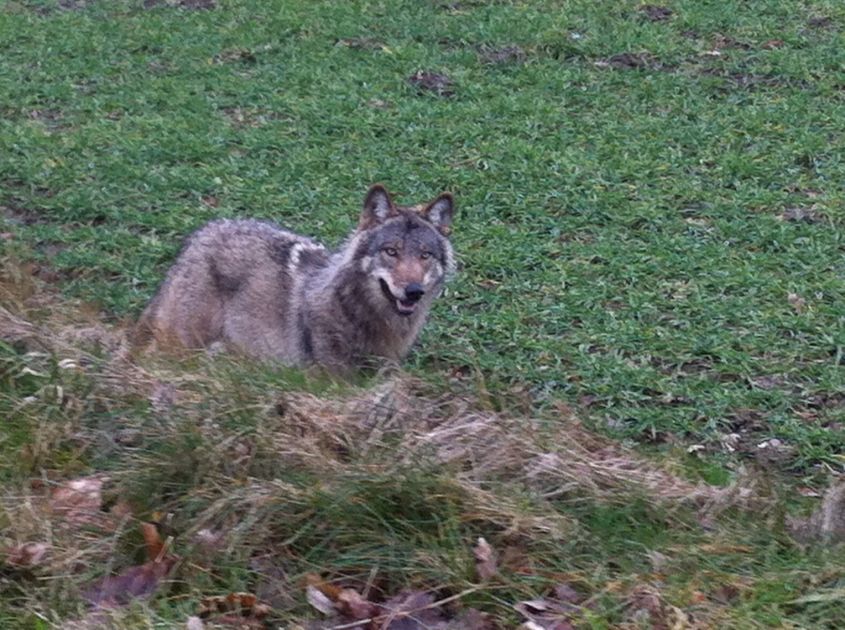
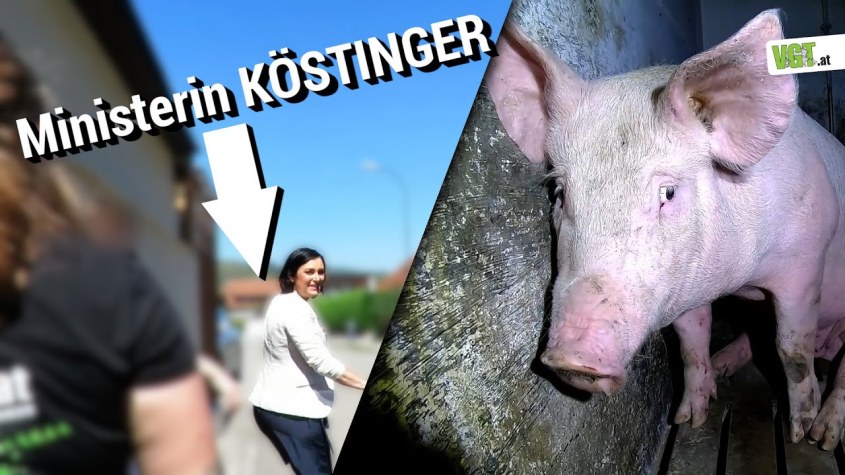
Austria’s Minister of Agriculture, Elisabeth Köstinger, in a broadcast called for the “removal”, i.e. killing, of wolves that keep killing sheep and goats.

This is legally possible (!!)

Elisabeth Köstinger

The wolf debate also reached the federal capital.
Agriculture Minister Elisabeth Köstinger of the Austrian People’s Party (ÖVP) took a political stand on Friday against the demands of the green coalition partner and behind those of the farmers who are calling for problem wolves to be shot down.

“If no action is taken now and problem wolves are removed, the local alpine pastures will soon no longer be able to be cultivated,” the minister said in a broadcast (!!!)

Across Austria, wolves had killed around 200 animals in the past few weeks.
In Salzburg, three wolves killed at least 75 sheep – around 25 are still missing.
The alpine farmers see it as “cruelty to animals such as would not have happened in the past hundred years” (!!!)

On Thursday they vented their anger at a rally in Salzburg’s old town.
Again and again they speak of the fact that the wolf falls into a “blood frenzy” when it rips off their animals.

Hubert Stock, the state’s wolf commissioner, describes this as a natural hunting behavior.
“It seems irrational, but as long as something is moving, the wolf hunts.”

In order to protect their animals, many farmers have not driven their sheep and goats up to the alpine pastures this year – or have already driven them down again.

Instead of in the heights, the animals are now housed on the fenced winter pasture near their farms.

ÖVP Provincial Councilor Josef Schwaiger points out the consequences for tourism: If animals no longer graze on the alpine pastures, the hiking trails would be covered with bushes.

Minister Köstinger also emphasizes the possible consequences of wolf cracks for the tourist use of alpine pastures and hiking trails.

“The peaceful coexistence of wolves and alpine farming is an illusion. Wolves are predators that often strike indiscriminately and kill alpine cattle.” (!!)

The Minister of Agriculture also points out that the “removal” – that is, killing – of individual problem wolves is legally “entirely possible”.

Even if the wolf is strictly protected according to the EU nature protection directive, the fauna-flora-habitat directive.
It says that all “deliberate forms of capture and killing” are banned in the EU.
Exceptions to this guideline are possible, however, if individual wolves would lead to “damage in particular to crops and animal husbandry as well as to forests”.

The State Council now wants to define conditions and areas of action by ordinance.
However, he should not get the necessary approval from the Greens. They spoke out against the regulation in advance.
The nature conservation organization WWF also criticized the demands of Agriculture Minister Köstinger.

“The wolf is a strictly protected species and an important part of intact nature,” says the WWF.
Instead of discussing the shooting of problem wolves, there should be nationwide coordinated herd protection programs as well as “a revival of shepherd life based on the Swiss model”.

https://www.sn.at/salzburg/politik/friedliche-koexistenz-ist-eine-illusion-ministerin-ist-fuer-den-abschuss-des-wolfes-106352221

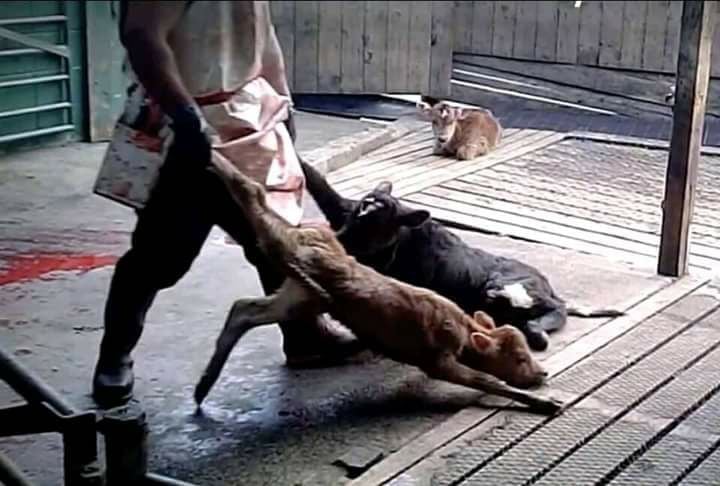
And I mean…Shepherds howl when wolves, bears or eagles steal a sheep from them, but I have never seen a shepherd cry in front of a three-story truck that carries sheep hundreds of miles on top of each other through a heat of 35 ° or even 40 °.
They are the same animals that the farmer gives for slaughter anyway.
Because the farmers keep animals for economic reasons.

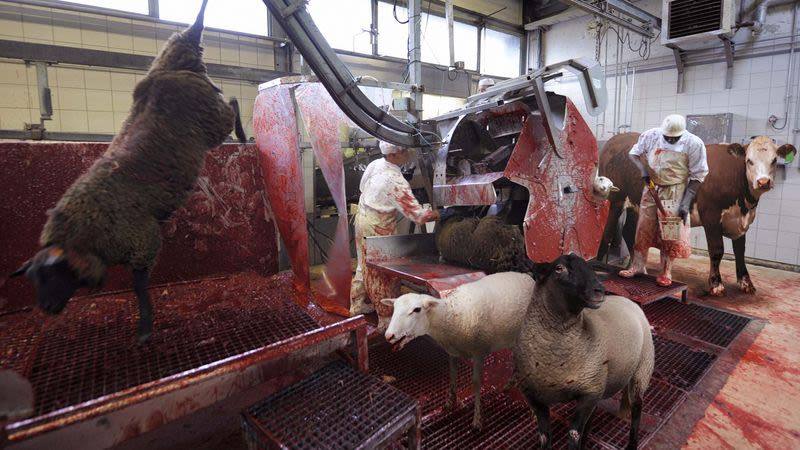
Grazing animals are also ultimately brutally killed in slaughterhouses without any control and carted into the mobile coffins on all the highways of the world.
And that is also subsidized.

Wolves make grazing animals impossible?
Whta an outrageous lie!
Wild animals make up just 3% of the total biomass of terrestrial vertebrates on earth!
The rest is “useful” animals + people!

According to the Federal Statistical Office, an average of more than two million animals are slaughtered in Germany every day.
Per day!

So … not even whole wild animals around the world would be able to do that in a hundred years !!

Wolves do not practice brutal mass animal husbandry, they either eat what is there or starve to death.

But the farmer’s knitting pattern is always the same: dissemination of incorrect or incomplete information, coupled with targeted scaremongering.

Köstinger is Vice President of the Austrian Farmers’ Union.
That can explain some of the reasons why she calls for the “removal” of the wolf.
To date, no Minister of Agriculture in Austria has supported farmers and hunters as outrageously as Köstinger.

Perhaps the Minister’s “removal” would be the best choice for humans and animals.

My best regards to all, Venus

Canada: ‘Heat dome’ probably killed 1bn marine animals on Canada coast, experts say.

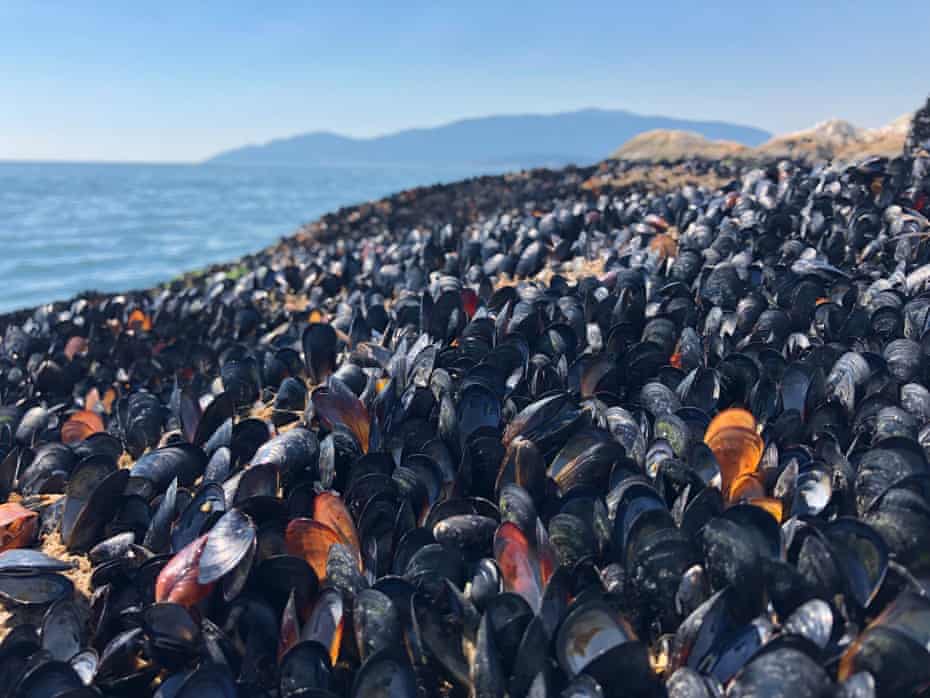
Dead mussels at the waterline in British Columbia.
Dead mussels at the waterline in British Columbia. Photograph: Christopher Harley

‘Heat dome’ probably killed 1bn marine animals on Canada coast, experts say

‘Heat dome’ probably killed 1bn marine animals on Canada coast, experts say | Canada | The Guardian

British Columbia scientist says heat essentially cooked mussels: ‘The shore doesn’t usually crunch when you walk’

More than 1 billion marine animals along Canada’s Pacific coast are likely to have died from last week’s record heatwave, experts warn, highlighting the vulnerability of ecosystems unaccustomed to extreme temperatures.

The “heat dome” that settled over western Canada and the north-western US for five days pushed temperatures in communities along the coast to 40C (104F) – shattering longstanding records and offering little respite for days.

The intense and unrelenting heat is believed to have killed as many as 500 people in the province of British Columbia and contributed to the hundreds of wildfires currently burning across the province.

But experts fear it also had a devastating impact on marine life.

Christopher Harley, a marine biologist at the University of British Columbia, has calculated that more than a billion marine animals may have been killed by the unusual heat.

A walk along a Vancouver-area beach highlighted the magnitude of devastation brought on by the heatwave, he said.

“The shore doesn’t usually crunch when you walk on it. But there were so many empty mussel shells lying everywhere that you just couldn’t avoid stepping on dead animals while walking around,” he said.

Harley was struck by the smell of rotting mussels, many of which were in effect cooked by the abnormally warm water. Snails, sea stars and clams were decaying in the shallow water. “It was an overpowering, visceral experience,” he said.

While the air around Vancouver hovered around the high 30s (about 100F), Harley and a student used infrared cameras to record temperatures above 50C (122F) along the rocky shore.

“It was so hot when I was out with a student that we collected data for a little bit and then retreated to the shade and ate frozen grapes,” said Harley. “But of course, the mussels, sea stars and clams don’t have that option.”Mussels are hardy shellfish, tolerating temperatures into the high 30s. Barnacles are even sturdier, surviving the mid-40s (about 113F) for at least a few hours.

“But when the temperatures get above that, those are just unsurvivable conditions,” he said.

The mass death of shellfish would temporarily affect water quality because mussels and clams help filter the sea, Harley said, keeping it clear enough that sunlight reaches the eelgrass beds while also creating habitats for other species.

“A square meter of mussel bed could be home to several dozen or even one hundred species,” he said. The tightly bunched way mussels live also informed Harley’s calculation of the scope of the loss.

“You can fit thousands on to an area the size of a stove top. And there are hundreds of kilometres of rocky beach that are hospitable to mussels. Each time you scale up, the numbers just keep getting bigger and bigger. And that’s just mussels. A lot of sea life would have died.”

While mussels can regenerate over a period of two years, a number of starfish and clams live for decades, and they reproduce more slowly, so their recovery is probably going to take longer.

Harley has also received reports from colleagues of dead sea anemones, rock fish and oysters.

Experts have cautioned that the province needs to adapt to the reality that sudden and sustained heatwaves are likely to become more common as a result of climate change.

Another heatwave is expected to strike the western United States and south-western Canada in the coming week, highlighting the relentlessness of the dry summer heat.

“The nerdy ecologist part of me is excited to see what will happen in the coming years,” said Harley. “But most of the rest of me is kind of depressed by it. A lot of species are not going to be able to keep up with the pace of change. Ecosystems are going to change in ways that are really difficult to predict. We don’t know where the tipping points are.”

Great article by The Guardian, London, as always

Regards Mark

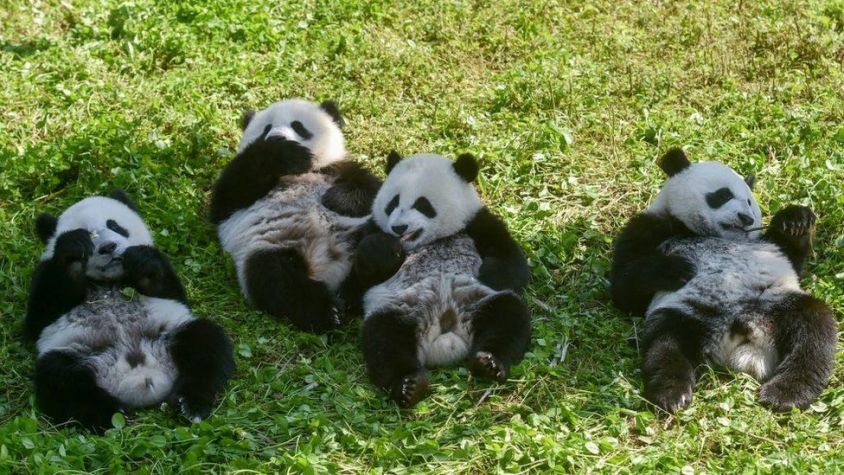
China: Panda is no longer under endangered status!

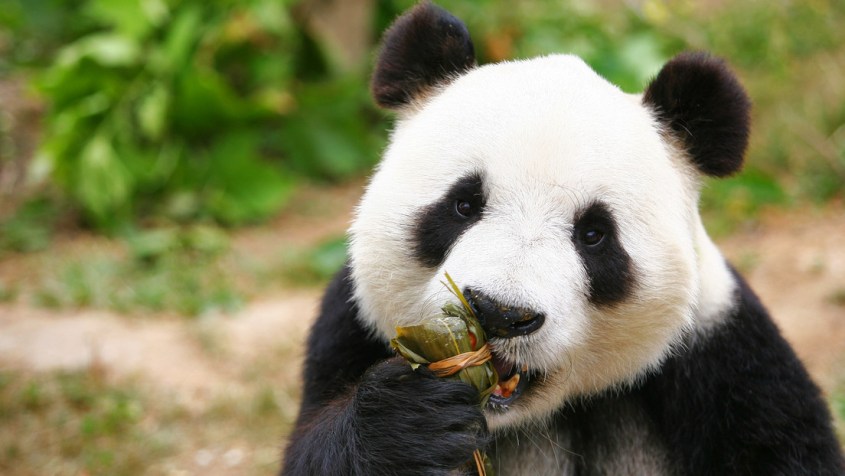
Giant pandas are no longer classified as endangered but are still vulnerable, Chinese officials say.

The classification was downgraded as their number in the wild has reached 1,800.

Experts say that the country managed to save its iconic animal through its long-term conservation efforts, including the expansion of habitats.

China considers pandas a national treasure, but have also loaned them to other countries as diplomatic tools.
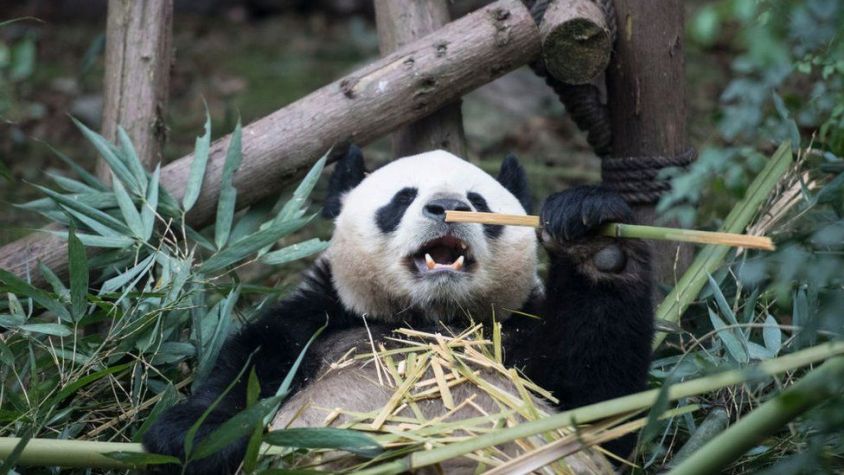
The latest classification upgrade “reflects their improved living conditions and China’s efforts in keeping their habitats integrated”, said Cui Shuhong, head of the Ministry of Ecology and Environment’s Department of Nature and Ecology Conservation at a news conference.

The new classification comes years after the International Union for Conservation of Nature (IUCN) had already removed the animal from its endangered species list and re-labelled it as “vulnerable” in 2016.

At the time, however, Chinese officials had disputed the decision, saying that it could mislead people into believing that conservation efforts could be relaxed.

Chinese efforts to create and populate bamboo forests have helped pull the pandas back from brink of extinction
This week’s announcement by China’s environmental ministry is the first time the animal’s status was changed on its own endangered species list, which uses similar standards as the Swiss-based IUCN.

Chinese social media users were delighted at the news, saying that it is “proof” that conservation efforts are worth it.

“This is the result of years of hard work. Well done to all the conservationists,”

one person wrote on microblogging platform Weibo.

Giant pandas are no longer classified as “endangered” – but are still “vulnerable”

Experts have said that the success is largely due to Chinese efforts to recreate and repopulate bamboo forests. Bamboo makes up some 99% of their diet, without which they are likely to starve.

Zoos have also attempted to increase numbers via captive breeding methods.

https://www.bbc.com/news/world-asia-china-57773472

And I mean…It is good to read such beautiful news.
So far we only know the sad fact that the human species are becoming more and more and the animal species are becoming less and less.
Yes! it is always worth fighting, and we will continue to fight for the animals

My best regards to all, Venus

Hunting is murder

“Turning children into soldiers is deeply perverse, but don’t think we’re lagging behind Africa in anything.
We let these killers break their own children and even promote their deeds in elementary schools”.

If you want to become a serial offender in the future, you practice early!

My best regards to all, Venus


Catching with limesticks for birds is now banned in all EU countries.

It has now become a reality, what animal welfare organizations have been fighting for for years.
The catching of limesticks for birds is now banned in all EU countries. France was the last country to classify the fishing method as illegal!

It’s a breakthrough in bird conservation.
Since June 28, 2021, the controversial hunt for limed birds has been banned throughout the European Union. As the last country in the EU, France has now declared the fishing practice illegal. The French Supreme Administrative Court announced last Monday that the trapping technique for blackbirds and thrushes could not be approved in their current condition.

Eric Neuling, bird protection consultant at the German Nature Conservation Union (NABU), welcomes the verdict: “At NABU, we have been fighting against the hunting of limedrods for years. The verdict is a groundbreaking success for bird protection across Europe.”

Illegal bird trapping in Cyprus with liming rods and nets

Up until the end of the day, liming was still practiced in some areas of the south of France. Every year around 40,000 birds – including protected species – were painfully caught in France. The decision of the French administrative court now followed a ruling by the European Court of Justice in March, according to which the technology fundamentally violates EU law.

Hunting tradition is no longer placed above animal welfare

When catching limescences, bird trappers set sticky traps for birds by smearing sticky glue on branches.
If the birds perch on the prepared rods or fly close by, the animals stick to the sticky paste. As the birds attempt to escape, they begin to flutter in panic, which causes the feathers and wings to stick together even more.
Often the only thing left for the animals is painful death.

Ramifications for Cyprus after European court rules on bird trapping | Cyprus Mail

Continue reading “Catching with limesticks for birds is now banned in all EU countries.”