Month: August 2021

England: ‘Full investigation’ launched over ‘cruel’ Morrisons chickens grown on Norfolk and Suffolk farms.

‘Full investigation’ launched over ‘cruel’ Morrisons chickens grown on Norfolk and Suffolk farms


‘Full investigation’ launched over ‘cruel’ Morrisons chickens grown on Norfolk and Suffolk farms | ITV News Anglia

Supermarket chain Morrisons says it has launched an urgent investigation after campaigners claimed chickens on farms run by its suppliers are being grown so fast they can barely stand up.

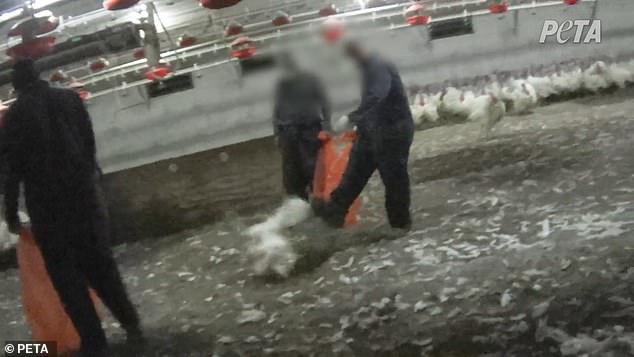
In a video narrated by the naturalist Chris Packham undercover filming claims to show fast-growing birds deformed and dying on farms in Norfolk and Suffolk.

Open Cages, an animal welfare charity, said new breeds of birds that grow fast feed consumers want for cheaper chicken. They claim modern chickens grow 400% faster than those farmed in 1950.

These chicks are born and locked into these giant factory farms. And in only 35 days are forced to grow to a monstrous size. Frankenchickens are cheap and efficient. Basically all cheap chicken will come from Frankenchicken breeds . People look at this footage and they will think that this is an anomaly – they’ll ask me if something illegal is happening here but no this is perfectly legal.

Connor Jackson, Open Cages Chief Executive

The organisation filmed in four intensive chicken farms in May and June. 

Those farms supply the Cranswick chicken factory which provides meat for Morrisons labelled Red Tractor approved, something designed to reassure people of high standards. 

ITV News approached Red Tractor for a comment but have not had a response at the time of writing. 

TV naturalist Chris Packham said it is ‘cruel beyond belief’ and is calling for Morrisons to sign the Better Chicken Commitment which would mean only slower growing chickens are used.

Other retailers like M&S, Waitrose and KFC are among 240 companies across Europe to commit to stop selling the fast growing birds. 

In a statement Morrisons say they have launched a ‘full investigation’ and that they ‘care deeply about animal welfare’.

We care deeply about animal welfare and require all our suppliers to maintain the highest standards. We have asked Cranswick to conduct a full investigation and get back to us.

Morrisons

Cranswick have yet to respond to our requests for comment, but elsewhere the company has said “we take the welfare of chickens at our farms very seriously and it is always our first priority.”

ITV news has not been able to independently verify the footage that came out of the farms. The video is also edited so may not reflect overall conditions the chickens face.

Morrisons Related:

Morrisons Misery.com

it’s #MorrisonsMisery for Chickens!

FrankenChicken:

Morrisons claims to “take animal welfare seriously.” However, despite horrific animal suffering in its supply chain, it has refused to sign up to the Better Chicken Commitment. These scientific measures are backed by over 40 animal protection charities from across Europe. Bred to grow so fast their bodies can’t keep up, ‘FrankenChickens’ sold at Morrisons are living lives of misery. It’s time for change. When will Morrisons hold true to their word and take this issue seriously?

BRED TO SUFFER

Birds have been so genetically manipulated that they grow to be three times as large as they would without such invasive tampering — and in less time. This accelerated growth leaves birds crippled under their own weight and causes a myriad of other problems.

TRAPPED IN FILTH

Industrial farming operations house hundreds of thousands of birds inside filthy, windowless sheds. Due to this severe overcrowding, these birds are provided slightly less space than a sheet of paper to live on. Often they are unable to walk and lie in ammonia-laden litter causing sores and respiratory problems.

Regards Mark
Tenerife-Loro Parque: The captured 2 year old Orca Ula is dead

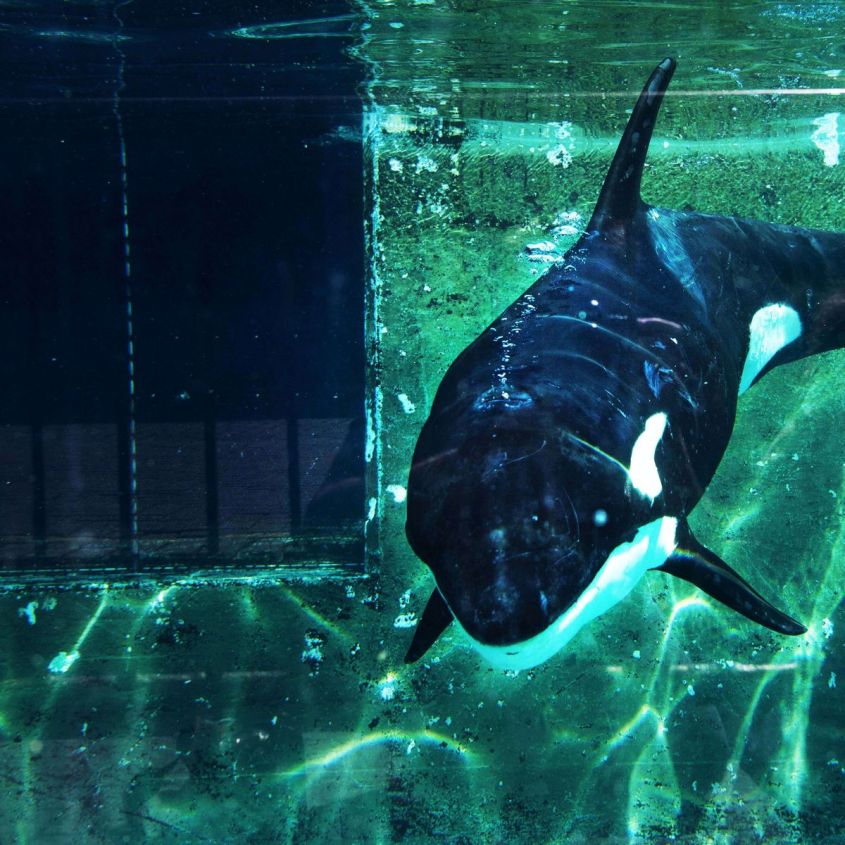
Orca Morgan, the weakened female orca, was found completely exhausted off the Dutch coast in 2010 and brought to the Harderwijk Dolphinarium. There she should be nursed back to health.

But after Morgan was well again, she was not released into the wild, as originally announced, but handed over to Loro Parque on Tenerife around a year later.

The dolphinarium nursed her to health, but refused to release her back into the wild. With the reason: it is deaf and will not survive in the wild(!!!)

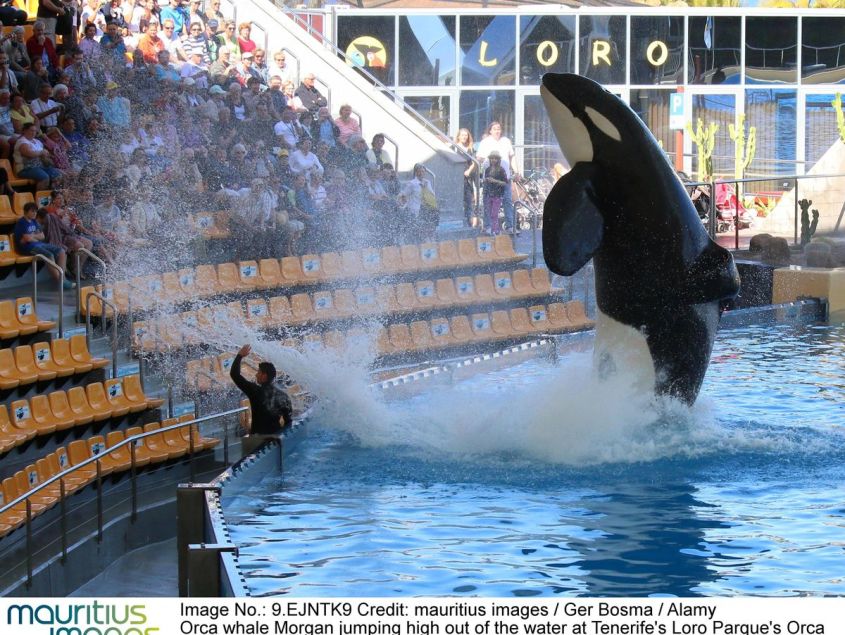
Orca whale Morgan jumping high out of the water at Tenerife’s Loro Parque’s Orca Show, audience getting splashed

Morgan’s supporters were speechless when the rumor that Morgan was deaf reached them.

The Orca Coalitie raised concerns that neither the Harderwijk Dolphinarium nor the Loro Parque had consulted an independent expert to assess Morgan’s health.
Hence, the statement about Morgan’s deafness is just another attempt by the dolphinarium industry to justify keeping Morgan in captivity.

Such dirty tricks have been used in the past by the captivity industry to prevent releases.

Orca Morgan that was captured in the Waddenzee in the Northern part of the Netherlands swims in the pool at the Dolfinarium in Harderwijk on June 24, 2010. AFP PHOTO/ANP/ROBIN UTRECHT netherlands out – belgium out

A capture announced .. Instead of covering around 65 kilometers a day in the vastness of the sea and diving up to 150 meters deep, Morgan had to and still has to perform tricks for paying stupid visitors in an artificially diced orca group, and therefore it was often bitten and attacked by the other whales.

For years, the “Free Morgan Foundation” has been fighting in an international association of experts and NGOs that campaigns for Morgan to be released into the wild.

Biologists were able to locate their families in Norway by means of sounds.

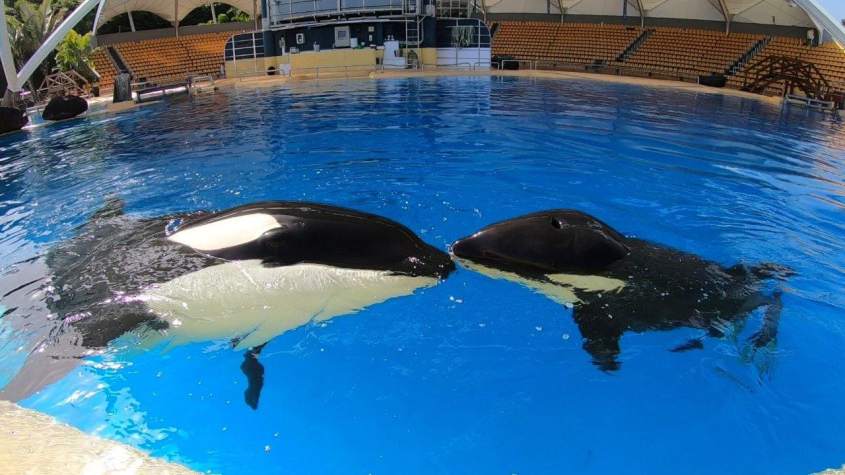
Contrary to the current law on free-born orcas, Loro Park allowed Morgan, barely pubescent, to become pregnant, giving birth to Ula. In nature, she could have counted on the help of her aunts, sisters and mother. The baby would have been surrounded by the affection from her siblings in their pod, a family group guided by the matriarch.

There, locked in a pool, there is nothing that allows for a maternal attachment, northe least of support for a young mother from her family in these important moments.

Morgan and her daughter Ula

According to Loro Park, mother and daughter were very close in the first consecutive days at birth, and Morgan reported exemplary maternal instincts, not leaving her little one, Ula swimming at her side.

Shortly after, however, the park separated the mother from her daughter, first of all on the pretext that she had too little milk, then it was for safety reasons… After only three days!

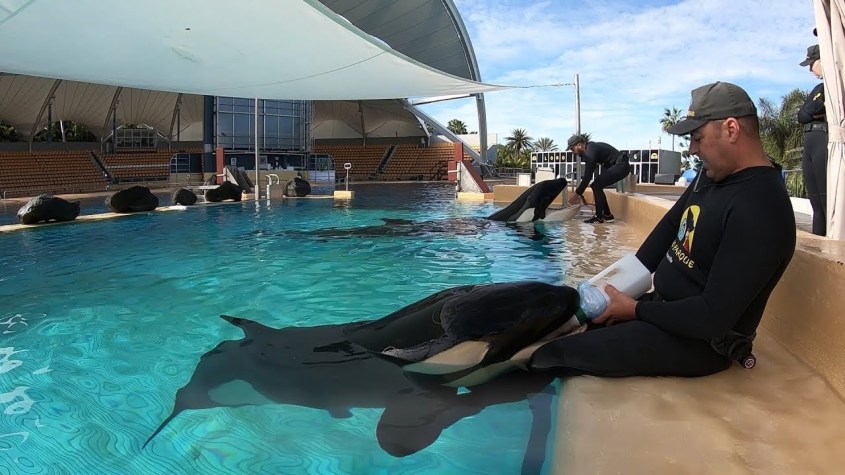
Ula was isolated from her mother, bottle-fed by a human in a position that is unnatural…

Now Ula died on Tuesday in her prison, in the Loro Parque Aquarium.
Ula fell seriously ill several months ago.
An autopsy should provide information about the cause of death.

For Mother Morgan, as for any mother, this must be traumatic. Observations of orcas living in the wild show that these animals often take care of their deceased young for days.

Ula dead

It doesn’t take an autopsy to know that the desperation, stress and loneliness in captivity in a concrete tank have fatal consequences for orcas and often drive the animals to the point of suicide.

Loro Parque means: captivity for orca Morgan and chimpanzees, Dolphins ,Orcas, Gorillas, Jaguars, Lions ,Sea Lions, Marmosets, Otters, Anteaters, Sloths, Meerkats, Tigers, Red Pandas, Flamingos, Parrots, Penguins, Cranes, Fishes, Alligators, Iguanas, Tortoises…

Boycott Loro Parque!

The best thing to do would be to close this prison and all of the captured animals release into the wild

My best regards to all, Venus

Grouse shooting in UK: ‘A glorious 12th for hunt saboteurs’

The UK’s grouse shooting season has officially begun, with the first shoots taking place yesterday.
The day is called the ‘glorious twelfth’ by people who enjoy shooting primarily ground-dwelling birds.

This year over 100 hunt sabs disrupted multiple grouse shoots in the Yorkshire Dales, the Hunt Saboteurs Association has claimed.

Shoots in Wensleydale, Swaledale and Arkengarthdale were targeted.

Stand-off
Police were called and a stand-off between shooting parties and the saboteurs took place on several moors.
The Hunt Saboteurs Association said in a post on its website:

“We found our first driven shoot located above the village of Healaugh on Reeth Low Moor.
A stand off ensued whilst the shooters called in the police and we held them there for several hours and monitored them for the rest of the day”.

https://www.huntsabs.org.uk/not-so-glorious-12th/

Reactions
It is unlikely that many of the hunting community were big fans of the direct action, but there was a lot of support on social media for the sabs.


We’ve rounded up the best of it below:
1.
Hit report from yesterday’s mass sab of the inglorious 12th! https://t.co/gFcXrRBSVi pic.twitter.com/IF9P6Rysb0
— West Yorkshire Hunt Sabs (@wyhuntsabs) August 13, 2021
2.
You’re all brilliant. Donation on it’s way. Thanks to all
— Susan 💙 (@Sueblueocean) August 13, 2021
3.
Wow. 100 of you turned up.
Im impressed. Thank you
We will clean up the countryside yet.
— Michael Smith (@albionau) August 13, 2021
4.
Just thank you.
— the Brexitarian (@AMaddock4) August 13, 2021
5.
Northern sabs killing it today! 👊🏽#NoMoorMyths https://t.co/n9mmNzAgeM
— Wiltshire Hunt Saboteurs (@WiltsHuntSabs) August 12, 2021
6.
Still feeling the love for yesterday’s successes..https://t.co/SVFa2dDoYI
— South Wales Hunt Sabs (@SWalesHuntSabs) August 13, 2021

7.
Well done to all sabs out yesterday.https://t.co/hZZAnGUcaO
— Lee Moon (@PressHsa) August 13, 2021

https://fb.watch/7EW5rW4oyL/

Related: Prince William says being dad spurred him to protect natural world but took son on Grouse shoot

https://www.thelondoneconomic.com/news/grouse-shooting-a-glorious-12th-for-hunt-saboteurs-285871/

We also say “Thank you” to the Hunt Sabs for disabling the traditional beginning of Grouse’s murder.
We show solidarity with everyone who combats and prevents the murder of innocent animals without violence.

Many thanks also to the author of this article.
There are apparently some journalists who have not yet sold their professional ethics because of their careers

My best regards to all, Venus

Amazon Frontlines – Our Territories, Our Decision.

Dear Mark,
 

Waorani leader Nemonte Nenquimo and A’i Kofan leader Alexandra Narvaez recently co-published a powerful op-ed, Our Territories, Our Decisionin Ecuador’s most widely distributed newspaper. We are excited to share it with you today.

As the Waorani and Kofan prepare to fight a court battle in the coming months that may well determine the future of the Amazon in Ecuador and of our planet, Nemonte and Alexandra invite us to look back at history to understand how the legal justifications of the Spanish colonizers hundreds of years ago are at their core the same as those used by government and industry today.

As Nemonte and Alexandra describe, “What the Ecuadorian governments and industries call ‘free, prior and informed consultation’ is nothing more than the following: they give us confusing and misleading information about what they want to do in our territories, and if we do not agree, they threaten us by waging war against us again.”

Read the full article here:

Our Territories, Our Decision – Amazon Frontlines

We cannot allow this to continue. We have a massive opportunity to change course and to defend Indigenous peoples’ right to free, prior, and informed consent and self-determination for their territories.

As the Waorani and Kofan prepare for their case to be heard by the Constitutional Court of Ecuador, we need your help to apply global pressure so that the ruling upholds respect for Indigenous peoples’ rights to decide over the future of their territories and cultures. 

Learn more:

Our Territories, Our Decision – Amazon Frontlines

Stay tuned over the next week for important new opportunities to get involved and support the decision-making power of the next generation of Indigenous leaders and forest defenders. Because what happens in the Amazon matters everywhere.

The Amazon Frontlines Team

We give 100% support to the Amazon Frontlines tean and campaign;

Regards Mark

Australia: Live Exports – Update From Stop Live Exports.org.

Friday 13th August 2021.

Dear members and supporters

It’s been a while since you’ve heard from us, we know. There have been a few changes!

The current pandemic has made it challenging to hold the usual events we do, as we can’t accurately predict how many people will turn up, or if the event will be able to go ahead. We are still here though, monitoring situations at home and abroad, commenting on media and industry stories regarding yet more atrocities for Australian animals, this time in Indonesia, Jordan, and UAE.

Our other focus is on the up-and-coming federal election, now expected to be sometime from March to May 2022. We have also been busy developing new branding to maximise our effectiveness (it’s been over a decade since the last one.)

Some of you will be aware that I moved to Tasmania in May this year. I am still doing the job I have been doing for the past nine years, as much of the work is done remotely, and what can not be, is undertaken by our volunteers. The committee has some fresh blood, and a new president, Rebecca Tapp. They are dynamic, enthusiastic, and have some great ideas. Our committee continues to meet regularly, and I join in via Zoom.
Here is a photo of some orphaned lambs I recently adopted – Buster and Lucille. Unlike the tens of millions of other Australian sheep, they will have a long, safe, and happy life.

Sadly, we will not be holding a quiz night this year, as the planning is quite demanding and time-consuming, and with the situation in other states thanks to the Covid-19 delta strain, we just feel everything is too unpredictable to hold that event this year.

However, the Human Chain will go ahead on Sunday 17 October, unless there are any restrictions on attendance numbers or social distancing, in which case we will also opt to defer for a year. We have had over 1200 people attend in the past, which is not ideal for an event that requires a Covid Plan. Please keep an eye on your emails and our Facebook page for any last-minute changes.

You might have read in the media over the past month, that there have been yet more ESCAS breaches reported in Indonesia (thanks PeTA), Jordan (the one Middle Eastern country we export to where a royal family edict requires animals slaughtered in government facilities to be stunned first), and UAE (thanks Animals Australia for both exposés). There is also another complaint lodged by Animals Australia regarding cattle being leaked from the supply chain in Indonesia, but this has not yet been reported on by the media.

In this, the tenth year of reporting and investigations of Exporter Supply Chain Assurance System (ESCAS) breaches, STILL we are seeing animals mistreated and being channelled out of supply chains and treated horrifically at slaughter. Surely, after a decade of ESCAS, a one-strike rule should apply to any country not strictly adhering to ESCAS regulations.

Fremantle has been quiet, with only four ships in total docking since the northern summer trade moratorium started on 1 June. Three ships loaded feed and continued to Portland, and one loaded cattle bound for Mauritius. Liberal MPs have recently called for a dramatic shortening of the 1 June to 17 Sept moratorium on live animal exports to the Middle East, stating that it can be done successfully. This is despite records from the last monitored shipment that left in that season, showing that sheep were subjected to days of wet-bulb temperatures of up to 34 degrees (sheep suffer from heat stress once wet-bulb temperatures exceed 28 degrees). So despite their claims that “only” 28 sheep died and the voyage was, therefore, a success, one can be assured that every single animal on board suffered to some degree with wet-bulb temperatures at that level.

In 2018, the Labor Party pledged to phase out live sheep exports in under five years. We urge you to contact your Labor MP and ask them to not go back on their word. With a federal election now expected in 2022, please remind them of what their constituents want – an end to all live export, but at the very least, a cessation of the live sheep trade; this would likely also see an end to any cattle being sent by sea to the Middle East, as it would no longer be cost-effective. Whilst the aim of our organisation is to end the trade in all live animals, we see the live sheep trade to the Middle East as the priority, both because of the length of the voyages, and the lack of stunning in all but one destination country. Animals Australia has made it easy for you – just click here.

We are so grateful for your unwavering support, which has been vital in helping us continue our important campaign to end the live export trade. Though we have experienced a drop-off in donations and memberships due to the global pandemic, we have a solid, strong community that stands steadfast and determined to stop this trade once and for all. Thank you for everything you do for the animals.

If you are unsure of whether your membership or monthly financial pledge is still current, or you wish to recommence membership or monthly donations or increase or decrease the amount, feel free to get in touch with me at  info@stopliveexports.org and I can assist. If you know you are no longer a member or have never been a member, sign up here, and if you wish to start or recommence monthly donations, which greatly help us fund our ongoing campaign, sign up at GiveNow here. You can pay via credit card or direct deposit; weekly, monthly, quarterly, or annually, or make a one-off donation.

Follow us on Facebook for all the latest.

For the Animals

Katrina Love
Campaign Manager

Regards Mark

US-Pennsylvania: “humane” turkey farm

If you’ve ever shopped at Whole Foods, you may have seen signs posted in the meat department that say things like “enriched environment” and “treated humanely.”
But what a PETA investigator documented at a series of Pennsylvania turkey factory farms tied to a Whole Foods supplier reveals that these signs are probably worth less than the recycled paper they’re printed on.

Farm workers feeding “humanely raised” turkeys to stores such as Whole Foods were filmed torturing animals.

The horrifying masked footage obtained by a worker who was secretly doing a side job for People for the Ethical Treatment of Animals (PETA) also shows that the worker is trampling, kicking, and beating birds.

Taken at Plainville Farm in New Oxford, Pennsylvania. The farm also supplies stores such as Publix and Harris Teeter. After being fatally injured by a worker, the bird was photographed cramping in pain and left to die on the concrete floor of a harshly illuminated barn.

The footage was shot by PETA activists who worked 11 shifts in 10 different plain buildings in July and August this year, claiming that the company is “humanely” raising birds in a “stress-free environment.”
Pennsylvania police have been investigated and told the New York Post Thursday that their animal cruelty office is “currently” reviewing information from animal advocacy groups.

Workers on a plainville farm can be seen picking up large birds with fragile wings and necks before throwing them into the air across the farm.

“Instead of trying to stop this abuse, one supervisor himself kicked a turkey and repeatedly encouraged workers to abuse the bird,” PETA said.

It is about “terrible atrocities.

“A worker picks up a bird, tries to break his neck, and then puts her between his legs. When he hugs her with an injured neck, he mimics masturbation,” PETA reviews from DailyMail.com.

It is stated in the video. [The worker] Then drop her on the floor, kick her, and let her die.

The disturbing footage shows workers picking turkeys with their necks and fragile wings, throwing them across the room “like a game” to each other and to other turkeys.

Workers can also be seen kicking injured or dying turkeys on the ground.

Continue reading “US-Pennsylvania: “humane” turkey farm”

UK: UK-Australia Free Trade Agreement sets a dangerous precedent for Animal Welfare. Do Johnson and Liz Truss Care ? – Probably Not.

UK-Australia Free Trade Agreement sets a dangerous precedent for Animal Welfare

After several weeks of anticipation, the UK and Australia announced on 15 June that they have reached a political agreement on a trade deal. The future Free Trade Agreement (FTA) will grant huge trade preferences to Australian beef and sheep meat, with no further condition on animal welfare standards. This is a dreadful precedent for UK trade policy.

The Agreement in Principle, published on 17 June, confirms that the FTA will open duty-free and unconditional tariff-rate quotas (TRQs) for beef and sheep meat, starting at 35,000 tonnes for beef and at 25,000 tonnes for sheep meat. In both cases, the volume is set to increase over ten years (up to 110,000 tonnes for beef and 75,000 tonnes for sheep meat yearly), after which the TRQs will be replaced by unconditional liberalisation, accompanied by safeguards for another 5 years. 

This result is a huge disappointment for the animal welfare movement. As most UK animal welfare standards are not applied to imports, such a trade deal is likely to fuel intensive and unsustainable farming in Australia, which is extremely detrimental to animal welfare. For instance, feedlots are common practice in Australian beef production and transport rules allow for journeys of up to 48h without food or water. The UK committed to use trade deals to promote animal welfare abroad. Yet, by abandoning the possibility to condition preferential market access to the respect of UK-equivalent animal welfare standards, it renounces to the best tool to achieve this purpose. Conditional liberalisation was part of the calls expressed by the Trade and Agriculture Committee (TAC) earlier this year. 

Similarly to the EU-Mexico Global Agreement, the UK-Australia deal is set to include a chapter on Animal Welfare and Antimicrobial Resistance (AMR). This is welcome, but the language described in the Agreement in Principle lacks ambition. The UK government is likely to depict the inclusion of non-derogation and non-regression clauses in this chapter as a victory , however, considering the low level of Australian animal welfare standards, a commitment not to lower such standards – or not waiver them – is hardly a ‘success’. In addition, non-derogation and non-regression clauses can usually only be activated when the derogation to or regression of the standards has an impact on trade or investments, which is very hard to prove. 

Allowing such cheap low quality imports in the market in Great Britain will have various implications. In addition to further fueling unsustainable practices in Australia, the massive market access granted to Australian beef and sheep meat could undercut English, Scottish and Welsh farmers, as they remain subject to higher standards – and thus, higher costs. For farmers in England and Wales, this comes at a time when they begin to transition to a fundamentally new type of income support system, one that rewards them solely for better environmental stewardship and for better animal husbandry. If not well managed, this new system could potentially lead to a lowering of the availability of higher welfare British products, and thus to a greater share of lower welfare imports. In addition, central and devolved governments in the UK have set out a range of ambitious agendas to improve farm animal welfare- notably within England – and the lack of measures on imports could well diminish the support for these reforms among farmers in Great Britain. 

By negotiating very fast, without even having published a trade strategy, the UK seems to have sold out animal welfare for the sake of a quick deal. Addressing animal welfare in trade policy requires a long term vision and an understanding of the far-reaching interlinkages between animals and trade. The UK-Australia deal is thus a very bad precedent and does not bode well for future negotiations with the US, Mercosur or India.

Regards Mark


The World’s Largest Restaurant Chain Commits to Improve Chicken Welfare.

The World’s Largest Restaurant Chain Commits to Improve Chicken Welfare

Subway has announced the commitment to improve chicken welfare in its European supply chain by 2026.

August 12, 2021

HISTORIC PROGRESS: On Wednesday, August 11, Subway announced the commitment to improve chicken welfare in its European supply chain by publicly committing to the European Chicken Commitment (ECC). This was not an easy feat, it took 22 non-profit organizations from 16 European countries and 1.5 years of campaigning to push the company to this end. Subway had already committed to the North American version of the ECC, the Better Chicken Commitment, for all its US and Canadian stores.

THE COMMITMENT: Subway now joins the growing list of hundreds of companies that have pledged to improve chicken welfare in their supply chains by adopting the European Chicken Commitment. Other prominent brands include Burger King and Popeyes. The ECC requires companies to provide chickens more space, natural light, enrichment such as perches and pecking substrates, and bans the use of fast-growing breeds, which can cause painful deformities and heart attacks.

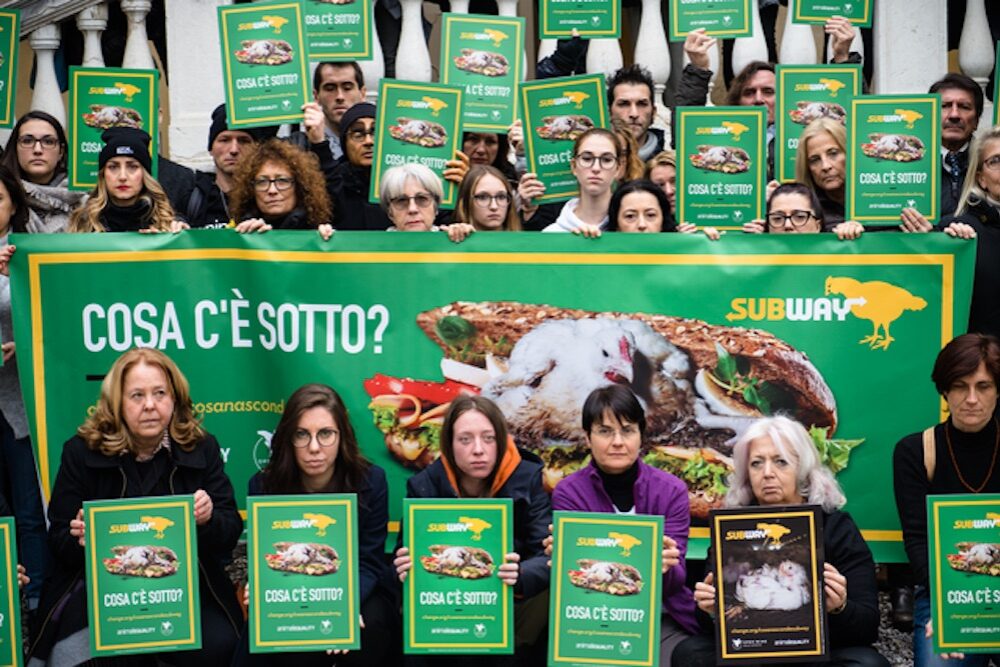
Protest in Verona, Italy

THE FORCE BEHIND IT: Animal Equality played a major role in this campaign along with other coalition members of the Open Wing Alliance. We sent campaigners to Amsterdam to protest and attempted to meet with Subway’s leadership, held protests in Italy, Spain, and the UK, and activated our social media networks where thousands of animal advocates from all around the world took part in highly impactful digital actions. Subway couldn’t ignore the importance of raising their animal welfare standards any longer.

THE IMPACT: As of June 2021, Subway has approximately 37,500 locations in 104 countries and territories, and an annual revenue of around $10 billion. This policy commitment not only will positively alter the lives of millions of chickens used in Subway meals, but this commitment also sets a strong precedent for future campaigns to improve farmed animal welfare in the restaurant industry.

WHY IT MATTERS: Chickens raised for meat are among the most abused animals on the planet. Bred to become much larger than normal, at an alarmingly unnatural rate, fast-growing chickens suffer from broken bones, organ failure, and even death from not being able to reach food and water. They are kept in filthy conditions, crammed by the tens of thousands in dim barns that have no enrichment for the chickens to engage in natural behaviors. At the end of their shortened lives, chickens are forced to endure live-shackle slaughter, a horrific practice where birds are forcibly hung upside down and slammed into metal shackles, a process which sometimes breaks their bones. The ECC aims to address these major abuses faced by chickens used for food.

HOW YOU CAN HELP: This major step in animal protection happened because of the actions of passionate animal lovers and those who believe in progress in animal welfare. Animal Equality’s volunteers, the Animal Protectors, played a significant role in achieving this move forward for hens, as well as other corporate policies. Would you like to be informed of easy online actions you can take for animals? Sign up to become an Animal Protector today!

Regards Mark

England: Stella McCartney Debuts Sustainable Vegan Sneakers Made With Recycled Fishing Nets.

Stella McCartney Debuts Sustainable Vegan Sneakers Made With Recycled Fishing Nets
The new Reclypse sneakers are made with plant-based materials

Stella McCartney Debuts Sustainable Vegan Sneakers Made With Recycled Fishing Nets

Stella McCartney will soon debut its vegan Reclypse sneakers, which are made with recycled and sustainable materials

Fashion house Stella McCartney is set to increase its cruelty-free range once again.

The UK-based company, which aims to produce sustainable clothing and accessories, will release its new vegan Reclypse sneakers later this month.

Reclypse sneakers

The shoes feature lining created from ECONYL regenerated nylon, which is sourced from pre- and post-consumer waste like fishing nets and carpet.

The Reclypse sneakers – which are handmade in Italy – come in four colours. They have a recycled polyester upper, as well as a tractor sole containing plant-based and renewable materials.

They also feature contrast panels of vegan leather and mesh.

“The Stella McCartney Reclypse is fashion innovation, taking luxury trainers one step closer to sustainability and circularity – it stylishly blends athleticism with escapism,” reads a release sent to Plant Based News.

Is Stella McCartney vegan?

It’s certainly not Stella McCartney’s first foray into animal-free fashion. The brand does not use animal-based leather, feathers, fur, or exotic skins. However, it does use wool in some of its designs.

Stella McCartney was founded by a designer of the same name, who is also the daughter of Sir Paul McCartney.

Both he and his daughter are long-time vegetarians. The designer’s late mother, Linda, was also a vegetarian and the founder of plant-based meat brand Linda McCartney.

Stella McCartney’s new vegan Reclypse sneakers are part of the brand’s WI21 collection, which launches on August 25.

Regards Mark

Germany: Volkswagen makes the central canteen meat-free!

Volkswagen produces seven million curry sausages a year in its own butcher shop. The curry sausage production at Volkswagen has often exceeded the car sales of the well-known automaker.

In another canteen, however, they are now being removed from the menu, schnitzel too!

Volkswagen employees who feel a certain hunger for meat at lunchtime will have to accept detours in the future.
Because the canteen in the Wolfsburg branded high-rise, the headquarters of the well-known car manufacturer “Volkswagen AG”, is revising its range and will soon only offer vegetarian and vegan dishes.

The VW curry- sausage is popular and is a regular part of the plate for many employees: however, the classic will soon disappear from the menu in the canteen in the branded high-rise building in Wolfsburg.

According to an internal announcement, the company restaurant should be meat-free after the work holiday.
The 150 or so recipes should then do without meat. Only now and then will fish be part of the offer.

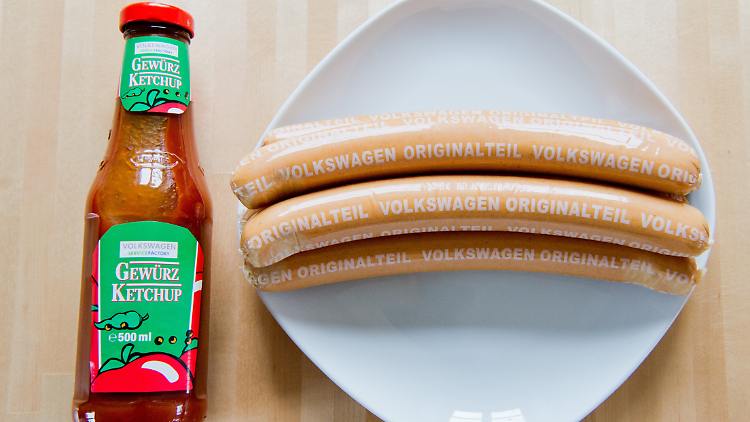
It couldn’t be more German: Curry sausage and ketchup from Volkswagen production. (Photo: picture alliance / dpa)
Many employees wanted vegetarian and vegan alternatives, according to the reasoning in the information letter.
The realignment also serves the topic of sustainability, because less meat consumption per week also helps the environment.
The responsible Service Factory has already successfully implemented the concept at the Hanover location.

Nobody at VW has to do without the sausage.
They will still be there in the canteen a few meters away on the opposite side of the street.
Most recently there were around seven million curry sausages from the Volkswagen butcher’s shop in the pre-Corona year 2019, plus more than 550 tons of ketchup, as a spokesman said.

The curry sausage production at Volkswagen has often exceeded the car sales of the well-known automaker
However, many company restaurants at the car manufacturer are currently still closed.

It’s over with the curry sausage in VW

With the switch to vegetarian and vegan cuisine, VW is relying on a trend that has been around for a number of years, according to the German Hotel and Restaurant Association (DEHOGA).
“The times when vegetarian cuisine was neglected by some are over for good,” said a spokesman.

https://www.n-tv.de/wirtschaft/VW-Kantine-streicht-Currywurst-von-Karte-article22732008.html

And I mean…The only sensible news from the VW Group for years! Seems like the “V” in VW stands for vegetarian!

Curry sausage is part of Volkswagen’s corporate culture, just like the Golf, except that it is a year older.
Two dozen factory butchers have been producing the Curry-Bock sausage since 1973 – at that time from pigs from the farm on the factory premises.
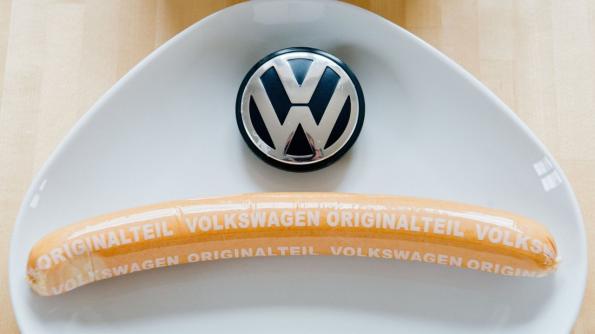
Each sausage is labeled “Volkswagen Genuine Part” and, like the special ketchup that goes with it, has a part number ((199 398 500 A and B).


VW has already tried a canteen without currywurst, in this case vegetarian, in Hanover – successfully, as the management and the works council assure.
In any case, the works council welcomes the experiments with the vegetarian canteens in Wolfsburg.
“We are also just a mirror of society,” says a spokesman

Even those who are dissatisfied with this decision will soon notice that there are also vegetarian / vegan currywurs that taste great without harming the environment or animals.

And everyone who is annoyed with walking to the canteen across the street to eat his sausage can now understand how much trouble vegans have always had to find a vegan restaurant in a city, and to get it free.

Times change in favor of veganism.
And if these changes come from above, they are effective, and then everyone has to adapt and come to terms with them.

My best regards to all, Venus