Month: September 2021

UK: British Government refuses to halt post-Brexit Faroes trade deal despite whale and dolphin massacres.

Government refuses to halt post-Brexit Faroes trade deal despite whale and dolphin massacres

Exclusive: Department for International Trade defies plea for sanctions after nearly 1,500 mammals killed

The government has refused to suspend a free-trade deal with the Faroe Islands over whale and dolphin massacres, in defiance of calls from conservationists.

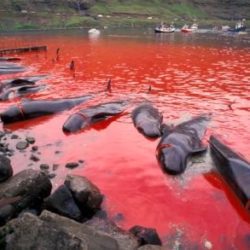
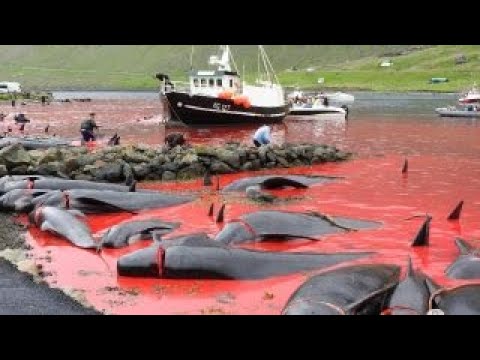
Hunters caused widespread outrage last week when they wiped out a super-pod of 1,428 dolphins – thought to be the worst bloodbath of the mammals in the islands’ history.

Just 10 days later, they responded to the global revulsion by slaughtering 53 pilot whales only a few miles from the first massacre.

Wildlife campaigner Dominic Dyer has called for ministers to suspend the £580m post-Brexit agreement that the government agreed with the Faroe Islands in 2019 “until the slaughter ends for good”.

More than 21,000 people have signed a petition on the government website backing the plea in three days.

The government told The Independent it is “extremely concerned about the sustainability and welfare implications for the animals involved in these hunts” but that it would not review the trade deal.

Instead, it says it will “continue to engage in a frank and respectful dialogue” with the government of the Faroes.

Zac Goldsmith, the minister for animal welfare, tweeted of the dolphin killings: “This is one of the most sickening spectacles I’ve ever seen. It shames our species.”

Known as the “Grindadrap”, the annual hunt involves herding whales and dolphins on to a beach where they are knifed to death as their blood turns the sea red.

The practice has been branded “barbaric”, “sick” and “sadistic” but those who defend it say it is a tradition that does not risk driving the animals into extinction.

Mr Dyer said: “We are currently granting the Faroe Islands a preferential trade agreement worth over £500m a year – it’s time for sanctions to stop this barbarism.”

The deal accounts for more than 25 per cent of the Faroes’ global trade, he said, with exports from the islands – mostly fish sold in British supermarkets – worth £582m a year.

UK exports to the islands amount to £34m, said Mr Dyer, whose petition reads: “If the UK is to be considered a world leader in the protection of marine mammals, it must use this leverage now.”

When asked by The Independent whether it would agree to suspend or review the deal, the Department for International Trade said it had no plans to do so.

A spokesperson for the Department for Environment, Food & Rural Affairs (Defra) said: “The UK is strongly opposed to the hunting of any cetaceans and continues to call on all whaling nations, including the Faroe Islands, at every appropriate opportunity to cease their whaling activities in favour of well-managed, responsible tourism, such as whale-watching.

“We recognise there is a long tradition in the Faroe Islands of killing pilot whales and dolphins for meat and other products, and we wish to continue our frank conversations relating to cetacean conservation, to encourage them to stop these hunts.”

Government policy is to “maintain diplomatic pressure” on the islands to end the hunts and re-engage with the International Whaling Commission.

Boris Johnson’s wife, Carrie, and his father, Stanley, have previously joined campaigns against whaling outside the Japanese embassy in London.

Government refuses to halt post-Brexit Faroes trade deal despite whale and dolphin massacres | The Independent

WAV Comment:

We tried 30 years ago to make this an issue in England, and to bring it to peoples attention.

When was this ? – around 1991 probably.  Joanne; Mark (WAV) and Trevor (at front) campaign outside an English local supermarket buying produce from the Faroe Islands – responsible for the whale slaughter (see picture below).

As an Englishman, I am sickened to the core that our limp wristed, gutless government are not making this a big issue in the trade deal currently in progress. It simply shows that money talks louder than anything else, and governments (in this case the British government) are happy to look the other way and ignore the killing of over 1,400 marine animals in the last week. God knows how many since we were on the streets – too many, and something should have been done about this decades ago.

Regards Mark

Read the article below by clicking on https://serbiananimalsvoice.com/about-us/ and then scrolling down to the same picture, which you can click on to enlarge and read.

Tesco terrors
Faroe whale slaughter
Petition · STOP THE ANNUAL SLAUGHTERING OF PILOT WHALES IN THE FAROE ISLANDS  · Change.org
News - EIA
Gruesome whale hunts in Faroe Islands exposed by activists - YouTube

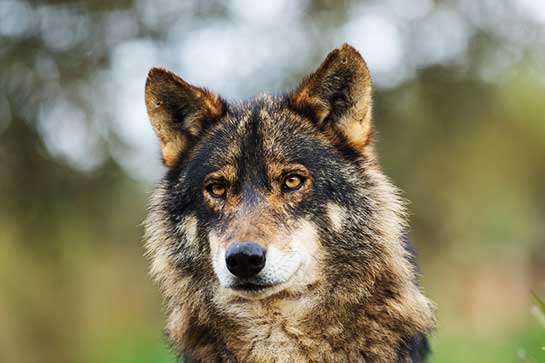
Spain has started to change the history of the wolf-wolf hunting has been banned!

The ban initially only affected southern Spain, but that was it: Wolf hunting has been banned on the entire Iberian territory since September 22, 2021.

There are said to be between 2,000 and 2,500 wolves in 297 packs in Spain, more than in any other country in Western Europe. They live mainly in the northwest of the country north of the Duero River.

The Duero is the third longest river on the Iberian Peninsula.
It rises in the Spanish province of Soria, flows through northern Spain and northern Portugal and flows into the Atlantic Ocean at Porto. It is about 897 kilometers long.

The populations are already being protected south of the Duero River.
Regions that are home to larger wolf populations continued to reject such protection.
95% of wolves live in Castile-Leon, Galicia, Asturias and Cantabria.

In the Sierra de la Culebra, an area of ​​around 70,000 hectares in Castile and León (northwestern Spain), wolves are omnipresent, on signs or T-shirts in souvenir shops.
They are spoken of in the singular, like in a fairy tale.

“This has always been a wolf’s paradise,” confirms Carlos Zamora, forest officer, from behind his binoculars, while he looks for a specimen in the low-lying twilight sun.

Continue reading “Spain has started to change the history of the wolf-wolf hunting has been banned!”

UK: 1 In 5 Kids In The UK Are Vegan Or Want To Be, Survey Finds.

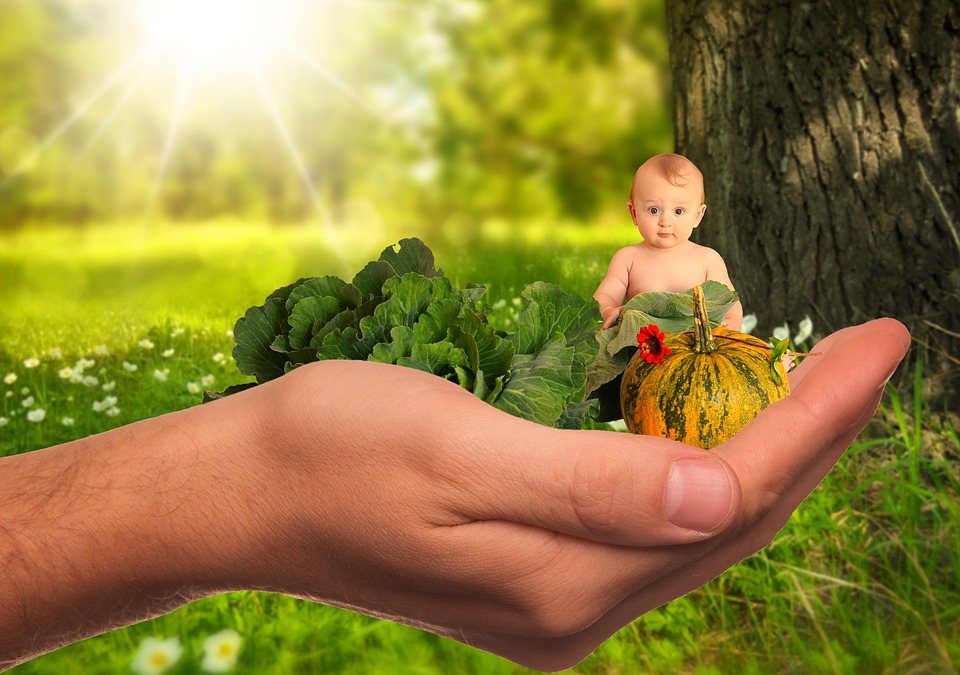
Vegan Baby

1 In 5 Kids In The UK Are Vegan Or Want To Be, Survey Finds

Are young people leading the plant-based movement?

Nearly 60 percent of children in the UK are vegan or vegetarian or want to be, a new survey has found.

BBC Good Food surveyed 1,004 children between the ages of five and 16.

The global food media brand discovered that 8 percent of participants were eating a fully plant-based diet. A further 13 percent were vegetarian. 

Additionally, 15 percent of children said they would like to become vegan, and roughly one in five (21 percent) said the same about vegetarianism. 

Reports didn’t clarify what the children’s reasons were for eating plant-based food. But sustainability was on their minds for at least part of the research. The survey found that 44 percent of kids said they hope that no food is packaged in plastic in 10 years’ time. 

Christine Hayes, Editor of BBC Good Food, commented: “It was fascinating to survey children’s eating habits, behaviours and opinions around food.”

“They are passionate about exploring alternative diets and methods of food production that could be more sustainable for the planet,” Hayes added.

Young people leading the way

The recent findings reaffirm the widely held belief that young people are leading the charge toward plant-based living. 

A 2019 BritainThinks report concluded that Gen Z and Millenials are slightly more likely to be vegan than older age groups.

And earlier this week, it was reported that a majority of young people (aged 15 to 20) were taking action to help fight the climate crisis. Specifically, 26 percent of participants said they eat plant-based to help protect the planet.

1 In 5 Kids In The UK Are Vegan Or Want To Be, Survey Finds – Plant Based News

30% Of Brits Are Now Eating Less Or No Meat At All, New Survey Finds

Animal welfare, environmental, and health reasons are motivating Brits to adjust their diets

Anew survey has indicated that the eating habits of people in the UK are changing, with more individuals ditching meat in favor of vegan food. 

The survey

Market research website Appinio hosted the survey, which included 1,000 participants from the UK.

Five hundred women and 500 men took part, and the average age of participants was 41.1.

Just 68.6 percent of participants said they were omnivores.

Four percent were vegan, and 8.7 percent were vegetarian. These figures are notably higher than they have been in previous years. 

For instance, in 2019, research found that just over 1 percent of people in Great Britain identified as vegan. 

Eating more plan

The recent Appinio survey also found that 5.4 percent of participants were pescatarian (meaning they don’t eat meat besides fish). Further, 11.4 percent said they were flexitarian, referring to those who actively try to reduce their meat intake and eat primarily plant-based food. 

The survey asked participants whether they would consider replacing some of the meat in their diets with plant-based alternatives. Of the 800 participants who responded to the question, half said yes. And 6.8 percent said they ‘want to switch to plant-based meat entirely’.

Respondents also explained why they have purchased plant-based meat, dairy-free alternatives, or other vegan options in the past. The leading motivator was health, with 46.3 percent saying they believed the vegan options are better for you. 

Animal welfare and environmental reasons also played a part, with around a third of participants selecting those responses. 

30% Of Brits Are Now Eating Less Or No Meat At All, New Survey Finds – Plant Based News

Only 1 In 10 Young People Trust Adults To Help Solve The Climate Crisis

Young people are cutting energy and water use and eating plant-based for environmental reasons

Many young people are determined to tackle the climate crisis, new research shows, but don’t believe adults will step up to the plate. 

About the study

Analysis firm United Minds conducted the study on behalf of Electrolux, the world’s second-largest home appliance maker. 

Electrolux wanted to learn more about young people’s outlook on sustainable living, and use this information to guide its own environmental targets. The global study was made up of a quantitative survey as well as in-depth interviews. 

It included nearly 14,000 people aged 15 to 20. The respondents were from 13 countries: Argentina, Australia, Brazil, Chile, France, Germany, Israel, Poland, Sweden, Thailand, UK, USA, and Vietnam.

The findings

More than half of the respondents felt that sustainability is the single most important issue faced by society today. And 59 percent said they are ‘very anxious’ about the matter.

Nearly 60 percent of young people said they are willing to ‘drastically’ change their lifestyle to protect the planet. Even more (74 percent) agreed that everyone must make a collective effort to become more sustainable. And young people predominantly trust in themselves to lead the charge towards a sustainable future, with 37 percent saying so.

Twenty-seven percent of respondents believed scientists will take on the responsibility, while 17 percent said influencers will. 

But only one in 10 participants thought adults will lead the way.

Notably, 43 percent of respondents felt that young people will actually solve the climate emergency.

Eco-friendly actions

The young participants were already taking action to lighten their load on the planet. Fifty-six percent were reducing energy use at home, without around half limiting food waste and recycling. 

Others were keeping water use down, buying second-hand clothes, and using eco-friendly transportation. Twenty-six percent of young people said they eat plant-based to help protect the planet. 

The research mirrors similar data surrounding young people, diet, and the climate. 

Gen Z and Millenials are the age groups that are mostly likely to be vegan or vegetarian, a BritainThinks report found. Further, it highlighted that more than a third of Gen Z vegetarians follow a meat-free diet for its lower impact on the planet. In general, Baby Boomers still consume the least amount of plant-based meat, according to a market report by Tastewise. But the trend is shifting. Tastewise found that Baby Boomers are consuming 57 percent more vegan meat compared to June 2019. Meanwhile, Gen X’s vegan meat consumption only increased by 4 percent in the last year. 

‘It’s their future at stake’

“We believe there’s a big opportunity in combining different perspectives in order to shape a better future,” Tove Chevalley, Head of Electrolux Innovation Hub, said in a statement. “That’s why we want to involve young minds already today, as the actions we take today will define the future they will live in.”

Chevalley continued: “As the study shows, young people have a very determinant and proactive mindset when it comes to sustainability, it’s their future at stake and they want to be part, or actually take lead, in creating solutions for the future home.”

Only 1 In 10 Young People Trust Adults To Help Solve The Climate Crisis – Plant Based News

Regards Mark

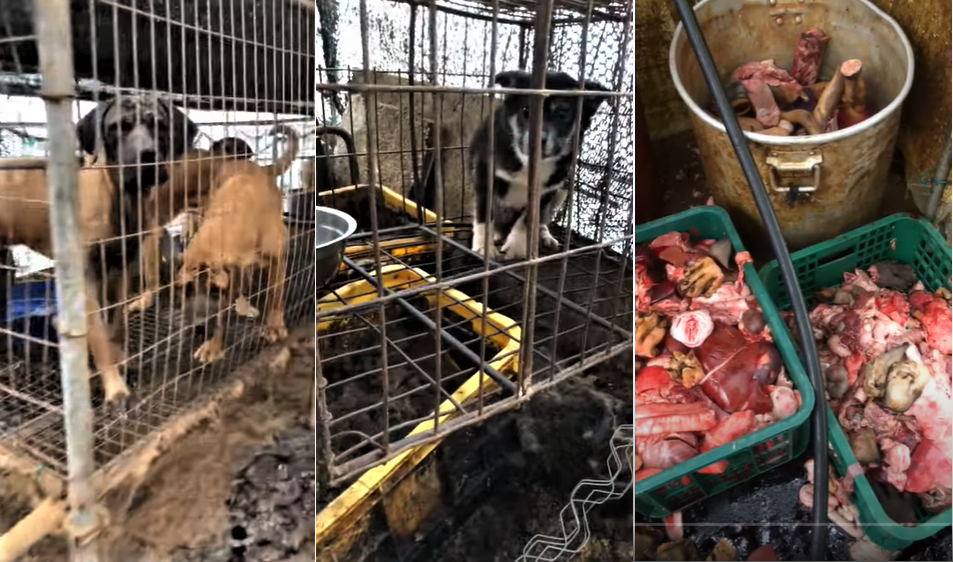
Dog fat and the “dog catcher mafia” in Slovakia

Report of the organization “Together for Animals” (Gemeinsam für Tiere)

DOG’S FAT – MAFIA’S DOG CATCHING CONTINUES UNBELDED!

Exactly a year ago, an undercover video exposed horrific animal cruelty and organized crime in Slovakia.
A mafia ring there kills strays to obtain dog fat.
We reported:

In 2021, a year later, the situation has not improved.
Although the authorities promised to drain the swamp of the dog-catching mafia, they continue to go about their hideous craft undisturbed and countless dogs are still caught and killed for this animal product, and in some cases even stolen from their adoptive parents.
We still strongly condemn the massacre of innocent dogs for dog fat.

These people have completely given up their humanity in favor of the disdainful mammon and organized crime.
The ring of these animal killers should finally be dug up and those who were prayed behind bars for a long time.

We appeal to Mario Kern, Director of the Department for Environmental Crime in Slovakia, the promise he made in 2020 to stop this madness, finally to make it come true and to act before even more innocent animal souls fall victim to the diabolical hustle and bustle.
Strays are also sensitive creatures, and not a commodity.

What they desperately need is a family with a daily can opener and a forever home to shelter.

That is why it is all the more important for expectant dog mums and dog dads to adopt animals from animal welfare and not to buy them from the breeder.

To protect the valuable life of dogs, please also sign this petition against the systematic killing of strays within the EU:
https: //jedertag.org/petition-streunerhunde /

https://www.facebook.com/marschfuerdietiere/

And I mean…It is claimed that dog fat is said to be effective against tuberculosis bacilli. Against psoriasis, against wounds, against lung diseases … Dog fat is the miracle cure, and as always, animals fall victims to the altar of hocus-pocus medicine.

Almost anything can cure dog fat – except stupidity.

My best regards to all, Venus

South Korea: Dog Meat and Dog Farms – Latest News and Actions.

Rather than repeat a lot of actions involving the South Korean dog meat trade, it is best we give you the direct link which will provide information and allow you to do follow ups as detailed.

https://r.newsletter.koreandogs.org/amcy5godtht7e.html?utm_source=sendinblue&utm_campaign= CARE and Watchdog expose dog meat farmer -adopting- dogs from Inje County Animal Shelter Watchdog can eliminate the majority of dog farms in South Korea &utm_medium=email

Yongin is Hell on Earth for dogs sacrificed in South Korea’s horrific dog meat industry. It is a major supplier of dogs to South Korea’s dog meat industry with one of the largest number of dog farms and dog slaughterhouses in South Korea. 
Click HERE to see the list published by Korea Animal Rights Advocates. This is only a partial list; the true numbers could be much higher.

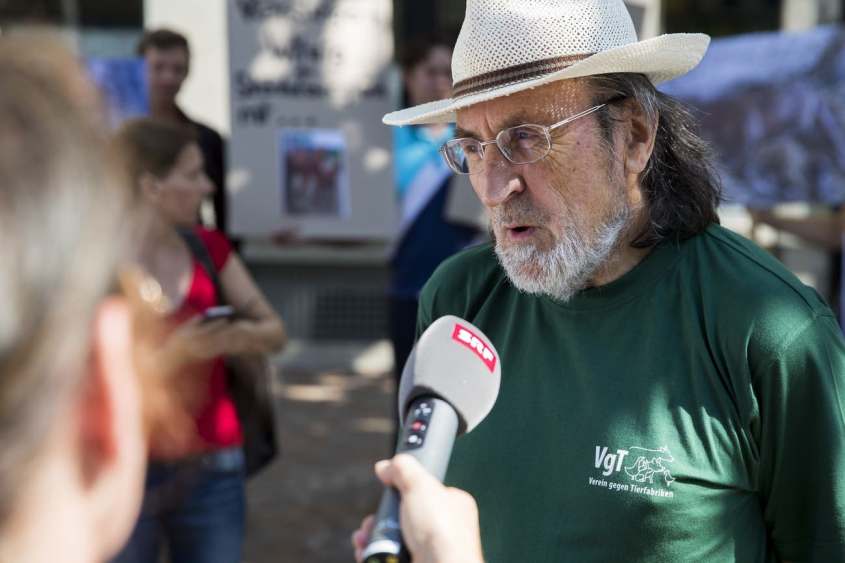
Erwin Kessler – the most contentious animal rights activist in Switzerland is dead

He went to bed with chest pain – and never woke up.
Erwin Kessler, President of the Association against Animal Factories and one of the most famous animal rights activists in Switzerland, died at the age of 77.

Erwin Kessler dedicated his life to the fight for animal welfare. However, he did not achieve Switzerland-wide fame solely through his uncompromising commitment to animal cruelty and factory farming.
He also became famous for numerous legal skirmishes, the sharpest polemics and unconventional methods with which he regularly exceeded the limits of the legal.

Erwin Kessler-Bern-2017

Since 1989 the trained engineer with a doctorate has fought against the exploitation of livestock with his Verein gegen Tierfabriken (VgT). Kessler also kept the judiciary busy.

Kessler sneaked out to farms at night and took photos of what he thought was not animal-friendly.
He pilloried the alleged animal abusers on the website of his association against animal factories (VgT). He was often successful with his actions.
Many farms were redeveloped after Kessler interventions – even if those affected hardly ever admitted that the controversial animal rights activist was the trigger.

Kessler was not a man of compromise.
With remarkable perseverance, he covered his adversaries with complaints. Kessler did not only count farmers, animal breeders and agricultural schools among his declared opponents.
Representatives of the media and authorities were also part of it.

Kessler also had to appear in court again and again. He was convicted several times. In 1998 he received an unconditional prison sentence of 45 days for violating the racism criminal norm from the Zurich Higher Court.
In 2004 he was sentenced to an unconditional prison sentence of 5 months by the Zurich Higher Court for multiple racial discrimination and simple bodily harm.

Again and again, Kessler came into public focus because of anti-Semitic statements.
He repeatedly compared Jewish slaughter with Nazi crimes, in 1998 he even wanted to have the Talmud banned in bookstores and libraries.
In 2001 he fought a dissertation on the ban on slaughter up to court. Kessler defended himself against the designation “anti-Semite” with dozens of defamation suits.

In 2015, the Federal Supreme Court finally ruled that Kessler could be called that.

Kessler’s “Association against Animal Factories” is said to have had tens of thousands of members at the best of times.
The hard core of the followers appeared loudly at court proceedings.
Most recently, Kessler took part in demonstrations against Ulrich K.’s animal farm in Hefenhofen in Thurgau in 2017.

Kessler was the leading figure in the Hefenhofen animal welfare scandal. It was about a horse owner from Hefenhofen in the canton of Thurgau, who for years grossly disregarded regulations and fooled the authorities.

He helped uncover the scandal and passed the photos to the media, which led to a new veterinary law in the canton of Thurgau.
He also fought against factory farming, making many enemies among the farmers.

Erwin Kessler has now died unexpectedly at the age of 77

His closest confidante, Sonja Tonelli says: “Erwin complained of chest pain yesterday afternoon, but didn’t want to see a doctor about it.”
He said it wasn’t that bad. Finally he went to bed in his house in Tuttwil and allegedly suffered a cardiac arrest that night.

The work of the association against animal factories should continue after the death of the founder.

Sonja Tonelli takes over the office.

https://archive.is/ycswu#selection-2731.73-2731.170

And…In August 2012 he wrote a remarkable article on his website http://www.vgt.ch, which I want to present here as an obituary to his death:

“It has always been the case in human history that in times of mass national crimes, the judiciary sided with the perpetrators, and it was not the perpetrators who were prosecuted, but those who spoke out against the crime.
The judiciary always represents the current political majority and judicial officers and judges are elected by this and do not want to endanger their careers – that was under the Nazi and Stalin regimes as well as with the witch hunts and slavery.

It is not uncommon for a war to end such mass crimes covered by the justice system, such as the civil war in the USA, where only the victory of the northern states ended slavery in the southern states, or the Second World War, which stopped the mass crimes of the Nazis.

Whether, how and when the current global holocaust of farm animals will come to an end cannot be foreseen at the moment.
This mass crime, which is currently underway, cannot be ended with laws and courts, because the laws are made by the criminal majority of the unscrupulous carnivores and the judges are appointed by the “representatives of the people” of the same criminal majority.
The only hope is that more and more people will wake up, take responsibility and eat vegan.

The vegan diet is not something that only protects the animals when the majority have become vegans – no, according to the law of supply and demand, everyone who eats vegan reduces the mass crime against animals immediately, here and now, in to the extent that he does not consume any products of this mass crime, i.e. precisely the contribution that each individual can immediately make of his own accord.
Anyone who does not do it is an accomplice and follower.

And it was always the followers – not individual leaders like Hitler and whatever they are called – who made mass crimes possible in the first place.
Not the scapegoats that will be pointed to later, but the mass of followers bears the decisive responsibility.
And these followers can later, even hypocritically and cowardly, talk their way out of not having known anything.
Their karma knows better, and cannot be deceived.

Everyone knows enough about the mass crime against farm animals to be fundamentally complicit in it if someone supports it with his consumer behavior. “

Rest in Peace Erwin Kessel-we will miss you

regards, Venus

Horror laboratory “Vivotecnia” in Spain: a crime in which all the workers were involved.

Do you remember the scandal in the Vivotecnia Experiments Laboratory in Madrid? We reported about it:

https://worldanimalsvoice.com/2021/04/10/spain-close-the-horror-laboratory-of-vivotecnia/comment-page-1/

The protected witness in the Vivotecnia case accuses the laboratory of manipulating animal tests.
The veterinary technician who recorded the alleged animal abuse that was made public five months ago testifies before the judge about the evidence she collected between 2018 and 2020

Hidden until now in the shadows, the woman who recorded the images that showed the alleged animal abuse in the Vivotecnia laboratory came to light this Wednesday, September 22nd five months later, to answer the questions of the judge as a protected witness.

She answered a myriad of questions about exactly when and what she saw, who was directly involved, and whom she contacted before she began gathering evidence.

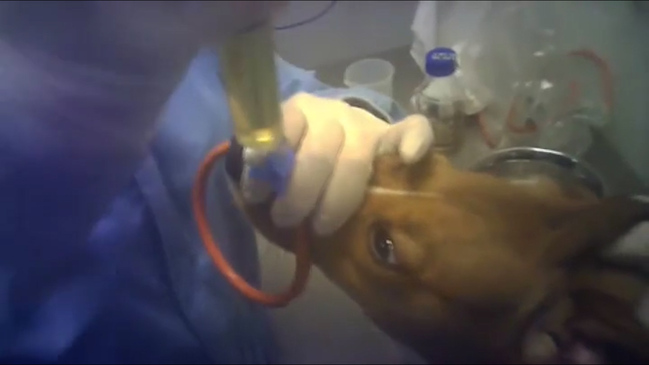
She was the only one who could clarify the most relevant details of an investigation that is being carried out in the Colmenar Viejo Court, under summary secrecy since April, when the scandal broke out thanks to an eight-minute video recorded by her between 2018 and 2020 and edited and published by the NGO Cruelty Free International (CFI).

It showed how different workers allegedly mistreat the animals they experimented with.

She arrived nervous, but she did it in a big way, unveiling one more bomb: in the laboratory, she assured, not only was there “repeated abuse” of the animals, but the results of the tests were also manipulated to approve studies that later went on to a second phase of experimentation with human beings.

All the lights pointed towards Carlota Saorsa, the pseudonym by which the person who signs the video with which she began her particular battle of David against Goliath is known, that of an anonymous person against a company whose main business is commissions of studies of the pharmaceutical industry.

Continue reading “Horror laboratory “Vivotecnia” in Spain: a crime in which all the workers were involved.”

USA: ‘Smoke cows’: Could more US wildfires mean less milk from Oregon’s huge dairy herd?

Photo – WAV Archives

https://www.theguardian.com/environment/2021/sep/22/us-research-points-to-lower-milk-yield-from-cows-exposed-to-wildfire-smoke

‘Smoke cows’: Could more US wildfires mean less milk from Oregon’s huge dairy herd?

A team at the Oregon State University has begun a three-year study looking at the effects of poor air quality on cattle

Juliana Ranches drove to work in eastern Oregon in early September through wildfire smoke so thick that, for a moment, she thought it was just a grey, foggy day and it would soon start to rain.

Ranches is a livestock researcher relatively new to living in the area, and the conditions were unlike anything she had experienced before, leading her to ask questions about the animals that spend their summers in the smoke. Eastern Oregon has this year experienced regular wildfires since early July.

“We know there is a negative effect,” Ranches said, referring to the cows grazing outside in some of the most polluted air in the US. The area registered 160 on the air quality index (AQI) in early September after reports of a large number of wildfires, a level that can put human health at risk.

“There is a little bit of work out of California with [dairy and beef] producers and indirect impacts, reporting lower conception rates and birthrates, but we cannot say for sure because there are no studies in a controlled environment looking into that.”

Research into the impact on livestock bred for human consumption is limited, although it is known that particulate matter from the smoke is a significant health threat, especially when exposure is long-term.

According to new preliminary research from the University of Idaho, a sample of dairy cattle exposed to poor air quality and heat stress produced less milk – about 1.3 litres less than normal (just over two UK pints) – a day than average. Some cows had not fully recovered two weeks after the air quality improved. But because this observation was based on just one herd, the data does not yet translate into solid recommendations for ranchers and farmers. The work must be scaled up to explore larger patterns.

It is why Ranches, along with her colleague Jenifer Cruickshank, who specialises in dairy management, has begun a three-year study to collect more data on cows and the effects of wildfire and smoke, as part of which they have put nearly 30 cows out to pasture.

“I call them my smoke cows,” said Cruickshank. During a wildfire event that results in an AQI measure over 50, she takes daily milk samples and blood tests, which will be analysed as stress markers. The cows’ respiratory rate and body temperatures are also documented.

Continued on next page.

EU Organic Day: what it could mean for animal welfare.

https://www.eurogroupforanimals.org/news/eu-organic-day-what-it-could-mean-animal-welfare

EU Organic Day: what it could mean for animal welfare

23 September 2021

News

Today, Eurogroup for Animals joined the European Commission, the Council and the Parliament at the launch of the first EU Organic Day

This launch is part of the European Organic Action Plan 2021-2027, released last March, which follows the objectives set out in the Farm to Fork and Biodiversity Strategies of “at least 25% of the EU’s agricultural land under organic farming and a significant increase in organic aquaculture by 2030.”

Eurogroup for Animals particularly welcomes the contribution of the Action Plan to better align animal welfare with the societal demands on higher animal welfare and to further improve animal welfare in organic production. The recognition of the link between aquaculture and animal welfare, as well as the promotion of organic aquaculture are also welcomed. 

The Commission states that organic farming already plays an important role in improving the welfare of animals and that animal welfare is an integral part of sustainable food systems. However, there are still animal welfare issues in organic farming that urgently need to be addressed

Today at the launch of EU Organic Day, we used the opportunity to alert the institutions to the need for a comprehensive animal welfare labelling system as well as a need for animal welfare standards to aim higher: the need for stricter criteria to define adapted breeds, a truly compulsory access to pasture for livestock, a ban on mutilations, availability of immunocastration, transport time limitations, and proper enforcement for the existing organic rules for animal welfare. 

Eurogroup for Animals recommends the European Commission to:

  • Quantify the target for organic aquaculture by aligning it with the target for terrestrial farming, i.e. 25% of aquaculture sites by 2030.
  • Implement concrete animal welfare improvements such as slow-growing breeds in broilers, a ban on surgical castration of pigs and transport time limitations.
  • Adopt Methods of Production (MoP+) labelling with one of the top levels integrating organic production.
  • Ensure proper enforcement of the existing organic rules for animal welfare, e.g effective stunning of fish at slaughter, before granting the organic logo. 
  • In identifying the obstacles for more organic agriculture and aquaculture, the reduction and replacement of animal products and a shift to more plant-based diets, as well as the need to shift to low-trophic aquatic species, should be seen as solutions. 

Eurogroup for Animals welcomes the new Organic Action plan and sees the potential of organic production to be classified as the top tier method of production as well as an EU-wide labelling system for animal welfare. However, organic farming should lead the way towards the EU’s sustainable and humane food production model, reflecting the ambitions of the Farm to Fork strategy. While the language in the Organic Action Plan is still vague, we welcome the commitment to improving animal welfare, including farmed fish. We are looking forward to working with the Commission and other stakeholders to ensure organic farming will embrace the highest possible animal welfare standards.

Reineke Hameleers, CEO, Eurogroup for Animals

Animal welfare and food labeling: initiating the transition through high quality consumer information

File

Report – Animal Welfare and food labeling1.84 MB

Regards Mark