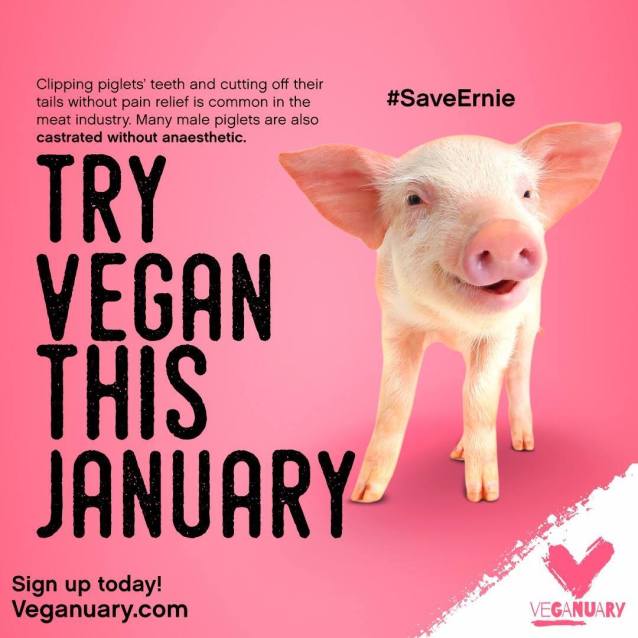
It’s January and that means one thing: Veganuary! It’s time to open your new BOSH! book, take a walk down the Free From aisle and get yourself to the next Vegan Nights event.
Don’t forget that Love Veg is here to help you, whether you’re a new vegan or a seasoned plant-based eater!
We’ll tell you all about the incredible products out there in your local supermarket and delicious food on the menu at high street restaurants, so you can navigate Veganuary like a pro. And it’s never, ever been easier. All of the major supermarkets now have their own extensive plant-based ranges that include meat and dairy product alternatives and incredible pizzas, pies and ready-meals.There really is something for everyone, no matter what your budget might be.
Next time you’re at the shops, why not pick up the ingredients for these delicious jackfruit burgers? You can buy tinned jackfruit from all of the leading supermarkets – Sainsbury’s and Tesco even sell it pre-marinated. You can find more recipes on our Love Veg website.
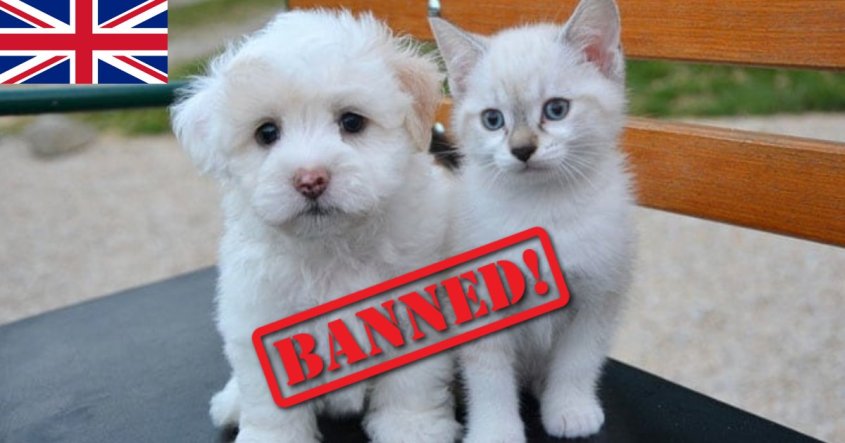
After a whopping 95 percent of public comments voiced support for ending the sale of puppies and kittens in pet stores, the British government confirmed that it will roll out the legislation in 2019.
Anyone looking to purchase a kitten or puppy under six months old must either get one from a rescue shelter or directly from a private breeder.
From the time the Department for Environment, Food & Rural Affairs (Defra) took the first public comment to the rollout of the new law, it took just five months to get the legislation confirmed. Animal Welfare Minister David Rutley hailed the campaign, entitled “Lucy’s Law“, saying in part,
“We promote responsible pet ownership in our welfare codes and I urge fellow animal lovers to consider the idea of rehoming a dog from the many wonderful organizations across the country.”
Britain’s newest ban comes on the heels of previous legislation rolled out in October 2018, which blocked licensed dealers from selling dogs and cats under eight weeks old.
Lucy’s Law was founded by Dr. Marc Abraham, a veterinarian in Brighton, after the 2016 death of Lucy, a Cavalier King Charles Spaniel. Her case brought much-needed attention to the horrific neglect suffered by animals in puppy mills; Lucy exhibited debilitating health issues such as fused hips, a curved spine and malnutrition due to unscrupulous breeding practices.
A petition with more than 143,000 signatures in support of Lucy’s Law was presented to the government in May. Major animal charities such as the International Fund for Animal Welfare (IFAW) and celebrities including animal advocate Ricky Gervais were extremely supportive of the initiative. Earlier this year, in case any of his 13 million followers were considering adding a pet to their family, Mr. Gervais tweeted,
“This weekend plan a visit to your local rescue shelter, where your new best friend is waiting for you. #LucysLaw”.
In addition to promoting adoption, the new law will also tackle irresponsible breeding and sale of animals from puppy and kitten mills. Dr. Abraham stated,
“Lucy’s Law will help end puppy farming, protect the future health and happiness of dogs like poor little Lucy, as well as encourage prospective pet owners to adopt from their local rescue shelter too.”
The British Government is also raising the bar on sentencing animal abusers, and has increased the Court’s ability to assign maximum sentences to up to five years, the harshest sentencing in Europe.
The only other state with a complete ban on exotic animal acts is New Jersey, while Illinois and New York forbid the use of elephants in performances. More than 135 towns and cities across the U.S. have passed legislation to address circus cruelty, while the states of Rhode Island and California have banned the use of bullhooks to control performing animals.
This circus ban has been a hot-button issue in the state of Hawaii ever since the tragic death of Tyke the elephant nearly 25 years ago. Tyke was a wild-born African elephant captured from the wild in Mozambique when just a baby. She was sold into the circus industry in the U.S. and for twenty years abused and exploited. Tyke was tortured during this time, forced to wear a degrading clown costume and dance for the audience, and even forced to ride a giant tricycle.
In August 1994, Tyke spent several days locked in the hull of a tanker ship on a long ocean journey from California to Hawaii. When they finally let her out she was immediately forced into performing in from of an audience. Unable to take the abuse any longer, she snapped and killed her trainer by stomping on him repeatedly. She also seriously injured her groomer, then busted through a chained metal gate and ran out onto the street.
Tyke ran for her life through the streets of Hawaii for over half an hour. Unable to calm the elephant, local police eventually opened fire and shot her over 80 times before she finally fell to the ground. She then lay in a pool of blood on the streets of Hawaii for over two hours, until she finally bled to death. The state of Hawaii then vowed to completely ban the use of exotic animals in circuses, and now decades later they finally followed through on that promise.
As tragic as Tyke’s story is, there are still hundreds of animals suffering in the circus industry across the United States, and we need all other states to step up and speak out for them. If you ever hear of a proposed circus ban in your city, county, or state, please contact your elected officials and urge them to sign the ban into law.
We would like to extend our gratitude to Hawaii’s governor David Ige for signing this historic circus ban legislation. Now the beautiful state of Hawaii can truly a be a paradise for both people and animals!
We don’t typically get to follow the lives of individual animals who are killed for their coats. Now, a short film is offering us a harrowing glimpse into the short and tragic lives of three fox siblings who were born, raised and killed on a fur farm.
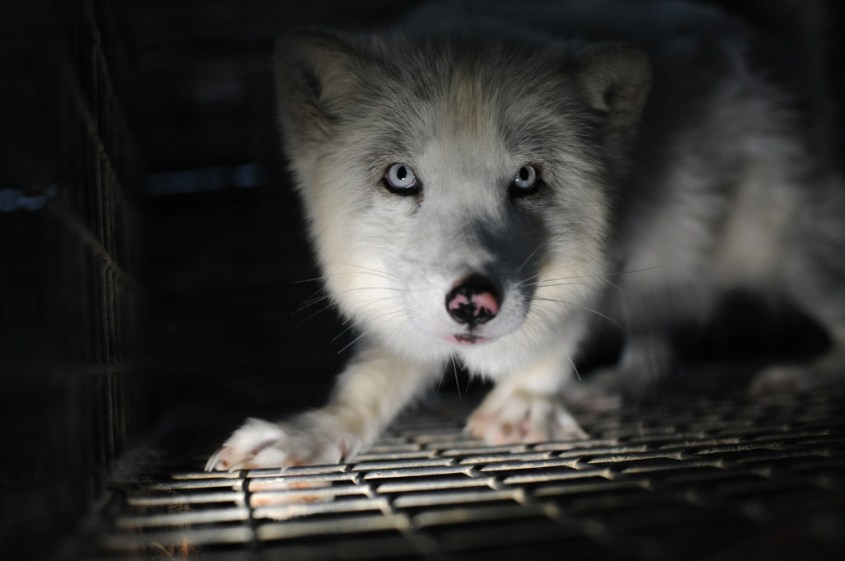
The film, Fur: A Lifetime, which was just released by Animal Defenders International (ADI), was taken by hidden cameras placed on a fur farm in Poland – the fourth largest fox fur producer in the world. It spans the short lives and deaths of three arctic fox cubs, who ADI named Borys, Eryk and Aleska.
First the tiny cubs are nurtured by their mother, as best she can given the circumstances, before she is taken away from them. As they get older, their personalities come out and they attempt to play in their tiny wire cage. Soon their coats change color, and before they’re even seven months old, terrified Borys and Eryk are dragged out of their cage by a farmer, strung up by a leg and electrocuted to death.
Aleska watches as her brothers are torn away from her and killed. She is only spared because she will be used to produce more cubs, who will be torn from her to be killed for their fur as the cycle repeats.
“Over 100 million animals die for their fur every year. Our film shows the lives of these intelligent, feeling individuals and the cruelty they suffer when treated like a product. Just because they are not like us. Playfulfox cubs Borys and Eryk grow up in a small cage and die a terrifying and painful death for vanity and trinkets. This is the real cost of fur – when you buy fur, you buy cruelty, not beauty or luxury,” said ADI’s President, Jan Creamer.
The lives of these three cubs resemble nothing of their wild counterparts. They never knew the safety of a den, or the caring parents they would have had in the wild, who would have protected them and taught them the valuable skills they would need as they explored the world before setting out on their own.
Instead, they only experienced extreme confinement on the equivalent of a factory farm, and denied everything that would have enabled them to thrive. As a result, they and others like them pay a physical and psychological toll. On this single farm, ADI found foxes with bent feet and overgrown claws from living on wire floors, self-mutilation, aggression, injuries and illnesses that were left untreated, and filthy living conditions, while other investigations have found similar issues elsewhere.
According to ADI, over 15 million foxes are killed every year, usually to make trinkets, trims and accessories, but it can take up to 35 individuals to make a single coat. Sadly, foxes aren’t the only victims of this brutal industry. It’s estimated that over 110 million animals are killed on fur farms, every year, while more than 16 million are trapped in the wild, including mink, raccoon dogs, rabbits, chinchillas, coyotes, seals, otters, cats and dogs.
While the fur industry and its apologists continue to claim fur products are sustainable, eco-friendly and humane, those arguments couldn’t be further from the truth, and what few regulations and certification schemes there are do little to nothing to stop widespread suffering. While there have been major victories with nations banning fur farming, and imports, those that are still making fur are exporting products around the world.
While there are now plenty of faux options around, they still send the message that fur is trendy and open the door to other problems with mislabeling, which continues to be found to lead otherwise caring consumers to unwittingly support this industry by buying the real thing.
ADI added that the best ways to stop this cruel industry include pushing for legislation that bans fur farming, trapping and imports, urging designers and retailers to stop using and selling fur, and for us to stop buying it.
“Be comfortable in your own skin, and not that of a poor defenceless animal caged and killed to provide it. Say no to fur and yes to helping these fashion victims. Please help ADI stop this brutal trade,” said actress Joanna Lumley, who is supporting ADI’s campaign to end the fur trade, along with actor Brian Blessed.
For more on how to help, check out Animal Defenders International.
Justice for young dog thrown from car on New Your highway.
Image Credit: New York State Police
PETITION TARGET: New York State Police
Two beagle mixes were hurled out the window of a moving car onto Interstate Highway 81 in Marathon, New York, one suffering from injuries so gruesome, he lost a leg.
The innocent dog suffered a compound fracture to his distal radius and ulna on one front leg, and a hairline fracture of the ulna on his other front leg. He also had lung contusions and broken ribs. In spite of best efforts from veterinarians, a front leg was so mangled that it had to be amputated. A long, painful road of recovery awaits.
A truck driver witnessed this horrific incident as it happened, and immediately pulled over to save the dogs. He was quickly assisted by state troopers before The Broome County Humane Society arrived to take the dogs into care.
The amputee was later named “Trooper” after the state troopers who assisted with the rescue. The younger dog — named Adam after the truck driver who stopped to bring these dogs to safety — luckily escaped without major physical injury.
New York State Police are searching for the people responsible for this disgusting act. They are looking for an older model blue Dodge Durango that was traveling on Interstate 81 around 9:30 am on Wednesday, December 12.
Sign this petition urging police to use all available resources to track down the person/s responsible and prosecute them to the fullest extent of the law, ensuring they never harm another animal again.
There is a $16,500 reward offered for information leading to the conviction of those responsible. Anyone with information is asked to call SP Homer at (607)749-1614.
We have been personally saying on both SAV and WAV sites for many years that the ‘average / normal’ citizen of the EU is basically being ignored by the ‘maters’ (Junker, Tusk etc) when it comes to issues that they have strong feelings about, such as the live transport of animals and the 8 hour rule.
8 hours was a major campaign across the EU to limit the journey times for animals in transport to a maximum of 8 hours; thereby cutting down on the suffering which is forever being presented to the EU ‘masters’; which is then completely ignored by them. The Status Quo rules you could say.
Well now, Professor Cedomir Nestorovic of the ESSEC Business School; has said that the EU elections in May 2019 are the biggest ‘fear’ for the EU; as well as Brexit; as there will be a rise in populistic parties all over Europe. In other words; the normal EU citizen is getting ‘bummed off’ with the dictatorship of Brussels and will this time vote for parties that reflect their views a lot more comer the May elections for Members of the European Parliament (MEP).
“I am not really confident that we will have some kind of Europe building capacity in the future as we have in the past.” said the Professor.
He added: “I think the higher fear is the elections in May because for the major part of the European countries, the UK is over, the UK has left the European Union.
The European elections to elect new MEP’s throughout Europe to represent ‘the normal EU citizen’ will take place between May 23 and 26, less than two months after Britain’s exit from the Brussels bloc.
The situations in Italy and France for example represent such problems. French President Emmanuel Macron and Italy’s deputy prime minister Matteo Salvini are expected to become the symbols of the two sides at the upcoming vote. Neither of the two leading politicians will actually stand for a seat in the European Parliament elections; but the two political forces have made it clear they will fight for their respective political sides to determine the future of the continent.
The French President (Mr Macron) has been battling in France f9or weeks now to control the so-called “yellow vest” protests which have paralysed parts of France since erupting last month with demonstrators clashing with police, torching cars, erecting roadblocks and burning barricades. Signals that the ‘normal’ EU citizen is not happy with what is coming from EU governments as well as from Brussels (EU).
The Italian eurosceptics will likely team up with MEPs from (French) Marine Le Pen’s National Rally and (Hungary) Viktor Orban’s Fidesz party, who are also expected to gain votes.
The UK should not be presenting any MEP’s for election in the May votes; as the UK should have left the EU by this time – the process of ‘Brexit’; which again was introduced in 2016 by British citizens being given the option of remaining or leaving the EU. Again here; the majority of citizens in the UK voted for Britain to leave the EU; as they felt they were not being listened to; represented or actions taken to support their wishes at the EU in Brussels.
So; the elections in May 2019 will be very interesting throughout Europe. We at WAV do expect that the ‘common man / woman’ of Europe will have their say at the election booth and that post May; there will be major changes in the make up of the European Parliament.
Junker, Tusk and others have been presented with real evidence for change over the years. They have decided to ignore it; putting themselves on a higher pillar than the people of the EU. In May, we envisage that the ‘worm will turn’ and the pillars will come crumbling down.
Who knows; in the post 2019 elections; we may even witness animals being transported throughout the EU for a maximum of 8 hours ! – They were warned that they needed to change the rules; they ignored it; maybe in May they will pay the price !
Again a devastating failure in Alzheimer’s research on animals
At a recent science conference, a total of three pharmaceutical companies announced that their investigational drugs to treat Alzheimer’s disease have failed – even though they had been successfully tested on mice [1]. The animals were genetically engineered to develop pseudo-Alzheimer’s disease.
The preparations, also known as BACE inhibitors, apparently even harmed the patients because they worsened their cognitive abilities and led to brain atrophy. The journal Nature writes about the long list of failures [2]: “Drug manufacturers have spent billions looking for therapies that can reverse or significantly slow Alzheimer’s – but to no avail.”
Alzheimer’s patients deserve better. Or to put it in the words of a molecular biologist cited in this article:
“The biggest mistake you can make is to assume there could be a mouse with Alzheimer’s. “
Experimenters must use higher-quality, animal-free research methods whose results are actually transferable to humans. For example, a groundbreaking study has just been published that has been performed on cells from the human brain [3]. It provides new insights into the development of Alzheimer’s and can thus contribute to the development of effective treatment methods.
Original published on April 3, 2017:
After a long series of failed attempts, animal experimenters have come to realize that their previous attempts to develop treatments for Alzheimer’s have come to nothing [4].
It’s hard to believe, but for decades time and money have been wasted on developing more than 100 medicines that ultimately turn out to be a failure. Countless animals have lost their lives so far.
In an attempt to develop medicines for Alzheimer’s, experimenters have been tormenting mice, dogs and other animals for years. The problem is that these animals do not get Alzheimer’s disease. Therefore, the “researchers” had to alter the genetic makeup of animals to trigger the formation of amyloid plaques, which similarly occur in the brain of affected individuals.
The result: The animals may seem to be helped against symptoms that look like Alzheimer’s but are not Alzheimer’s. But human patients continue to suffer.
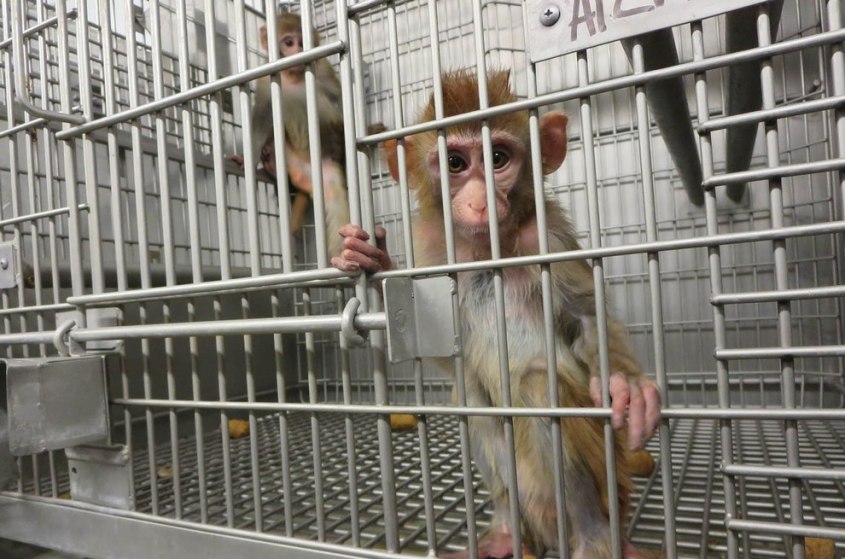
The Greek Nikos Logothetis and his troupe “researched” for decades of Rhesus monkeys to vent the mystery of the human brain for the purpose of Parkinson’s and Alzheimer’s disease. The result: monkeys who were tortured to death, a lawsuit against Logothetis and other “researchers”, waste of billions of euros from our coffers for criminals idiots who have never brought a result for the benefit of man.
But these criminal idiots continue to work, they continue to earn, animals continue to die, and serious diseases continue to plague us all.
Real animals have been replaced by puppets in Circus 1903, a musical that sets to recapture the golden age of circus.
These extraordinary puppets were created by the talented team behind the play War Horse.
Puppet creator Mervin Millar explains in this video that the size of the performer is the first factor taken into consideration when creating the elephants. From there on out, all the designs come from the puppeteer. Although puppeteering is difficult work, the primary goal of the creators is to make something as easy to handle as possible.
Luke Chadwick-Jones, a puppeteer in the musical, describes just how hard the work is: “It’s a lot of pressure on the back, I’m in constant plank position. And the weight kind of sits just above the head, so it puts a lot of pressure on the lower back.”
All the hard work is worth it, however. When Peanut the baby elephant (played by Chadwick-Jones) appears, the kids in the audience are thrilled by his playful antics.
With its use of puppets instead of real elephants, Circus 1903 demonstrates one major lesson, above all: it is, indeed, possible for a circus to forego cruelty without sacrificing the quality of its entertainment!
Dairy farmers refuse £6,000 to allow filming of milk production in Denmark
Dairy farmers in Denmark have refused an offer of nearly £6,000 to let animal-rights campaigners film the production of milk, butter and cheese.
The country’s farmers, who supply dairy products for the firm behind British brands Anchor and Lurpak, have not accepted the cash incentive to let cameras in to record how cows and calves are treated every day.
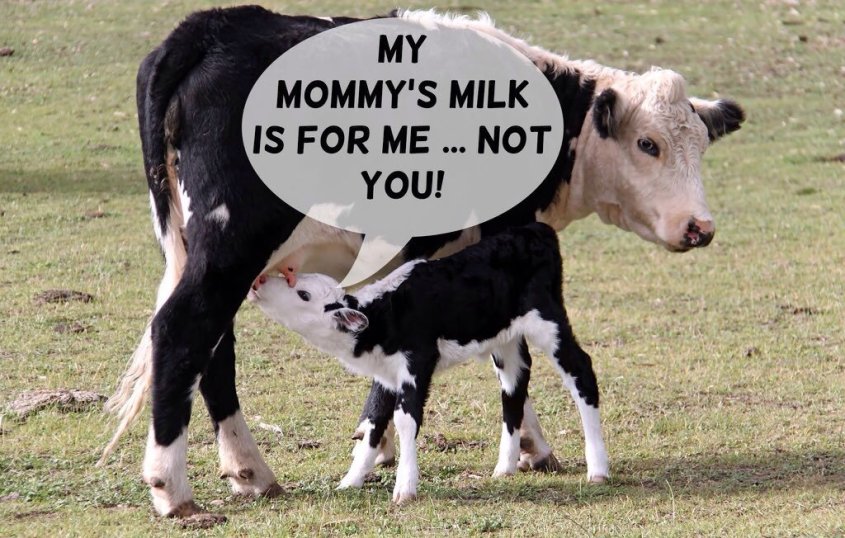
Animal-rights group Anima claims filming would reveal practices common in the UK and Denmark, such as how the young are taken away from their mothers within hours of being born, causing distress to both.
A video would also record how male calves are shot dead – with a bolt in the head – when they are around a day old because they are not used in dairy production, according to the activists, who say this is standard practice.
A new YouGov poll showed that less than half of the Danish public knew that cows must give birth to produce milk, and only about a third knew that calves are removed just a few hours after birth.
It’s believed about nine in 10 Danish farmers work for Arla Foods, one of the UK’s biggest dairy firms which owns the Lurpak and Anchor brands.
Anima, which is calling on Arla to be open about how milk is produced, initially asked the company to allow filming.
“We asked Arla to show us what the process of separation calf from mother was like and let us film, including when many of the calves are shot at birth. They refused, saying they couldn’t show us because they’re not the farmers,” said Kirsty Henderson, of Anima.
So the group took out full-page adverts in 11 national newspapers offering 50,000 Danish Kroner (£5,900) to any farmer who allows filming. A hotline was also set up for farmers.
Ms Henderson said about 10 so far had expressed interest but none had agreed. She said there was a report that Arla had asked farmers not to accept.
“The fact that they are so unwilling to show the public what is going on sends a big message in my view,” she said. “Consumers have the right to know how their milk and butter are produced, and it is clear that when they are given the full story, the public don’t think such cruelty is acceptable.”
WAV Comment – Farmers refusing money ! – maybe this lack of unwillingness really shows that they don’t want to show the public what really happens on dairy farms.


















 World Animals Voice