Australian scientists find a huge new healthy coral reef off the northern coast!
SYDNEY (Reuters) – Australian scientists found a detached coral reef on the Great Barrier Reef that exceeds the height of the Empire State Building and the Eiffel Tower, the Schmidt Ocean Institute said this week, the first such discovery in over 100 years.
The “blade-like” reef is nearly 500 meters tall and 1.5 kilometers wide, said the institute founded by ex-Google boss Eric Schmidt and his wife Wendy.
Australia: Great Barrier Reef.
It lies 40 meters below the ocean surface and about six kilometers from the edge of the Great Barrier Reef.
A team of scientists from James Cook University, led by Dr. Robin Beaman, were mapping the northern seafloor of the Great Barrier Reef onboard the institute’s research vessel Falkor, when they found the reef on Oct. 20.
“We are surprised and elated by what we have found,” said Beaman.
He said it was the first detached reef of that size to be discovered in over 120 years and that it was thriving with a “blizzard of fish” in a healthy ecosystem.
The discovery comes after a study earlier this month found the Great Barrier Reef had lost more than half its coral in the last three decades.
New analysis of live export ships shows there is still a high risk to animals – SAFE
29 October 2020
New analysis from The Guardian has found that live export ships are twice as likely to be lost at sea as cargo vessels.
SAFE Campaigns Manager Bianka Atlas said the growing evidence supports what SAFE has been saying for years.
“It is clear that the live export trade places the lives of animals and humans at an unacceptable risk,” said Atlas
Livestock carrier Yangtze Fortune is expected to arrive at Napier Port on Wednesday 4 November. This is will be the first export of live animals since the sinking of Gulf Livestock 1 in September.
The Yangtze Fortune’s arrival next week is estimated and subject to change, but the animal rights organisation SAFE will be protesting regardless.
“It’s only been two months since we lost 5,867 cows and 2 of our own people in the Gulf Livestock 1 tragedy and now we have another ship leaving from that same Port,” said Atlas.
“The reality is, all of these animals, who are exported for breeding purposes, will eventually be slaughtered in their destination country, potentially by methods outlawed in New Zealand.”
“Ending live export should be at the top of Jacinda Ardern’s agenda when she forms her new cabinet.”
Above – Carcasses line a beach after a livestock carrier loaded with 5,000 cows capsized at Vila do Conde port in northern Brazil in 2015. Photograph: Reuters
Exclusive: livestock ships twice as likely to be lost as cargo vessels
Billion-dollar export trade puts lives of animals and crew at greater risk of ‘total loss’ through faulty design and inexperience
Ships carrying live animals are at least twice as likely to suffer a “total loss” from sinking or grounding as standard cargo vessels, the Guardian has found.
In the past year alone there have been two disasters involving animals in transit. Last November, at least 14,000 sheep drowned after the Queen Hind capsized en route to Saudi Arabia from Romania. And last month, Gulf Livestock 1, a carrier transporting almost 6,000 cattle, sank off the Japanese coast en route to China from New Zealand. Forty crew members remain missing and are presumed dead.
“With the Guardian’s shocking findings … [it’s] time for an open and honest assessment of an industry that has caused one crisis after another,” said Prof Kristen Stilt, director of Harvard’s animal law & policy program, currently writing a book about the transport of live animals. “That assessment should recognise that the transport of chilled and frozen meat is the way that nearly all meat travels in commerce today. The idea of sending live animals is a holdover from a bygone era.”
The global live export trade is worth nearly £16bn. For decades, campaigners have been calling on the EU to provide better protections for animals in transit, and an inquiry into the regulatory system is under way.
According to Guardian analysis, between January 2010 and December 2019 five livestock vessels were recorded as lost to sinking or irrevocable grounding, killing crew and animals. The total equates to just over 3% of the estimated 150 livestock carriers above 100 gross tonnes (GT) known to operate worldwide. The 100 GT measurement is used by the shipping industry to separate smaller vessels, often owned for pleasure, from larger, more probably commercial, ones.
The same loss calculation for the global cargo fleet of about 61,000 ships over 100 GT, shows that 471 vessels within that tonnage (excluding tugs, dredgers, fishing and passenger vessels), were lost to sinking or grounding in the same period – or less than 1%.
The Guardian’s risk calculations are based on historical data from insurer Allianz Global Corporate and Specialty’s Safety and Shipping Review 2020, analyst IHS Markit and the International Maritime Organization.
If the loss figure for livestock vessels expands to include two more vessels, sunk in December 2009 and September 2020, just outside the 10 years covered by the Allianz shipping safety report, used as a basis for the calculation, then the figure rises to 4.7%.
And if the cell phone has no reception up there… bad luck for the animal lover!!
By the way: the tires on my car were also slit in one night.
But that wasn’t the ALF!
I live among farmers, hunters, farm owners … it couldn’t have turned out otherwise, I disturb all professional groups that have to do with animal cruelty, animal exploitation, and animal murder.
A butcher who has been branded a murderer by animal rights protesters has thanked customers and the rest of the community who have rallied round to support him.
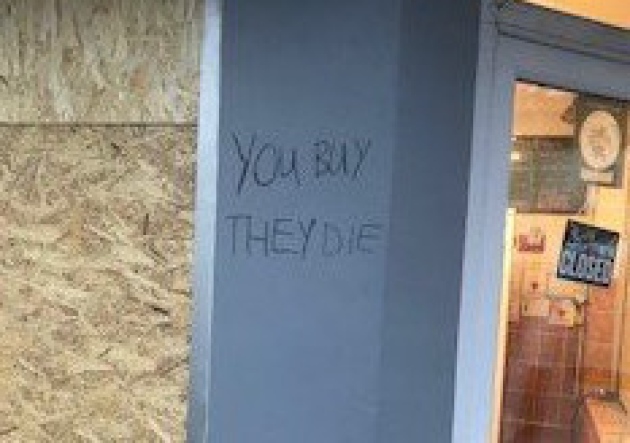
Graham Fiddy, 62, found “murderer” and other vile graffiti daubed across the front of his butcher’s shop on Aylsham Road, Norwich which also had two large plate-glass windows smashed by protestors.
Mr. Fiddy, who set up Fiddy’s Butchers in 1986, reported the damage to police.
He said he is well aware there are different points of view but could not understand why those responsible could not come and talk to him rather than attacking his shop.
Mr. Fiddy said: “It’s some animal rights group – they don’t agree with what I’m doing”.
Graham Fiddy, 62, found damage by animal rights protesters at his butcher’s shop, Fiddy’s Butchers, on Aylsham Road, Norwich. Picture: Tom Fiddy
“I’ve got friends who are vegetarian but I don’t say you’re wrong or you’re right. “If they want to do something come in and have a debate with me rather than calling me a murderer and writing it all over the building. “They wanted to have their say and that’s it, but it doesn’t seem right to me.”
Following the attack, which is understood to have happened in the early hours of Thursday, October 8, Mr. Fiddy lost a morning’s trade as he and his son Tom worked with others at the store to clean up the mess that had been left behind by the vandals.
He said: “I turned up for work and unfortunately saw all this mess and thought ‘Oh no’. “I can get it repaired on the insurance but it’s the hassle and aggravation. “We had to shut all Thursday morning because there was glass everywhere. It took four to five hours to clear it up.”
But Mr. Fiddy said he has been heartened by the response of customers and the community since the attack.
He said: “It’s nice to see people have been rallying round. “We seem to have seen everyone this week so it’s been nice they’ve been showing a bit of support from customers. It’s been lovely.” (!!!)
As well as Fiddy’s Butcher it is understood Hazel’s Butchers in Corbet Avenue, Sprowston, has also been targeted by vandals who daubed slogans on the property and glued locks in a separate incident which is believed to have happened overnight on Friday, October 9 and was discovered on Saturday, October 10.
And I mean..Of course, the carnivorous customers of Mr. Fiddy have to show solidarity, because only then will they calm their guilty conscience so that the murdered animals taste good again. This is a tried and tested strategy used by perpetrators and professional animal abusers
The animals cannot go out on the street and demand their rights
We have to do that.
And some do it well.
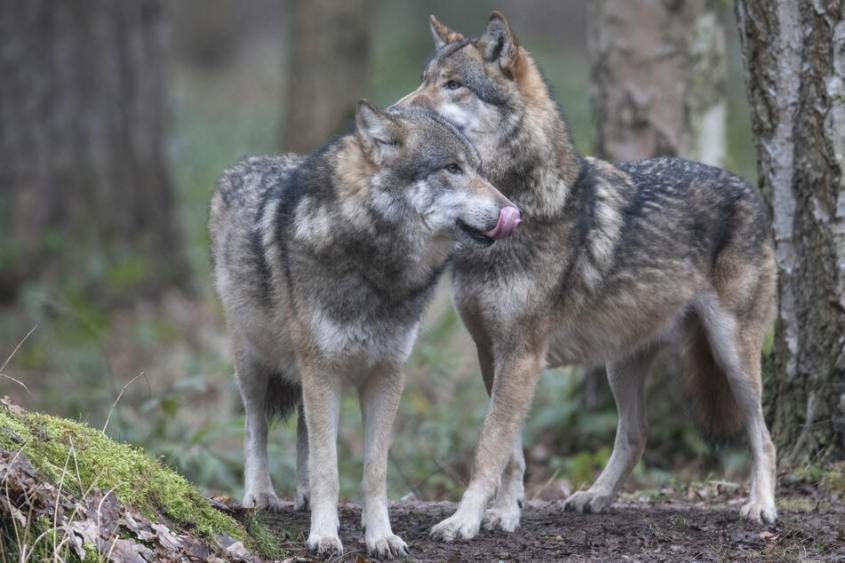
Copenhagen,Denmark – In order to make more space for modernization,the Copenhagen Zoo has now decided to kill three wolves and a bear.
In a press release, the technical director of the zoo stated that “the wolves’ facility is too old and has long since ceased to meet the requirements of today’s animal welfare”.
The zoo wanted to create a newer area and closed the facility without further ado.
Only there was a problem:
As “Focus”reported, the modernization did not seem to be about renewing the wolf enclosure, but rather a planned expansion of the elephant enclosure. That means the previous facility for wolves is to become part of the elephant park (!!!)
Due to renovation work, there was no more space for the excess animals, so the zoo had no choice but to have them killed.
And the polar bears also need more space, that is why the brown bear had to go.
The brown bear had to make room for a pregnant bear and her future cubs because he was “so old that the zoo couldn’t pass him on”.
However, it is still unclear what will become of the bear mum and her little ones – actually the polar bears also need more space.
Unfortunately, this is not the first time that Denmark’s oldest zoo has made negative headlines.
In 2014 the almost two-year-old giraffe Marius was killed because of the risk of inbreeding, butchered and fed to lions – right in front of the zoo visitors.
Unfortunately, these four lions were later also killed due to a lack of space, as “Focus” mentions online.
In Copenhagen, however, the killing received approval from other zoos, as this was important “to maintain the health of the giraffe population in Europe’s zoos,” as Focus reports online.
And I mean…Close the zoo and put those responsible in jail.
The most effective would be: Deliver this “zoo director” himself to the lions, bears, and wolves.
We decided that we no longer need him.
And we don’t discuss it.
The implementation of a new law that would have reduced the number of cattle permitted on live export ships sailing from Australia has been put on hold.
Key points:
A change to animal welfare laws that would mean fewer livestock on vessels has been delayed
Exporters and former Agriculture Minister Bridget McKenzie have questioned the science behind the new rules
· The RSPCA has rejected those concerns, saying the “science is clear”
Days before new animal welfare laws were expected to come into effect, Agriculture Minister David Littleproud has changed the rules to allow exporters to continue to load cattle at existing stocking densities.
In a statement on Tuesday evening, the Department of Agriculture, Water and Environment said Mr Littleproud had decided to make last-minute amendments that would be in place until April 30 next year.
The decision comes after changesto the Australian Standards for the Export of Livestock (ASEL) were announced in April followinga Federal review sparked by footage of the Awassi Express carrying dead and distressed Australian sheep to the Middle East in April, 2018.
The new ASEL stocking densityrule was expectedto come into effect on November 1 and would have required more space to be provided for each head of cattle exported.
The ABC understands the changes announced today only relate to cattle and do not include sheep.
In the case of exports to Indonesia, for example, a vessel that would typically carry 5,000 cattle would be reduced to carrying 4,300.
The Northern Territory Livestock Exporters Association (NTLEA) told ABC Rural the reduced stocking density rules had been “tweaked” and would not apply during a trial period.
NTLEA chief executive Will Evans said the reprieve would allow exporters to prove that current stocking densities were delivering good animal welfare outcomes.
Mr Evans said the industry had been told by the Government that the new stocking rate would not be imposed for at least six months, and exporters that maintained low mortality rates would be allowed to continue to export at a higher stocking density.
“It’s essentially an audition period,” Mr Evans said.
“Those exporters who have a rolling average of 0.1 per cent mortality rate or lower will be able to maintain the [current] stocking density.
“But those who don’t will need to go to the new ASEL 3.0 stocking densities.
“So for the next six months, you’ll be able to maintain access to current stocking densities.”It gives us a period to prove what we’re saying is true.”
ASEL 3.0 changes coming to live export industryDownload 4 MB
Bulk of recommendations to be adopted
Despite the last-minute change to stocking densities, Mr Evans said other significant changes to the way live animals were shipped under ASEL would commence as planned on November 1.
“Out of the 49 recommendations, one of those was about stocking densities,” he said.”The other 48 recommendations are coming into effect next week. “So there will be changes to how many stockmen are on vessels, changes to bedding, changes to the time we have cattle in registered premises.
“It’s an enormous regulatory change that’s coming in next week, it’s the biggest regulatory change to the industry since [the Exporter Supply Chain Assurance System] in 2011.”
Cattle exporters had previously suggested introducing the changes would cost the industry as much as $40 million a year.
Former minister questions science
At a Senate Estimates hearing last week, former Agriculture Minister Bridget McKenzie said the new ASEL stocking density was based on “loose science”.
Speaking to officials from the Department of Agriculture Water and Environment, Ms McKenzie said the change would mean as many as 130,000 fewer Australian cattle were sold into South East Asia.
“There isn’t a robust body of science available to us right now to be making these decisions,” she said.”[The standards are] not fit for purpose, for our industry, our place in the world, our markets.” The Royal Society for the Prevention of Cruelty to Animals, which has lobbied for an end to the live export trade, described Ms McKenzie’s appearance at Estimates as disappointing and feared a potential policy shift.
“The science is clear around stocking density reduction for cattle on these voyages,” RSPCA spokesman Jed Goodfellow said.
“This is simply about giving animals a little bit more space so they can lie down during the voyages, which sometimes take over two weeks, to give them further space to access food and water troughs.
“I hope Minister Littleproud will stand strong on these reforms that he himself has overseen and introduced.”
Mr Littleproud’s office has been contacted for comment.
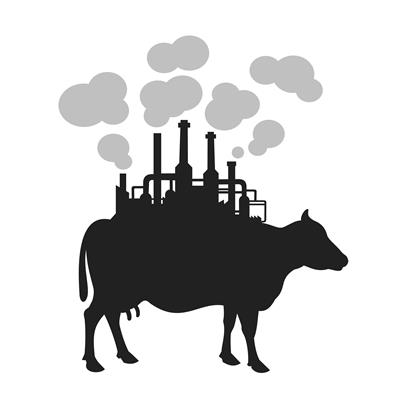
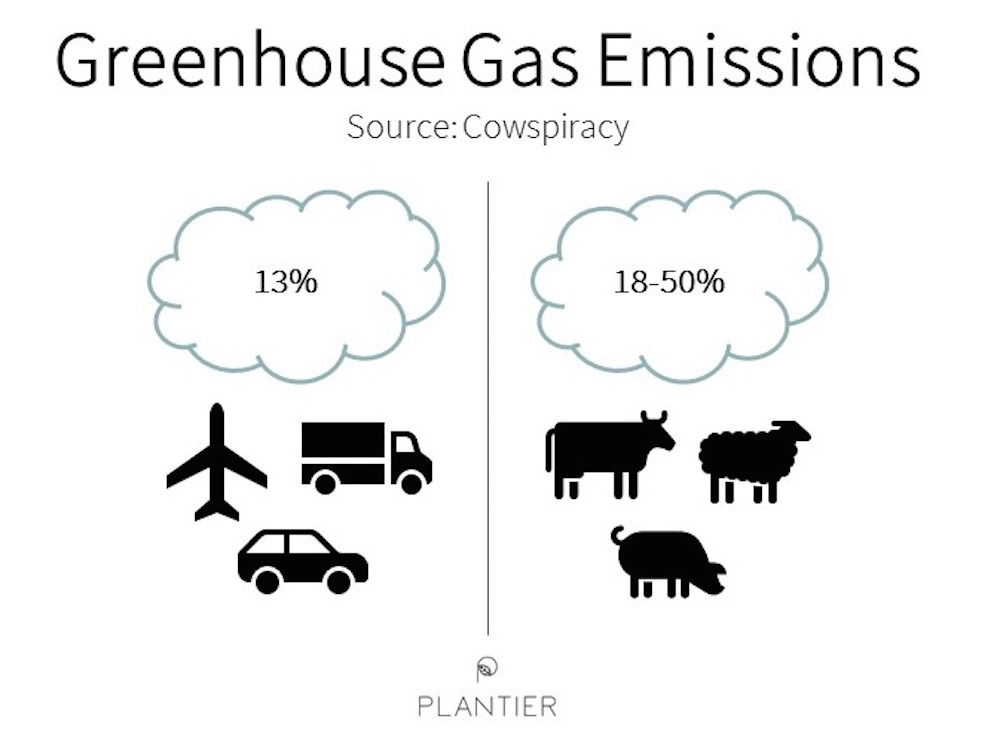
EC study find outs the livestock sector is responsible for 81-86% of the agricultural greenhouse gas emission
22 October 2020
On 14 October 2020, the European Commission published a report examining the environmental, economic and social consequences of EU livestock production and how this sector can contribute to sustainable agriculture.
While recognising the important economic role played by livestock production in the EU economy, the report stresses the significant environmental impacts associated with industrial animal production. Such impacts can affect biodiversity, human health, and the functioning of ecosystems.
In particular, by including in calculations the environmental impacts of the production, processing, and transport of feed, the report concludes that the livestock sector is responsible for 86-88% of the EU’s agricultural GHG emissions.
Additionally, more than 80% of nitrogen of agricultural origin present in all EU aquatic environments is linked to livestock farming, and livestock farms are the main sources of ammonia.
On animal welfare, the report recalls the results of the last special Eurobarometer on animal welfare (add link) showing that 94% of European citizens attach importance to animal welfare, with 82% agreeing that farm animals should be better protected. Three key areas need to be addressed to respond to citizens expectations, and namely the intensification of farming, transportation of animals and slaughter.
The report notes that the specialisation and intensification of livestock farming systems has had negative implications for animal welfare, leading to stress and pain due to artificial living conditions in industrial type buildings, damage to animal integrity (e.g., painful husbandry procedures), separation from familiar conspecifics and unnatural levels of mixing. Citizens expect animals to be spared fear and anxiety and to be offered the possibility to experience positive emotions. Such an approach can also have positive knock-on effects on the reduction in the use of antimicrobials in farmed animals, which should be halved by 2030 compared to current levels according to the Farm to Fork strategy.




 Australia: Great Barrier Reef.


 Graham Fiddy, 62, found damage by animal rights protesters at his butcher’s shop, Fiddy’s Butchers, on Aylsham Road, Norwich. Picture: Tom Fiddy


 World Animals Voice
