Month: September 2019

Australia: I Am Invisible.

australia

schweine kasten mit ferkel-PETA-D

Pictures shown are from WAV archive and are not associated with this AA campaign.


And the high walls of factory farms are designed to ensure she stays that way.

With rare reviews of legal standards for hens and pigs taking place, these animals desperately need to be seen.

Watch our powerful new TV ad (no graphic imagery) — and please help us keep it on air:

watch the video

https://secure.animalsaustralia.org/see-me/?r=5d849d909e5161568972176&ua_s=e-mail


gestresste schweinejpg

Have you noticed that when a truck of pigs or chickens pulls up at traffic lights, all eyes turn away from them? Why? Because when we look into their eyes we see individuals looking back at us. When we look into their eyes we connect with them — we feel our affinity with them. When we look into their eyes we recognise their vulnerability. We feel for them… The human heart instantly responds.

One of the defining reasons why pigs and chickens in this country have been denied the protection of animal cruelty laws is because they are unseen: hidden away in mammoth factory farms. The legislators who have the ability to change their lives for the better — cannot see them. The people who would make kinder choices — cannot see them. These animals are ‘invisible’.

But they don’t have to be. With decision-makers revisiting laws that allow hens to live their entire lives crammed in barren cages and sensitive mother pigs to be kept caged in crates — the most important thing we can do is ensure these animals are seen.

Can you help by supporting our new TV ad so we can spread their message far and wide?

This time last year, an end to caging hens wasn’t even being considered. But unprecedented public feedback to the ‘poultry code review’ has put a ban on the battery cage squarely on the table.

Yet despite the public consultation ending over 18 months ago, we’ve just learned that a final decision on the future for hens in this country has again been delayed.

It seems various government processes are currently more focused on silencing and stopping those exposing animal cruelty than protecting animals from cruelty in the first place. And all the while, the animals wait. The very fact that they are hidden allows these outrageous delays.

For only the second time in the past 20 years, Australian laws that allow severe confinement of mother pigs and, inconceivably, body parts to be cut off their babies without pain relief are also due to be reviewed.

These animals desperately need us to create a window into their world. To reveal that these fragile hens are not production units, they are individual living beings who deserve so much better from us. As do the gentle and playful pigs whose lives in factory farms are so miserable they are known to suffer depression.

That’s why, now more than ever, we need to remind decision-makers who these animals are. That they live and breathe and dream and feel… That while they may be hidden from their view — they equally need protection from cruel treatment.

You’ve given animals your voice. Now help them find their own by clicking here to help us keep this powerful TV ad on air.

GIVE ANIMALS A VOICE »

Like most people, most politicians have never stepped foot inside a factory farm. They’re not places keen to open their doors. And there’s a reason for that. It’s because ‘life’ for the animals confined within them is so at odds with how things were meant to be.

Hens naturally want to flap their wings, peck in the soil and lay their eggs in privacy. Pigs naturally want to explore and dig, and build nests for their babies. Given the opportunity both hens and pigs will respond to kindness with affection. But in factory farms, the daily lives of these animals have been systematically stripped of everything that makes life worth living — because of ‘production systems’ that kept them hidden and unseen.

We have a vision to change that by shining a light on their existence and taking their plea for compassion and kindness directly to the very people who have the power to change their world.

If you too can envision a peaceful, kind world for animals then please help us create it.

For the animals,

Lyn White AM
Director of Strategy


WAV Comment – see also:

https://worldanimalsvoice.com/2019/09/19/france-civil-courage-of-animal-rights-activists/ 



South African Sheep Face “Nightmare” Journey.

SAfrica


South African Sheep Face “Nightmare” Journey

By The Maritime Executive 2019-09-17 01:44:45

Shu 3

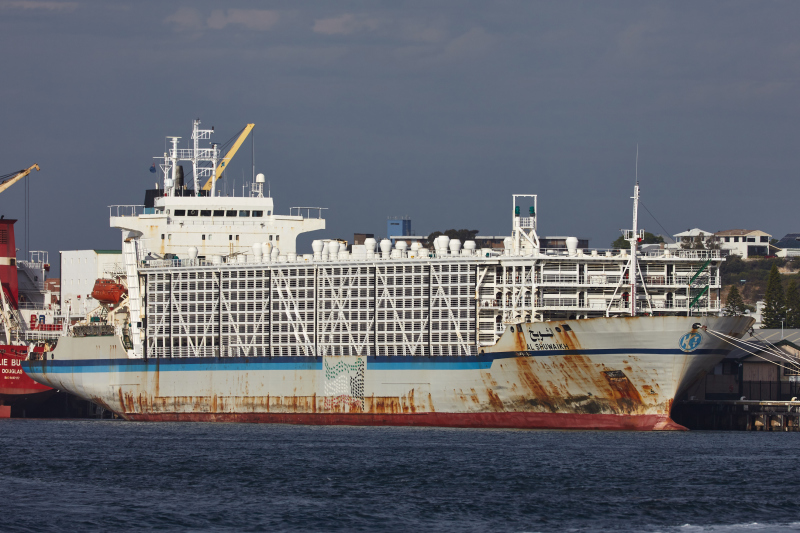
As the livestock carrier, the Al Shuwaikh, heads for South Africa, local TV show Carte Blanche has investigated the nation’s emerging live export trade with Kuwait and the potential for what the presenter calls a “nightmare journey” for the 65,000 sheep being readied to sail.

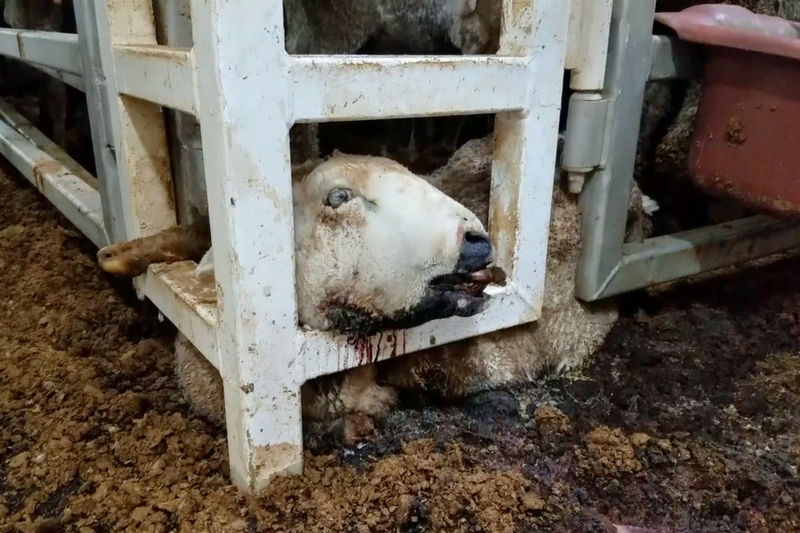
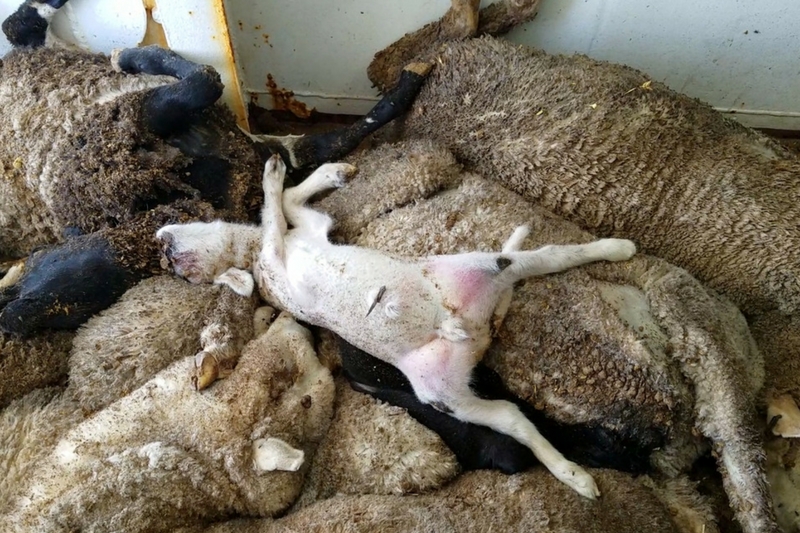
The Carte Blanche TV show says: “Facing prolonged loading processes, poor ventilation, stifling heat and overcrowded quarters, some 65,000 sheep will soon be packed onto a mammoth livestock vessel due in the East London harbor later this month. The livestock will be transported for weeks on the high seas, standing in their own filth, with no space to even lie down. Amid methane gas and ammonia accumulating in the cargo hold, this controversial trade deal between South Africa and the Middle East will eventually see millions of our sheep sent abroad.”

The TV show notes the whistleblower footage released by in Australia in 2017 that focused on the Awassi Express but also included footage from the Al Shuwaikh. The Carte Blanche presenter said the footage was so disturbing that it was decided not to show it on the program. He interviews Australian Dr. Lynn Simpson, a former live export veterinarian who has sailed on the Al Shuwaikh and who has been raising the issue of poor welfare on live export ships since 2001. Simpson says when she saw the footage, she was just seeing her experience from 57 voyages repeated.

Shu 2

The controversy surrounding the whistleblower footage continues in Australia – and an Australian Department of Agriculture observer report from a May 2018 voyage of the Al Shuwaikh revealed suffering and death as a result of the vessel’s design and management of livestock on board. The report indicated that for eight days sheep were open mouth breathing, indicating severe heat stress, as they “attempted to gain position around the ventilation vents on all open and closed decks.” Multiple instances of “death by smothering” occurred as a result of this. Heat stress was worsened by “oil fuel heaters being left on during the equator crossing” and poor ship design with “dark colored steel roof surface absorbing radiated heat from above.”

Additionally, the observer noted that water troughs were fouled with manure, particularly towards the end of the voyage when a skeleton crew were available to attend the livestock due to discharge preparations. There were significant welfare concerns during discharge, with the livestock, vocalizing loudly, left without fresh feed for over 30 hours. Moldy food was observed in the bottom of troughs for both sheep and cattle on numerous occasions. Dusty pellets were also observed, and on some decks this was largely attributed to the workings of the automated feeding system. The observer also noted that during rough weather a ballast tank overflowed into one of the sheep pens.

A Kuwaiti export company is apparently planning to export two consignments of around 70,000 sheep from South Africa to the Middle East this year, followed by 600,000 sheep, goats and cattle annually for the next three to five years.

Shatha Hamade from Animals Australia, says on the Carte Blanche program: “Every animal welfare organization on the planet opposes the live export trade by sea, and for good reason. The inherent suffering and risks in this trade are actually unavoidable.”

Regarding the export voyage planned for departure from South Africa later this month, she says: “I challenge the farmer that might be contracting with the Kuwaiti company, I challenge him to sit down and watch this [whistleblower] footage and talk to me and tell me that he thinks that it’s okay.”

https://www.maritime-executive.com/article/south-african-sheep-face-nightmare-journey

Japan: Taiji – Should Surfers Boycott the 2020 Olympics in Japan over Taiji and Whaling?

Japan


Image result for japan olympics


Should Surfers Boycott the 2020 Olympics in Japan over Taiji and Whaling?

Should surfers be competing for Olympic medals in the same waters where dolphins & whales are being slaughtered or is this an opportunity for us to take a stand and defend.

https://vimeo.com/dolphinproject 


France: Civil courage of animal rights activists


france-flag

“The well-known pain in my chest is back, I can just walk, they can not.”
(Jo-Anne McArthur, photographer and animal welfare investigator)

Activists who exposed animal cruelty to the largest pig farm in France were TROUBLED.

What activists experience when they discover animal agony, you can see in the video!

This is how an activist describes the action in this slaughterhouse:

“The last days I hadn’t found any words for everything that happened, I tried several times to write this post and then deleted the lines again.

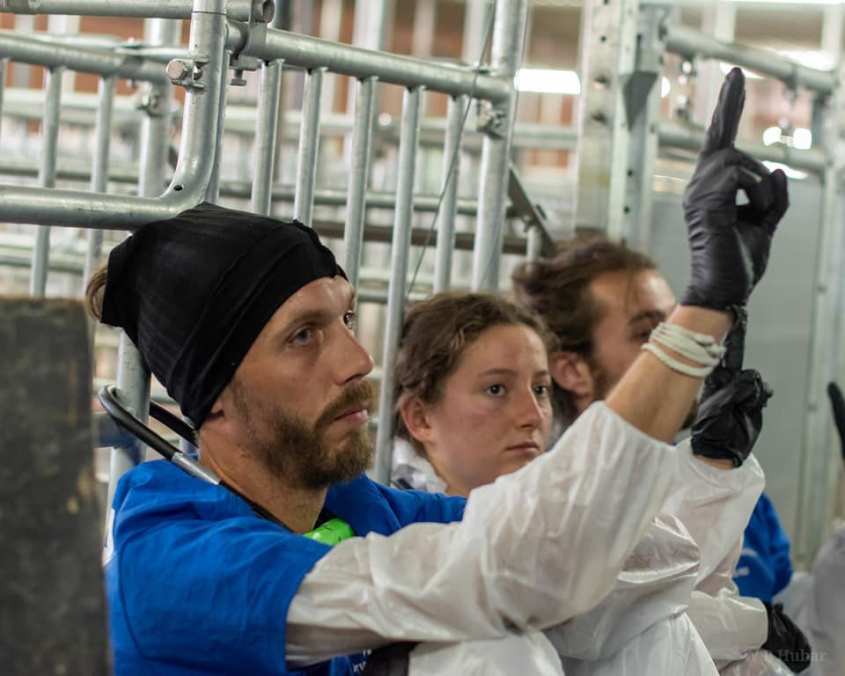
Five days ago I participated in the mass action of civil disobedience #OccupyCarrefour and we peacefully occupied one of the largest pig farms in France. Together with other activists i had my neck chained to the bars of the cages where the pigs are trapped, while other activists documented the terrible conditions to make it available to the public.

frankreich aktivistenn

We were subjected to the same violence as the animals are every day, we were pushed and beaten by the farmers and I was even hit in the face with an iron bar.

People who use violence against animals on a daily basis do not shy away from violence against humans. While i was chained at the same height as the pigs, I had to look into their eyes the whole time and could hear their screams. But I also had to look into the eyes of my friends – full of fear and grief.

frankreich aktivisten 2

We had to experience what it’s like to be trapped there and were helplessly at the mercy of this violence just like the animals. The other activists tried to protect us with their bodies, but nobody protects the animals.

A young farmer even threatened to shoot us, there was so much hatred in the eyes of these people. We were lucky to be able to leave this cruel place alive again, but the animals are in captivity all their lives and are killed in the end.

schweine mutter mit ferkeljpg

Imagine what it is like to be locked up in a small cage for the rest of your life, where you can’t even turn around. Imagine what it’s like when your babies are taken away shortly after birth and you never see them again. Imagine what it’s like when you can’t run away from violence, when you can’t even try to save your own life. The animals are born in this hell, they don’t see daylight or sunlight all their lives, they don’t get fresh air and they just vegetate until their day of execution. Humane agriculture or humane killing does not exist in reality.

Let us make conscious choices and end systematic exploitation.

brutkasten für schweinen

Such cruel conditions are even permitted by law and the police monopolize the use of force that is applied against the people who oppose this system. Police violence and repression thus affects the wrong people, who are free to denounce the bearer of a message instead of responding to the message itself and changing something. The consumption of dead animals and animal products is not only morally reprehensible, but also ecologically unacceptable as it contributes significantly to the climate – consuming huge amounts of water and energy.

schönes Foto mit totem chwein und Spruchpg

Next time you buy meat or animal products, think of her face. Think of their fate and the suffering they have experienced. Think of the life they could never live just because of your taste. In today’s society, eating meat is no longer a necessity, but a decision. A decision for violence, indifference, suffering and death. And a decision against compassion, love, respect and freedom. Is this really what we as human beings want to stand for?

Schweinekopf mit Slogan

The only thing this industry fears so much is the truth and the truth is what we will reveal. Just because something is legal, does not mean it is also right. If there is a law to legitimize and legalize cruelty to animals, exploitation, oppression, discrimination and environmental destruction, then it is our moral duty to disregard these unjust laws.

When injustice becomes accepted, resistance becomes an obligation!

Please reconsider your decisions in the future, you have at least three choices a day. Do not apologize, do something! Become active and speak for the animals, they cannot speak for themselves”.

Direct Action Everywhere – DxE

There’s nothing to comment on, just a lot to think about, and it’s best to make your decision here and today to stop cooperating with this fascist system of exploitation.
This is the meat and milk industry.
It’s time to finish it.
We thank the brave activists very much for their civil courage.

My best regards to all, Venus

Cultures and cruelty


Hunde farmen in Korea

Because we humans have raised ourselves to the pyramid of creation, we take every right in relation to animals to enslave, slaughter and eat them.
This also includes dogs and cats for China and some other Asian countries.

Recently, there have been heated discussions and even struggles in the circles of animal rights activists.

Some, those with the pet protection mentality, say: “Yes, it is terrible to eat pets, they are more sensitive than others, they are the best friend of man living with people …”
The others say: “Why should we rescue the dogs and eat the pigs? The slain pigs are smarter than dogs and at least as friendly, playful and trusting as dogs are when we let them.” Both arguments are wrong, because it means: If death, then for all! that is justice”.

Although people might have a right to their opinions, it does not follow that their opinions are correct. Especially when it comes to ethical issues.

Regarding the debate of dog food in general, it seems that not the killing is criticized but only the torture.

However, there are a few things to note when it comes to the difference between slaughter and slaughter:
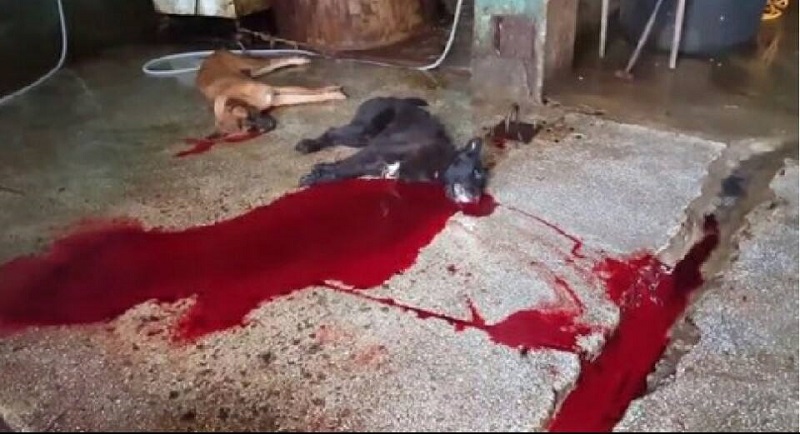
First, there is a crucial difference between the slaughter of animals in slaughterhouses and the private, amateurish slaughter of dogs on the street. While slaughtering animals in abbatoirs is wrong, dissecting a live dog is even worse and deserves special criticism.

Secondly, the rationalization of dog food can not be confirmed by legitimizing the eating of meat in all countries, because it is an argument based on the wrong ethical basics.
And that, for one simple reason: if something wrong is legitimized, it must not be broadened and tolerated at all levels.

For us, the animal rights activists the fight against the atrocities in the slaughterhouses does not stop in pigs, cows, sheep, chickens, but extends to ALL slaughterhouses and slaughter practices of the world.
And even small successes in this direction are in danger of relapsing, when cruel folkloric idiosyncrasies, primitive traditions, and miserable cultural heritage are permitted by corrupt and demagogic politicians.

A cultural practice can be immoral, although it seems immensely logical to its practitioners. This applies to both the Chinese and the non-Chinese.
There is no human meat food culture, all the food cultures on the basis of meat in the world do not represent moral practices.

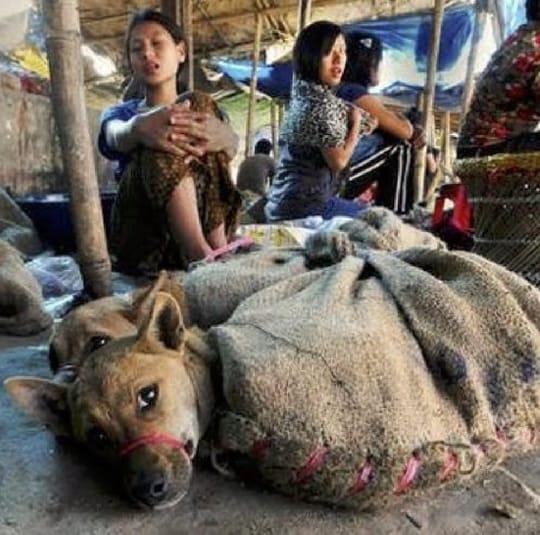
fauen und Hunde im Sack-China

If U.K actually annulled the prohibition of dog meat internally, that would only prove a pseudo cultural tolerance, a cheap demagogy for “cultural” dog eating, motivated in the reality by their absolute indifference to the suffering of animals; of slaughter animals and domestic animals.

My best regards to all, Venus


India: There Are Some Brilliant People Devoted To Animals Out There ! – Another AAU Video.

India


Please make a donation to help rescue street animals in India : https://www.paypal.com/cgi-bin/webscr…

Three puppies were submerged in rock solid tar where they had been stuck, unable to move even an inch for many hours. They were terrified and being unable to move, could only cry out in fear.

It took many hours over several days for our team to soften the tar by massaging oil and giving many baths, but these three puppies had incredibly strong spirits.

Please donate to save street animals in the most desperate need : http://www.animalaidunlimited.org/how…

Remember the ‘Al Shuwaikh’ and the Romanian Sheep ? -Now It Is Trying To Take SA Sheep. Read the Latest From Animals Australia and the RSPCA.

SAfrica


WAV Comment – remember we recently covered the entire shipment of the ‘Al Shuwaikh’ when it was transporting 70,000 live sheep from Romania to Kuwait and Iran – well now it is setting its sights on live exports from South Africa – read more below.


Shu 3

From Animals Australia:

The Kuwaiti company responsible for Aussie sheep ‘cooking alive’ at sea is trying to gain a foothold in South Africa.

Little did they know, we were already there waiting for them.

On Sunday night, their hopes of loading South African sheep onto the notorious Al Shuwaikh without any scrutiny or opposition were fully shattered when the country’s premier current affairs TV program, Carte Blanche, aired an unforgettable ’60 Minutes’ style segment as to why South Africa should not export live sheep.

Please take a moment to see how our efforts to protect animals from the live export industry are going global: WATCH NOW!


Along with former live export veterinarian Dr Lynn Simpson, I was interviewed for the program. Caring South Africans are now venting their outrage that this company — having been stopped from getting Australian sheep during the Middle Eastern summer — has turned its sights on South Africa.

The Al Shuwaikh is currently sitting off the South African coast hoping to wait-out the public furore created by the Carte Blanche program. We are teaming up with local animal protection group, the NSPCA, to lobby the South African government to not allow this shipment.

The NSPCA would love Animals Australia supporters to band together with caring South Africans to call on their government to say ‘no’ to live sheep export. You can sign their petition here:

https://nspca.co.za/animal-cruelty/campaign-against-live-export-animals/ 

When I landed in Johannesburg to be interviewed for Carte Blanche, it was impossible not to reflect on the enormity of our efforts to bring an end to the global live export trade and the different continents it has taken us to.

Little by little, these powerful export companies are realising that their industry is now being held accountable globally due to the efforts of a relatively small animal charity from ‘down under’ and our band of compassionate and generous supporters.

Achieving this unprecedented exposé on South Africa’s highest-rating current affairs TV programme would not have been possible without our investigations, and without your support. As an investigator and an advocate, I send you a heartfelt thank you.

For the animals,

Shatha Hamade
Legal Counsel – Animals Australia.

bad4

bad3


From the RSPCA Australia:

Mark, we know how strongly you feel about ending the cruelty of live animal exports.

So we wanted to update you on some recent developments in the trade.

Despite the clear evidence that suffering is inevitable, live sheep exports resume

After a moratorium was placed on live sheep exports from June to 22 September, exports are due to resume this week. This is despite the overwhelming evidence that heat stress is unavoidable for the entirety of the high risk May to October period.

We will be watching this space closely, and are continuing to call for the Department of Agriculture to heed the evidence and protect sheep from suffering by ending this trading period.

What is the Department of Agriculture trying to hide?

Late August, the RSPCA was advised that the Department of Agriculture would refuse to release video footage from live sheep export journeys to the Middle East (footage we requested under the Freedom of Information Act).

On the day the footage was due to be released, we instead received a letter from the Department stating that the footage could not be released, because it could result in adverse criticism of the live animal export industry as a whole and be used by those who are opposed to the industry to lobby for the banning of the trade.

It’s extraordinary. How bad must this footage be (captured under the watch of the government observer), if the Department is concerned it could be used to advocate for an end to the trade altogether?

If the footage is so risky to the future of live export, it’s even more important that we see it.

We’ll continue to challenge this decision, and bring you updates.

Inspector-General of Live Animal Exports Bill passes Parliament

In good news this week, the Bill to establish an Inspector-General of Live Animal Exports has passed through Parliament, meaning greater oversight and accountability for the live export trade.

The establishment of an independent Inspector-General to oversee the Department of Agriculture’s regulation of live export was a key recommendation of the 2018 Moss Review.

The Moss Review found that the Department’s focus on trade facilitation negatively impacted its culture as a regulator of animal welfare.

As long as the regulation of animal welfare falls to the Department of Agriculture, the need for strong oversight by the Inspector-General will remain.

More evidence of cruelty to Australian cattle in live export

Sadly last week, we also saw more horrific footage coming out of Indonesia, showing Australian cattle suffering shocking slaughter conditions after they were ‘leaked’ outside the approved supply chain.

Once again, we have evidence of the Exporter Supply Chain Assurance System (ESCAS) failing to protect Australian livestock.

The RSPCA is urgently calling for a review into the ESCAS, and will be watching developments on this issue closely.

We will keep bringing you updates, and letting you know how you can help end the suffering in live exports. Thank you for your support.

Regards,

Dr Jed Goodfellow
RSPCA Australia


UK: Scotland Raises Maximum Penalty for Animal Cruelty to Five Years Imprisonment.

scot


Scotland Raises Maximum Penalty for Animal Cruelty to Five Years Imprisonment

Image result for cartoon judge legal


The Scottish Government has strengthened its Animal Health and Welfare (Scotland) Act 2006 by introducing several new measures, including upping the maximum prison sentence for the most serious animal welfare crimes from one to five years.

The Government has also introduced an unlimited fine and raised the maximum penalties for some wildlife offenses. In addition, it will enforce ‘Finn’s Law’ — which is already being implemented in England and Wales — to toughen protection for service animals.

The changes were announced in the country’s Programme for Government, which states: “The Bill will also provide powers to make regulations for fixed penalty notices in relation to animal welfare offenses and provides a new process to allow animals that have been taken into possession on welfare grounds to be sold or rehomed without the need for a court order.” This aims to decrease the time that animals involved in lengthy court cases will have to wait to find new homes.

The Government says it is continuing work to protect the welfare of animals in Scotland and is recruiting members to its interim Scottish Animal Welfare Commission to provide advice on the welfare of sentient animals. It is also planning to launch a media campaign to put an end to the barbaric and cruel puppy farming trade.

“The positives this will bring to animal welfare in Scotland are genuinely transformational. From the thousands of court cases we’ve been involved in, its evident sentencing is wildly inconsistent,” says Mike Flynn, chief superintendent of the Scottish SPCA, which welcomes the move. “A number of Sheriffs have recently stated that they thought their current powers were inadequate. It’s clear that the courts would benefit from the ability to hand down lengthier custodial sentences to protect animals and deter other people from acts of mistreatment.”

“For years, we have worked hard to reform animal welfare legislation with MSPs and Government officials,” adds Scottish SPCA chief executive, Kirsteen Campbell. “Credit must go to the Scottish Government for identifying the need for reform, taking on board both the invaluable expertise of the Scottish SPCA and our partners and the overwhelming public support for this and acting on it.”

Greece: Petition – SIGN: Stop Chaining Animals’ Heads and Legs Together for Cruel ‘Hobbling’.

GREC0001


SIGN: Stop Chaining Animals’ Heads and Legs Together for Cruel ‘Hobbling’


Petition 2

Petition Link: https://ladyfreethinker.org/sign-stop-chaining-cows-heads-and-legs-together-for-cruel-hobbling/?utm_source=Newsletter&utm_medium=Email

PETITION TARGET: Mayor of Paros, Markos Koveos


SIGN: Stop Chaining Animals’ Heads and Legs Together for Cruel ‘Hobbling’

In the Greek Island of Paros, locals tie animals’ legs to their heads to disable them from walking in an incredibly cruel process called hobbling. The ropes and chains cut into the helpless animals’ skin, creating wounds that become painfully infected. The animals are so desperate to escape, they often break their bones trying to get free.

Hobbled donkeys, cows, and sheep are kept in areas without shelter or water, left to suffer in the baking sun or freezing cold. This often leads to an agonizing death.

Hobbling is illegal in Greece, but still prevalent. A Lady Freethinker eyewitness described seeing the shocking practice firsthand, along with further cruelty to animals in Paros.

“Dogs with heavy metal chains around their necks, burning in the sun, with no water available, nowhere to hide from the heat and sun or from bad weather. Stray cats, sick, living in garbage, being driven over often on purpose by locals,” reports the eyewitness.

The witness saw locals drowning newborn animals and poisoning stray cats, along with a general lack of animal welfare enforcement on the island.

It’s time to stop the suffering.

Sign this petition urging Mayor Koveos to enforce the law and end all hobbling, and work to drastically improve the way all animals are treated in Paros.

UK: Government Tries New Ban To Stop Dog Meat Being Eaten in UK; But Bureaucrats Stop It for Fear of ‘Offending Cultural Sensitivities In the Far East’ !

UKjpg

WAV Comment:  This was intended to stop any dog meat being eaten by folk when in the UK.  We are not talking a ban in Vietnam or Korea; this is in the UK.  But now scared UK desk pushers have got the jitters that the UK is ‘offending cultural sensitivities in the Far East’ by not allowing dog meat to be eaten here in the UK.  Seems that the UK is not allowed to make laws for the UK for fear of upsetting someone from somewhere else. 

Maybe we will have to introduce bullfighting into the UK very soon for fear of upsetting ‘Spanish Tradition’.  Don’t nations governments make laws for their own nations any more ?

Mr Gove is a good man who tried to stop this – the scared UK pen pushers giving in to animal abuse on cultural grounds once again ! – Pathetic !!

 The Yulin Dog Meat Festival is held annually in China's Guangxi province

A NEW legal ban on eating dogs (in the UK) has been blocked by Justice Ministry bureaucrats for fear of offending cultural sensitivities in the Far East.

Environment ministers have drawn up a new criminal offence in Britain of possessing dog and cat meat.

https://www.thesun.co.uk/news/9934112/legal-ban-eating-dogs-blocked-far-east/?utm_source=twitter&utm_medium=social&utm_campaign=sharebarweb


 Michael Gove ordered the ban in the summer despite dog meat being rarely eaten in the UK

Mr Gove (above) attempted the right thing with a ban IN HIS COUNTRY- the UK.


Former DEFRA Secretary Michael Gove ordered the move in the summer despite the sickening practice being rare in the UK.

Dog groups persuaded him that it would send a powerful message to South East Asian countries where the practice is still rife, matching a similar law passed in the US last year.

But The Sun can reveal that nervous civil servants have stepped in to halt the ground-breaking move.

 A ban on eating dog meat in the UK has been blocked over fears of offending South Asian countries

‘CULTURALLY INSENSITIVE’

Campaigning Tory MP Giles Watling was told by the MoJ that one of the reasons it acted was that it would be “culturally insensitive” of the Government to dictate to other nations what they should eat.

Mr Watling told The Sun last night: “Dogs are our companion animals. We do not eat them, and that is a very important message to send to the rest of the world.

“It’s not culturally insensitive because we’re not telling them what to do – we’re just telling them what we do.

 Their meat it is considered both a delicacy and a health tonic in the Far East

“We shouldn’t be worrying about that, so I was surprised that was the MoJ’s objection.”

Justice officials also argued that it would be difficult to enforce the law and the current ban on transporting or exporting dog and cat meat suffices.

Eating dog is already banned in Germany, Austria, Taiwan, South Australia and Hong Kong.

An estimated 30 million dogs a year are slaughtered to be eaten, across China, the Philippines, Indonesia, Thailand, Laos, Vietnam and Cambodia.

Most are stolen off the street.

 A new legal ban on eating dogs has been blocked by Justice Ministry bureaucrats for fear of offending cultural sensitivities in the Far East

Their meat it is considered both a delicacy and a health tonic.

The World Dog Alliance mounted a campaign in the UK last year for a full ban on any activity relating to the eating of dogs.

A series of MPs back a ban, including former Foreign Office minister Sir Alan Duncan who dubbed it “a disgusting habit”.

A Ministry of Justice spokeswoman said: “We currently have some of the strongest animal welfare laws in the world.

“The government is currently considering whether any changes are needed in this area in the UK and will set out any plans in due course.”