Reptiles smuggled from Mexico found at German airport stitched inside dolls
German airport customs officers have found 26 rare reptiles – 10 of them dead – smuggled inside parcels of toys and sweets from Mexico.
Some of the dead animals had suffocated as they had been stitched inside cloth dolls, a statement from Cologne Bonn airport customs said.
The endangered horned lizards, alligator lizards and box turtles were destined for private buyers in Germany.
They are among many species that the global Cites accord seeks to protect.
German officials are now trying to trace the origin of the reptiles, using DNA samples.
It is not yet clear if they came from the wild or from captive breeding programmes. They were in two packages seized on 30 October and 8 November.
The customs service is collaborating with Mexican authorities and with zoologists at the Alexander Koenig Research Museum (ZFMK) in Bonn. The smugglers could be fined, if the police can identify them.
The 16 surviving reptiles might be returned to their Mexican habitat.
ZFMK’s work with customs mostly focuses on illegal goods made from poached endangered species, such as snakeskin handbags or furs.
Nature, wildlife, and scarce water supplies in a unique corner of southern Africa are being endangered by a rush to drill for oil. A Canadian company is pushing to explore for oil in the Kavango Basin, an environmentally sensitive area.
Please support the fight against a fossil fuel project that will drive the climate crisis.
Aerial View of the Okavango Delta, Botswana
“The oil needs to stay in the ground”, says Ina Shikongo.
The Fridays for Future (FFF) activist in Namibia’s capital city Windhoek is fighting a project to exploit untapped oil and gas reserves in the northeast of the country.
“The exploitation would be a catastrophe – not only for the global climate but also for wildlife, water resources and the livelihoods of local people”.
The project Ina rejects so fiercely – together with further FFF activists and a citizens’ coalition – is run by ReconAfrica,a firm based in Canada.
The company claims to have discovered an immense deep sedimentary basin. It obtained a license for oil and gas exploration in the Kavango delta, bought a second-hand oil rig in the US, and shipped it across the Atlantic.
If the drilling of the first three test boreholes – slated for December 2020 – is successful, the company plans to extract two billion barrels of oil before drilling into deeper layers of rock.
Environmentalists fear the company will use fracking despite public statements to the contrary, as its marketing materials refer to “unconventional” methods – an industry euphemism for fracking.
The ecological impacts of the projects are likely to be devastating.
It would not only threaten bodies of water in the dry savannas of Namibia, but also Botswana’s UNESCO World Heritage Site, the Okavango Delta, with its unique biodiversity and huge populations of elephants, hippos, rhinos, and birds.
Tourism, an important source of income, is in danger while other livelihood strategies of indigenous San and local people also hang in the balance.
We need to stop ReconAfrica’s project for the sake of the climate, biodiversity, water, and the livelihoods of the local people.
And I mean…the head of the farmers’ association Kavango-Ost, Adolf Muremi, says: “Recon Africa says they informed the people here – but we are not aware of anything about this. You can already expect malformations in babies and other diseases that this type of industry leads to agriculture will be just as affected as the groundwater, it will have negative consequences for life for everyone here “
The multinational sells the project as an “exciting future” – for whom?
1) Oil and gas extraction is a menace to wildlife. Loud noises, human movement, and vehicle traffic from drilling operations can disrupt avian species’ communication, breeding, and nesting.
2) The ecosystem will be destroyed by a criminal Canadian Company that harvests 90% of the profits. The state of Namibia is only entitled to ten percent – a hunger share.
3) The construction of roads, facilities, and drilling sites known as well pads requires the use of heavy equipment and can destroy big chunks of pristine wilderness.
4) The underground water will not only be polluted but also depleted. How can the inhabitants giving an overseas company unbridled access to their most precious resource?
There will only be damages to humans and animals, and this harm is irreversible.
After four years of campaigning and negotiations, South America’s biggest grocery chain has finally committed to going 100% cage-free in Brazil by 2028. The company, called GPA, also committed to ban gestation crates for pigs by 2028 and to improve conditions for chicken and cows raised for meat sold in the stores.
MILLIONS OF CHICKENS IMPACTED: GPA is the second-largest retailer in Brazil, so this new policy is a great step in the right direction for farmed animals. We estimate with 5.7 million hens will be impacted by this policy, which was achieved in part by a variety of tactics, including mobile billboards and grassroots actions at 45 different GPA store locations.
“This commitment is the result of a lot of work by animal protection organizations, but it is also the result of the mobilization of consumers who joined us to demand more responsible behavior from Grupo Pão de Açúcar.”, Says Carla Lettieri, new Executive Director of Animal Equality Brazil.
“We hope that GPA’s attitude will inspire other companies because there are still millions of chickens suffering in cages around the world.”
Image: Animal Equality
A STEP IN THE RIGHT DIRECTION: Chickens are sensitive animals who are able to feel emotions and pain, but unfortunately many of them still live confined and crowded into tiny wire cages where they spend their whole lives without ever stepping on the floor or being able to open their wings.
This confinement is not only physically harmful, but is also psychological torture for the birds, and often leads to self-mutilation and even cannibalism.
It is worth remembering that free from cages does not mean free from cruelty. The egg industry is inherently cruel and denies animals everything that’s natural and important to them, and the best way to help hens is by simply avoiding eggs.
However, banning cages is an important step to reduce the suffering of animals and deserves to be celebrated.
YOU MAKE A DIFFERENCE: This milestone wouldn’t have been possible without the work and support of thousands of volunteers across Brazil. You can help animals with campaigns in the United States, too, by signing petitions, taking action on social media, and at in-person demonstrations.
Join The Animal Protectors, our online group of volunteers, and assist our corporate outreach team in making changes to our broken food system.
And I mean…It’s a huge industry!
Brazil ranks second among the largest poultry producing countries behind the USA and is the most important force in the international poultry trade.
In 2016, 5.86 billion chickens were slaughtered there. Brazil exports meat to over 160 countries.
And another number: eleven percent of water consumption in Brazil is accounted for by animal breeding.
For the European Union, Brazil is the most important country of origin of imported chicken.
Brazilian chickens make up about 60 percent of imports, of which 76.2 percent are processed and salted poultry. The majority of deliveries in the EU go to Belgium, Germany, and Great Britain.
However, these European countries are not necessarily the countries where chicken meat is ultimately sold and consumed.
The Brazilian poultry industry is dominated locally by two multinational corporations: BRF and JBS. BRF is the largest poultry company in the country, with 105,000 employees, and is largely owned by a mutual fund. JBS is a Brazilian public company, the largest company in the country, but also the largest meat producer in the world.
In March 2017 there was the so-called rotten meat scandal: the Brazilian federal police uncovered hygiene violations in 21 industrial plants for the slaughter of cattle, pigs, and chickens.
According to the police, the investigation found that corrupt health officials and inspectors from the Brazilian Ministry of Agriculture covered the sale of rotten meat in some slaughterhouses.
The largest poultry exporting companies BRF and JBS were also involved in the scandal.
However, just a few weeks after the allegations became known, most of the major import markets – including the European Union – had resumed trading with the Brazilian poultry industry.
When you consider these meat production conditions in the country, it is really a big step that GPA abolishes the cages.
Even in 7 years, better later than never.
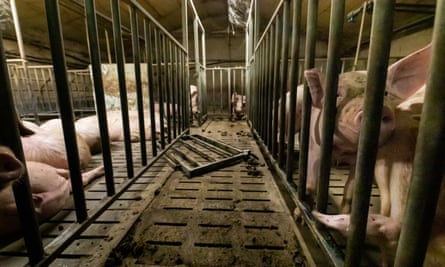
Video footage released by French animal welfare group L214 appears to show pig cannibalism, dead animals in pens, and pigs in overcrowded conditions. Photograph: Courtesy of L214
Undercover footage at French farm shows ‘deplorable’ conditions for pigs
The animals are supplied to frankfurter brand Herta and sold in supermarkets including Waitrose, which has pulled the products pending investigation
Undercover footage published on Thursday appears to show pig cannibalism and other serious issues at a supplier for a Nestlé-owned brand of frankfurter sold by most major supermarkets.
Waitrose has suspended the pork products by bestselling French brand Herta while it investigates.
Herta is being sued by campaigners for animal mistreatment and misleading consumers. The brand, which is sold in UK supermarkets, is 60% owned by Spanish food company Casa Tarradellas and 40% by Nestlé.
The video footage published by French animal welfare group, L214, appears to show pig cannibalism, dead animals lying in pens, and pigs in overcrowded pens climbing over one other. In one section a sow, which appears to be struggling to stand in a narrow farrowing crate with no bedding, slips and squashes at least one piglet.
L214 has now begun legal action against Herta in France, based on the undercover videos which it said it filmed in June and September this year. The case, according to L214, will centre on Herta’s animal mistreatment and the way it misled the consumer with promises of better welfare.
In its press release L214 said: “Contrary to the commitments made by the brand, the images show deplorable conditions for the pigs that do not comply with regulatory requirements. L214 is filing a complaint for mistreatment of the animals against Herta, the most purchased brand in France, and for misleading the consumer.”
More than 20 pharmaceutical products are shown in the video, including a “last resort” antibiotic called colistin. Colistin is widely used in the pig industry, often to prevent or treat a piglet sickness known as post-weaning diarrhoea.
Waitrose has said it does not permit suppliers to use colistin. It told the Guardian: “We pride ourselves on our high animal welfare standards and our standards around the use of antibiotics. We have therefore taken the decision to suspend all pork products from this brand while we urgently investigate the video footage.”
The World Health Organization has recommended that colistin’s preventive use in healthy animals be halted to preserve the antibiotic as one of the “essential … last-resort treatments for multidrug-resistant infections in humans”.
EU funding from the common agricultural policy for the Herta pig supplier farm, which grows crops and keeps other livestock, totalled about €150,000 (£135,000) in 2018 and 2019, according to the French government website, Telepac.
The pigs in the video appear to have had their tails docked, a practice outlawed in the EU, other than in exceptional circumstances. No straw or other bedding is seen and the sheds do not appear to have any natural light. The pigs and piglets appear to be covered in faeces. Additional footage by L214 seen by the Guardian appears to show a pig chewing after biting a dead pig’s stomach.
EU law governing pig welfare stipulates they “must have permanent access to” rooting materials “such as straw, hay, wood, sawdust, mushroom compost, peat or a mixture of such … ”
A worker loading the pigs for slaughter appears to use an electrical prod and to hit pigs’ backs with a plastic panel. One half-escaped sow is trapped by her hips in the bars of her crate. A piglet appears to have its foot trapped in the slatted floor.
In an email, L214 co-founder Sébastien Arsac accused Herta of “lying” to consumers about pig welfare, and described the pig housing conditions as “squalid … [where] animals spend a life of suffering”.
In an email to the Guardian a spokesperson for Herta said almost 350 French breeders hold a filière préférence contract that commits them to “a continuous improvement process based on animal welfare criteria such as the use of antibiotics, animals restraining conditions or better housing conditions”.
It also said: “Herta has a rigorous purchasing policy with its 40 meat suppliers in Europe. These partners are regularly audited by the company. These companies are, themselves, in contractual links with various groups of European breeders who have the obligation to respect European legislation.”
In 2019, it said: “More than 120 farm audits were carried out by Herta teams in France. A Herta farm audit includes 42 control points and 17 are specifically dedicated to animal welfare.”
Casa Tarradellas referred the Guardian to Nestlé for comment. Nestlé said: “We strongly condemn any mistreatment of farm animals. Consumers trust us to hold our suppliers to high standards. Nestlé is a minority shareholder in the Herta joint venture.” The company stated that an audit has been carried out which found no issues at the farm in question. This confirmed the findings from a previous audit earlier in the year. “Herta will now send additional investigators to the farm and continue to follow up these allegations to determine if the images were taken there.”
Nestlé added: “We will ensure Herta reviews its audit process to identify necessary improvements. Nestlé is strongly committed to improving animal welfare in its supply chain.”
The Guardian approached one of the owners of the farm but he did not wish to comment.
• Footnote added 3 December 2020. On 3 December 2020, after this article was published, Nestlé announced that supply from the farm to Herta had been suspended pending an investigation to determine the appropriate next steps.
The current rules aimed at protecting animal welfare in transport are derived from directly applicable EU law, Council Regulation No 1/2005. The Regulation sets out the requirements that anyone transporting animals in connection with an economic activity must comply with. There are growing concerns that the current requirements for the transport of animals do not reflect the latest scientific evidence on how best to protect animal welfare during transport.
We are consulting in England and Wales on ending live animal exports for slaughter and fattening that begin in or transit through England or Wales, and further improvements to animal welfare in transport.
Why we are consulting
The Government is committed to the welfare of all animals and to making further improvements to animal welfare in transport and has a manifesto commitment to end excessively long journeys for slaughter and fattening. Now that the UK has left the EU, the Government can explore alternative options to better protect animal welfare during transport. As part of changing the current regulatory regime that sets the standards for animals in transport, it is right that we should gather the views of all interested parties.
The Farm Animal Welfare Committee (FAWC, now known as the Animal Welfare Committee) have reported to the Department for Environment, Food and Rural Affairs on the welfare of animals during transport. This report took into account the responses to the 2018 Call for Evidence on controlling live exports for slaughter and improving animal welfare during transport, and the scientific systematic review conducted by the Scotland’s Rural College and the University of Edinburgh on the welfare of animals during transport and at markets.
The Government has reviewed the FAWC report and is now consulting to seek views on ending the export of livestock and horses (this will not apply to poultry) for slaughter and fattening in England and Wales, where the journeys begin in or transit through either country, in addition to introducing further improvements to animal welfare in transport more generally.
——————————–
WAV Comment:
Take part in the online consultation by clicking on the following link:
Note – we are currently unsure if (only) UK residents can undertake this; but we encourage folk outside of the UK, who are anti live export, to try ! – apologies if you are unable; as we say; may be UK residents only.
These are the consultation questions which you will need to respond to. Hopefully; this advanced insight will give you a feeling of what (the questions asked) is required.
IMPORTANT – We (WAV) do not expect everyone to provide answers to every question.
Some questions are really directed at transport operators – livestock hauliers etc – Questions 19 – 19 for example. You do not have to respond to anything like this – only the questions for which you can do a response. Your input to the consultation will still be considered even if you doo not answer everything. The main point to remember is that you are on the animals side and want to get live exports stopped regardless of the animal species. This is what needs to be reflected (included) in your responses when you do them. This is the real point – we need to make it clear that we want this sordid trade stopped from the UK.
Best wishes with your responses; the fact that you are taking part is a big bonus.
And remember – you have until the end of January 2021 to respond. Note that you can complete part of the consultation; save; and then return at a later date. It does not all have to be done in one session. Please see the consultation pages to enable you to save and return later.
Personally; this is a big thing for me and many other campaigners – brilliant Jane; brilliant Liza, wonderful Trudi; and all the others who a too many to mention – just brill !. Many who have now passed and are not here to hear the news of this. I personally have done live export campaigns and investigations from the UK for the last 30 years. Been there, seen it; heard it and smelled it you could say; horses, pigs, calves, sheep and more. They do not deserve to be treated as they currently are during transport – it is time for it to stop.
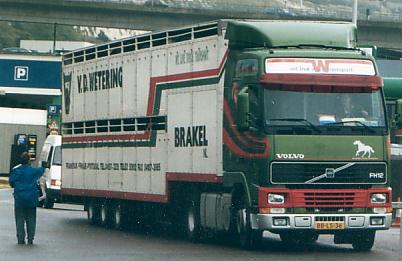
Above – A Dutch ‘Wetering’ horse transporter exits the port – Photo Mark
I did a big investigation report (5 undercover trails) with several other EU investigation groups on the trade back in 2010; presented to the EU and UK parliament, (with regard the EU) who threw it back in our faces and basically trashed the whole 120 page thing. You can read one of the 5 undercover trail reports by going to About Us. | Serbian Animals Voice (SAV) and scrolling down to all the livestock transporter / calf pictures are where you will find a link to the report. Alternatively, go direct to Microsoft Word – JH.04.03.2010_REPORT on NON-COMPLIANCE with RESTING TIMES in relation to CONTROL POST at F-HEAUVILLE.doc (wordpress.com) to read just one of the five investigations into live calves being shipped from Ireland to France. It makes bad reading. The failures to comply with rest times etc (as defined in EU ‘legislation’ !) for example justifies why we need to get this disgusting trade stopped asap. Your involvement in the consultation can help this.
Well that’s it from me;
Do what you can; for those in transport;
Regards Mark (WAV)
Kent; England.
In memory of great campaigner friends now departed – including the great Mike from London – we shared some fantastic times:
The following is the basic outline of all the questions which are asked in the consultation.
(Your) Name and e mail.
Organisation if you represent one. Note – individual citizens can also take part – you DO NOT have to represent an organisation.
Live Animal Exports
4. Do you agree that livestock and horse export journeys for slaughter and fattening are unnecessary? Please explain your views.
5. Do you agree that in order to prohibit livestock and horse export journeys for fattening where the animal will be slaughtered soon after arrival, these export journeys where animals are slaughtered within 6 months of arrival should be prohibited? Please explain your views.
6. Do you agree that the only exceptions to prohibiting live export journeys should be for poultry live exports, and animals going for breeding or production that will not be slaughtered within 6 months of arrival? Please explain your views.
7. What would be the financial impact to your business or organisation of no longer being able to export livestock or horses for slaughter or fattening? Please explain any impacts provided.
8. What alternatives would your business or organisation explore if it was not able to export livestock or horses for slaughter or fattening?
Maximum Journey Times
9. Do you agree with the proposed maximum journey times as outlined in Table 1? Please explain your views and highlight any potential regional impacts that your business or organisation might experience.
10. Do you see a need for any exceptions to the maximum journey times and, if so, why? Please provide evidence.
11. In the case of such exceptions, what requirements should be put in place to ensure animal welfare is protected?
12. What would be the financial impact to your business or organisation due to new maximum journey times being implemented? Please explain any impacts provided.
13. Including loading, unloading and stops, how long is your average journey for the livestock, poultry or horses that your business or organisation manage?
14. Do you agree that a new journey should not start until a minimum of 48 hours have elapsed after the previous journey? Please explain your views.
15. Do you agree that there should be a minimum 7-day rest period for cattle? Please explain your views.
Thermal Conditions and Ventilation
16. Do you agree that we should prohibit both short and long poultry journeys when the external temperature is outside of a temperature range of 5-25oC, unless the vehicle is able to regulate the internal temperature within this range for the duration of the journey by means of a thermo-regulation system, and that this temperature range should be 5-25oC? Please explain your views.
17. What would be the financial impact to your business or organisation of prohibiting both short and long poultry journeys when the external temperature range is outside of 5-25oC? Please explain any impacts provided.
18. Do you agree that we should prohibit both short and long livestock and horse journeys when the external temperature is outside of a temperature range of 5-30oC, unless the vehicle is able to regulate the internal temperature within this range for the duration of the journey by means of a thermo-regulation system, and that this temperature range should be 5-30oC? Please explain your views.
19. What would be the financial impact to your business or organisation of prohibiting both short and long livestock and horse journeys when the external temperature range is outside of 5-30oC? Please explain any impacts provided.
20. Do you think that there are other species that should be considered as vulnerable and have a smaller external temperature range applied, outside of which journeys cannot take place? Please provide evidence.
21. What proportion of your current transportation vehicles have the facility to regulate temperature and provide ventilation?
22. For your vehicles which do not have the facility to regulate temperature and provide ventilation, what would be the cost of retrofitting to enable them to regulate temperature and provide ventilation?
23. Are there any other steps that can be taken to ensure animal welfare can be maintained in extreme weather? Please provide evidence.
Space Allowances
24. Do you agree that we should use allometric principles as a basis for future space allowance calculations? Please explain your views.
25. Do you think that reforms to space allowances based on allometric principles should apply to both short and long journeys? Please explain your views.
Headroom Allowances
26. Do you agree with the proposed species-specific headroom requirements?
27. Do you think that the proposed species-specific headroom requirements should apply to both short and long journeys? Please explain your views.
28. What would be the financial impact to your business or organisation of the proposed headroom requirements for both short and long journeys? Please explain any impacts provided.
Sea Transport
29. Do you agree that we should prevent animals from being transported in rough weather at sea and that animals should not be transported during Beaufort Wind Force 6 or above? Please explain your views.
30. What would be the financial impact to your business or organisation of prohibiting transport during Beaufort Wind Force of 6 or above
Exceptions
31. Do you think that there should be any exceptions to the previously mentioned proposals alongside the specific exceptions already outlined, excluding the proposal to prohibit live exports for slaughter and fattening? Please provide evidence.
32. What conditions should be met in order to ensure animal welfare is protected in the case of other exceptions?
33. Do you think that it should be possible to obtain permission to use an exception on an ongoing basis to avoid the need for transporters to apply before every applicable journey?
This completes the consultation. Submit your answers in accordance with the site instructions.
Animal Equality Indiahas released a new investigation into the country’s chicken production industry, detailing numerous animal welfare and food safety violations.
THE DETAILS:Animal Equality investigated several chicken farms and meat markets from February 2019 to October 2020 in Maharashtra, Gujarat, Andhra Pradesh, and Telangana—states in India which are known for their chicken production.
What we found was shocking.
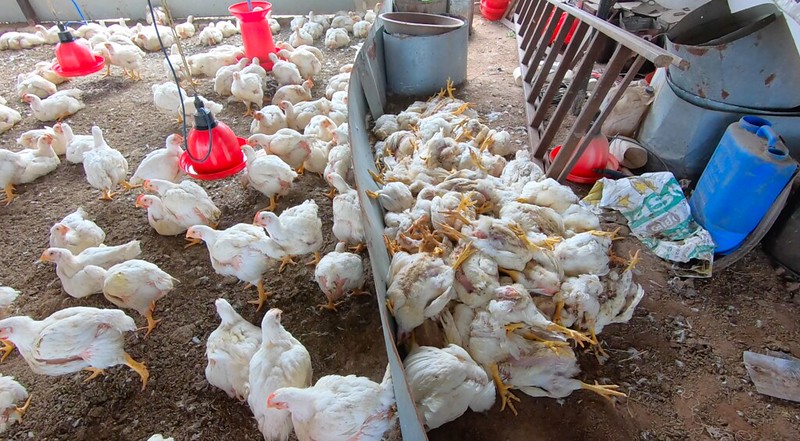
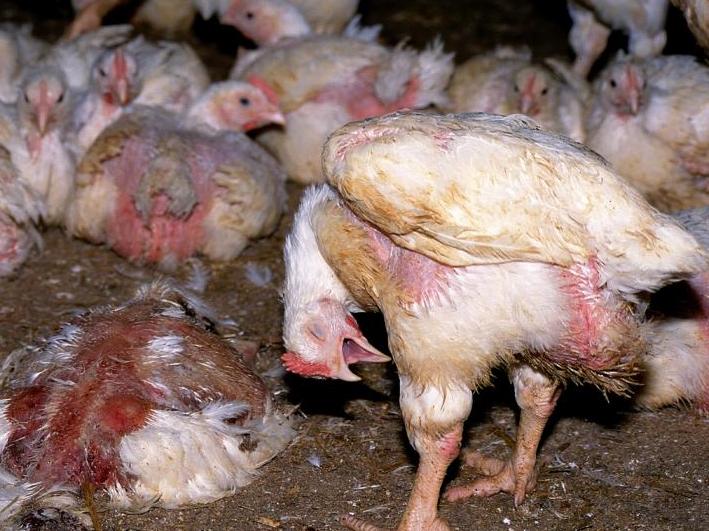
In India, It’s standard practice to give feed laden with antibiotics to grow the bodies of chickens unnaturally fast. As a result, their legs become crippled because of the unnatural weight gain. In our investigation, we found birds who could not walk or reach food or water.
We also found many chickens severely ill and dying of starvation, heart attacks, and respiratory infections. The carcasses of the dead birds were left to rot next to live chickens.
THE HORRORS OF PRODUCTION: Once these chickens reach their maximum weight, they’re crammed into overcrowded transport trucks. The birds are then sent on a rigorous journey that lasts for hours, sometimes days, without food or water. Many will die along the way, while those that remain are barely alive.
At the meat markets, the chickens are crammed into small cages for hours—often days—again without food or water.
Many chickens waiting for slaughter develop various infections and diseases, and aside from the absence of veterinary care, there is no health inspection conducted on the birds who will soon become food.
When the chickens are slaughtered, their throats are slit and they are thrown into drain bins where they languish in pain for several minutes before they die. The meat from these poor birds is then prepared in filthy, unhygienic conditions.
PAST WORK IN INDIA: This is Animal Equality’s second investigation into Indian chicken farms. After exposing the cruel and illegal practices on these farms in 2017, we presented our findings to the Indian government, along with a list of recommendations to reduce the suffering of chickens. Some of these recommendations are included in the Law Commission’s proposed rules for the welfare of chickens.
WHAT WE’RE DOING NEXT: Animal Equality has also requested the Indian government to:
Stop the slaughter of chickens at meat shops, markets, etc., and implement the slaughter provisions in the country’s Food Safety and Standards regulations, as well as those in India’s Prevention of Cruelty to Animals rules.
Introduce in-Ovo sex determination technology to avoid the killing of male chicks.
Form a central committee to monitor the welfare of farmed animals and appoint a subcommittee at every district and regional level.
WHAT YOU CAN DO: No matter what country we are in, our investigations have shown that chickens are suffering by the hundreds of millions on farms and in slaughterhouses all over the world. Their pain and exploitation are seemingly neverending and it is up to people like you—people who care about the welfare of all animals—to stand up and use your voice and purchasing power to change the future for the abused birds.
Please, share our investigations with your networks, and if you haven’t already, make the switch to plant-based. Together, we can create a society where all animals are respected and protected.
Comparison to German practices…About 50,000,000 laying hens live in Germany! That’s quite a lot, considering that there are around 83,000,000 inhabitants.
In Germany, 97 percent of the chickens live in conventional barn farming.
Nowadays, facilities with over 200,000 animals are no longer uncommon.
Battery packs have been banned in Germany for several years.As a result, the meat industry came up with “small group farming”.
Chickens of a so-called meat breed in a German fattening farm.
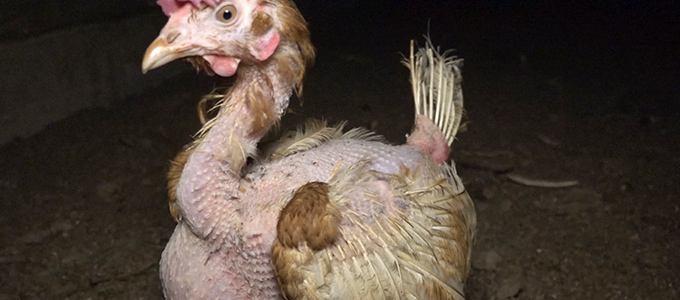
These are also cages, but this time larger ones, in which up to 60 hens are crammed.For the hens also cruelty, each chicken has the area of a 3/4 A-4 page available. Just that the chicken has room to lie down. Apart from eating and laying eggs, a chicken cannot do any of the things it would like to do.
The most common poultry diseases are intestinal parasites, skin parasites, vitamin deficiency diseases, ball abscesses, laying deficiency, poisoning, goiter constipation – information from Zurich Animal Welfare.
The following can also occur blackhead disease (diarrhea), round and tapeworms, avian cholera, avian tuberculosis, botulism, foot ulcers, conjunctivitis, leg weakness syndrome, neck pouch, skeletal anomalies.
Until the time of slaughter, the chest and thigh muscles are enormously enlarged and together makeup to 66% of the body weight.
Conventional chicken producers only fatten hybrid animals.
High-performance hen, Germany
The focus of the breeding of high-performance broilers is a high amount of meat, efficient feed conversion, and the shortest possible fattening time due to large daily weight gains Today’s mast hybrids reach this weight within 30 days or less.
Four globally active companies control the breeding of these mast hybrids: the Erich Wesjohann Group (EW Group),Hendrix Genetics,Groupe Grimaud, and Tyson.
The video was shot on an organic farm in Germany.
But you can see a lot of similarities to the video from India, except for the open cruel slaughter on the street and the transports.
India is known for having the worst animal transports, and not just related to poultry.
Nevertheless! No farm cruelty is justified just because there are worse ones elsewhere.
We don’t compete in cruelty.
We fight for these practices to be abolished no matter where in the world.

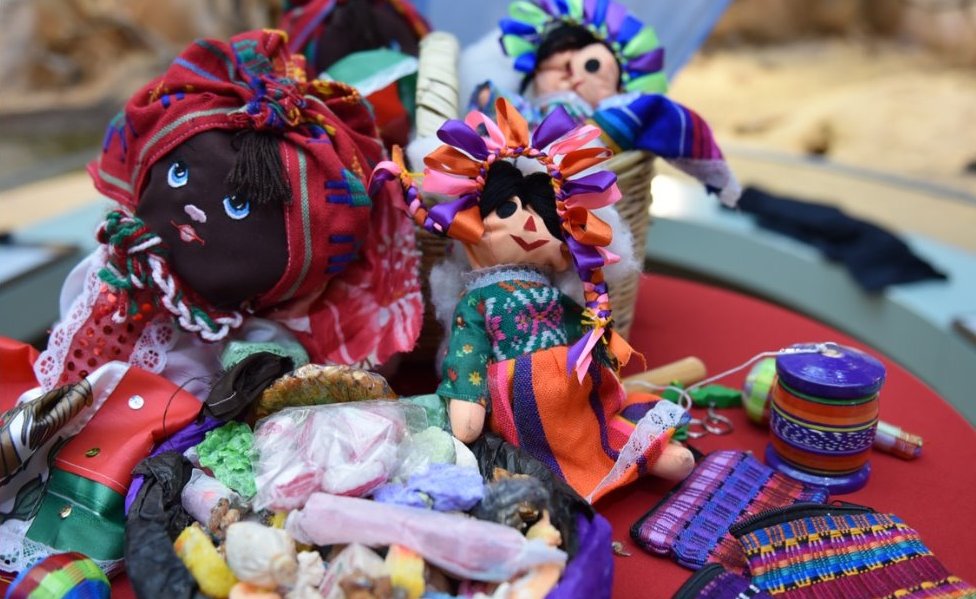


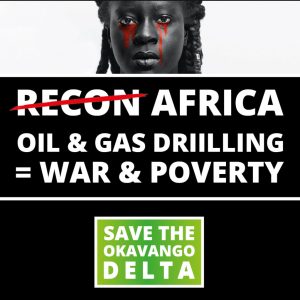

 Image: Animal Equality






 High-performance hen, Germany



 World Animals Voice