Milk calves stand on fully slatted floors with excrement – the company advertises with “species-appropriate” husbandry!
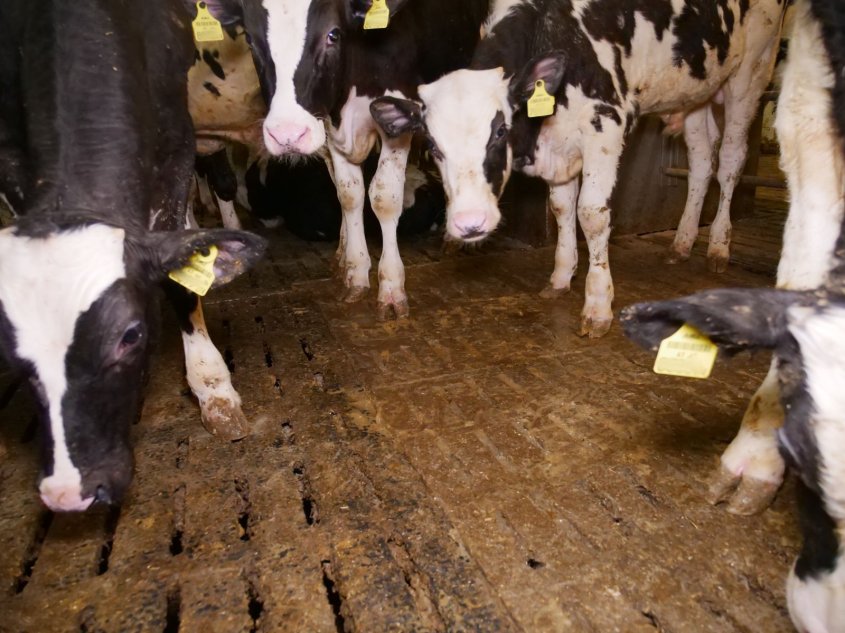
The slatted floor is littered with feces, the animals are completely covered with excrement.
The new insights into a large company in Upper Austria show the real picture behind the scenes of the advertising phrases.
According to their own statements, around 700 animals live in the calf fattening area.
All live on fully slatted floors in bays with no outlet to the outside.
The scandal: the floor is completely covered with feces and smeared with feces. Many animals have their fur covered with shit.
The shit is all over the body. Calf diarrhea sticks the animals’ fur.
Feces and diseases
Light-colored diarrhea sticks to the flank of a calf, in other places it covers the floor. The calves have to lie down on this completely filthy slatted floor to ruminate and sleep.
In many bays there are no dry and clean lying areas at all.
Some calves also appear to have skin diseases and bald spots on their bodies.
The coughing of several calves can be heard over and over again in video recordings (see below) – life on and in their own feces attacks the calves’ respiratory tract and lungs.
A publication of the Fund for the Protection of Wild Animals (Fapas) uncovered a group of farmers who falsified the damage of the wolf in western Asturias.
The news collected by the entity on its website prompted an investigation by the Seprona de Vegadeo, attached to the Oviedo Command.
The operation took place under the orders of the Castropol Court of First Instance and Instruction, it took place for almost two years and culminated in the arrest of six Asturian farmers, accused of collecting more than 60,000 euros of public funds from the Asturian administration.
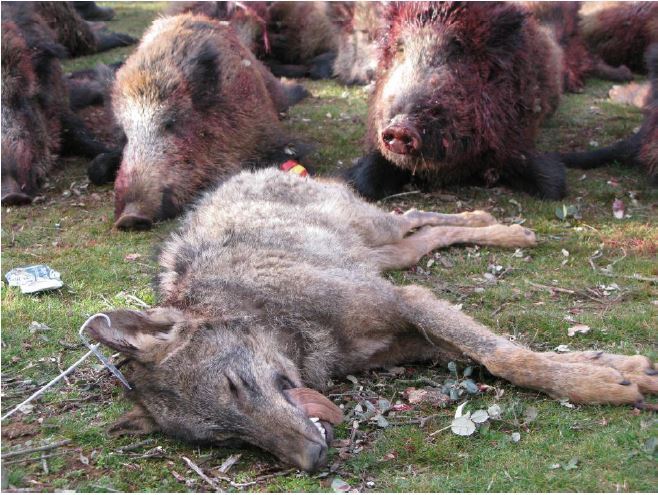
Likewise, it was shown that they had killed six wolves that were part of a pack shared between Asturias and Galicia.
In November 2020,a veterinarian from Asturias denounced in the Castropol court irregular practices of farmers who reported alleged attacks suffered by horses and whose cause, they pointed out, was the wolf.
However, the investigation showed that they were false and that the complainants had a very specific modus operandi: they separated the foals from their mothers and then abandoned them in the mountains, getting the canids to attack them and thus collect a subsidy that could reach 900 euros for each one.
This means a profit of between 600 and 700 per animal, since the price of it is between 150 and 300 euros.
From Fapas they assure that some of the animals left in the forest were bought in Galicia, as they are the cheapest specimens.
The Asturian veterinarian also denounced that the farmers fed the wolves so that they could approach the herds. This prompted the court to open an investigation by Seprona.
The proceeding of the defendants in the framework of this operation, baptized as White Fang, was to attract wolves to the area where the foals were located by means of feedlot.
In total, more than 170 horses were killed and linked to the cause between 2019 and 2020. In some cases, farmers falsified the documentation to collect a double subsidy, feigning the death of the same animal twice in six months.
Urge the COP26 Climate Summit to Serve a 100% Vegan Menu
The 26th Conference of the Parties (COP26) climate summit is fast approaching.
Urge the president of COP26 – Alok Sharma – to set a meaningful example during this time of climate emergency by serving a fully vegan menu at the event.
Eating Vegan Is Better for the Environment
The fishing, meat, dairy, and egg industries are not only cruel to animals but also cause catastrophic damage to the environment. For decades, the United Nations has identified animal agriculture as a leading cause of deforestation, pollution, ocean dead zones, habitat loss, species extinction, and zoonotic disease spread.
Plant-based foods have a far smaller carbon footprint than their animal-derived equivalents, even when comparing imported plant proteins to flesh from grass-fed, locally farmed animals. And a switch to vegan eating can reduce food-related carbon emissions by 73%. Quite simply, eating meat and dairy is part of what got us into this mess.
The COP26 Climate Summit Should Set an Example
Given everything we now know about the devastating impact of animal agriculture on the environment, serving meat, dairy, or eggs at a climate change summit would be like distributing cigarettes at a health convention.
Plants are the way forward, and a vegan menu would not only allow attendees to dine with a clear conscience but also set an important example for the world to follow.
Take action and tell Alok Sharma, president of COP26, to set an example and only serve vegan food at the event:
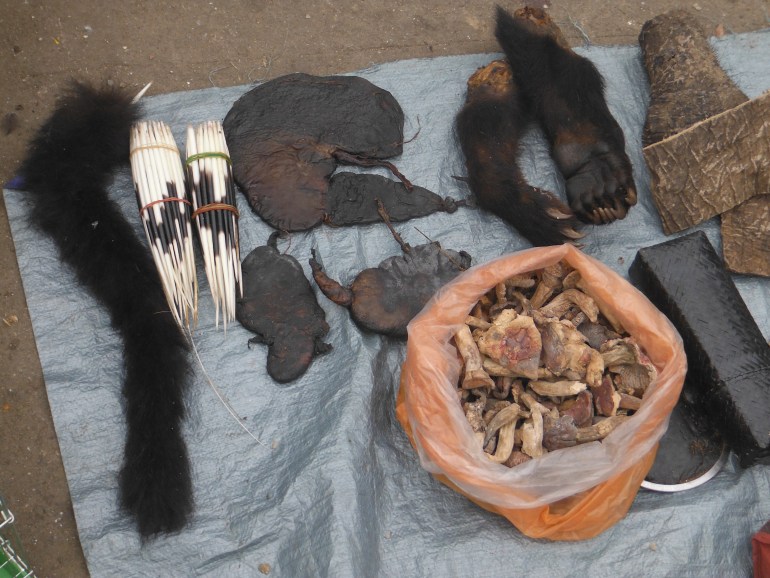
Pangolin scales for sale in a market in Mong La in Myanmar [Courtesy of Chris R Shepherd/TRAFFIC]
Bear paws, pangolin scales: Wildlife trade flourishing in Mekong
Investigation finds thousands of illegal animal parts and products at markets across five countries
A new study by TRAFFIC, a group that monitors the illegal trade in wildlife, has found thousands of animal parts and products – from pangolin scales to ivory and bear bile – for sale in five countries in mainland Southeast Asia, underlining the region’s struggle to address wildlife crime and the need to intensify anti-trafficking efforts.
The group says its researchers found close to 78,000 illegal wildlife parts and products for sale in more than 1,000 outlets in select towns and cities in Cambodia, Laos, Vietnam, Thailand and Myanmar throughout 2019 and 2020.
The parts and products originated from a wide array of animals including bears, big cats, helmeted hornbills and pangolins, but TRAFFIC said ivory products were among the most prominent.
Laotian Giant Flying Squirrel in a market in Muang Sing, Laos [Courtesy of Agkillah Maniam/TRAFFIC]
Individual species, many of them endangered, were found to have been used for multiple products. Researchers found pangolin scales both raw and ground for medicinal use, as well as made into jewellery or talismans. The pangolin is said to be the world’s most trafficked mammal.
“The variety and prevalence of illegal wildlife trade in several locations emphasised that the circumstances facilitating illegal trade have not only remained but, in some cases, proliferated,” Agkillah Maniam, a TRAFFIC consultant said in a statement.
The lower Mekong region has long been recognised as a hub for the illegal wildlife trade and has been a focus of efforts to improve enforcement and policy interventions, as well as providing officials with the tools to effectively combat such crimes.
In 2019, the nonprofit Environmental Investigation Agency found Vietnam’s “out-of-control, illegal wildlife trade” had helped drive demand globally, and that the Southeast Asian nation was now “the leading destination for illicit ivory”.
Poachers operating in Malaysia’s forests, often from Vietnam or Cambodia and working for buyers in China and elsewhere in the region, are blamed for helping push the Malayan tiger to the brink of extinction.
Wildlife parts for sale in Mong La market in Myanmar [Courtesy of Chris R Shepherd/TRAFFIC]
TRAFFIC’s research found that wildlife markets across the five Mekong countries continue to operate in the open, including in the Special Economic Zones (SEZs) that governments have set up to boost foreign investment and create jobs.
Although restrictions associated with COVID-19 did have some effect on the illegal trade, TRAFFIC says surveys carried out late last year showed illegal products remained easily available.
In December 2020, Vietnamese authorities seized 93kg of African rhino horns from a warehouse near Ho Chi Minh City’s international airport.
“It would be naïve to think that the pandemic alone will dampen wildlife crime in the long term,” said Kanitha Krishnasamy, director for TRAFFIC in Southeast Asia. “Monitoring and investigations must continue.
“There’s also a need for strengthening collaboration and public commitment from all governments in the region. The illicit wildlife trade problem here is not something countries can tackle on their own.”
He’s looking for guidance on how to do it. We have some ideas
President Biden has been getting an earful lately from a few influential people worried about the fate of wolves, and he’s seeking guidance on what to do to protect them.
Appearing this week on Brave Wilderness, a popular children’s YouTube program that focuses on connecting its young audience to the great outdoors, President Biden talked about concerns he’s hearing from his grandchildren.
“One of the things I’m getting from my grandkids — some of them are really little — they’re calling me and saying ‘Pop, they’re going to kill all the wolves! Why’s that happening, Pop?’” President Biden said.
He appeared on the YouTube show alongside Dr. Anthony Fauci to encourage Americans to get vaccinated for Covid-19, which will allow more freedom and safety while traveling this summer, particularly to America’s treasured national parks. But halfway through the conversation, President Biden brought up his grandchildren’s concern for wolves.
This is heartening given the dire circumstances wolves face today. The Trump administration in its last days in power removed federal endangered species protections from wolves across the country. Shortly thereafter, hunters in Wisconsin killed over 200 wolves in less than three days. The hunt involved deeply inhumane and unsporting tactics, including the use of bait and snares and dogs to flush the exhausted wolves into firing lines. Earthjustice is in court challenging the Trump administration’s unlawful and unscientific decision.
Elsewhere, Idaho and Montana have adopted extreme policies to allow hunts that would kill up to 90% of the wolf populations in those states. This would negate decades of success recovering the species in the Northern Rockies potentially tipping wolves’ trajectory back toward extinction. The hunts are expected to begin this summer.
During the YouTube conversation, host Coyote Peterson mentioned one of his favorite video projects was with the Colorado Wolf Center, to educate kids about the plight of wolves and how sorely they need federal protections. He said he was encouraged to hear the president cares about wolves.
“I’m in! I’m in!” President Biden responded. “Let me know the places you think, I mean this sincerely now… are the most at-risk natural resources out there. I have my views and I’m working on them, and have someone [Administrator Deb Haaland] at the Department of Interior who really cares about it. You oughta talk to me about it.”
This call for input on how to save the wolves is welcome, and we have some ideas. Ultimately, getting Endangered Species Act protections back for wolves is the most important thing we can do. The president is reviewing the decision to delist wolves now and he has the power to undo it.
We also urge federal agencies to adopt stronger policies to protect wolves on public lands in places like Idaho and Montana which — due to Congressional carve outs — are excluded from federal protections unless the populations go into freefall.
We are heartened the president cares about the wolves and recognizes that our children and grandchildren deserve to inherit a world where wolves remain in the wild, and not just as dusty relics in a museum.
Speaking about the youngest generation, President Biden said, “I want them to see and understand that we all have a responsibility to nature, but we also have a responsibility to one another.”
A video says more than 1,000 words: At our bird protection camps in April and May, we caught 49 poachers, secured 545 traps and 67 nets and rescued more than 200 birds!
Our video from the spring deployment in Cyprus shows what is behind the sober numbers:
And I mean…Cyprus is the “problem child” of bird protection in Europe.
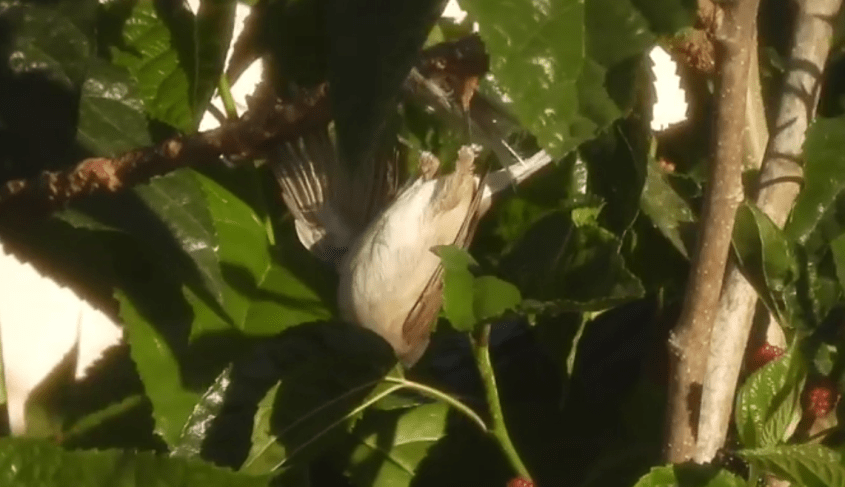
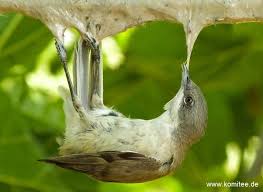
In gardens, bushes and acacia trees specially planted for poaching, countless bird trappers set up liming rods to catch the resting songbirds.
Thrushes and warblers are particularly numerous, but also cuckoos, owls and other protected species. The captured animals end up in the saucepan and not infrequently in restaurants, where they are offered at high prices as delicacies.
Bird trapping has long been forbidden – the relevant laws were tightened once more when the country joined the EU.
But the poachers seem above the law.
The perpetrators hardly bother to hide their trapping facilities because large parts of the rural population have little awareness of poaching
On the other hand, the authorities and the police are not completely inactive, but there is usually a lack of staff and the right will to take action against poaching.
For this reason, the teams are often left on their own.
When the committee team found the position of a very active poacher in Famagusta in 2012 and collected the liming rods, the poacher attacked the activists with a club!!
In autumn 2020, when the team filmed him setting up the liming rods, the poacher was fined € 200!
The bird catchers known to the team – around 1,200 people – usually have no financial worries.
Bird trapping is a hobby that promises to be a real gain.
It has nothing to do with poverty.
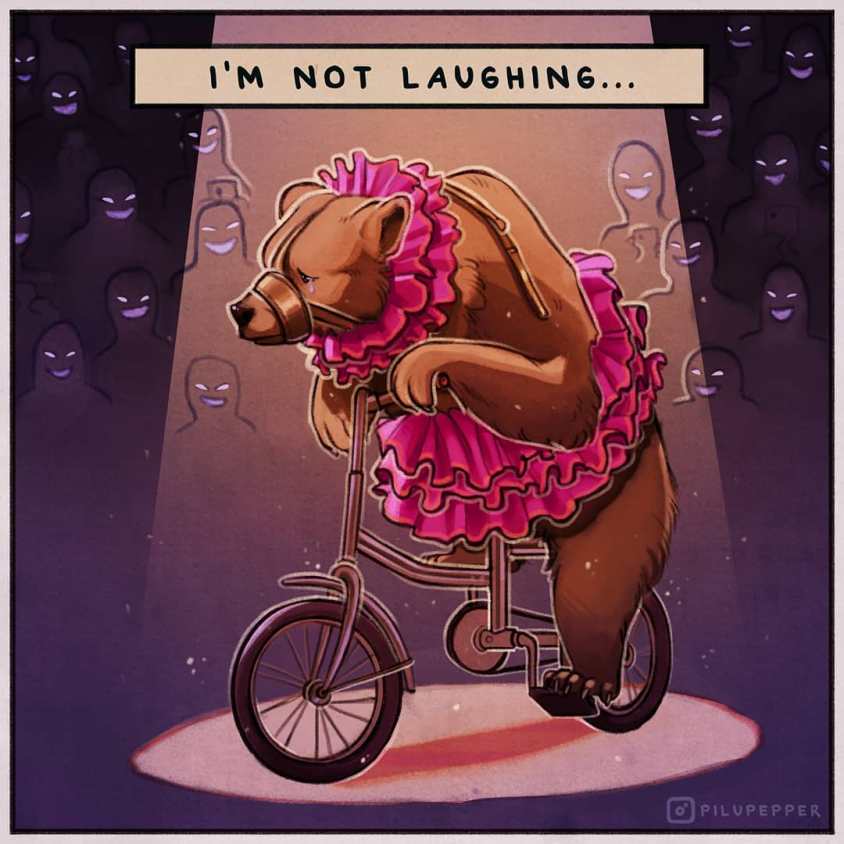
The glittering world of the circuses disguises the inadequate animal husbandry conditions and the violence and coercion shaped dressage.
Wild animals do not belong in the circus and it is finally time for a wild animal ban in circuses!
Text: PETA
And I mean … a ban on the use of all animals in the circus business would be even better.
It is fundamentally impossible to keep wild animals in circuses in a species-appropriate manner and therefore cruelty to animals.
Numerous countries have got it and have already issued strict bans or restrictions on wild animals in circuses.
For example, Peru, a poor country is among them. Germany, the richest country in Europe, is not among them.
Some countries around the world also prohibit the keeping of all circus animals – not only wild animals such as tigers, lions, giraffes or elephants, but also domesticated species such as horses or dogs, which are also often used in animal training in the circus.
What a strong lobby must have circuses with wild animals in Germany!!
There is no other way to explain why a civilized country, the richest in Europe, still supports and maintains the wretched circus with wild animals in the 21st century.
This is a 3 page article – please click on page numbers at the end of post to select page – thank you.
Mother 1
As someone who researches the dairy industry regularly, I have observed over the last few years a distressing surge in pro-dairy messaging from an increasingly visible and vocal sector of animal agriculture: female dairy farmers, many of whom are also mothers. It is painful and disturbing, to say the least, to read these mothers righteously defending the reproductive subjugation of other mothers, and the destruction of other mothering relationships for profit. But I believe this growing trend is no coincidence; rather, in a climate of increased criticism of dairy farming practices, it represents a strategic industry shift to put more female faces on dairy farming, and to reframe this mother-exploiting industry as a maternal, nurturing one.
Fortunately, I am also frequently privy to comments and messages from mothers relating how the process of becoming a mother led them to see the dairy industry for what it truly is: an assault on motherhood and bodily sovereignty. The poignant insights these mothers relate articulate a uniquely powerful perspective that I believe deserves a larger audience. For this reason, I founded Mothers Against Dairy , a year-round campaign devoted to showcasing the stories of vegan mothers for whom motherhood influenced their decision to reject dairy and go vegan, as well as reflections from mothers who were already vegan before becoming a parent, but whose mothering relationship deeply reinforced for them the injustice of dairy farming.
In the nearly two years that have passed since first posting a call for statements, I have received hundreds of inspiring reflections from vegan mothers around the world. New stories are shared each month on our Facebook and Instagram accounts, which have a combined following of more than 30,000 readers. Submissions to be featured at Mothers Against Dairy are accepted on an ongoing basis and can be uploaded to our website or emailed to info@milkhurts.org. To keep up with new statements and other news about the campaign, follow our Facebook, Instagram, and our new Twitter account, and sign up at our website to be notified each time a new story is published.
Below are 10 heartfelt reflections that first launched the Mothers Against Dairy campaign on Mother’s Day of 2016.
WAV Comment – we are not publishing all the experiences here – please click on the link given to view them all.
Researchers at an Australian university have been granted thousands of dollars from the government to work on AI-based devices that would help identify individual koalas crossing the roads in the country.
A team of artificial intelligence specialists from Griffith University in South East Queensland have been working on high tech cameras they plan to install at koala crossings on the east coast of Australia.
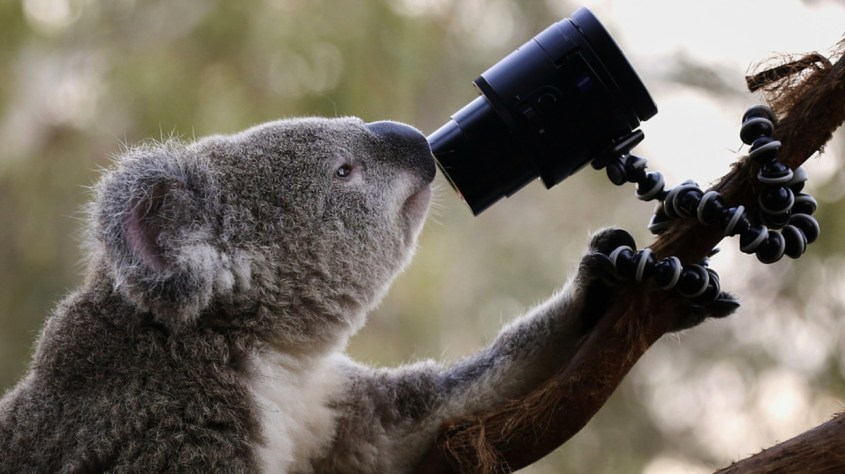
Their aim is to train the equipment to use ‘facial recognition’ technology on the animals, to be able to better understand koalas’ patterns, if any, in crossing the roads.
The study plans to challenge their AI equipment to not only distinguish koalas from other animals, but to be “powerful enough” to determine individual koalas. To create recognition patterns, researchers will team up with koala conservation groups and sanctuaries in the area, who can describe certain koala appearances and movements.
The local government has allocated AUS$90,000for the project, which will see a network of devices with cameras, motion sensors, internet modules and solar panels placed on the roads.
As part of the pilot study, 20 cameras will be installed on roads near Brisbane by the end of July.
“Animal movement will trigger image capture, with images transferred to a server at Griffith University. Computer vision and machine learning systems will be used to process images, allowing for automatic detection and recognition of individual koalas,” said Jun Zhou, Associate Professor from Griffith’s School of Information and Communication Technology, who is leading the study.
Specialists say they will be analyzing this data to try and understand how the cuddly creatures are moving across habitats and whether they need any assistance while crossing the roads in particular.
“The goal of this project is to set up an AI-based monitoring facility to monitor the koalas’ road crossing behaviors, so that we can analyze how many koalas are using the facilities to cross the road using underground pathways or the above-road crossings,” Zhou said.
Australia has been tracking its koalas for years, using various tags and GPS sensors, to help preserve the declining population. Mostly living along the country’s eastern coast, koalas have been vulnerable to road incidents and both man-made and natural habitat loss.
More than 60,000 koalas were killed or harmed in devastating bushfires in 2019, with the World Wide Fund for Nature-Australia having warned the species could be extinct there by 2050.
Australia, a member of the Five Eyes alliance, already boasts one of the most advanced mass surveillance networks, and Sydney has recently made it to the list of top 10 “most surveilled cities in the world”outside of China.
And I mean…Stop! Checkpoint. Papers. Can I see your Eucalyptus?
I can’t get rid of the stupid feeling that this is just an excuse for more private surveillance, and this koala watching story is how they sell it to the public.
We get lots of support for the site every day; and I thank everyone for making the effort to let us know they are with us on issues, – everywhere in the world.
Today, an e mail arrived which simply said the following – there was no ‘Hi’, or anything relating to friendly, nice advice – it simply said:
“You don’t carry much credibility when your article is full of grammatical errors”.
That’s fine – we always welcome negative comments for the site, as well as positive. I have the following to say in response; and that is:
This article was posted by Venus. She is a German citizen and operates out of Germany for WAV. English is not her mother tongue by any means; but I personally fully support everything she produces (in English); as her articles are always varied, interesting and informative.
Venus writes some fantastic articles for WAV in English; which as I say, is not her native tongue. Wherever possible; and if information (or articles) are from another source; we always attempt on the post to give a link or reference to the original source.
The e mail states ‘grammatical errors’ but fails to inform further on what they exactly are, or if applicable. Regardless; the person who commented obviously has a right to express their (her) feelings about the article. Myself; I fully support all the excellent work that Venus contributes to the site; and I very much appreciate that she is not writing anything in her own mother / native language. Regardless of this; I am sure you will all support me that there are very few criticisms to be targetted at anything which relates to her work. She is always professional with her approach, spending many hours of her time advancing the cause for animal rights; even though WAV is a volunteer run site and nobody takes any rewards for what they do. It exists because we care.
I finish by quoting the great Mick Ronson; who stated:
It is nice to be important; butit is much more important to be nice.
How very true;
Regards Mark – and please keep your comments arriving; however you feel about issues we cover.
A response comment from Jorge; one of our visitor friends; thanks Jorge:
Hi Daphne,
a grammar consists of formation and transformation rules that make it possible to build formally correct sentences from a given vocabulary (words). Grammars belong in the field of a science called syntactics.
Credibility, on the other hand, has to do with truth. That means, with the relation between formal systems and their models, or if you prefer, between language and reality. So it’s about whether what someone says is true or not. A science called semantics takes care of this problem.
So if you conclude a lack of credibility from incorrect grammar, you are making a so-called “category error”. So much for the brief introduction to semiotics.
As you have hopefully understood, mastering your mother tongue is not enough to understand anything about the world. For that you need a little more, something that you obviously don’t have.
By the way, English is not my mother tongue either, so if you prefer we can communicate in German, Spanish or Greek.
 The slatted floor is littered with feces, the animals are completely covered with excrement.
 The shit is all over the body. Calf diarrhea sticks the animals’ fur.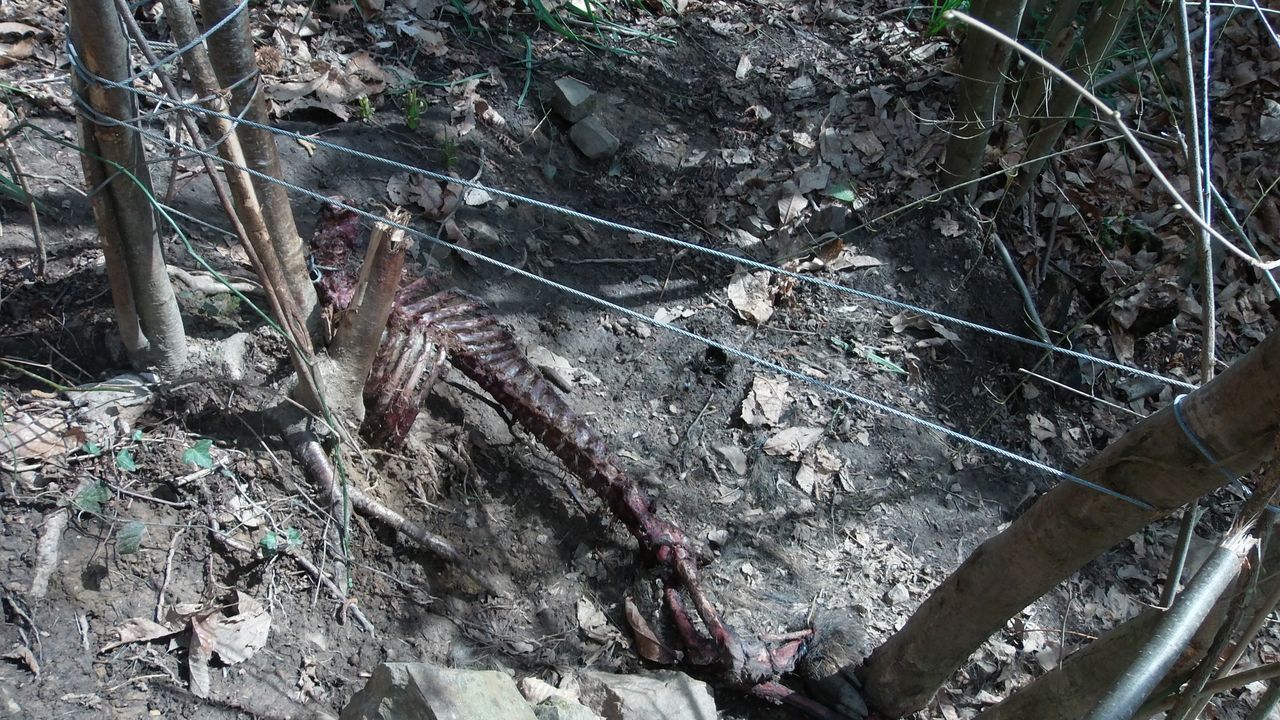




![Pangolin scales for sale in a market in Mong La in Myanmar [Courtesy of Chris R Shepherd/TRAFFIC]](https://www.aljazeera.com/wp-content/uploads/2021/06/21.jpg?resize=770%2C513)



 Thrushes and warblers are particularly numerous, but also cuckoos, owls and other protected species.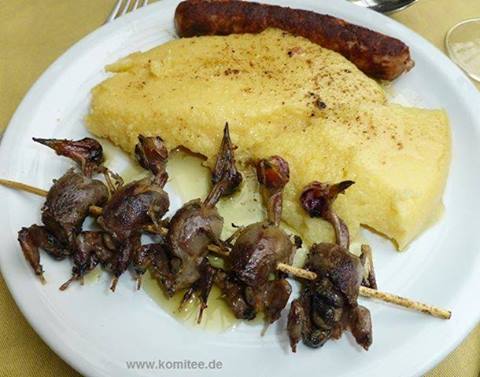

 FILE PHOTO. © Reuters / David Gray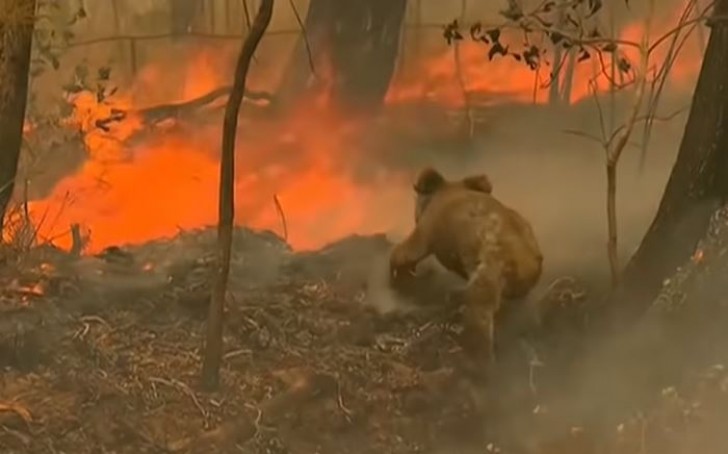
 World Animals Voice