Despite our personal aims as an organisation for major changes to the better with animal transport in mainland EU; everyone in the form of anti transport campaigners were dealt a really bad hand with regard the EU ANIT meeting of 3/12/21.
Here following is the post meeting PR from the ‘Eurogroup for Animals’; who like us, had high hopes of major, positive changes and transport reforms:
Read the Eurogroup PR (post meeting) by clicking on the following:
As echoed by us at WAV; the ANIT meeting of 3/12 was very much a missed opportunity which massively failed in the helping of live animals in transport big time, but additionally, which also blatantly ignored the wishes of so many EU citizens calling for drastic improvements for live animals undergoing transportation.
As we have said before, the EU does what it wants to do and to hell with everyone and everything else. The ANIT catastrophe witnessed this week is a typical example; with the livestock industry and its lobbyists basically ensuring that they continue to get what they want; a status quo; effectively resulting in no real ‘wow’ changes for animal welfare, whilst simply ignoring the wishes of a vast number of EU citizens calling for better legislation for animals; including a shout for a maximum one off journey time of no greater than 8 hours.
ANIT Committee vote: a missed opportunity failing animals and citizens
3 December 2021
Press Release –Eurogroup for animals
After eighteen months of work, yesterday the Committee of Inquiry on the Protection of Animals during Transport(ANIT) voted on a series of compromise amendments to its concluding draft report and recommendations.
Despite some positive calls for improvement, the final report’s text, as adopted, fails to address the bulk of the problems, calling for minor improvements rather than supporting a systemic change.
Indeed, despite acknowledging the poor implementation of the current Transport Regulation (Council Regulation (EC) No 1/2005) especially when animal consignments leave the Union, the Committee supports a continuation of live exports beyond the EU, calling for a meat and carcass trade only “when possible”.
Additionally, the text lacks clear language on the need to establish a maximum journey time of 8 hours, utterly disregarding EU citizens’ calls.
While it considers that the transport of unweaned animals should be avoided, unweaned lambs remain basically forgotten by the Committee, which only called for not allowing the transport of unweaned calves below 4 weeks of age.
Eurogroup for Animalswas pleased to see that the Committee acknowledged the lack of comprehensive species– specific provisions, and called for ad-hoc provisions to guarantee the welfare of all the animals being transported, including fish, poultry, horses, as well as cats and dogs.
During the past year the Committee organised several hearings and workshops with experts, however the information retrieved seems to have only partially informed the final texts.
The Transport Regulation will soon be revised and for the final vote in January Eurogroup for Animals calls on the European Parliament to step up the ANIT report’s ambition level and reflect citizens views by banning any long-distance transport, refining, replacing and reducing intra-EU transport, and shifting to meat, carcasses and genetic materials for export.
“Despite some good wording on meat and carcasses trade, the committee did not make any call to ban live export.
This is very disappointing, given the evidence the same committee collected thorough hearings, field missions and workshops with experts in the field, and to the severe crisis at sea which happened during its mandate.
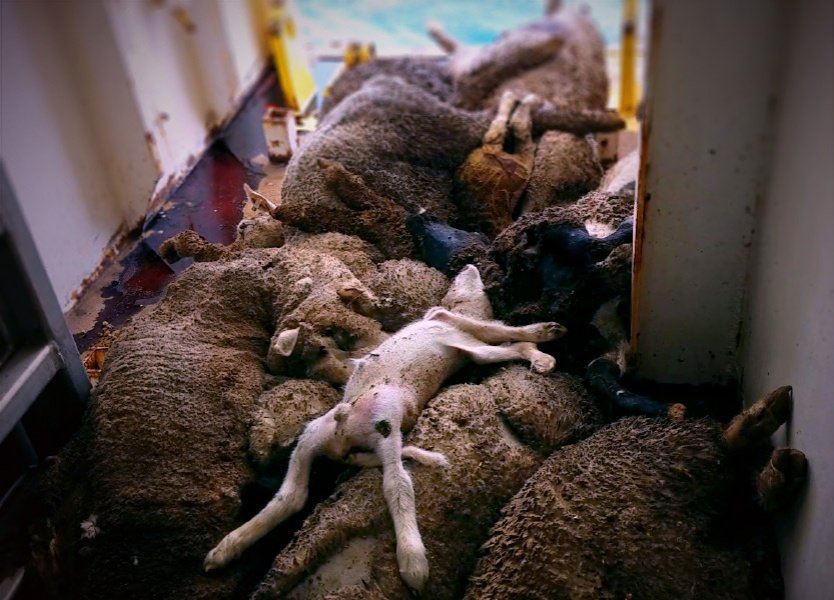
Indeed the Committee witnessed the Karim Allah and Elbeik vessels spending three months around the Mediterranean in a bureaucratic limbo which ended with the killing of 2,600 cows.” (Reineke Hameleers, CEO, Eurogroup for Animals)
With this Inquiry the Members of the European Parliament had the chance to set the basis for a revised Transport Regulation that both meets animal needs and contributes to building a sustainable Europe, in line with the EU Farm to Fork Strategy.
“This cannot happen if long-distance transports are improved rather than banned, and if we continue to allow for the transport of young and pregnant animals over 40% of the pregnancy stage.
We will continue pushing for key changes to ameliorate the worst elements at the time of the vote in Plenary, expected in January 2022. However, as it stands now, this Report is testament to a political divide in the ANIT committee and seriously failing to address the cruelty and tragedies we have been facing for decades.” (Reineke Hameleers, CEO, Eurogroup for Animals)
And I mean..This group has given a statement on their functions and guidelines – which clearly favored the “farm animal model” – with which the group had actually said goodbye to all important requirements of the NGOs in advance.
Quote from the statement-“Farmers need to know that the animals they raise will be treated appropriately throughout their lives, so everyone involved in the food chain have to work towards achieving this goal. Any incident has a negative impact, first of all on the animals affected, secondly on those involved in farming and animal care, and finally, on consumers”.
As the ANIT- report makes clear, the abolition of live animal transport is not an issue for the 30 committee members, and we are a long way from limiting animal transport to 8 hours.
As it stands, none of this is fair work for the animals, even if those responsible have tried very hard to justify a hypocritical report as a verified testimony to the welfare of the animals.
It is no wonder that the committee remains loyal to the line and in bondage to its employers.
From the beginning it was a mirage to entrust the committee the welfare of the animals, because a function in the EU apparatus makes a critical look impossible
It’s just about getting the political “priorities” right.
The items are important – what else are the needs of the animals of interest?
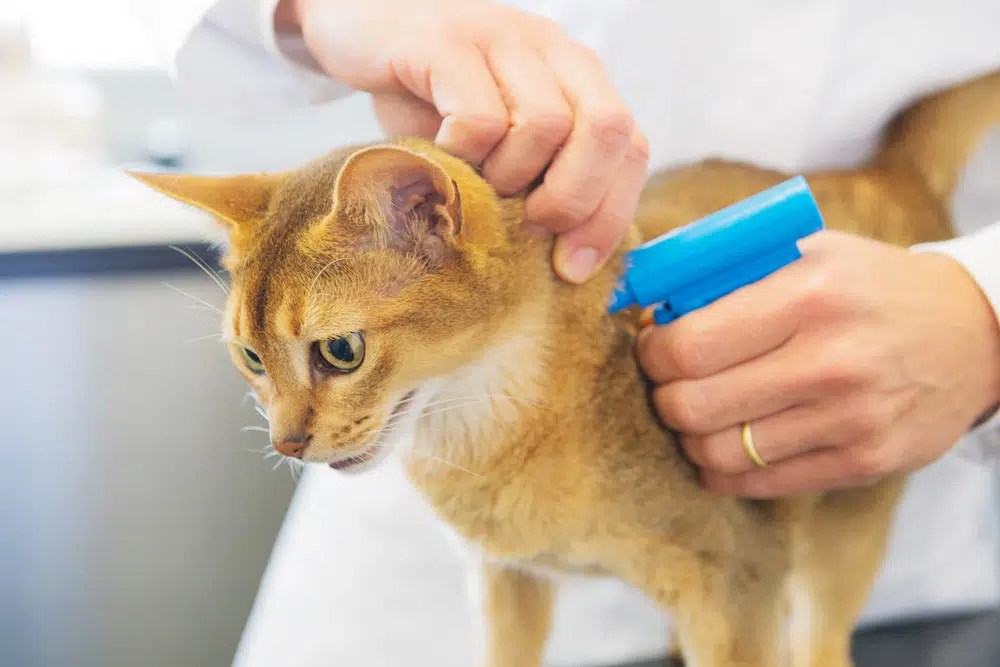
The UK government has unveiled a compulsory microchipping plan for domestic cats, designed to make it easier to reunite lost pets with their owners. Those refusing to inject their feline with a chip will face fines of up to £500.
The microchipping plan was unveiled by the Department for Environment, Food & Rural Affairs on Saturday.
The measure is said to enjoy overwhelming public support, with “99% of people” backing the compulsory microchipping of pet cats, according to the government (!!)
UK task force calls for making pet abductions a criminal offence after dognappings surge during Covid lockdowns UK task force calls for making pet abductions a criminal offence after dognappings surge during Covid lockdowns
“Cats are much-loved parts of our families and making sure that they’re microchipped is the best possible way of making sure that you are reunited with them if they are ever lost or stolen,” Animal Welfare Minister Lord Goldsmithsaid in a statement.
According to official statistics, the majority of Britain’s felines are already fitted with tracking microchips, with some 2.8 million out of more than 10.8 million pet cats not having one.
At the same time, eight out of ten stray cats ending up at shelters do not have a microchip installed.
Under the new rules, all cats will have to be fitted with a microchip before they reach the age of 20 weeks, with contact details of their owners stored in a database.
Those owners whose cats happen to be without such a device will have a grace period of 21 days to fit their pet with a chip, after which failure to do so will incur a fine of up to £500.
The measure has been hailed by British cat charities: “Microchipping is by far the most effective and quickest way of identifying lost cats and can help ease the pressure on rescue charities like Cats Protection. Without a microchip, a lost cat will most likely end up being rehomed to a new home as there is often no trace of their original owner,” Jacqui Cuff, head of Cats Protection’s Advocacy & Government Relations, said.
99% of people support it?
99% of people don’t support anything.
20% of people probably don’t even know what day it is.
I think it’s more likely … Cats now. People later … and not much later.
Following talks with PETA, the Armani Group – whose iconic brands include Giorgio Armani,Emporio Armani, EA7, and Armani Exchange – has confirmed that it has banned the use of angora in future collections.
The company implemented a ban on fur in 2016.
Today’s socially conscious fashion consumers want nothing to do with an industry that rips the hair out of fully conscious rabbits.
As more and more Italian designers and fashion houses are saying no to fur, angora, and other materials stolen from animals, it’s time for Italian legislators to catch up with the changing times and ban fur farms.
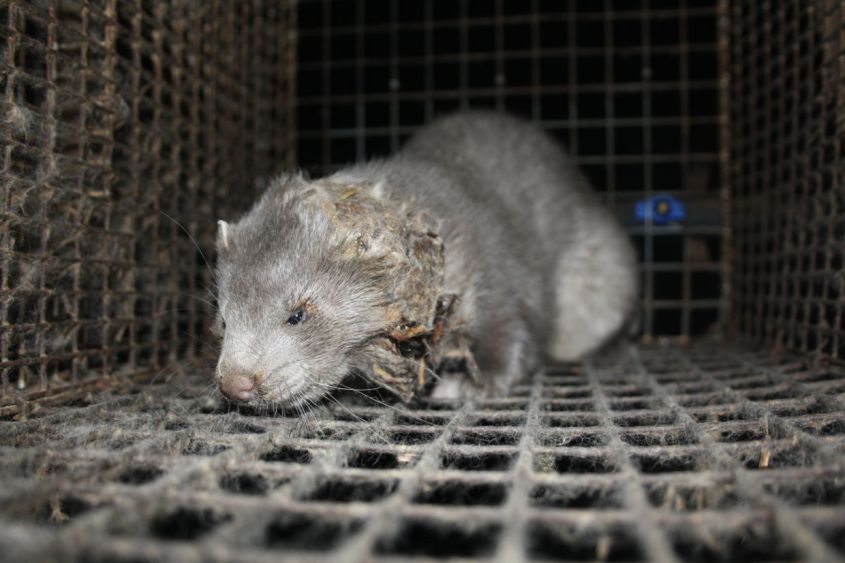
A few things about it: Around 7,000 minks a year are still imprisoned on Italy’s six remaining fur farms. It’s time to shut these facilities down.
Investigations into Italian mink farms have found that animals spend their short, miserable lives inside wire cages, with no access to grass or water to swim in.
Many are left with severe injuries, and some are driven to self-mutilation or cannibalisation of their cagemates by the stress of captivity.
The minks are killed when they’re only about 6 months old – crammed into a box and gassed to death.
These fur farms are putting public health in jeopardy, too. When it comes to the risk of spreading disease, they’re no different from the live-animal market in which the novel coronavirus is believed to have originated.
It’s very easy for infectious diseases to spread on fur farms through the exchange of urine, excrement, pus, and blood.
Minks with infections, sores, and festering, open wounds are a common sight.
Fur farmers and handlers are among those who most commonly suffer from the zoonotic bacterial disease tularaemia.
Following reports that minks tested positive for COVID-19 on fur farms in the Netherlands and that workers are believed to have contracted a strain of the virus from the animals, the Dutch parliament voted by an overwhelming majority to bring forward the implementation of a fur-farming ban in the Netherlands.
Such bans are already in place in Austria, the Czech Republic, Israel, the UK, and several other countries.
A meeting of the Agriculture and Fisheries Council was held in June 2021, and the European Commission was called on to end the breeding of animals for the production of fur in the European Union.
Italy’s Minister of Agricultural, Food and Forestry Policies Stefano Patuanelli showed support for the ban, declaring that “the breeding of animals for fur is no longer justifiable and Italy will give its maximum support to reach the European ban on this form of breeding”.
PETA is celebrating this progress and has written to Italian government officials, thanking them for taking the right steps forward.
Italians know that fur belongs in the history books, not in our wardrobes.
Over 90% of the country’s population is against fur farming; iconic Italian designer brands such as Armani, Gucci, Elisabetta Franchi, Prada, and Versace are all fur-free; and over the past 30 years, the number of fur farms in Italy decreased from 125 to six.
We must urge the Italian government to stay true to its word by ending all fur farming in Italy now – minks can’t wait any longer.
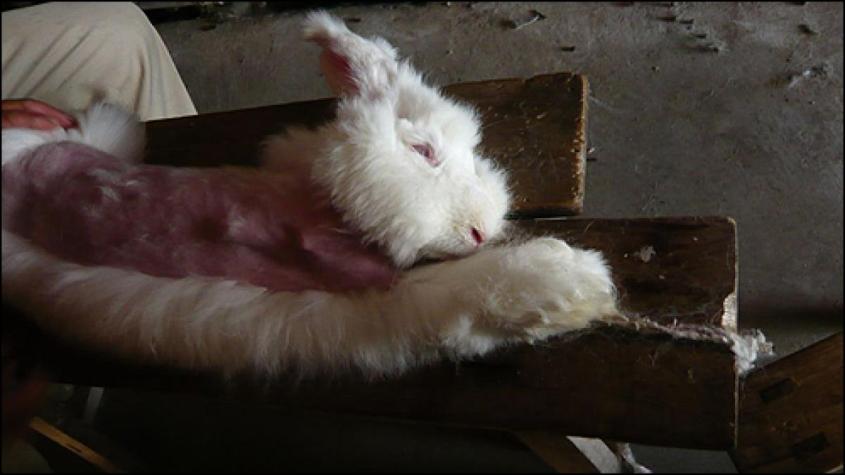
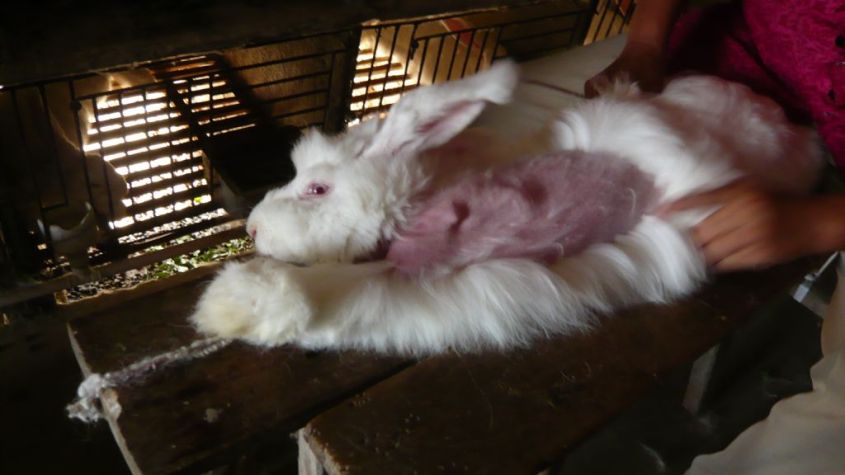
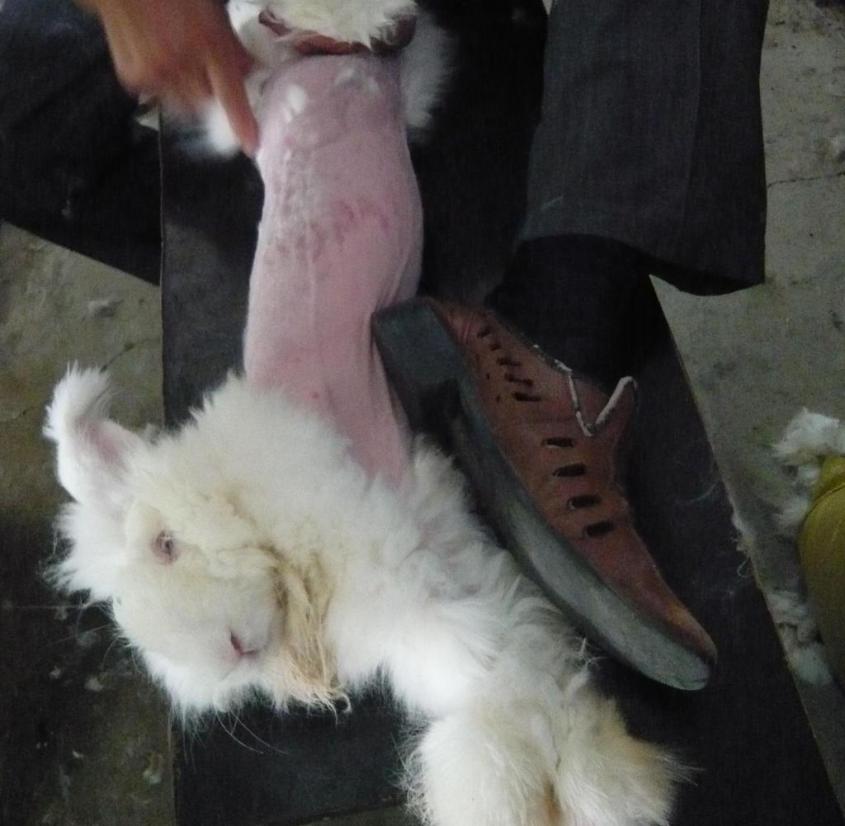
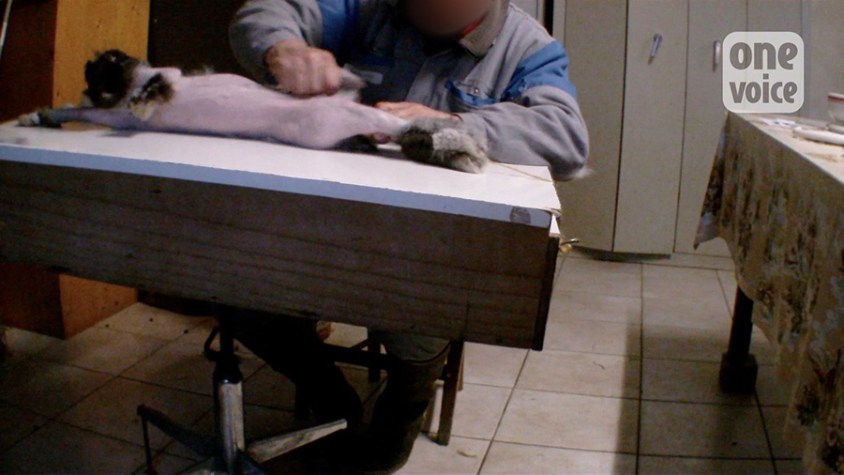
Amd I mean…The rabbit with the lush, delicate white fur is fixed on a rack.
The front legs are tied up and stretched far forward, the hind legs backwards.
A worker sits down over the rabbit and begins to tear out the fur from the small animal.
The rabbit screams, louder and louder, until his voice cracks in pain … Later the angora rabbit – with fleshy skin, the body covered with wounds – is put back in a narrow lattice cage.
(That immediately reminds me of the down “production”)
Up to 60 percent of the animals that are plucked die in the first two years. Also from hypothermia, because pneumonia can occur without fur
This is the reality behind angora wool.
90% of the angora fur comes from China, even if the finished product was made elsewhere.
Right now at Christmas time we appeal to all people not to buy an angora.
Leave Angora products in the closet and use herbal and synthetic alternatives.
Small things that you don’t pay much attention to can cause a lot of suffering.
“If slaughterhouses had glass walls, everyone would be vegetarian.”
In 2010, Sir. Paul McCartney lent his face and this famous quote to a PETA film that took viewers behind the opaque walls of slaughterhouses and factory farms.
Although one of the most well-known quotes in the animal rights movement, it took the team behind Planted Foods—a Swiss food tech company dedicated to ending animal suffering through tasty plant-based alternatives to meat—to run with the idea.
Convinced the food industry needed to be more transparent about ingredients and processes, Planted made this literal by building an enormous glasshouse around their production in the heart of their Switzerland-based factory.
Slaughterhouses are often miles away from urban centers, guarded by impenetrable walls and perplexing laws. To date, the primary means of drawing attention to the non-transparency1 of the industry has been through activists sneaking out footage of terrible conditions and practices.
“We built our production under a greenhouse with glass walls and glass ceiling because we want to be transparent in the way we make meat today,” said Planted’s Co-Founder Pascal Bieri. “Unlike the animal meat industry, we have nothing to hide.”
Open, airy, and entirely transparent, the factory and ethos is a sharp contrast to the efforts of meat manufacturers to hide the horrors of their production processes from consumers.
As Planted goes from strength to strength, the team invites everyone to visit their glass-walled factory to take a closer look at what they do.
Beginnings and success
While working in the USA in 2017, Bieri became excited by the potential of plant-based meat replacement products coming to market and saw an opportunity to challenge the status quo of the animal meat industry.
Initially collaborating with his cousin Lukas Böni who was completing a doctorate in food process engineering, financial specialist Christoph Jenny and Lukas’ fellow Ph.D. student Eric Stirnemann later rounded off the founding team of Planted Foods.
United by a love of food, environment, and science, the co-founders spent 2018 deep in research and development at Lukas’ research university, the Swiss Federal Institute of Technology in Zurich.
Their goal was clear from the beginning: create plant-based options that could win over carnivores and vegans alike with clean, 100 percent natural ingredients and transparent processes.
In 2019, Planted received a Pioneer Fellowship, awarding access to infrastructure to fast-track small-scale production and create an early prototype of their first product, planted.chicken.
Fuelled by new technology and a drive to provide ecologically friendly alternatives that could satisfy the cultural desire for meat, the team was thrilled by how close their plant-based product came to replicating the taste and texture of chicken.
Off the back of their initial success, Bieri and the team founded Planted in July 2019. The same year, dozens of restaurants across Zurich, Lucerne, and Geneva put Planted’s chicken on their menus.
An injection of seven million Swiss francs powered construction of a production plant and offices in Kemptthal, Switzerland, and in 2020 Planted launched at one of Switzerland’s largest retail and wholesale companies.
Bieri believes the rise of Planted Foods is thanks to strict adherence to four core principles—natural ingredients, animal welfare, taste, and sustainability—nurtured by a team with complementary skill sets and a drive to change the world for the better.
Recently winning the top prize at the TOP 100 Swiss Startup annual awards2, Planted employs over 140 people and welcomes scores of consumers, schools, and groups to their production facility every month.
Planted is now available at restaurants and retailers across Germany, Austria, France, and Switzerland.
In the UK, products are available from the Planted webshop, and the company is rolling out its products at a range of venues, including the Elite family of pubs in Kent and Sussex.
In October, Planted received the Best Artificial Chicken Product award at the Plant-Based World Europe Expo in London.
“We’re super-excited about our launch into the UK market; consumer feedback has been fantastic,” Bieri enthused, “and winning the Award at the Expo makes our whole team proud too. We know that we’re on the right track and developing great-tasting products.”
Today, 3/12/1; news has come through that Shell ae pulling out of their involvement with the Cambo filed off of Scotland. Here are some news links just through to verify thia:
But, regarding Shell operations in South Africa, we have had the following news:
Shell plans underwater explosions during peak whale mating season
Shell is planning to search for oil and gas on the South African coastline, a move that will threaten whales during mating season.
The oil giant is going to conduct underwater explosions to locate deep-sea oil and gas reserves, with vessels at sea for five months starting 1 December. They will travel between Morgan Bay in the south and Port St Johns – an area known as the Wild Coast.
These explosions generate loud shock wave emissions which penetrate through three km of water and 40 km into the Earth’s crust below the seabed, harming marine life in the process.
Although the survey will not involve drilling at this stage, it raises broader concerns around sea pollution, climate change and South Africa’s national energy policy. As well as fears about the future development of the region if Shell were to discover commercial quantities of oil or gas off this coast.
Kickback from activists on the ground
But the exploration plans are being met by fierce opposition by environmental activists in South Africa, some hailing from Cape Town’s branch of Extinction Rebellion.
A petition by Oceans Not Oil Coalition was started to try and get Barbara Creecy (South Africa’s Minister for the Environment) to revoke Shell’s permit and currently has nearly 363,000 signatures.
It says the explosions will leave whales, dolphins, seals, penguins, sharks and even crabs “panicked and damaged”, adding that the ship will work around the clock, firing air guns every 10 seconds.
“At a time when world leaders are making promises and decisions to step away from fossil fuels because climate science has shown we cannot burn our existing reserves (let alone drill for more),” it adds, “offshore oil and gas Operation Phakisa is pushing ever harder to get its hands on a local supply of gas.”
Happy Khambule is Senior Climate and Energy Campaign Manager for Greenpeace Africa. He calls Shell a “climate criminal”.
“Shell’s activities threaten to destroy the Wild Coast and the lives of the people living there. South Africa’s problems do not require violent extraction nor destruction of the environment and community livelihoods.
“The best and most immediate solution is a just transition to renewable energy, ensuring safe and decent/work jobs, and energy access for all,” he explains.
Tracy Carter describes herself as a concerned South African citizen, whose family come from the Wild Coast in the Transkei. She also spoke to Euronews Green about how devastated she would be if the Shell exploration goes ahead.
“To give you an idea about the Wild Coast, where my family come from, it is the most incredibly breathtaking place one could ever dream of. The ocean is lush and abundant with sea life in all shapes and sizes,” she says.
“I was honestly shocked that after the COP26 summit Shell had the gall to go ahead with the seismic surveys when the world is meant to be moving away from fossil fuels. There was absolutely no public notice given to South Africans about this matter.”
Tracy stresses that it’s important to make as many people as possible aware that this “heinous act” is going on.
Whales in South Africa
South Africa is one of the best destinations worldwide for watching whales and dolphins. Annual visits from humpback and southern right whales and the presence of enormous pods of dolphins all year-round provide amazing viewing opportunities both from land and boats.
Southern right and humpback whales migrate to southern Africa’s warmer waters between June and December, to mate and rear calves.
The whales’ annual visits from Cape Town to Mossel Bay are in fact so predictable that the south coast is also known as the ‘whale route’ and a whale festival is held every year at Hermanus.
Shell’s disruptive surveys will begin just as these whale families start making their way back to icy feeding grounds in Antarctica this year, meaning many could be harmed or killed along the way.
“Having grown up in one of the most unspoiled areas left on this planet and watching the migration of whales over the years, it means a lot to me to fight for the protection and conservation of this area and the sea life that will be affected if this seismic survey goes ahead,” adds Tracy.
In response to concerns about how underwater blasting would affect the marine environment, a Shell spokesperson told New Frame, “the impacts are well understood and mitigated against when performing seismic surveys. This is supported by decades of scientific research and the establishment of international best practice guidelines.
“There is no indication that seismic surveys are linked to (whale and dolphin) strandings,” they conclude.
Australian police have arrestedthree people who escaped a Covid-19 quarantine compound near Darwin in the Northern Territory.
They had all tested negative the day before they broke out.
On Wednesday, police alleged that three people had scaled the perimeter fence of the compound in order to break out of the facility situated near Darwin in the Northern Territory.
Police say the trio escaped Centre for “National Resilience” (!!!) just before 4:40am.
Officers had set up checkpoints and were inspecting cars in the area in an attempt to find the absconders. The three were swiftly caught and taken into custody.
“Police and staff at the Centre for National Resilience are currently confirming the absconder’s identities prior to releasing further information,” authorities stated
Officials did not confirm whether the inmates (it’s amazing they didn’t call them unvaxxed criminals) were returning travelers or local citizens who had been put into quarantine.
According to the BBC, the center has been used in recent days to house people infected with Covid-19 from an outbreak in Katherine, a town 300km (185 miles) away.
The Howard Springs site can hold up to 2,000 people; it is situated within an old mining camp (!!!) which was turned into a quarantine center by the Australian government in August.
The three individuals arrested had tested negative for Covid-19 on Tuesday.
Fears of contagion were heightened after one person housed at the facility, having returned from South Africa, had tested positive for the highly mutated Omicron variant on Tuesday.
On Friday, a 27-year-old man scaled the facility’s perimeter fence and jumped into a waiting car.
He was later arrested but tested negative for Covid-19.
Suggestion: Send the Australian government to Re-education camp in China. China has no compulsory vaccination and can do without centers for national resilience.
In an ongoing campaign and petition, GAIA is calling on the three regional Ministers for Animal Welfare in Belgium to introduce a ban on the cooking of live lobsters, as is already the case in Switzerland, as well as a ban on cutting lobsters in half.
Each year, Belgium imports an average of 3.8 million live lobsters, mainly from Canada. Belgians are the largest consumer of lobster in the world per capita.
The whole journey of the lobster from capture to death is agonising. The lobsters are transported from Canada to Belgium in polystyrene foam boxes with gel ice packs. They are held vertically with their claws held upright. On arrival, the lobsters are at best kept alive in water tanks, sometimes for months. At worst, they are simply placed on ice. Exposed to air, they are unable to excrete bodily waste products, and their condition weakens significantly leading to a slow death. The animals are commonly then boiled alive or cut in half without being stunned.
Recent scientific research has concluded that that crustaceans, such as crabs and lobsters are sentient beings that feel pain. GAIA is therefore collecting signatures for a petition to introduce a ban on the live boiling or cutting of lobsters without stunning.
Such a ban would receive the support of a large part of the population. GAIA reports that 83% of Brussels residents are aware that lobsters feel pain. In addition, four in five Brussels residents believe that lobsters feel pain when they are boiled alive and consider that this is also the case when they are cut up alive. 80% of Walloons agree that there should be a legal ban on killing lobsters without stunning them.
Crustastun is an electrical stunning and killing device developed to render crustaceans unconscious without impacting the quality of the meat.
WAV Comment 1345hrs 02/12/21. No further news yet; but we are monitoring this very important issue and will bring you further news when we have it. Regards Mark
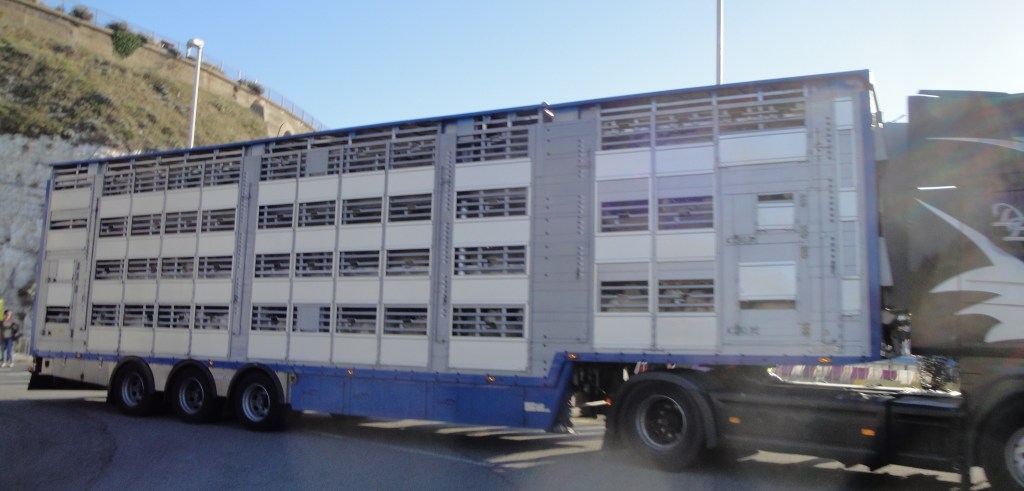
Photo: Jane J – Kent, England
NGOs and MEPs protest against live animal transports in the EU
Wednesday, 1 December 2021
A protest action took place on Tuesday in front of the European Parliament ahead of a crucial vote in the European Parliament against live animal transport over long distances and live export.
The action was organised by animal welfare NGOs in Brussels and accompanied by speeches from a a number of MEPs across party lines.
For the past year the Parliamentary Committee of Inquiry on the Protection of Animals during Transport (ANIT) has analysed the implementation of EU rules by member states and the correct enforcement by the European Commission.
The draft Report and relevant recommendations are going to be voted in the Committee on Thursday (2 December) and put forward for adoption by the plenary in January 2022. In the pipeline is also a revision of the Transport Regulation, for which a new legislative proposal is expected in 2023.
Animal welfare NGO Eurogroup for Animals told The Brussels Times that it has been campaigning for decades to stop live transport and has issued a white paper how it should be done in line with recommendations made by the European Food Safety Authority, the World Animal Health Organisation and the Federation of the Veterinarians of Europe.
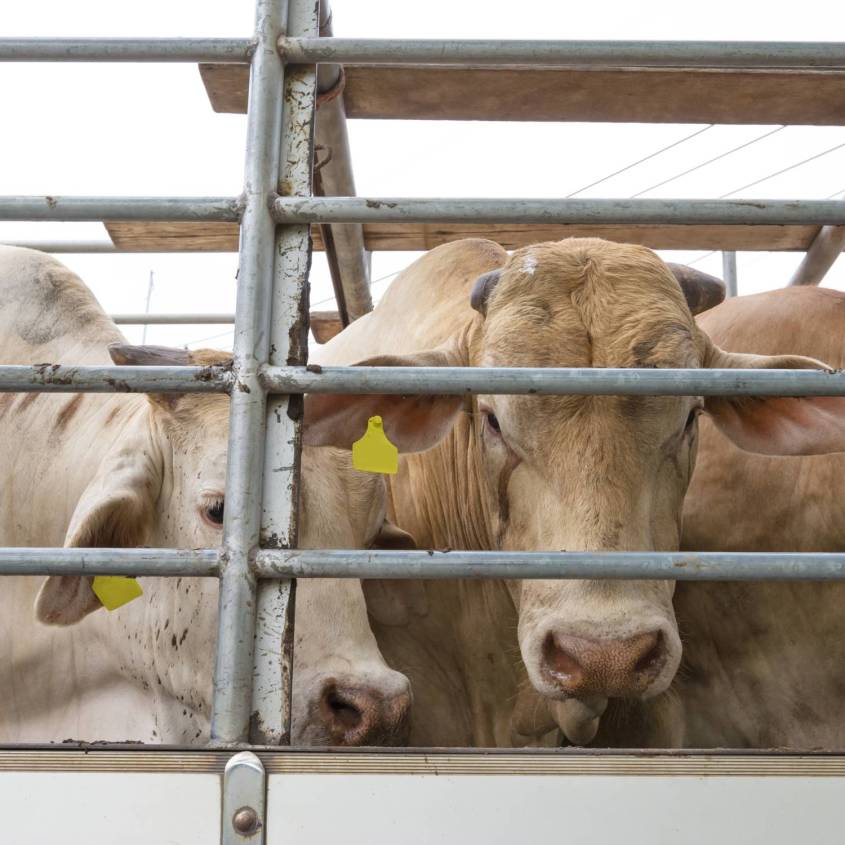
For the time being, every year over one billion animals are transported in the EU and from the EU to third countries without effective protection. EU has become the world’s biggest live animal exporter, according to the NGOs.
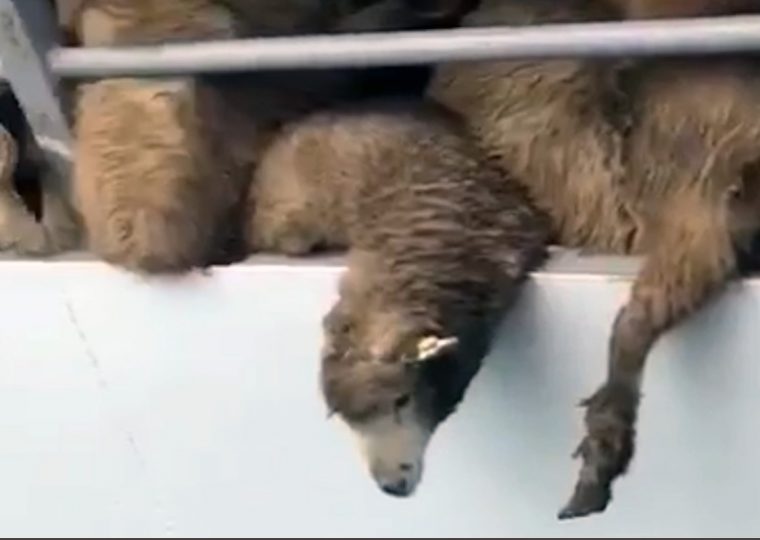
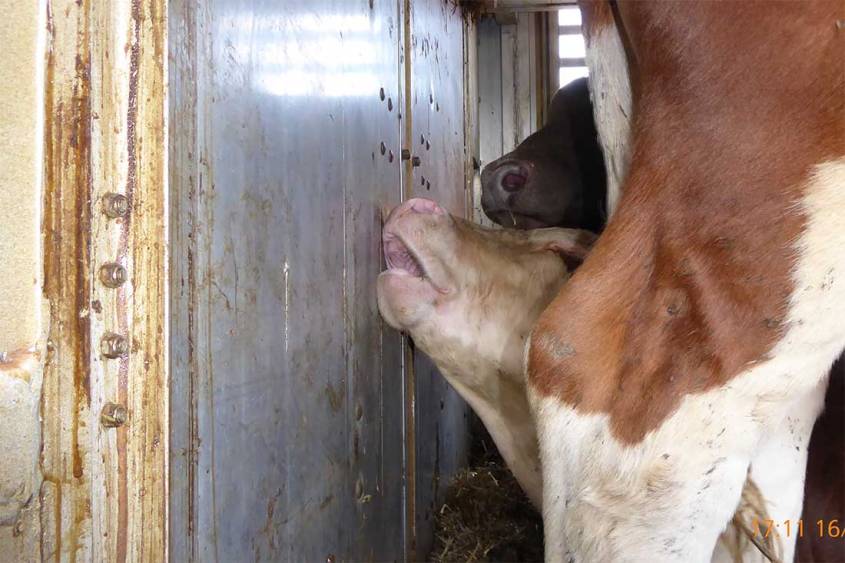
“Over the years we witnessed endless and avoidable suffering: animals crammed on overcrowded and unsuitable trucks and vessels, and animals unfit for transport, such as pregnant, young or injured ones. The tragedies at sea and on the road have given the ANIT Committee plenty of evidence to stop live transport”, commented Reineke Hameleers, CEO, Eurogroup for Animals.
MEP Anja Hazekamp (The LEFT) is Vice Chair of the ANIT Committee and President of the Intergroup on the Welfare and Conservation of Animals. “The way animals are transported in the EU is heart-breaking, devastating and unbelievably brutal and cruel,” she said. “The investigation of the ANIT Committee confirmed that animals are currently not protected during transport and that changes are urgently needed.”
“I expect from my colleagues in the ANIT Committee that they give a strong message to the European Parliament: long-distance transport, live export and the transport of vulnerable animals, such as unweaned animals, so-called ‘end-of-career’ animals and pregnant animals, must be stopped,” she added.
Live animal transports are extremely important from an animal welfare viewpoint, Swedish MEP Emma Wiesner (Renew Europe) told The Brussels Times. “Our patience is running out. Transports take place in poor conditions where the temperature is not regulated, there is not enough space for the animals and they don’t get water during the transport. In addition, the transport distances are far too long.”
Which member states are most in breach of current regulations?
“There are many member states that violate current regulations. Romania, Greece and Spain are some that occur relatively frequently. Member states that do not comply with the law must be sued. The European Commission has every legal opportunity to do this, but has repeatedly failed to use this tool.
“In our compromise proposal, we set a limit of eight hours in transport. That is the current limit that already exists in Sweden,” she added.
Is there a majority in the parliament for changes to the legislation and for better compliance with the regulations?
“In the committee of inquiry, there is now a majority behind the compromises and I hope that they will go through. Europe must become better at taking animal welfare seriously. It’s about countries complying with laws and regulations already in place and about the total time that live animals can be transported. We need also to ensure that we control transports that go outside the EU,” MEP Wiesner concludes.
Update: The article has been updated to include an interview with MEP Emma Wiesner.
MEP’s Make Their Voices Heard Against the Live Animal Business.
WAV Comment – I (Mark) have been witnessing and fighting this vile, disgusting, abusive, cruel, abhorrent, insulting bloody business for over 30 years. December 2nd sees the chance for the EU to start to put something into practice; ie legislation, regarding something it has avoided for so many (too many) years; to now finally make a real legislative issues on live animal transport.
Now, finally, we have so many MEP’s who support change; but it is the non-elected Commission which has the final say. There will be opposition, we expect that, from the industry and the abusive animal transporters who haul innocents all over the EU, and beyond to third states such as Turkey.
Fingers crossed that 2nd December 21 will be a major turning point for live animal transport across the EU and beyond.
Would I give it another 30+ years of fighting if needed ? – you bet I would. If the political leaders of the EU were herded into a 3 tier transporter; spent 48 hours crapping and urinating onto each other; without adequate food and water; then you see how quickly the legislation would change !
Now is their chance – lets hope for their benefit, they meet all the demands set out below. If they don’t, then one has to ask what they are about; certainly not meeting what is required of them by EU citizens.
Regards Mark
On December 2nd the ANIT members can contribute to the building of a truly sustainable transport system by supporting key amendments to the ANIT Report and Recommendations.
To make sure that human and animal health and welfare will be effectively addressed in the revised Transport Regulation, Eurogroup for Animals urges to:
Replace terrestrial farmed animals transport with the export of meat, carcasses and genetic materials to non-EU countries.
Introduce species- and category-specific maximum journey times with a maximum travel time of 8 hours for adult bovine, swine, and ovine, and 4 hours for poultry and rabbits.
Prohibit the transport of unweaned and pregnant animals (for which 40% of the pregnancy stage has already passed).
Introducespecies-specific requirements for the commercial movements of fish and invertebrate, laboratory animals, equidae, cats and dogs.
Introduce clear definitions and species-specific rules for the Intra-EU movement of animals, including stricter and centralised systems for the approval of livestock vessels used to move animals within the EU







 World Animals Voice