Month: December 2018

“Consumers are to business what voters are to politics.”


Germany


Is there actually meat from “animal welfare”?

“Good farm idyl” – does not exist, and despite new meat seal apply in practice hardly improvements in animal husbandry.
Consumers increasingly reject cheap meat from factory farming, so discounters and supermarkets increasingly resort to tricks.
“My butchery”, Aldi (the well-known food chain) advertises, and sells a special XXL crust roast! But who now believes that the “butcher” is right in the neighborhood, is wrong.

Fleisch
And Penny’s chain store “Mühlenhof”  does not exist either. The logo of the sausage manufacturer “Rügenwalder mill” is a mill with red sausages as wings.  Beware of advertising terms such as “from the region” or “from here”; because the term “region” is not protected by law. Recently, the discounters advertise with new meat seals, but even here there are hardly any improvements in animal husbandry.

And indeed, under German Trademark Law, it’s perfectly legal to sell products under a farm name as a product “from the region”, even if they’re not from there.

The German food trade is dominated by the so-called Big Four. Only four major food companies account for 85% of the sales market. This overweight gives them the power over the consumers, because most Germans buy their food there, attracted by cheap offers.
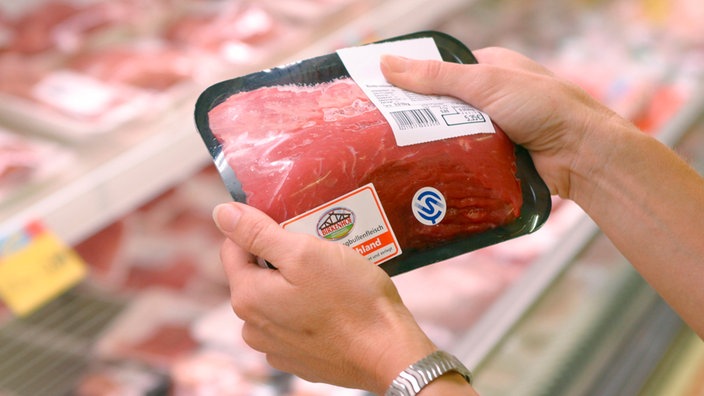
Fleisch Vrpackungjpg

Where does the food for the fattening animals come from?

Soybean meal is the most important feed for intensive meat production. And it is also the most important agricultural import product for the European Union. 80 to 90 percent of soybean seed imported into Germany goes into meat production, the rest into milk production.

Most soya imports come from South America, especially from Brazil, Argentina and Paraguay. In these countries, the savannas are now being cleared to create new crops. The animal mast in Germany is therefore also concentrated in Lower Saxony and North Rhine-Westphalia, because the feed can be landed in the large North Sea ports and the way to the farmers is short.
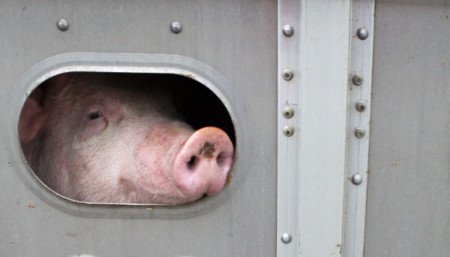
Schwein-in-Transporter_Bernhard-Richter-2-s-450x257

Where should so much “better meat” come from?

The area between Oldenburg ( in Lower Saxony) and Rheda-Wiedenbrück in North Rhine-Westphalia is Germany’s largest slaughterhouse. Every year, 3.5 million tons of pork, 900,000 tons of poultry and 400,000 tons of beef are produced here.
Slaughtering means cutting the throat, hanging it up, drilling the rectum, skining it, cutting it up, cutting it up, packing it.

It is hard to imagine: around 1400 pigs are slaughtered and dissected in the Rheda-Wiedenbrück factory at Europe’s largest meat processor Tönnies. Not during the day, but in an hour. That’s more than 22,000 animals per day. Instead of 26,000 pigs, Tönnies plans to slaughter 30,000 animals per day in Rheda-Wiedenbrück (a small town in the east of Germany).

Finally, what one wants to sell to us as meat from “animal welfare” looks like this in reality: In these animal factories, 5,000 pigs are controlled by one person. The animals are crowded. Their tails are cut and their teeth are ground down, otherwise they will bite each other’s tails out of boredom, get sick and need antibiotics. After a short life they are then slaughtered by modern slaves. These are mostly Bulgarians or Romanians, who bring the animals from their lives to death for 4.50 euros an hour at an insane pace!
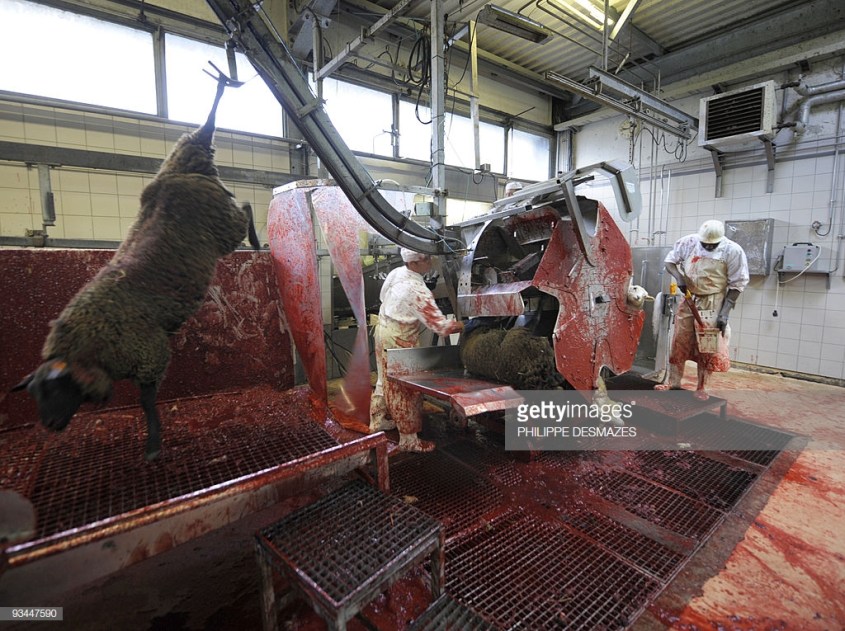
schlachthofjpg

https://netzfrauen.org/2018/12/12/fleisch-3/#more-58555

My comment: In the world of animal husbandry, meat production is often considered the lesser evil. We are pretty cleverly manipulated to combine milk and meat production with luck. Cow cartoons on yogurt cups are always smiling, dairy cows have their own commercials where they literally sing and dance with joy.

However, the dairy and meat industry has become a criminal enterprise in which animals are treated like objects. Consumers who want to do something good for their conscience and therefore buy meat “from the farmer” are cheated and ripped off because they pay a high price for an ‘animal welfare’ that is both legally and economically ignored and therefore does not exist

“Consumers are to business what voters are to politics.” Jim Turner, American business journalist.

My best regards, Venus
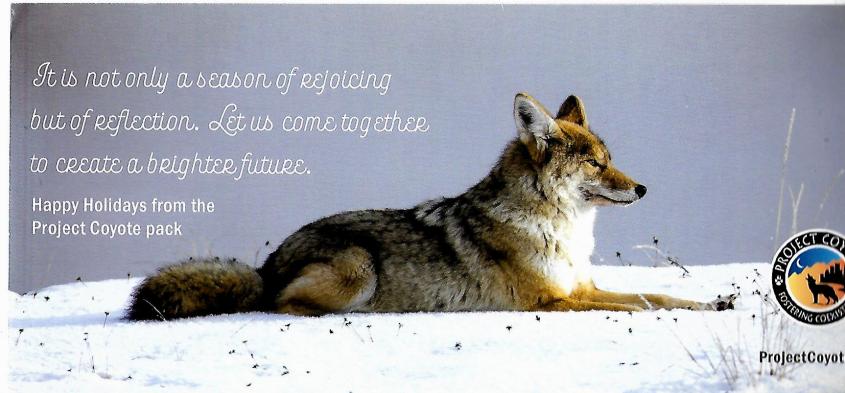
‘Happy Holidays’ From Our Friends at Project Coyote. Join Up and Win Bri’s Guitar !

Visit them at   http://www.projectcoyote.org/ 

Better still – join up and become part of the pack like us.

You could win Brian’s very special ‘red’ guitars – see below.


PC 1 Xmas

Own A Red Special Guitar from Queen’s Brian May

“You may know me as a founding member of the rock band Queen. As a devoted animal advocate who believes in standing up for the underdog—those species most maligned and misunderstood by society—I pledged my support to Camilla and her team many years ago, after I learned about the remarkable work Project Coyote is doing on a very lean budget to protect coyotes, wolves, bobcats, and other North American carnivores.

Now I’m proud and excited to invite you to support Project Coyote by participating in our holiday auction for a signed Brian May Red Special Guitar, which I hope will bring the winning bidder (or a very lucky giftee!) as much joy as it has brought me.”


Brian May
Founding Member & Lead Guitarist ~ Queen

Founder ~ Save Me Trust

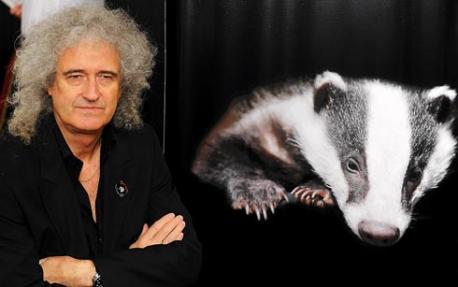
Brian May Badgers


Project Coyote Ambassador


http://www.projectcoyote.org/about/ambassadors/brian-may/


PC 2 Xmas

BM save me 2

England: Ban the Use of Farrowing Crates in the UK – The UK Government Responds Positively.

England


We have been fighting to get a ban on farrowing crates being used in UK farming practices.

We are happy with the response provided by DEFRA below; and although we all wish for quicker times, we accept that it does take time to phase out existing equipment.

We supported:

Ban the use of farrowing crates in the UK

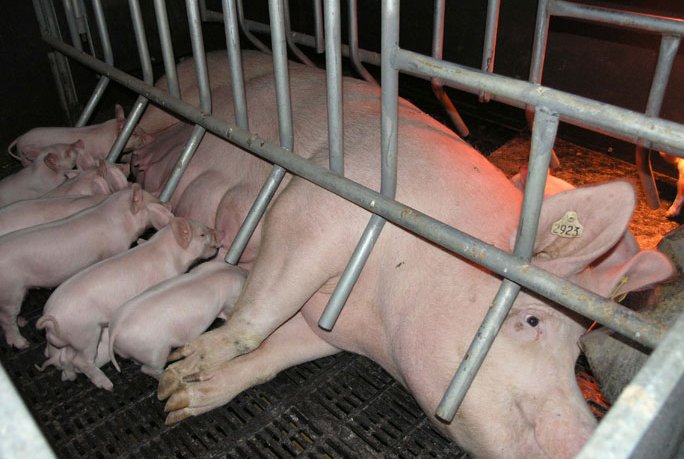
Farrowing crates, profoundly similar to sow crates which were banned in the UK in 1999, are long, narrow crates in which sows are contained during gestation. It’s still legal to use farrowing crates in spite of them having the same implications to animal welfare as the sow/gestation crates.

Pigs are intelligent, sentient beings and these crates deny their natural behaviours. This frustration can be displaced to damaging abnormal behaviours such as self-mutilation due to the intensive conditions. Farrowing crates severely restrict the sow’s movement and deny them the instinctual urge to build a nest, worsening their frustrations. Having been made illegal in Sweden, Norway and Switzerland, we should follow this route of progression to maintain our reputation for good animal welfare.

farro 1

————————————–

UK Government Ministry DEFRA (Department for Environment, Food and Rural Affairs) has responded to us with the following:


Dear Mark Johnson – Founder ‘World Animals Voice’,

The Government has responded to the petition you signed – “Ban the use of farrowing crates in the UK”.

Government responded:

The Government aims to make farrowing crates unnecessary. Alternative farrowing systems in indoor production are insufficiently advanced. Approximately 60% of UK sows are in farrowing crates.

The Government shares the public’s high regard for animal welfare and we are committed to being a world leader in the care and welfare of animals.

Comprehensive animal welfare laws already exist to protect livestock, including pigs. The Welfare of Farmed Animals (England) Regulation 2007 (WOFAR) equally protects the welfare of the sow, as well as her piglets. It permits the use of farrowing crates. The majority of sows are housed in farrowing crates from approximately five days before they are due to give birth, until their piglets are weaned at 28 days of age.

After this period, they must be moved back to loose/group housing accommodation in which they are free to turn round easily. Both nesting material for sows and the need to provide environmental enrichment materials for all pigs are a requirement in WOFAR. Comparable legislation exists in Wales, Scotland and Northern Ireland.

The Government’s aim is to reach a point where traditional farrowing crates in indoor production are a thing of the past and where any new system protects the welfare of the sow, as well as her piglets. Government funded research has been undertaken by Scotland’s Rural College and the University of Newcastle, to develop and test commercially viable farrowing systems which do not closely confine the sow but provide adequate protection to piglets. This research has shown that some such alternative systems seem promising in an experimental environment, but it remains the case that results need to be replicated consistently under commercial conditions, as piglet mortality is still too high. Research is continuing to develop the system to try to improve piglet survival further.

As part of the Government’s animal welfare reform programme, the statutory pig welfare code is being updated and enhanced to safeguard the welfare of pigs, in line with the most recent scientific and veterinary advice. Pig keepers are required by law to have access to and be familiar with the code.

Department for Environment, Food and Rural Affairs

UK Government and Parliament

Costa Rica: a third world country makes a first-class decision!


Costa Rica is the first Latin American country to ban hunting!


Costa icapng


In 2012, Costa Rica was the first Latin American country to ban hunting by a unanimous decision of the National Congress. It was a step forward on the path to the protection of wildlife – probably the most valuable asset of this country.

tiger-11

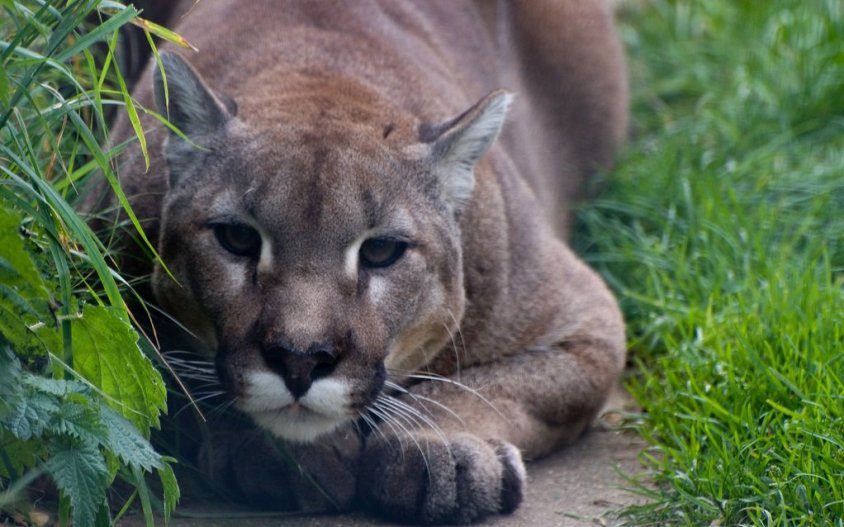
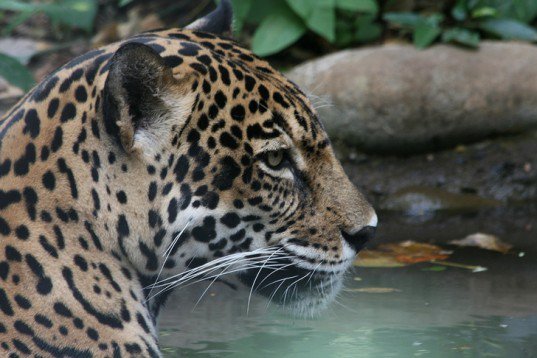
Before the ban, hunters from all over the world flocked to Costa Rica to hunt pumas or jaguars, or to catch these wild animals and then sell them on the black market. The country’s population launched an initiative to protect wildlife. The petition with over 177,000 signatures was then submitted to Congress.

The big cats were not the only victims of the insatiable greed of the hunters. Trappers caught parrots and sea turtles and smuggled them out of the country. People demanded $ 5,000 (around € 4,750) per person for hunting trips – and the population was fed up with it.

Jaguar-Marco-Zanferrari-537x3581

More than 4.5 million people live in the country and it is said that Costa Rica is one of the most biodiverse nations in the world. Support for the congress also came with the decision to close the zoos in the country and return the animals to their natural habitats.

Those who violate the new hunting law will be punished with up to four months imprisonment and pay a fee of $ 3,000 (around € 2,850).

Article of livingtheorganicdream.com.

My comment: Costa Rica is also one of the countries that have no military.
And we, who are not third world countries, we, who believe that we are the strongest and the best, we, the first world countries, we are not even able to banish the wild animals from the circus, to ban the hobby hunt, let alone close the animal’s open air prisons, the zoos.

My best regards, Venus
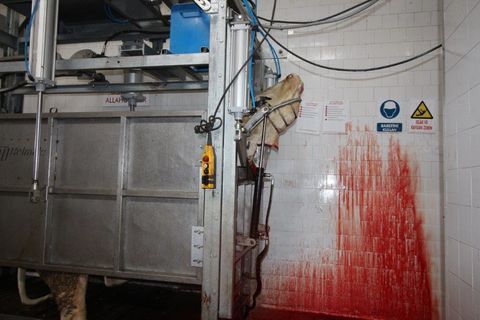
Thousands of farm animals die in barn fires, and no one seems to care.


Thousands of farm animals die in barn fires, and no one seems to care 

When a barn catches fire, it can have disastrous consequences for the livestock trapped inside.

“The animals have no chance to escape. I mean, how do you evacuate 5,000 pigs or 60,000 chickens?” said Vicki Fecteau, the director of the Canadian Coalition for Farm Animals.

She said the immense scale of modern farming and the giant barns required mean the casualties are often enormous.

Fecteau spoke to Michael Enright, host of The Sunday Edition, about the coalition’s efforts to raise awareness about the toll barn fires take on the lives of animals.

Between January 2015 and October 2018, 610,000 farm animals died in barn fires in Canada.

Fecteau said society has a blind spot when it comes to the wellbeing of livestock.

For example, she said, there was international media coverage when 43 racehorses died in an Ontario barn fire in 2016.

“That very same week 50,000 ducks died in a fire in Quebec and that did not make the news at all. It may have made a local paper but, you know there was really no news about that at all.”

·         Lessons learned at Classy Lane Stables in wake of devastating barn fire

Fecteau said people are very responsive when companion animals — including horses — are hurt or killed, but not livestock.

Vicki Fecteau says the media rarely takes notice when livestock are killed in barn fires. (John Ulan/University of Alberta)

The problem is not just the size of modern barns, but their susceptibility to fires.

Ontario’s Agriculture Ministry reports that 40 per cent of barn fires in that province are related to electrical problems.

Fecteau said the environment in barns is very harsh on electrical systems, causing the equipment to deteriorate and malfunction.

“There are corrosive gases like ammonia […] and hydrogen sulphide from animal waste. They have high humidity levels. There’s a lot of dust.”

The coalition is now working with the government to try and increase the use of fire detection systems in barns in Canada.

Fecteau said installing fire systems is expensive for farmers, but they also lead to lower insurance premiums.


USA: The Dirty Water Rule and Seismic Airgun Blasting – Americans Must Take Action !


USA-Flagge

trump clean water 1

The “Dirty Water Rule.”

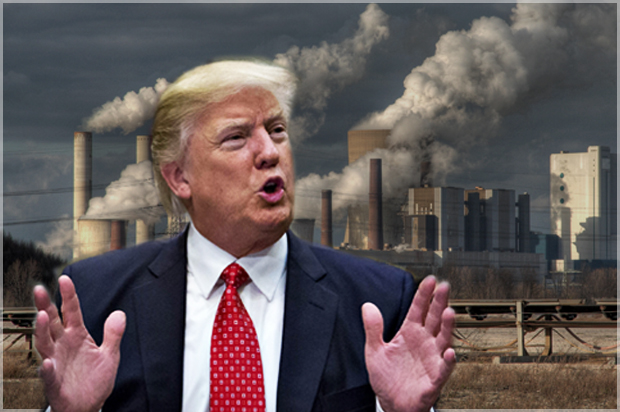
That’s what we call President Trump’s new move to give fossil fuel giants, factory farms, and other industrial polluters the green light to pollute thousands of vital rivers, lakes, and streams with no repercussions.

Trump’s EPA just released its disastrous plan to gut the protections of the Clean Water Act that help prevent the pollution of drinking water sources for millions of Americans. It makes no scientific, legal, public health, or fiscal sense.

NRDC is prepared to fight back at all costs to stop this senseless attack on clean water, our environment, and our health.

But right now we need your help to rally a massive public outcry.

Tell the EPA to reject Trump’s disastrous Dirty Water Rule and protect our swimming and fishing spots and sources of drinking water for millions of Americans. Be one of the 100,000 activists we need to stand strong for clean water protections.

The Clean Water Act was designed to protect lakes, rivers, streams, and other waterways across the country, and hold polluters responsible if they violate its requirements.

Trump’s Dirty Water Rule will gut those critical protections, and threaten to contaminate our drinking water supplies and destroy important habitats for aquatic wildlife.

We’ve already seen enough devastating impacts from pollution and climate change on the nation’s water resources as of late: Outbreaks of harmful algae in Lake Erie that contaminated drinking water for thousands in Toledo, Ohio… losses in the Pacific salmon population in the Pacific Northwest… drought in California and across the west… and unprecedented toxic algae blooms in Florida, which have killed millions of fish, and other marine wildlife, and led to a state of emergency in the Sunshine State. Hobbling the Clean Water Act will only add to this list.

And while slashing safeguards for clean water will impact ALL Americans, low-income communities and communities of color could be hit the hardest — exacerbating inequality in communities that are already disproportionately impacted by polluted water.

We must stop this no-holds-barred attack on our clean water. Call on the EPA to reject Trump’s dangerous Dirty Water Rule immediately and help us reach our goal of 100,000 official public comments.

The Trump administration has been attacking clean water since Trump came into office, and NRDC has sued to protect it.

You can be sure that we’ll continue to fight this outrageous assault on clean water — in and out of court — and any Trump administration attack on our environment and health.

Will you join us today and demand that the EPA protect clean water for all?

Thank you for speaking out.

Sincerely,

Rhea Suh
President, NRDC

———————————————————

Mark,

The Trump administration has given the green light to oil and gas companies to use
seismic airgun blasting in the Atlantic Ocean, from New Jersey to Florida, to
search for fossil fuels in the sea floor. Seismic airgun testing involves
firing extremely loud and continuous blasts of compressed air–every few seconds, twenty four hours a day, for up to weeks or even months at a time–to determine whether oil and gas deposits are present.

The consequences of seismic airgun blasting could be devastating to marine wildlife.

Hundreds of thousands of ocean animals could be disturbed, maimed, or killed as a result of this shortsighted and potentially very deadly testing program. Marine
mammals like whales and dolphins are at a higher risk for harm since they rely
on hearing to communicate, reproduce, and find food.

The North Atlantic right whale,  migrates in the blast testing area.
This species is teetering on the brink of extinction with an estimated 400
individuals left in the wild.

Take action now and
tell Congress to protect the North Atlantic right whale and other marine mammals
by opposing the following legislation: SEA Act (HR 3133) and SECURE Act (HR 4239), and supporting legislation such as the Atlantic Seismic Airgun Protection Act (S. 1263/ HR 2158).

The impacts of expanding offshore drilling will be extremely
harmful to marine ecosystems.

Offshore drilling causes habitat destruction, ocean acidification, and oil spills,
resulting in immense loss of wildlife. Use of fossil fuels speed up climate
change and associated risks. We cannot let this administration open the door to
new offshore drilling when we have only twelve years to act against climate
change.

Email your members of Congress right now and tell them to oppose the potentially deadly seismic airgun blasting and stop the expansion of offshore drilling in the biologically rich waters of the Atlantic!

In solidarity,

Stepph Sharpe
Turtle Island Restoration Network

trump dirty money

Dirty Policy – Dirty Money.


liberty oh god

EU: the business with the life of the animals..


EU- Flagge


Millions of animals are transported across Europe every year, to North Africa and the Middle East. Main customers for German and EU cattle for years are third countries such as Lebanon, Libya and Egypt, but also Turkey.

In 2018, Germany granted import licenses for half a million cattle from the European Union.

The transport of animals is a profitable business, because the tariffs for meat, for example, in Turkey are much higher than those for live animals. But the cattle are often penned for days or weeks on trucks and ships or have to endure at much too high heat without water at the border crossings.
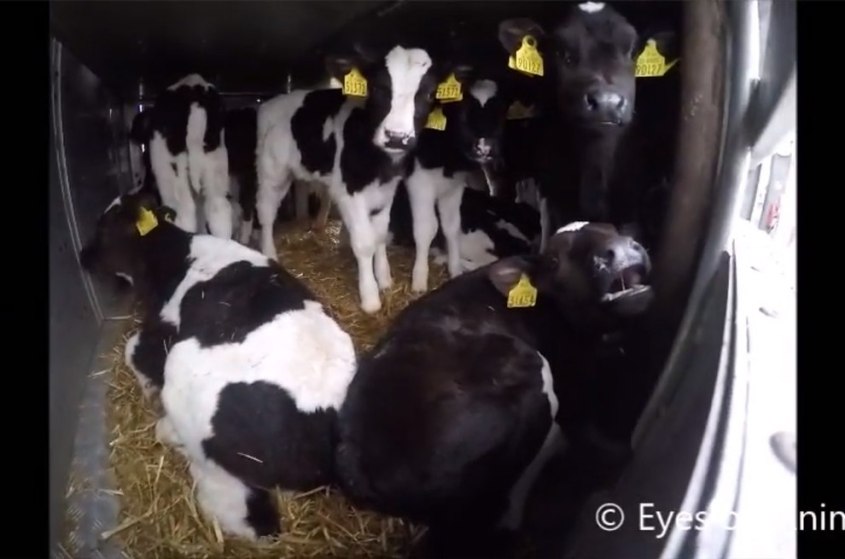
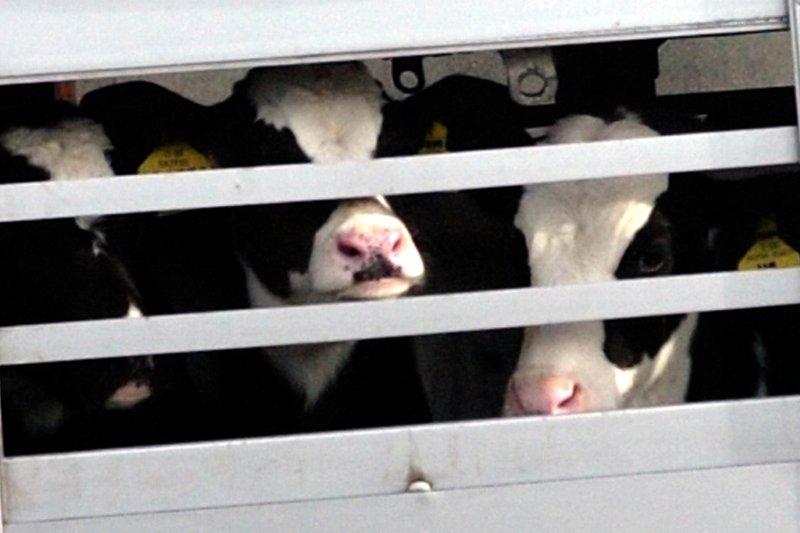
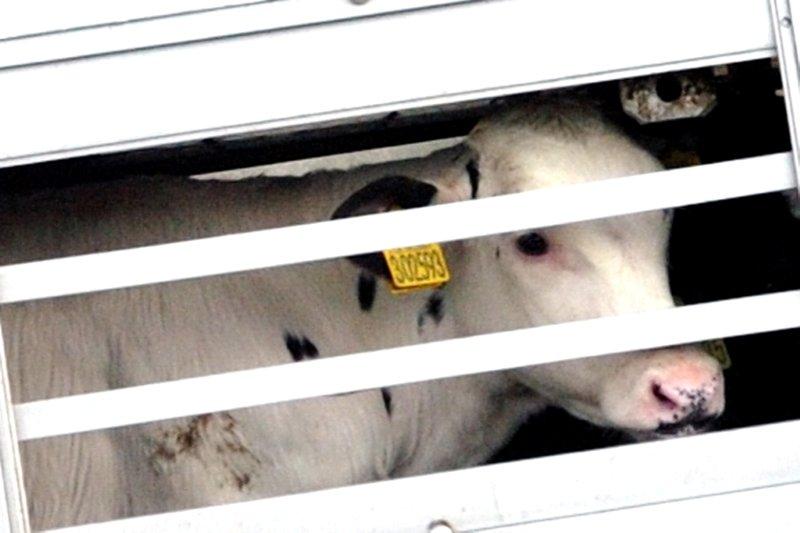
Even small calves are transported over 3000 kilometers. Arriving at their destination, the animals await a torturous end in the slaughterhouses of third countries.


Kuh mit eingekemmeten Kopf


Tormenting on livestock freighters

Animal rights activists raise the alarm: NO ONE cares about the law any more, as soon as our animals leave the EU, they say. They report, for example, on thirsty cattle at the Turkish border crossing, on unspeakable torture on old livestock freighters, and on their arrival in the Middle East and North Africa.

tote Kuh in Transportjpg

The fact that animal transport is often not complied with EU standards over a long distance was demonstrated by the ZDF (second german television program)  with the film from Manfred Karremann “Geheimsache Tiertransport” (“Secret thing animal transport”) in November 2017, which brought the grievances into the consciousness of the general public again. In the meantime, politics has also recognized the need for action.

Hängende Kuh-Karremann

Members of the European Parliament from Germany, Austria and the Netherlands had taken a picture of animal transports in July 2018 and documented violations of the EU Animal Transport Directive.

After broadcasting these unbearable pictures of the cattle export to third countries in the TV on 2017, green agriculture spokesman Friedrich Ostendorff attacks the Federal Government sharply. These “scandalous animal transport conditions” have been known to the government for years. Only last winter, the Green parliamentary group has submitted an application to the Bundestag with the aim of improving the conditions for the animals and to limit the transport.

“But instead of supporting this initiative, the federal government relied on increasing exports with devastating effects: the number of long-distance transports of cattle exploded in Schmidt’s (Former agrarian minister of Germany) term; They were tripled to Lebanon and more than tenfold to Turkey and Russia, “said Ostendorff.

Although all experts have called for greater control of animal transports to third countries, the Agriculture Committee of the federal daily, end of September 2018 with the voices of the Christian Democratic Union / Christian Conservatives, the Social Democratic Party and the right populist party, rejected the request.

No control of transport outside the EU

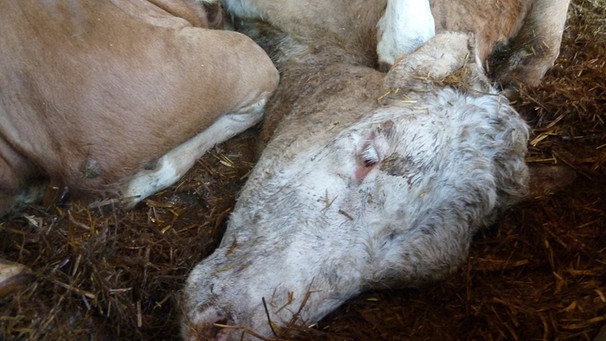
Just recently, one million protest signatures were handed over to the European Commission in Brussels. The background: The European Court of Justice has ruled that the welfare of the animals must be guaranteed to the last destination. But nobody controls the transports once they have left the EU. This is also confirmed by the doku film from author Manfred Karremann, “37 degrees” . Shortly after the EU’s external borders, he encounters thirsty cattle, as well as breeding cows, who give birth to the truck and die.

56-stunden-tiertransport-titel.Kälberjpg

Manfred Karremann wanted to know: Are the pictures of animal suffering exceptions? Or is a law systematically abused? In a several-month, investigative research that has led him from German farms to Bulgaria and Turkey to Lebanon, he pursues this question. With a terrifying result. “37 degrees” shows the result.

Manfred Karremann about the movie

“The scream from the slaughterhouse” was my first movie in 1989. During the filming I saw how miserable cattle and pigs have just arrived at slaughterhouses after a transport through Germany. That was the reason to take a closer look at the international animal transports.

This is a section from the film by Manfred Karremann and I have deliberately attached, because there is the possibility of an English translation in subtitles here.

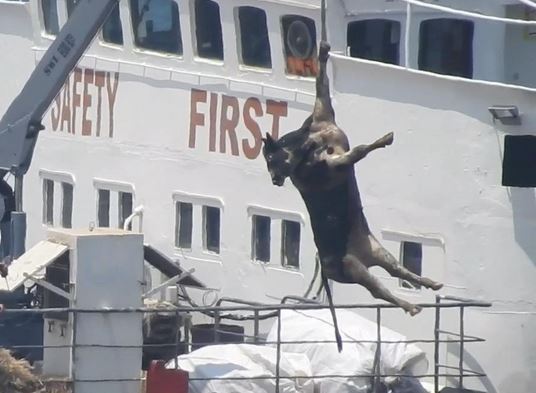
Many films were made in the episode. They look like one, because some pictures are similar in a frightening way: “Then the picture of the hanging cow, which is already fifteen years old, will surely come again”, an exporter told me recently about the current film. In fact, but there were many different ships and each time other cattle, which were unloaded at winches and cranes of ships. The current film deals with the question: What does animals expect once they have left Germany or the EU?

the whole film from Manfred Karremann

Annotation: This Video  is unfortunately in German without the possibility of an English translation with subtitles. At least I could not find an English version.

The following is a relevant video for animal transport abroad

Hell’s torments: Animal transport by ship (Video aus VGT (Association against animal factories, in Austria)

(The video material was shot by Animals International in 2016)


The text translation of the video is mine:

Every year millions of live animals are exported from the EU. Among other things, they are sent to Turkey and the Middle East or to North Africa

The animals travel for hours in transports, loading the ships takes several days

Punches and electric drivers are the order of the day. On the ships, the animals are poorly cared for. It is very tight and hot.

Even small calves are exported to thousands.

After days on the ships, the animals are completely dirty.They are transported on inappropriate transports.

Some are already dying on the way. The local conditions are terrible. Most of the exported animals are killed soon.

Even in larger slaughterhouses, the animals are killed without anesthesia.

European agriculture DOES NOT CARE about the fate of exported animals

Sign our petition. https://vgt.at/actionalert/tiertransporte/petition.php


My comment: Today, I read to a web page, what the head of Vegetarian Federation Germany, Proveg, said: “Our goal is to halve the meat consumption in the world by 2040.”

Maybe the Mister is one who believes in Santa, and Christmas is coming soon too.

My best regards to all, Venus

Global Warming Could Raise Ocean Levels By 28 Metres.

Related image


Full article – https://www.bbc.co.uk/news/science-environment-46517396

Nasa says it has detected the first signs of significant melting in a swathe of glaciers in East Antarctica.

If this trend continues, it has consequences for future sea levels.

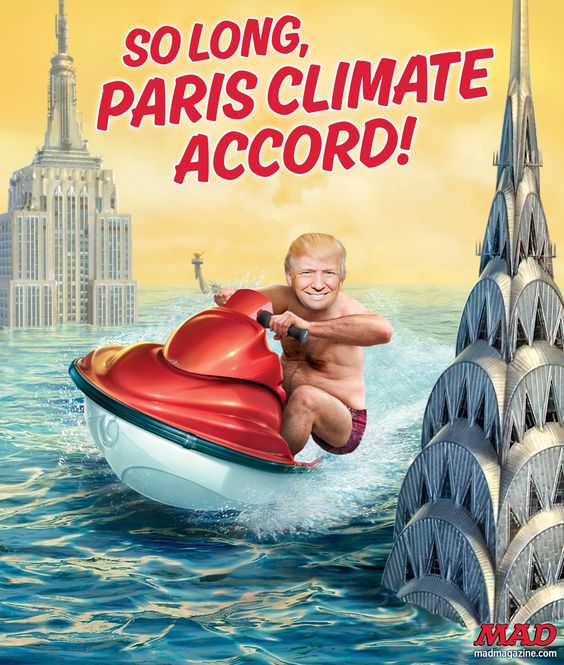
There is enough ice in the drainage basins in this sector of Antarctica to raise the height of the global oceans by 28m – if it were all to melt out.


WAV Comment – A pity those in power who could do the right thing, don’t !! – hope he can swim, or maybe not.

big power plant

trump global sea level 1

EU: Before the Elections in 2019; the EU Wakes Up To the Reality That EU Animal Welfare Is Not Good. Yet More Talk Only; or Real Action This Time ?


zerissene EU-Flagge am Stock


 Talking of the EU; please check out our recent post re foie gras production in the EU:

https://worldanimalsvoice.com/2018/12/11/eu-82-of-eu-citizens-think-that-farm-animals-should-be-better-protected-mr-junker-always-the-no-black-sheep/


EU to review animal welfare strategy

By Peter Teffer

The European Commission is going to evaluate its animal welfare strategy, it has said in response to a report by the European Court of Auditors published on Wednesday (14 November).

The review of the strategy comes almost three years after the European Parliament asked for it.

The auditors said in their report that animal welfare in the EU has improved, but that member states were slow to implement recommendations from the commission.

One example of slow implementation was found in France.

In 2010, the EU commission had recommended that French inspectors use better equipment to check conditions of animals’ environment on farms and during transport.

According to French legal requirements already in place since 2000, inspectors were supposed to have specialised equipment to make measurements.

The French authorities had not, however, procured all the required equipment by the time of our audit,” the auditors wrote.

“During our visit to a laying hens farm certified as free-range, where the presence of ammonia inside the building was evident, the French inspector did not have the necessary equipment to measure the level of gas concentration. The inspector noted in the inspection report that the related requirement had been met,” they added.

Following the auditors’ visit, French authorities told the EU commission in spring 2018 that they had bought measurement equipment.

“However, inspectors were only asked to use this on farms raising chickens for meat,” the report said.

Meanwhile, Romania had been told several times between 2009 and 2011 that it needed to have legal sanctions in place for those who broke EU animal welfare rules.

“At the time of our audit, the Romanian authorities had not yet approved the necessary changes in the legislation to apply such sanctions,” said the report.

hungarian calf

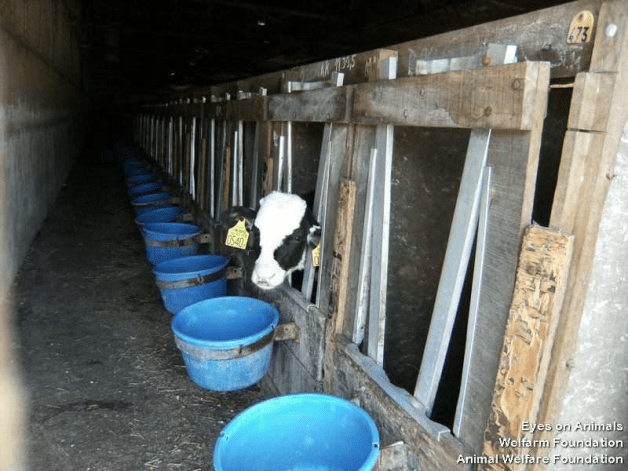
Above – A Calf peers out of a veal crate which should have been banned in the EU 6 years earlier !!

eu-flagge-zerrissen-pg

A review, finally

The EU’s animal welfare strategy was published in 2012, and was specifically designed for the period 2012-2015.

However, some of the proposed measures were delayed until after 2015, and the commission has not published a new strategy paper since.

On 26 November 2015, the European Parliament adopted a non-binding resolution urging the commission “to evaluate the existing strategy and to draw up a new and ambitious strategy for the protection and welfare of animals for the 2016-2020 period in order to build on the work of the previous strategy and ensure the continuation of a framework for delivering high animal welfare standards across the member states”.

In March 2016, a group of northern and western European ministers also called for new rules to improve animal welfare standards.

The European Court of Auditors said in a report out on Wednesday that the commission had not assessed if the strategy had achieved its goals.

“There are no baseline indicators or target indicators to measure how far the strategy objectives have been achieved and the commission had not yet evaluated the results of its actions as requested by the European parliament,” said the report.

In response, the commission acknowledged that, and said that it planned to perform an evaluation of the strategy.

“Its actions have not yet been evaluated since they were completed only by early 2018, and therefore, the impact of all actions has not yet materialised,” the commission said.

eu-flagge-zerrissen-pg

Improvements, but slowly

The report stated that there were “still some significant discrepancies between the animal welfare standards established in the EU legislation and the reality on the ground”.

They audited the situation in Germany, France, Italy, Poland, and Romania.

“The member states visited generally followed the European Commission’s recommendations, sometimes took a long time to address them,” auditor Janusz Wojchiechowski told journalists in a briefing on Tuesday.

He did not want to say whether the commission should introduce a new animal welfare strategy.

“This is not our role, to suggest or recommend to have a new strategy,” he noted.

The report stated that some of the measures announced in the 2012 strategy, like the publication of EU guidelines on the protection of animals during transport had been delayed by up to five years.

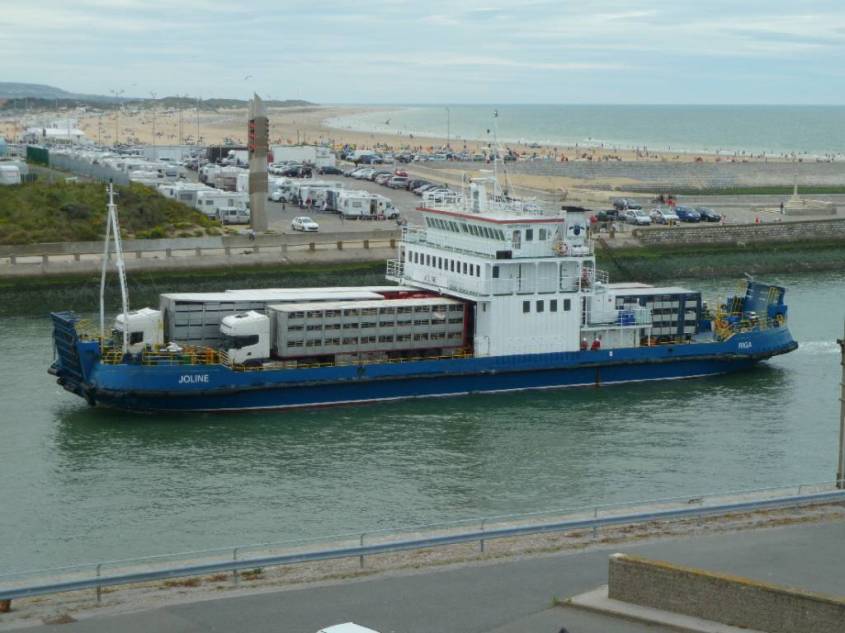
Below – Live exports of animals from the UK to France by Dutch convicted criminals !

Joline

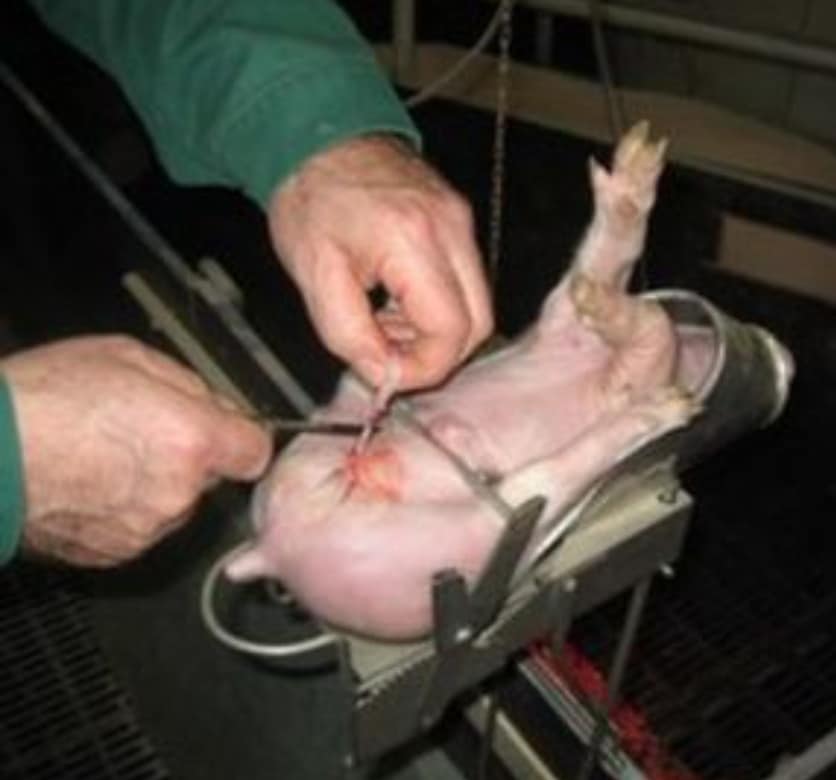
Kastration für Ferkel -Schritt 2_n

Above – Germany – A piglet is castrated without any veterinary involvement or use of medication.


“The guidelines on pig welfare and on the protection of animals at slaughter were also delayed due to lengthy discussions with stakeholders,” the report said.

“Most reports were based on external studies, which were sometimes delayed due to lack of staff at the commission to manage the procurement process and review draft content,” it continued.


eu-flagge-zerrissen-pg

Further reading of our posts relating to EU lack of involvement for EU animal welfare issues:

https://worldanimalsvoice.com/2018/12/08/give-us-today-our-daily-meat/

https://worldanimalsvoice.com/2018/12/06/pissing-in-the-rain/

https://worldanimalsvoice.com/2018/12/01/hungary-eu-more-evidence-to-show-why-the-eu-cannot-enforce-its-own-legislation-regarding-animals-and-their-welfare/

https://worldanimalsvoice.com/2018/11/27/england-dutchman-onderwater-exports-scottish-calves-from-ramsgate-plus-more-info/


junker

Junker – Mr all talk and do nothing.