Month: June 2020

Thank You for Your Continuing Support.


Hi all;


Just a quick line to say thank you for your continued support and for your comments and likes of many of our posts. We get too many to return thanks individually; but rest assured; we do read everything that comes through.

If you ever want us to concentrate on something special; or do an article or two, then please just let us know through the usual channels.

Fingers crossed for our friends at Animals Australia that they will be successful in their court case over the next few days. We know from our fight against this trade in the EU / UK how difficult it can be. We wish them all good results for the animals.


Regards Mark and Venus.

https://clustrmaps.com/site/1a9kn 


Good to be global – a World Animals Voice !


ValCameron141113_7604 _1

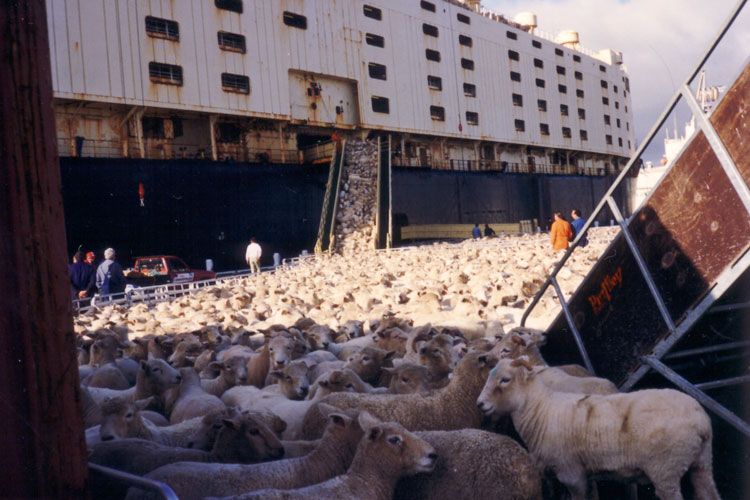
Photo – Uk sheep exported by Dutch haulier – Dober Harbour, SE England – by Val Cameron.

Australia: From RSPCA Australia. Live Sheep Exports. Act Now – Very Little Time.

australia


Mark we bring you sad and shocking news today.##

As you may have heard, the Government has backflipped under pressure from a live exporter and agreed to exempt them from rules that would’ve protected tens of thousands of Australian animals from a torturous journey into the Middle East at the most dangerous time of year.


Just one week ago, they made the right decision, upholding their own regulations in accordance with the overwhelming science and evidence.

But now, after promising to independently regulate this reckless industry based on the science and evidence, the government is apparently unable to stand up to the live exporter and uphold its own laws.

So they’ve given in. And in doing so, they’ve shown beyond doubt that they cannot uphold these important animal protection regulations in the face of industry pressure.

Australians – including farmers – know there are rules they must follow when it comes to caring for their animals.

If they don’t follow the rules, there are consequences.

So why don’t the same rules apply to live exporters?

And why does our government keep giving in to them?

Live exporters are playing by their own rules and making a mockery of our regulations, and the Australian Government is letting it happen.

This exemption is an absurd decision by the regulator, and how it has come about needs to be heavily scrutinised.

Three out of every four Australians want live exports to end. But everyone agrees the industry should be well managed and regulated.

That’s not happening.

Time and again, live exporters like RETWA / KLTT bring negative attention and damage the international reputation of Australian agriculture by flagrantly risking the welfare of our animals.

This cannot be allowed to continue.

They don’t respect our rules. And if the Australian Government and the regulator can’t stop this from happening, live export cannot continue.


The clock is ticking.

First, this shock exemption has been with no notice and no consultation. That’s just not good enough.

We’re asking the Minister to uphold the law and stop this shipment.

Second, we’re insisting there must be an independent observer on board at the very least – as is current government policy – so the live export industry cannot hide the truth.


TAKE ACTION IMMEDIATELY


https://www.rspca.org.au/take-action/live-sheep-export?utm_source=Email+Campaign&utm_medium=email&utm_campaign=27921-57306-2020-06-15+eBlast+-+Subject+B+-+Government+gives+in+to+live+exporter%2C+backflips+on+own+regulations+…


https://www.rspca.org.au/take-action/live-sheep-export?utm_source=Email+Campaign&utm_medium=email&utm_campaign=27921-57306-2020-06-15+eBlast+-+Subject+B+-+Government+gives+in+to+live+exporter%2C+backflips+on+own+regulations+…


There is nothing sweet about honey!

Although there were 3,500 native bee species of bees pollinating the flowers and food crops of North America when European settlers landed on its shores in the 17th century, the colonists were interested only in their Old World honeybees’ wax and honey.
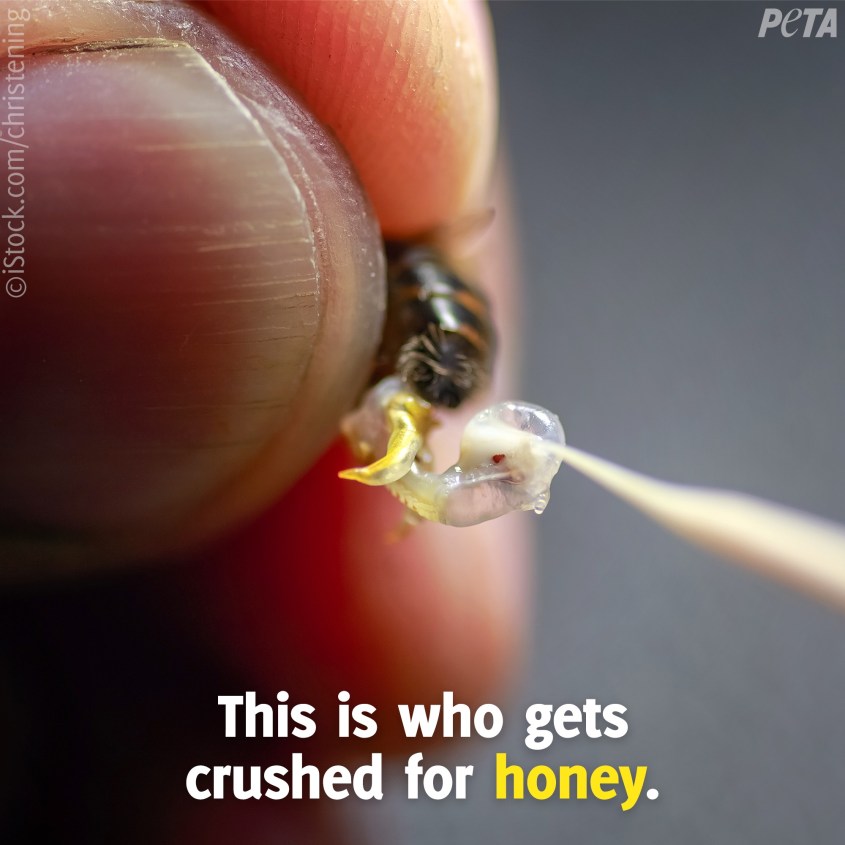
bienen und HonigBees heads are CRUSHED so workers can steal their semen and use it to forcibly impregnate queen bees.


They imported the insects, and by the mid-1800s, both feral and domesticated colonies of honeybees were scattered all over the United States. As a result of disease, pesticides, and climate changes, the honeybee population has been nearly decimated, but since the demand for the bees’ honey and other products remains high, these tiny animals are raised by industries, much like chickens, pigs, and cows are.

The Complex Lives of Bees

bienen-auf blumejpg

A honeybee hive consists of tens of thousands of bees, each with his or her own mission that is determined by the bee’s sex and age as well as by the time of year. Each hive usually has one queen, hundreds of drones, and thousands of workers. Queens can live for as long as five years, while other bees have life spans ranging from a few weeks to six months.

Worker bees are responsible for feeding the brood, caring for the queen, building comb, foraging for nectar and pollen, and cleaning, ventilating, and guarding the hive. The drones serve the queen, who is responsible for reproduction.

bienenköniginpg

She lays about 250,000 eggs each year—and as many as 1 million over the course of her lifetime.

When a new queen is about to be born, the old queen and half the hive leave their old home and set up in a new place that scouting worker bees have found.

As the temperature drops in the winter, the bees cluster around the queen and the young, using their body heat to keep the temperature inside the hive steady at around 93 degrees F.

A language all their own
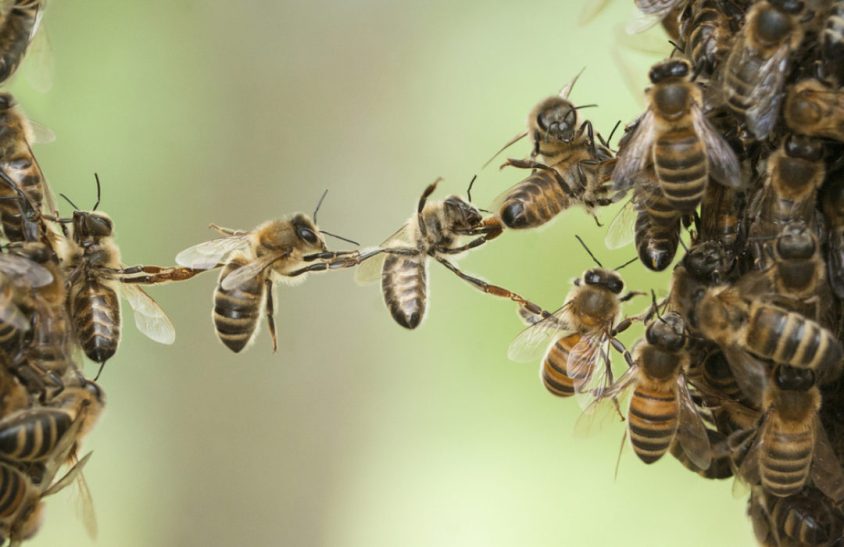
bienenschwarm-1080x700

Bees have a unique and complex form of communication-based on sight, motion, and scent that scientists and scholars are working to understand. Bees alert other members of their hive to food, new hive locations, and conditions within their hive (such as nectar supply) through intricate “dance” movements.

Studies have shown that bees are capable of abstract thinking as well as distinguishing their family members from other bees in the hive, using visual cues to map their travels, and finding a previously used food supply, even when their home has been moved.

And similar to the way that smells can invoke powerful memories in for humans, they can also trigger memories in bees, such as memories of where the best food can be found.
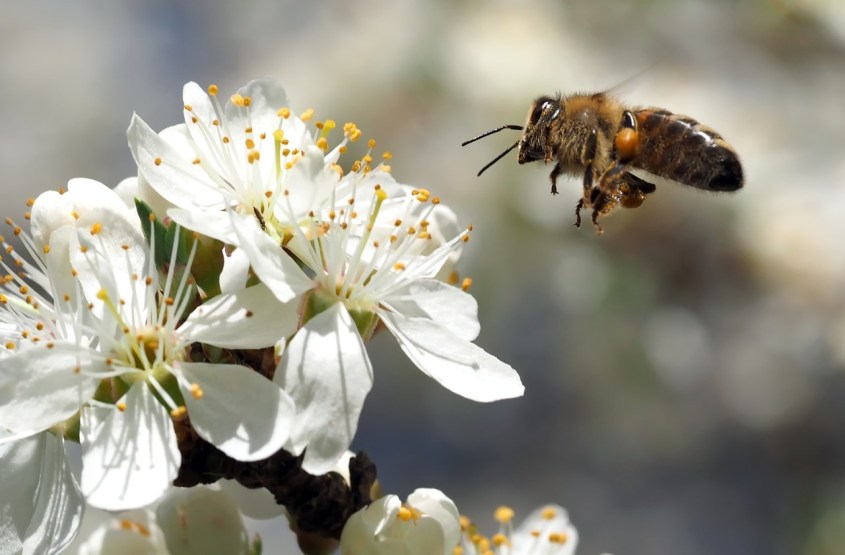
bienen-auf Blumen

Why Bees Need to Keep Their Honey
Plants produce nectar to attract pollinators (bees, butterflies, bats, and other mammals), who are necessary for successful plant reproduction.

Bees collect and use nectar to make honey, which provides vital nourishment for them, especially during the winter. Since nectar contains a lot of water, bees have to work to dry it out, and they add enzymes from their own bodies to convert it into food and prevent it from going bad.

A single worker bee may visit up to 10,000 flowers in one day and, in her lifetime, produce only a teaspoonful of honey.

Bienen volkpg

Honeybees do not pollinate as well as native bees
Approximately one out of every four mouthfuls of food or drink that humans consume is made possible by pollinators—insects, birds, and mammals pollinate about 75 percent of all food crops.

Industrial beekeepers want consumers to believe that honey is just a byproduct of the necessary pollination provided by honeybees, but honeybees are not as good at pollinating as many truly wild bees, such as bumblebees and carpenter and digger bees.

Native bees are active earlier in the spring, both males and females pollinate, and they are not affected by stressors such as colony collapse disorder. But because most species of native bees hibernate for as many as 11 months out of the year and do not live in large colonies, they do not produce massive amounts of honey, and the little that they do produce is not worth the effort required to steal it from them.
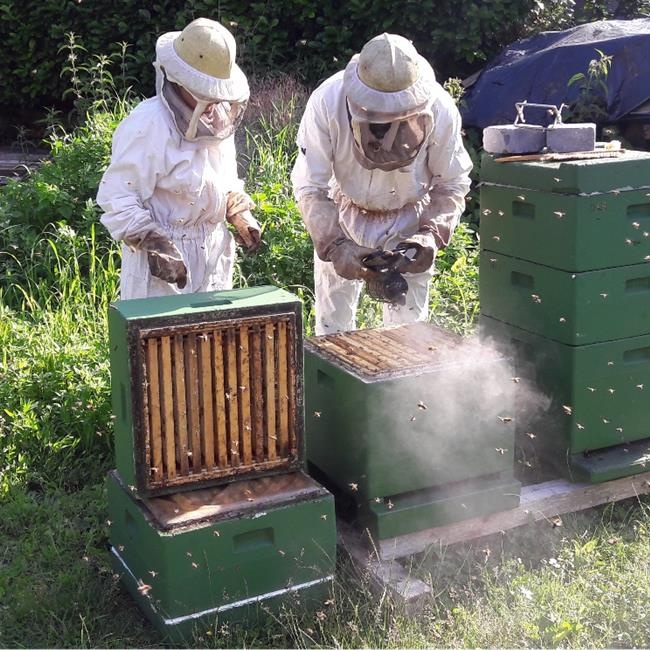
Bienen

So although native bees are more effective pollinators, farmers continue to rely on honeybees for pollination so that the honey industry can take in more than 152 million pounds of honey every year, at a value of more than $333 million.

Manipulating Nature
Profiting from honey requires the manipulation and exploitation of the insects’ desire to live and protect their hive. Like other factory-farmed animals, honeybees are victims of unnatural living conditions, genetic manipulation, and stressful transportation.

The familiar white box that serves as a beehive has been around since the mid-1850s and was created so that beekeepers could move the hives from place to place. The New York Times reported that bees have been “moved from shapes that accommodated their own geometry to flat-topped tenements, sentenced to life in file cabinets.”

Bienen Hauspg

Since “swarming” (the division of the hive upon the birth of a new queen) can cause a decline in honey production, beekeepers do what they can to prevent it, including clipping the wings of a queen. Queens are artificially inseminated using drones, who are killed in the process.
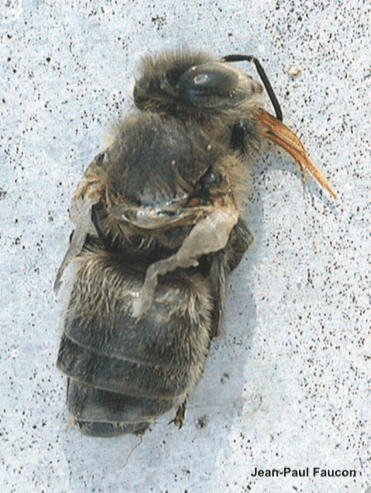
königin ohne Flügel bienenpng

Commercial beekeepers also “trick” queens into laying more eggs by adding wax cells to the hive that are larger than those that worker bees would normally build.
Avoid honey, beeswax, propolis, royal jelly, and other products that come from bees. Vegan lip balms and candles are readily available.

Visit CaringConsumer.com for a list of companies that don’t use animal products.

Agave nectar, rice syrup, molasses, sorghum, barley malt, maple syrup, and dried fruit or fruit concentrates can be used to replace honey in recipes.

https://www.peta.org/issues/animals-used-for-food/animals-used-food-factsheets/honey-factory-farmed-bees


And I mean…As a food, honey can easily be identified on supermarket shelves.
But many cosmetic companies- that claim to be vegan- use beeswax for their products, which we often overlook or fail to declare.

So be careful when buying cosmetics too.

The same applies to palm oil, which is used massively in food, but also in cosmetic products, and it is therefore very difficult to find some companies that do not use it.

Nowadays you have to train your eyes very well.

bienen Majapg

My best regards to all, Venus

Australia: Breaking 15/6/20 – Animals Australia Now Going To Court to Stop Sheep Shipment.

australia

tiertransporte schafen im Schiff

Photo is from archive and is not associated with this article.


Hi Mark,

This is just a quick note as I know that over the past 48 hours your mind, like ours, will have been with the 50,000 Australian sheep who inconceivably are now scheduled to be shipped to Kuwait this week.

Like me, you may ask yourself, ‘How can this be? Surely there is something fundamentally wrong here?’ And yes, you would be right, there is.

We were not going to allow this shipment to proceed without doing everything in our power to prevent it.

Yesterday afternoon, after working day and night, our legal team filed an urgent application in the Federal Court seeking to challenge the Department of Agriculture’s decision to grant the exemption. Our case will be based on the fact that the decisionmaker was obliged to afford Animals Australia an opportunity to be heard in relation to this application. We are seeking an urgent trial on this matter as the window to overturn this decision is so limited.

There is much to play out in coming hours and days. No doubt the Department and exporter will rigorously defend this decision, but be reassured that our brilliant legal team will be in the Federal Court this morning doing all things humanly possible on behalf of these sheep, and us — the community who care so deeply about them.

Mark, know that we are only able to take this swift action to defend these animals because of you. Thank you so much for supporting these critical efforts as always.

I will keep you updated on developments.

For the animals (and especially for each one of these sheep),

Lyn White AM
Director of Strategy


England: Stay Foxy !

England

IMGP0589

My Christmas Hat has been hijacked  – but I have no problem if it these little guys,

Stay Foxy – Regards Mark


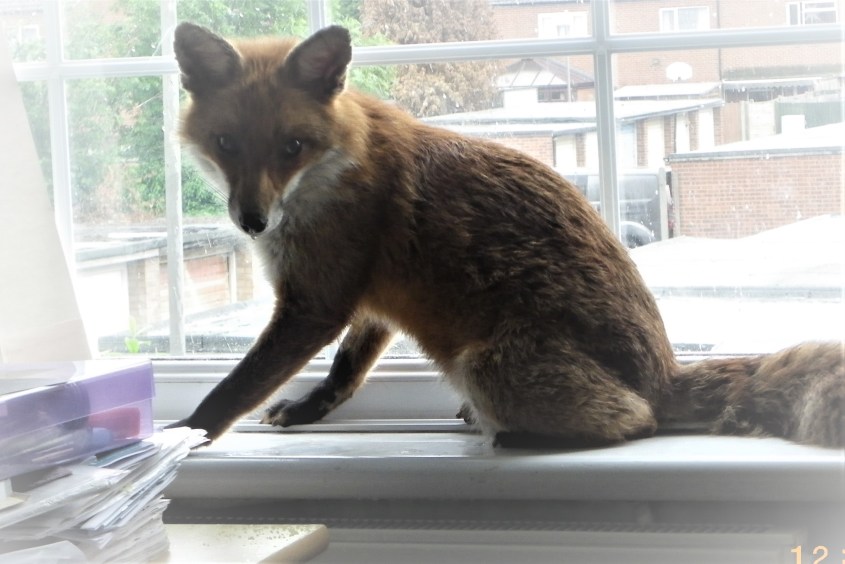
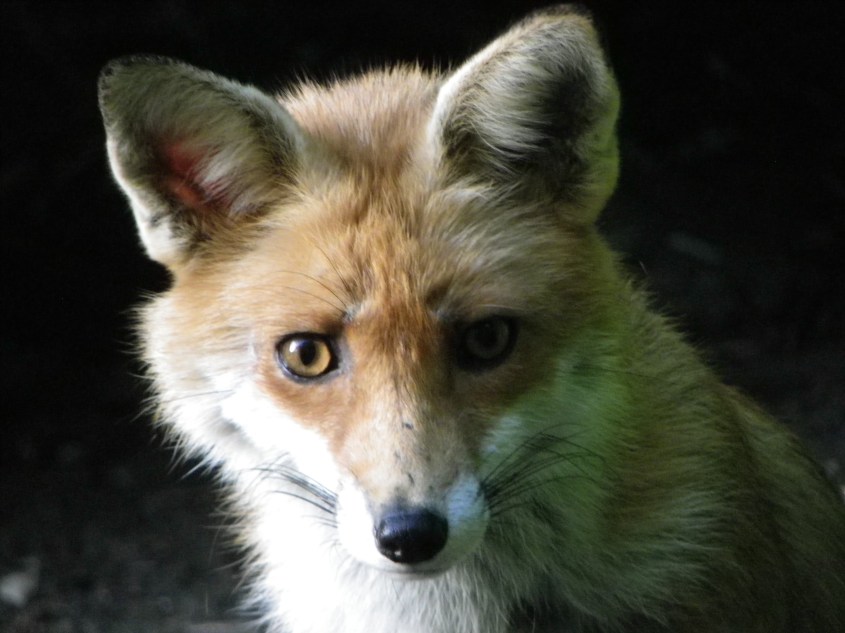
I have had the real pleasure of meeting lots of foxes over the years – and until I took a few shots one day; people did not believe when I told them that a wild fox comes up the stairs into the office and stays a while.  I carry on working, but keeping an eye on him also – when he has stayed a while; he jumps down, goes out the front door back to the wild.

Here is a picture of him in the office:


fox in office 1


Fox 2


fox sake 3

Animal transports: animal cruelty officially approved

To the international animal transport day…

tiertransporte schafen im Schiff

Around 3.8 million animals are transported every day in the EU alone.

That is 1.4 billion animals a year.

As in all sectors of the economy, animal transport is about money: animals are transported to where the greatest profits are: Pigs are born in Austria, fattened in Spain, and slaughtered in Lebanon.

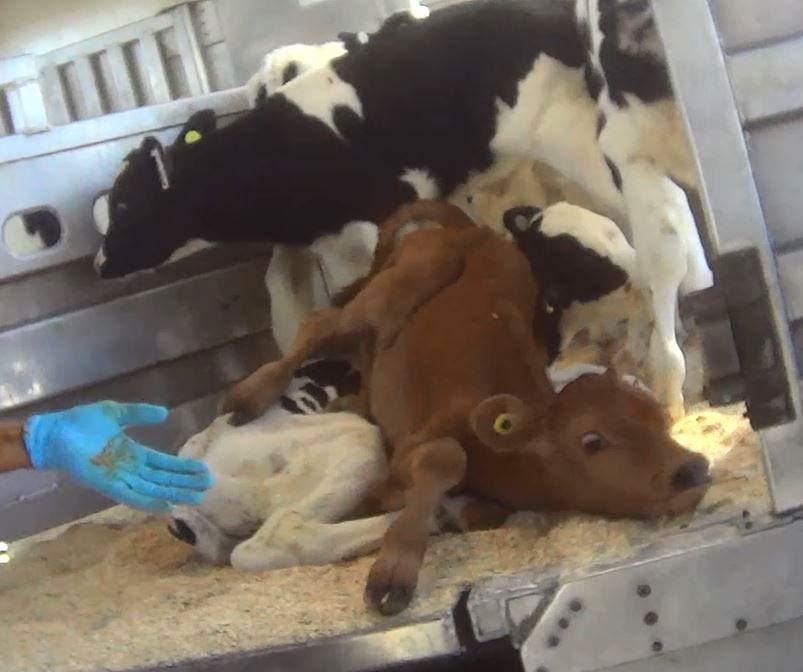
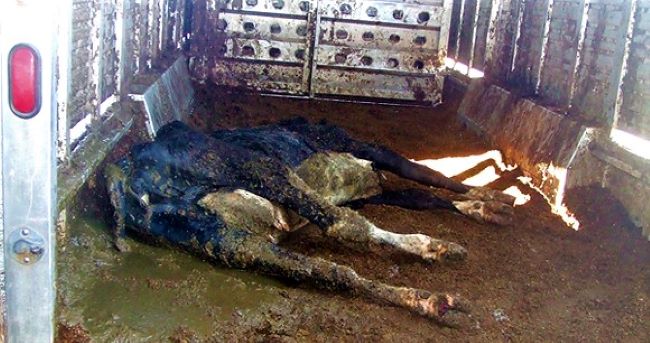
Animal transports take place under cruel conditions. The longer an animal is transported, the more the animals suffer.

Rind Kälber werden in den LKW geworfen FB

Strict savings are made on feed, bedding, and drinking water, as additional weight means higher transport costs.

Nine million pigs, four million cattle, three million sheep, 400 million poultry, and more than 100,000 horses from Eastern Europe are on the move.

The usual journey time for international animal transports is between 50 and 90 hours.

Horses that are transported from Lithuania to Sardinia are 100 hours in the transporter, cattle that are shipped to the Middle East for a whole week.

pferdetransport-520x387

It’s hard to believe, but transporting live animals is more economical than transporting them slaughtered in a refrigerated truck. This includes the reason why animal transporters travel long distances at home and abroad instead of slaughtering the animals in a slaughterhouse near the fattening plant.

There are applicable EU directives that stipulate the transport of animals without unloading, but these are hardly checked. Permitted would be 29 hours for cattle, 24 hours for pigs and horses, 19 hours for calves, and lambs.

Tiertransport-Trennwaende-BIGA-TTEX

If it is checked and infringement is found, the punishments are trivial and in no way act as a deterrent. Compliance with the applicable EU directives is also practically prevented because of a simple reason: along the main European traffic routes, there are hardly any suitable unloading stations for breaks.

transport-2Kälber jpg
In November 2001, the EU Parliament introduced a legislative initiative according to which duration of 8 hours and a maximum distance of 500 kilometers should not be exceeded when transporting live animals.

In July 2003, the EU Commission finally put the following completely inadequate proposal on the table: after nine hours of driving, twelve hours of rest should follow.

But not just once, but often one after the other at will!!

According to the proposal, “slightly injured” animals are also transported on. An unbearable situation for all animal rights activists!

schlachter mit kälbern

It was also decided to end export subsidies for live animal transport to third countries. But due to countless exception rules, which are also laid down by the EU Commission, these laws are completely ineffective.

We have beautiful laws and tons of exceptions!! There are so many exceptions that export subsidies for cattle increased from 58 to 67 million euros between 2002 and 2003!

Until today,  instead of reducing long-distance transport, the EU is still promoting these live animal transports!


Why they are animal transports so lucrative?
Because EU subsidies continue to flow and flow in favor of factory farming, the animal traders and the freight lobby …

This means that instead of reducing long-distance transports, the EU is promoting them until today because the commissioners in Brussels do the best lobby work for the meat industry.

And because, despite the information, despite videos from the hell of animal transports and animal farms, meat-eaters still want to eat dead animals and their products!

But we can change this murderous world order, it must be feasible to awaken conscience in this society. That must be our goal!

Our job is not to complain about, we need struggle and effectiveness.

My best regards to all, Venus
Spain: Bullfighting returns to Spain with ‘strict new rules’ for the sport.

spain


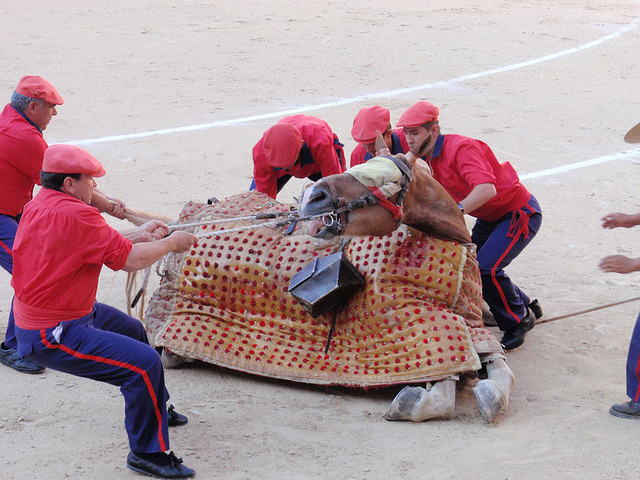
WAV Comment – It is not a ‘sport’ – so it should never be written as such.  Sport allows 2 competitors to fight for an eventual victory; evenly matched competitors.  In the bullring there is ever only one winner; that is how the bullfight works – the disgusting matador; supported by his bloodthirsty followers is always the victor


bull july 1.

Finito de Córdoba ( + bull of Martín Lorca) - Málaga 18 August 2006

Bullfighting returns to Spain with strict new rules for the sport


There has been no bullfighting since Spain declared its State of Emergency on March 14th and the industry had voiced its “grave concerns” over whether the tradition could survive

https://www.mirror.co.uk/travel/news/bullfighting-returns-spain-strict-new-22173387?utm_source=twitter.com&utm_medium=social&utm_campaign=sharebar


bullfight


Bullfighting is back in Spain despite the hopes of animal rights’ campaigners that the coronavirus pandemic would end the tradition.

The Spanish government has published a new decree that allows bullrings to reopen for the first time in three months.

There are conditions, including regions needing to be in either phase two or phase three of the COVID-10 de-escalation period which most of the country is already in.

Those areas in phase two can only fill their bullrings to a third capacity or a maximum of 400 people.

Once in phase three, this increases to 50 per cent or 800 spectators.

These bullrings have to be outdoors and all the seats have to be allocated in advance.

Any equipment used and anything shared must be completely disinfected after use.


bull july 6


There has been no bullfighting since Spain declared its State of Emergency on March 14th and the industry had voiced its “grave concerns” over whether the tradition could survive.

Thousands of bullfights and fiestas were cancelled, as well as bull running festivals, the most famous being the San Fermin in Pamplona which should have been held from July 6th to 14th and would have attracted hundreds of thousands of spectators from all over Spain and beyond.

Animal rights groups said the coronavirus pandemic should have been the death knell for the sport and that it was part of Spanish culture only enjoyed by the minority.

During the pandemic, bullfighting organisations and unions called for extensive aid and compensation for breeders, bullrings and bullfighters, saying losses would amount to more than 700 million euros in ticket and sponsorship revenue.

Despite the government’s decision to give the go-ahead for bullfights to restart, the industry says it is still furious about the lack of financial help and supporters are planning to launch protests at the weekend in various locations.

They claim the government has shown them “utter contempt”. Marches are planned in Seville, Valencia, Albacete and Guadalajara.

The party for the defence of animals, Pacma had hoped there woud be no more bullfights this year because of the coronavirus and that more than 12,000 bulls would have been saved.

AnimaNaturalis also launched a petition calling for “not one euro of help” and received more than 150,000 signatures.


bullfight july 1

14/6/20: Today is “Ban Live Exports” International Awareness Day.


Today is “Ban Live Exports” International Awareness Day, an opportunity to speak up for the hundreds of thousands of animals who are forced to make long, harrowing journeys to their deaths.

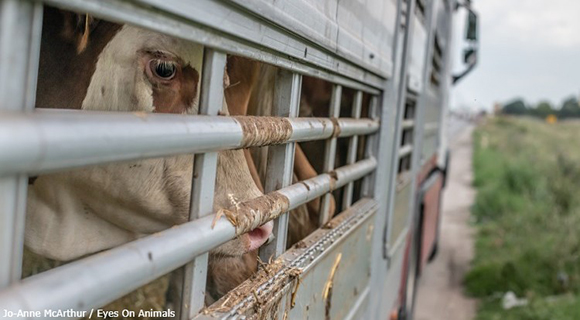
Live animals, including babies and pregnant females, are transported hundreds or even thousands of miles from the UK to the EU and beyond in dangerous conditions and all weather extremes, causing them distress, injury, and disease. They can be in transit for days, often without sufficient food, water, or rest. Many die as a result.

Now that the UK has left the EU and its trade restrictions no longer apply, we have a realistic chance of securing a ban on live exports. Please write to environment secretary George Eustice – and ask all your friends to do the same – to urge him to prevent thousands of animals from suffering and dying on lorries and ships every year.


Take Action:

https://secure.peta.org.uk/page/62085/action/1?utm_source=PETA%20UK::E-Mail&utm_medium=Alert&utm_campaign=0620::veg::PETA%20UK::E-Mail::Live%20Export%20Awareness%20Day::::aa%20em&ea.url.id=4765410&forwarded=true


England: ‘Live animals are the largest source of infection’: dangers of the export trad.

England


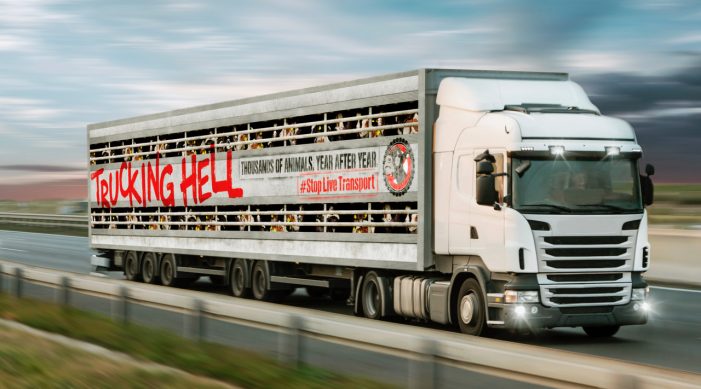
CIWF Trucking hell

CIWF


https://www.theguardian.com/environment/2020/jan/21/live-animals-are-the-largest-source-of-infection-dangers-of-the-export-trade


‘Live animals are the largest source of infection’: dangers of the export trade


Transporting more livestock will increase transmission of diseases, including some that could also threaten humans

The growth of the live animal export trade will make the spread of diseases more likely, experts have warned.

Almost 30% more pigs, goats, cows and sheep were shipped, flown and driven across the world in 2017 than a decade earlier, according to the UN’s Food and Agriculture Organization.

The figure is set to rise further, partly because it is still often cheaper to move live animals than use refrigerated transport, despite advances in technology.

Consumer demand for fresh meat is also rising as the global population approaches 8 billion, including many who are increasingly adopting diets rich in meat.

But transporting live animals around the world increases the risk of disease transmission, according to veterinarians and epidemiologists who fear the growing industry may have already caused viruses to spread.

Jeroen Dewulf, a veterinarian at Ghent University in Belgium, said the introduction of the African swine fever virus (ASF) into Belgium had almost certainly been caused by human interference: either through imported contaminated animal products or by illegal movements of wild boar.

“There are several drivers of spreading diseases, but live animals are the largest source of infection,” Dewulf said. “The more you are going to move animals, the more you run the risk that diseases will be spread through these animals. There are other routes, the virus can be transmitted in meat products for example, but it’s much more efficient to transmit via live animals.”

David McIver, a senior scientist and epidemiologist at biotech company Metabiota, said the rise in live animal exports was a growing issue for many other diseases, such as avian influenza virus, mad cow disease and Nipah virus, while he warned that ASF could one day feasibly threaten humans in some form.

“The first case of Nipah virus in 1998 came after an outbreak in Malaysia following the expansion of pig farming in pristine rainforest areas,” he said.

“Bats were eating fruit, they dropped it with their saliva on it, it was eaten by pigs, then it gets into humans and there were 105 deaths. Tons of swine had to be culled to get the outbreak under control. If we’re exporting those animals around the world we’re potentially moving unknown pathogens to new places.”

In another well-known case, British live cattle exports, as well as those of beef products, were banned in the 1990s due to the fear of spreading bovine spongiform encephalopathy, commonly known as mad cow disease.

It is believed that variant Creutzfeldt-Jakob disease, a rare, fatal brain disorder, is likely to be caused by people ingesting meat contaminated with mad cow disease.

The authors of a study in journal BioMed warned in 2015: “Animal trade is an effective way of introducing, maintaining and spreading animal diseases, as observed with the spread of different strains of foot and mouth disease in Africa, the Middle East and Asia and the spread of bovine spongiform encephalopathy (BSE), for example, into Oman and Canada through the importation of infected cattle.”

McIver added: “Even though ASF doesn’t affect humans now, pigs and people are not so different biologically and immunologically, so it is conceivable that a few small changes in the genetics of the virus can allow that to hop into people and then we’ve got ourselves a serious problem.”

Prof Dirk Pfeiffer, from City University in Hong Kong and the Royal Veterinary College in London, said the risk depends on where you are in the world. “It’s very regulated in high-income countries with fairly effective measures in place protecting their livestock populations from spread of infectious diseases,” he said.

“The real issue is in many of the low- to medium-income countries where there are new opportunities for money to be made, and that includes increased meat demand. Movements of live animals in these parts of the world play a role in spreading animal disease.” In China, for example, live animals are regularly moved around the country in order to supply the ‘wet markets’ where butchers serve up freshly slaughtered meat. These places have long been connected with disease risk – and, indeed, the recent outbreak of coronavirus has been traced back to a wet market in Wuhan.

A system managed by the World Organisation for Animal Health monitors disease outbreaks and provides information based on the reporting of affected countries. While it is praised for its role, it has to rely on prompt and honest reporting from states to be fully effective.

“One of the perverse incentives about the surveillance system is that the harder you research the more likely you’ll find something, and then the country will be a victim of finding something,” Dewulf said.

“In Belgium, for example, with the recent ASF outbreak, we were carefully monitoring, we notified all the responsible agencies, and then we faced all the consequences, such as trade restrictions, etc. In consequence, our animal industry has been hit very hard.”

But despite the growing realisation of the need to control exports more robustly, experts warn that it would be impossible to screen all animals.

“In most cases where we look at the transmission of disease, whether in humans or livestock, we tend to see them move quicker and in more diverse ways than our surveillance systems are able to keep up with,” McIver said.

Nor are these systems designed to screen live animals or meat products entering or leaving countries, he said, before warning of diseases which have not yet been identified.

“Due to the sheer volume of animals that move around, the budgets that are allocated towards it are not always sufficient and in many cases we’re only able to look for things we know about. Animals may be coming or going with pathogens that are potentially really dangerous but we just haven’t dealt with them yet.”


The rescue of a duck’s family

Most people think that they are the owner, the ruler under the other animals.

That is an error.
We are all part of the whole. Our task is to act as protectors and caretakers of the weakest, not that of the exploiters.
Man has responsibility, not power.

Regards and a good night from Venus