Month: December 2020

The Crew at LMT K14 KFOR of the Italian Army Show Their Compassion By Supporting the Local Work Associated With Sterilisation of Stray Dogs in Kosovo.

WAV Comment: we send our best thanks to all the crew at LMT K14 KFOR of the Italian Army, for their incredible local work and financial support of this project. The dogs are not wild; just homeless !

From OIPA; Italy:

KOSOVO, THE ITALIAN ARMY “DEPLOYED” TO HELP STRAYS IN DECANI AND JUNIK: DONATIONS FOR NEUTERING AND VACCINATIONS. OIPA INTERNATIONAL WILL SUPPORT THE PROJECT

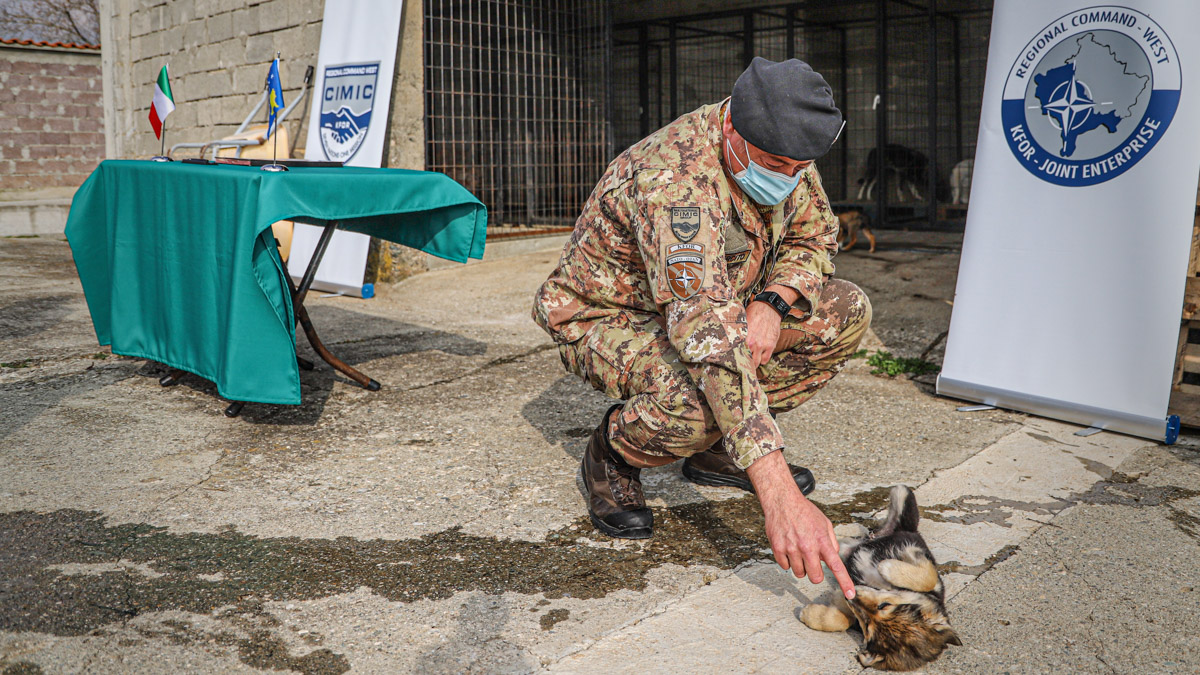
A big thanks to the Italian Army personnel of the West Regional Command, KFOR, with headquarter in Belo Polje – Kosovo, that besides monitoring the socio-economic development of the Country and helping to preserve security and stability for the population, have not turned away taking to heart the serious problem of strays present locally.

The Kosovo Force (KFOR), currently under Italian command, is an international military force led by NATO and represented by 27 contributing Nations, responsible for keeping the peace according to the UN Resolution No.1244 in Kosovo, and guaranteeing with the international support the presence of a fully democratic system.

In August the team LMT K14 KFOR of the Italian Army, in view of a high number of dogs and cats observed in the area, started a constant an attentive monitoring of strays located in the municipalities of Decani and Junik, in the western part of the Country. They noted a lack of awareness among the population and the unavailability of funds and means by local authorities in order to implement attempts to solve the problem.

Italian soldiers, talking with both municipalities, has exposed the issue and the serious consequences that a bad management of the phenomenon, including the lack of neutering and spaying activities and the non-activation of vaccination programmes, can bring in terms of security, hygiene and public decency but mostly in terms of respect for animal rights, animal protection and safety.
Local administrations have been willing and opened to discuss and asked for support in the creation and drafting of a long-term project that can face and limit the phenomenon, in collaboration with local and international animal welfare associations, including OIPA International, local veterinary services and agricultural organizations.

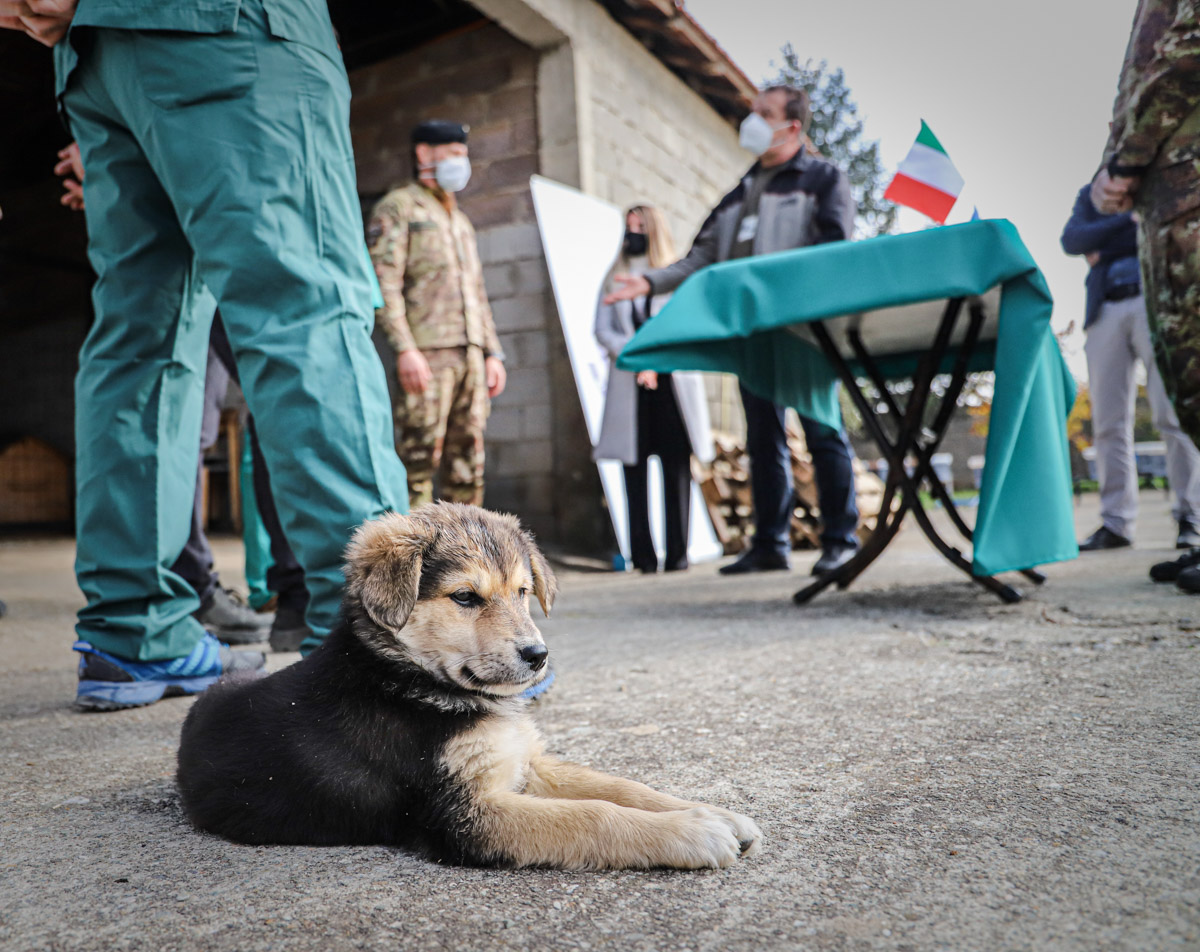
While waiting to define a long-lasting plan, the Italian soldiers of the KFOR West Regional Command did not sit back but donated funds to a consortium of local veterinarians to encourage the sterilization and vaccination of strays in the two municipality.

This first project was entirely financed by the Italian Ministry of Defense and carried out by the 5th “Superga” Rocket Artillery Regiment of the Italian Army through CIMIC funds (Civil and Military Cooperation) and has already allowed the spay and vaccination of about 30 dogs.

A virtuous example of the Italian Army and a demonstration of great sensitivity, love and courage in defence and in aid of those who have no voice, of those who are the most vulnerable and of those that often remain invisible because they are “just animals”.

You can support the project and help the homeless dogs and cats of Kosovo to be spayed/neutered and vaccinated. Make a donation writing “OIPA for KOSOVO”.

All photos – OIPA / Italian Army
More Positive News: European Council Sets the Course for a Comprehensive Labelling System That Should Benefit the Whole Animal Food Production Cycle.

Putting animal welfare first: Council sets the course for a comprehensive labelling system that displays the well-being of animals over the whole animal food production cycle

14 December 2020

WAV Comment: Well done German EU Presidency for moving this issue forward. Finally; is the EU listening to what its citizens want ?

Press Release

Under the German Presidency, the Member States have agreed on a way forward in the development of an EU wide animal welfare labelling system that goes beyond voluntary labels and includes all species over their entire lifetime. Eurogroup for Animals sees the next step in introducing a mandatory EU animal welfare label for all animal-based food products.

On December 15, the Council of the European Union on Agriculture and Fisheries made considerable progress in adopting Council Conclusions that call for an EU-wide animal welfare label aimed at improving animal welfare for as many food producing animals as possible. Eurogroup for Animals welcomes the conclusions as the Council clearly sets the starting point for improving the treatment and well-being of farmed animals.

The Council Conclusions are an important step forward toward the comprehensive “Method-of-Production” label proposed by Eurogroup for Animals. We need a label that covers the entire lifetime of animals, including factors such as transport, slaughter and all of the living conditions of the animals. Eurogroup for Animals will gladly support the Commission in the further development of any scheme moving forward.

Says Gemma Willemsen Chair of Eurogroup for Animals’ labelling  working group. 

In a report launched in October, Eurogroup for Animals asks for adoption of a mandatory “Method-of-Production+ label” based on a core set of animal welfare indicators that measure animal welfare over the entire lifetime of the animals. 

“A multi-level label required on all products and for all species by law would be most effective in harmonising practices and setting improvement targets easily identifiable for producers. But it is all about how the conclusions will be implemented. It is  important that the label clearly distinguishes between minimum as well as ambitious lower and higher standards. We commend Member States, and the German Presidency in particular, for moving things in the right direction.”

Comments Jürgen Plinz, Treasurer of Deutscher Tierschutzbund.

Putting animal welfare first: Council sets the course for a comprehensive labelling system that displays the well-being of animals over the whole animal food production cycle | Eurogroup for Animals

Etiquette Bien-Etre Animal

Consumers want the label: the Eurobarometer from 2015 showed that 82% of European consumers ask for increased welfare of farmed animals and more than half of the population actively looks for animal welfare labels. In some Member States, different voluntary labels (see Étiquette Bien-être animal from France) have been introduced. Such a label at EU level  would empower consumers to make their choice for products with the highest animal welfare scores over the animal’s lifetime, including breeding, transport and slaughter, provided that it becomes mandatory. The success story of the EU energy label which played a pivotal role in consumers’ contribution to reducing the energy consumption clearly shows the impact. 

The European Commission is going to start a study on animal welfare labelling in 2021, leading to a proposal following this, expected in 2022.

ENDS

Animal Welfare Victory: 17/12/20 – The European Court of Justice (CJEU) Ruling Confirms Member States Have the Right to Introduce Mandatory Pre-Slaughter Stunning.

Animal welfare victory: the CJEU ruling confirms Member States right to introduce mandatory pre-slaughter stunning

17 December 2020

Today is a historic day for animals, as the Court of Justice of the European Union (CJEU) clarified that Member States are allowed to impose mandatory pre-slaughter stunning.

The case raised from the ban adopted by the Flemish Government (BE) in July 2019 which made stunning compulsory also for the production of meat by means of traditional Jewish and Muslim rites.

The verdict ruled that the EU Governments can legitimately introduce mandatory reversible stunning in the framework of Art. 26.2(c) of the Council Regulation 1099/2009 (Slaughter Regulation), with the aim to  improve animal welfare during those killing operations carried out in the context of religious rites.

It clearly states that the Slaughter Regulation “does not preclude Member States from imposing an obligation to stun animals prior to killing which also applies in the case of slaughter prescribed by religious rites” .

 This judgment considers the latest development on reversible stunning as a method that successfully balances the apparently competing values of religious freedom and animal welfare, and it concludes that “the measures contained in the (Flemish) decree allow a fair balance to be struck between the importance attached to animal welfare and the freedom of Jewish and Muslim believers to manifest their religion”.

Eurogroup for Animals has followed the Court case closely and in October it released an opinion poll showing that EU citizens do not want to see animals slaughtered while fully conscious.

“It is now clear that our society doesn’t support animals to unduly suffer at the most critical time of their lives. Reversible stunning makes it possible to successfully balance the apparently competing values of religious freedom, and the concern for animal welfare under current EU law. Acceptance of pre-slaughter stunning by religious communities is increasing both in EU and non-EU countries. Now it’s time for the EU to make pre-slaughter stunning always mandatory in the next revision of the Slaughter Regulation” commented Reineke Hameleers, CEO, Eurogroup for Animals

Throughout the years, experts have raised concerns about the serious animal welfare implications of killing without pre-cut stunning (FVE, 2002; EFSA, 2004; BVA, 2020), as acknowledged by the Court itself, in another case (C-497/17).

The case will now go back to the Flanders’ constitutional court which will have to confirm and implement the CJEU’s ruling. Furthermore, the imminent revision of the Slaughter Regulation, as announced by the European Commission in the framework of the EU Farm to Fork strategy, gives the chance to further clarify the matter by making pre-slaughter stunning always compulsory and move towards a Europe that cares for animals.

ENDS

Notes

Opinion poll on slaughter 

Summary of the Court of Justice of the European Union (CJEU) case C-336/19

Amicus Curiae on CJEU case

Advocate General opinion

Additional from WAV:

Electrical stunning

An electrical stunning device (applied to the head only) must pass sufficient current through the brain of the animal to interrupt normal brain activity and render the animal immediately unconscious. Electrical stunning (or electronarcosis) is reversible as it disrupts normal brain function for a short time only. An electrical stunning system requires the correct voltage, current and application time to be delivered for the stun to result in instantaneous and painless unconsciousness.

India:”Not one slaughterhouse fulfilled the legal requirements”

In India, 1.3 billion people are affected by the curfew due to the corona pandemic. Also in Bantala, where millions of people work in the leather industry.

Leather is the skin of animals, which is chemically preserved through tanning. The chemicals come from China and, like in China, dogs are also to be slaughtered here for the leather industry.

Although China is the largest leather producer and exporter itself, it imports cheap leather from India.

In the end, it is no longer possible to determine where the leather really comes from

India is the largest producer of cheap leather in Asia.

From here, a great demand for finished leather and leather goods is exported to Japan, Germany, Italy, Spain, and France. And for the neighboring countries of Bangladesh, Pakistan, and Sri Lanka, the leather comes from India.

Since India exports leather worth billions of euros, cows are simply caught on the streets, but so are dogs. Since everything has to happen very quickly, their legs are chopped off so that they can no longer run away. Then the skin is torn off their bodies while they are alive.

The fact that dogs and cats are also slaughtered for the leather industry in India was rather unknown, especially since dog and cat meat are prohibited. But after the police in Calcutta confiscated 20 tons of dog and cat meat, there is great fear that this meat will also be sold in restaurants.

Slaughtering cows is legal in Kerala and West Bengal. Therefore the animals are carted there.

Excruciating transport

At the markets, the animals are given liters of water before they are sold so that they look plump and can be sold for more money. Cows and calves that are far too young are also sold to traders, contrary to the law, and crammed onto overcrowded trucks to the slaughterhouse. This often leads to the animals falling on top of one another, trampling on one another, or injuring one another with their horns. Cows that collapse on a march are rubbed chili in the eyes, hit with sticks, or their tails are broken to get them to stand up again.

Ingrid Newkirk, President of Peta, followed one of the caravans of cattle stumbling towards Kerala.

“It’s a hideous journey,” she writes “To keep them moving, drivers beat the animal across their hip bones, where there is no fat to cushion the blows. The cows are not allowed to rest or drink. Many cows sink to their knees. Drivers beat them and twist their battered tails to force them to rise. If that doesn’t work they torment the cows into moving by rubbing hot chili peppers and tobacco into their eyes.”


Millions of cows are imported into Bangladesh from neighboring India every year. Although these are “sacred” in India, the workers there quickly forget and kill the cows on the street or in slaughterhouses – without prior anesthesia.

Continue reading “India:”Not one slaughterhouse fulfilled the legal requirements””

New Zealand: Demand the Government Now Follows the Court Victory and Has a Commissioner for Animals. All Links Below for Action.

WAV Comment:

17/12 – We have had the following in to us from SAFE, New Zealand. 

They have achieved major wins legally for animals over the last few weeks; now it is time to ramp up the pressure even more and get the government to act.

From SAFE:

Kia ora Mark

We achieved victory for mother pigs, now we need Government action 

Today SAFE and the New Zealand Animal Law Association (NZALA) have published a full-page open letter in the New Zealand Herald, asking the Prime Minister to appoint a Commissioner for Animals. 

Last month, the High Court found that the Minister of Agriculture and his advisors from the National Animal Welfare Advisory Committee (NAWAC) acted illegally when they failed to phase out farrowing crates and mating stalls for mother pigs. 

Now that the Government has accepted the Court’s decision, it is time to take animal welfare seriously. We need you to add your voice to ensure this happens. 

TAKE ACTION – Demand the government now has a commissioner for animals.

The High Court has ruled that the Minister of Agriculture and his advisors from the National Animal Welfare Advisory Committee (NAWAC) acted illegally when they failed to phase out farrowing crates and mating stalls for mother pigs.  

The Court’s decision shows that NAWAC did not perform its legal duty well and was biased, consciously or unconsciously, towards industry interests. It also highlights that although New Zealand has some of the best animal welfare laws in the world, there are significant shortcomings with regulation and enforcement of the law. 

The Government has accepted the Court’s decision, and we are now asking for some essential changes, starting with the appointment of a Commissioner for Animals. 

A Commissioner for Animals should be appointed to oversee NAWAC, advocate for animals and ensure that NAWAC is accountable. 

The Government must now take the Court’s decision seriously and show respect to animals and our animal welfare laws. With the appointment of a commissioner for Animals, New Zealand could once again be a world leader in animal welfare.

ACT NOW:  Go to –

Demand a Commissioner for Animals and an independent NAWAC – SAFE | For Animals

Demand a Commissioner for Animals

Write a polite email to Prime Minister Rt Hon Jacinda Ardern and Agriculture Minister Hon Damien O’Connor telling them why you want a Commissioner for Animals.

Key points you can make:

  • Following the High Court’s decision on farrowing crates, it’s time for the Government to take animal welfare seriously and appoint a Commissioner for Animals.
  • New Zealand needs a Commissioner for Animals to oversee NAWAC, advocate for animals and ensure that NAWAC is accountable. 
  • New Zealand has some of the best animal welfare laws in the world, however we need to ensure that these laws are properly enforced.  
  • If New Zealand wants to consider itself a world leader on animal welfare, then it’s clear that NAWAC needs oversight from an independent commissioner that reports directly to Parliament. 
  • NAWAC must undergo structural and cultural changes to be able to exercise its legal duty, starting with a Commissioner for Animals to oversee NAWAC and ensure the needs of animals are met.   

Thanks – it time for action and demands to be met;

WAV.

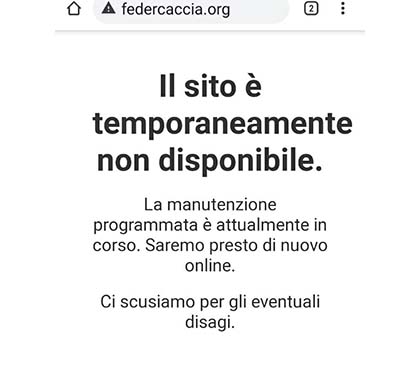
Italy: the Hunter Website takes a break

Received anonymously from Frente de Liberación Animal:

The official website of the Italian Hunting Federation <www.federcaccia.org> has been hacked by the Animal Liberation Front.

ALF Hacks Italian Hunting Federation Website (Italy)

We wish the hunters a lot of fun repairing the hacked page.
Especially now in Corona times, you have to employ hunters, otherwise, they will come up with stupid ideas

Regards and good night, Venus

WHO scientists will travel to Wuhan (China) in January 2021 to investigate origins of Covid-19.

WHO scientists will travel to Wuhan in January to investigate origins of Covid-19 after months of negotiating with China for access

  • The coronavirus pandemic is believed to have originated from Wuhan in China
  • A year on from the start of the pandemic, the mission is expected to visit the city
  • U.S. has called for a ‘transparent’ WHO-led investigation and criticised its terms
  • Specifically, it was unhappy that Chinese scientists did the preliminary research

Read the full article at:

Christmas Vegan.

Christmas Vegan:

Taiwanese Vegan Pop-Up Takes Over Cocobella Creamery in Hollywood | VegNews

Last-Minute Vegan Stocking Stuffers – VegOut Magazine

Vegan vanilla cake topped with fresh strawberries on a white cake stand.

Vegan Vanilla Cake – Loving It Vegan

Ads Explain Why Animals Shouldn't Be Given as Gifts | PETA | Animals,  Puppies, Animal companions

Cultured Meat – No Animal Killing

Philip Lymbery | Why world’s first approval for cultured meat is good for us all

Alex Clark Woody Dog in Hat Pack of 5 Charity Christmas Cards 5060108700238  | eBay

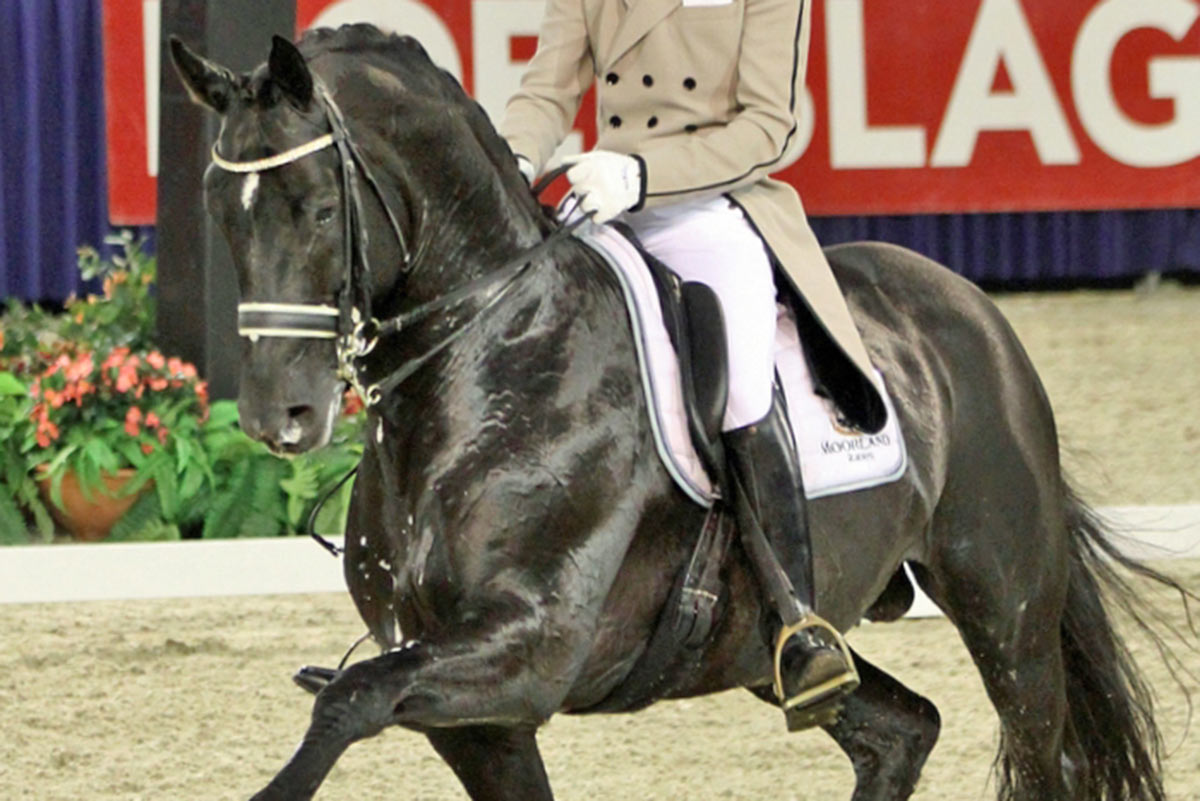
Totilas, the “miracle stallion” is dead!

Totilas was considered a “miracle stallion” and record breaker in dressage riding and was the most expensive dressage horse in the world. His life in equestrian sport was marked by agony and suffering.
Now Totilas died on the evening of December 14, 2020, at the age of just 20 years.

Nach einem Leben voller Qualen: „Wunderhengst“ Totilas gestorben

A painful death ends his painful life

Totilas died of complications from colic. After an operation, the otherwise healthy stallion got up again but eventually succumbed to the disease.

Animal rights activists mourn the death of the long-suffering animal, which symbolized the pain and suffering of the equestrian sport like no other.
“Totilas is, on behalf of thousands of other horses that are abused as sports equipment, the best-known example of a reprehensible and criminally driven sports business.” (Dr. Edmund Haferbeck, PETA Germany)

Tortured with cruel training methods

Totila’s life clearly shows that in dressage only success counts and that horses are misused as expensive sports equipment.

After Totilas broke all records in dressage at the 2009 European Championships, he was bought for an estimated 10 million euros by entrepreneur and showjumper Paul Schockemöhle and the Linsenhoff-Rath family.

But the hoped-for successes mostly failed to materialize

In order to achieve the calculated victories in the future, Totilas has been trained with the cruel “roll cure”, especially since spring 2012.

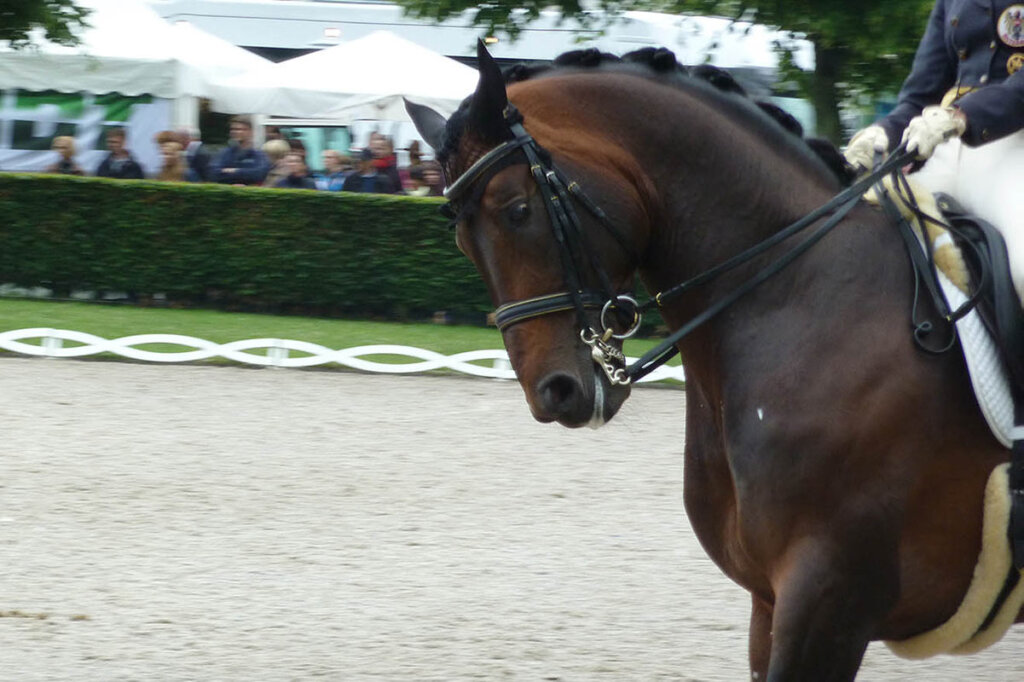
The horse’s head is pulled down so hard that the neck is systematically overstretched. This is incredibly painful for the animals.

Symbolbild

Totila’s trainer has been investigated for years

The application of the Rollkur at Totilas could be observed at many tournaments. Almost everyone looked away when the stallion was harassed on the dressage arenas during and before the competitions.

We at PETA Germany, therefore, filed a criminal complaint against Totila’s trainer Edward Gal and rider Alexander Rath in 2012.
After repeated resumptions, the preliminary proceedings against Gal are currently still running at the Aachen public prosecutor’s office.

Equestrian sports must be banned

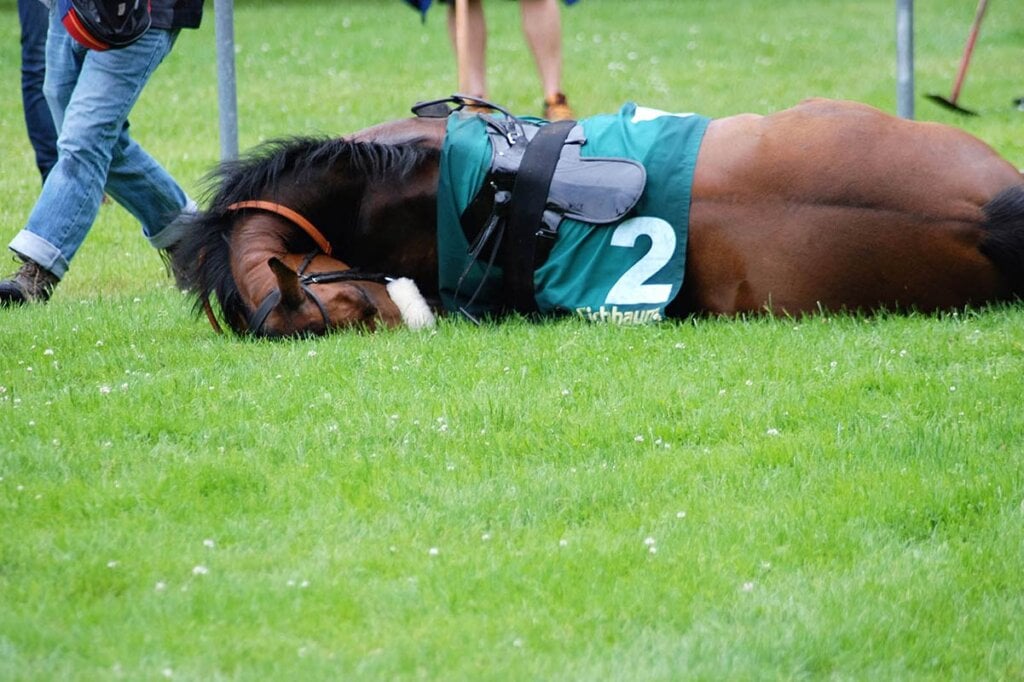
Totilas has become the symbol of a sport based on systemic cruelty to animals. Countless horses injure themselves in tournaments and training when falling and die from excessive physical strain.

totes PferdSymbol

Horses that their owners believe are no longer productive enough are brought to the slaughterer. Doping is also not uncommon in equestrian sport and causes a lot of suffering in animals.
The horses are often mistreated by their riders with cruel training methods, whips, and spurs.

Competitive sport with horses and the suffering of animals must finally end.

Nach einem Leben voller Qualen: „Wunderhengst“ Totilas gestorben

And I mean...Between 2011 and 2013, 46 horses died directly on German horse racing tracks; worldwide there were 735 deaths for gallop and trotting.

This system serves barbaric sensational lust and it is still about the big win, about splintering bones and high stakes … it is what it is: pure cruelty against doomed horses and the complete disregard for life and suffering.
Anyone who earns money in this system can be described as an animal abuser.

It is permissible to keep a horse without access to pasture, to beat it, and to discipline it.
Stress, beatings, brute force, coercion, and fear as well as physical and psychological overload. Horses are chastened, humiliated, broken, locked up, intimidated, threatened, and deprived of their natural needs by force. This is certainly not the case always and everywhere, but too often and, above all, too naturally.

There are a lot of vets who speak out against racing, but many behind closed doors. It just takes courage to openly attack colleagues and the sport. There is a financially strong lobby on the other side.

Horse racing is a billion-dollar business, it is a tradition and a lot of money is made internationally with it. Worldwide sales are around 90 billion euros, not including the number of unreported cases of “black bets”.

My best regards to all, Venus

Scottish Salmon Farming Exposed – A Viva ! Investigation.

Alarming scenes captured at Scottish salmon farms supplying Co-op, Sainsbury’s, Lidl, Aldi, Morrisons and M&S reveal putrid conditions that lead to invasions of parasitic sea lice. Painful non-medicinal lice management systems that breach basic animal welfare standards on the treatment of farmed animals were also filmed – one of which was operating in a designated Special Area of Conservation and Marine Protected Area famous for its rare flame shell bed.

Around 70 per cent of Scottish salmon farms are RSPCA Assured, while the remainder conform to other supposedly ‘high welfare’ certification schemes such as Best Aquaculture Practices, Marin Trust, GGN Certified Aquaculture and GlobalG.A.P.

More images from the investigation can also be publicly viewed on Flickr.

Promoted as a ‘sustainable’ solution to overfishing, modern aquaculture confines fish in fetid cages by their thousands, creating a breeding ground for disease and causing widespread suffering.

Whilst adult wild salmon are well adapted to coping with the odd sea louse – a parasite that naturally occurs in the sea – the intensification of salmon farming has led to fundamental changes in the density and occurrence of lice in coastal waters. Although one or two lice per salmon may not sound like a real threat, when you multiply that by hundreds of thousands within a sea cage, the consequences are catastrophic.

The lice reproduce rampantly, feeding on skin, mucus and blood, which produces white ‘death crowns’ of exposed flesh on the salmon. Clearly suffering, the infected fish are regularly seen jumping up to 30 centimetres in the air and skimming along the water surface with their tails in attempts to dislodge the bugs. Large numbers of these lice can be devastating, causing skin lesions, loss of scales, secondary infection and ultimately death.

As if that wasn’t bad enough, huge numbers of juvenile sea lice also escape to the local marine environment, causing significant damage to wild salmon and sea trout smolts, whose fragile skin is not yet adapted to coping with parasites on this level.

In response to the invasion of sea lice, the aquaculture industry breeds millions of lumpfish ‘cleaners’ that feed on sea lice, in futile endeavours to control the outbreaks. Other techniques include chemical washes or mechanical treatments such as hydrolicers and thermolicers.

Hydrolicers

During a hydrolice treatment, fish are drawn into a ‘washing machine’ type device through two lines by live fish pumps. Each system line includes a fish counter, two hydrolicer combi units, fish pumps, water separating units and a filtration system to ensure that all the lice can be removed from the water and destroyed.

As the salmon pass through the system, they are sprayed with freshwater jets to dislodge lice that are not adapted to non-seawater conditions. Eye damage, increased stress levels and death are all consequences of the process.

According to the Scottish Government, fish farms have reported killing 269,674 salmon in hydrolicers between 2016 and 2019. That’s an average of 67,418 a year.

Thermolicers

Like with hydrolicer treatments, salmon are herded and pumped up from the sea pen through a tube. Exiting the tubes the fish pass through a tank of warm water, before being ejecting back out into the opposite side of the sea cage. The water is heated up to 34 degrees, which can be 20 degrees above the seawater temperature. It takes around 25-30 seconds for the fish to pass through the entire ‘processing loop’.

Sea lice are sensitive to sudden changes in water temperature and so die and fall off once the salmon hit the heated water. They are then collected and destroyed.

Recent scientific research has found that salmon exposed to water temperatures above 28 degrees centigrade behaved as if they were in pain. Marine and veterinary researchers in Norway observed fish swimming faster, crashing into tank walls and shaking their heads.

According to the Scottish Government, fish farms have reported killing 177,601 salmon in thermolicers between 2016 and 2019. That’s an average of 44,400 a year.

“In my expert opinion and based upon scientific studies from other laboratories, [hydrolicers and thermolicers] contravene the FAWC five freedoms, the RSPCA (2018) welfare standards for farmed Atlantic salmon and the Animal Welfare Act (2006) resulting in harm and poor welfare and should not be employed within the Atlantic salmon farming industry.”

– Dr Lynne Sneddon (Senior Academic, University of Gothenburg)

Share our investigation graphics

Download one of the graphics below and share with the following text:

Putrid conditions and severe overcrowding on Scottish salmon farms lead to parasitic sea lice invasions that kill fish and destroy the surrounding environment. End Factory Farming, Before It Ends Us.

  viva.org.uk/scottish-salmon

#EndFactoryFarming #EFF

Investigation: Scottish Salmon | Viva! – The Vegan Charity