Month: May 2021

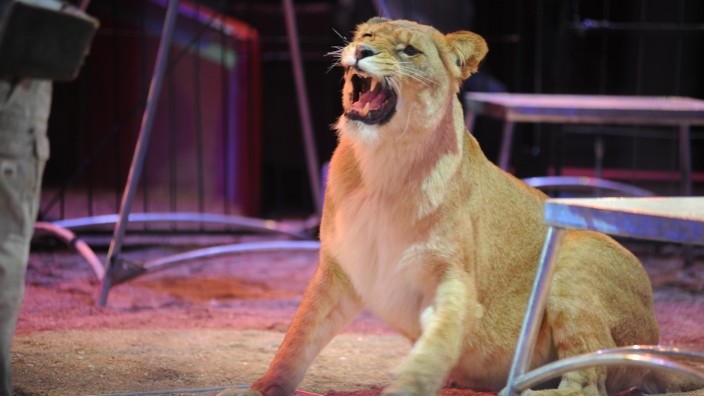
Russia: animal tamer mangled by lioness in the circus

05/23/2021

The situation on Saturday became very precarious for a Russian circus trainer. He was locked in a cage with two lionesses when one of the two attacked him.

The family performance of a Russian circus turned into an absolute horror experience for the visitors. Two lionesses were in a large cage with the tamer Maxim Orlov at the performance.

When he was inattentive for a brief moment, one of the lion ladies, Vega attacked, lunged at Orlov and seared her teeth deep into his leg.
For a moment he was able to push the lioness back, but shortly afterwards she attacked him a second time and injured his arm.

Mass panic broke out in the tent

The attack caused mass panic among the audience, and one pregnant woman even suffered an epileptic seizure (!!!)
Screaming children and scared parents made their way out of the tent.

Only with the use of long, pointed poles could the lioness be pushed back and the trainer leave the cage. The man escaped only limping severely and with deep flesh wounds, he was taken to a nearby hospital.
Nevertheless, the circus would like to continue to introduce live wild animals

Calls for a ban on live wildlife circus performances grew louder after the attack, part of a long series of similar events in Russia.

However, it does not seem as if the trainer intends to do without exotic animals in the future. Orlov commented on the incident in the hospital: “Such cases are extremely rare, but animals remain animals. We are already in negotiations with a zoo, maybe we can exchange our lioness for a little lion cub. The circus wants to negotiate with zoos”, said the animal trainer.

Animal rights activists demand a ban on animals in circuses

The attack was sharply criticized by animal rights activists. It was called for a ban on live animals in Russian circuses. Many people are also in favor of a ban.

“How many similar cases are there to come before people stop seeing wildlife suffering as entertainment for children,” one person said. Another said: “This is wild animal cruelty.”

https://www.news.de/panorama/855919927/tiertrainer-von-loewen-im-zirkus-in-russland-zerfleischt-schwangere-zuschauerin-erleidet-epilepsie-verbot-gefordert/1/

Please sign the Petition: http://www.vier-pfoten.de/zirkus

And I mean… Both slaves were never allowed to lead a free, self-determined life.

The hour of vengeance has come – the press wants to sell it as horror scenes

So next time Vega has to expand her targets and hack as many circus fans as possible because they are the owners’ accomplices who finance their slavery

My best regards to all, Venus

Greece: The suffering of the “taxi”- donkeys in Santorini continues

Update: As donkeys and mules continue to be abused for tourist rides on the Greek island of Santorini, PETA Germany gathered at the Greek embassy in Berlin to hand in a petition signed by over 160,000 supporters of PETA and our international affiliates calling for a ban on the cruel rides.

Please help keep the pressure on the Greek government to finally do right by animals and stop abusive donkey and mule “taxi” rides on Santorini.

Originally posted on November 13, 2019:
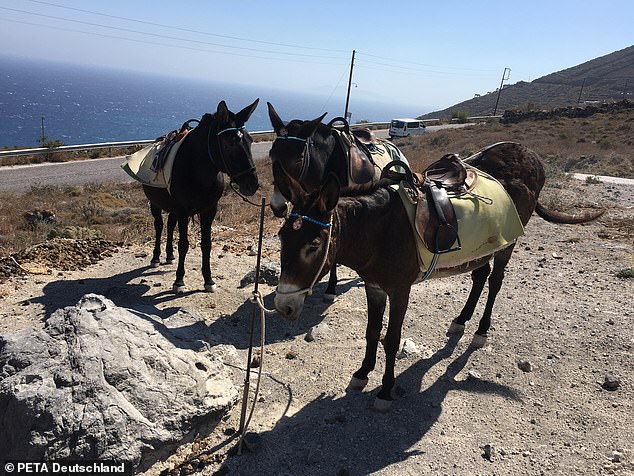
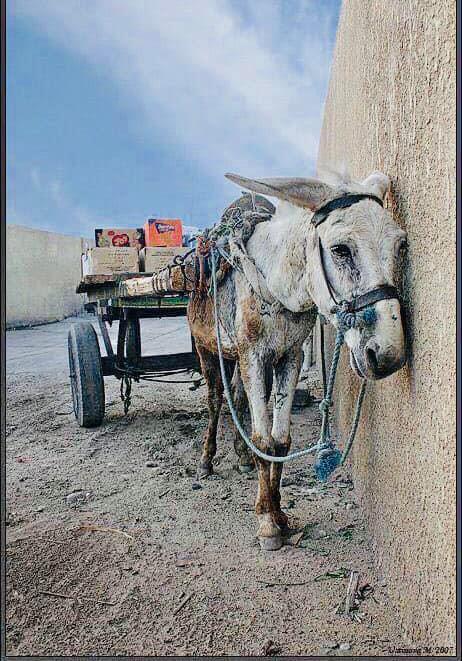
On the Greek island of Santorini, donkeys and mules are used as taxis to carry tourists up and down more than 500 steps to the old town of Firá several times a day.

Despite international outrage when an eyewitness report published by PETA in 2018 revealed that the animals were denied water and shade and many had painful wounds, a new PETA video exposé reveals that the suffering and abuse continue.

Open Sores and Bloody Injuries

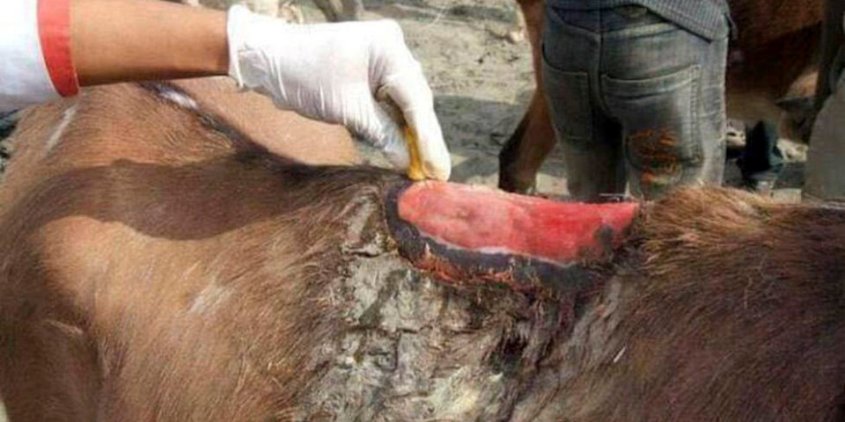
Donkeys and mules were observed suffering from open sores, raw skin, and bloody injuries caused by their ill-fitting and makeshift saddles.
Some animals were forced to wear tight muzzles with sharp wire ends that could easily injure them as well as humans.

Denied Food, Water, and Adequate Shade
When there were no customers, most donkeys and mules were left to stand in the scorching sun. They were tethered so tightly that they couldn’t even reach the sole bucket of water available to them.

They weren’t given any food throughout the day.

Tourists Endangered
Eyewitnesses documented several instances in which tourists were almost run over, trampled, or pushed aside by panicked donkeys and mules, including one in which a man jumped up on a wall to get out of the way. In 2015, a woman was even trampled to death by a donkey.

What You Can Do

After PETA’s first exposé, the Greek Ministry for Rural Development passed new laws to protect animals.

Yet this footage shows that the laws are neither observed nor enforced.
The time has come for Greece to ban donkey and mule rides altogether, as this is the only way to guarantee the animals’ protection and end their suffering and exploitation.

When visiting Santorini, please never go for a ride on an animal. Instead, take the nearby cable car (which has been operating for decades), or explore Firá on foot.
Please join PETA in urging the Greek minister of agriculture to ban donkey and mule rides on Santorini.

Online Petition: End donkey and mule exploitation in Santorini

Since 2018, the animal welfare organisation PETA Germany and its international affiliates have been active for donkeys and mules who are exploited as living taxis and tourist attractions on the Greek island of Santorini.

I was shocked to learn that these animals are still forced to suffer despite the international outcry against their abuse.
The images from 2018 clearly show that the equines were exposed to the scorching sun and did not have sufficient food, water, or shade. Every day, these donkeys and mules are used to carry sometimes extremely heavy tourists as live taxis.

The animal handlers often hit them with wooden sticks, and the tourists themselves abuse them by kicking their stomachs.
Images from October 2020 are proof that the suffering and illegal acts continue on Santorini. Pictures show equines tightly chained in the sun without food or water, and animals are forced to endure this suffering day after day, deprived of everything that’s natural and important to them.
This must stop!
More and more tourist regions around the globe are showing their commitment to animal welfare, including Egypt, which plans to ban rides on camels and other animals around the Giza pyramids and archaeological sites.
Santorini must follow this compassionate example.

Donkeys and mules in Greece have the right to receive proper care and to be free from physical harm. These rights must not be ignored by using the animals as a means of transport for tourists. The only way to guarantee them a life free from cruelty is by banning this exploitation. Please help do so!

https://headlines.peta.org/suffering-continues-donkeys-santorini/

https://www.peta.de/themen/santorini-petition/

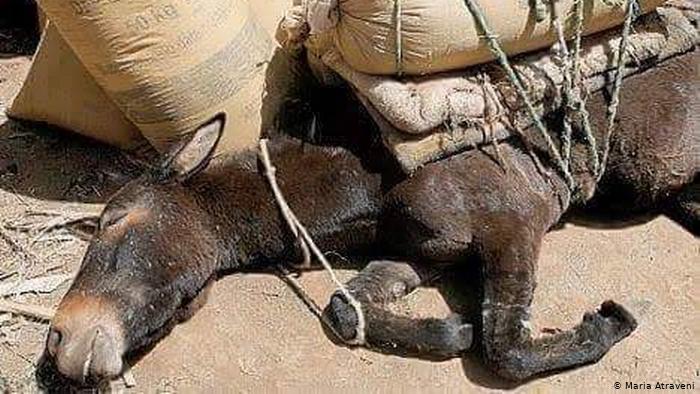
And I mean… As picturesque as Santorini may be, there is also a downside: the donkeys that, day after day, often carry tourists for hours over steep paths and up 586 steps in extreme heat.
According to animal rights activists, more and more of the travelers are overweight, which is why many of the animals suffer injuries.

And although everyone can clearly see that these donkeys are not doing well, numerous tourists choose precisely this attraction.
While there is now a weight limit (a step in the right direction), donkey owners often ignore it. This is how the frightening images of the injured donkey emerged.
In addition: there are only a few breaks for the animals, they are literally shooed up the steps.

The saddles are improper, the tail straps are chafing, and many animals have open wounds.

And yet they are still used.
Please sign this petition too.

https://www.change.org/p/the-mayor-of-santorini-mr-anastasios-nikolaos-zorzos-boycott-santorini-stop-the-abuse-of-donkeys

My best regards to all, Venus

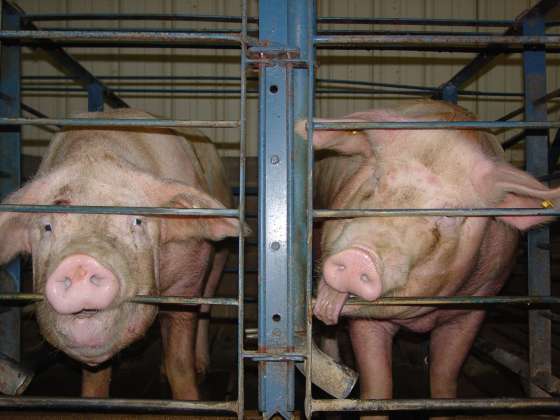
USA: AIR POLLUTION FROM MEAT PRODUCTION KILLS MORE THAN 16,000 AMERICANS EACH YEAR, STUDY FINDS.

AIR POLLUTION FROM MEAT PRODUCTION KILLS MORE THAN 16,000 AMERICANS EACH YEAR, STUDY FINDS

Air pollution produced from growing and raising food kills as many as 16,000 U.S. residents every year–  and 80% of those deaths are related to manufacturing of animal products such as meat, dairy, and eggs, a new study found.

The study, published in Proceedings of the National Academy of Sciences, also reported nearly 2,000 additional people die annually from pollution caused by producing non-food animal products, including ethanol, leather, and wool.

The study builds on previous research about the environmental impact of foods by identifying specific products that most contribute to the air pollution that can cause asthma, heart attacks, and strokes.

“The long-term effects of climate change are daunting and quite frightening, but this is killing people now, too,” Jason Hill, a University of Minnesota biosystems engineer and senior author, told National Geographic. “These are emissions that happen every year, that affect people, that lead to a poor quality of life.”

The team used data from the Environmental Protection Agency (EPA) and the U.S. Department of Agriculture (USDA) and analyzed the processes used for creating animal products and feed for farmed animals: including fertilizing crops, the fuel burned by farm equipment, and managing livestock waste.

In particular, the study measured the effect of a type of pollution called fine particulate matter, or PM 2.5 —  which can cause irritation, coughing, and shortness of breath in people upon short-term exposure. 

Notably, producing vegetable crops for human consumption only causes 100 air pollution-related deaths every year — an amount Hill described as “almost imperceptible” compared to the impact of producing crops for feeding livestock.

The study recommends several ways for producers and individuals to reduce agricultural air pollution, including adopting a plant-based diet. Previous research backs up this suggestion, with a study last year also finding that reducing meat and dairy can cut an individual’s food-related carbon footprint by as much as 73 percent.

Speaking with National Geographic, Toxicologist Jack Harkema pointed out that the new findings show that air pollution is not primarily an urban problem like many mistakenly believe, but that it’s an ever-present product of animal-based agriculture.

If you haven’t yet, sign Lady Freethinker’s petition urging U.S. legislators to support the Farm System Reform Act and ban cruel and dangerous factory farms throughout the country.

Regards Mark

UK; Sick In Head Trophy Hunters Use ‘Click and Kill’ Website To Shoot Animal Species for Depraved Kicks.

Mental head trophy hunters use sick website to book “click and kill” holidays – so they can shoot vulnerable species for kicks.

Almost all the animals on BookYourHunt are exempt from forthcoming UK legislation aimed at banning the import of hunting souvenirs such as skins, antlers and heads.

The website has up to 5,000 hunts available for animals such as reindeer (£1,373), striped hyenas (£14,815), golden jackals (£542) and the African civet cat (£848).

They are not considered sufficiently at risk of extinction to make the Government’s designated categories of species to be covered by the new law.

But all are on a “red list” compiled by global animal rights body the International Union for the Conservation of Nature which considers them near threatened or vulnerable.

Others on the hunt list include camels, kangaroos and even sheep.

Eduardo Goncalves, founder of the Campaign to Ban Trophy Hunting, said: “This is a click-to-kill catalogue which sick psychos browse before choosing a defenceless animal to shoot for fun.

“It’s a one-stop snuff shop for hunters who love to kill for thrills. There’s something for every animal murderer.”

Explorer Ranulph Fiennes said: “This is the most hideous website I have ever heard of. It’s advertising animals like you’re doing a weekly shop, except the photos show bloodthirsty psychopaths grinning moronically over the dead animals they’ve killed for fun.

“Trophy imports like these should be banned, they’re an absolute disgrace.”

MPs are signing a cross-party Commons motion to press ministers to include less endangered species in the new law – and jail time for offenders.

Tory MP David Amess, who is behind the move, said: “We should ensure all animals are protected from those who take pleasure in killing them for entertainment and furnishings. We must settle for nothing less than a total ban.”

Read it all; including photos, at

Trophy hunters flock to sick website to book holiday to shoot vulnerable species – Mirror Online

Regards Mark

Save the Bees!!!

Report from the blog: “Together for the animals”

Thousand of bees on the car?
Don’t panic, we tell you what to do!💖🐝


Pictures like these probably make some people freeze in horror: You come to your car and thousands of bees have made themselves comfortable on it.
Now it’s just not about losing your nerve.

First of all, the “WHY”.
The months of May and June are the so-called “swarming time”.
Strong bee colonies use the abundance of nectar and pollen to divide.
About half of the bees move out with the old queen and sit somewhere in the neighborhood as a “swarm of grapes” in a tree or on a car.
The rest of the bees stay in the old home and raise a new queen.
So when the little cuties sit down on your car, it’s pure coincidence.
Don’t panic.

They don’t harm you if you don’t harm them either.
Now it’s time to keep a cool head.
Don’t try to scare them away.
Do you have time let the animals make a stopover on your car.
They won’t bother you for more than 24 hours.
If you want to do something good for them, then carefully place a bowl of sugar water on the roof of your car.

If you don’t have that much time, proceed as follows: Stay at a safe distance from your car and make sure that nobody else approaches.
Don’t call the police, animal rescue or fire brigade, but a local beekeeping company.
The beekeepers know how to proceed and will catch the animals.
You just have to be patient until a beekeeper comes, but they usually know this problem and hurry up.

Don’t try to catch the bees yourself or you’ll be like a woman in Wales.
Your hybrid was followed over and over by the same swarm of bees for 2 days.
Why do you ask yourselves?
It’s simple: their queen got lost inside the car and was trapped.

The beekeepers will look for the queen and will know how to recognize her.
So don’t go into shock or panic, nothing will happen to you if you don’t harm the bees.
Even the hard-working little honey collectors just want to live and may be more afraid of you than you are of them.

In this sense: SAVE THE BEES !!! 💖

In Gedanken bei dir Smiling bee, text says be safe-Sticker

And I mean...It’s exellent that some blogs do such an informative job and take the initiative to educate people about such cases.
I have often found beehives in the forest and at first I left them alone.
After a day I called the beekeeper and he took them with him, he has a small, animal-friendly beekeeping in the village where I live.
After a month he brought me a jar of honey as a gift for the rescue of the bees, which I gave away because I do not consume any animal products.
Not even honey, not even from the beekeeper next door.
Is a matter of principle

My best regards to all, Venus

USA: New Campaign Brings Awareness to Wildlife Killing Contests in Wyoming.

FOR IMMEDIATE RELEASE: May 24, 2021

New Campaign Brings Awareness to Wildlife Killing Contests in Wyoming

Billboard Compels to #STOPTHEKILL of Wolves and Other Apex Predators

Cody, WY — Starting today, drivers traveling from Cody to Yellowstone National Park will see a large billboard featuring a captivating wolf and a call to action to “End Wildlife Killing Contests.” The billboard, funded by Wyoming Wildlife Advocates in partnership with the national organization Project Coyote, is part of a coordinated campaign to bring attention to the widespread but little known bloodsport of wildlife killing contests—events in which participants compete to kill the most, largest, or smallest animals for cash, guns or other prizes.

Wyoming is home to many of these contests, including the Wyoming Best of the Best and other privately run events. The Wyoming Best of the Best is a circuit of contests that draws people from around the region to Wyoming to kill target wildlife, primarily coyotes and foxes. Participants pay an entry fee and then build points in monthly events that run from December through February. Qualifying events are held in Kemmerer, Casper, Cheyenne, Lovell, Riverton, Rock Springs, and Newcastle, and a state championship is held in early November in Rock Springs. The number of contests that occur in Wyoming is difficult to assess because organizers and participants, aware that the majority of the public does not condone or support these events, operate mostly in secret with virtual check-ins and little oversight—but killing contests occur in or near most communities across the state.

In addition to smaller native carnivores like bobcats and coyotes, wildlife killing contests in Wyoming may also target imperiled wolves. Despite the fact that they are still recovering and bring essential tourism dollars to local economies, wolves are listed as trophy game animals in the northwest corner of the state where there is a hunting season and limits on the number of animals that can be killed. Even worse, they are considered a predator in the remaining 85% of the state, which means they can be killed at any time by any means with no oversight or hunting tag needed. This lack of regulations concerning fair chase, hunting seasons, quotas, night hunting and spotlighting, use of electronic calls, and the use of high-powered weapons does not protect animals considered “predators” in Wyoming and leads to egregious ethical violations on the part of contest participants.

Participants and proponents of killing contests claim that killing coyotes and other animals protects deer and elk and prevents livestock losses. Yet the best available science illustrates that randomly killing wildlife does not increase public safety or decrease conflicts with domestic animals. Seven states (Arizona, California, Colorado, Massachusetts, New Mexico, Vermont, Washington) have enacted prohibitions on killing contests and have not observed increases in conflict. Four additional states (Maryland, Nevada, Oregon, and Virginia) are considering bans on killing contests.

Bans on killing contests are increasing as the public recognizes that coyotes and other native carnivores play key roles in maintaining healthy ecosystems, such as controlling rabbit and rodent populations, and that wildlife killing contests threaten the safety and well-being of hikers, dog walkers, bird watchers, hunters, and other outdoor enthusiasts. This billboard serves to raise awareness of the issue for the millions of people who visit Wyoming to see wildlife but do not realize the national park is a proverbial zoo and valued wildlife are slaughtered as soon as they step foot outside the park.

“Wildlife is held in the public trust by our wildlife managers and should be managed for all Wyoming residents,” said Kristin Combs, Executive Director of Wyoming Wildlife Advocates. “A minuscule number of people are involved in wildlife killing contests, meanwhile wildlife watchers and ethical hunters are left with virtually no voice in the management of animals classified as predators. All of these animals serve a valuable purpose in the ecosystem and don’t deserve to be randomly gunned down while just trying to raise their young and live out their lives.”

“Billboards are showing up across the country and raising public awareness about this barbaric practice, which will inspire people to take action and join the growing movement to ban wildlife killings contests nationwide,” said Camilla Fox, Executive Director and Founder of Project Coyote and Co-founder of the National Coalition to End Wildlife Killing Contests. “Most people have no idea this cruel and unnecessary bloodsport is happening in their state and they are shocked to learn that it is legal to slaughter animals en masse for cash prizes and awards. Once they become aware of this issue, they want to know how they can get involved to help end this cruelty. That’s why we steer them to ProjectCoyote.org to learn how they can get involved in this growing movement to end killing contests.”

“Wildlife killing contests serve no genuine ecological or wildlife management purpose,” said Michelle L. Lute, PhD in wildlife management and Project Coyote National Carnivore Conservation Manager. “These contests are mass slaughter events that may actually increase what are typically rare occurrences of conflict and undermine the valuable ecological roles of carnivores.”

Viewers of the billboards will be pointed to ProjectCoyote.org where they can view a new film about wildlife killing contests produced in partnership with National Geographic filmmakers and sign a petition to ban wildlife killing contests on federal public lands. The petition has thus far garnered over 60,000 signatures.

The National Coalition to End Wildlife Killing Contests, including co-founder Project Coyote, Wyoming Wildlife Advocates and 50+ other national wildlife and animal protection organizations, will continue to raise awareness in pursuit of policy changes at local, state, and national levels in 2021 and beyond.

* * * * *

Wyoming Wildlife Advocates is a non-profit organization focused on informing, educating, and empowering communities to preserve our wild legacy and protect our shared wildlife resources. We envision a Wyoming that leads the nation in exceptional and innovative wildlife management; all stakeholders are valued equally, and management decisions are driven by the best available science. Headquartered in Jackson, Wyoming, WWA has supporters in Wyoming, the Greater Yellowstone Ecosystem, and nationwide. Visit wyowild.org to learn more.

Project Coyote, a national non-profit organization, is a North American coalition of scientists, educators, ranchers, and citizen leaders promoting compassionate conservation and coexistence between people and wildlife through education, science and advocacy. Visit ProjectCoyote.org for more information.

To learn more about wildlife killing contests, visit the National Coalition to End Wildlife Killing Contests’ website here.

Watch the new film Wildlife Killing Contests and sign the petition here.

Regards Mark

call things by their name-framing kills!

Article by Bettina Marie Schneider

Framing means that different formulations of a message – with the same content – influence the recipient’s behavior differently.
Politics has long made use of this.
Ugly messages are wrapped in friendly euphemisms: garbage dumps are turned into disposal parks, state surveillance is touted as internal security and a pause in growth sounds much more reassuring when it is referred to as a recession.

Well-sounding descriptions have also been invented for the cruelty that we do to animals every day. In this way, animal suffering is concealed, glossed over and trivialized.

“Artificial insemination” is rape using medical instruments that are forcibly inserted into the genitals of the restrained animal.

“Dressage riding” is a form of demonstration of power, as the horse is trained to be absolutely obedient. The movements are unnatural for the animals and usually also complicated. The controversial methods that are used to induce horses to “absolute obedience” leave every animal lover in disbelief about our legislation.

“Useful-animals” is a term that doesn’t really exist. If we degrade an animal to a “livestock” and thereby undermine its right to life and integrity, a pig remains a pig, a cattle remains a cattle and a chicken remains a chicken , It does not become an insensitive object through an empty phrase, even if we treat it as such.
The word “Useful”- animals only serves our conscience, so that cruelty to animals, exploitation and killing on a large scale are ethically justifiable.

Even the harmless word “stray” for homeless stray animals contains a great misconception.
“Strays” sounds like freedom and adventure.

You don’t have to worry about strays, they have chosen their own free life …
Anyone who knows the unspeakable suffering of homeless stray animals, hunger, mistreatment, survival in the icy cold without a refuge, always in desperate search for food, marked by deprivation, parasites and diseases … will quickly change this romantic perspective.


Don’t call homeless street animals “strays” … they are the only victims of our neglect and indifference and are in many places treated like rubbish, chased away, kicked, mistreated, poisoned and killed.

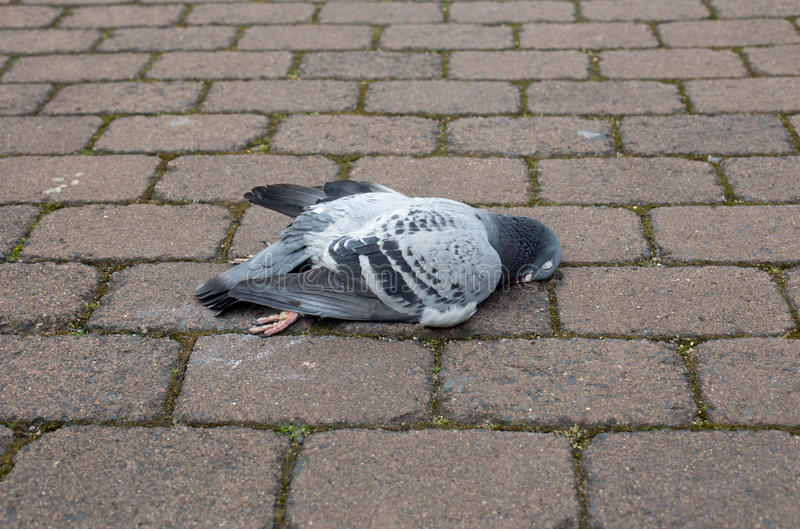
The “city pigeons” are also not “free birds” that happen to live in the city, but homeless animals that rely on human beings to take care of them.
They are starving to death in front of all of us. Many of them are the victims of “pigeon racing”.


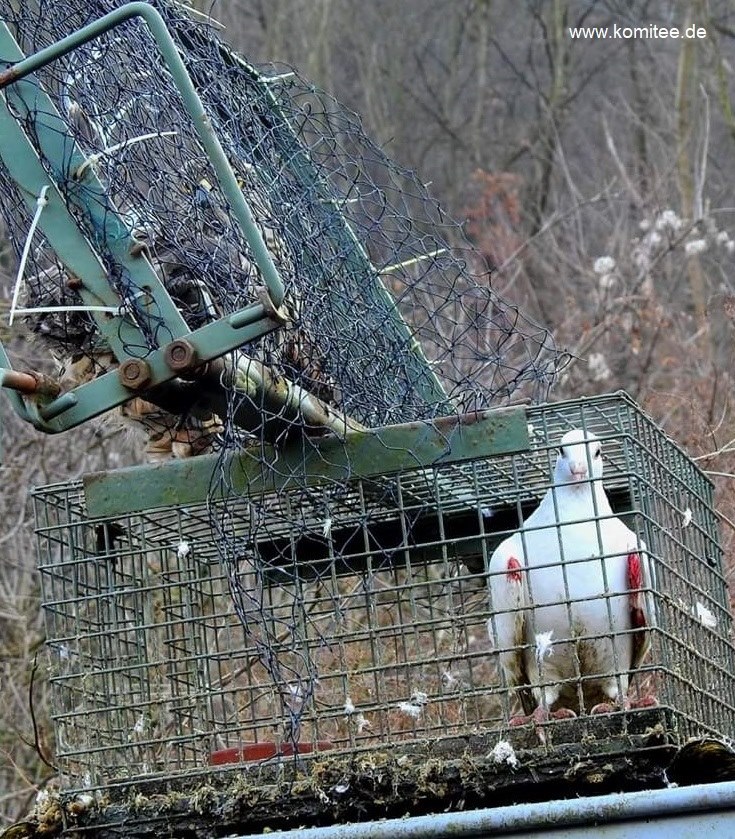
A “sport” in which the animals are forcibly separated from their partner and their nest, then abandoned and their desperate effort to find their way back quickly, only serves to amuse the pigeon athletes and their “sporting ambition”.
The pigeons who die of exhaustion, are injured or stranded in unfamiliar cities in this attempt certainly find it not very “sporty”.


There are countless numbers, but nobody thinks of them when the melodious name “carrier pigeon sport” is mentioned.

Framing is ubiquitous when it comes to trivializing or covering up animal suffering and cruelty.
Since in many places great importance is attached to correct address and terminology, I would like to see the same awareness and attention for the linguistic contact with our fellow creatures.
Here I would like it to be very special!

Call things by their name! Only then can something change, because framing kills!

Bettina M. Schneider

And I mean…the language is instrumentalized by politicians, the media, the judiciary and, last but not least, by the church in order to ultimately retain what is already being practiced, namely the brutal exploitation of animals and their legalized enslavement.

Euphimisms are smoke candles and serve – intentionally or unintentionally – to stabilize the system because they distract from what is really important: the victims.
We must never allow our language to be taken from us by system-compliant framing, because our language is our most important weapon.
If we want to defend animals successfully, we must not give away the freedom to think, speak and act

My best regards to all, Venus

France : Ecocide is becoming a criminal offense

Report by Martin Bussmann -MEP

The time has come! what I have been asking for a long time is now beginning to become reality. France wants to pass a law that punishes ecocide with severe penalties.
Ten years imprisonment or a fine of 4.5 million euros for anyone who harms the environment.
Of course, the law only applies within France, but I am confident that other countries will follow suit.

This makes it possible, for example, in the event of a river being polluted to take tough action against the company causing it.
The only problem: the intention has to be proven.
I hope that this point will be improved again. Of course, negligent behavior is also punishable. Environmental crimes should no longer be taken lightly; they are serious crimes.

When will such a law be passed in Germany?
So far, Germany has only been on screen for ecocide.

A television film of the same name was broadcast on state TV stations and played out a fictional court case:
In 2034, 31 states in the southern hemisphere are suing the German republic for damages amounting to billions for the devastating consequences of climate change.
Germany is found guilty and has to pay.
It doesn’t have to come to that if we manage to turn around now.

https://www.facebook.com/Tierschutzabgeordneter/

And I mean…Maybe we will still see it!
See Bolsonaro, Monsantos, Nestle, Shell, Total, Tönnies and hundreds of other environmental criminals at the International Court of Justice in Den Haag. It may be…

The 2010 Gulf of Mexico oil spill was caused by the explosion of the Deepwater Horizon oil rig on April 20, 2010.
The amount of oil that leaked from the well in the Macondo oil field into the Gulf of Mexico between April 20 and July 16, 2010 is estimated at 800 million liters; therefore the accident is considered to be one of the worst environmental disasters of its kind.

Criminal company BP has reached an agreement with the US government on damages totaling 18.7 billion US dollars, which is the highest value in US history.

Therefore: Maybe we shouldn’t give up hope, France is the starting point.

My best regards to all, Venus

Germany: the suffering of the fattening turkeys

Although over 34 million turkeys were slaughtered in Germany in 2019, there are no special minimum legal requirements for keeping these animals.
Instead, the industry has imposed the so-calledvoluntary federal guide values on itself.
These vague guidelines only contain specific requirements for stocking densities, but these are far too high.


Other important aspects such as activity material or a run out are not specifically defined or are completely missing.
The consequences of keeping turkeys in accordance with these guidelines are usually serious animal welfare problems such as behavioral disorders and injuries.

For this reason, PROVIEH Organisation, together with the Alliance for Animal Welfare Policy, once again called on the federal government to finally introduce legal rules for keeping turkeys.

Behavioral disorders and injuries – turkeys are not adequately protected

Continue reading “Germany: the suffering of the fattening turkeys”