Month: July 2021

Sustainable Fashion Brand Collaborates With Sea Shepherd For New Clothing Line.

The t-shirts, hoodies, and tote bags are made with organic and recycled materials Credit: TOMORROW

Sustainable Fashion Brand Collaborates With Sea Shepherd For New Clothing Line

A new sustainable clothing line aims to raise awareness about ocean conservation

 Social activism brand TOMORROW has joined forces with Sea Shepherd to release a collection of sustainable, vegan clothing. The range is an effort to raise awareness about ocean conservation.

The new line is TOMORROW’s latest foray into ‘activism you can wear’.

The brand teamed up with six artists to produce the line: B. Thom Stevenson, Ellen Rutt, Humberto Cruz (I SCREAM COLOUR), Kelly Knaga, Kit Agar, and Luca Bjørnsten.

The vegan range includes organic cotton t-shirts and hoodies, as well as tote bags made from recycled fabrics.TOMORROW plans to donate 50 percent of the line’s proceeds to the artists and Sea Shepherd.

The PETA-certified brand said in a press release: “The innovative campaign shines a light on the importance of ocean conservation and enabling real action to protect marine wildlife.”

“Sea Shepherd accomplishes these goals through public education, investigation, documentation and, where appropriate, help to enforce violations of international treaties, laws and conventions designated to protect the oceans.”

Sea Shepherd

Founded in 1977, Sea Shepherd targets issues like whaling, plastic pollution, and marine habitat destruction.

In 2019, the Liberian Ministry of Defense awarded Sea Shepherd the Distinguished Service Order. The order honored the non-profit for its  ‘immense support and contribution in assisting the Liberian Coast Guard to fight against illegal, unreported and unregulated (IUU) fishing in Liberia’.It’s the highest military award that the ministry gives.

The year prior, Sea Shepherd helped arrest and seize the Damanzaihao – the world’s largest fish factory ship. The blacklisted vessel was capable of killing 547,000 tons of fish annually.

Find more information about the TOMORROW X Sea Shepherd range here.

Sustainable Fashion Brand Collaborates With Sea Shepherd For New Clothing Line | Plant Based News

Regards Mark

USA: Minnesota DNR calls off wolf hunt this year despite support from farmers, hunters.

The Minnesota Department of Natural Resources said Wednesday that there will be no wolf hunting or trapping season in Minnesota in 2021. Agency officials said they will wait until a new state wolf management plan is in place early in 2022 before deciding on any wolf harvest options. (Photo by iStock/AB Photography courtesy of the Wisconsin DNR)
The Minnesota Department of Natural Resources said Wednesday that there will be no wolf hunting or trapping season in Minnesota in 2021. Agency officials said they will wait until a new state wolf management plan is in place early in 2022 before deciding on any wolf harvest options. (Photo by iStock/AB Photography courtesy of the Wisconsin DNR) 

Minnesota DNR calls off wolf hunt this year despite support from farmers, hunters

Agency officials made the annoucement during a video meeting of the state wolf advisory committee.

Minnesota DNR calls off wolf hunt this year despite support from farmers, hunters | Park Rapids Enterprise

ST. PAUL — The Minnesota Department of Natural Resources on Wednesday, July 7, said there will be no wolf hunting and trapping season in Minnesota in 2021 as the agency continues to develop a new long-term wolf management plan.

DNR officials made the announcement during a video meeting of the agency’s wolf plan advisory committee that is helping plot the future of wolf management in the state.

Agency biologists say they won’t authorize a hunt until after a new wolf management plan is in place which they said likely won’t happen until early 2022, but no later than March.

“This morning we reiterated to the (committee) that there would be no decision on a wolf season prior to the completion of the wolf plan update,” Dan Stark, the DNR’s large-carnivore specialist, said Wednesday. “We anticipate the completion of the wolf plan process in early 2022.”

Minnesota could hold a wolf hunting and trapping season this year because the animal has been taken off the federal endangered species list, as of January, with management now in the hands of state and tribal resource agencies.

Current state law says the DNR “may’’ hold a wolf hunt when federal protections are removed. Legislation to force the DNR to hold a wolf hunt, and another bill to prevent them from holding a wolf hunt, both failed to pass the 2021 Minnesota Legislature, leaving the decision up to the agency.

Many farmers and deer hunters have pushed for a wolf season, saying the big canines are killing livestock, threatening pets and people, depleting deer numbers and need to be culled.

But wolf supporters say the animals should remain protected. Collette Adkins, carnivore conservation director at the Center for Biological Diversity and a member of the state’s wolf plan advisory committee, said the DNR is making the right decision.

“Minnesota’s wildlife managers have wisely prioritized first updating the management plan to reflect new science and the values of all Minnesotans,’’ she said. “That’s a welcome contrast to what happened just next door in Wisconsin, which rushed to hold a winter hunt and decimated their wolf population earlier this year.”

Wisconsin’s Natural Resources Board, pressed by legal action and state lawmakers, ordered a wolf hunt in February which led to 216 wolves being killed in just 72 hours, 82% more than the state goal. Supporters said the culling was long overdue. But critics said the wolf season was too much, too soon after federal delisting. Wisconsin officials are debating another wolf hunt set for November.

In June 2020, the Minnesota DNR released a report that found 87% of Minnesota residents agree that maintaining the state’s wolf population is important. That agency last summer also formed its Wolf Advisory Committee with the goal of evaluating and updating the current 20-year-old Minnesota Wolf Management Plan. Committee members include representatives of local governments, wolf advocacy groups, environmental protection organizations, hunters and trappers and livestock operators.

The DNR estimates that there are about 2,500 wolves in Minnesota currently, by far the most of any state outside Alaska.

Nationally, the Biden administration says it is reconsidering all moves by the Trump administration regarding the Endangered Species Act. Wildlife groups also have moved to sue the federal government over the decision to delist wolves in the western Great Lakes region — Michigan, Minnesota and Wisconsin.

Regards Mark

The history of meat consumption in America

Happy cows living in sanctuaries wander, swing their tails, form strong friendships, groom each other, enjoy intellectual stimulation, prefer salty and sweet foods, empathize with each other, and take care of herd members who are sick. The vast majority of cows in the United States, meanwhile—about 41 million cows were being raised for beef and dairy in 2019—are unable to enjoy most of these activities, especially as they only live to be about 14 to 16 months old, less than a tenth of the expected lifespan of a cow living in an animal sanctuary.

https://charismatismus.files.wordpress.com/2014/10/kuhstall.jpg

But how did cattle farming become like this, and what might the future hold for beef consumption in the U.S.?

The history of meat consumption in America

The history of eating meat in America begins with hunted meat. This predates the arrival of the settler colonialists who created a system of white supremacy, within which the story of meat-eating became primarily one of stealing American Indian land, raising cows on that land, and the consumption of domesticated meat.

In the 20th century, meat consumption has also been heavily tied to farming innovations. Innovations in industrial agriculture changed how animals were raised for the market.
For example, after World War II, farmers began using antibiotics to prevent the spread of disease among animals living too close together.
Cows spend their lives in cramped and unsanitary conditions where they must often endure the pain of having their tails removed.

How to make secret KFC secret recipe that's locked in vault - according to Michelin-starred chefs | indy100

The resulting efficiency of the meat production system also came with a price of hazardous conditions for low-wage workers.
Slaughterhouses tend to hire Black, Latino, Asian, and both undocumented and documented immigrant workers for dangerous, trauma-inducing, non-unionized work.

Farmers who raise cattle that are sent to slaughter also struggle to make money from their labor.

Continue reading “The history of meat consumption in America”

Gray whale “Wally” swims in Italy

A young gray whale swims off the coast of Italy – the animals actually live in the Pacific. Has global warming opened a way across the Arctic and Atlantic?

A gray whale has been sighted on the coast of Italy and is causing all sorts of speculations about its origin.
Because the giant animals actually live on the other side of the globe on the coasts of the East and West Pacific.
The one-year-old gray whale, christened “Wally” by the Italian press, was sighted in the Gulf of Naples near Sorrento, near the island of Ponza and in front of the US naval base of Gaeta, and was last swimming around near Fiumicino near Rome, like the coast guard reported on Thursday.

Gray whale in the Pacific | The population of gray whales in the Pacific Ocean is around 22,000, far below the previous population of around 96,000.

The appearance of a gray whale in the Mediterranean Sea is extremely rare.
Several experts suspect that the melting of the polar ice caps in the Arctic will open up new routes into the Atlantic for gray whales.
In fact, the marine mammals in this ocean were thought to be extinct.
“Gray whales are coastal whales and sometimes invade large lagoons,” write whale conservationists from the Marevivo organization.
So they could also explore the way to the Mediterranean. The animal is “probably malnourished because our ecosystem does not offer enough resources. But it’s strong enough to look for food. “

The Mexican whale expert Jorge Urban, interviewed by the Italian newspaper »La Repubblica«, speculates that gray whales, arriving in the Atlantic, can enter different waters: »North America, Iceland, Spain and finally the Mediterranean, a great lagoon for them« so Urban.

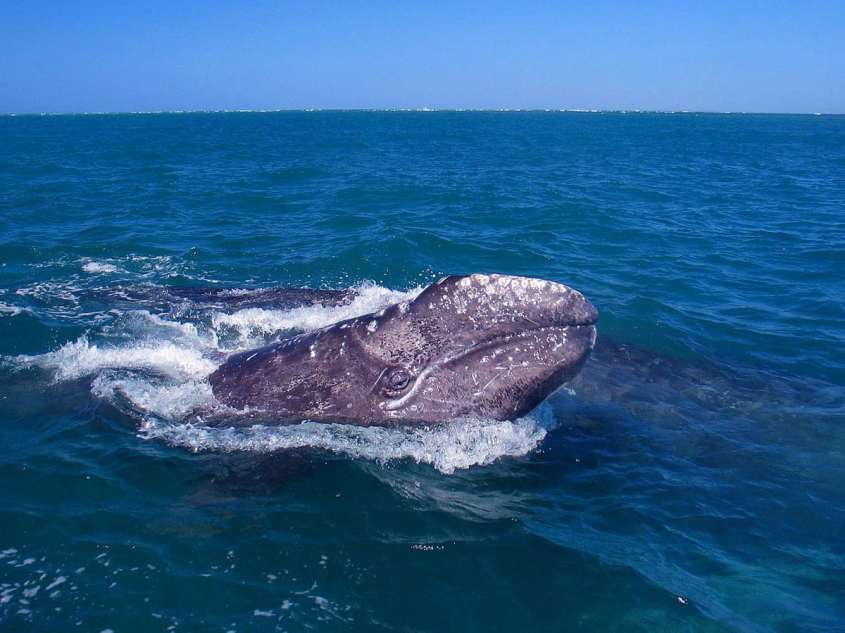
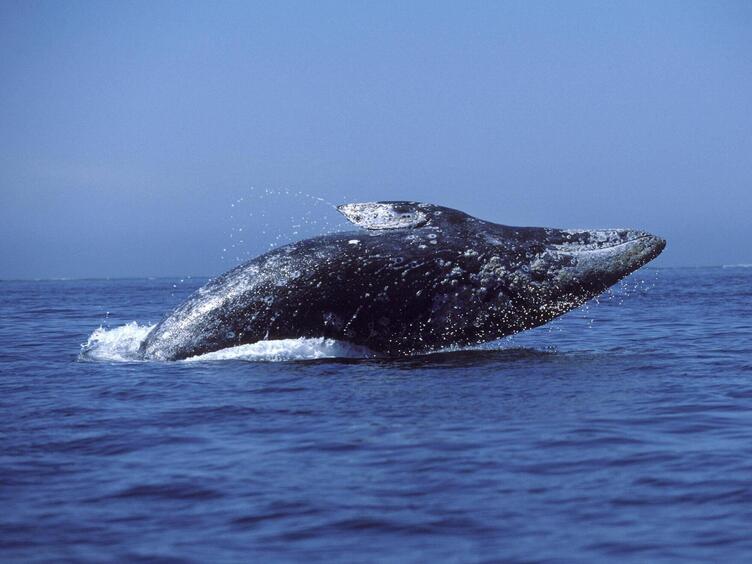
Gray whales can weigh up to 35 tons. Here is a copy off the coast of Mexico.

Other experts suggested that because of its young age, the animal might even have been born in the Atlantic.

This would raise new research questions on the return of the animals to regions where the species became extinct some time ago.
Because of the climate crisis, gray whale experts are concerned about the way the gray whales live in the Pacific: In the Arctic, the sea ice is dwindling and with it the food supply.
The animals therefore have to swim further and further north in search of food.

https://www.spektrum.de/news/verirrte-tiere-raetsel-um-grauwal-vor-italien/1863577

And I mean…In fact, this marine mammal species has long been extinct in the Atlantic and Mediterranean.
To date, only the East Pacific gray whale populations have recovered. The West Pacific gray whales are more threatened than ever by oil and gas drilling.

There is much speculation as to where “Wally” came from: It is unlikely that the animal swam all the way. That’s what the experts say. The whale is still too young for that.
It is more likely that the young whale was born in the Mediterranean Sea.

That would be a real sensation. Because that would mean that there are even more gray whales in the Mediterranean.

No matter where the guest Wally “comes from, we wish you all the best and a long, carefree life

My best regards to all, Venus

England: 9/7/21 – Vegan Bites.

9 Badass Vegan Broccoli Recipes That Are Super Easy to Make

9 Badass Vegan Broccoli Recipes That Are Super Easy to Make – ChooseVeg

Vegan Beauty Basics (Quick & Easy Guide to Understand What Vegan Beauty Is)

Vegan Beauty Basics – Easy Guide to Understand What Vegan Beauty Is (ethicalelephant.com)

The best vegan-friendly rooftop bars and restaurants in London

The best vegan-friendly rooftop bars and restaurants in London | The Vegan Review

Research Reveals Which US States Have Highest Number of Grocery Stores Catering to Vegans

Research Reveals Which US States Have Highest Number of Grocery Stores Catering to Vegans – vegconomist – the vegan business magazine

ALL THE BEST PLACES TO GET VEGAN ICE CREAM THIS SUMMER

All the Best Places to Get Vegan Ice Cream This Summer | VegNews

NYC IS ONE STEP CLOSER TO GETTING ITS FIRST VEGAN MAYOR

NYC Is One Step Closer to Getting Its First Vegan Mayor | VegNews

25 Amazing Vegan Potato Recipes

25 Amazing Vegan Potato Recipes | EatPlant-Based

An All-Vegan Ethiopian Restaurant Rides Into the Heart of Santa Monica Soon

All-Vegan Ethiopian Restaurant Rides into Heart of Santa Monica Soon – Eater LA

Regards Mark

USA: U.S. proposal would ban mink farming to stem COVID-19 mutation.

U.S. proposal would ban mink farming to stem COVID-19 mutation

U.S. proposal would ban mink farming to stem COVID-19 mutation – The Globe and Mail

A bipartisan proposal in the U.S. House would ban the farming of mink fur in the United States in an effort to stem possible mutations of the coronavirus, something researchers have said can be accelerated when the virus spreads among animals.

The bill introduced this week is an effort from Reps. Rosa DeLauro, D-Conn., and Nancy Mace, R-S.C. It would prohibit the import, export, transport, sale or purchase of mink in the United States.

Researchers have said that spread of COVID-19 among animals could speed up the number of mutations in the virus before it potentially jumps back to people.

Last year, the European Centre for Disease Prevention and Control issued new guidance to curb the spread of the coronavirus between minks and humans. The agency warned that when COVID-19 starts spreading on a mink farm, the large numbers of animal infections means “the virus can accumulate mutations more quickly in minks and spread back into the human population.”

Denmark reported last year that 12 people had been sickened by a variant of the coronavirus that had distinct genetic changes also seen in mink.

“What we want to do is ban the inhumane practice of farming mink for fur,” Mace said Friday during an interview with The Associated Press. “At the same time, it’s also a public health crisis, so it helps fix both of those situations.”

“Knowing that there are variants, and being someone who cares about the humane treatment of animals, this is sort of a win-win for folks,” she added. “And I believe that you’ll see Republicans and Democrats on both sides of the aisle work on this together.”

According to Fur Commission USA, a non-profit representing U.S. mink farmers, there are approximately 275 mink farms in 23 states across the United States, producing about 3 million pelts per year. That amounts to an annual value of more than $300 million, according to the commission.

There have been several mink-related coronavirus cases in the U.S. In December, a mink caught outside an Oregon farm tested positive for low-levels of the coronavirus. State officials said they believed the animal had escaped from a small farm already under quarantine because of a coronavirus outbreak among mink and humans.

According to the U.S. Centers for Disease Control and Prevention, a mink on a Michigan farm “and a small number of people” were infected with a coronavirus “that contained mink-related mutations,” something officials said suggested that mink-to-human spread may have occurred.

While mink-to-human spread is possible, CDC officials said “there is no evidence that mink are playing a significant role in the spread of SARS-CoV-2 to people.”

Our Morning Update and Evening Update newsletters are written by Globe editors, giving you a concise summary of the day’s most important headlines. 

Sign up today.

Regards Mark

Question – what do you call a man that does not listen to others ?

Answer – Mr. Trump.

Related articles:

B.C. mink farm in quarantine after animal tests positive for COVID-19 – The Globe and Mail

One of two quarantined mink farms in B.C. resumes breeding program – The Globe and Mail

B.C. mink farmer euthanizes remaining 1,000 animals on farm after positive COVID-19 tests – The Globe and Mail

Over half a million animals brought to Israel since January

– Report By JERUSALEM POST STAFF JULY 8, 2021 

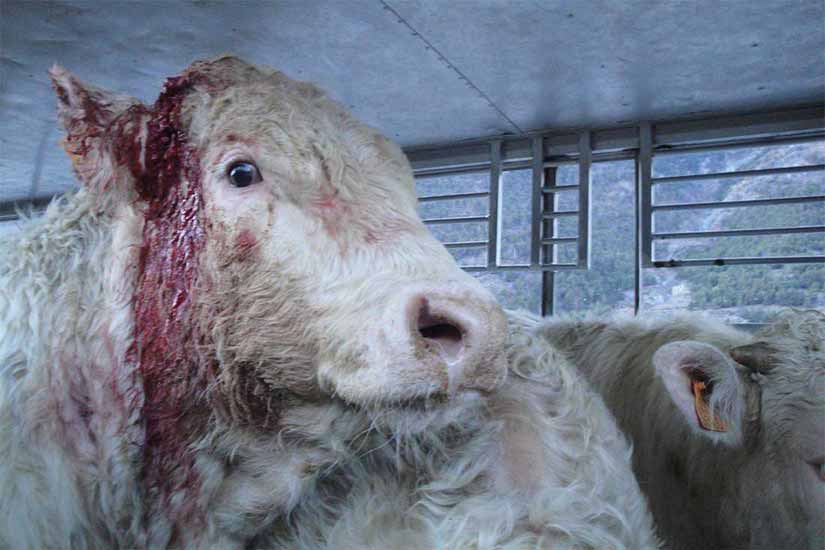
Reports indicate that the livestock delivered to Israel were living in horrid conditions in the cargo ship, which caused them great suffering.
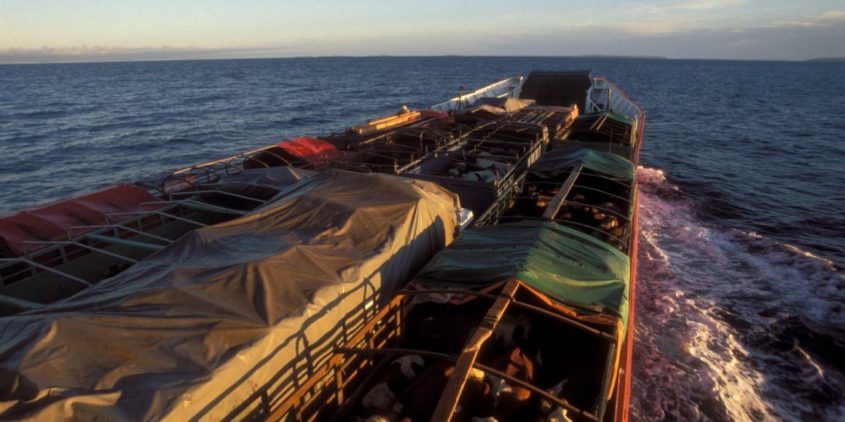
In 2018 alone, 685,000 animals came to Israel from Australia and Europe. Photo: imago

More than 500,000 calves and lambs passed through Israeli ports in cargo ships during the first half of 2021, according to the Agriculture Ministry, and the Knesset should “act urgently and stop the madness of live shipments,” Animals Now, an Israel-based animal-rights group, said Wednesday in a press release.
Animal shipments to Israel this year have increased 59% compared with 2020, it said. Almost half a million animals were delivered to the country in 2017, it added.
Shipments of animals to Israel come from Australia, Sweden, France and elsewhere.
A bill proposed by Likud MK Miki Zohar would end this practice within three years.
However, in November 2018, the legislative process to pass it was halted due to early elections. Since then, multiple bills have been submitted to stop live animal shipments.
A few bills have been submitted to the current Knesset, spearheaded by Zohar and MKs Sharren Haskel (New Hope), Ibtisam Mara’ana-Menuhin (Labor) and Mossi Raz (Meretz).

30.10.2020 | Trotz Verbot: Internationale Tiertransporte nach Zentralasien gehen weiter | SWR Recherche-Unit | REPORT MAINZ | SWR.de

The Agriculture Ministry has not imposed sanctions on importers or ship owners who have not complied with the ministry’s guidelines, “Animals Now” said.
Reports indicate that animals that were delivered to Israel were living in horrid conditions while in the cargo ship, which caused them great suffering, it said.

“They do not care about animals,” Animals Now said. “They are only interested in the money they [make] from cramming animals into crowded and polluted ships. We call on MKs and the government to act urgently and stop the madness of live shipments.”

https://www.jpost.com/israel-news/over-half-a-million-animals-brought-to-israel-since-jan-2021-report-673192

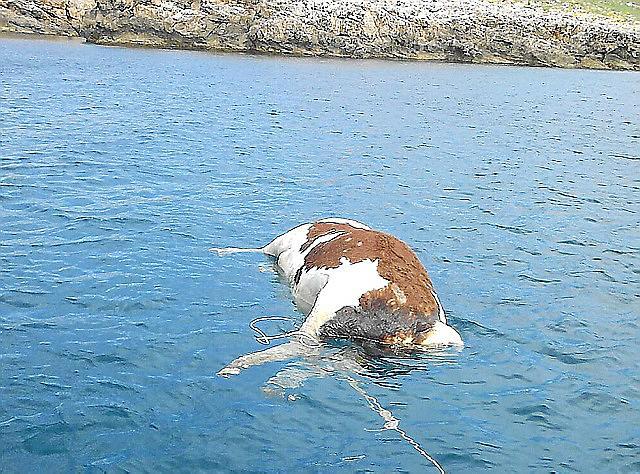
And I mean…In 2019, the bloated carcass of a calf washed up on Zuk Beach in northern Tel Aviv.

A few days later the gruesome incident was repeated.
“Where do the dead animals come from?” Asked the bathers angrily. The answer came on the evening news: from the animal transports that regularly ship hundreds of thousands of cows and sheep to Israel.
Died and thrown overboard.

Workers were filmed torturing calves and lambs with electric shocks while they were being unloaded from the ship’s belly. The 20,000 young animals were transported from Australia to the port of Eilat in a week-long journey.

Workers were filmed torturing calves and lambs with electric shocks while they were being unloaded from the ship’s belly. The 20,000 young animals were transported from Australia to the port of Eilat in a week-long journey.

Unloading alone took five long days.
These are images that shock and shake even the toughest.
Sheep, cows, calves and lambs, crammed together in the overheated storage rooms of ships, pounding in front of them and then mistreated.
In between sick and dead animals, smeared with excrement and blood.
Many suffer injuries and broken bones from the rough seas.

Israeli animal welfare organizations reported those responsible for cruelty to animals according to the pictures published by TV channel 13.
The spokesman for “Israel Against Live Shipments” said that in the 15 years the group has been active, he has never seen such cruelty to animals.
And yet it is not an isolated case, but a daily reality when transporting live animals.

According to the animal welfare organization, it is common practice to simply throw sick or dead animals overboard.
“Many even alive.”
In July 2018, a draft to end live transports was accepted by the Legislative Committee in a preliminary reading.
The proposal aims to reduce the shipping of live animals – hundreds of thousands annually – within the next three years and then ban them completely.

Only meat (chilled or frozen) should then be allowed to be transported to Israel.
Sixty rabbis also wrote a public letter in which they made it clear: “This is neither the Torah nor human morality to allow such cruelty to animals.”
Nothing has happened since then.

https://www.juedische-allgemeine.de/israel/transporte-des-horrors/

“They do not care about animals” says Animals Now.

Neither do our corrupt politicians. And not in the whole world.
They control and organize the animal transports according to their economic profit.
No other exploiter is politically and economically more powerful than the meat mafia.
The meat industry makes most of its profits from the suffering and exploitation of animals.

On the other hand, animal exploitation would be unthinkable without the support of a society that still consumes meat in perverse numbers.
We fight against the meat mafia and against this inveterate, meat-oriented ideology of today’s society.
We have had some small successes, but there is still a long way to go.
And we’ll go it.

Because the animals only have us.

My best regards to all, Venus

USA: Montana and Idaho (Republican-controlled states – what else ?) Have Legalized Killing Wolves on a Massive Scale.

Motivated by livestock and big game hunting interests, Idaho and Montana recently enacted a series of new laws that allow for the aggressive hunting of wolves’.  Wow – big men in camo trousers !


Montana and Idaho Have Legalized Killing Wolves on a Massive Scale

The two Republican-controlled states have passed laws that could decimate the wolf population and endanger a major conservation success story.

Montana and Idaho Legalized Killing Wolves on a Massive Scale (gizmodo.com)

Gray wolves (Canis lupus) have been persecuted in the U.S. since the arrival of Europeans. By the 20th century, they had been driven to near-extinction. Narrowly pulled back from the brink by endangered species protections and reintroductions in Yellowstone National Park and central Idaho in the 1990s, they are one of North America’s greatest conservation success stories.

Wolf recovery has had huge cultural resonance. Most Americans love wolves. Gas station t-shirts and tchotchkes featuring the species have become a fixture of kitsch Americana—a testament to our collective love for these charismatic canids.

Still, antipathy has persisted in some quarters. Now, state legislation threatens the Northern Rockies population, concentrated in Montana, Idaho, and Wyoming with smaller numbers dispersed across California, Colorado, Oregon, Washington, and Utah.

Motivated by livestock and big game hunting interests, Idaho and Montana recently enacted a series of new laws that allow for the aggressive hunting of wolves. Supporters erroneously claim that the predators threaten the livelihood of ranchers and wreak havoc on elk herds.

“[People] don’t understand the truth of what wolves do. It’s not their fault. The universities and media have brainwashed them at so many levels,” insists Steve Alder, executive director of Idaho for Wildlife, a controversial hunting advocacy organization.

Conservationists counter that this sort of antagonism is rooted in a superstitious, ideological dislike for wolves that doesn’t square with the reality of their impact. Data strongly indicates that the complaints by hunting and agricultural interest groups are exaggerated.

Predation on livestock by wolves is relatively low and elk populations are stable. In Idaho, between July 2019 and July 2020, there were only 102 confirmed livestock kills, with 28 more considered probable. Montana saw 238 confirmed kills in 2020. Both states host millions of cattle, sheep, and other ruminants, and compensate ranchers for each confirmed loss. Elk herds are thriving, with around 136,000 animals in Montana and 120,000 in Idaho. Most hunting districts meet or exceed their population goals.

“There are no data that would suggest that conflicts exist at such a level that a massive massacre of gray wolves is indicated,” said ecologist Mike Phillips, who headed the early efforts to reintroduce wolves to Yellowstone National Park and later served as a Democratic senator for Montana. “They’re ecologically illiterate.”

“Wolves have self-regulated their populations for millennia based on prey availability, habitat, and competitors,” added Michelle Lute, a conservation manager with Project Coyote, an organization that works to promote coexistence between humans and wildlife. “We just don’t need to manage them.”

Continued on next page.

England: 13 Elephants To Be Flown To Africa (From England) and Re Homed by the Aspinall Foundation.

WAV Comment:  The Aspinall Foundation is based in our (England) home county of Kent.  There are 2 facilities; which are not ‘zoos’ in the typical sense.  Instead, they are breeding facilities with the intention of returning endangered species back to their ‘homelands’; with the hope they will establish new breeding colonies.

This programme to home 13 elephants back to Africa from the UK will be a world first.  We watched Damian on the BBC this morning; and the aim is to fly all 13 animals to Africa in one consignment.  They have each had a special crate for their journey made, and they have been getting used to entering those over the last few weeks.  When loaded; all the crates contain the elephants will be taken to the airport where they will all be loaded onto one single cargo aircraft.  Then they will be flown to Africa and the whole process repeated to get them to their new home.

It is a massive logistical task; but we have every confidence that it will go ok.

What a shame that African elephants have to be bred in the UK and then flown to Africa.  What a shame that some hunter dickheads pay big bucks to kill the beautiful animals that are already there.  But this breeding and rehoming project just shows that there are people and organisations that are better than the hunters.  We have supported the Foundation monthly for over 20 years, and when you see this, it shows your monthly donation is being put to good use.

Below I have included a link so that you can see the conservation work the foundation is doing.

As you can see in the videos below, they also specialise in putting Gorillas back into the wild from the facility at Howletts, Kent, England

Regards Mark

Link – https://www.aspinallfoundation.org/


Herd of 13 elephants to be flown from the UK to Africa in groundbreaking rewilding project (inews.co.uk)

Herd of 13 elephants to be flown from the UK to Africa in ground breaking rewilding project

The ambitious project is the first of its kind in the world

An animal conservation charity is to rewild 13 elephants from the UK to Africa in what will be a world first.

The Aspinall Foundation’s project – the largest it has ever undertaken – will fly the elephants, weighing 25 tonnes, more than 7,000 km (4,350 miles) to their ancestral homelands. 

This is the first time that a herd of elephants has ever been rewilded anywhere in the world and no elephant rewilding project of this scale has ever been attempted before. 

The logistics of the operation have been described as “huge”. 

All of the elephants will be transported on one 777 plane accompanied by a team and vets. 

Prior to the journey – which is set to take place next year – the animals will be acclimatised to smaller spaces. 

Once the elephants are in Africa, the charity will work with The Sheldrick Wildlife Trust and the Kenya Wildlife Service, to rewild the entire breeding herd of 13 African elephants, including three calves.

At present, the elephants  – one of the most successful breeding herds in Europe – are located in an eight-acre enclosure at Howletts Wild Animal Park in Kent. 

They comprise two interrelated families but the intention is to rewild them as one larger herd. 

Two different sites, both in the south of Kenya, are currently under consideration for the elephants.

The elephants will face new risks not encountered in captivity, such as new diseases and different food, but The Aspinall Foundation says its experience of rewilding projects will help guide the animals’ transition.

As will The Sheldrick Wildlife Trust, which has been at the forefront of African elephant conservation for more than four decades and provided a “wild future” to more than 260 rescued orphans and operated projects to ensure they and their families are protected throughout their lives. 

The Aspinall Foundation hopes the project will have a positive effect in the zoo industry by discouraging the trade in elephants and bolster commitment to returning animals to the wild, where possible.

It also hopes to prove that proving such a project can be done will encourage zoos to do the same.

The public can support the project by donating through its JustGiving page. 

Damian Aspinall, Chairman of The Aspinall Foundation, said: “This is an incredibly exciting project and a genuine world-first. 

“As with any conservation project of this magnitude, there are obviously big risks, but we consider them well worth it to get these magnificent elephants back into the wild where they belong.

“By supporting the project, members of the public will be part of conservation history, helping to restore an iconic species to its ancestral homeland.

“If this is successful, I would love to see elephants held in captivity all over the world be rewilded too.”

For more information, or to donate to the project, visit justgiving.com/campaign/backtothewild


Regards Mark

France: Psychopaths on the construction hunt

A dangerous investigation, undercover in a hunting crew underground-Report of the French organization “One Voice”

We managed to infiltrate the very closed environment of underground hunting in the spring of 2019.

As part of a Hauts de France crew, our investigators witnessed several massacres: that of badgers and fox cubs.

They attended the search for foxes in this basement of Hauts-de France for hours.


Accepted by the huntsmen, they filmed the abominable spectacle that unfolded before their eyes, so that the unvarnished reality bursts into the faces of those who allow this cruel hunt.
For everyone, too, kept in the impossibility of imagining what is hidden in the woods of France by simple ignorance!

When the French learn that underground hunting is allowed, they want to ban it. Now they know as precisely as possible what this means for the animals concerned.

Unearthing, an unbearable horror

Continue reading “France: Psychopaths on the construction hunt”