
Month: September 2018



We have produced the following sheet so that you can print it out or e mail and pass on to all your contacts to keep them informed of all the animal work in Serbia for the last 13 years and now worldwide; via this site WAV.
Please share to all;
Regards Mark and Venus.
WAV SAV

No real reason for this; except maybe we need some time out. I just love ‘The Cure’ (Fascination Street) and I have been a good ‘Depeche Mode’ follower in the past – Enjoy – Mark.

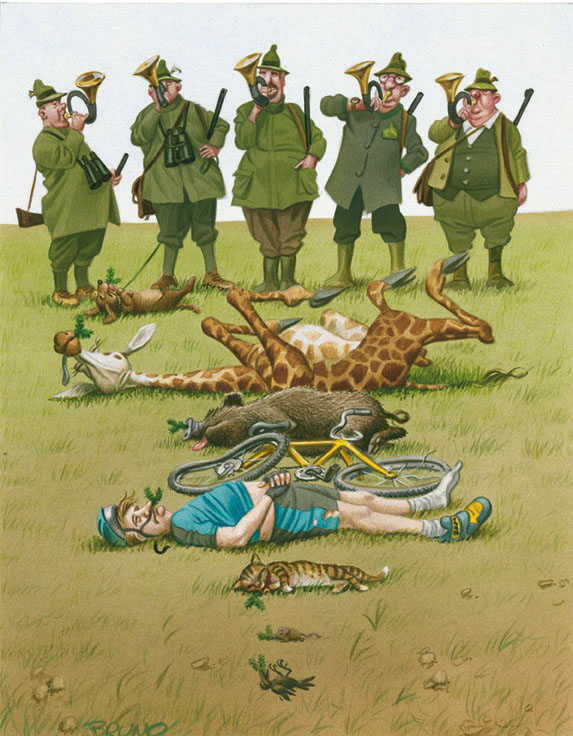
“In the past were insane, murderers, sex offenders or addicts in psychiatric institutions.
Today they are in the hunting federations”!
(WILDBEIMWILD, Facts instead of Hunter’s Lies)
My best regards, venus


Posted
Updated:
Author: Chloe Govindasamy – Public Affairs Intern
A new, independent report revealing that 97 dogs were euthanised following an outbreak of bovine tuberculosis (bTB) at a hunting kennel confirms that hunts are a major biosecurity risk, argues an animal protection charity.
The report, by researchers at the University of Edinburgh, also contains information which suggests both the hunt and Defra kept quiet about key aspects of the outbreak – such as claiming only 25 dogs were affected, rather than the actual total of 97.
Given that disease, not just bTB, is one of the biggest threats to the lives of farm animals and the livelihoods of farmers in the UK, this raises grave concerns about the way biosecurity across the UK is being managed.

Chris Pitt, Deputy Director of Campaigns at the League Against Cruel Sports, said:
“We’ve been saying for a long time that hunting is a major biosecurity threat to our countryside and this report confirms it. The 97 dogs which were destroyed because of bTB are just the tip of a diseased iceberg. This story isn’t about one kennel infected with bTB, it’s about the way hunts routinely avoid even basic biosecurity and animal welfare measures, meaning their poor dogs are often living disease carriers.
“There’s a simple truth here. When livestock dies, potentially of disease, it is given to hunts to feed raw to their hounds. These hounds are often in poor health due to kennelling conditions and lack of care, and pick up the disease. They then spread the disease back into the countryside – and the cycle continues. The government knows this is a huge risk but is either turning a blind eye or not giving people the full picture, both of which are unacceptable.”

Key concerns are:
· The number of dogs put down was 97, not 25, as originally admitted by the hunt, which suggests a deliberate attempt to play down the outbreak. The number of recorded bTB outbreaks in the Kimblewick Hunt’s territory almost doubled to 90 in the four months after the disease was discovered in the kennels.
· Government statements about the outbreak gave the impression that there was no real threat of disease spread by hunting hounds – while at the same time they amended regulations to restrict the feeding of offal to hunting hounds. If there was no threat – why change the regulations?
· The condition of the Kimblewick kennels – a typical hunt – is described as ‘suboptimal’, with dogs being kept in dirty, unhygienic conditions which are a breeding ground for disease.
· Some biosecurity measures were introduced at the kennels once the infection had been confirmed. However this backs up evidence that basic biosecurity measures at hunting kennels are generally low or non-existent.
Chris Pitt added:
“If farmers are concerned about disease on their farms, be it bTB or anything else, then they need to take a close look at any hunts in their area. There is stacks of evidence showing that disease can spread between livestock and hunting hounds, but the government seem intent on playing this down with misleading or disingenuous statements which deflect from the truth.
“They brought in new regulations last year while pretending there was no problem when clearly there was. And those regulations won’t make any significant difference – it’s a clear case of shutting the kennel door after the hounds have bolted.
“If this country wants to take disease control seriously and protect livestock, then proper biosecurity is vital – and that means stopping hunts from galloping all over farm land.”
– Ends –
Notes to Editors
· The Edinburgh report can be found here: https://onlinelibrary.wiley.com/doi/full/10.1111/tbed.12969
· For more information about the diseases spread between hunting hounds and livestock, see a summary here or the full study, Hunting with hounds and the spread of disease, by Professor Stephen Harris, BSc PhD DSc and Dr Jo Dorning, BSc PhD.
· For more information or interview requests please contact the League Against Cruel Sports Press Office on 01483 524250 (24hrs) or email pressoffice@league.org.uk
· The League Against Cruel Sports is Britain’s leading charity that works to stop animals being persecuted, abused and killed for sport. The League was instrumental in helping bring about the landmark Hunting Act. We carry out investigations to expose law-breaking and cruelty to animals and campaign for stronger animal protection laws and penalties. We work to change attitudes and behaviour through education and manage sanctuaries to protect wildlife. Find out more about our work at league.org.uk. Registered charity in England and Wales (no.1095234) and Scotland (no.SC045533).
Source: LACS – https://www.league.org.uk/news/death-of-100-dogs-exposes-the-secret-threat-of-disease

Top Man Brian !
Save Me –
http://www.save-me.org.uk/dr-brian-may-biography
http://www.save-me.org.uk/

Yes, it IS currently legal to slaughter and eat dogs and cats in 44 states of the USA.
| We are closer than ever… |
| …to banning dog and cat meat throughout the entire United States!
Shockingly, it is legal to slaughter and eat dogs and cats in 44 states of the US, with no federal law barring this brutal practice. But last week, the House of Representatives voted to pass H.R.6720, the Dog and Cat Meat Trade Prohibition Act. Now, we just need the Senate to pass this important bill, and the president to sign it into law. Speak out now to help make dog and cat meat illegal in the US. |
|
|

Jump into the arena of death!

Once again, the activists of the Vegan Strike Group interrupted a bloody bullfight.
After Valladolid in May and in Huelva on August 5 at the beginning of this year, we now visit Albacete. The activists of the Vegan Strike Group want to draw attention to the suffering of the animals in the sand (bulls and horses) and they do so by jumping into the sand to stop the bullfight, with a text of cruelty against the animals painted on their bodies.
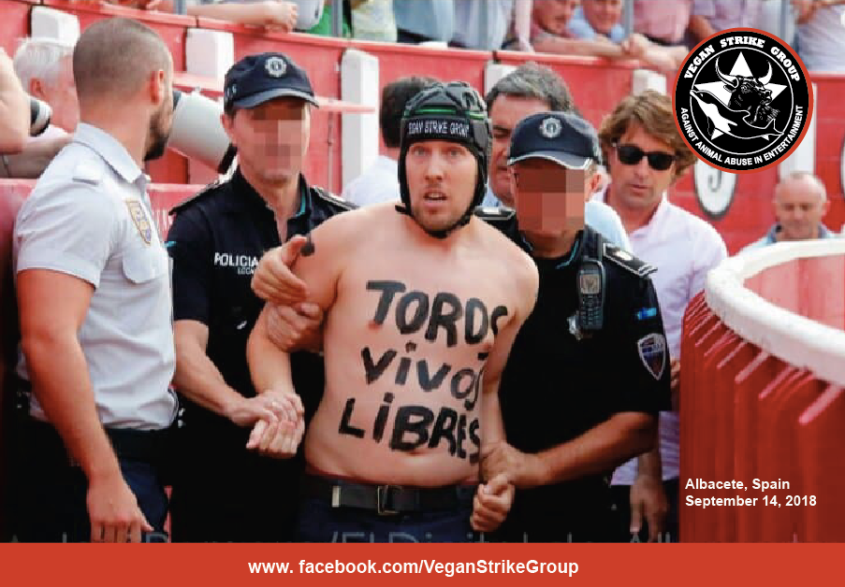
Between September 8 and 17, in Albacete, a city 255 km south of Madrid, six bulls are killed every day just for the entertainment of the people. This means sixty bulls plus the ‘reserve’ bulls that do not have to let go in the ring but are killed later in the slaughterhouse after the bullfight. Many people do not know that bullfighters also train with bulls, calves and heifers. This often happens in the properties of the torero. Therefore, the estimated number of 250,000 bulls that are killed inside and outside the celebration.

Subscribe to our YouTube channel and share this message on your Facebook page. By sharing, our action has more scope. People need to be aware of the suffering and slavery of animals for our entertainment. The animals need our help.
My best regards to all, Venus

London Vegan restaurants that can’t be beet !
https://www.thehandbook.com/london-guidebook/new-vegan-venues-that-cant-be-beet/
Genesis
What: Breaking Free
Why: For over a hundred years, the Santoro family have been key players in the meat industry, but now Alex and Oliver Santoro are rebelling by opening restaurant Genesis which couldn’t be more different. Situated on Commercial Street, Genesis is plant-based, GMO-free and organic. Influenced by street food and their travels, the candy-pink restaurant serves up everything from kale Caesar salad, mac & cheese and the American Woman burger filled with creamy coleslaw, BBQ sauce, onion rings, jalapeños and gherkins. And as for puddings, it’s not all chia seeds and raw cacao, instead you’ll find their takes on brownie sundaes, bread and butter pudding and cheesecake. To drink will be cold pressed juices, Lo Bros Kombucha, organic drinks from Longflint Drinks Co. and will be the only UK restaurant use a brewing contraption from Dutch Lab for their cold brew coffee. Fancy.
Where: 144 Commercial Street, Shoreditch, E1 6NU
Website: www.eatgenesis.com
Flipside
What: Grab and Go
Why: Flipside is so brand spanking new that it has even opened yet. Set to open at the start of October in Farringdon, it’ll sit (almost mockingly) in the shadow of the historic Smithfield Meat Market and will be a modern American fully plant-based grab and go restaurant. For breakfast you’ll find organic chickpea scramble boxes, mocha morning oats and sourdough donut with almond feta and hone. At lunch, drop in for a sandwich, they have more than 30 so you won’t get bored quickly or head to the ‘Mac Bar’ where you can customise your mac & cheese with caramelised onions, sticky rashers and chargrilled broccoli. Come the evening there’ll be burgers and sides including loaded nachos and skinny apple slaw.
Where: 88 Cowcross Street, Farringdon, EC1M 6BP
Website: www.flipsidefood.com

Jidori Covent Garden
What: Vegan Japanese Style
Why: Whilst technically not a vegan restaurant, Jidori in Covent Garden has just launched an all new vegan menu. Following the standard menu, the new additions will include small plates, yakitori, snacks and puddings. You’ll find a Mizuna and tofu salad, avocado, radish and yuzu ceviche, tenderstem broccoli tempura, as well as shiitake and shimeji ‘Kinoko’ mushroom and smokey ‘Nasu’ aubergine and coconut water sorbet with figs and lime for pudding.
Where: 15 Catherine Street, Covent Garden, WC2B 5JZ
Website: www.jidori.co.uk
Fat Gay Vegan
What: Fat Gay Vegan Takeover
Why: Sean O’Callaghan aka the Fat Gay Vegan is now part of the Clapham Common’s Venn Street Market as he takes over a section to bring the finest vegan street food to SW4, each Saturday there’ll be ten stalls serving up the best a vegan can get. Traders joining him will be Big V, Jake’s Vegan Steaks, Let’s Do Temaki and Temple of Seitan, cookies and cupcakes from Ms Cupcake, homemade vegan cheeses from Kinda Co and vegan beer from Mondo brewing.
Where: Clapham Common, SW4
Website: www.vennstreetmarket.co.uk


United Becomes the Latest US Airline to Ban Plastic Straws
Starting in November, passengers on each of United’s 4,600 daily flights will be using bamboo stirrers — not plastic ones.
United Airlines’ plan to ditch wasteful plastic straws follows American Airlines and Alaska Airlines, who each made similar moves earlier this year.
In 2015, it was reported that 8 million tons of plastic is dumped into oceans each year. The same report suggested that number would increase by a factor of ten in the next decade without significant change. This plastic is literally killing turtles, fish, and birds.
United’s move adds to the growing list of companies, cities, and states that are taking on the scourge of single-use plastics. Bamboo and wood disposable utensils have far less environmental impact than plastic versions. Environmental activists have been calling attention to this issue for years, but only recently has the movement against a throwaway culture really taken hold.
United Airlines’ shift to bamboo stirrers is a step in the right direction, but there is still room for much improvement. It is essential that activists and concerned citizens do not rest on their laurels, and continue to fight for a society that eschews the convenience of disposable one-time use products and plastic wrapped foods and instead choose healthier, more environmentally friendly options.

London’s Fashion Week is Finally Going Fur-Free
Posted by Kenneth C. Wenzer | September 13, 2018

For the first time in history, London Fashion Week will have zero fur.
This magnificent gesture by the British Fashion Council represents a milestone in the garment industry and could influence countless consumers to ditch fur themselves. With the results of a survey in hand, this organization announced that there is “a cultural change based on ideals and choice made by designer businesses, international brands as well as consumer sentiment – but also encouraged by the stance of multi-brand stores who are moving away from selling fur.”
Over the past few years, we have witnessed an increasing tempo of humanitarian concerns in the garment industry, many of whose professionals have graciously joined in the fur fight. Designers are coming to the realization that their lines of apparel can be tailored without cruelty. One by one, leading fashion houses have dropped fur without a sacrifice to the most discriminating tastes of their clients.
For millennia, seals, beavers, foxes and other creatures were relentlessly hunted with agonizing trapping methods. More recently, these fur-bearing animals have been subjected to slaughter farms and confined in substandard living conditions. These establishments, located in numerous countries around the world, engage in the most barbaric methods to feed an archaic lust for pelts. One pro-fur group even claims: “The lure of fine fur has never faltered. We all share in this rich and varied history and the traditions that were the cornerstone of this great nation from it’s [sic] beginning.”
Bob Dylan wrote in 1964 that “the times they are a changin’.” And so they are, most especially for the fur industry. A global distaste for the wearing of fur is constantly gaining momentum. With the advent of the internet and the relentless campaign by advocates against the cruelty towards animals, we may soon realize a fur-free future.


Victory! Japan’s Proposal to Bring Back Commercial Whaling REJECTED
Posted by Carly Day | September 16, 2018
The International Whaling Commission (IWC) has rejected a proposal from several countries — led by Japan — calling for the ban on commercial whale hunting to be lifted.
The pro-whaling nations argue that the ban — which has been in place since 1986 — doesn’t take into consideration the species of whales that have healthy populations and complain that the IWC is too focused on conservation. Their proposal, entitled “The Way Forward,” suggested creating a “sustainable whaling” program.
Fortunately, the motion was denied by a vote of 41 to 27. Iceland and Norway were two of the countries who voted in favor — not surprisingly, as they are the only countries that continue to hunt whales commercially in objection to the moratorium — but the vote was also supported by Cambodia, Kenya, Cambodia, Morocco, and several other nations.
“This decision sends a clear message to governments around the world that the exploitation of animals will no longer be tolerated, and animals must be protected at the highest level,” said Kate Nustedt, global director of wildlife at World Animal Protection. “All eyes are now on Japan to respect this decision. Neither commercial nor scientific whaling have any place in the 21st century, and we urge all governments to increase pressure on Japan to end its whaling once and for all.”
Japan’s proposal to the IWC included a request for permission to hunt minke whales — one of the few species of whales not currently in danger of extinction. The nation claims that minke whaling is part of their economy and history. Although Japan technically — and reluctantly — adheres to the moratorium on commercial whaling of minke, they do still catch and kill hundreds of these whales every year, claiming that the whales are killed for research purposes. Japan’s quota of minke is 333 per year, while Iceland and Norway are estimated to slaughter around 600 each year.
However, the IWC has now agreed to stop supporting Japan’s excuse of hunting whales for “scientific research,” putting the pro-whaling nation further at odds with the commission.
Following the rejection of the proposal, Japan has hinted that it may withdraw from the IWC.
“If scientific evidence and diversity is not respected, if commercial whaling is completely denied … Japan will be pressed to undertake a fundamental reassessment of its position as a member of the IWC,” said Japan’s vice-minister for fisheries, Masaaki Taniai.
But for now, animal activists are breathing sighs of relief after the IWC decision to maintain the whaling ban.
“Japan’s proposal to resume commercial whaling would be like jumping from a plane without a parachute,” said Claire Bass, director of Humane Society International. “Whales face so many threats in our increasingly degraded oceans; it’s critical that the IWC focuses its time and resources on tackling the many problems that we create for whales, such as entanglements in fishing gear and pollution.”
 World Animals Voice