Mink, foxes and raccoon dogs are kept in tiny cages and suffer terrible wounds when fighting each other. Foxes are bred to a huge size and fattened morbidly. The more fat the animal is, the more fat is the profit.
These conditions were not uncovered in China, but in Europe, in Finland. Now cruel conditions on fur farms were revealed there!
We have reported several times on the terrible conditions in fur farms in China. But did you know that fur farming also has a long tradition in Finland? In Finland about 2.1 million mink, 2.2 million foxes and 134,000 Finnraccoon, that is the name for raccoon dogs, are bred. And how was rediscovered now: in terrible conditions.
In Germany, the most read weekly magazine is “Der Spiegel”. Earlier, and as long as the newspaper was under the leadership of its founder, Rudolf Augstein, was a left-liberal news magazine with a very good level.
Today “Der Spiegel” has come down to the level of Infotainment.
On Monday, 17.12.2018 the following article has been published as a “main topic”.Title: “No meat is not a solution either”! Obviously, the subject was difficult to handle, so the article is written by 3 (!!) journalists!
Foto: der Spiegel
The item
The journalists beginn with the following question: “Have you already ordered the holiday roast? No fear! nobody wants to ruin it for you. We are not vegetarians ourselves. But we have to ask ourselves the question: how can we produce meat more sustainably?” “We all have to ask ourselves this question”.
The reader should not have the opportunity to see that this is not the question! Not for vegans and even for vegetarians the burning question is how can we reduce the meat consumption so, that in the future, the meat eaters will be in the minority of the population.
Der Spiegel continues: “More and more people are eating more and more meat. Over the past 50 years, the world’s population has doubled – and world meat production has even tripled. By 2050, meat consumption could once again grow by 85 percent, warns the UN!”
Here begins the central idea of the article to work manipulatively. If statistics give us only bleak predictions anyway, then the posted question: how can we produce meat more sustainably? “appears as an urgent need! And so the question is not meat or not meat,
but which meat and why.
Der Spiegel:On the other hand, meat is a pleasure. It has been part of our culture for millennia. And it can also be a valuable protein source. Protein from animal products is often easier for humans to use than vegetable protein. Without these animal proteins, humans might not have been able to evolve to Homo sapiens”!
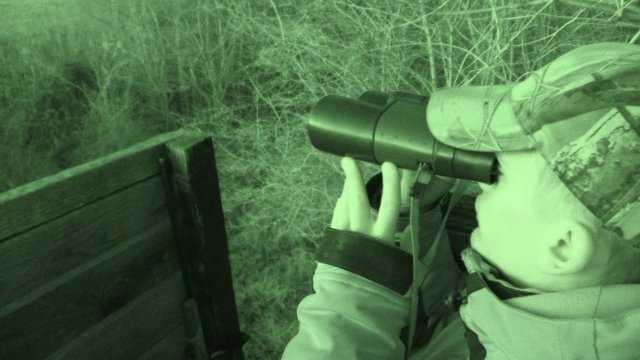
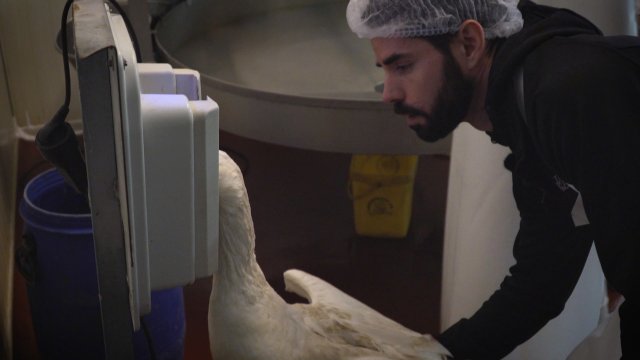
Subsequently, three Homo sapiens appear on three videos: a master butcher, a policeman and hunter, and a journalist who visits an organic farm with gooses.
The two of them must have paid an extra sum, because they advertise directly their meat business. The journalist cuts the neck of a (bio) goose with a knife himself and ends the murder act with the sentence: “It was not as bad as I thought, I think the procedure is not bad!”
Why all the embarrassing theater? is the question.
Because the title “No meat is not a solution” brings money and readers. Finally, 98% of the country eat animals.
The title “no meat is a solution” would only have problems with the sale, nobody wants to read that he has to stop eating meat.
The butcher,who runs a business with Alfa-class meat, which he produces by hand. 100 gr. 2 Euro!
The cop, who” plays” hunters in his free time, only sells fresh and healthy bodies from the forest, which he sells in his shop.
Both are THE solution, for “der Spiegel”, a solution that favors the higher profits, but at the same time puts the magazine in Boulevard Scala.
Look at the videos on the link! they are unfortunately in German, but the third will understand everyone. It is the visualization of the title that I gave in my article.
The management at Samutprakarn Crocodile Farm and Zoo in Thailand has been ordered by the country’s Department of National Parks, Wildlife and Plant Conservation to remove two thin elephants from the park’s performance schedule until their health improves.
Following an outpour of complaints about the emaciated condition of the animals at Samutprakarn, officials examined them on Wednesday, according to spokesperson Sompote Maneerat.
The two elephants who have been removed from the circus-like acts are reportedly underweight because they lost some of their teeth and couldn’t chew food properly, which affected their ability to absorb nutrients — though management has also claimed to keep the animals thin so they’re able to perform dangerous tricks.
To rehabilitate the elephants’ health, the agency recommended that zoo management use pellet and chopped feed. They made the same recommendation for a half-blind horse who was not used in any shows but was found in the same condition as the elephants.
While the physical aspects of the zoo were, shockingly, approved by the inspectors, they suggested ways for the zoo to improve the quality of life of the confined animals, such as chimpanzees and tigers.
The zoo’s license was also out-of-date, the officials discovered. It had expired in April 2016 and the zoo was instructed to submit additional documents upon seeking renewal. However, this has not yet been done.
While we’re happy that the elephants are receiving a much-needed break from performing, we believe that it’s in their best interests to never have to perform again, or endure the decrepit conditions at this zoo, which fails miserably to provide the environment or care that wild animals need.
Lady Freethinker has started a petition campaigning for the elephants to be removed from Samutprakarn and relocated to a sanctuary, where they may live out the rest of their lives in freedom and peace.
Heading from the Henan province in central China to Hangzhou, the vehicle was detained because the driver did not have the documentation required for transporting the dogs and could not prove where they had come from.
The police called upon Nanjing’s largest animal rescue center, Ping An A Fu (meaning Peace and Luck), to assist with rescuing the dogs. On arrival, staff from the organization discovered 108 medium to large dogs stuffed into only nine tiny wire cages.
The malnourished, hungry and stressed animals were taken to safety at Ping An A Fu’s center in the Pukou district to be quarantined. There, they received comfortable beds made of hay, water, food, and medical care.
Although all the rescued dogs survived that first night, some died later due to other medical problems.
“Most of the dogs are healthy now although some still need continued medical attention,” said Lu, a volunteer for Ping An A Fu. “Deaths were simply unavoidable as the conditions of some of the dogs when we received them were just too dire.”
Staff at the rescue center report that most of the dogs are friendly and comfortable around people, indicating that they may be beloved family pets that were swiped off the street for the horrific dog meat trade — a common occurrence throughout China.
“If it is not for the police who enforced laws strictly and saved the dogs from meat dealers, these 108 dogs would have been meat dishes,” the organization posted on Facebook.
Although animal advocates estimate that the popularity of eating dog meat throughout Asia is decreasing, around 20 percent of China’s population continues to consume it, believing it to be good for their health. Their consumption accounts for half the dogs slaughtered in Asia every year.
Thanks to the Nanjing police and the amazing team at Ping An A Fu — who currently care for more than 10,000 animals — these lucky pooches will be heading for a much better life.
Spain Finalizing Bill to Classify Animals as Sentient Beings, Not ‘Objects’
Animal rights in Spain are about to change, as the Spanish Congress work on finalizing a bill which will see them classified as sentient beings, rather than “movable property.”
Currently, pets can be seized as material assets if guardians default on payments; this bill would prevent that from happening.
In the case of a separation or divorce, the best interests of the animal would come first when deciding which partner the pet stays with. In America, only two states — Illinois and Alaska — take animal wellbeing into consideration during custody battles.
This Spanish bill has been a year in the making, with 115 amendments introduced since it was first drafted last December by the Popular Party (PP).
Although animal advocacy groups acknowledge the bill is a step in the right direction, they all agree that there need to be broader changes to animal welfare legislation throughout the country. Among the issues discussed by animal rights groups is the use of animals in circuses and bullfighting — still a heated and highly controversial topic.
“Right now that depends on municipal authorities,” says Avelino Barrionuevo of the PP. “What’s required is political determination and courage, because Spain is trailing at the back of the pack when it comes to animal protection in Europe, even though social awareness has increased in recent years.”
The European Union acknowledged that animals were “sentient beings” nearly 10 years ago in 2009, with New Zealand, France, and Quebec following suit in 2015.
Although all US States have laws in place to protect animals from abuse and cruelty, in many states, they are still classified as property.
Politicians say the bill should be ready by February 2019, giving animals in Spain more rights and protections in line with the rest of the European Union in the coming years.
2018 was marked by scandals for the Swiss food company Nestle.
Nestlé, the largest food producer in the world, has an annual turnover of 80 billion euros. Why is Nestlé one of the most hated companies in the world? The allegations date, from the contamination of baby food on the genetic manipulation of ingredients to animal experiments and the exploitation of children. Unethical advertising, manipulation of uneducated mothers, pollution and much more.
In addition, the Group is digging up water there, where none is left. Nestle is the world’s largest food company and the group has a history that makes even hardcore industrialists shudder. But 2018 should not end well forNestlé, because in India, the much-anticipated feature film “Tigers” by Oscar winner Danis Tanovic was shown. Tigers is based on the true story of a former seller of Nestlé baby milk in Pakistan. Meanwhile, 15 million people have clicked on the” Tigers” trailer on Youtube. After 21 years, it is now possible in India and the subcontinent to hear the story of Nestle’s terrible scandal.
Twenty-one years have passed since Pakistan proved how Nestlé violated the WHO Code. It was in the 90s and this is a sad story about poverty, breastfeeding and greed. In less developed countries (LEDCs), Nestle has particularly addressed the poor. Your baby food should be almost as good as breast milk, which is highly unethical for several reasons.
The first problem was the need for clean water. Most of the people targeted by the corporation – especially in Africa – did not have access to clean water (many still do not), so the water had to be boiled. Due to the low literacy rate, many mothers were unaware of this. Therefore, they mixed the baby food with contaminated water and endangered their babies. Nestléseems to have knowingly ignored this and encouraged mothers to use baby food even when they were aware of the risks.
Drinking water is vital. But global supplies are unevenly distributed. The supply of drinking water has been made the main task of the Swiss groupNestlé and as a precaution buys everything that looks like a source of water, because Water Makes Money.
To date, several countries and organizations are boycotting Nestlé, although Nestlé claims to comply with WHO regulations.
Also in 2018, a recent study shows how Nestlé leads consumers astray with promises of promises and different additives!
Nestlé has been criticided by all corporations worldwide, but Nestlé, the international Swiss corporation, is also the world’s largest supplier of baby food, accused of breaching ethical marketing rules and manipulating consumers with misleading claims about the nutritional benefits of its breastmilk substitute. Nestlé is also accused of selling ‘substandard’ baby milk in South Africa. It is not the first time that Nestlé has problems with baby food. Already in the 1970s and 1980s, there was the first scandal about milk powder from Nestlé and, as the film shows, even in the 1990s.
The “Tiger” Story
For the first time ever, a whistleblower in Pakistan managed to trace the system of bribery of health workers and doctors in minute detail. He found out that the baby food of his new company killed hundreds of children. After that began a lonely and dangerous fight against the company. Although the film premiered on September 8, 2014 at TIFF and was shown at film festivals in Berlin and New York, it was never released in India. Until then the streaming platform Zee5 got the rights to “Tigers” and on November 21, 2018 the Indo-French production for the video-on-demand service published.
The film looks at the life of Ayan, a pharmaceutical vendor who states that the baby formula he uses to achieve excellent results is the cause of malnutrition and even the death of infants. The real Ayan from “Tiger”,Syed Amir Raza Hussain, then awaited his second child – it was to induce him to take action against the company that had occupied him.
A message from the man behind the film “Tigers” Emraan Hashmi 2018.
The film “Tigers” based on my life story of personal sacrifice to expose an injustice and principled stand against Nestle in defense of the health of babies and their families. The film was directed by the Oscar winning director Danis Tanovic and me was portrayed by the famous Indian actor Emraan Hashmi. The mission we began in Pakistan was on a very small scale, but thanks to the filmmakers it has come into a very powerful medium to reach people all around the world. I am grateful to everyone who worked on this film and made it possible. I was not expecting that at the end of the filmi would be accepted with a standing ovation @ TIFF!
I am thankful that people love it and understand what we have been struggling to do as a family.
My comment: I remember that my mother was a fan of this multinational group and all of us have been fattened with Nestlé milk for years!
She did not know any better, but today, if we want, we almost all have a cheap and uncomprehended access to information and knowledge.
Therefore, make sure that you do not support and access the “Tigers”, as much as possible.
In the name of the thousand animals that are no longer transported over the sea painfully, Thank you Lyn White. Thank you for your strength, your perseverance and your tireless struggle!
“Sheep trade is finished…” Sydney Morning Herald, 13 December 2018
Mark, this was a very welcome media headline to end what has been a huge year in our efforts to end live export. It refers to a new ‘heat stress assessment model’ which would effectively stop sheep exports for half the year, presenting another huge blow to the future viability of the trade.
So much has happened this year. And with politicians heading home for the summer break, and with four live export bills yet to be voted on — I thought you may be wondering, what now?
The short answer is that politicians have 13 more chances over 13 parliamentary sitting days to bring on a vote to end live sheep exports. If they don’t, then the Australian people get to make the decision for them at the next Federal election. And, as you know, for the first time in our history there is a point of difference on this issue between the two major parties.
Let’s pause for a moment to take that in.
After 50 years of condemning animals to unconscionable cruelty — after half a century of thinking their secrets would stay hidden at sea — the live sheep export industry’s days are well and truly numbered.
They’re numbered because compassionate and determined people like you, Mark, have refused to stay silent. Because, day and night, for eight months, you have answered our call for help every time we found a strategic opportunity to fuel this campaign for the animals onwards.
Now, as a result of our collective efforts, live exporters no longer enjoy majority political support. Two additional live export bills were introduced to the Federal Parliament during the final parliamentary sitting week, sending a striking message from a powerful new cross-bench straight to the Morrison government that this issue is more palpable than ever, and will not go away.
South Australian MP Rebekah Sharkie cited that she gets dozens of emails every single day calling for live export to end. The new Independent member for Wentworth, Dr Kerryn Phelps, said her electors made it clear during the by-election that they will no longer tolerate the trade. And long-time friend of the animals, Andrew Wilkie, reminded his fellow parliamentarians that every poll ever conducted has made Australia’s opposition to this cruellest of trades clear.
These are your voices, your emails, your phone calls, your letters, being echoed by your political representatives.
Mark, I would have loved nothing more than to head into Christmas with a parliamentary decision to end the trade. However, after 15 years investigating and exposing the horrors this industry inflicts on animals, I can wait a few more months. After all, it’s already been a year of truly milestone moments:
More than 500,000 sheep were spared from ‘cooking alive’ at sea during the deadliest Northern summer months.
Australia’s biggest sheep exporter — the company exposed on 60 Minutes — was banned from operating, permanently.
We hauled the live trade before the Federal Court, and won, and now the regulator remains under investigation for covering up cruelty.
New standards being forced on the industry will effectively end shipments during the hottest months, and impact the commercial viability of all export voyages — for both sheep and cattle.
So fearful is the industry of a pending political vote that they ‘voluntarily’ committed to stop shipments across the sweltering June to August period next year. And now, this ‘heat stress’ review will likely mean there will be no sheep shipments for 6 months next year.
So, while the year is rapidly drawing to a close, 2018 will be remembered as the year Australia’s cruellest trade began to unravel. Mark, with your help, we are determined to ensure that 2019 will be commemorated as the year Australians voted to bring it to an end.
US Interior Secretary Ryan Zinke is leaving his post at the end of the year, President Donald Trump says, in the latest high profile departure from his administration.
The interior department oversees federal land, including national parks such as Yosemite and Yellowstone.
Mr Zinke has faced scrutiny over expensive trips in US Park Police helicopters and on private jets.
Costly alterations at his department also came in for criticism, including reports that three sets of double doors in his office were being upgraded at a cost of nearly $139,000 (£110,000). He later said he had negotiated the price down to $75,000.
According to the newspaper, he is facing scrutiny for blocking a Native American casino expansion after meetings with lobbyists opposing the plan, and for possible breaches of the Hatch Act – which stops federal employees from influencing elections by using their office.
Washington (CNN) President Donald Trump announced Saturday morning that Interior Secretary Ryan Zinke will depart from his administration at the end of the year.
The departure comes amid multiple ethics investigations into Zinke as well as a staff shake-up among Trump administration officials, including the President’s chief of staff. Trump announced Friday that his budget director, Mick Mulvaney, will become his acting chief of staff, replacing John Kelly, at the end of the year.
The Washington Post reported Saturday that administration officials said the White House had been pushing Zinke to resign for weeks and that he was told he had until year’s end to leave or he would be fired. Citing two people familiar with the discussion, The New York Times also reported that Kelly’s team had told Zinke that he might risk a potentially humiliating firing if he didn’t leave his post by the end of the year.
After Zinke Resignation, Industry Lobbyists Will Lead Country’s Top Two Environmental Agencies
The resignation of Ryan Zinke as head of the Interior Department is opening to way for a man who has long advocated for the industry he now regulates to take over the department, at least temporarily. And that means that the top two agencies that deal with the environment in the United States government will be run by men who were once paid by the industry they must now regulate, notes the Guardian. Zinke’s number two, David Bernhardt, will take over as secretary of the interior when he steps down at the end of the year. Although it’s a temporary appointment for now it could very well become permanent. After all, that’s what happened with Andrew Wheeler, a former coal lobbyist, who will be nominated to maintain the post he has been holding as acting administrator of the Environmental Protection Agency.
Bernhardt has long been seen as the man behind the scenes at Interior to run the president’s deregulation agenda. “Bernhardt has been running the policy show ever since he’s been there as deputy secretary,” Kathleen Sgamma, the president of the Western Energy Alliance, told the New York Times.
Prior to his life in government, Berhardt was a lobbyist for the oil, gas, and water industries, all of which are subject to decisions from Interior.
Warning Graphic Footage. Running Down Coyotes with Snowmobiles. The coyotes suffer horrendous torture and killed in many different ways and for many different reasons. And people want to wear their fur for a fashion statement. Shame on the hunters, brands and knowingly customers.



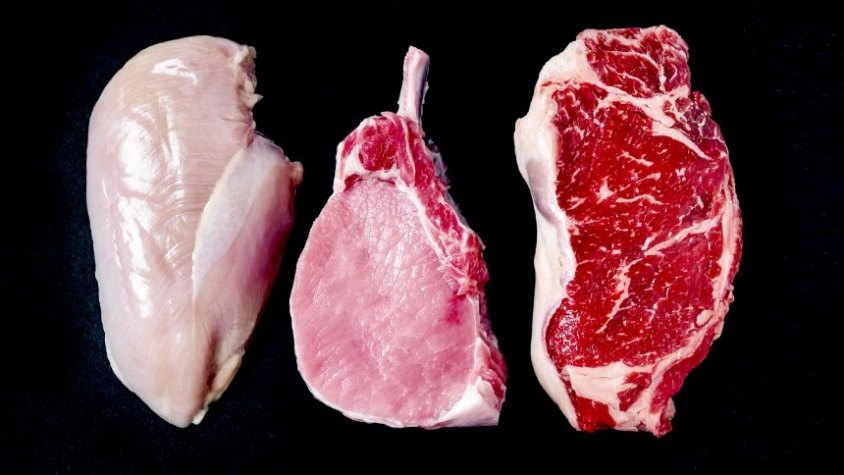 Foto: der Spiegel












 World Animals Voice