Month: June 2020

USA: Trump’s Unjust Executive Order–We’re Fighting Back.

american-flag-120402148


CBD Logo


https://www.biologicaldiversity.org/ 


Hi Mark,

Just minutes ago we launched a lawsuit against President Trump for illegally ordering federal agencies to waive laws like the Endangered Species Act in order to ram through oil pipelines, mines and other pet projects.

For Trump it’s an “emergency” to make sure polluters get what they want. For wildlife and people — all of us depending on clean air and water and a safe place to live — it’s an invitation to disaster, a recipe for more death and extinction.

We’re not going to stand for it. Please support our effort with a gift to the Saving Life on Earth Fund.

Trump’s executive order last week was the latest escalation in his drive to wipe out wildlife, including some of the rarest, to clear the way for corporate profits and reward his rich, powerful friends.

One of his earliest acts as president was to open up Alaska’s wildlife refuges for wolf pups to be gassed in their dens.

Then last summer he took an axe to the Endangered Species Act.

Now he’s directing agencies to ignore the most fundamental environmental laws protecting wildlife from extinction.

We see this for what it is. Our action today is directed at Trump for violating the Endangered Species Act by ordering the government to fast track bulldozing, clearcutting, mining and drilling projects anywhere and everywhere.

The Trump administration is doubling down on authoritarianism designed to dominate nature at all costs.

It comes from the same dangerous place that also allows kids to be put in cages, white supremacy to flourish, women to be abused, climate agreements to be ripped up, science to be ignored and citizens to be tear-gassed while protesting peacefully on city streets.

The status quo is not just toxic, but dangerous, hateful, cruel and fatal.

It won’t stand, and we’re fighting it with all we’ve got.

Please consider a gift to the Saving Life on Earth Fund to help.

For the wild,

Kierán Suckling
Executive Director
Center for Biological Diversity


Scotland: Opinion: Mark Smith: Cruel and unjustified: the legal case against the Scottish Government that you might not have heard about.

scot


https://www.heraldscotland.com/news/18502458.opinion-mark-smith-cruel-unjustified-legal-case-scottish-government-might-not-heard/?ref=twtrec


Opinion: Mark Smith: Cruel and unjustified: the legal case against the Scottish Government that you might not have heard about

There’s an important case coming up at the Court of Session in the next few weeks, but when I phoned the Scottish Government to find out more, they told me it would be inappropriate to talk about it. I disagree. The fact that the case is happening, and the fact that the Government is defending it, is infuriating and depressing and we should definitely talk about it and I hope to God the Government loses.

The issue at the heart of the case is animal welfare, specifically the welfare of young calves, and it’s important because it raises several moral and political questions. First: how should we treat farm animals in Scotland? Second: do we want Scotland to have the highest standards because if we do, why is the Scottish Government allowing a practice that’s no longer happening in England? And third: will we learn lessons from Covid? Because in Scotland we still disrespect animals in ways that have spread disease in the past and could do so again in the future.

I have to say here that, until I started looking into this case, I hadn’t properly realised Scotland was still persisting with a practice that became such an infamous issue 30 years ago. You may remember it: in the 90s, half a million male dairy calves were being exported from the UK every year, mostly for veal, but the dairy industry eventually realised – thanks to a campaign against the practice – that their image was suffering and the number of exports dropped dramatically.

However, the trade does still continue and I’m sad to say that for the last three years the only place in Britain where it’s been happening is Scotland. Since 2017, more than 12,000 calves have been exported from Scotland to Spain where they are fattened for beef. The calves are usually taken from their mothers on their first day of life and loaded on to the trucks at two weeks old. Many other male calves are shot at birth (in the UK, about 95,000 a year).

READ MORE: MSPs back animal welfare reforms 

Ah but wasn’t there a whole scandal about this a couple of years ago and didn’t P&O say they would stop carrying calves from Scotland? True, but the Scottish Government remained supportive of live exports and, after P&O made their decision in 2018, the industry switched its tactics. So now, instead of going by boat from Cairnryan, the calves are driven to Ramsgate where a ship, chartered by the exporters, takes them to France and then by road to Spain.

Which is where the court case comes in. The petitioner in the case is Compassion in World Farming, the organisation that campaigns for better farming standards, and their argument is that, in allowing the export of calves to Spain, the Scottish Government is breaking the law. The Government disagrees and has appointed a QC to fight the case, although exactly what their defence will be we don’t yet know.

What the law says is that unweaned animals should not be transported for more than eight hours unless, after nine hours, they are given water and if necessary fed. Now as far as we know, after eight hours or so, the calves from Scotland are stopped at a motorway service station in Essex and the automatic watering system in the trucks is operated. But each truck is tightly packed with up to 250 calves and no one goes on board to check if all the calves take the water. Chances are many don’t.

As for feed, what calves of that age receive is milk or a milk replacement, but the trucks don’t have the facilities for that so for the entire journey to France (23 hours or so), they will not be fed. What the Government may argue – and it would be a pretty lowdown argument if they try it – is that it’s not necessary to feed the calves. But calves of that age feed at least twice a day (and if they’re with their mothers, a good deal more) and the schedule of documents sent to the Court of Session includes an unequivocal statement from Professor Donald Broom, the UK’s foremost authority on animal welfare: it is necessary to give milk or milk replacement to calves that have been transported for eight or nine hours.

Compassion in World Farming say the Scottish Government has also tried to argue – surprise, surprise – that the problem arises in England and when I got in touch with the Government, they said it would be inappropriate to comment while legal proceedings were ongoing. They did, however, say they were committed to consulting on the recommendations of the Farm Animal Welfare Committee, which includes a nine-hour limit on journeys for calves. “Our preferred policy intention,” said the spokesman, “is not to support unnecessary long journeys involved in the export of livestock.”

But a statement like that raises more questions than answers. First, why support exports anyway – the UK imports a lot of beef so why not use the male dairy calves for beef in this country? Secondly, even if you think live exports are a good idea, why fight a case over a time limit you say you support? And thirdly, is the fight really worth it? The calves being exported represent the rump of an industry that isn’t even economically significant any more. Do we really want to be the last place in Britain where this happens?

And perhaps the fact that the case is happening in the middle of a pandemic should also give the Government pause for thought. If you haven’t watched the recent webinar with the celebrated primatologist Jane Goodall, I recommend it. She didn’t hold back. Humans have brought coronavirus on ourselves, she said, because of our disrespect for animals that have been pushed closer into contact with each other, and they’ve been pushed closer together in markets, on intensive farms, and in trucks parked up at motorway service stations in Essex.

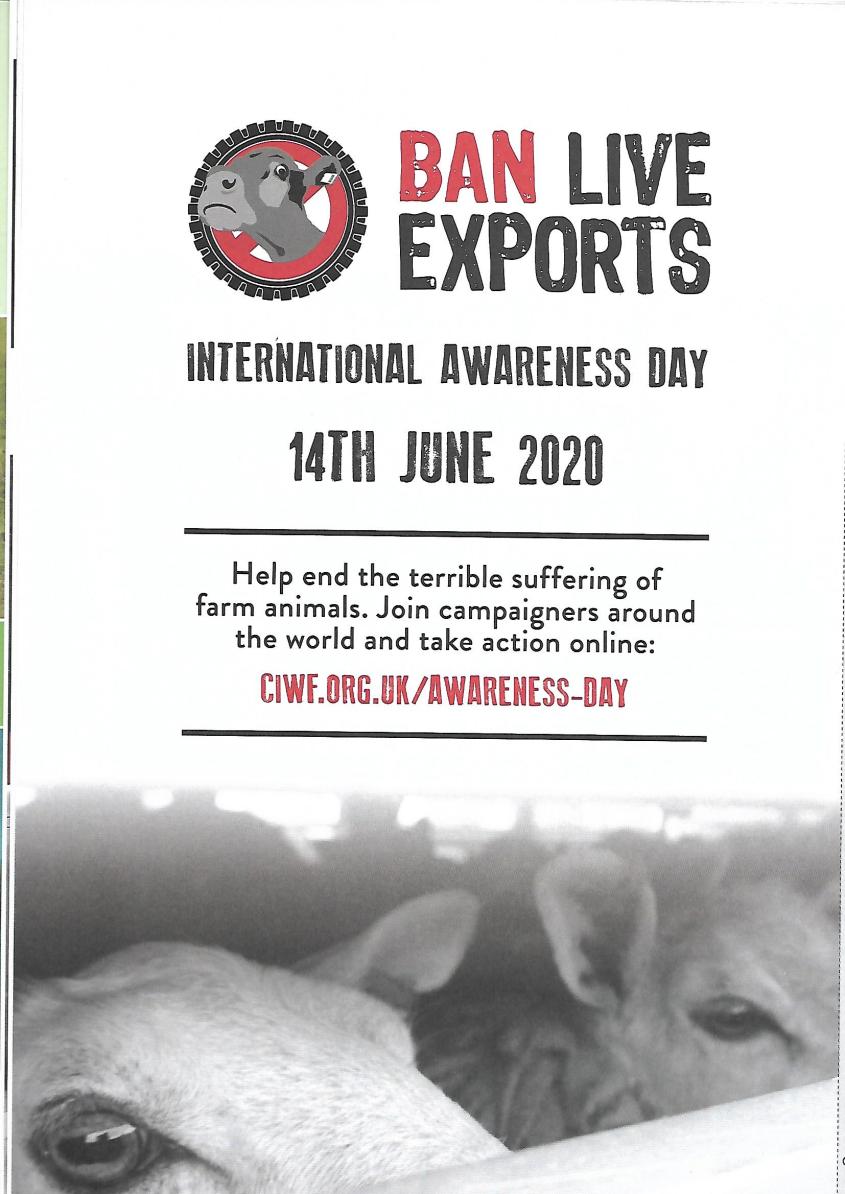
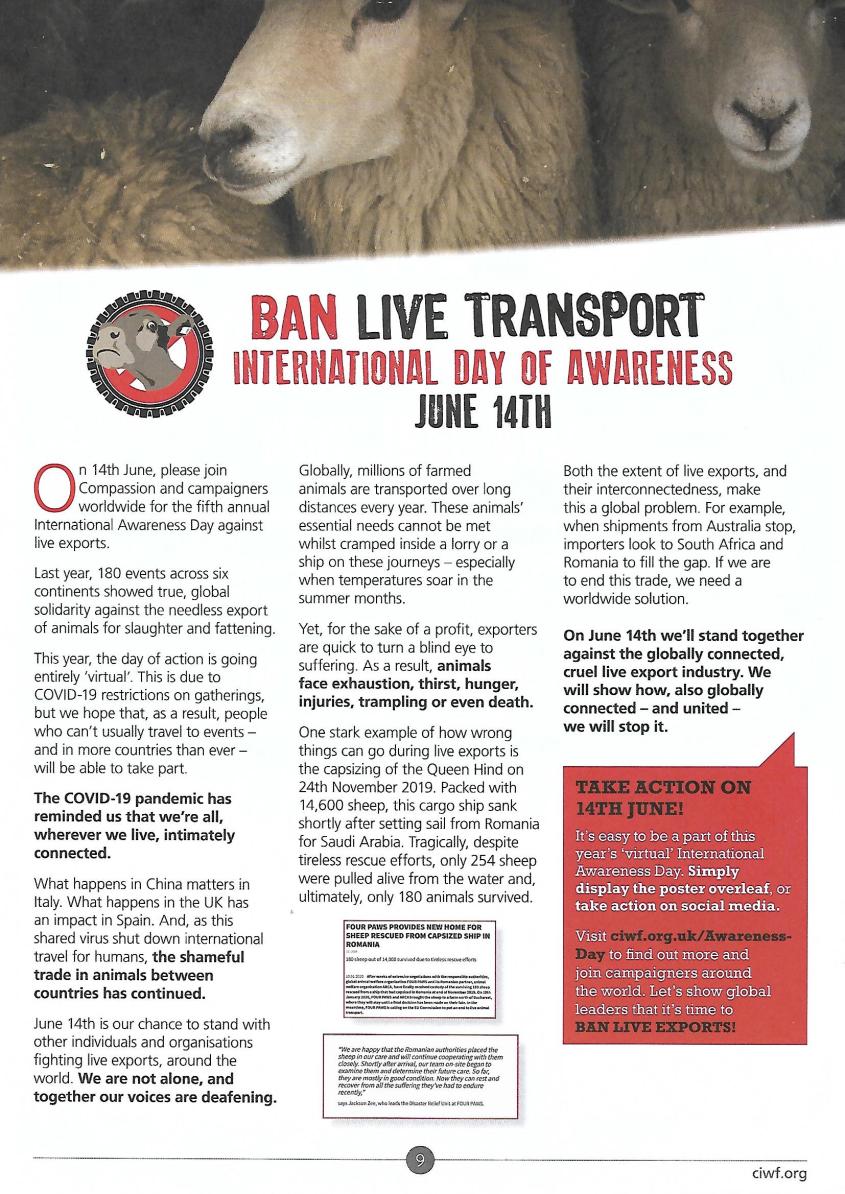
So what happens now? The case against the Scottish Government is due to be heard on August 4th and campaigners on animal welfare will be keeping a close eye on it. There’s also an awareness day on live exports this Sunday. The aim, in the end, is to stop live exports all together and the hope is that the Scottish Government will show some sense. What we’re realising is it may take a judgment of the Court of Session to make that happen.


Info from CIWF:
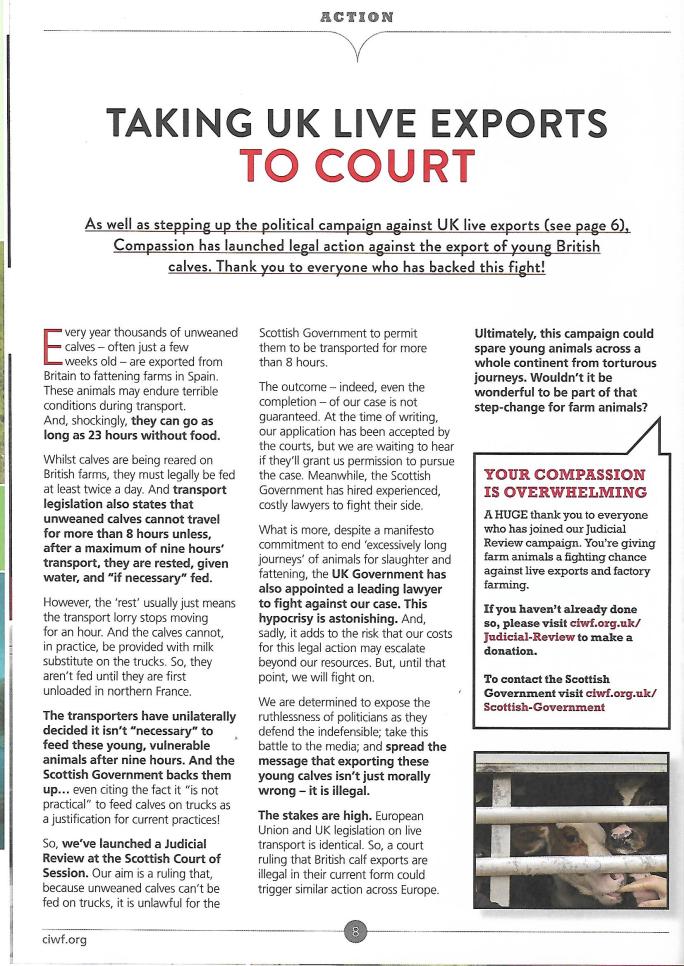
 

CIWF Calves court June

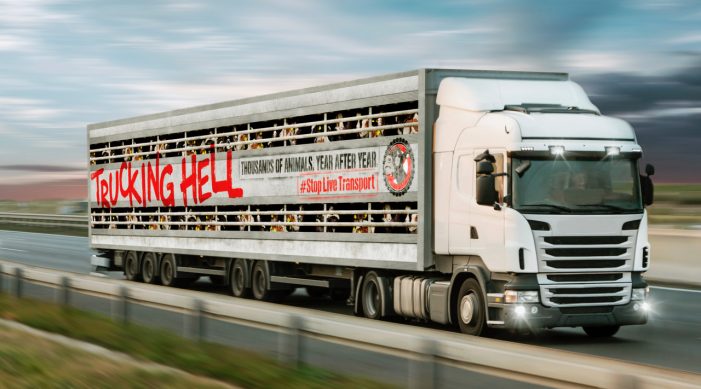
CIWF Trucking hell


CIWF posterCIWF awareness day 2020

The fate of a Greek puppy

greece

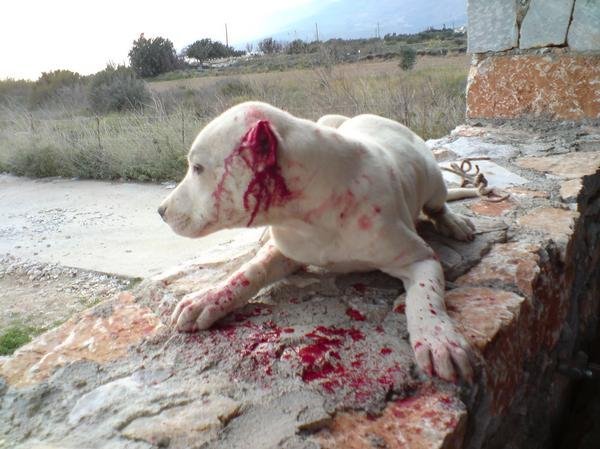
In September 2009, this picture had caused outrage, anger, and numerous petitions worldwide.
It comes from a town on the island of Crete, Greece, and shows a pitbull puppy bathed in blood because a shit teenager, his owner, cut off his ears with the sheep scissors!!

arche-noah.ch welpe mit geschnittenen Ohren_

The then 19-year-old budding murderer had proudly published the crime via FB and was therefore caught.
Nobody knows whether he was punished.

What is known is the great happiness of the mutilated dog.
He was adopted in Sweden three years after the torture.

Today he has a nice family on his side, people who were then attentive and sensitive to his fate via Facebook and adopted him.
The video says it all.

And I mean…Nothing works more than a victim who has survived torture and murder. A surviving victim is a sting in the flesh of the violent offender.

Hundreds of thousands of evil Facebook comments will never be able to develop as much strength against the psychopath as the pictures of happy, beautiful and characterful animals that were saved and finally get the opportunity to show who they are.

My best regards to all, Venus

Germany: Krefeld Zoo wants to build monkey prison again

We have not forgotten!
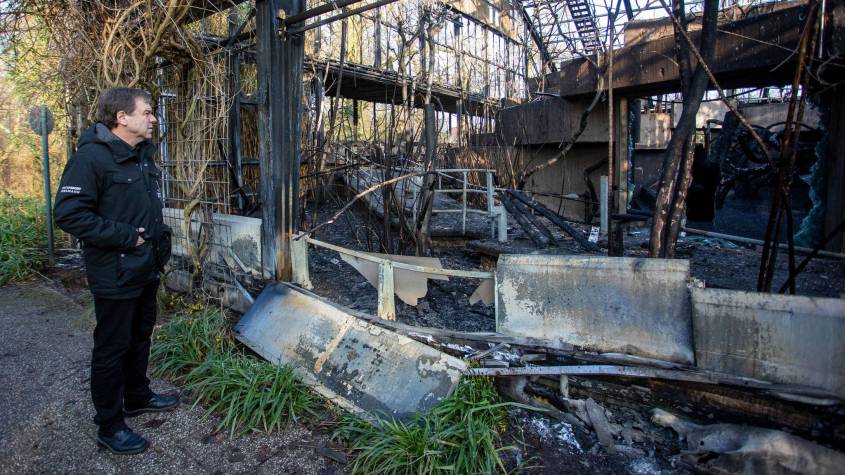
Over 50 animals died on New Year’s Eve when the monkey house in the Krefeld Zoo (Germany) burned down.
The zoo presented its new construction plans on Thursday: A new monkey prison is to be built for over 20 million euros, in which even more animals than before are to be locked up.

Please help us to prevent the construction of a new monkey house in the Krefeld Zoo!

direktor-zoo-krefeld-vor-affen-tropenhausThe zoo director in front of the burned monkey house


Shortly after the devastating fire, those responsible for the zoo announced that they were planning to build a new monkey house and that they also wanted to keep apes.

Please appeal to the mayor, the members of the city council and the zoo to refrain from building a new monkey house and instead to transfer the donations to species conservation projects that use the money to protect large areas of the natural habitats of great apes in Africa and Asia in the long term, and thus theirs Can secure the future.

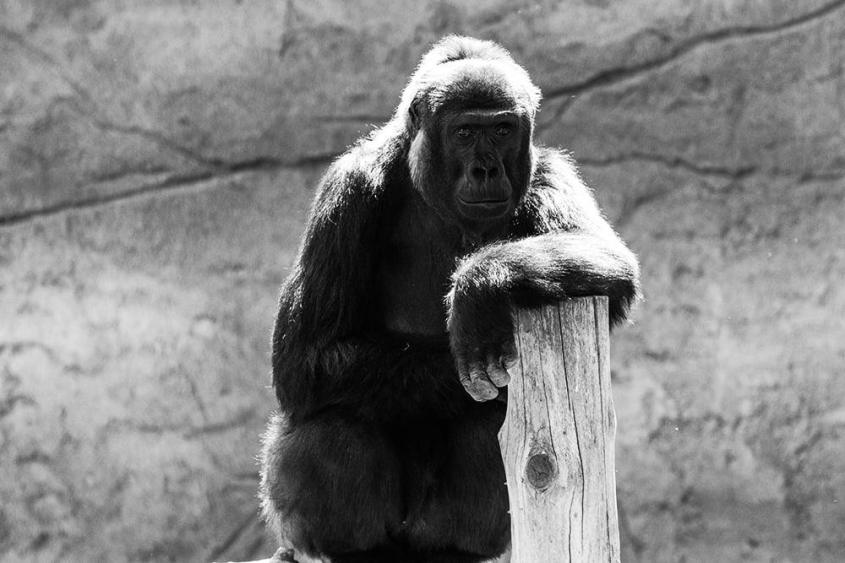
krefeld-massa-gorilla-100~_jpgGorilla Massa -Krefeld Zoo
 

On the history of the zoo prison in Krefeld.

Apes incarcerated in an outdated monkey house for decades.

The monkey house in the Krefeld Zoo was built in 1975 and was considered “modern” at the time. The great apes were separated from zoo visitors only by a ditch.
But the attitude – especially the great apes – was catastrophic.

There was no outdoor enclosure. For the animals, this meant sitting in narrow, barren concrete bunkers day in and day out, without ever being able to go outside or feel fresh grass underfoot.
Some animals have had to endure for decades, such as the Gorilla Massa.

gorilla in krefeld ZooGorilla Massa
Continue reading “Germany: Krefeld Zoo wants to build monkey prison again”

Heroes in everyday life


Someone who has eyes, sensitivity, and heart sees that the dog has been abandoned.

The dog falls in love with him but is afraid.
He knows people differently…

The young hero tries to win his trust with goodies, for a moment it looks like it works.
Then he knows he mustn’t waste time, a trap has to be made.

That was the beginning of great love, now they both live together
We love stories like that ❤️

Regards and a good night from Venus

England 1939: The great animal massacre, an unknown story

On September 3, 1939, British Prime Minister Neville Chamberlain announced to the BC that Britain had declared war on Germany.

UK flagge aquarelljpg

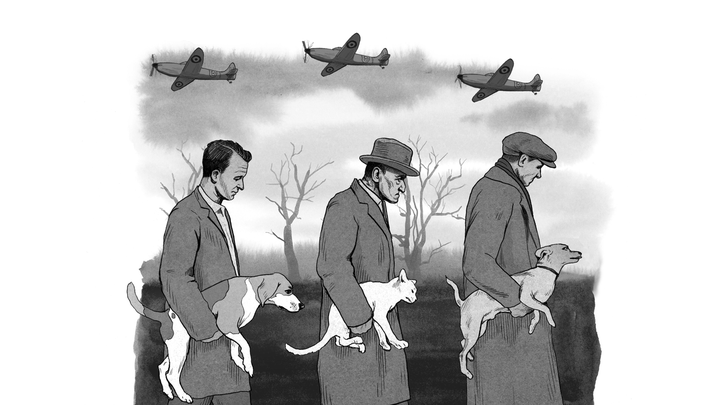
At that moment something happened that almost no one has ever mentioned. Without the authorities’ requests, around 400,000 dogs and cats (26% of the animals that lived with their families in London) were sacrificed in the first four days of World War II.

Pets were dying all over the city these days. Veterinary clinics and animal shelters were busy with an unprecedented extermination facility. A large operator ordered night shifts because the work could not be done otherwise.

dog and cat massacre 6g

People had brought their favorites here to have them killed. Hundreds of the citizens stood neatly lined up in front of a small animal shelter in north London. Cats and dogs were waiting with them. Life ended here for the animals.

The dog protection association ran out of chloroform to put to sleep; the helpers had to electrocute the dogs. Many companies soon no longer knew what to do with the carcasses. Most of them were taken to a large sanatorium for animals that had offered a meadow on its grounds in an emergency.

Today there is not even a plaque to commemorate the mass grave.
How did the pet massacre, this collective hysteria, come about in a country that sees itself as fond of animals?

great cat and dog massacre 4png

British historian Hilda Kean found that the British showed little sign of panic in everyday life.
The food had not yet been rationed and there was still enough meat for the animals, as usual from emaciated horses. There was also no immediate danger to life and limb;

The airstrikes in London did not begin until the summer of 1940.

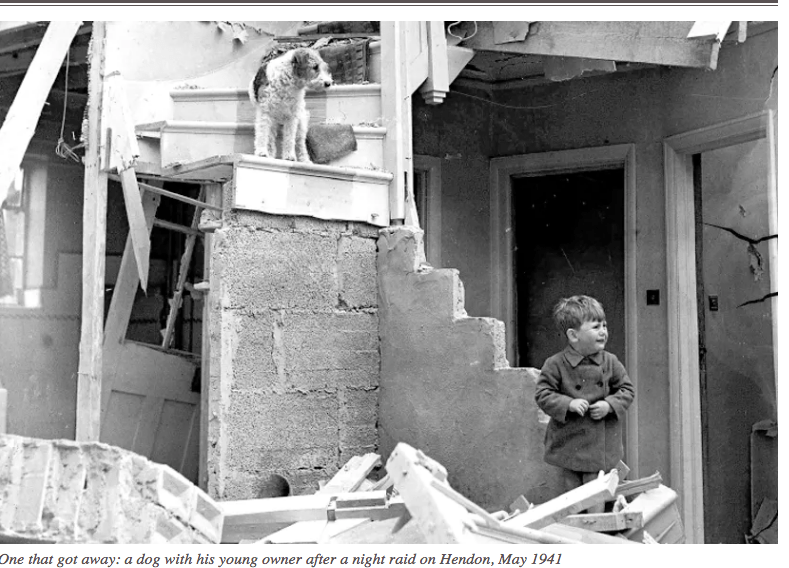
The owners apparently removed their animals as a precautionary measure, out of diffuse fear of what might come.

cat and dog massacre 7png

Hilda Kean believes that clear directives at the beginning of the war saved many four-legged friends.
But there were no instructions for it. And the attitude of the authorities was initially not clear.
An official manual recommended those who could not ensure the safety of their animals to use the euthanasia.
On the other hand, the state soon took care of the food and whereabouts of the surviving housemates.

Historian Hilda Kean says that it was just another way of signifying that war had begun. “It was one of the things people had to do when the news came – evacuate the children, put up the blackout curtains, kill the cat.”

They were still animals enough to be killed if in doubt.

Continue reading “England 1939: The great animal massacre, an unknown story”

2020: the year the whole world went full retard

Coronavirus deaths in the Netherlands have plummeted. Still, the government has ordered the slaughter of 10,000 captive mink, the first sign of a potential US-style mass cull.

niederländischen-flagge

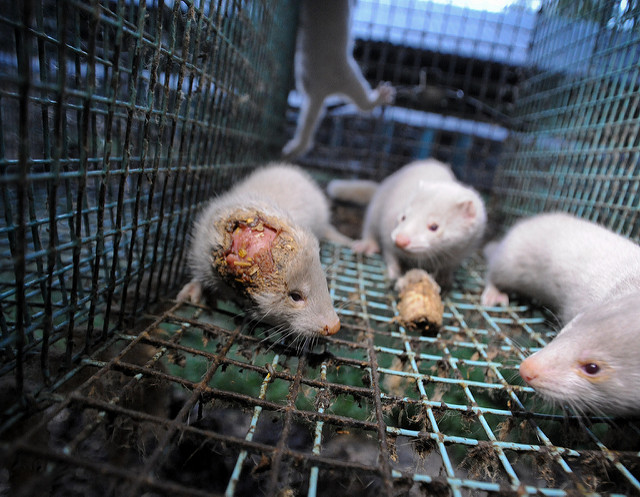
Bred in captivity for their fur, mink are subjected to some appalling conditions throughout their short lives. However, the coronavirus pandemic has introduced a new threat to the lives of these creatures.

minkmink-1

After their handlers infected mink on Dutch farms with Covid-19 in April, and after at least two farm workers caught the disease off the mink, the Dutch government ordered 10,000 of the animals to be culled on Wednesday.

Farmworkers in protective clothing will gas the mink en masse before a disposal plant takes care of the bodies and the farms are disinfected (!!!)

In the course of the coming days, all eight affected companies should be cleared. There are still around 150 fur farms in the Netherlands.

From 2024, breeding mink is prohibited after a court decision.

pelz tier farmenpg

Animal rights activists say the cull should herald the end of fur farming in the Netherlands for good. The country is one of only 24 worldwide that allows mink farming.

However, it’s not just animals in the fur trade that the coronavirus threatens. In the US, sicknesses at meat processing plants forced some facilities to shut down, leaving farmers with no choice but to cull their herds.

Tens of millions of pigs, cattle, and hens have been or will be slaughtered due to the shutdowns.

schwein we animalsjpg

Moreover, the US recorded its first case of coronavirus in a dog last week.

The disease has been found in tigers, lions, and cats in the US, and early reports of the animal to human transmission in China sparked fears of pet euthanasia and led to hundreds of pet cats and dogs being abandoned in the city of Wuhan in February.

hund in China pg

In the Netherlands, coronavirus infections have closed at least three meat processing plants in recent months. While no herds have been culled yet, the idea is not an alien one to Dutch farmers.

More than 100,000 cattle in the country have been culled since 2016 as a result of EU phosphate regulations.

Hopefully, that day won’t come. Daily coronavirus deaths in the Netherlands have plunged to 15 as of Friday, down from a peak of 234 two months earlier.

A total of 210 new cases were reported on Friday, down from a high of 1,335 in early April.

https://www.rt.com/news/491071-netherlands-cull-mink-animals/


And I mean…The authority speaks of the evacuation of the fur farms and the gassing of the animals. As if we were in Hitler’s time.

Has the Dutch government never heard of a release?
Even if part of the mink is run over, the rest will live in freedom.
That would be a humane solution.

But because criminal governments provide support to the mass murderers in the animal industry, the 10,000 mink have to fall a victim.

It looks like a financial bankruptcy of this branch in the Netherlands.
Hopefully, the operators commit suicide..

My best regards to all, Venus

England: Bee Hotels and Dormouse Boxes.

England


At the moment I am doing a few things in relation to wildlife issues at ‘Jeskyns’; a huge wildlife park very near with masses of tress, ponds and dog walking areas which is owned and protected by Forestry England.

Over the past years, I made a lot of Dormouse boxes (for Jeskyns) in order that we try to encourage / set up a breeding colony in the woodland. The breeding programme has been a real success and I think we are now in the top 10 sites in England for dormouse colonies and breeding.

You can see a bit more here – https://serbiananimalsvoice.com/about-us/   – scroll down a long way until you come to the pictures of all the apples from Jeskyns. Then you will see pictures of some of the dormouse boxes and our first little arrival from 2017; when we first discovered that the boxes were starting to be used for nesting / breeding.


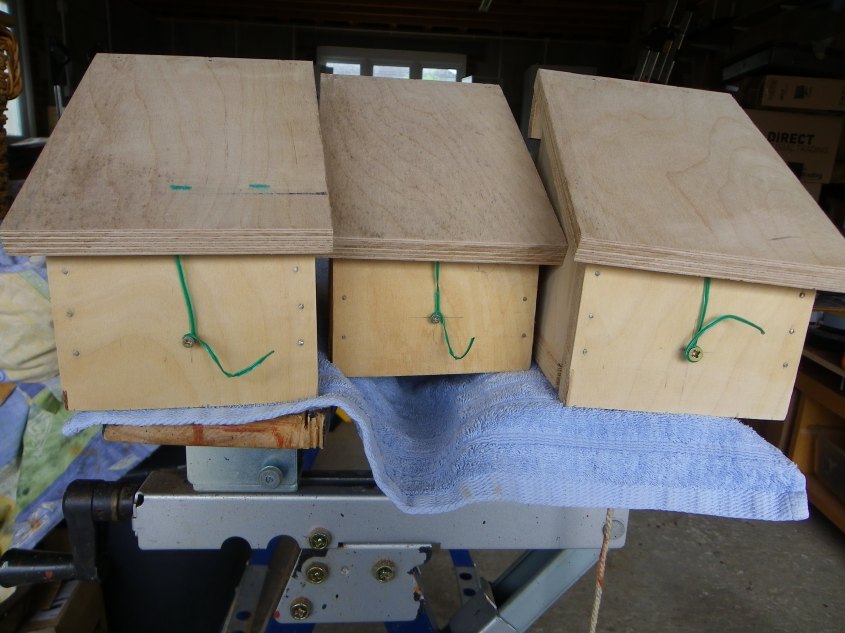
Here are the final 3 boxes which I finished this week, and which have hung around for years unfinished !


IMGP0566

Box fronts – the green twine secures the roof – which you unwind and slide the roof horizontally to check if a nest has been made,  Slide back roof into position and re secure.


IMGP0569


Entrance holes to box are located at the rear – mouse climbs up the tree trunk and enters through the hole to make its nest


dormouse-nest-in-box

dormouse-sleeping

Asleep in a constructed nest fitted within a box


August 2017 – Its a Boy ! – our first dormouse on site.


There are several other pictures of Jeskyns also; including one of the rangers with our Hedgehog houses, which was another construction project.


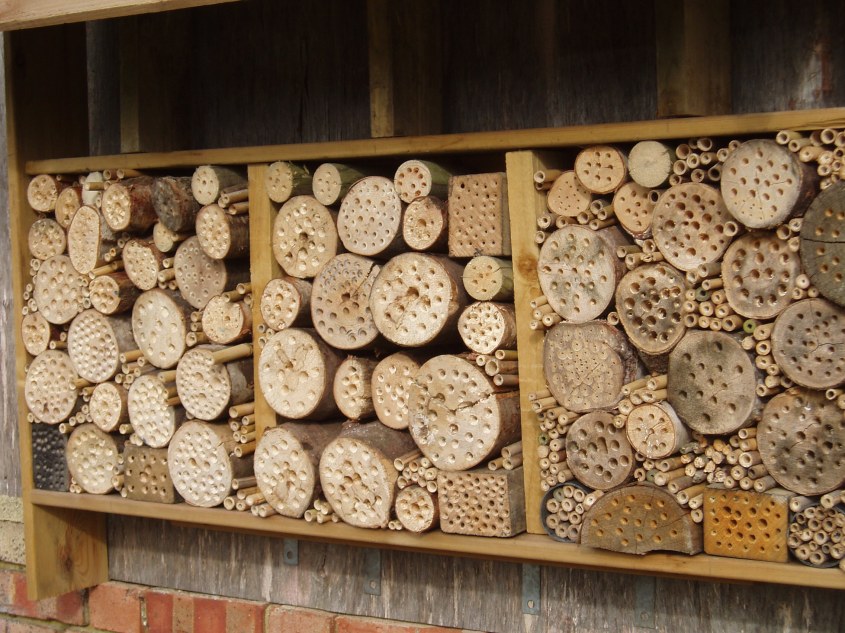
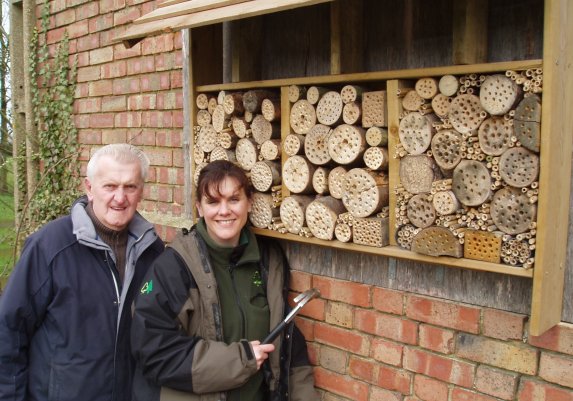
We are constantly working to do replacement logs for our bee hotel which we constructed several years ago.  Here we are with the first finished hotel.


19-mar-13-resize

19-mar-12-resize


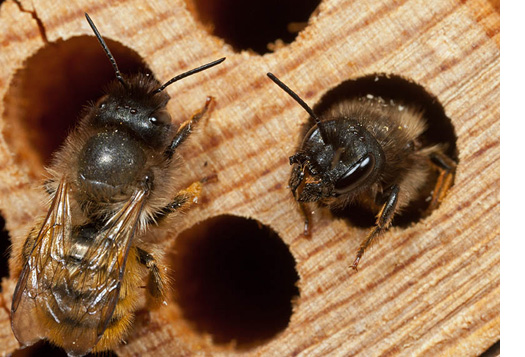
A pollen covered solitary bee – and new and old logs – note many chambers sealed up with mud – see below.


Bee hotels are easy to make, and you can place them anywhere – places such as Jeskyns; with large orchards; or even in your own back yard for flower pollination. It is primarily ‘solitary bees’ who use the hotel. They are much better pollinators than the traditional honey bees which we all think of. Around 7 solitary bees can pollinate a tree, which would require around 600-700 honey bees to do the same job !

sol bee 1

A solitary bee


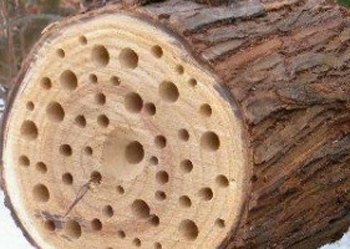
The bee hotel is made up of logs which have been drilled out to produce a series of chambers, or long tunnels. These must vary in width up to about quarter inch (or around 1cm) in diameter. The smallest can be about 2-3mm in diameter. Ideally each chamber or tunnel should be up to about 6 inches or 15cm long; although they can be about 4 inches / 10cm long for narrower chambers.


sol bee 5

sol bee 3


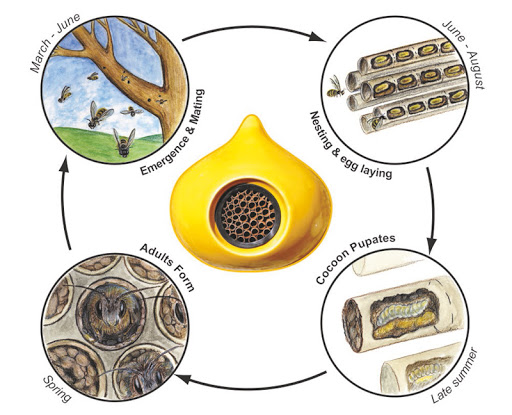
The solitary bee works from the rear of the chamber forward. At the back; a female egg is laid; along with some pollen for the youngster to feed on when it hatches. Once the egg has been laid, the female bee then blocks up the chamber with some wet mud. It then moves forward towards the front of the log and lays another egg ( also leaving pollen). This time the egg is for a male bee; again the chamber is sealed with mud. The bee then moves further forward and repeats the process; only now; all male eggs are laid.


When they are developed, the male bees work from the front of the log. They break through the mud barrier and fly off. The second bee in the chamber then does the same; followed in turn by all the other males. Eventually, it gets to the female at the back of the chamber. She breaks through her mud wall; goes down the tube until she is free to fly away. All the males that left earlier; wait for her to arrive; then she is impregnated by the males and the whole process starts again; with the female looking for chambers in which to lay her eggs.


sol bee 6


Is that not amazing !


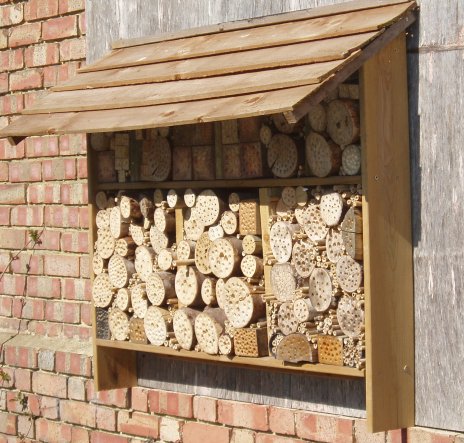
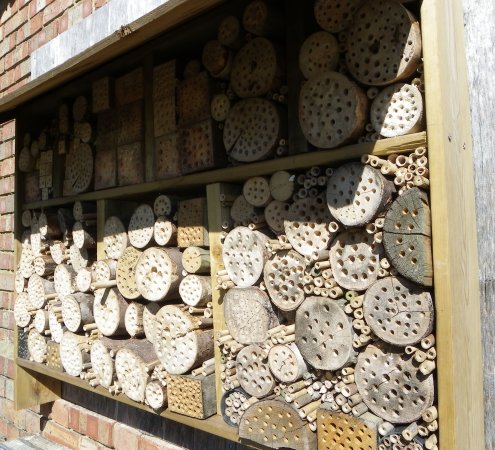
Here is a picture of our bee hotel at Jeskyns – you can see the different diameter holes in the logs for the different sized solitary bees.  It has since been made much larger and given a new rain proof roof.


19-mar-15-resize


Above is a picture which may help you with understanding the life cycle process.

Give bees a helping hand – go construct a littyle bee hotel for your garden.


Regards Mark


bee 1


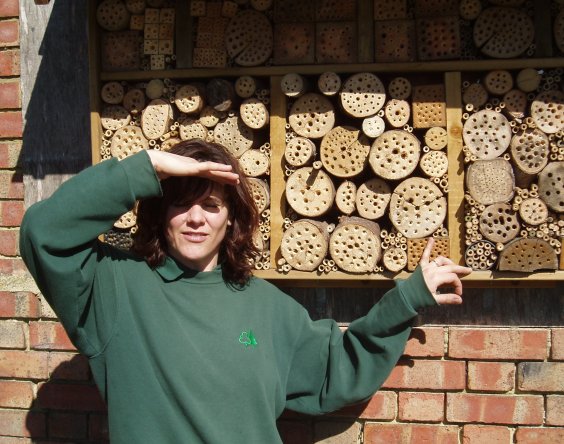
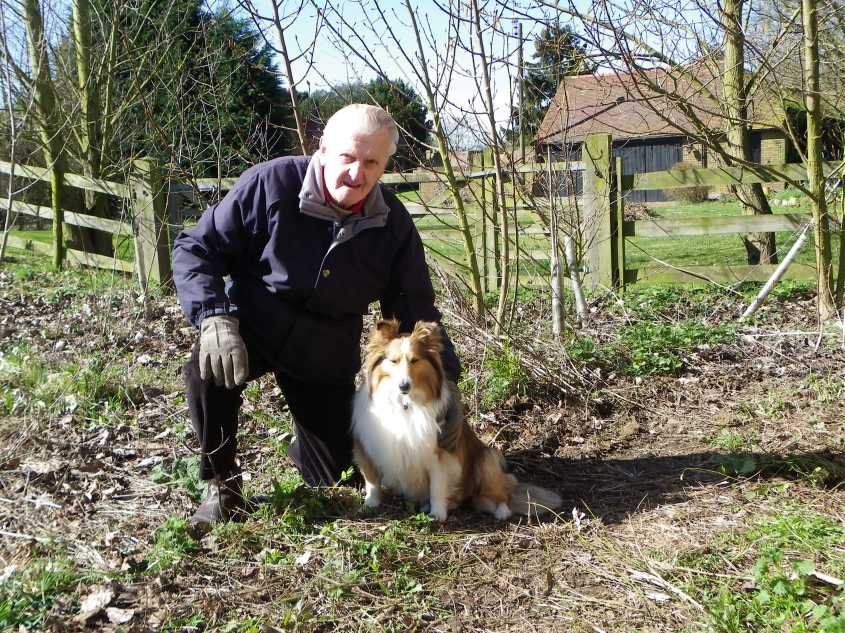
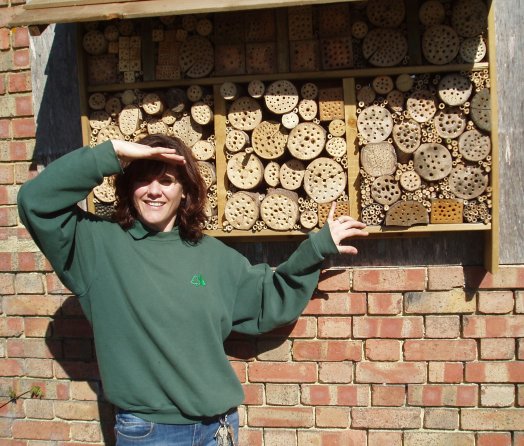
My dad was involved with the construction – he is at the hotel – but beware of lovely girl with a hammer in her hand !!:


15.Feb.6 Resize


OLYMPUS DIGITAL CAMERA

Honey.Hotel.4 Resize


IMGP0034

IMGP0024

19 Mar 2 resize

19 Mar 11 resize

Canada: Dead black bear dumped in ditch; hunter ticketed for littering.

Canada


WAV Comment – with shit like that; really sad that they are part of the British Commonwealth.  Brits try to protect animals, not be assholes like this deadbeat hunter.


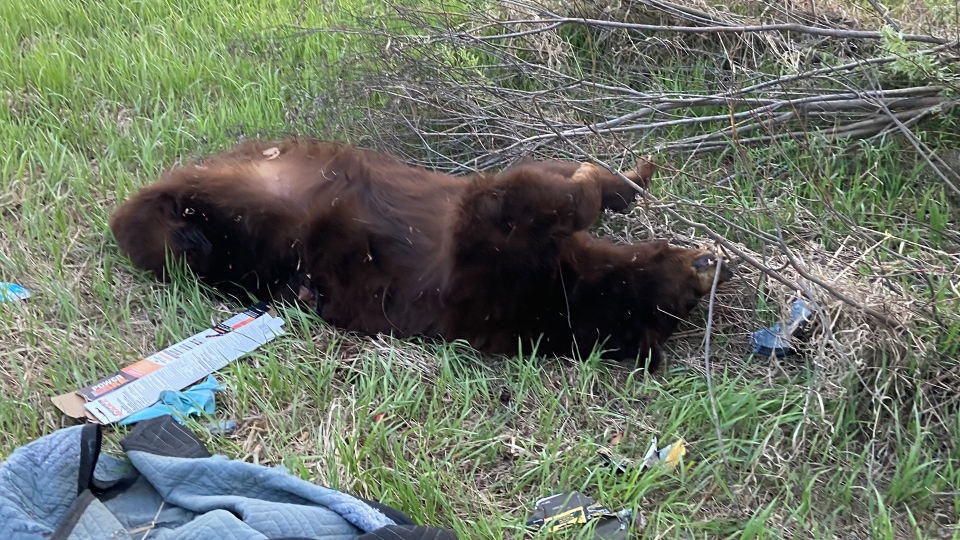
Bear carcass


https://edmonton.ctvnews.ca/dead-black-bear-dumped-in-ditch-hunter-ticketed-for-littering-1.4968342#_gus&_gucid=&_gup=twitter&_gsc=sKmC4jB


Dead black bear dumped in ditch; hunter ticketed for littering


EDMONTON — The body of a black bear was dumped illegally in a ditch near Lloydminster on Sunday, Alberta Fish and Wildlife said.

Officers determined the bear had been shot legally on private land, but that the carcass was improperly disposed of.

The person who shot the bear was ticketed for littering, Fish and Wildlife said.

“Owners or occupants of privately owned land or any person authorized to keep livestock on public land may, without a licence, hunt (but not trap) black bear on such lands, at all times of the year,” a Government of Alberta spokesperson said.

The woman who reported the carcass, Angie Atkinson, says bears are a common sight in the area.

“We’re not that far from the North Saskatchewan River, so there’s lots of ravines,” said Atikinson. “Once in a while, I’ll see scat along the road but they’re just trotting down the road and don’t seem to be much of a problem.”

Officials say animal carcasses should be disposed of at a waste management facility or on private land.