Month: August 2019

South Africa: Stop the Mass Poisoning of Dogs by Ruthless Gangs in S. Africa.

SAfrica


Stop the Mass Poisoning of Dogs by Ruthless Gangs in S. Africa

Posted by Jane Wolfe

SIGN: Stop the Mass Poisoning of Dogs by Ruthless Gangs in S. Africa


petition keyboard

Petition link: https://ladyfreethinker.org/sign-stop-the-deadly-mass-poisoning-of-dogs-in-s-africa/?utm_source=Newsletter&utm_medium=Email


PETITION TARGET: South African Ambassador to the U.S. Mninwa Johannes Mahlangu

Criminals are shamelessly poisoning up to one thousand dogs every week in South Africa. The canines become disorientated, bleed from the nose, shake, vomit, have diarrhea, lose eyesight and then succumb to paralysis. In their final minutes of life, unable to move, they struggle to breathe until they eventually suffocate and die.

Ruthless gangs poison dogs to remove interference when robbing homes. They throw food laced with the lethal pesticide Aldicarb to the unsuspecting pets. Although banned in South Africa, Aldicarb is smuggled into the country via Zimbabwe.

This illegal poison is apparently incredibly easy to buy and is stocked at informal shops and taxi stops.

β€œThis has been going on for years,” says Cora Bailey, director of Community Led Animal Welfare (CLAW). β€œIt is a massive problem. This poison is being sold everywhere.”

We must speak out to prevent criminals in South Africa from accessing this deadly poison and end the mass slaughter of innocent dogs.

Sign this petition urging Ambassador Mahlangu to clamp down on the illegal sale of Aldicarb to stop this cruel epidemic of dog killing.

USA: Latest News from the Center for Biological Diversity.

-us-flagge-jpg


Latest News from the Center for Biological Diversity

https://www.biologicaldiversity.org/

CBD Logo


Unprecedented: Trump Guts the Endangered Species Act

We’ve never seen an attack like this on the Endangered Species Act.

On Monday the Trump administration finalized sweeping changes to the Act that weaken habitat protections, block climate change from being addressed as a threat to vanishing wildlife, and create new barriers to preventing extinctions. Trump’s rules have one goal: to make it easy for industry to plunder our lands and waters for private profit β€” endangered species be damned.

The Endangered Species Act is the world’s strongest law for saving species from extinction. It’s the reason we still share this planet with bald eagles and whooping cranes and gray wolves.

You can be sure the Center for Biological Diversity will stop this cowardly, vicious move with all the strength we’ve got. We’re counting on you to stand with us in the historic fight ahead.

Please consider supporting our court battle with a donation to our Endangered Species Act Protection Fund.

Β 

Suit Launched to Save Green Sea Turtle Habitat

Green sea turtles cross oceans to nest on beaches that soon could be inundated as the seas rise. The gentle animals are also being hurt and killed by plastic pollution. So on Tuesday the Center and allies launched a lawsuit to force the Trump administration to protect their habitat.

“The recovery of most green sea turtle populations is a beacon of hope in our changing oceans, but we’ve got to protect the places they live,” said Jaclyn Lopez, our Florida director.

Get more from Maui Now.

Β 

Court Approves Ban on Cyanide Bombs in Wyoming Forests

Β 

Days after Trump’s EPA gave a thumbs-up to the ongoing use of sodium cyanide in M-44s (or “cyanide bombs”), forest creatures across 10 million acres in Wyoming caught a break from the lethal devices.

A judge has approved an agreement, secured by the Center and allies, to ban M-44s across the state’s national forests. It also requires the federal program “Wildlife Services” β€” which uses cyanide bombs β€” to analyze the impacts of its killing of coyotes, bobcats and other Wyoming wildlife. And new trapping restrictions will help protect grizzlies and other animals. Read more.

Β 

Take Action: Save Joshua Tree From Sprawl

Β 

One of our best-loved national parks, Southern California’s Joshua Tree, is threatened by plans to build a city next door.

The sprawl development would bring more than 25,000 people to an isolated spot that’s now home to vulnerable animals like desert tortoises, bighorn sheep and kit foxes. It would drain aquifers, punch a hole in a wildlife corridor, and destroy a key stopover place for migratory birds.

The Riverside County Planning Commission is poised to make its final decision on approving the development. Take one minute now to urge it to say no and protect the area’s wild character.

Β 

We Just Sued Trump Over His Dirty Power Plan

Β 

On Wednesday we and our partners sued Trump’s EPA to overturn its Dirty Power Plan and reinstate the Obama-era Clean Power Plan. The agency failed to meet its legal obligations under the Clean Air Act when it repealed and replaced this set of policies.

“The Dirty Power Plan’s only purpose is to make fossil fuel CEOs richer, no matter how deadly and dangerous that is for the rest of us,” said Center senior attorney Clare Lakewood.

Read more in our press release.

Β 

Β 


Living sushi…and we thought, we would have seen everything


And there is nothing that does not exist!!We are now prepared for everything.

Also on live frogs that are eaten.

It is an older video where the half-living frog was served with ice cubes, soy sauce, a piece of lemon. The upper body of the amphibian is served as a decoration on the plate and is in the last live moves. The big eyes gaze at the restaurant visitors, the muscles twitch every now and then, the arms move, even the eyelids blink.

We don`tΒ  just dig ourselves for such a research, but since we were asked if frogs are really eaten alive in Japan, we went on the search and it was really disgusting!
So allegedly cooked frog meat with bitter gourd is a popular remedy for dengue fever.

What is the reason for this belief?

Mosquitoes bite humans, frogs eat mosquitoes and people eat frogs. That’s why we humans are still the strongest in the food chain. Idiotic, right?
And what happens if there are no more frogs?

Frogs are a delicacy especially in the kitchens of France, Western Switzerland, Belgium, Luxembourg, Portugal, Louisiana and the Caribbean, and generally in South and East Asia and parts of Africa. These frogs are mainly imported from Asia. The main exporter is Indonesia. Over thousands of miles, they must endure in tight transport boxes. Arrived at the destination, their legs are cut off without any anestheticdesperately wriggling, the frogs die a painful and slow death.

Froschjpg


Would you eat a live frog? Frogs from the kitchen are otherwise known only from France. But frogs are also eaten in far-away Asia. In Japanese restaurants, a very special and cruel delicacy is prepared: live frog sushi.

The frog is broken up into pieces with a sharp knife. It seems he lives and can watch him being eaten. The animal is served in a bowl full of hot broth and fresh vegetables.

Frosch Kopfpg

It is really horrible that we must read that in Central Asia it is a delicacy to eat fallopian tubes of frogs or even the ovaries, also known as ovaries. The court is called Hasma (Harsmar, Hashima).

Frosch-GetrΓ€nk mit ierstΓΆcke4

These are usually used by the Asian Common Frog (Rana chensinensis). Because of its whitish appearance, Hasma is often falsely described as a “snowflake fat”. Hasma is produced in the provinces of Heilongjiang, Jilin and Liaoning in China. The soup from Hasma is also served in North American cities with a large Chinese population. But mainly in China, Taiwan, Singapore and Hong Kong.

Frosch Suppepg

At Singapore’s Frog Farm in the Kranji countryside, the meat is bred by the American bullfrog and sold worldwide as a frozen product.

In the following video you can see the frog farm, here live tens of thousands of frogs.

https://netzfrauen.org/2016/08/18/froschsushi/


My comment: It is frightening to see how many places in Europe now sell frogs’ legs again and are prepared and eaten in restaurants.

In the “wild frog harvest” the back frog extremities are separated, from living body!!
Most of the imported frog legs are still from these wild catches.

Frog thighs may not look anyone in the eye, but they are ALSO a horrible cruelty, like any food made from animal corpses.
Only that the “civilized” society in Europe can not endure the living gaze of a victim on the plate and therefore dead body parts are preferred and served.

Best regrads, Venus

Β 


Undercover in Poland: becoming a butcher!


Poland flag, vector illustration


The undercover journalist Patryk Szczepaniak tells very excitingly how he prepared for his role as “butchers” for a slaughterhouse in Poland. The results of his investigative work were sensational. https://gijn.org/2019/08/05/becoming-a-butcher-lessons-from-working-undercover/

His report follows:

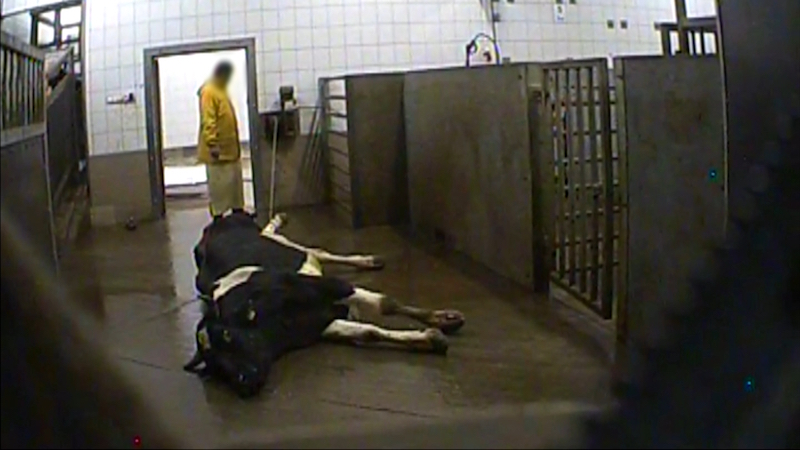
“In early October 2018, Tomasz Patora and I started to take a closer look into the Polish cattle industry. We had a tip-off: A slaughterhouse (or abattoir) in Poland was selling the meat of sick cattle, some of which had arrived at the facility already dead. After conducting some initial background research and sneaking around the slaughterhouse a few times in the cover of night, we knew our source was telling the truth. The only problem was how we were going to get inside to prove it. After a long discussion with our editor at the investigative program Superwizjer of TVN Discovery Poland, we decided that one of us needed to go undercover and get hired as a butcher.

Happily, I got the job.
undercover. PolandpgPatryk Szczepaniak went undercover to investigate a slaughterhouse in Warsaw, where he secretly recorded video. Image: Courtesy TVN Discovery Poland


Where’s the Beef?

We knew a few things before going in. We knew the slaughterhouse where I would work had been buying sick and dead cattle from farmers, and that it usually paid a farmer a maximum of $200 per sick cow; by comparison, a healthy cow costs between $800 and $1,400.

We also knew that the slaughterhouse would take in diseased, dead cows for free. We knew that sometimes the sick cows had broken legs, or that their bones wouldn’t pop back in their hips after giving birth. We also knew that after those sick cows were slaughtered, the carcasses were cleaned and visible marks of diseases were cut away, and that the meat of those sick cows were regularly sold on for human consumption. And we knew that all of this was done without any oversight by the state’s veterinary office.

We estimated that by killing around 20 sick cows per day, the slaughterhouse would earn around $660,000 of pure profit per year; if it killed only the healthy ones, its profits would come in at around $91,000 per year. Poland produced almost 438,000 tons of bovine meat worth $1.5 million in 2018, and more than 80% of that was exported to European UnionΒ and beyond.

We had much of our background research in the bag. Now it was time to get inside to show how bad things looked up close. But first, I had to prepare for my role.

Becoming a Butcher

It wasn’t my first undercover assignment. In the past I had been abused as a temporary worker in the Netherlands. I hired myself out as an Uber driver to show how the company was avoiding taxes as well violating labor laws. I also frequented Warsaw’s strip clubs to document the robbery of foreign tourists. My experience from all of these past assignments was crucial for my preparation in becoming a butcher.

Here’s what I learned about going undercover:

Setting the story. The best character is built on real events, emotions, and histories. Use memories and experiences from your own past to make your story authentic. Before going to the slaughterhouse and asking for the job, I prepared two stories and, based on how the situation inside developed, I could choose two different paths to explain how I ended up at a slaughterhouse in the countryside, far away from major cities. During the job interview, I began to sense that my initial story paths wouldn’t work, so I had to come up with a third story path. So I said my girlfriend had fallen pregnant by another man, which left me distraught and far away from home. I know it sounds really cliched, but that’s the one that landed me the job.

Lies. You’ll be lying a lot. My advice is that it is better to say as little as possible. Memorize your story and be prepared to have it checked by anybody at any time.

Digital footprints. “Delete everything you can from the internet, including all social media. Profiles need to be deleted and, if necessary, replaced with new ones”. Do it carefully and well before the assignment. Learn from my mistake: I left one of my old photos that appeared under my real name on the sixth page of a Google image search. It later led to my exposure where, during one of my night shifts at around 3 a.m., I was invited to my boss’s office β€œto sign a contract.”!!

Change of appearance. Shaving, growing, or dying hair; cutting or growing a beard; growing or cutting a mustache β€” it is worth taking a closer look at your external appearance, as well as inside your wardrobe. If the clothes don’t match your story, buy new ones, including socks and underwear. For example, I normally wear colorful socks. Can you imagine a butcher with socks like that? I also shaved my head, beard, and mustache. My colleagues didn’t recognize me when I passed by them in the office hallways. I also recommend reading β€œBlack Like Me.” John Howard Griffin was a white journalist who chemically altered the color of his skin and headed to the racially segregated Deep South in the United States in 1959.

Change of personality. Adapt to your environment. If it is an academic environment, behave and speak like an academic. If it’s a slaughterhouse, behave and speak like a butcher”.

I graduated from a decent university in Poland and before the assignment began, my colleagues expressed concern that those years of education might ruin my story. β€œYou won’t sound like the other butchers,” they said. So I spoke very little about myself and kept to the most important facts. Pretending to be an introvert helped a lot.

Research. Learn whatever you can about your assignment. I watched plenty of documentaries about meat production, and some pretty nasty videos on LiveLeak and YouTube regarding animal cruelty. I also read a few books for beginning butchers, and went to other slaughterhouses to learn how they work. It’s good to know if you’re about to puke or faint during slaughtering before going undercover.

Identification card. Faking an ID is a crime in Poland, so we decided not to do it during my assignment, and there wasn’t really a need for it. But if you go into an undercover situation where your personal information might lead to threats on your health or life, you might need to fake it. While this will certainly depend on where you are working and what story you are working on, most courts will likely acknowledge that this was done in a pursuit of the greater good.

Observe and document. These are basic ethical rules of undercover journalism. You’re there to document systems or criminal activities, not to provoke or to stage situations. While working on night shifts β€” where the illegal butchering was happening β€” I tried to be a useful worker at every step of the slaughter, from pulling sick cows with a rope to stunning and killing them, as well as decapitating, skinning, and cleaning out their guts. I wasn’t pushing anyone to give me a particular job. I knew the graphic footage filmed with hidden cameras would be newsworthy, and I had only a limited time to film certain scenes. I had to go with the flow of work and film everything whenever I could.

Worst-case scenario. Prepare safety rules and know your way out. Create a communication system, such as secret text code messages. Report back daily about any unusual behavior in your working environment β€” your colleagues might notice something relevant. If possible and necessary, have someone nearby to help you. I was exposed as a journalist during the night. It wasn’t the most comfortable time in my life, but I knew there were people watching my back all the time. This helps.

Investigative Impact

I worked undercover for almost three weeks in November 2018 to expose the slaughterhouse.

I managed to document and film the pulling, by a rope, of sick and dead cows into the slaughterhouse; the preparation and cleaning of the sick and dead cows for further sale; the slaughter of cows in advanced stages of pregnancy; the disposal of both small and large fetuses; a wide range of animal cruelty acts; the loading of rotting carcasses into trucks for further sale; stamping by workers, my boss, and myself with an official veterinary stamp that was intended to show that the meat was examined by the veterinary service when it was not; and conversations with workers and the head of the company about procedure. Altogether we had around 120 hours of undercover footage.

kuh .jPolen pgImage: Courtesy TVN Discovery Poland


After our piece came out in late January, it had significant impact, including:

  • The slaughterhouse and its closest business partners were shut down by the government.
  • Every slaughterhouse in Poland β€” around 800 of them β€” was put under the strict control of state veterinary inspectors.
  • Unexamined meat from the slaughterhouse where I worked was found in 14 EU states, including in schools, kindergartens, military bases, restaurants, and shops.
  • The chief deputy of the General Veterinary Inspectorate was dismissed.
  • A trade war between Poland and the Czech Republic unfolded, with the Czech government urging its citizens to buy domestic products instead of buying Polish meat.
  • Upscale restaurants in Prague were exposed for selling meat from the slaughterhouse where I worked as Argentinian beef.
  • EU inspectors examined meat production in Poland, and their report confirmed our reportage.
  • It is estimated that the Polish beef industry will lose around $150 million in 2019 in the aftermath of our reportage.
  • In the latest polls, 43% of Poles stated that they have reduced meat consumption or eliminated it from their diet.

In Data We Trust

There could be another way to dig deeper into this story. My colleague Julia Dauksza is one of the few true data freaks in Poland, constantly digging up and analyzing all sorts of data. She obtained data from the Polish Ministry of Agriculture, the Agency for Restructuring and Modernization of Agriculture, and the Institute of Agricultural and Food Economics, and found that in 2017, Poland reported it had slaughtered almost two million cows, of which only 4,513 β€” or just 0.22% β€” were reported unfit for human consumption by the government’s veterinary office. These numbers are just waiting for another investigation”!

https://gijn.org/2019/08/05/becoming-a-butcher-lessons-from-working-undercover/
https://www.tvn24.pl/tvn24-news-in-english,157,m/meat-from-sick-cows-on-sale-shocking-report-by-superwizjer-tvn,904899.html


My comment:Β  And we immediately remember the German scandal, which has the same criminal barbarity against sick and injured cows here, in civilized Germany.

The SOKO organization also got acquainted with undercover video material, we had reported it . https://worldanimalsvoice.com/2019/04/13/germany-crime-continues-in-slaughterhouses/

That was in March and April 2019, and that was the tenth slaughterhouse scandal in Germany within two years. Connected to this is a criminal network of hundreds of farmers, livestock dealers and veterinarians who operate and support the illegal and highly profitable trade in so-called downer cows.
A farmer who was confronted with pictures of his farm said without any sense of guilt:

“It is not an isolated case that animals are so charged when they can no longer walk independently. That’s just like that. That’s economy. We do business. “

kuh deutschland undercovergImage: SOKO Tierschutz e.V, Germany


Our Agriculture Minister of germany, Julia KlΓΆckner said: We do not need a self-proclaimed stable police, which controls the compliance with animal welfare. It is up to the state to prosecute farmers who keep their animals bad “.
KlΓΆckner announced that the federal government wanted to punish stabling burglaries even more in this legislative period. So far, activists often go unpunished, gaining access to stables and secretly filming. Farmers criticize this.

KlΓΆckner: “The thing is very clear: burglary is burglary. Animal rights activists would have to abide by laws”.

No thing is clear in slaughterhouses before a brave undercover team goes in and films what corrupt politicians consider as “clear”.
Thanks to these people, we know how every system, and not just that of Poland, works with the meat mafia.
The walls of slaughterhouses have long been made of glass, but no one wants to know what’s going on in there.

My best regards to all, Venus


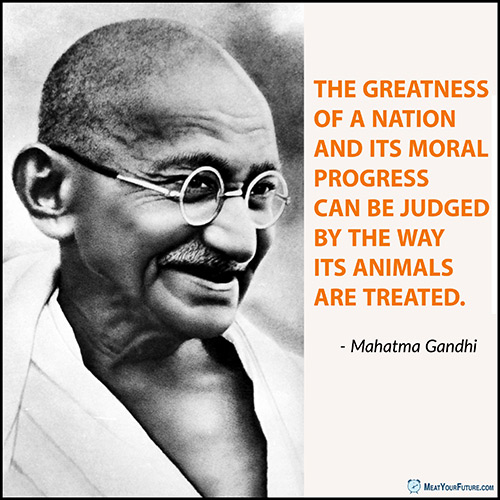
A Nation Can Be Judged On The Way It Treats Its Animals.

translator


Image result for a nation is judged by the way it treats animals

As you can see from our global map; or β€˜Clustrmap’; https://clustrmaps.com/site/1a9kn – we are getting lots of visitors from all over the World. The site is truly becoming a World Animals Voice.

We want to welcome each and every one of you here and hope to see you again real soon.

If there are any specific issues that you would like us to try and investigate further; then please drop us a quick line using the β€˜Contact’ link – https://worldanimalsvoice.com/contact/

For the animals;

Regards Venus and Mark.

Give a shit 4


UK: Foxhunting – Illegal But Still Undertaken by Some Exploiting the Hunt Ban.

UNKG0001

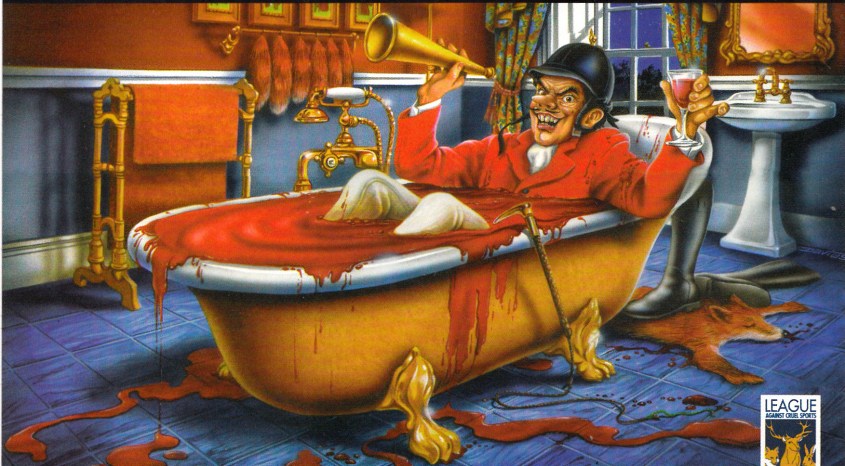
hunter bath.jpg

Bloodbath


https://www.league.org.uk/fox-hunting?gclid=EAIaIQobChMI4rrhkpyD5AIVyLTtCh3usQv-EAAYASAAEgK6afD_BwE

Reproduced from the β€˜League Against Cruel Sports (LACS) – England.


Fox hunting is a β€˜traditional sport’ in which hunters, usually on horseback, follow a pack of hunting dogs aiming to pick up the scent of a fox, chase it – and kill it. Fox hunting is illegal in England, Scotland and Wales, but evidence suggests that hunts are regularly breaking the law.

Carry on reading for some more fox hunting facts.

IS FOX HUNTING ILLEGAL?

Fox hunting is illegal in England, Scotland and Wales. It is still legal in Northern Ireland.

Fox hunting was banned by the Hunting Act 2004 in England and Wales, and the Protection of Wild Mammals (Scotland) Act 2002 in Scotland. But while these were both welcome and hard-fought pieces of legislation, overwhelming evidence suggests that both are being ignored or exploited by hunts on a regular basis.

Hunts in England and Wales invented the activity of β€˜trail’ hunting after the fox hunting ban came in. This claims to be a non-lethal sport where the hunt simply follows a pre-laid trail rather than searching for and chasing a fox. However, years of evidence shows that hunts are using trail hunting as a cover for illegal hunting by claiming to be following a trail but still carrying on and hunting foxes the way they did before the hunting ban.

Hunts in England and Wales also use β€˜exemptions’ in the Hunting Act. These were designed to allow certain types of β€˜pest’ control or scientific research, but are being exploited by the hunts to give them an excuse to carry on hunting.

In Scotland, an exemption in the law allows foxes to be killed by β€˜flushing to guns’, where a pack of hounds is allowed to be used to chase a fox from cover where it can be shot. However, evidence from League investigators shows hunts claiming to be flushing to guns – but without having any guns present in the right place.

MOST PEOPLE WANT TO STOP FOX HUNTING

If you are opposed to hunting, then you are in the majority. More than eight out of ten people are opposed to hunting. This includes more than eight out of ten people in rural areas – which shows that people who truly understand and experience what hunts do want to see it remain illegal.

Hunting is not a town vs country issue, and it is not a β€˜class’ issue. More than seven out of 10 Conservative voters want hunting to remain illegal. Hunting is an issue of animal cruelty, nothing else.

Some argue that β€˜hunting’ should continue because it’s a grand old British tradition. However, bear baiting and bull baiting were also traditions, and they were rightfully consigned to the history books. Traditions are measured in more than years. They have to reflect the values and attitudes of a society, and the vast majority of the British people oppose hunting with dogs.

IS FOX HUNTING β€˜PEST CONTROL’?

Fox hunting is not a credible form of pest control. Hunters claim that they are helping farmers by killing foxes, but this is a senseless argument that most people no longer believe. The League does not believe that there is any requirement for lethal fox control, but even if there was, then hunting is neither a humane nor effective way of doing it.

Any suggestion that fox hunting is about β€˜pest control’ can be dismissed very quickly by the fact that hunts have been caught capturing and raising foxes purely so they can then be hunted. In May 2015, a League investigation revealed 16 terrified fox cubs held captive in a barn linked to a fox hunt in Yorkshire. We rescued them, took them to a vet, and sadly one died, but we released the others to safety. We are proud to have protected those foxes.

While the scale of this fox β€˜factory’ was shocking, it’s not an isolated case. In December 2015, League Investigators released a fox found locked in a building near to where the Belvoir Hunt was meeting. It is worth mentioning that a few months later, while monitoring the same hunt, our Investigators were brutally attacked, leaving one with a broken neck, which we believe was retaliation for us rescuing this fox.


Watch the story of 16 fox cubs found captive in a barn close to a hunt kennel.

Read on using the top link.


petition keyboard


Sign the petition at:

https://takeaction.league.org.uk/page/19719/data/1


East Kent Murder

The Result – Photo – Mark (WAV).

USA: Beautiful ‘Salvador Dali’ Pup Draws Attention.

UNST0001


I just had to put this beautiful little pup on here tonight, as it really made me laugh ! – just to end the day with something good after all the export downers we have been experiencing.

Regards Mark.


Rescue Puppy Born with Adorable β€˜Mustache’ is Breaking the Internet

Images of a beautiful rescue puppy born with a Salvador Dali-like β€œmustache” have caused a stir online after the dog was saved from the streets and put up for adoption, along with her mother and ten siblings, by Hearts & Bones Rescue.

Initially referred to as β€œmustache pup,” this adorable five-week-old puppy has now been named Salvador Dolly due to her resemblance to the surrealist Spanish artist. Inquiries about adopting her are flooding into the non-profit organization.

Dolly, along with her mother and siblings, is currently living with a loving foster family in Dallas. The whole crew is looking for forever homes in New York City and will be ready for transport at the end of August.

The rescue organization has highlighted the vital importance of people fostering and adopting rescued animals. β€œWe were only able to save Dolly and her family because we had a foster to take them in,” it stated in a Facebook post. β€œThe more people we have ready to open their hearts and homes to a dog in need, the more we can save!”

Puppy with moustache

Salvador Dolly’s road to fame is just getting started, as she is now the face of Hearts & Bones Rescue animal adoption drive and is even on a T-Shirt saying β€œI mustache you to adopt.”

Rescue dogs make great companions and this unique little puppy is a great reminder of how special all animals are.


I Think We have Presented All the Evidence Needed to Show That EU Legislation for ‘ the Protection of’ Animals In Transport Is Up With EU Commissioner Fairies ! – Read on and Find Out Why.


I am supplying the following as additional reference / information to the excellent post which has recently been provided by Venus relating to animal transport guides: https://worldanimalsvoice.com/2019/08/14/eu-animal-transport-guides-animals-are-transported-in-the-best-possible-ways/


The following all directly relates to EU Regulation 1/2005 on the (so called) β€˜protection’ of animals during transport. Relevant sections and what they state are given.

A full copy of Reg 1/2005 can be accessed by the following link: https://eur-lex.europa.eu/legal-content/en/ALL/?uri=CELEX%3A32005R0001


As an additional reference, we give you a link to a very specific document produced by β€˜Eyes on Animal’ in the Netherlands, which specifically deals with the issue of the importance of access during transport.

Here is the link to the report: https://www.eyesonanimals.com/wp-content/uploads/2011/12/Downloads_Eyes_on_Animals_report_Importance_of_Access.pdf


We will identify our own (WAV) specific concerns clearly in relation to the Regulation in the following.


As Venus says in her post:

And we mean: The video work is actually very good, congratulations.
What we do not quite understand, to whom are the videos directed.
To the truck driver?
And before 2018, before the project is completed, did the drivers not know which laws apply to animal transport at EU level?
And now that they finally know, do they have to follow these rules? Or only if they want?

Exactly VenusΒ  – as we will show below, since the implementation of Reg 1/2005 in December 2004, all livestock drivers are supposed to be certified (since then) to ensure they are knowledgeable and competent in the transport of live animals.

If this is the case; then why have the EU wasted a lot of time and money in producing new videos on animal transport (links shown in your post)Β  ? – is this rather like making a video to instruct a qualified pilot the basics of flying a plane ? – drivers are supposed be certified by 1/2005 since 2004; so what is the real point of these new EU videos; apart from wasting lots of money ?

Anyway; we move on.


EU Regulation 1/2005 on the protection of animals during transport declares:


ANNEX IV

TRAINING

  1. Β Road drivers and attendants as referred to in ArticleΒ 6(5) and ArticleΒ 17(1) shall have successfully completed the training as provided for in paragraphΒ 2 and have passed an examination approved by the competent authority, which shall ensure that examiners are independent.

The training courses referred to in paragraphΒ 1 shall include at least the technical and administrative aspects of Community legislation concerning the protection of animals during transport and in particular the following items:

(a) ArticlesΒ 3 and 4 and AnnexesΒ I and II;

(b) animal physiology and in particular drinking and feeding needs, animal behaviour and the concept of stress;

(c) practical aspects of handling of animals;

(d) impact of driving behaviour on the welfare of the transported animals and on the quality of meat;

(e) emergency care for animals;

(f) personnel handling animals.


ArticleΒ 6

Transporters

  1. No person shall act as a transporter unless he holds an authorisation issued by a competent authority pursuant to ArticleΒ 10(1) or, for long journeys, ArticleΒ 11(1). A copy of the authorisation shall be made available to the competent authority when the animals are transported.
  2. Transporters shall notify to the competent authority any changes in relation to the information and documents referred to in ArticleΒ 10(1) or, for long journeys, ArticleΒ 11(1), no more than 15Β working days from the date the changes took place.
  3. Transporters shall transport animals in accordance with the technical rules set out in AnnexΒ I.
  4. Transporters shall entrust the handling of the animals to personnel who have received training on the relevant provisions of AnnexesΒ I and II.


ANNEX I

TECHNICAL RULES

(as referred to in ArticleΒ 6(3), ArticleΒ 8(1), ArticleΒ 9(1) and (2)(a))

CHAPTER I

FITNESS FOR TRANSPORT

No animal shall be transported unless it is fit for the intended journey, and all animals shall be transported in conditions guaranteed not to cause them injury or unnecessary suffering.

When animals fall ill or are injured during transport, they shall be separated from the others and receive first-aid treatment as soon as possible. They shall be given appropriate veterinary treatment and if necessary undergo emergency slaughter or killing in a way which does not cause them any unnecessary suffering.


CHAPTER II

MEANS OF TRANSPORT

  1. Provisions for all means of transport

2.Β  Additional provisions for transport by road or rail

2.1 Vehicles in which animals are transported shall be clearly and visibly marked indicating the presence of live animals,


article 2

article 1

Clearly and Visibly Marked ???


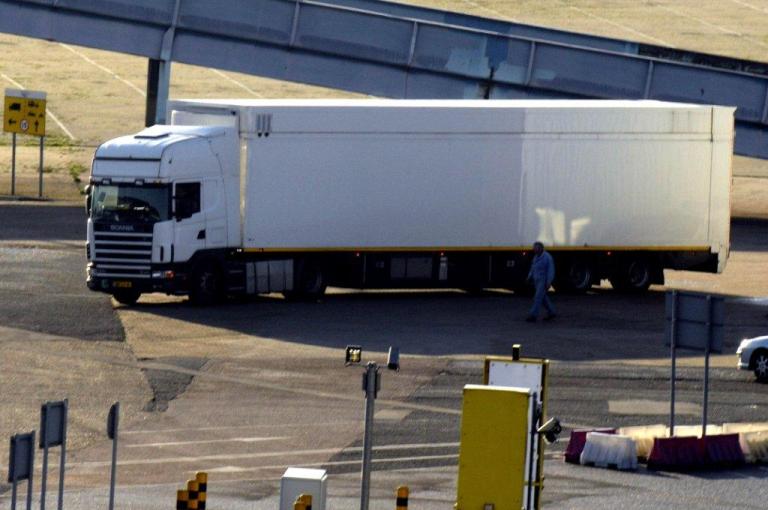
WAV Comment – Regarding the last couple of points shown red above, we draw your attention to one of our recent posts on how the industry is not being compliant with EU Regulations when transporting live animals in box type trailers.

Here is the link: https://worldanimalsvoice.com/2019/08/08/england-sealed-box-type-animal-trailers-how-the-industry-dodges-identifying-what-they-transport-and-the-eu-oks-it/


We ask; when box type trailers are being used:

  • how is access to ALL animals being transported provided for the driver ? – he cannot hear them and he most certainly cannot see them in a box trailer – unless he has x ray vision !
  • As we have clearly shown in our photographs and reports, vehicles ARE NOT clearly and visibly marked indicating the presence of live animals. Is this not what my report from vehicles using Ramsgate harbour proved ? – we included in the report our suggestions as to the labelling which we suggested should be used; and also suggested the locations on the trailer where these signs should be applied.


Nothing has ever been done by the EU Commission to address our concerns about live animals being transported in box type trailers.

So, we add all this up and what do we get:

Nothing much really – we (and many other organisations) provide all the evidence top show that adherence to EU rules are a complete and utter joke within the live animal transport sector;Β  we show that the EU does nothing except make nice new videos for drivers who are supposed to be fully trained and competent in the first place, and we see a Eurogroup for Animals which does not really do much to address any of the issues; when they are supposed to be the direct link to MEPs at the European parliament, who can make changes to the law !

Fed up; disgusted on behalf of the animals; and don’t even ask me about the Brussels crowd; I think we have now proved they in EU circles are utterly incompetent.

Regards to all – Mark.


We have also today (14/8) attempted to make contact by e mail with the 2 primary contacts at the Eurogroup about the live transport issue; but the following has come back to us:


Thank you for your message. I will be on summer leave until 25 August 2019 and will respond to you upon my return.Β 

For urgent matters you can contact my colleague Alessia Virone, a.virone@eurogroupforanimals.org

Best regards,

Andreas Erler

Senior Political Adviser, Eurogroup for Animals


And Alessia (the urgent contact) says:


Thank you for your message!

I will be out of the office until the 18th of Augustus.Β 

I will answer to your email as soon as possible upon my return.

If your question is urgent, please contact my colleague Andreas Erler (a.erler@eurogroupforanimals.org).

Best,

Alessia

But he has just automatically mailed us that he is also on holiday !!!


Strong cup of tea, please !

Β 

Β 


Β 

Β